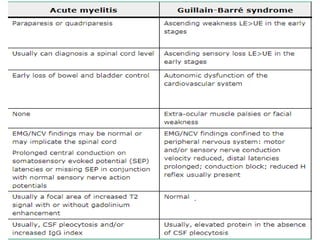
APPROACH TO
TRANSVERSE MYELITIS
Naresh.k
Neurology registrar(1st yr)
• 23 yr old ms. Varsha ,nurse from chattisgarh
k/c/o SLE presented with weakness of b/l LL
and sensory loss below the umbilicus and
bladder symptoms , onset to peak is 8 hrs on
examination stable vitals with areflexic flaccid
paraparesis with sensory level at T10.
alopecia,platal ulcers, malar rash+
?
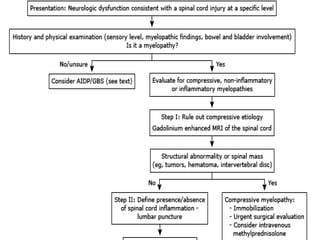
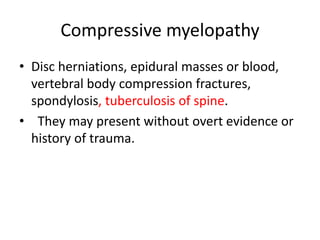
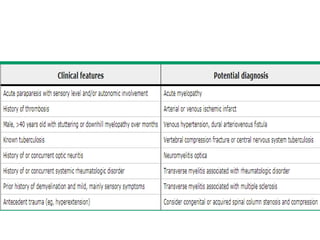
Compressive myelopathy
• Disc herniations, epidural masses or blood,
vertebral body compression fractures,
spondylosis, tuberculosis of spine.
• They may present without overt evidence or
history of trauma.
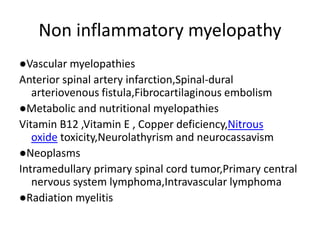
Non inflammatory myelopathy
●Vascular myelopathies
Anterior spinal artery infarction,Spinal-dural
arteriovenous fistula,Fibrocartilaginous embolism
●Metabolic and nutritional myelopathies
Vitamin B12 ,Vitamin E , Copper deficiency,Nitrous
oxide toxicity,Neurolathyrism and neurocassavism
●Neoplasms
Intramedullary primary spinal cord tumor,Primary central
nervous system lymphoma,Intravascular lymphoma
●Radiation myelitis
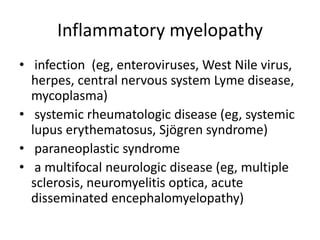
Inflammatory myelopathy
• infection (eg, enteroviruses, West Nile virus,
herpes, central nervous system Lyme disease,
mycoplasma)
• systemic rheumatologic disease (eg, systemic
lupus erythematosus, Sjögren syndrome)
• paraneoplastic syndrome
• a multifocal neurologic disease (eg, multiple
sclerosis, neuromyelitis optica, acute
disseminated encephalomyelopathy)
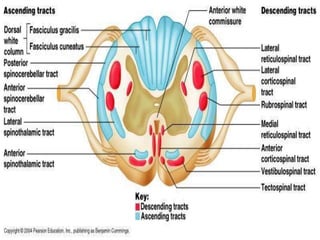
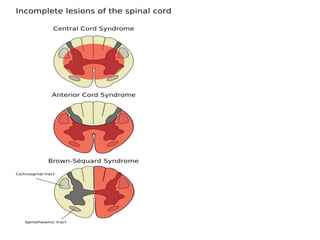
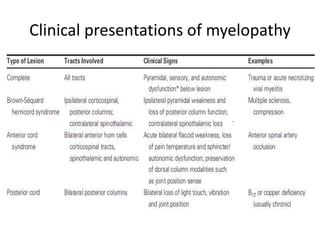
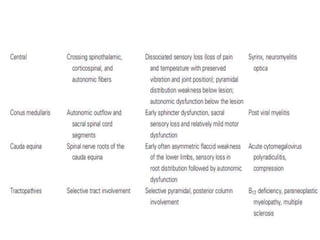
Clinical presentations of myelopathy
Transverse myelitis
• Acute transverse myelitis (TM) is a rare
acquired neuro-immune spinal cord disorder
that can present with the rapid onset of
weakness, sensory alterations, and bowel or
bladder dysfunction.
epidemiology
• incidence between one to eight new cases per
million people per year
• bimodal peak between the ages of 10 to 19
years and 30 to 39 years has been reported
• no gender or familial predisposition to TM,
although women predominate among the
cases that are associated with multiple
sclerosis .
classification
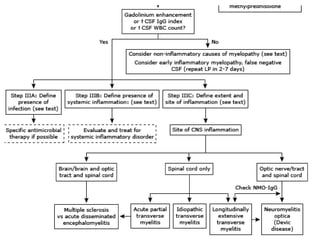
• Idiopathic TM , Secondary (disease-associated)
TM is most often related to a systemic
inflammatory autoimmune condition.
• Subtypes based on clinical severity, relative
involvement of spinal cord gray matter and
longitudinal extent of the spinal cord lesion.
acute flaccid myelitis (AFM), acute partial TM,
acute complete TM , longitudinally extensive TM
(LETM).
• acute complete TM-risk of multiple sclerosis is 5 -
10 % .
• partial or incomplete myelitis – risk of multiple
sclerosis is high.
• Patients with acute partial myelitis + cranial MRI
abnormalities of multiple sclerosis have a
transition rate to multiple sclerosis over three to
five years of 60 - 90 %.
• In contrast, patients with acute partial myelitis +
normal brain MRI develop multiple sclerosis at a
rate of only 10 - 30 % over a similar time period .
• Idiopathic TM usually occurs as a postinfectious complication and
appears to result from an autoimmune process.
• Secondary TM
• Acquired central nervous system autoimmune disorders that can
cause TM include :
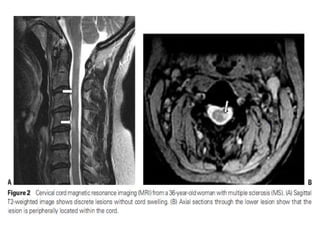
• TM as a part of the spectrum of multiple sclerosis. In some cases,
TM is the initial demyelinating event (a clinically isolated syndrome
[CIS]) that precedes clinically definite multiple sclerosis.
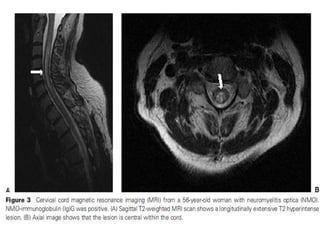
• TM manifesting as a neuromyelitis optica spectrum disorder.
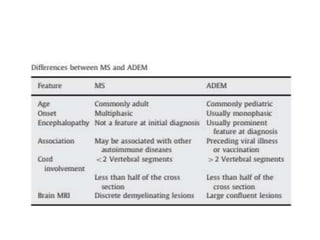
• TM may be seen in patients with acute disseminated
encephalomyelitis, a monophasic demyelinating disease with
multifocal neurologic symptoms and encephalopathy.
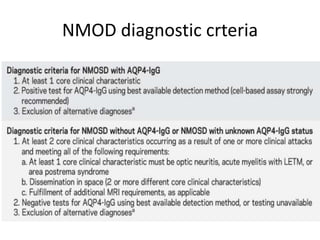
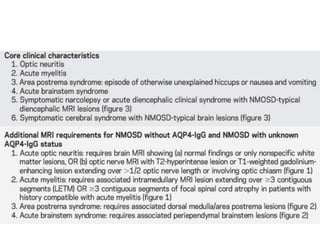
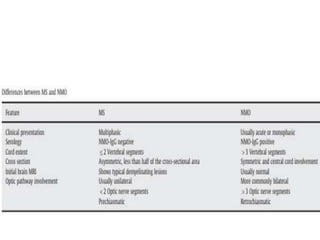
NMOD diagnostic crteria
Other CNS conditions
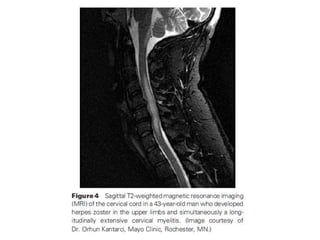
• Infections including enteroviruses, West Nile
virus, herpes viruses, HIV, human T-cell leukemia
virus type 1 (HTLV-1), Zika virus , neuroborreliosis
(Lyme), Mycoplasma, and Treponema pallidum .
• In general, infectious causes of spinal cord
dysfunction are rare, but outbreaks of acute
flaccid myelitis (AFM) serve as a reminder of the
myelitis outbreaks seen during poliovirus
outbreaks.
• Neurosarcoidosis
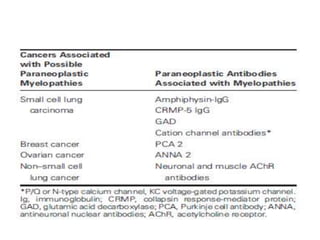
• Paraneoplastic syndromes
Systemic inflammatory disorders
• Ankylosing spondylitis
• Antiphospholipid antibody syndrome
• Behçet disease
• Mixed connective tissue disease
• Rheumatoid arthritis
• Sarcoidosis
• Scleroderma
• Sjögren syndrome
• Systemic lupus erythematosus
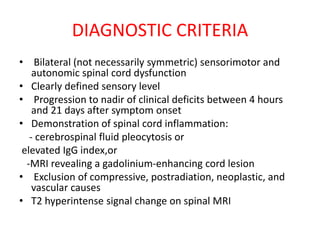
DIAGNOSTIC CRITERIA
• Bilateral (not necessarily symmetric) sensorimotor and
autonomic spinal cord dysfunction
• Clearly defined sensory level
• Progression to nadir of clinical deficits between 4 hours
and 21 days after symptom onset
• Demonstration of spinal cord inflammation:
- cerebrospinal fluid pleocytosis or
elevated IgG index,or
-MRI revealing a gadolinium-enhancing cord lesion
• Exclusion of compressive, postradiation, neoplastic, and
vascular causes
• T2 hyperintense signal change on spinal MRI
Other Investigations
• Serum anti-aquaporin-4 (AQP4)-IgG
autoantibodies, anti-myelin oligodendrocyte
glycoprotein (MOG) autoantibodies.
• Paraneoplastic panel
• human immunodeficiency antibodies, syphilis
serologies, serum antinuclear antibodies (ANA),
Ro/SSA, and La/SSB antibodies
• Salivary gland biopsy (if high suspicion for Sjögren
syndrome but negative SSA/SSB antibody)
• tests for viral etiologies (eg, West Nile virus,
enteroviruses, etc,) as appropriate.
• Nasopharyngeal swab for enteroviral polymerase
chain reaction (in setting of gray matter
predominant acute flaccid myelitis)
• Serum copper and ceruloplasmin (as copper
deficiency can mimic TM)
• Serum vitamin B12 ,vitamin E levels
• Spinal angiogram (in the setting of hyperacute
myelopathies that are thought to be consistent
with vascular myelopathies)
• Prothrombotic evaluation
Management
• high-dose intravenous glucocorticoids --
methylprednisolone (30 mg/kg up to 1000 mg
daily) or dexamethasone (up to 200 mg daily for
adults) for three to five days.
• plasma exchanges of 1.1 to 1.5 plasma volumes,
every other day for 10 days.
• Plasma exchange may be effective for acute
central nervous system demyelinating diseases
that fail to respond to high-dose glucocorticoid
treatment.
• patients with systemic autoimmune disease (eg,
SLE), the addition of cyclophosphamide(800 to
1200 mg/m2 administered as a single pulse dose)
to the treatment regimen improved outcomes.
• In the absence of systemic autoimmune disease,
plasma exchange plus methylprednisone was
superior to methylprednisone alone.
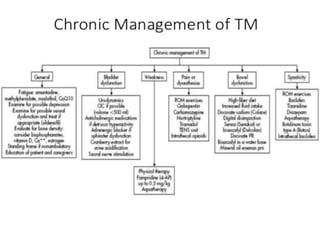
• patients with recurrent disease, chronic
immunomodulatory therapy should be given-
with mycophenolate (2 to 3 gm/daily)
or rituximab (1000 mg every 6 months)
Prognosis
• Most patients with idiopathic TM have at least a
partial recovery and it continues with exercise
and rehabilitation therapy over years.
• Some degree of persistent disability is common,
occurring in about 40 percent .
• Fallow 1/3 rd rule (complete recovery,residual
defects, No improvement from nadir)
• Recurrence in idiopathic TM -25-33%,disease-
associated TM- 70%.
Poor prognostic factors
1. rapid progression to maximal neurologic
deficit (<24 hours)
2. severe motor weakness
3. spinal shock
4. back pain as the initial complaint, and
5. sensory disturbances at the cervical level
Better prognostic factors
1. Older age
2. increased deep tendon reflexes
3. presence of the Babinski sign
recurrent disease predictors
• Multifocal or longitudinally extensive lesions in the spinal
cord on MRI
• Brain lesions on MRI
• +Presence of one or more autoantibodies (ANA,dsDNA,c-
ANCA)
• +Underlying mixed connective tissue disease
• + oligoclonal bands in the cerebrospinal fluid
• + neuromyelitis optica immunoglobulin G (NMO-IgG;
anti-aquaporin-4) antibody
• + anti-myelin oligodendrocyte glycoprotein (MOG)-IgG
antibody
?
• Imaging showed features of LETM(T9-T12),
CSF mild pleocytosis.
• VEPS normal,aquaporin, MOG ab negative
• elevated ANA,SS-A,dsDNA titres fulfillled SLICC
critera with DAI-46, APLA workup negative
• Paraneoplastic screening with CT neck,thorax,
abdomen negative.
• Considered an immune mediated
demyelination associated with SLE (secondary
transverse myelitis)
• She was initiated on immunomodulation with
steriods,rituximab,cyclophosphamide
Update
• The cytokine IL-6 may be a useful biomarker,
as the level of IL-6 in the CSF of acute TM
patients strongly correlates with and is highly
predictive of disability.
• Clinical trials testing the efficacy of promising
axonoprotective agents in combination with
intravenous steroids in the treatment of TM
are currently underway.
Summary
• Rapidly progressive myelopathy of any kind is a
medical emergency and requires immediate
evaluation.
• ATM is the focal inflammtory disease of the
spinalcord which evolves to nadir in 4hrs to 21
days.
• All patients with transverse myelitis should be
investigated for systemic autoimmune disease
and If positive consider immunomodulatory
treatment.
Questions
• TM , duration of clinical deficits progress to
nadir ?
• Spinal shock consists of sensory loss T/F ?
• _____ responsible for lhermittes sign in TM ?
• In TM most recovery occurs over ?
References
Thank you

Transvere myelitis

  • 1.
  • 2.
    • 23 yrold ms. Varsha ,nurse from chattisgarh k/c/o SLE presented with weakness of b/l LL and sensory loss below the umbilicus and bladder symptoms , onset to peak is 8 hrs on examination stable vitals with areflexic flaccid paraparesis with sensory level at T10. alopecia,platal ulcers, malar rash+ ?
  • 6.
    Compressive myelopathy • Discherniations, epidural masses or blood, vertebral body compression fractures, spondylosis, tuberculosis of spine. • They may present without overt evidence or history of trauma.
  • 7.
    Non inflammatory myelopathy ●Vascularmyelopathies Anterior spinal artery infarction,Spinal-dural arteriovenous fistula,Fibrocartilaginous embolism ●Metabolic and nutritional myelopathies Vitamin B12 ,Vitamin E , Copper deficiency,Nitrous oxide toxicity,Neurolathyrism and neurocassavism ●Neoplasms Intramedullary primary spinal cord tumor,Primary central nervous system lymphoma,Intravascular lymphoma ●Radiation myelitis
  • 8.
    Inflammatory myelopathy • infection(eg, enteroviruses, West Nile virus, herpes, central nervous system Lyme disease, mycoplasma) • systemic rheumatologic disease (eg, systemic lupus erythematosus, Sjögren syndrome) • paraneoplastic syndrome • a multifocal neurologic disease (eg, multiple sclerosis, neuromyelitis optica, acute disseminated encephalomyelopathy)
  • 11.
  • 14.
    Transverse myelitis • Acutetransverse myelitis (TM) is a rare acquired neuro-immune spinal cord disorder that can present with the rapid onset of weakness, sensory alterations, and bowel or bladder dysfunction.
  • 15.
    epidemiology • incidence betweenone to eight new cases per million people per year • bimodal peak between the ages of 10 to 19 years and 30 to 39 years has been reported • no gender or familial predisposition to TM, although women predominate among the cases that are associated with multiple sclerosis .
  • 16.
    classification • Idiopathic TM, Secondary (disease-associated) TM is most often related to a systemic inflammatory autoimmune condition. • Subtypes based on clinical severity, relative involvement of spinal cord gray matter and longitudinal extent of the spinal cord lesion. acute flaccid myelitis (AFM), acute partial TM, acute complete TM , longitudinally extensive TM (LETM).
  • 17.
    • acute completeTM-risk of multiple sclerosis is 5 - 10 % . • partial or incomplete myelitis – risk of multiple sclerosis is high. • Patients with acute partial myelitis + cranial MRI abnormalities of multiple sclerosis have a transition rate to multiple sclerosis over three to five years of 60 - 90 %. • In contrast, patients with acute partial myelitis + normal brain MRI develop multiple sclerosis at a rate of only 10 - 30 % over a similar time period .
  • 18.
    • Idiopathic TMusually occurs as a postinfectious complication and appears to result from an autoimmune process. • Secondary TM • Acquired central nervous system autoimmune disorders that can cause TM include : • TM as a part of the spectrum of multiple sclerosis. In some cases, TM is the initial demyelinating event (a clinically isolated syndrome [CIS]) that precedes clinically definite multiple sclerosis. • TM manifesting as a neuromyelitis optica spectrum disorder. • TM may be seen in patients with acute disseminated encephalomyelitis, a monophasic demyelinating disease with multifocal neurologic symptoms and encephalopathy.
  • 19.
  • 23.
    Other CNS conditions •Infections including enteroviruses, West Nile virus, herpes viruses, HIV, human T-cell leukemia virus type 1 (HTLV-1), Zika virus , neuroborreliosis (Lyme), Mycoplasma, and Treponema pallidum . • In general, infectious causes of spinal cord dysfunction are rare, but outbreaks of acute flaccid myelitis (AFM) serve as a reminder of the myelitis outbreaks seen during poliovirus outbreaks. • Neurosarcoidosis • Paraneoplastic syndromes
  • 25.
    Systemic inflammatory disorders •Ankylosing spondylitis • Antiphospholipid antibody syndrome • Behçet disease • Mixed connective tissue disease • Rheumatoid arthritis • Sarcoidosis • Scleroderma • Sjögren syndrome • Systemic lupus erythematosus
  • 26.
    DIAGNOSTIC CRITERIA • Bilateral(not necessarily symmetric) sensorimotor and autonomic spinal cord dysfunction • Clearly defined sensory level • Progression to nadir of clinical deficits between 4 hours and 21 days after symptom onset • Demonstration of spinal cord inflammation: - cerebrospinal fluid pleocytosis or elevated IgG index,or -MRI revealing a gadolinium-enhancing cord lesion • Exclusion of compressive, postradiation, neoplastic, and vascular causes • T2 hyperintense signal change on spinal MRI
  • 31.
    Other Investigations • Serumanti-aquaporin-4 (AQP4)-IgG autoantibodies, anti-myelin oligodendrocyte glycoprotein (MOG) autoantibodies. • Paraneoplastic panel • human immunodeficiency antibodies, syphilis serologies, serum antinuclear antibodies (ANA), Ro/SSA, and La/SSB antibodies • Salivary gland biopsy (if high suspicion for Sjögren syndrome but negative SSA/SSB antibody) • tests for viral etiologies (eg, West Nile virus, enteroviruses, etc,) as appropriate.
  • 32.
    • Nasopharyngeal swabfor enteroviral polymerase chain reaction (in setting of gray matter predominant acute flaccid myelitis) • Serum copper and ceruloplasmin (as copper deficiency can mimic TM) • Serum vitamin B12 ,vitamin E levels • Spinal angiogram (in the setting of hyperacute myelopathies that are thought to be consistent with vascular myelopathies) • Prothrombotic evaluation
  • 33.
    Management • high-dose intravenousglucocorticoids -- methylprednisolone (30 mg/kg up to 1000 mg daily) or dexamethasone (up to 200 mg daily for adults) for three to five days. • plasma exchanges of 1.1 to 1.5 plasma volumes, every other day for 10 days. • Plasma exchange may be effective for acute central nervous system demyelinating diseases that fail to respond to high-dose glucocorticoid treatment.
  • 34.
    • patients withsystemic autoimmune disease (eg, SLE), the addition of cyclophosphamide(800 to 1200 mg/m2 administered as a single pulse dose) to the treatment regimen improved outcomes. • In the absence of systemic autoimmune disease, plasma exchange plus methylprednisone was superior to methylprednisone alone. • patients with recurrent disease, chronic immunomodulatory therapy should be given- with mycophenolate (2 to 3 gm/daily) or rituximab (1000 mg every 6 months)
  • 36.
    Prognosis • Most patientswith idiopathic TM have at least a partial recovery and it continues with exercise and rehabilitation therapy over years. • Some degree of persistent disability is common, occurring in about 40 percent . • Fallow 1/3 rd rule (complete recovery,residual defects, No improvement from nadir) • Recurrence in idiopathic TM -25-33%,disease- associated TM- 70%.
  • 37.
    Poor prognostic factors 1.rapid progression to maximal neurologic deficit (<24 hours) 2. severe motor weakness 3. spinal shock 4. back pain as the initial complaint, and 5. sensory disturbances at the cervical level
  • 38.
    Better prognostic factors 1.Older age 2. increased deep tendon reflexes 3. presence of the Babinski sign
  • 39.
    recurrent disease predictors •Multifocal or longitudinally extensive lesions in the spinal cord on MRI • Brain lesions on MRI • +Presence of one or more autoantibodies (ANA,dsDNA,c- ANCA) • +Underlying mixed connective tissue disease • + oligoclonal bands in the cerebrospinal fluid • + neuromyelitis optica immunoglobulin G (NMO-IgG; anti-aquaporin-4) antibody • + anti-myelin oligodendrocyte glycoprotein (MOG)-IgG antibody
  • 40.
    ? • Imaging showedfeatures of LETM(T9-T12), CSF mild pleocytosis. • VEPS normal,aquaporin, MOG ab negative • elevated ANA,SS-A,dsDNA titres fulfillled SLICC critera with DAI-46, APLA workup negative • Paraneoplastic screening with CT neck,thorax, abdomen negative.
  • 41.
    • Considered animmune mediated demyelination associated with SLE (secondary transverse myelitis) • She was initiated on immunomodulation with steriods,rituximab,cyclophosphamide
  • 42.
    Update • The cytokineIL-6 may be a useful biomarker, as the level of IL-6 in the CSF of acute TM patients strongly correlates with and is highly predictive of disability. • Clinical trials testing the efficacy of promising axonoprotective agents in combination with intravenous steroids in the treatment of TM are currently underway.
  • 43.
    Summary • Rapidly progressivemyelopathy of any kind is a medical emergency and requires immediate evaluation. • ATM is the focal inflammtory disease of the spinalcord which evolves to nadir in 4hrs to 21 days. • All patients with transverse myelitis should be investigated for systemic autoimmune disease and If positive consider immunomodulatory treatment.
  • 44.
    Questions • TM ,duration of clinical deficits progress to nadir ? • Spinal shock consists of sensory loss T/F ? • _____ responsible for lhermittes sign in TM ? • In TM most recovery occurs over ?
  • 45.
  • 46.