Transition into
       research skills


    Jane Challinor
School of Social Sciences
Stereotype of student carrying
  out research at University
Where we want/ need them to be
researching?
On line searching
requires new skills
Building skills..
      ..from the
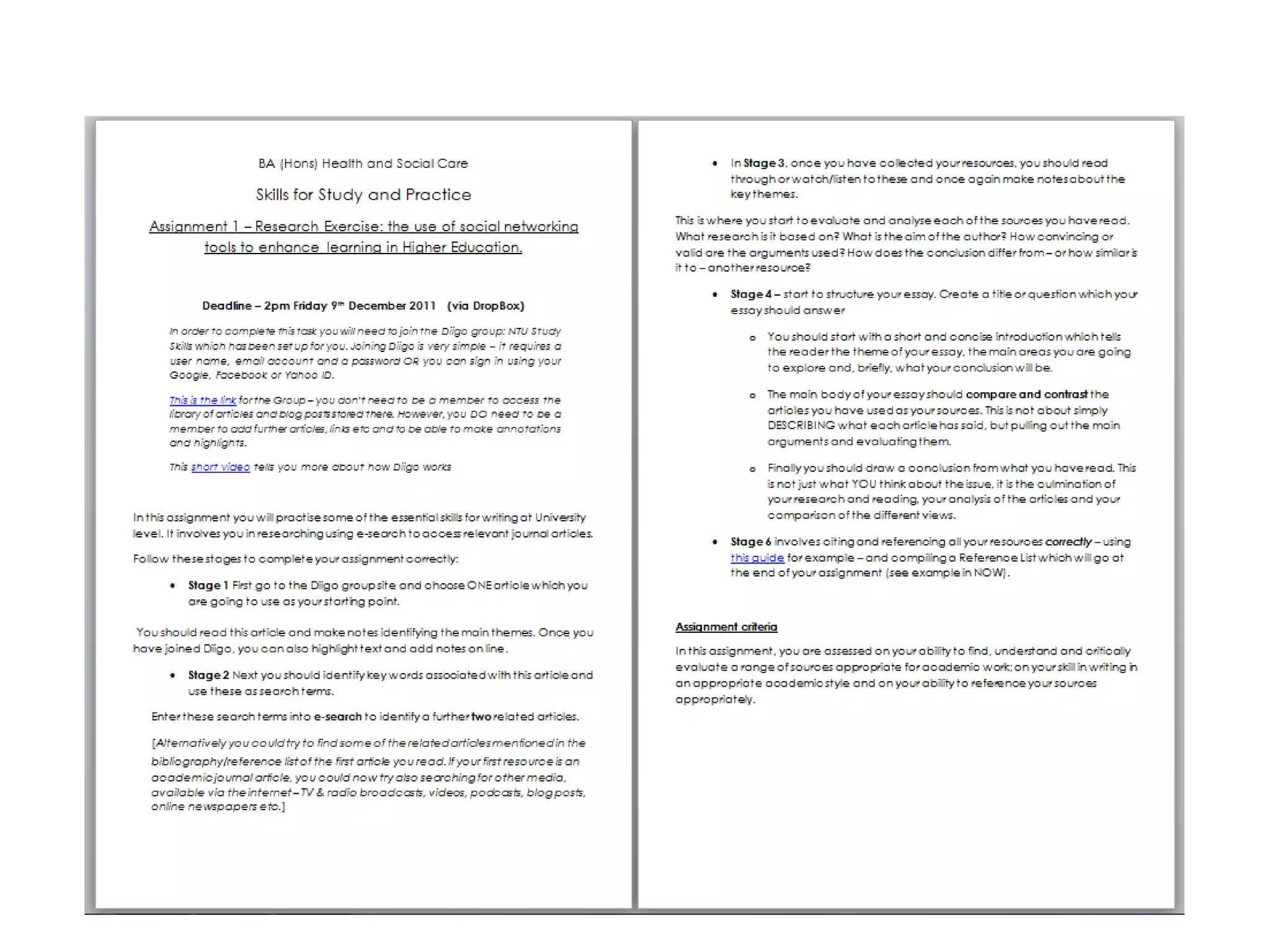
Stage 1 First go to the Diigo group site and choose ONE article
which you are going to use as your starting point.
 You should read this article and make notes identifying the main
themes.
Stage 2 Next you should identify key words associated with this
article and use these as search terms.
Enter these search terms into e-search to identify a further two related
articles.

In Stage 3, once you have collected your resources, you should read
through or watch/listen to these and once again make notes about
the key themes.

Stage 4 - This is where you start to evaluate and analyse each of
the sources you have read. What research is it based on? What is the
aim of the author? How convincing or valid are the arguments used?
How does the conclusion differ from – or how similar is it to – another
resource?
Stage 5 – start to structure your essay. Create a title or question
which your essay should answer
•You should start with a short and concise introduction which tells
the reader the theme of your essay, the main areas you are going to
explore and, briefly, what your conclusion will be.
•The main body of your essay should compare and contrast the
articles you have used as your sources. This is not about simply
DESCRIBING what each article has said, but pulling out the main
arguments and evaluating them.
•Finally you should draw a conclusion from what you have
read. This is not just what YOU think about the issue, it is the
culmination of your research and reading, your analysis of the
articles and your comparison of the different views.

Stage 6 involves citing and referencing all your resources
correctly and compiling a Reference List which will go at the end of
your assignment.
Starting with bookmarked
articles & other web based
resources using DIIGO
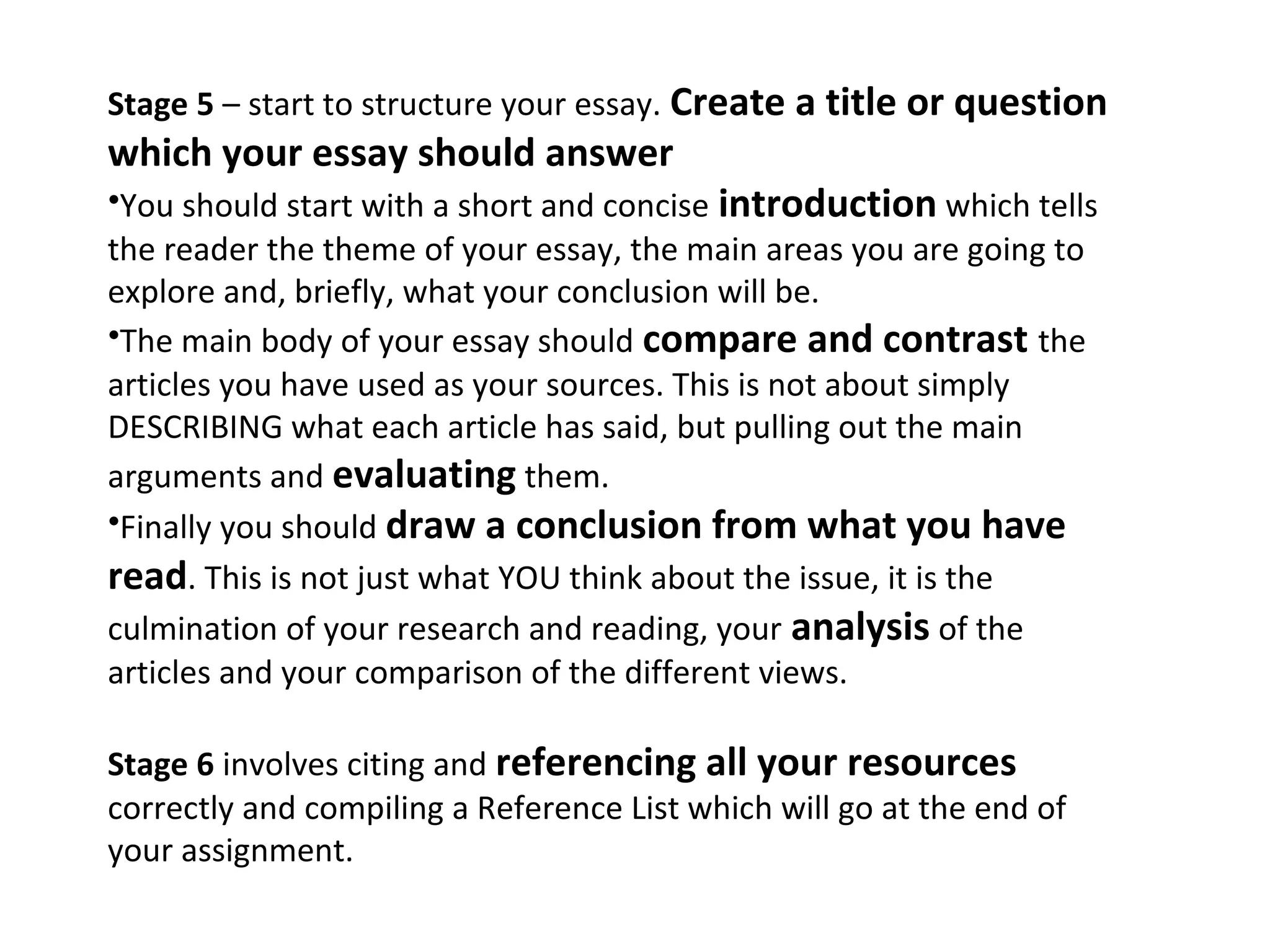
Screen Capture tutorial on
using Library One Search
A first step
towards
designing a
research
question ……..

                http://www.flickr.com/photos/niznoz/
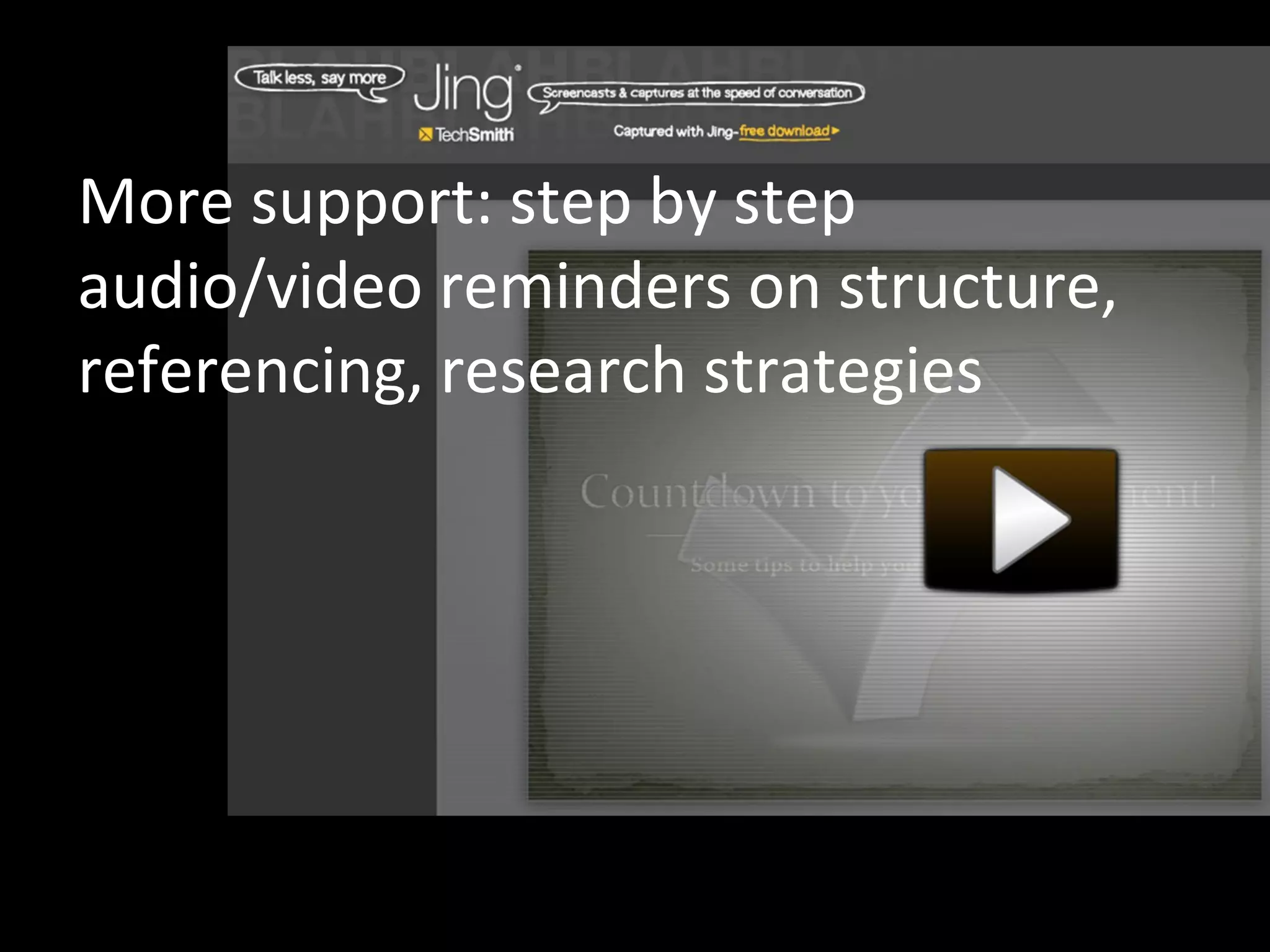
More support: step by step
audio/video reminders on structure,
referencing, research strategies
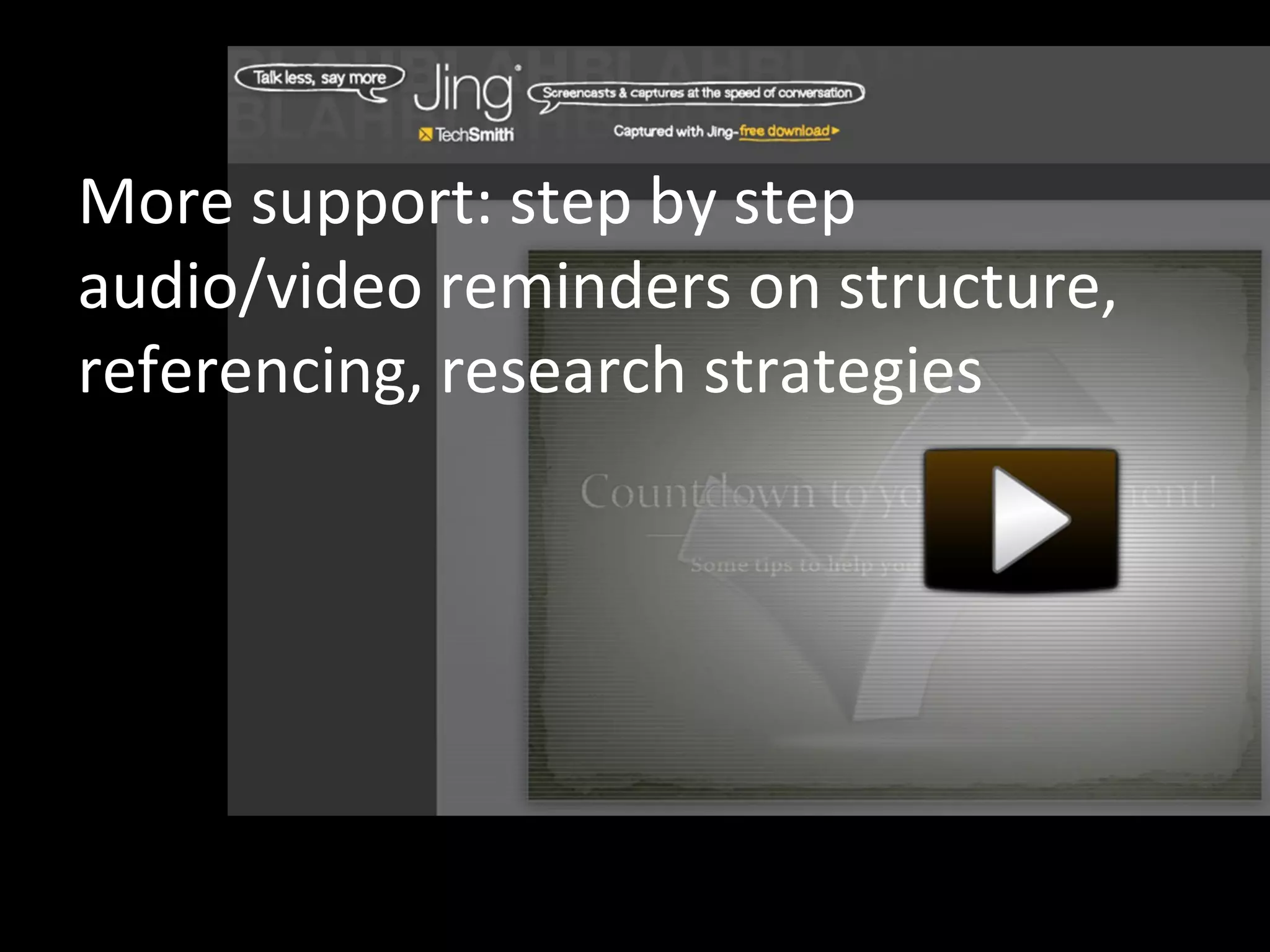
More support: step by step
audio/video reminders on structure,
referencing, research strategies
http://www.flickr.com/photos/r-butler/


Outcomes:
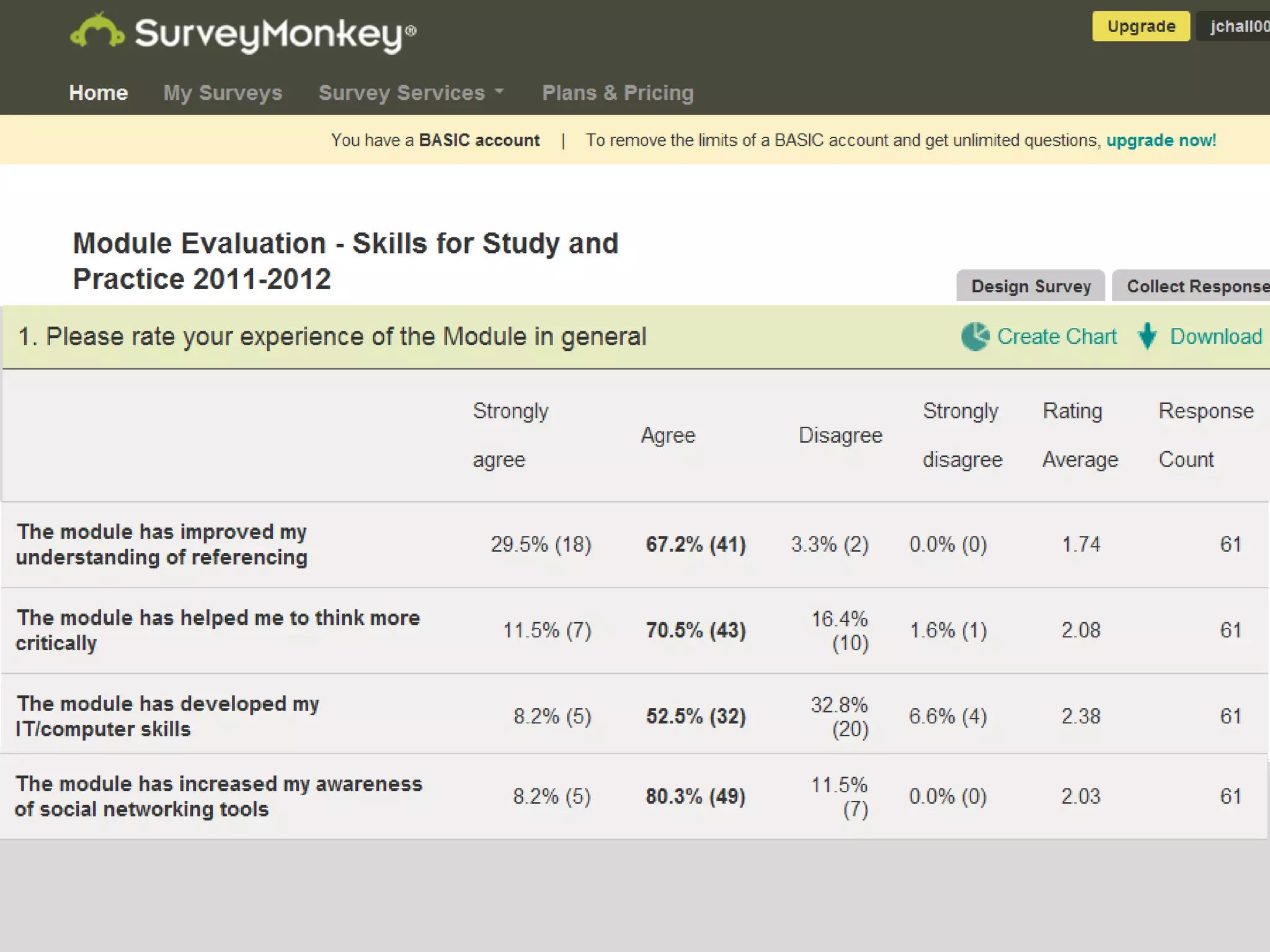
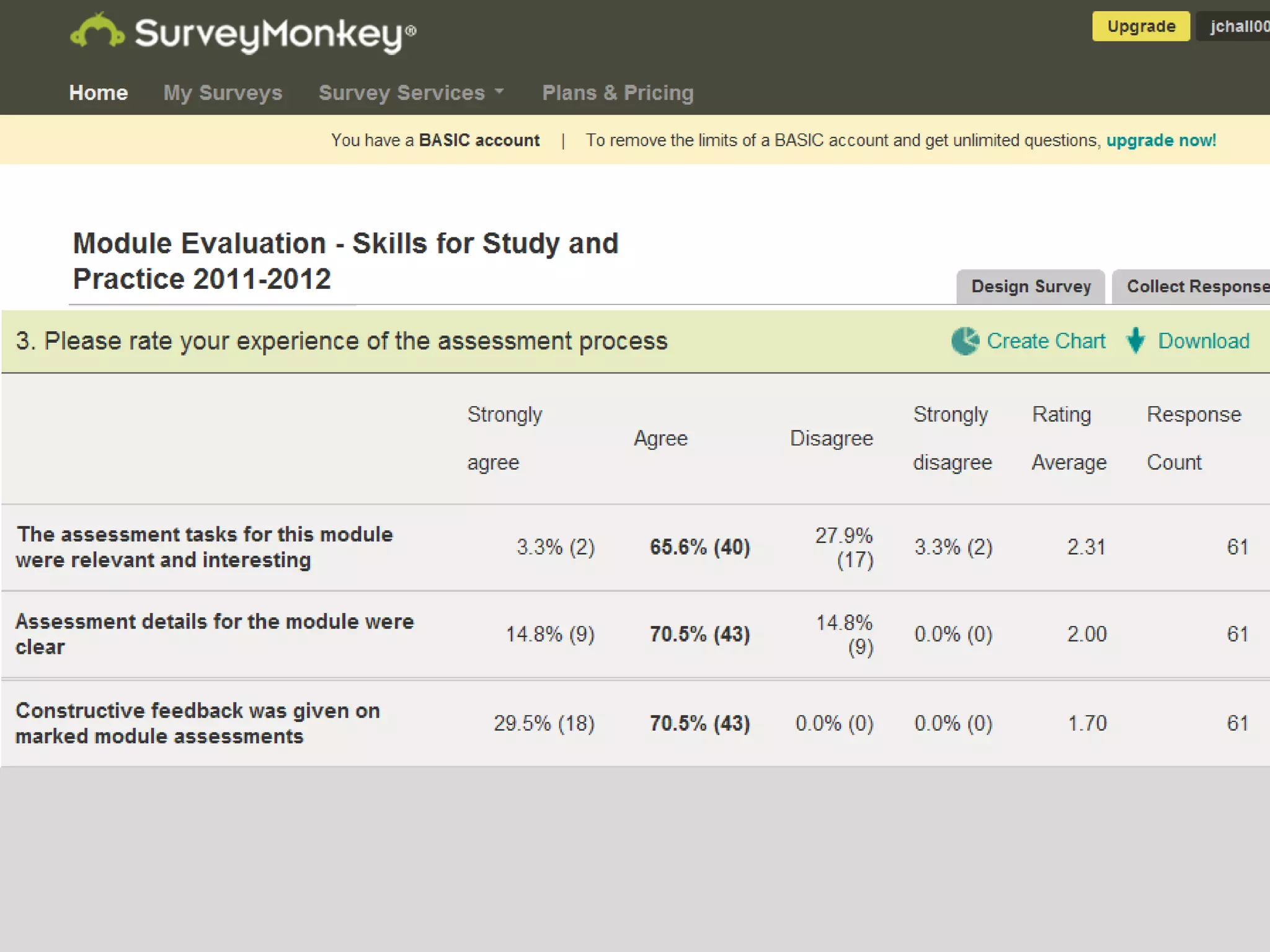
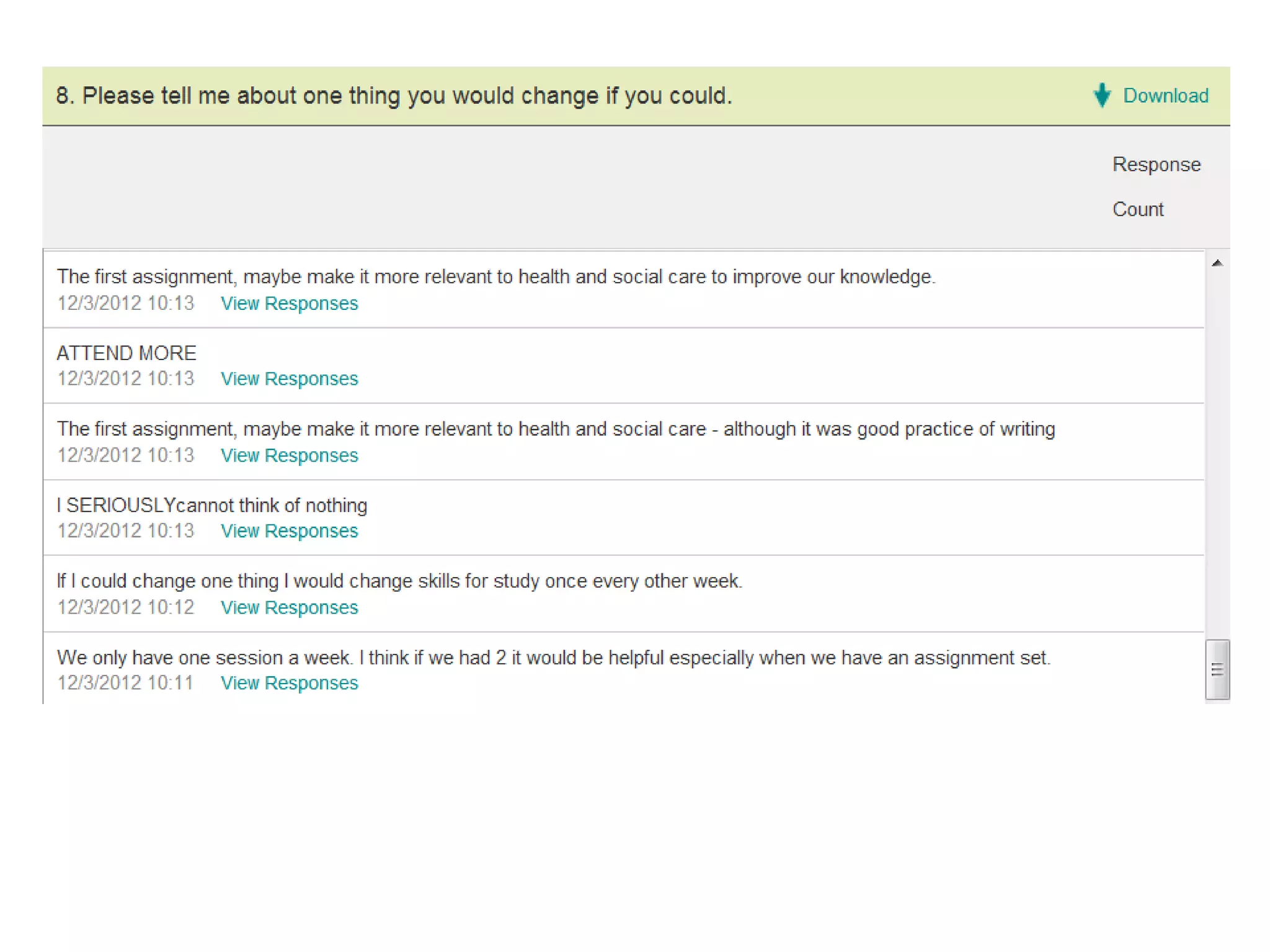
•module evaluation
• students’ assignments
http://www.flickr.com/photos/r-butler/


Outcomes:
•module evaluation
• students’ assignments
http://www.flickr.com/photos/r-butler/


Outcomes:
•module evaluation
• students’ assignments
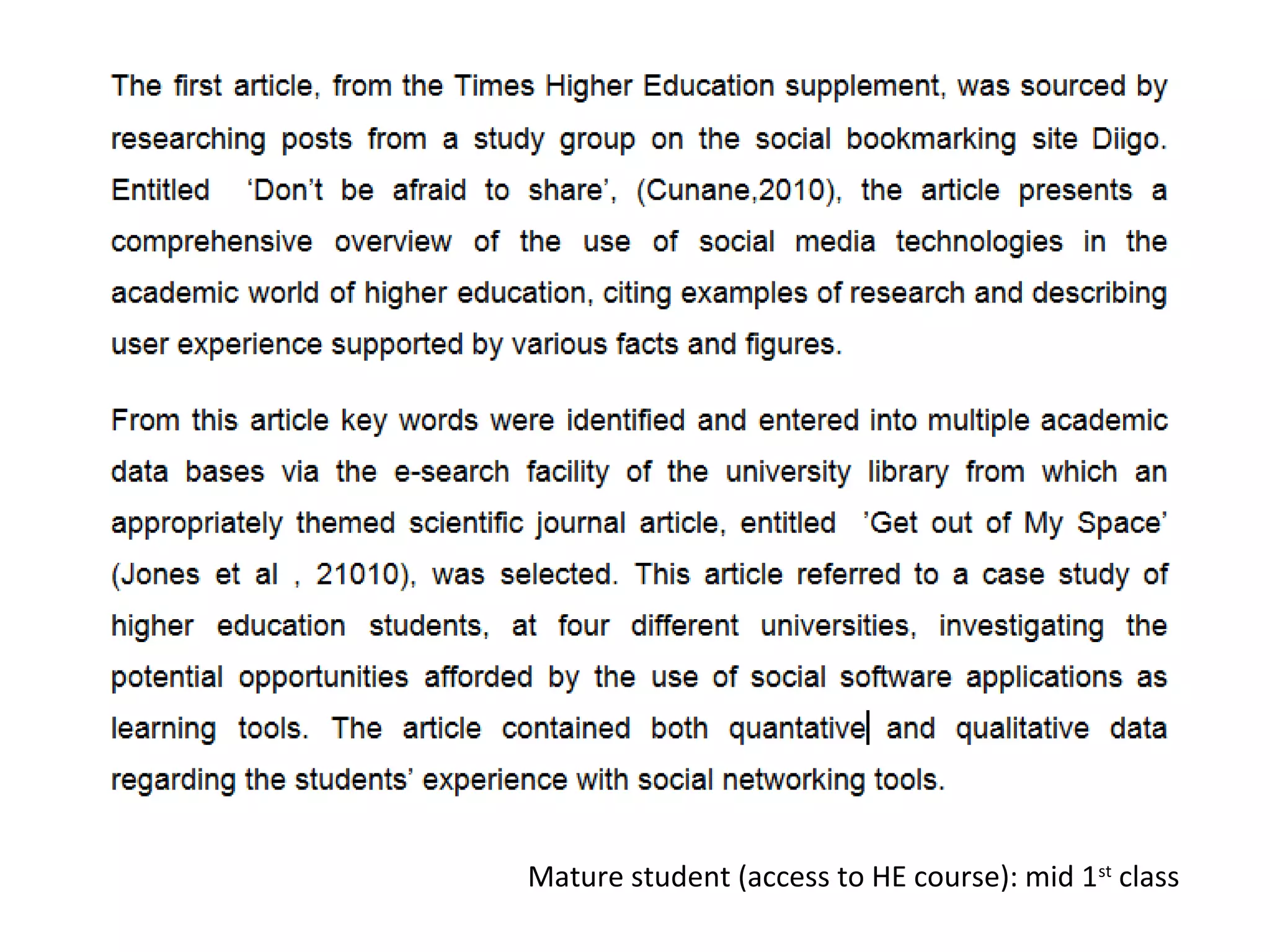
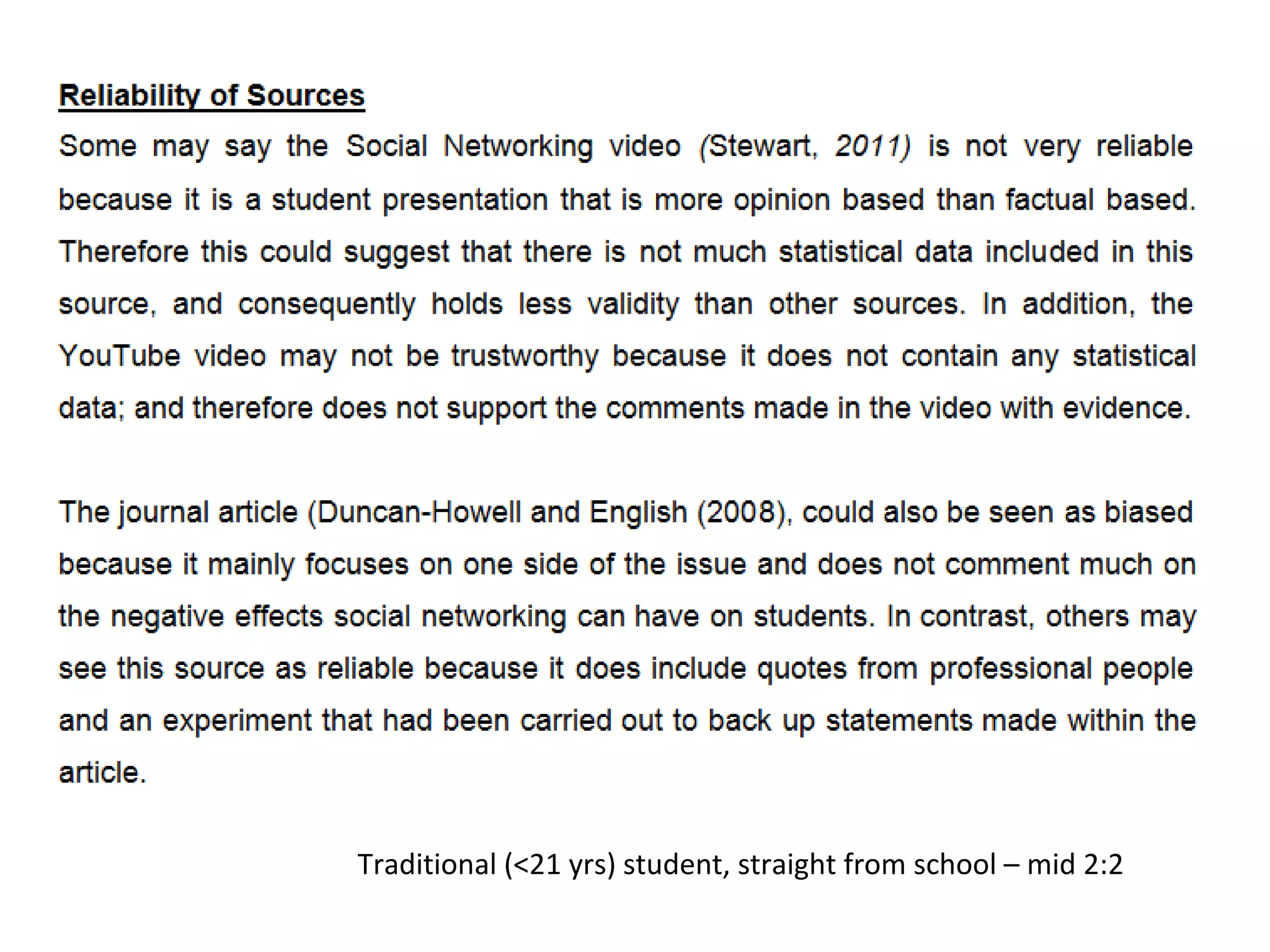
Mature student (access to HE course): mid 1st class
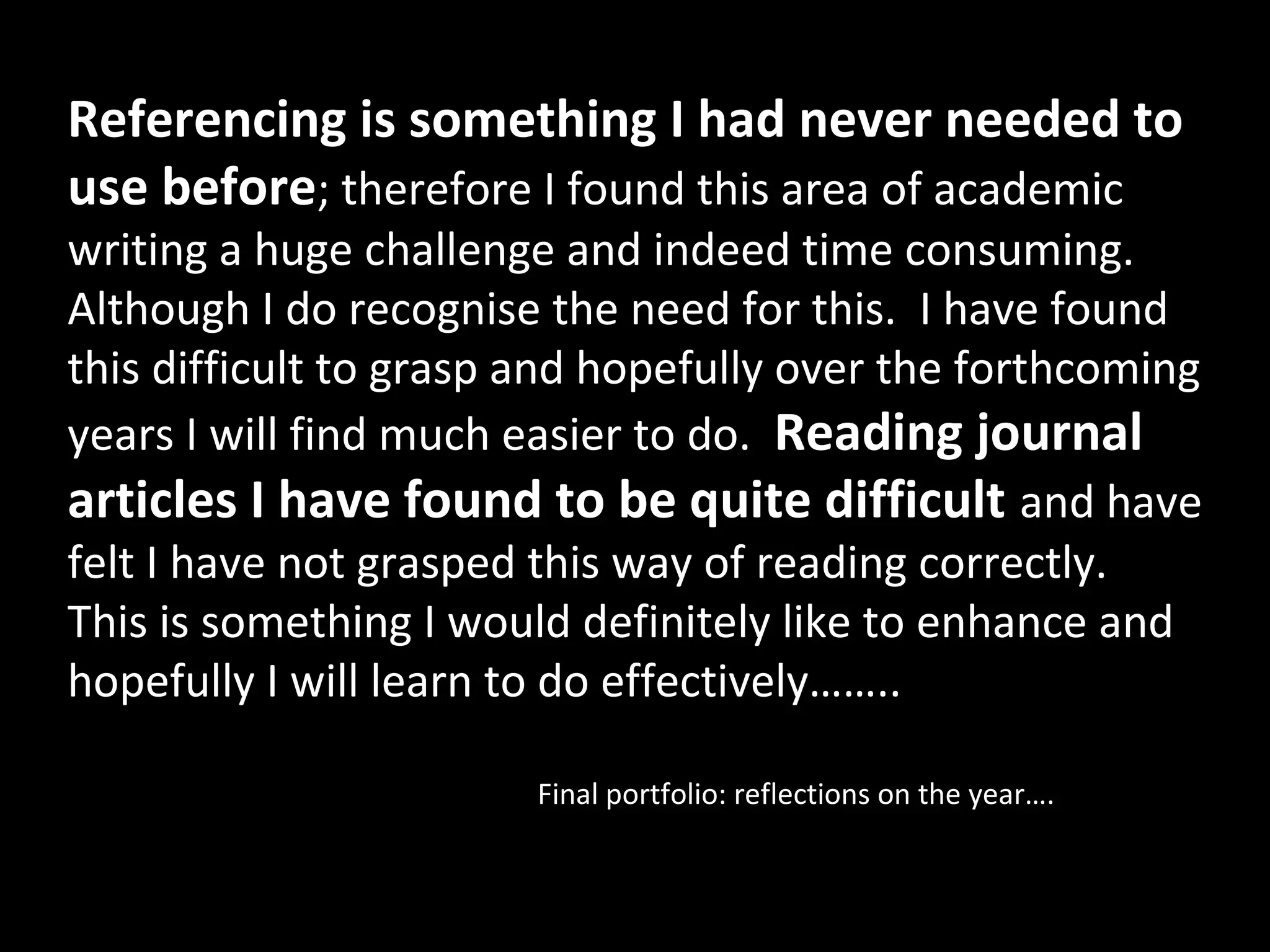
Traditional (<21 yrs) student, straight from school – mid 2:2
Referencing is something I had never needed to
use before; therefore I found this area of academic
writing a huge challenge and indeed time consuming.
Although I do recognise the need for this. I have found
this difficult to grasp and hopefully over the forthcoming
years I will find much easier to do. Reading journal
articles I have found to be quite difficult and have
felt I have not grasped this way of reading correctly.
This is something I would definitely like to enhance and
hopefully I will learn to do effectively……..

                        Final portfolio: reflections on the year….
……[the module] has helped me develop my research
skills by learning about different methods of collecting
data, writing styles, analysing findings and organising
workloads to understand literature by breaking it               down
to easily get a better understanding. The
research skills I have developed from this module have
widened my way of using IT in order to achieve valuable
outcome and interesting         ways of researching.

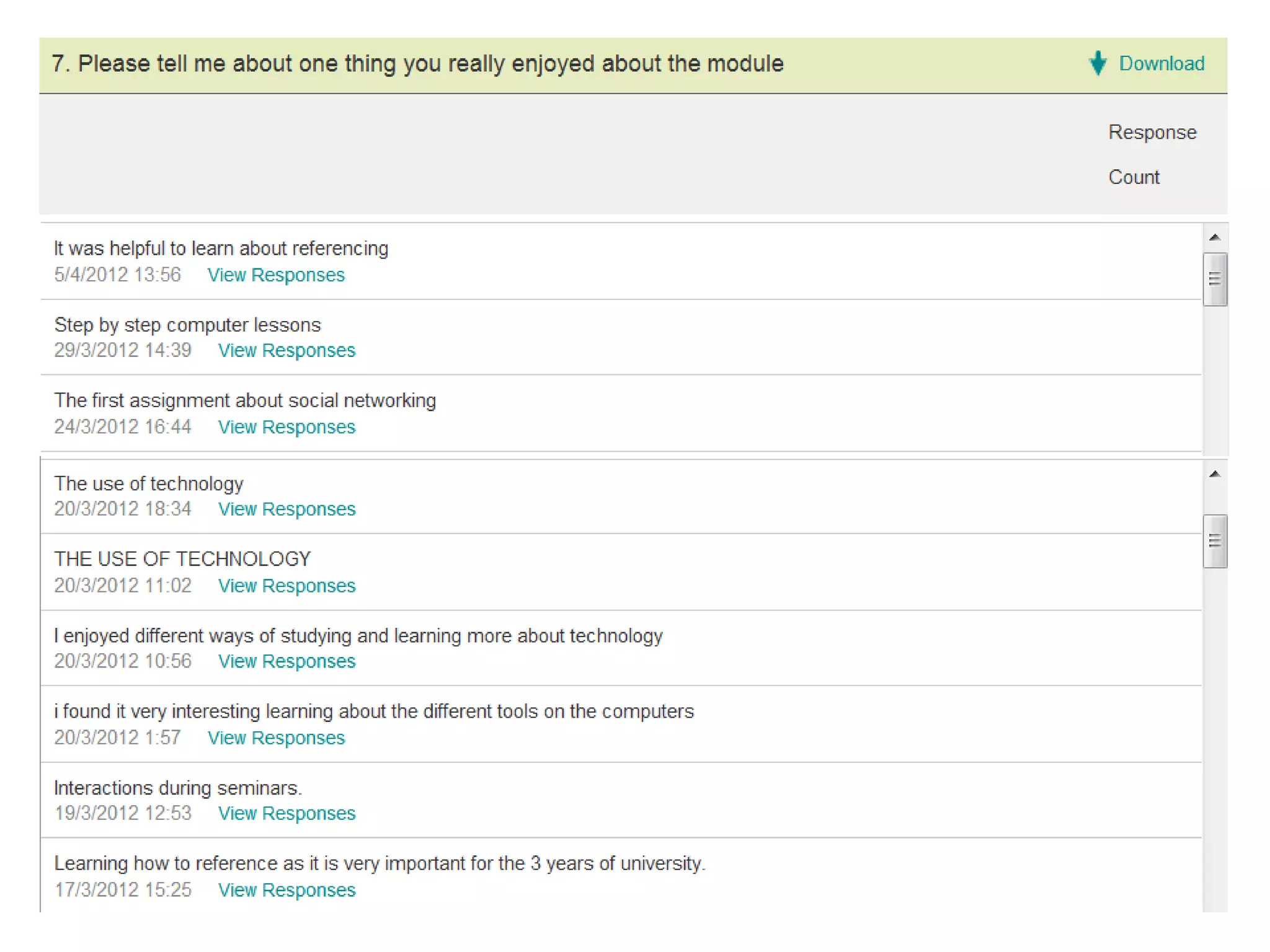
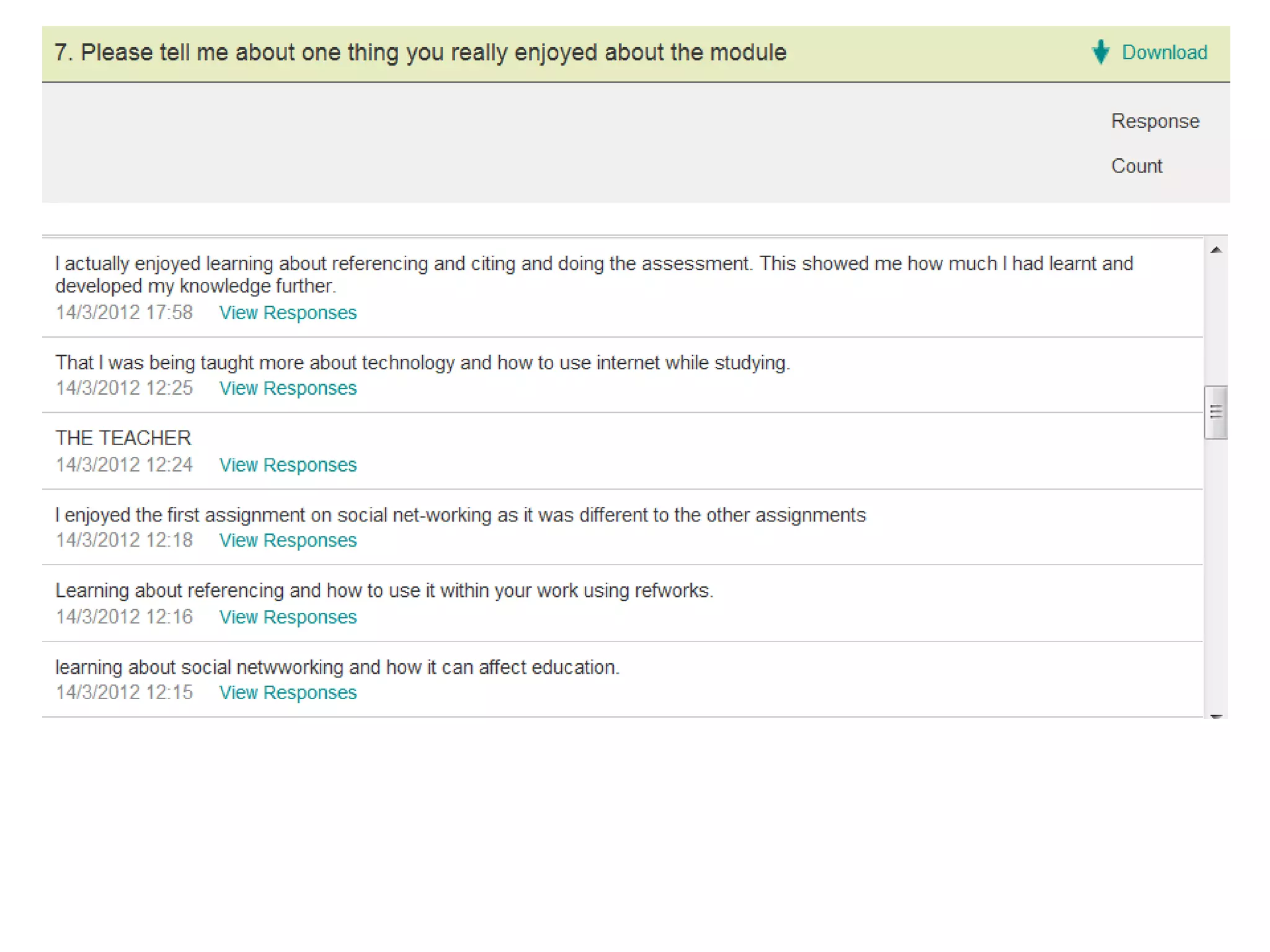
                   …. and on the module
                   Mature student returning to study after 10 year gap

Transition into research skills

  • 1.
    Transition into research skills Jane Challinor School of Social Sciences
  • 2.
    Stereotype of studentcarrying out research at University
  • 3.
    Where we want/need them to be researching?
  • 4.
  • 5.
  • 7.
    Stage 1 Firstgo to the Diigo group site and choose ONE article which you are going to use as your starting point. You should read this article and make notes identifying the main themes. Stage 2 Next you should identify key words associated with this article and use these as search terms. Enter these search terms into e-search to identify a further two related articles. In Stage 3, once you have collected your resources, you should read through or watch/listen to these and once again make notes about the key themes. Stage 4 - This is where you start to evaluate and analyse each of the sources you have read. What research is it based on? What is the aim of the author? How convincing or valid are the arguments used? How does the conclusion differ from – or how similar is it to – another resource?
  • 8.
    Stage 5 –start to structure your essay. Create a title or question which your essay should answer •You should start with a short and concise introduction which tells the reader the theme of your essay, the main areas you are going to explore and, briefly, what your conclusion will be. •The main body of your essay should compare and contrast the articles you have used as your sources. This is not about simply DESCRIBING what each article has said, but pulling out the main arguments and evaluating them. •Finally you should draw a conclusion from what you have read. This is not just what YOU think about the issue, it is the culmination of your research and reading, your analysis of the articles and your comparison of the different views. Stage 6 involves citing and referencing all your resources correctly and compiling a Reference List which will go at the end of your assignment.
  • 9.
    Starting with bookmarked articles& other web based resources using DIIGO
  • 10.
    Screen Capture tutorialon using Library One Search
  • 11.
    A first step towards designinga research question …….. http://www.flickr.com/photos/niznoz/
  • 13.
    More support: stepby step audio/video reminders on structure, referencing, research strategies
  • 14.
    More support: stepby step audio/video reminders on structure, referencing, research strategies
  • 15.
  • 16.
  • 22.
  • 23.
    Mature student (accessto HE course): mid 1st class
  • 24.
    Traditional (<21 yrs)student, straight from school – mid 2:2
  • 25.
    Referencing is somethingI had never needed to use before; therefore I found this area of academic writing a huge challenge and indeed time consuming. Although I do recognise the need for this. I have found this difficult to grasp and hopefully over the forthcoming years I will find much easier to do. Reading journal articles I have found to be quite difficult and have felt I have not grasped this way of reading correctly. This is something I would definitely like to enhance and hopefully I will learn to do effectively…….. Final portfolio: reflections on the year….
  • 26.
    ……[the module] hashelped me develop my research skills by learning about different methods of collecting data, writing styles, analysing findings and organising workloads to understand literature by breaking it down to easily get a better understanding. The research skills I have developed from this module have widened my way of using IT in order to achieve valuable outcome and interesting ways of researching. …. and on the module Mature student returning to study after 10 year gap