Hello
@richardthyde
Design
approach
Where
next?
Game
thinking
Quick
demo
01
Game thinking
He said the
G word
What % of information
do knowledge workers
need in their heads to
do their job?
1986: 75%
1997: 15-20%
2006: 8-10%
2016: 5%?
Today’s workers can devote only 1% of
their working week to professional
development and learning
67% of millennials
believe they can find
a YouTube video for
anything they want
to learn
[Google]
[Unicorn, 2016]
IMMERSION MULTI-TASKING
ENGAGEMENT
30% 16% 41%
28% 48% 25%
18% 34% 22%
10% 67% 5%
8% 32% 11%
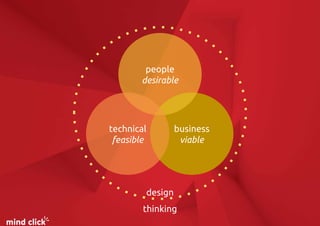
design
thinking
business
viable
people
desirable
technical
feasible
02
Design approach
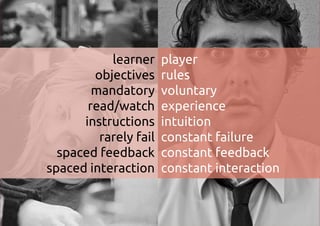
learner
objectives
mandatory
read/watch
instructions
rarely fail
spaced feedback
spaced interaction
player
rules
voluntary
experience
intuition
constant failure
constant feedback
constant interaction
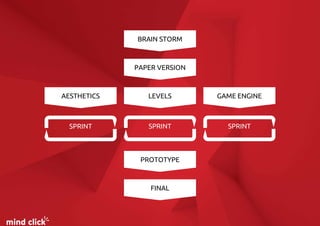
BRAIN STORM
LEVELSAESTHETICS GAME ENGINE
PAPER VERSION
PROTOTYPE
FINAL
SPRINT SPRINT SPRINT
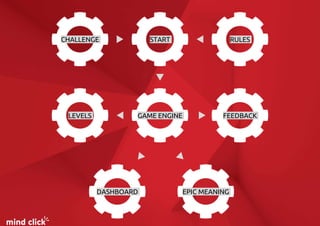
GAME ENGINE
CHALLENGE RULES
LEVELS FEEDBACK
START
EPIC MEANINGDASHBOARD
03
Quick demo
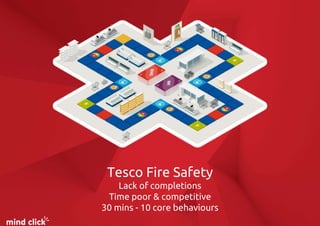
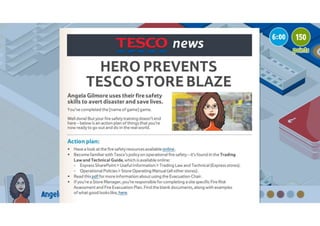
Tesco Fire Safety
Lack of completions
Time poor & competitive
30 mins - 10 core behaviours
04
Where next?
Boots Christmas Campaign
10 product lines - 15 mins
Collaborative development
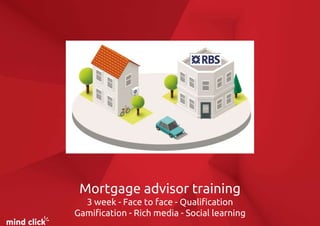
Mortgage advisor training
3 week - Face to face - Qualification
Gamification - Rich media - Social learning
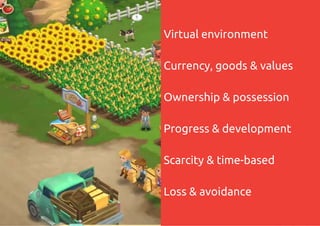
Virtual environment
Currency, goods & values
Ownership & possession
Progress & development
Scarcity & time-based
Loss & avoidance
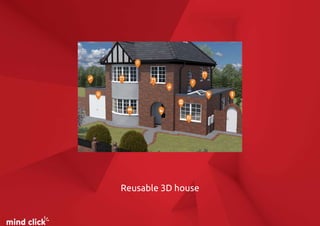
Reusable 3D house
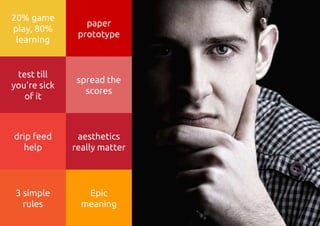
Epic
meaning
3 simple
rules
drip feed
help
aesthetics
really matter
test till
you’re sick
of it
spread the
scores
20% game
play, 80%
learning
paper
prototype
Thank
you
@richardthyde
Play the game
http://hubs.ly/H03dQ2x0

Transforming Learning using a Game Engine with Articulate Storyline

Editor's Notes

  • #4 We are very aware of the trends in our industry But we shouldn’t follow the crowd for the sake of it Some of us more seasoned people have seen fashions come and go We don’t want our best ideas to be thrown out with the flares and tank tops of the past
  • #6 Are most challenges related to this guy? Millennials in the workplace are forcing a change We know how they prefer to learn We know how little time they are prepared to devote to it
  • #7 Unicorn study comparing different technologies Difference between game play, TV, internet, music and social media Immersion - I don’t think about anything else Multi-tasking - I will be doing something else Engagement - I find it difficult to do anything else The fact is that games are more immersive, anti-multi-tasking and engaging than all other technologies Real customer example: Reported course kept disappearing for a learner They were watching YouTube videos Every time the video changed, so did the learning in the browser Simple solution, pay attention!
  • #8 This is a model from design thinking It’s too easy to focus on the people aspect But we need to make solutions feasible and viable
  • #10 Another important distinction The gamer is different to a learner Content is pushed to learners Content is discovered by gamers Very different design approaches
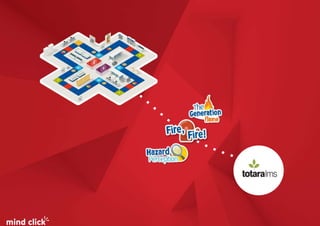
  • #15 A game engine for Tesco and others
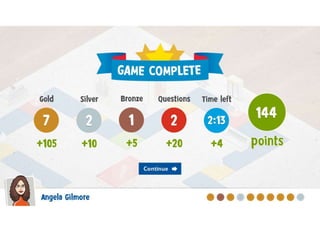
  • #16 Final score screen
  • #17 Final certificate
  • #19 A game engine for Tesco and others
  • #24 A reusable 3D house for Aviva Also building a more advanced version for Redraw Homes
  • #25 Balance game play - enough to not interfere with learning Help - progressive disclosure Epic meaning - what will make people finish? Scoring - hard to get right but hard to fail Paper prototype - simple and no excuse not to do Aesthetics matter - game and content need to be coherent Rules - 10 min game needs to be simple Test - very early with variety of stakeholders