Sulaim b. Ab Qais                                                                                    2012


                                        DESIGN A TRANSFORMER

 This paper guides a simple and practical calculation in designing a transformer. The hands-on work can
            be understood from this video http://www.youtube.com/watch?v=s6NyTprQCBI


           MATERIALS

Masking tape, wax paper, copper cable, magnet copper wire, sandpaper, silicon-iron sheet, formwork,
soldering wire

           CALCULATION

1. Determine the load power, P.

Let say,

           P=300W

2. Find the primary winding current. Malaysia using 230 VAC, +10%,-6%, thus the current would be;

           Ip = P/V

           Ip = 200W/230V

            = 0.87 A, thus the wire that we will using for primary winding is 0.26 mm2

Let say the secondary winding voltage, Vs = 40 VAC

           Is = 200W/40V

            = 5 A, thus the wire that we will using for secondary windings is 1.31 mm2

3. Find the size of the cable for primary windings and secondary windings.

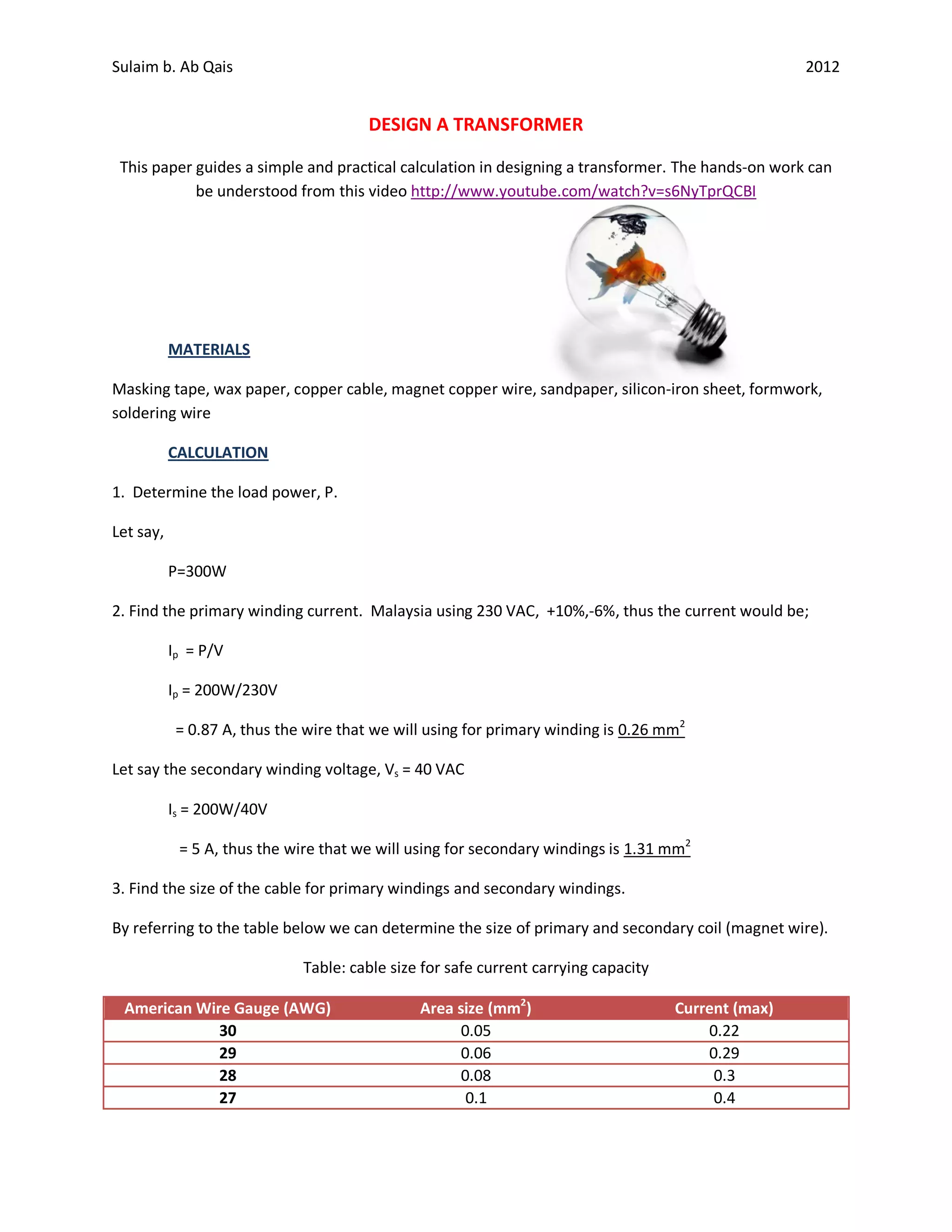
By referring to the table below we can determine the size of primary and secondary coil (magnet wire).

                              Table: cable size for safe current carrying capacity

 American Wire Gauge (AWG)                     Area size (mm2)                       Current (max)
             30                                      0.05                                0.22
             29                                      0.06                                0.29
             28                                      0.08                                 0.3
             27                                       0.1                                 0.4
Sulaim b. Ab Qais                                                                                  2012


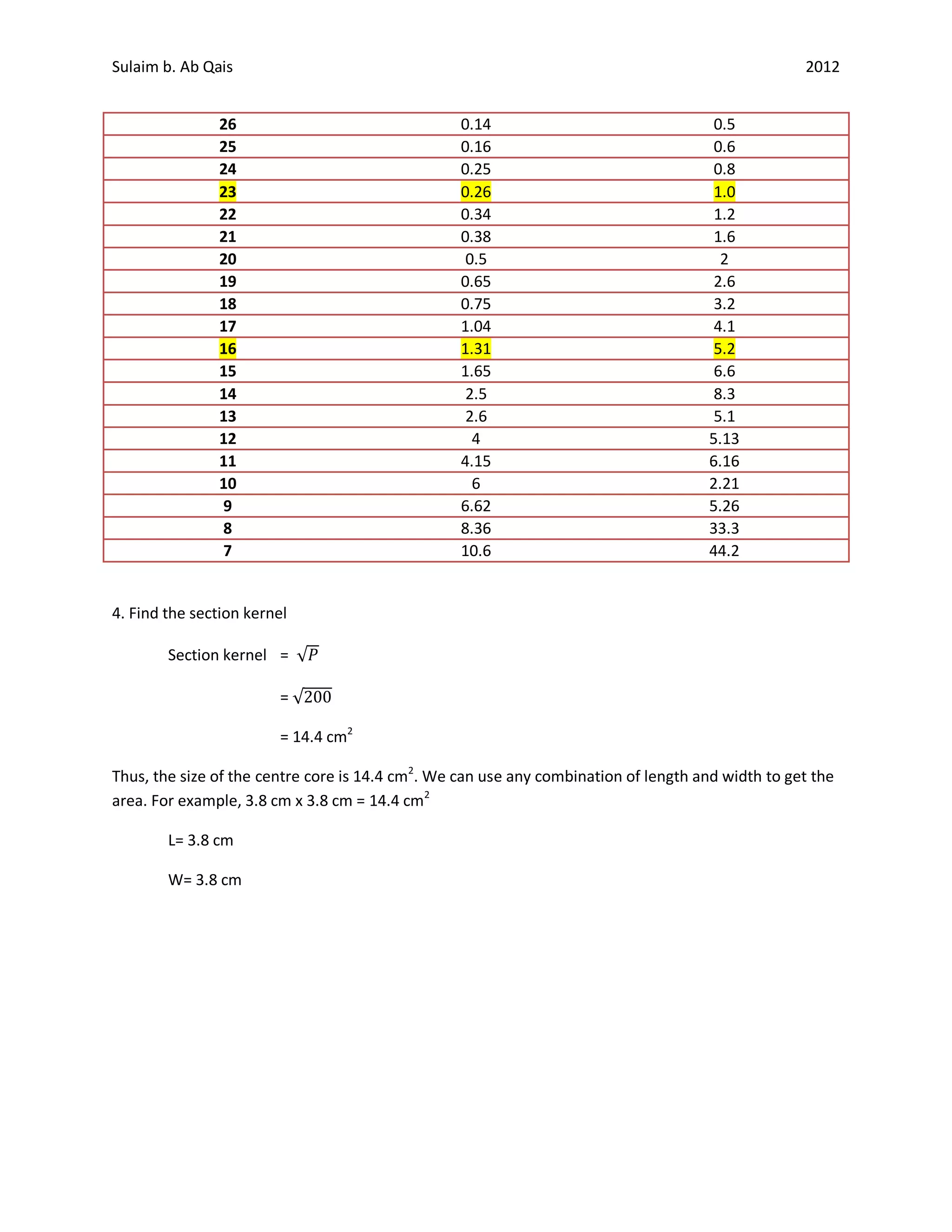
               26                                 0.14                                 0.5
               25                                 0.16                                 0.6
               24                                 0.25                                 0.8
               23                                 0.26                                 1.0
               22                                 0.34                                 1.2
               21                                 0.38                                 1.6
               20                                  0.5                                  2
               19                                 0.65                                 2.6
               18                                 0.75                                 3.2
               17                                 1.04                                 4.1
               16                                 1.31                                 5.2
               15                                 1.65                                 6.6
               14                                  2.5                                 8.3
               13                                  2.6                                 5.1
               12                                   4                                 5.13
               11                                 4.15                                6.16
               10                                   6                                 2.21
               9                                  6.62                                5.26
               8                                  8.36                                33.3
               7                                  10.6                                44.2


4. Find the section kernel

        Section kernel =     𝑃

                        = 200

                        = 14.4 cm2

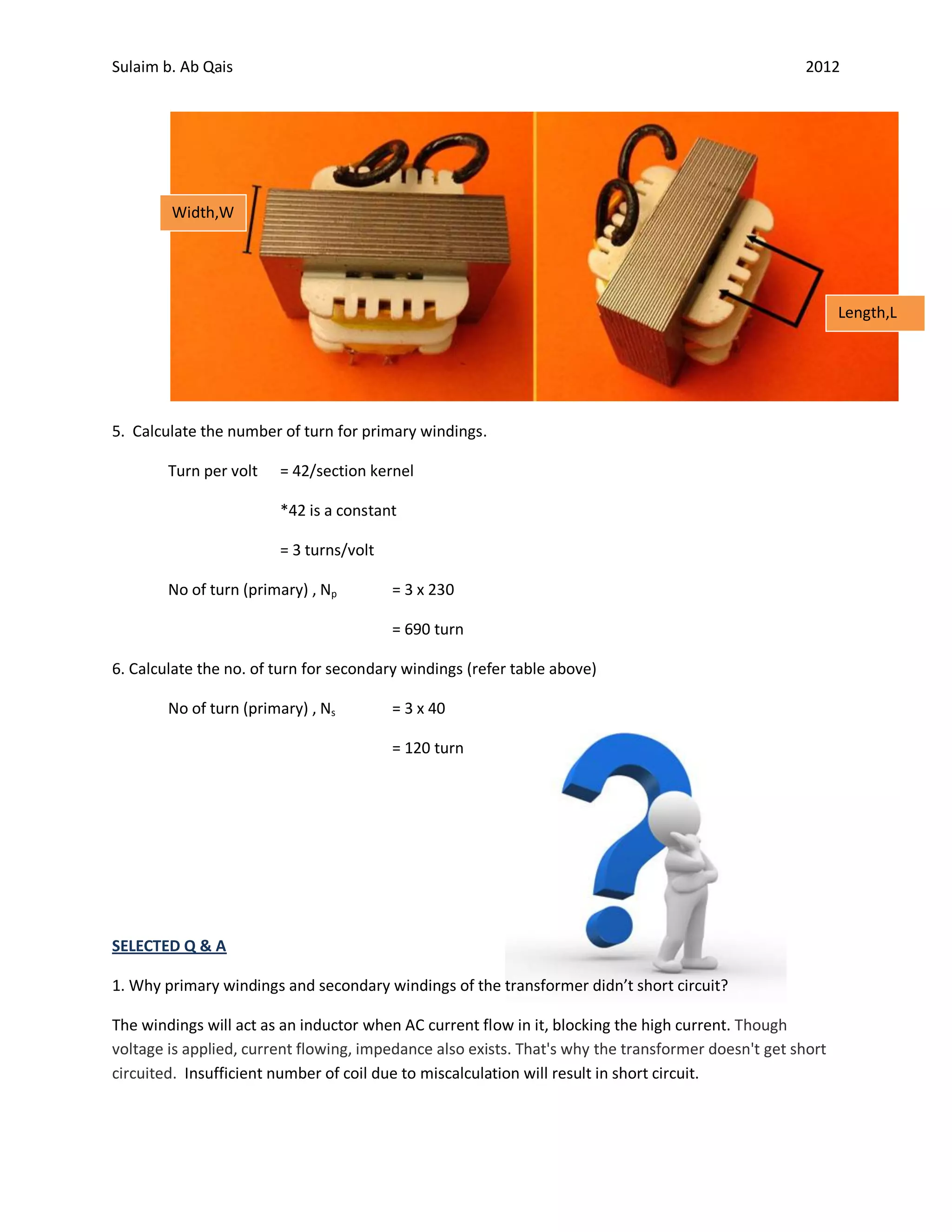
Thus, the size of the centre core is 14.4 cm2. We can use any combination of length and width to get the
area. For example, 3.8 cm x 3.8 cm = 14.4 cm2

        L= 3.8 cm

        W= 3.8 cm
Sulaim b. Ab Qais                                                                                   2012


        Width,W


                                                                                                           Length,L


5. Calculate the number of turn for primary windings.

        Turn per volt   = 42/section kernel

                        *42 is a constant

                        = 3 turns/volt

        No of turn (primary) , Np        = 3 x 230

                                         = 690 turn

6. Calculate the no. of turn for secondary windings (refer table above)

        No of turn (primary) , Ns        = 3 x 40

                                         = 120 turn


SELECTED Q & A

1. Why primary windings and secondary windings of the transformer didn’t short circuit?

The windings will act as an inductor when AC current flow in it, blocking the high current. Though
voltage is applied, current flowing, impedance also exists. That's why the transformer doesn't get short
circuited. Insufficient number of coil due to miscalculation will result in short circuit.
Sulaim b. Ab Qais                                                                                   2012


2. Is a transformer is obeying ohm's law or not?

Ohms law is for determining the behavior of electricity through a load (a resistor). Transformer is
nothing more than a pair of inductor. A transformer by itself is not a load. You apply Ohms law
separately to the primary circuit and to the secondary circuit of a transformer. You do not use Ohms law
to learn how the primary induces current in the secondary. The current that we calculate is the
maximum (short circuit) or ideal transformer current. If we put resistor at any side it still obeys ohm’s
law.

3. Why we usually use magnetic copper wire for the windings?

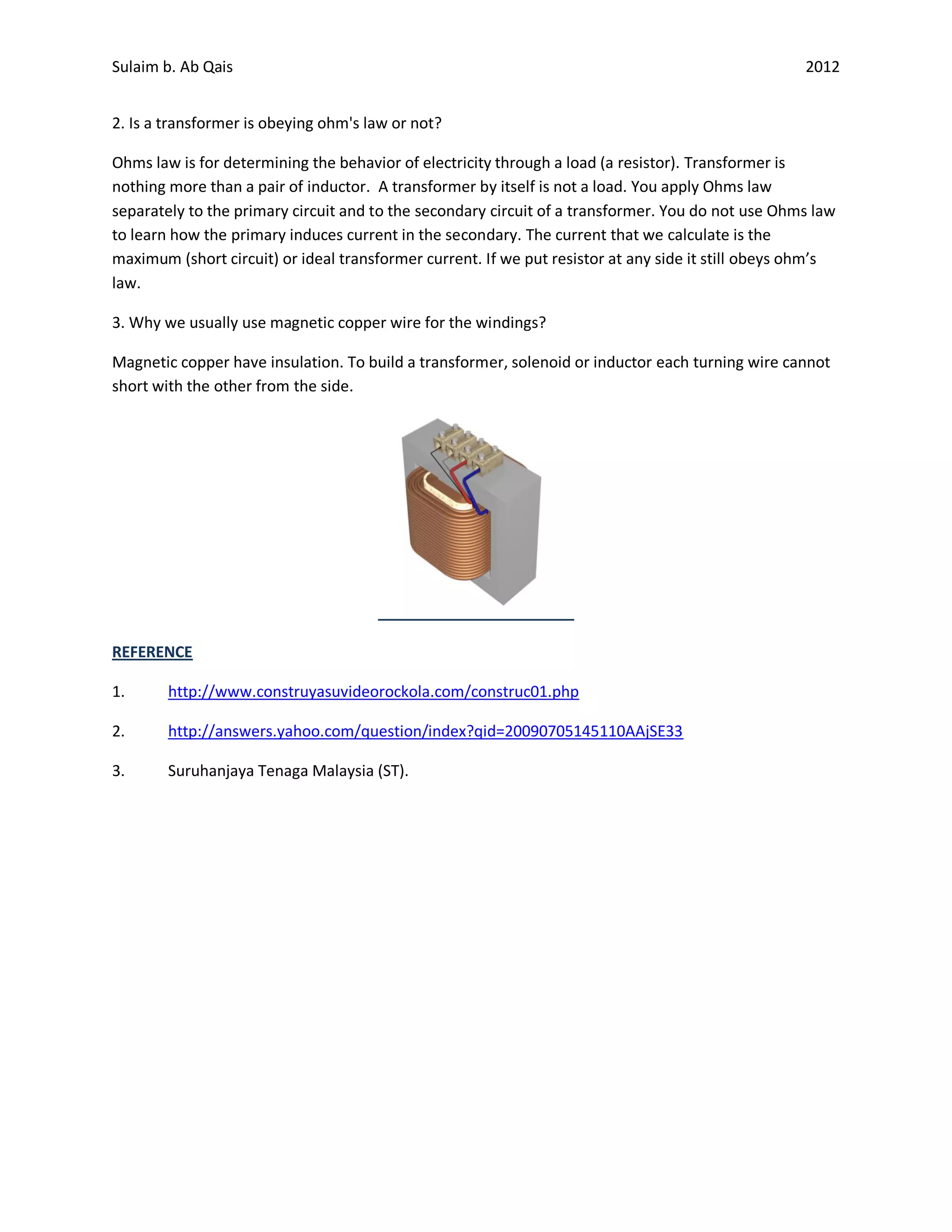
Magnetic copper have insulation. To build a transformer, solenoid or inductor each turning wire cannot
short with the other from the side.


REFERENCE

1.      http://www.construyasuvideorockola.com/construc01.php

2.      http://answers.yahoo.com/question/index?qid=20090705145110AAjSE33

3.      Suruhanjaya Tenaga Malaysia (ST).

Transformer design

  • 1.
    Sulaim b. AbQais 2012 DESIGN A TRANSFORMER This paper guides a simple and practical calculation in designing a transformer. The hands-on work can be understood from this video http://www.youtube.com/watch?v=s6NyTprQCBI MATERIALS Masking tape, wax paper, copper cable, magnet copper wire, sandpaper, silicon-iron sheet, formwork, soldering wire CALCULATION 1. Determine the load power, P. Let say, P=300W 2. Find the primary winding current. Malaysia using 230 VAC, +10%,-6%, thus the current would be; Ip = P/V Ip = 200W/230V = 0.87 A, thus the wire that we will using for primary winding is 0.26 mm2 Let say the secondary winding voltage, Vs = 40 VAC Is = 200W/40V = 5 A, thus the wire that we will using for secondary windings is 1.31 mm2 3. Find the size of the cable for primary windings and secondary windings. By referring to the table below we can determine the size of primary and secondary coil (magnet wire). Table: cable size for safe current carrying capacity American Wire Gauge (AWG) Area size (mm2) Current (max) 30 0.05 0.22 29 0.06 0.29 28 0.08 0.3 27 0.1 0.4
  • 2.
    Sulaim b. AbQais 2012 26 0.14 0.5 25 0.16 0.6 24 0.25 0.8 23 0.26 1.0 22 0.34 1.2 21 0.38 1.6 20 0.5 2 19 0.65 2.6 18 0.75 3.2 17 1.04 4.1 16 1.31 5.2 15 1.65 6.6 14 2.5 8.3 13 2.6 5.1 12 4 5.13 11 4.15 6.16 10 6 2.21 9 6.62 5.26 8 8.36 33.3 7 10.6 44.2 4. Find the section kernel Section kernel = 𝑃 = 200 = 14.4 cm2 Thus, the size of the centre core is 14.4 cm2. We can use any combination of length and width to get the area. For example, 3.8 cm x 3.8 cm = 14.4 cm2 L= 3.8 cm W= 3.8 cm
  • 3.
    Sulaim b. AbQais 2012 Width,W Length,L 5. Calculate the number of turn for primary windings. Turn per volt = 42/section kernel *42 is a constant = 3 turns/volt No of turn (primary) , Np = 3 x 230 = 690 turn 6. Calculate the no. of turn for secondary windings (refer table above) No of turn (primary) , Ns = 3 x 40 = 120 turn SELECTED Q & A 1. Why primary windings and secondary windings of the transformer didn’t short circuit? The windings will act as an inductor when AC current flow in it, blocking the high current. Though voltage is applied, current flowing, impedance also exists. That's why the transformer doesn't get short circuited. Insufficient number of coil due to miscalculation will result in short circuit.
  • 4.
    Sulaim b. AbQais 2012 2. Is a transformer is obeying ohm's law or not? Ohms law is for determining the behavior of electricity through a load (a resistor). Transformer is nothing more than a pair of inductor. A transformer by itself is not a load. You apply Ohms law separately to the primary circuit and to the secondary circuit of a transformer. You do not use Ohms law to learn how the primary induces current in the secondary. The current that we calculate is the maximum (short circuit) or ideal transformer current. If we put resistor at any side it still obeys ohm’s law. 3. Why we usually use magnetic copper wire for the windings? Magnetic copper have insulation. To build a transformer, solenoid or inductor each turning wire cannot short with the other from the side. REFERENCE 1. http://www.construyasuvideorockola.com/construc01.php 2. http://answers.yahoo.com/question/index?qid=20090705145110AAjSE33 3. Suruhanjaya Tenaga Malaysia (ST).