Hand Tool Use and Selection
Guidance in Construction
Adapted from a presentation developed by Washington State Department of Labor & Industries, Division of Occupational Safety and Health
Overview:
 The hands and wrists are made up of a
variety of fragile bones, nerves, blood vessels,
tendons and ligaments that can be easily
damaged if they are misused.
 The following are some of the conditions that
can cause hand and wrist illnesses:
• Frequent or repetitive movement of the hand or wrist,
usually associated with awkward wrist angles
• Inappropriate tool and equipment design
• Vibrating tools
• Poor work station design and arrangement
• Cold environments
Things to consider when using
and selecting hand tools
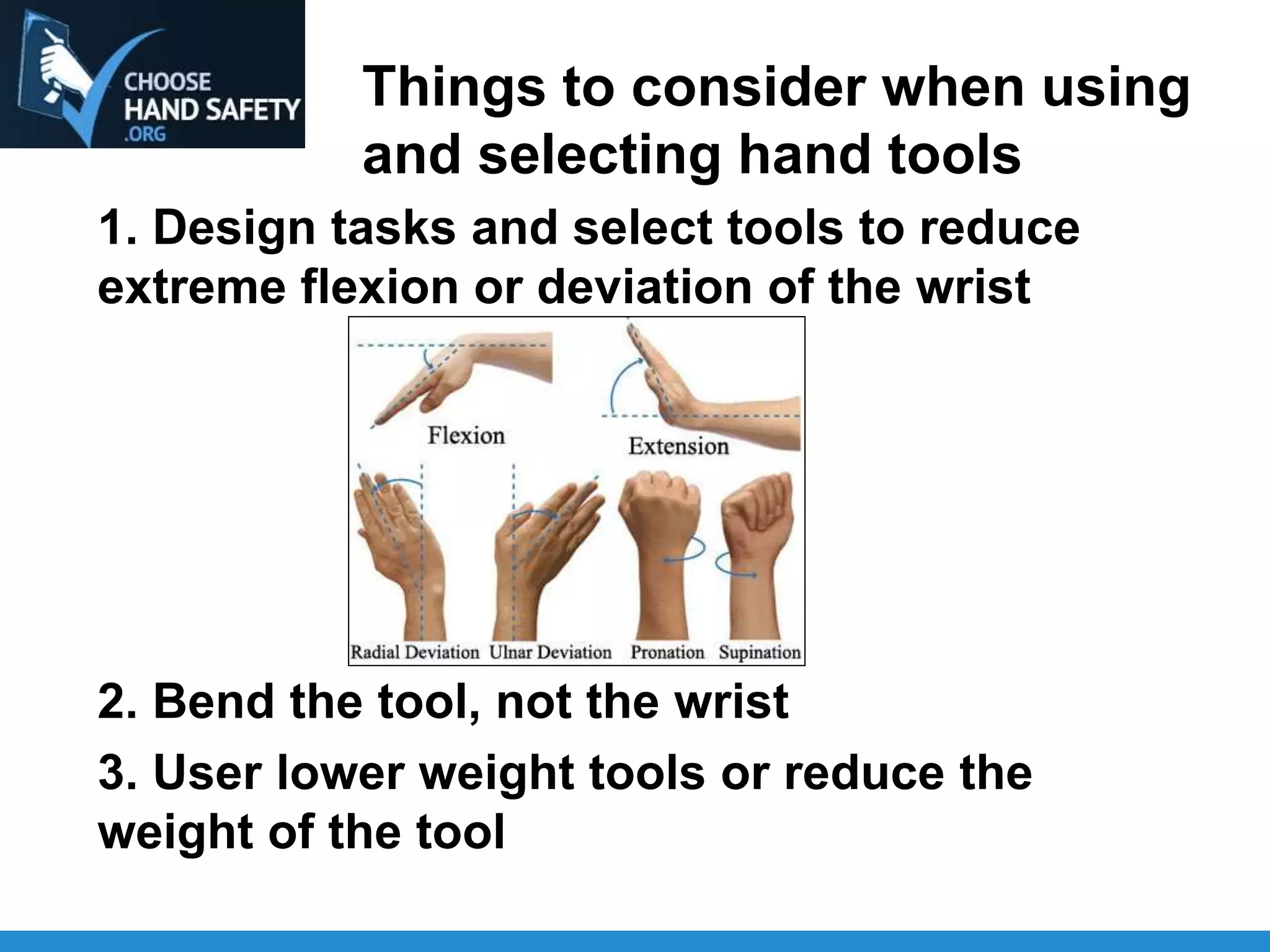
1. Design tasks and select tools to reduce
extreme flexion or deviation of the wrist
2. Bend the tool, not the wrist
3. User lower weight tools or reduce the
weight of the tool
4. Don’t raise or extend elbows with heavy
tools
5. Avoid stress on pressure points
 Stress concentrations result from poorly
designed tool handles or handle areas that
exert pressure on the palms or fingers.
6. Reduce grip force requirements
 Make sure the tool handle or grip area is the
right size for your hand.
7. Evaluate grip surface
 Look for cushioned, padded, non-slip and
anti-vibration handle materials.
8. Use a power grip
 Design tasks so that a power rather than a
pinch grip can be used to grasp materials.
– A pinch grip is five times more stressful than a
power grip.
– The greater the effort to maintain control of a hand
tool, the higher the potential for injury.
9. Avoid repetitive trigger-finger actions
 “Trigger-finger” happens when one of your
fingers or your thumb catches in a bent
position. The finger or thumb may straighten
with a snap.
 It’s caused by the narrowing of the tendon
sheath when repetitive gripping actions are
performed.
(Continue - Avoid repetitive trigger-finger
actions)
 Tendons in the finger joints can swell due to
overuse, “locking” the finger into a fixed
position.
 Select “triggers” that allow two or three fingers
to activate.
9. Isolate hands from heat and cold
 Heat and cold can cause loss of manual
dexterity and increased grip strength
requirements.
 Due to developments in glove materials many
are less bulky and provide better protection.
10. Isolate hands from vibration
 Excessive vibration can cause reduced blood
circulation and cause white-finger syndrome.
White-finger
syndrome
Anti-vibration
gloves
Thank you for taking the time to learn
about safety and health and how to
prevent injuries and illnesses.
To learn more about ways to protect
your hands, visit
www.choosehandsafety.org

training_and_more_-_hand_tools_11_-_hand_tool_use_and_selection_guidance.ppt

  • 1.
    Hand Tool Useand Selection Guidance in Construction Adapted from a presentation developed by Washington State Department of Labor & Industries, Division of Occupational Safety and Health
  • 2.
    Overview:  The handsand wrists are made up of a variety of fragile bones, nerves, blood vessels, tendons and ligaments that can be easily damaged if they are misused.
  • 3.
     The followingare some of the conditions that can cause hand and wrist illnesses: • Frequent or repetitive movement of the hand or wrist, usually associated with awkward wrist angles • Inappropriate tool and equipment design • Vibrating tools • Poor work station design and arrangement • Cold environments
  • 4.
    Things to considerwhen using and selecting hand tools 1. Design tasks and select tools to reduce extreme flexion or deviation of the wrist 2. Bend the tool, not the wrist 3. User lower weight tools or reduce the weight of the tool
  • 5.
    4. Don’t raiseor extend elbows with heavy tools
  • 6.
    5. Avoid stresson pressure points  Stress concentrations result from poorly designed tool handles or handle areas that exert pressure on the palms or fingers.
  • 7.
    6. Reduce gripforce requirements  Make sure the tool handle or grip area is the right size for your hand. 7. Evaluate grip surface  Look for cushioned, padded, non-slip and anti-vibration handle materials.
  • 8.
    8. Use apower grip  Design tasks so that a power rather than a pinch grip can be used to grasp materials. – A pinch grip is five times more stressful than a power grip. – The greater the effort to maintain control of a hand tool, the higher the potential for injury.
  • 9.
    9. Avoid repetitivetrigger-finger actions  “Trigger-finger” happens when one of your fingers or your thumb catches in a bent position. The finger or thumb may straighten with a snap.  It’s caused by the narrowing of the tendon sheath when repetitive gripping actions are performed.
  • 10.
    (Continue - Avoidrepetitive trigger-finger actions)  Tendons in the finger joints can swell due to overuse, “locking” the finger into a fixed position.  Select “triggers” that allow two or three fingers to activate.
  • 11.
    9. Isolate handsfrom heat and cold  Heat and cold can cause loss of manual dexterity and increased grip strength requirements.  Due to developments in glove materials many are less bulky and provide better protection.
  • 12.
    10. Isolate handsfrom vibration  Excessive vibration can cause reduced blood circulation and cause white-finger syndrome. White-finger syndrome Anti-vibration gloves
  • 13.
    Thank you fortaking the time to learn about safety and health and how to prevent injuries and illnesses. To learn more about ways to protect your hands, visit www.choosehandsafety.org