B . R A M A M U R T H Y
6/13/2013
1
Device Drivers
Introduction
6/13/2013
2
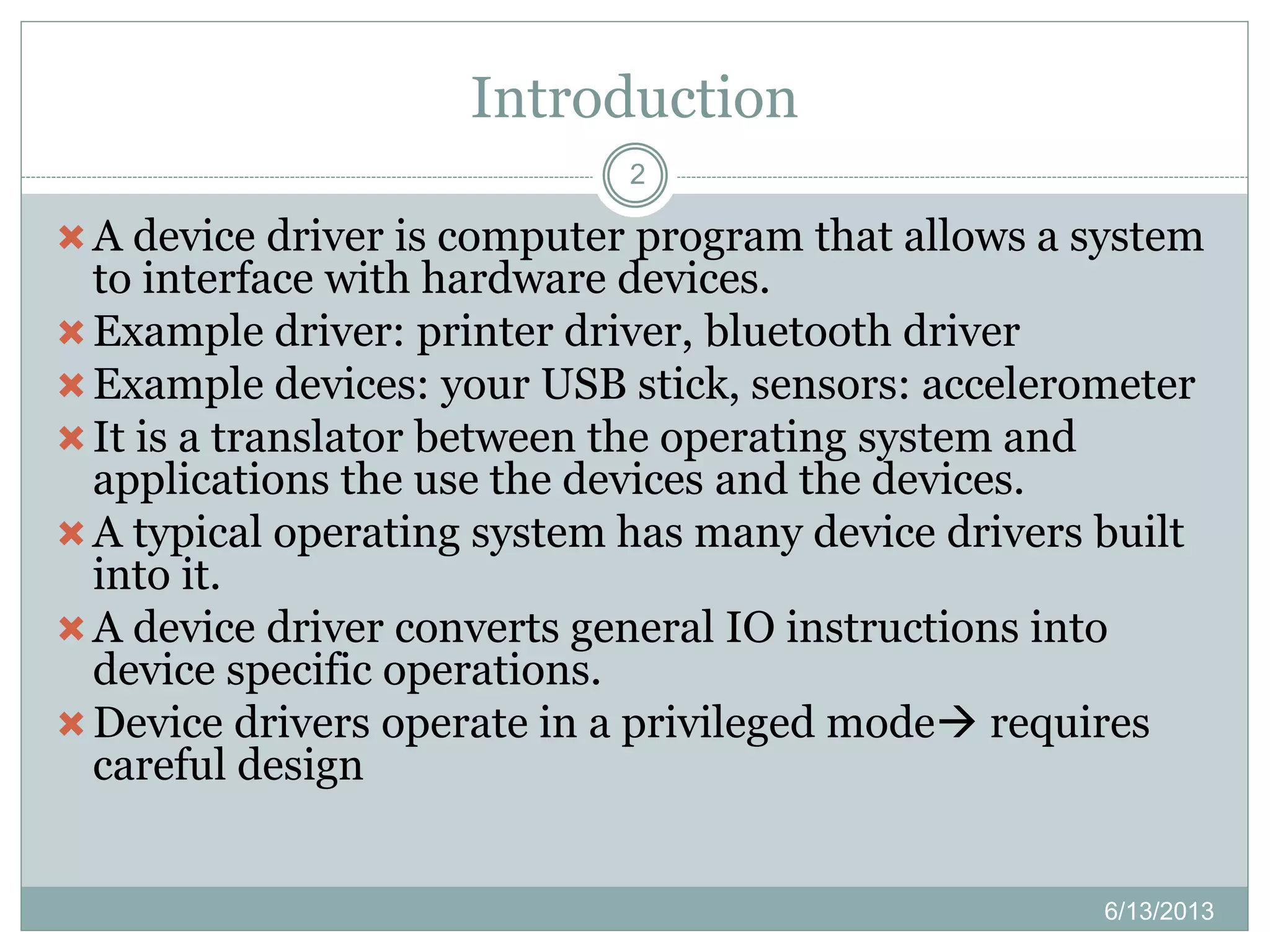
A device driver is computer program that allows a system
to interface with hardware devices.
Example driver: printer driver, bluetooth driver
Example devices: your USB stick, sensors: accelerometer
It is a translator between the operating system and
applications the use the devices and the devices.
A typical operating system has many device drivers built
into it.
A device driver converts general IO instructions into
device specific operations.
Device drivers operate in a privileged mode requires
careful design
Why Device Driver?
6/13/2013
3
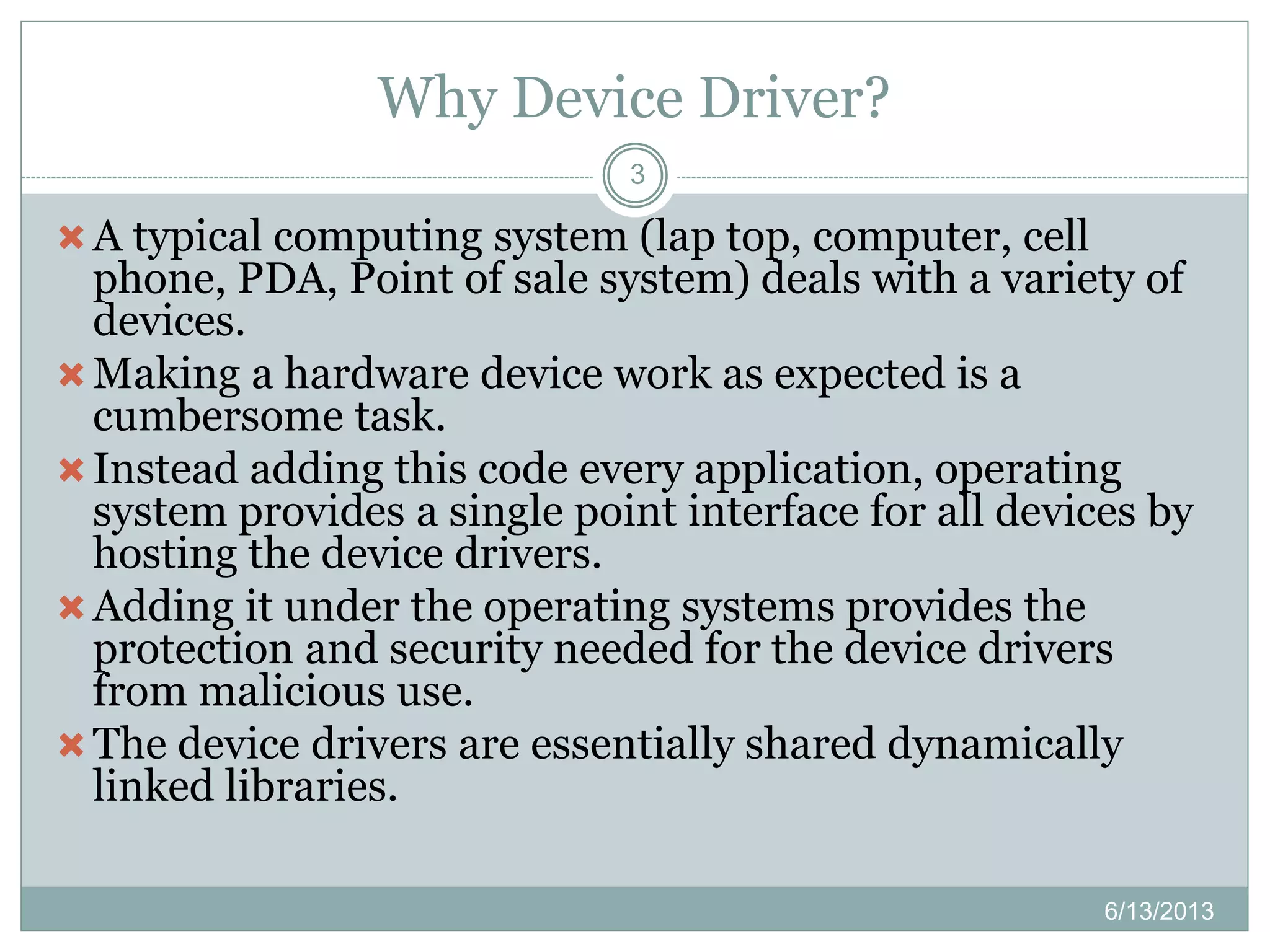
A typical computing system (lap top, computer, cell
phone, PDA, Point of sale system) deals with a variety of
devices.
Making a hardware device work as expected is a
cumbersome task.
Instead adding this code every application, operating
system provides a single point interface for all devices by
hosting the device drivers.
Adding it under the operating systems provides the
protection and security needed for the device drivers
from malicious use.
The device drivers are essentially shared dynamically
linked libraries.
File abstraCtion
6/13/2013
4
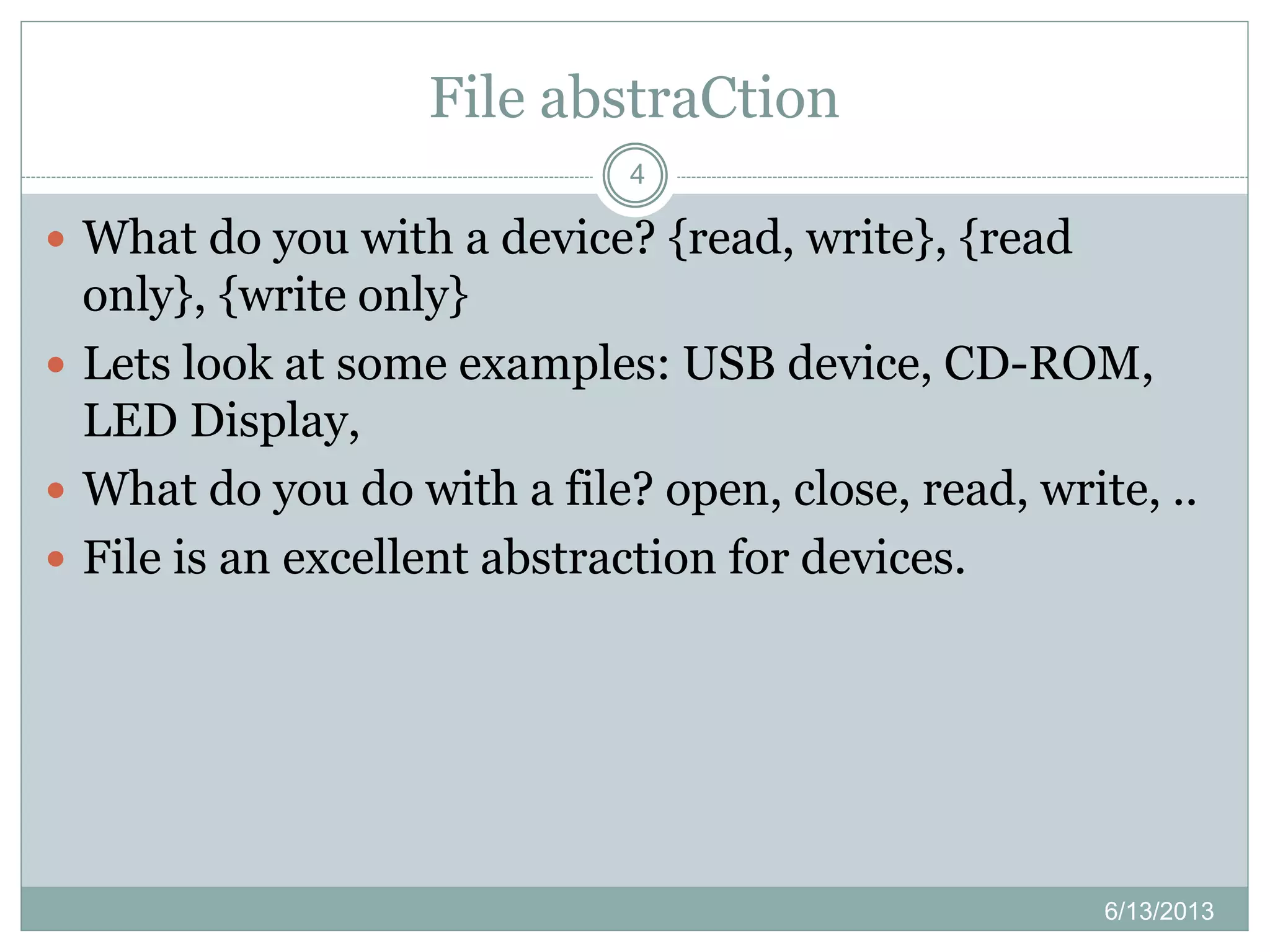
 What do you with a device? {read, write}, {read
only}, {write only}
 Lets look at some examples: USB device, CD-ROM,
LED Display,
 What do you do with a file? open, close, read, write, ..
 File is an excellent abstraction for devices.
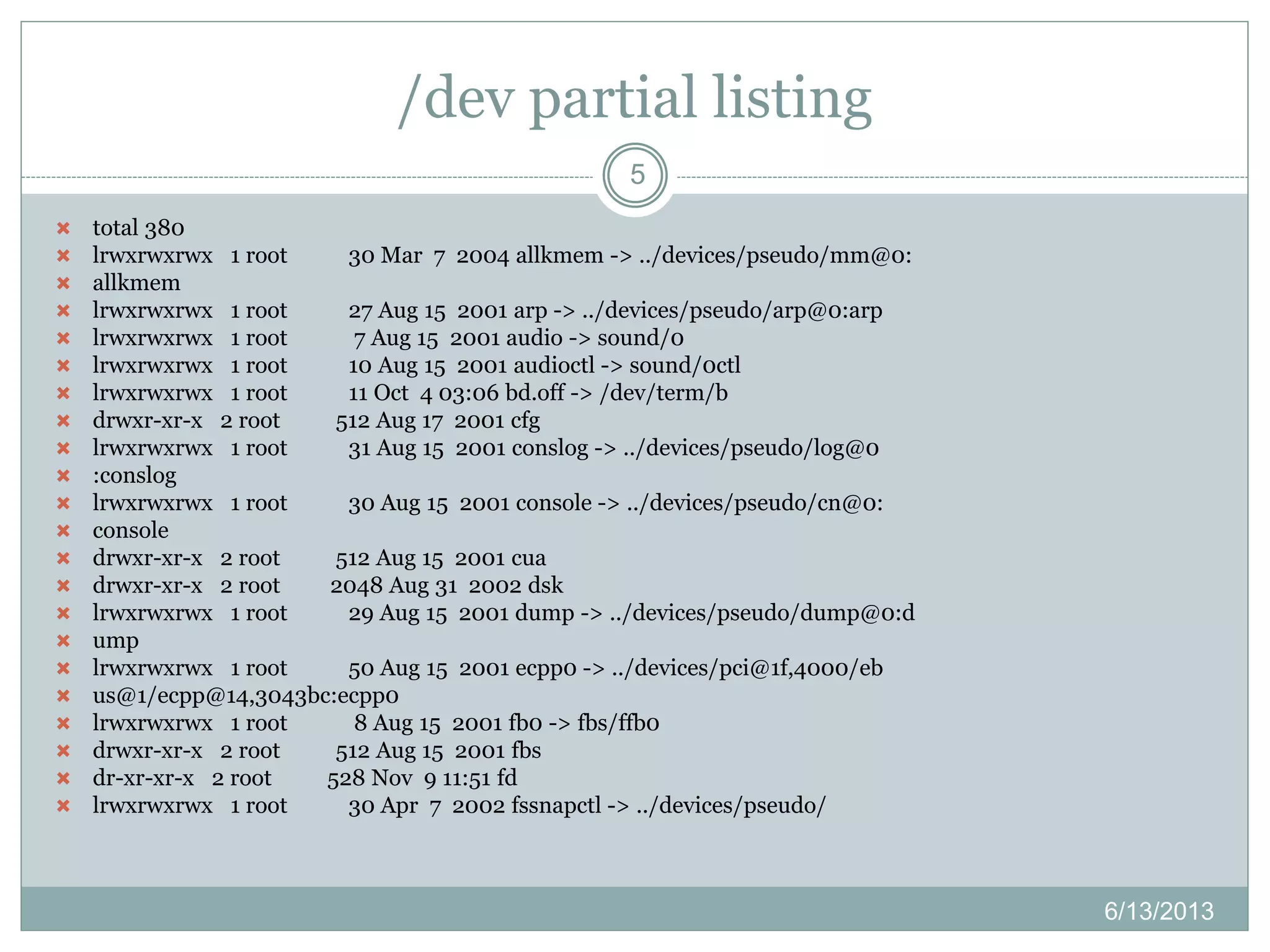
/dev partial listing
6/13/2013
5
 total 380
 lrwxrwxrwx 1 root 30 Mar 7 2004 allkmem -> ../devices/pseudo/mm@0:
 allkmem
 lrwxrwxrwx 1 root 27 Aug 15 2001 arp -> ../devices/pseudo/arp@0:arp
 lrwxrwxrwx 1 root 7 Aug 15 2001 audio -> sound/0
 lrwxrwxrwx 1 root 10 Aug 15 2001 audioctl -> sound/0ctl
 lrwxrwxrwx 1 root 11 Oct 4 03:06 bd.off -> /dev/term/b
 drwxr-xr-x 2 root 512 Aug 17 2001 cfg
 lrwxrwxrwx 1 root 31 Aug 15 2001 conslog -> ../devices/pseudo/log@0
 :conslog
 lrwxrwxrwx 1 root 30 Aug 15 2001 console -> ../devices/pseudo/cn@0:
 console
 drwxr-xr-x 2 root 512 Aug 15 2001 cua
 drwxr-xr-x 2 root 2048 Aug 31 2002 dsk
 lrwxrwxrwx 1 root 29 Aug 15 2001 dump -> ../devices/pseudo/dump@0:d
 ump
 lrwxrwxrwx 1 root 50 Aug 15 2001 ecpp0 -> ../devices/pci@1f,4000/eb
 us@1/ecpp@14,3043bc:ecpp0
 lrwxrwxrwx 1 root 8 Aug 15 2001 fb0 -> fbs/ffb0
 drwxr-xr-x 2 root 512 Aug 15 2001 fbs
 dr-xr-xr-x 2 root 528 Nov 9 11:51 fd
 lrwxrwxrwx 1 root 30 Apr 7 2002 fssnapctl -> ../devices/pseudo/
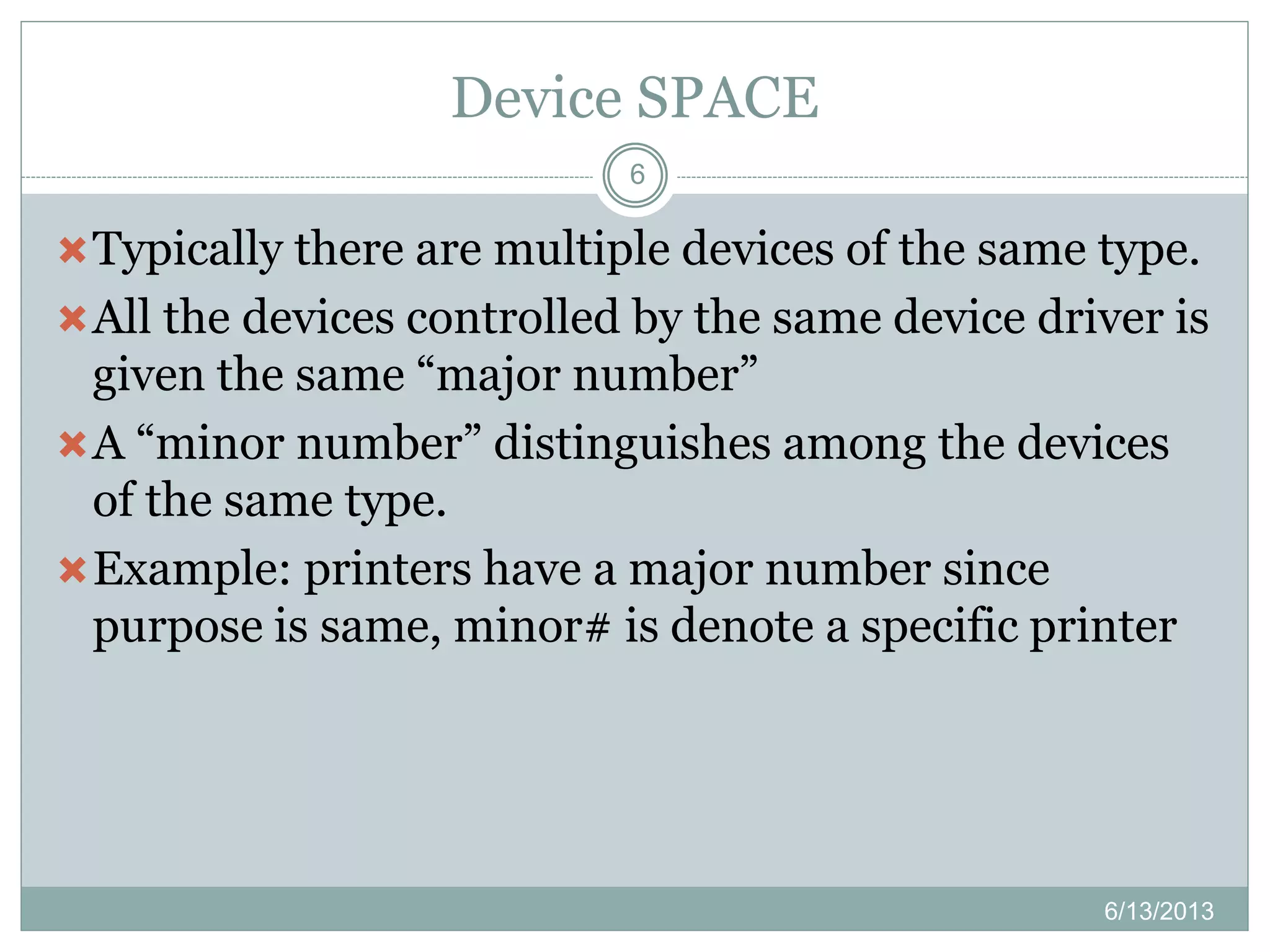
Device SPACE
6/13/2013
6
Typically there are multiple devices of the same type.
All the devices controlled by the same device driver is
given the same “major number”
A “minor number” distinguishes among the devices
of the same type.
Example: printers have a major number since
purpose is same, minor# is denote a specific printer
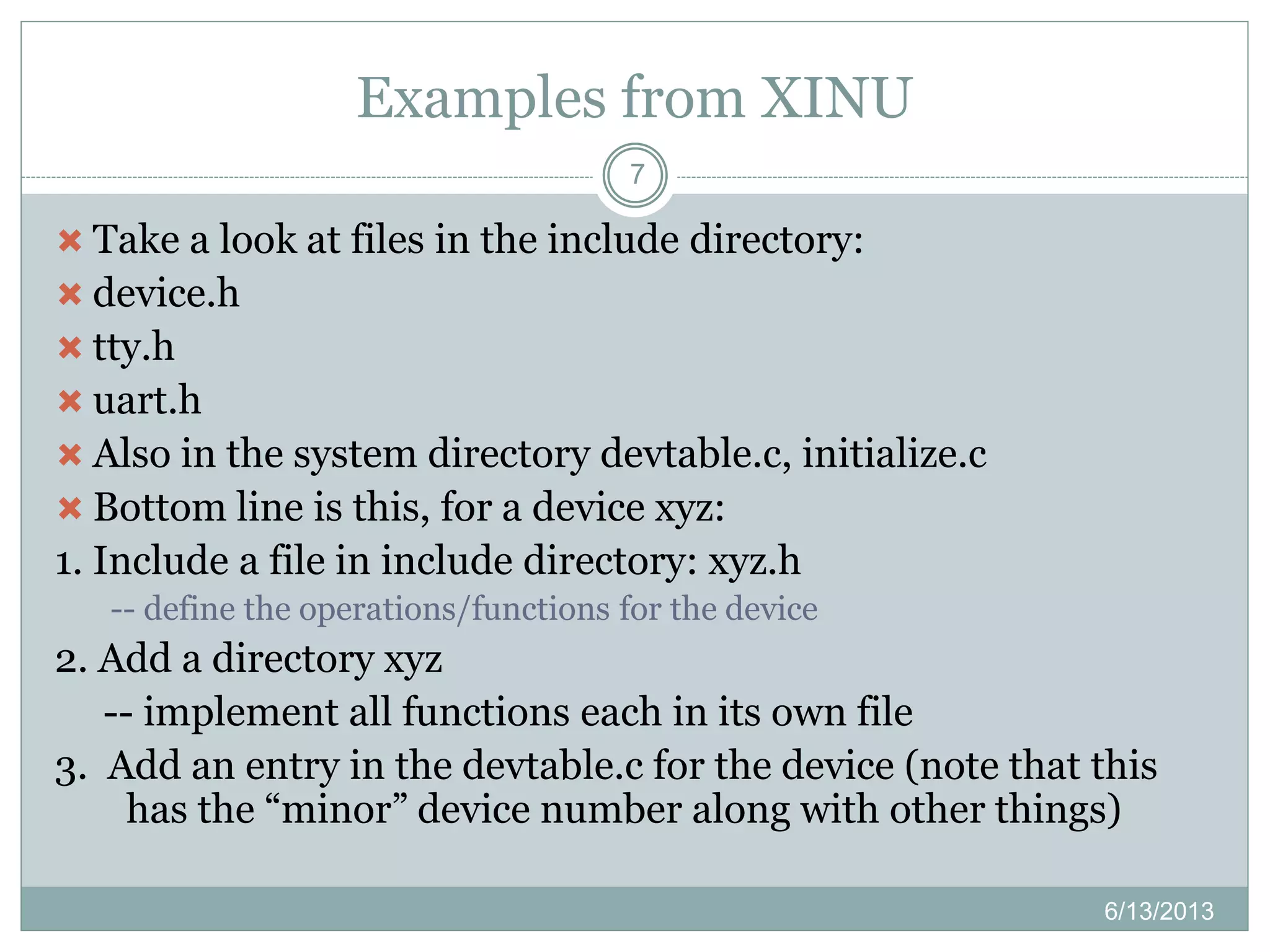
Examples from XINU
6/13/2013
7
 Take a look at files in the include directory:
 device.h
 tty.h
 uart.h
 Also in the system directory devtable.c, initialize.c
 Bottom line is this, for a device xyz:
1. Include a file in include directory: xyz.h
-- define the operations/functions for the device
2. Add a directory xyz
-- implement all functions each in its own file
3. Add an entry in the devtable.c for the device (note that this
has the “minor” device number along with other things)
Lets Analyze the XINU UART Driver
6/13/2013
8
 Starting point: uart.h in include directory
 uart directory functions
 system directory devtable.c, initialize.c
 Usage of the devices is through device table:
 Ex:
pdev = &devtab[i];
(pdevinit)(pdev);
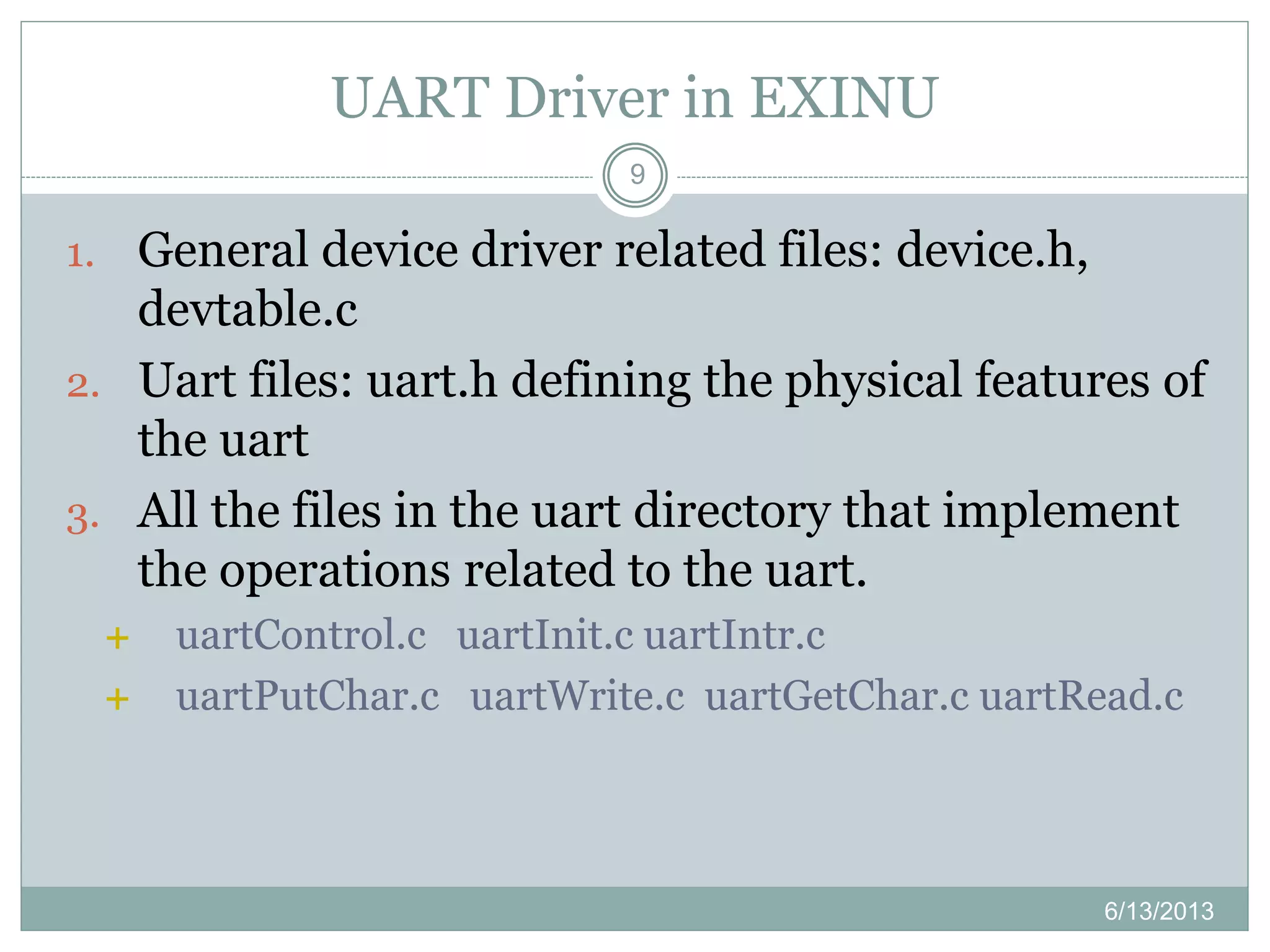
UART Driver in EXINU
9
1. General device driver related files: device.h,
devtable.c
2. Uart files: uart.h defining the physical features of
the uart
3. All the files in the uart directory that implement
the operations related to the uart.
 uartControl.c uartInit.c uartIntr.c
 uartPutChar.c uartWrite.c uartGetChar.c uartRead.c
6/13/2013
Device Drivers
10
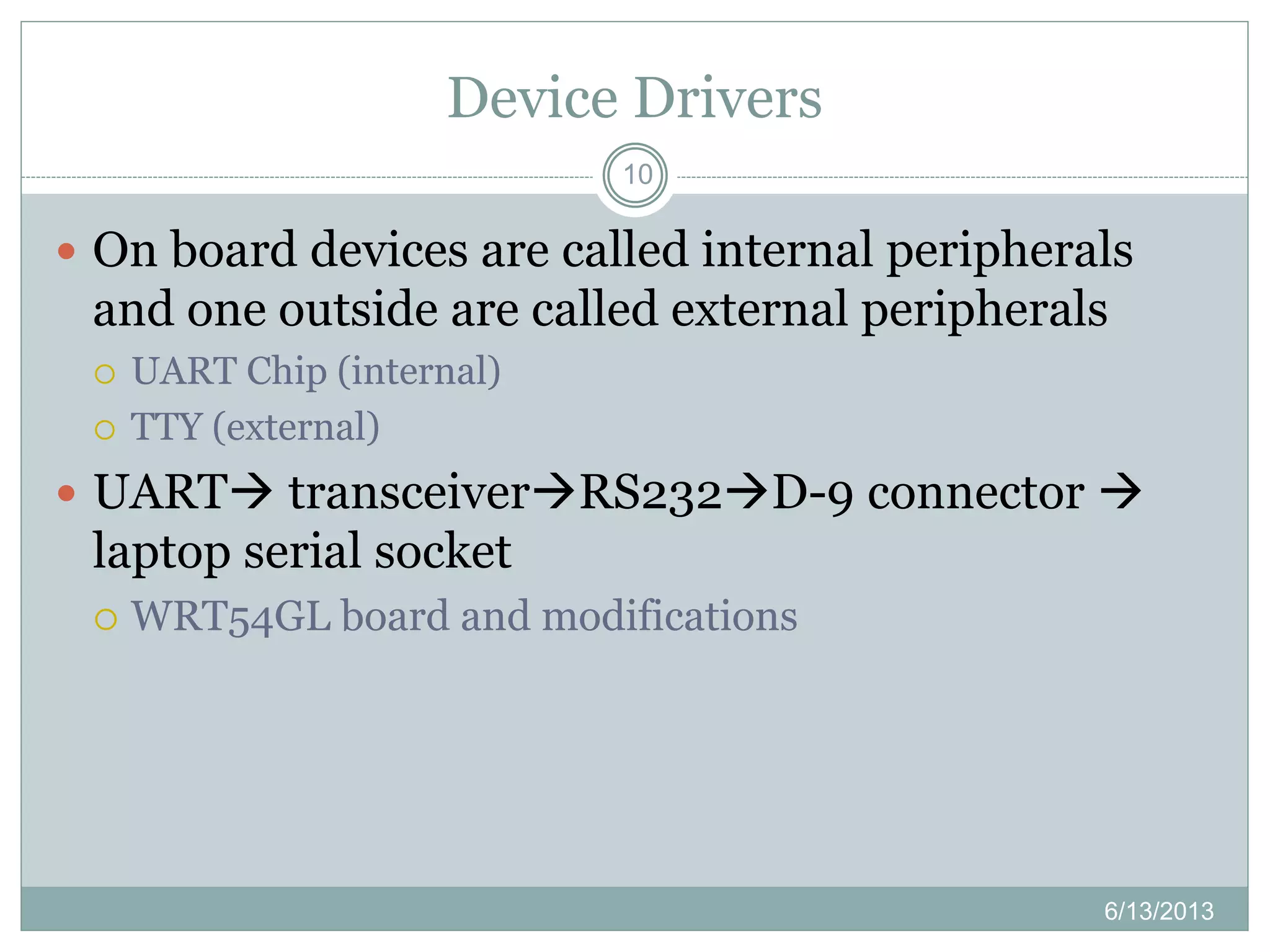
 On board devices are called internal peripherals
and one outside are called external peripherals
 UART Chip (internal)
 TTY (external)
 UART transceiverRS232D-9 connector 
laptop serial socket
 WRT54GL board and modifications
6/13/2013
Device drivers (contd.)
11
 Embedded processor interacts with a peripheral
device through a set of control and status registers.
 Registers are part of the peripheral device.
 Registers within a serial controller are different
from those in a timer.
 These devices are located in the memory space of
the processor or I/O space of the processor-- two
types: memory-mapped or I/O mapped
respectively.
6/13/2013
Device driver (contd.)
1. 1
2
 The keyword volatile should be used when declaring
pointers to device drivers.
 Bit patterns for testing, setting, clearing, toggling,
shifting bits, bitmasks, and bitfields.
 Struct overlays:
 In embedded systems featuring memory mapped IO
devices, it is common to overlay a C struct on to each
peripheral’s control and status registers.
 This will provide the offsets for the various registers from
the base address of the device.
6/13/2013
Device Driver Philosophy
13
 Hide the hardware completely: hardware abstraction
 If the device generates any interrupts include interrupt
controllers.
 Device driver presents a generic interface for applications
at higher level to access the devices: device.h
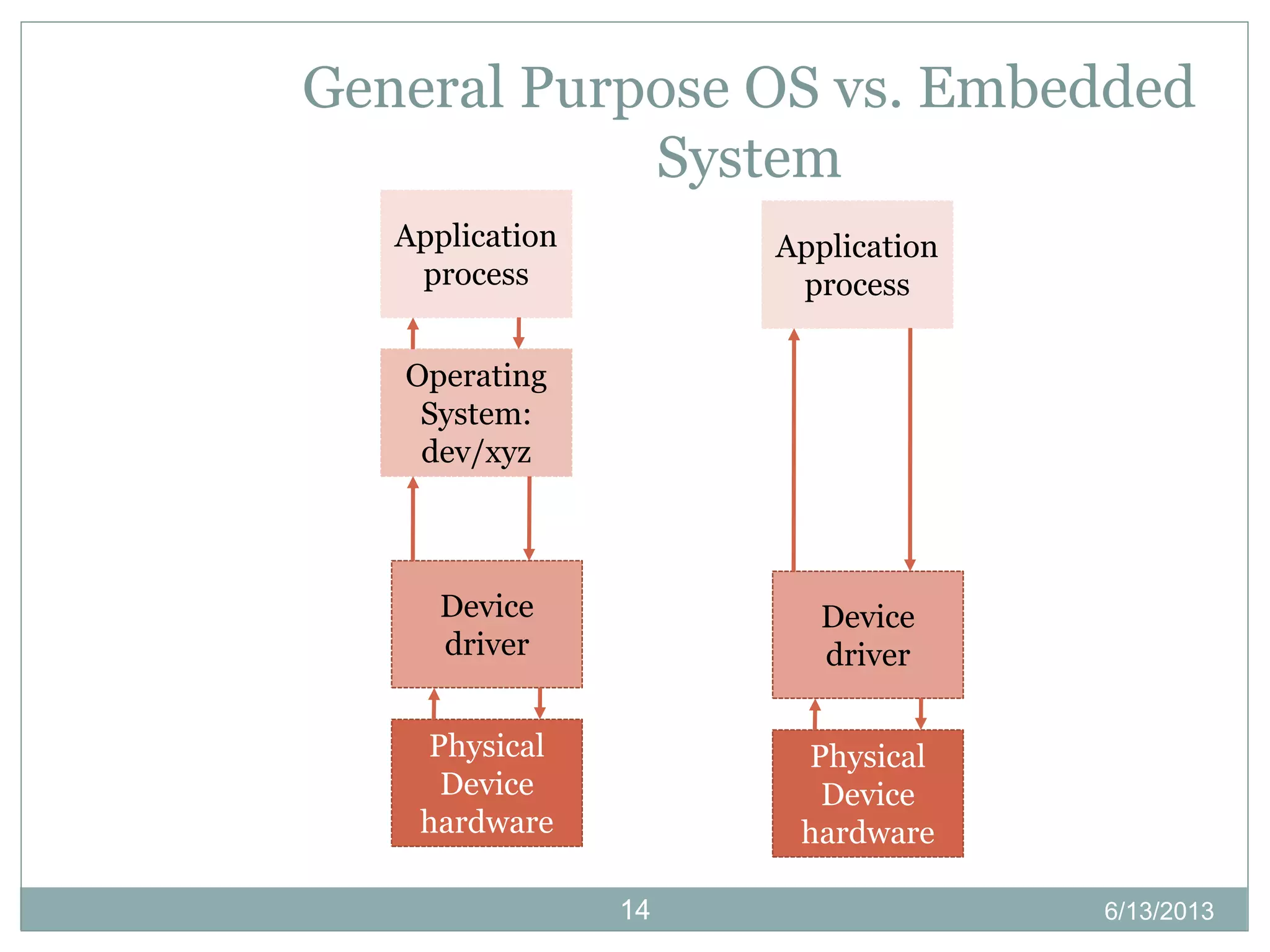
 Device drivers in embedded systems are different from
general purpose operating systems: See diagram in slide
#14
 Applications in general purpose systems accesses OS
(Operating Systems) which in turn accesses device
drivers.
 Applications in embedded systems can directly access
device drivers.
6/13/2013
14
General Purpose OS vs. Embedded
System
Application
process
Operating
System:
dev/xyz
Device
driver
Physical
Device
hardware
Application
process
Device
driver
Physical
Device
hardware
6/13/2013
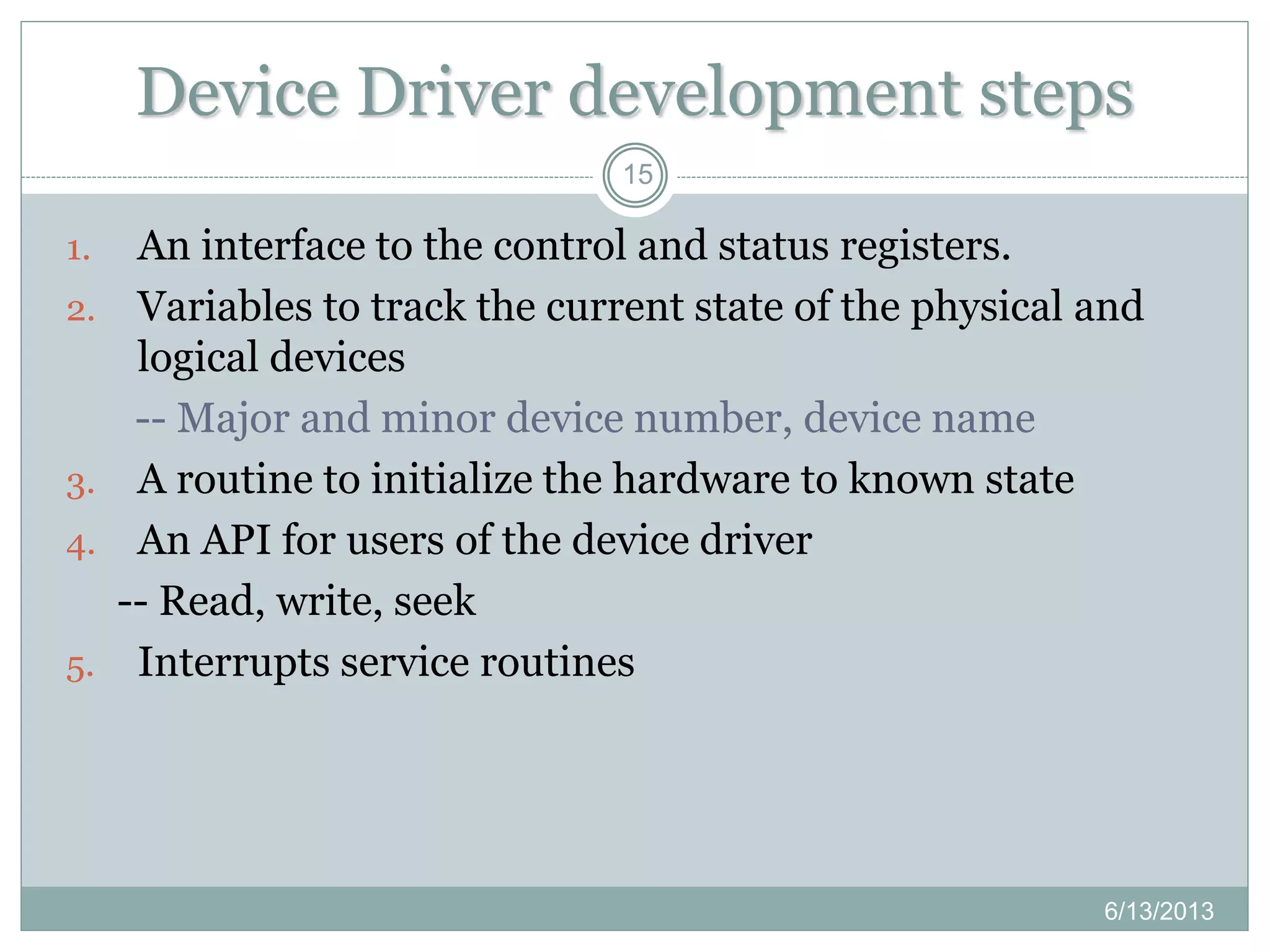
Device Driver development steps
15
1. An interface to the control and status registers.
2. Variables to track the current state of the physical and
logical devices
-- Major and minor device number, device name
3. A routine to initialize the hardware to known state
4. An API for users of the device driver
-- Read, write, seek
5. Interrupts service routines
6/13/2013
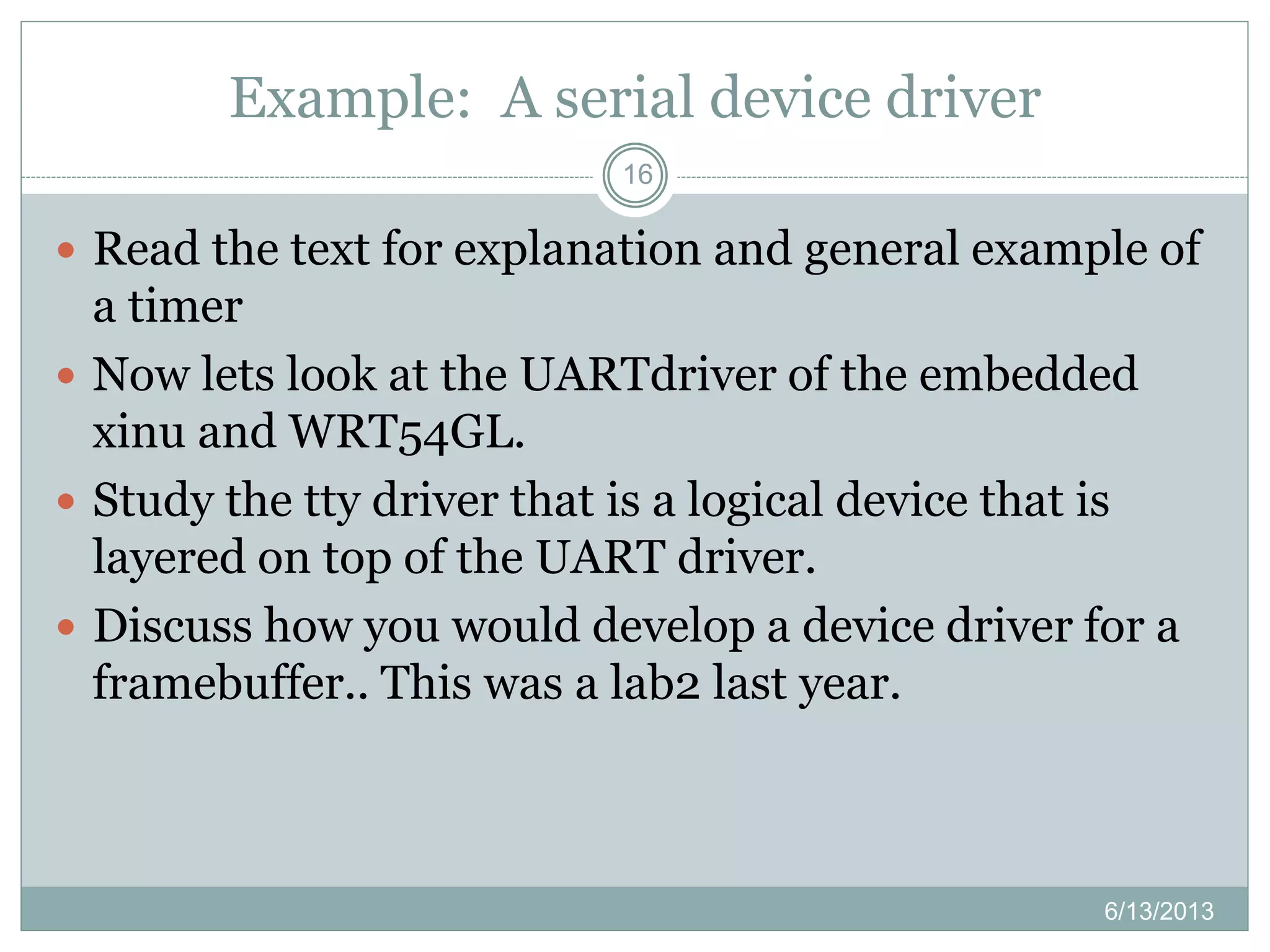
Example: A serial device driver
16
 Read the text for explanation and general example of
a timer
 Now lets look at the UARTdriver of the embedded
xinu and WRT54GL.
 Study the tty driver that is a logical device that is
layered on top of the UART driver.
 Discuss how you would develop a device driver for a
framebuffer.. This was a lab2 last year.
6/13/2013
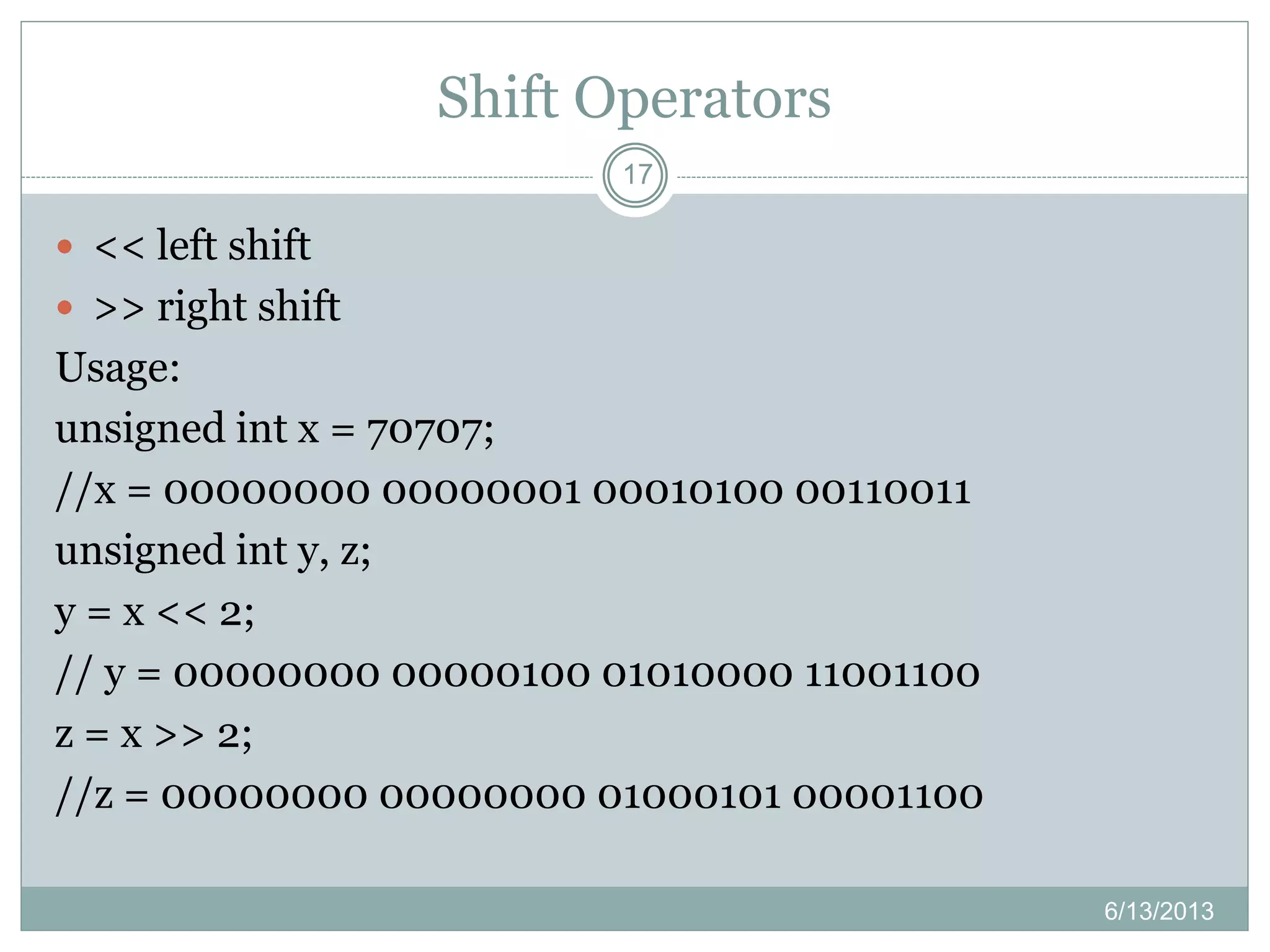
Shift Operators
6/13/2013
17
 << left shift
 >> right shift
Usage:
unsigned int x = 70707;
//x = 00000000 00000001 00010100 00110011
unsigned int y, z;
y = x << 2;
// y = 00000000 00000100 01010000 11001100
z = x >> 2;
//z = 00000000 00000000 01000101 00001100
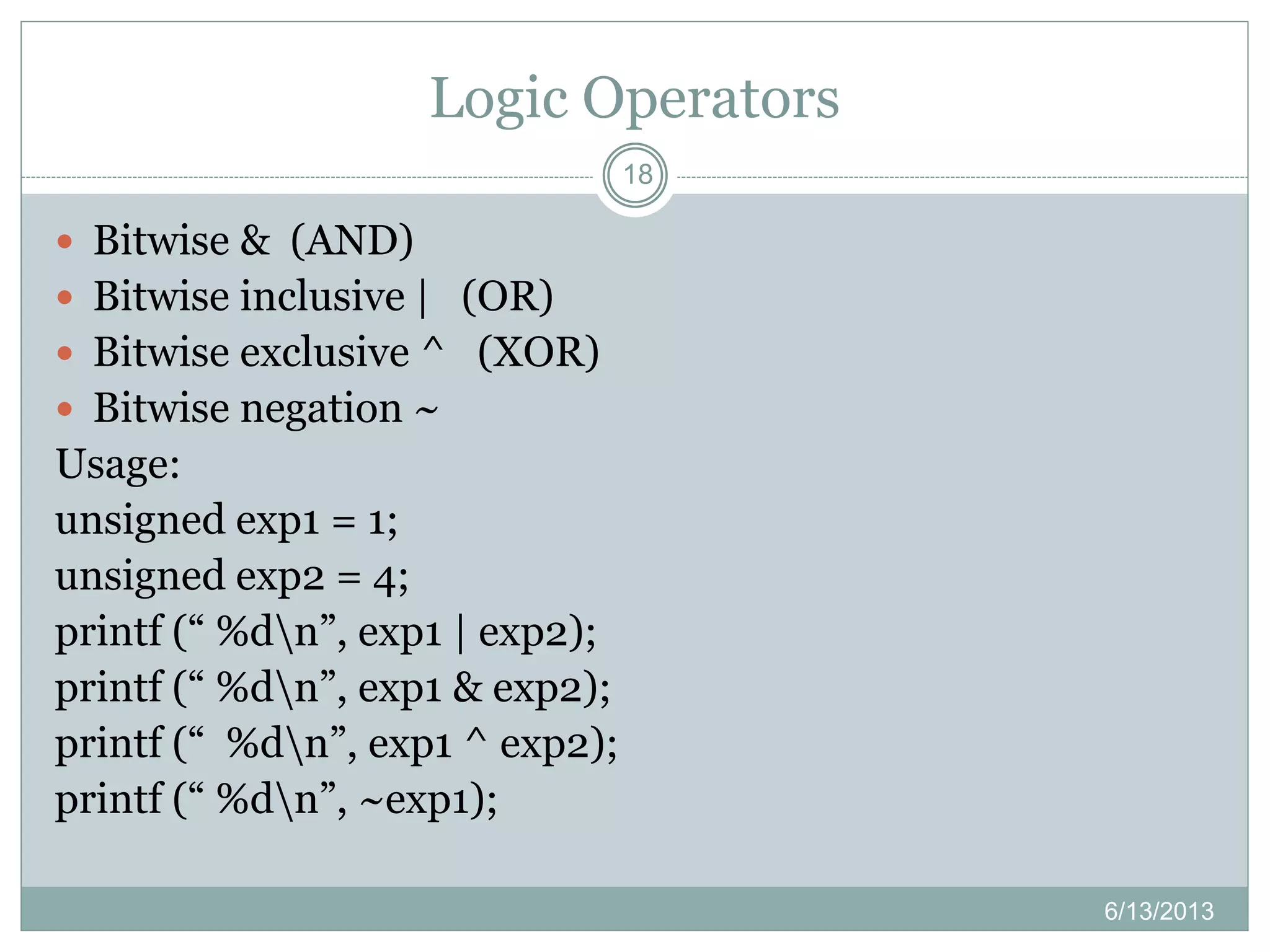
Logic Operators
6/13/2013
18
 Bitwise & (AND)
 Bitwise inclusive | (OR)
 Bitwise exclusive ^ (XOR)
 Bitwise negation ~
Usage:
unsigned exp1 = 1;
unsigned exp2 = 4;
printf (“ %dn”, exp1 | exp2);
printf (“ %dn”, exp1 & exp2);
printf (“ %dn”, exp1 ^ exp2);
printf (“ %dn”, ~exp1);
Relevance of shift and logic operators
6/13/2013
19
Bitwise operations are necessary for much low-level
programming, such as writing to device drivers, low-
level graphics, communications protocol packet
assembly and decoding.
Device drivers use these operators to test the
presence or absence of a bit in a serial port or a
device input, for example. (checking for on or off)
Summary
20
 We studied the design and development of device
drivers.
 We analyzed the code for a sample UART driver.
6/13/2013

DeviceDriverNov18.ppt

  • 1.
    B . RA M A M U R T H Y 6/13/2013 1 Device Drivers
  • 2.
    Introduction 6/13/2013 2 A device driveris computer program that allows a system to interface with hardware devices. Example driver: printer driver, bluetooth driver Example devices: your USB stick, sensors: accelerometer It is a translator between the operating system and applications the use the devices and the devices. A typical operating system has many device drivers built into it. A device driver converts general IO instructions into device specific operations. Device drivers operate in a privileged mode requires careful design
  • 3.
    Why Device Driver? 6/13/2013 3 Atypical computing system (lap top, computer, cell phone, PDA, Point of sale system) deals with a variety of devices. Making a hardware device work as expected is a cumbersome task. Instead adding this code every application, operating system provides a single point interface for all devices by hosting the device drivers. Adding it under the operating systems provides the protection and security needed for the device drivers from malicious use. The device drivers are essentially shared dynamically linked libraries.
  • 4.
    File abstraCtion 6/13/2013 4  Whatdo you with a device? {read, write}, {read only}, {write only}  Lets look at some examples: USB device, CD-ROM, LED Display,  What do you do with a file? open, close, read, write, ..  File is an excellent abstraction for devices.
  • 5.
    /dev partial listing 6/13/2013 5 total 380  lrwxrwxrwx 1 root 30 Mar 7 2004 allkmem -> ../devices/pseudo/mm@0:  allkmem  lrwxrwxrwx 1 root 27 Aug 15 2001 arp -> ../devices/pseudo/arp@0:arp  lrwxrwxrwx 1 root 7 Aug 15 2001 audio -> sound/0  lrwxrwxrwx 1 root 10 Aug 15 2001 audioctl -> sound/0ctl  lrwxrwxrwx 1 root 11 Oct 4 03:06 bd.off -> /dev/term/b  drwxr-xr-x 2 root 512 Aug 17 2001 cfg  lrwxrwxrwx 1 root 31 Aug 15 2001 conslog -> ../devices/pseudo/log@0  :conslog  lrwxrwxrwx 1 root 30 Aug 15 2001 console -> ../devices/pseudo/cn@0:  console  drwxr-xr-x 2 root 512 Aug 15 2001 cua  drwxr-xr-x 2 root 2048 Aug 31 2002 dsk  lrwxrwxrwx 1 root 29 Aug 15 2001 dump -> ../devices/pseudo/dump@0:d  ump  lrwxrwxrwx 1 root 50 Aug 15 2001 ecpp0 -> ../devices/pci@1f,4000/eb  us@1/ecpp@14,3043bc:ecpp0  lrwxrwxrwx 1 root 8 Aug 15 2001 fb0 -> fbs/ffb0  drwxr-xr-x 2 root 512 Aug 15 2001 fbs  dr-xr-xr-x 2 root 528 Nov 9 11:51 fd  lrwxrwxrwx 1 root 30 Apr 7 2002 fssnapctl -> ../devices/pseudo/
  • 6.
    Device SPACE 6/13/2013 6 Typically thereare multiple devices of the same type. All the devices controlled by the same device driver is given the same “major number” A “minor number” distinguishes among the devices of the same type. Example: printers have a major number since purpose is same, minor# is denote a specific printer
  • 7.
    Examples from XINU 6/13/2013 7 Take a look at files in the include directory:  device.h  tty.h  uart.h  Also in the system directory devtable.c, initialize.c  Bottom line is this, for a device xyz: 1. Include a file in include directory: xyz.h -- define the operations/functions for the device 2. Add a directory xyz -- implement all functions each in its own file 3. Add an entry in the devtable.c for the device (note that this has the “minor” device number along with other things)
  • 8.
    Lets Analyze theXINU UART Driver 6/13/2013 8  Starting point: uart.h in include directory  uart directory functions  system directory devtable.c, initialize.c  Usage of the devices is through device table:  Ex: pdev = &devtab[i]; (pdevinit)(pdev);
  • 9.
    UART Driver inEXINU 9 1. General device driver related files: device.h, devtable.c 2. Uart files: uart.h defining the physical features of the uart 3. All the files in the uart directory that implement the operations related to the uart.  uartControl.c uartInit.c uartIntr.c  uartPutChar.c uartWrite.c uartGetChar.c uartRead.c 6/13/2013
  • 10.
    Device Drivers 10  Onboard devices are called internal peripherals and one outside are called external peripherals  UART Chip (internal)  TTY (external)  UART transceiverRS232D-9 connector  laptop serial socket  WRT54GL board and modifications 6/13/2013
  • 11.
    Device drivers (contd.) 11 Embedded processor interacts with a peripheral device through a set of control and status registers.  Registers are part of the peripheral device.  Registers within a serial controller are different from those in a timer.  These devices are located in the memory space of the processor or I/O space of the processor-- two types: memory-mapped or I/O mapped respectively. 6/13/2013
  • 12.
    Device driver (contd.) 1.1 2  The keyword volatile should be used when declaring pointers to device drivers.  Bit patterns for testing, setting, clearing, toggling, shifting bits, bitmasks, and bitfields.  Struct overlays:  In embedded systems featuring memory mapped IO devices, it is common to overlay a C struct on to each peripheral’s control and status registers.  This will provide the offsets for the various registers from the base address of the device. 6/13/2013
  • 13.
    Device Driver Philosophy 13 Hide the hardware completely: hardware abstraction  If the device generates any interrupts include interrupt controllers.  Device driver presents a generic interface for applications at higher level to access the devices: device.h  Device drivers in embedded systems are different from general purpose operating systems: See diagram in slide #14  Applications in general purpose systems accesses OS (Operating Systems) which in turn accesses device drivers.  Applications in embedded systems can directly access device drivers. 6/13/2013
  • 14.
    14 General Purpose OSvs. Embedded System Application process Operating System: dev/xyz Device driver Physical Device hardware Application process Device driver Physical Device hardware 6/13/2013
  • 15.
    Device Driver developmentsteps 15 1. An interface to the control and status registers. 2. Variables to track the current state of the physical and logical devices -- Major and minor device number, device name 3. A routine to initialize the hardware to known state 4. An API for users of the device driver -- Read, write, seek 5. Interrupts service routines 6/13/2013
  • 16.
    Example: A serialdevice driver 16  Read the text for explanation and general example of a timer  Now lets look at the UARTdriver of the embedded xinu and WRT54GL.  Study the tty driver that is a logical device that is layered on top of the UART driver.  Discuss how you would develop a device driver for a framebuffer.. This was a lab2 last year. 6/13/2013
  • 17.
    Shift Operators 6/13/2013 17  <<left shift  >> right shift Usage: unsigned int x = 70707; //x = 00000000 00000001 00010100 00110011 unsigned int y, z; y = x << 2; // y = 00000000 00000100 01010000 11001100 z = x >> 2; //z = 00000000 00000000 01000101 00001100
  • 18.
    Logic Operators 6/13/2013 18  Bitwise& (AND)  Bitwise inclusive | (OR)  Bitwise exclusive ^ (XOR)  Bitwise negation ~ Usage: unsigned exp1 = 1; unsigned exp2 = 4; printf (“ %dn”, exp1 | exp2); printf (“ %dn”, exp1 & exp2); printf (“ %dn”, exp1 ^ exp2); printf (“ %dn”, ~exp1);
  • 19.
    Relevance of shiftand logic operators 6/13/2013 19 Bitwise operations are necessary for much low-level programming, such as writing to device drivers, low- level graphics, communications protocol packet assembly and decoding. Device drivers use these operators to test the presence or absence of a bit in a serial port or a device input, for example. (checking for on or off)
  • 20.
    Summary 20  We studiedthe design and development of device drivers.  We analyzed the code for a sample UART driver. 6/13/2013