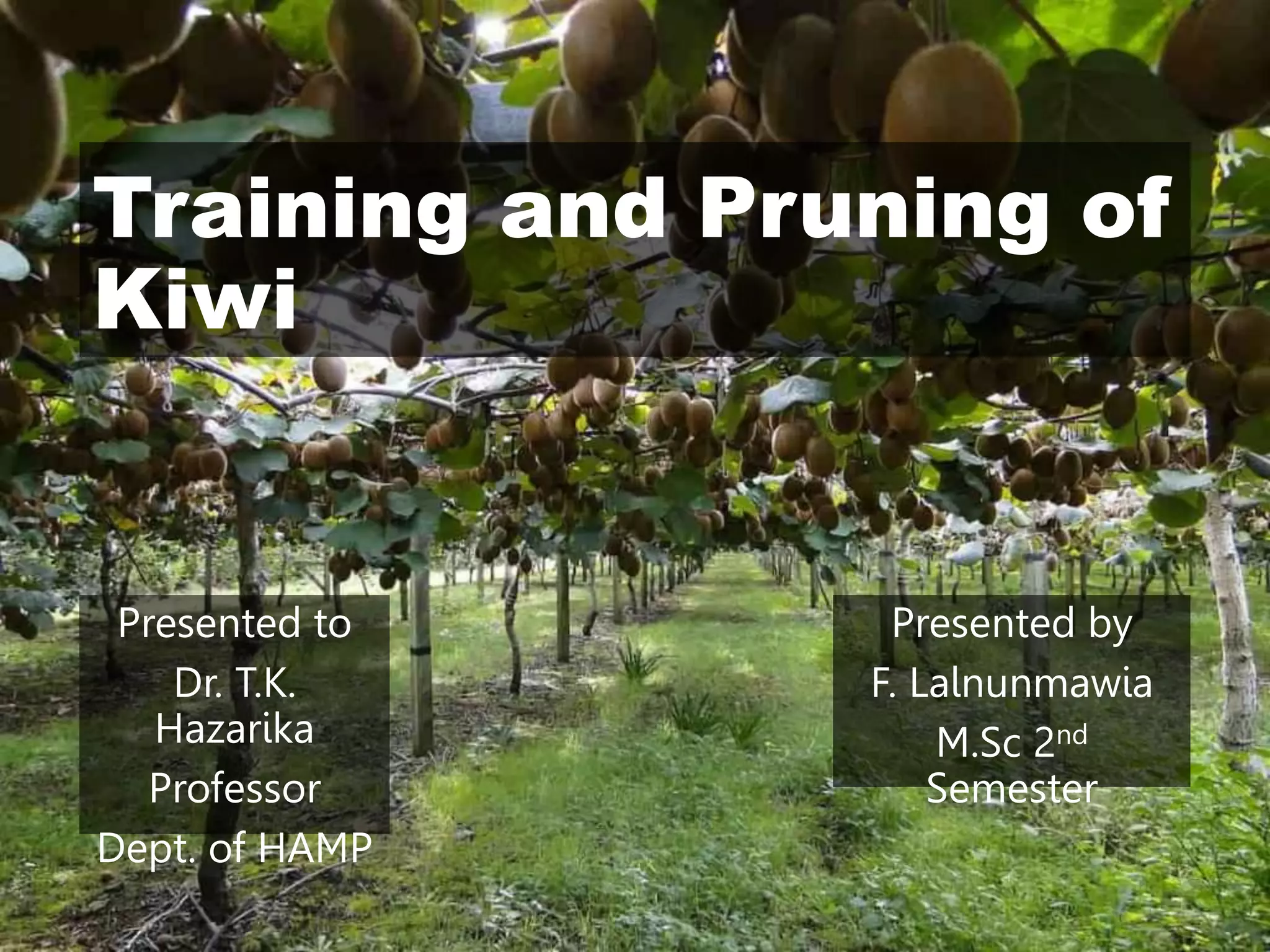
Training and Pruning of
Kiwi
Presented by
F. Lalnunmawia
M.Sc 2nd
Semester
Presented to
Dr. T.K.
Hazarika
Professor
Dept. of HAMP
Introduction
• Kiwifruit is a vine like grape, thus require similar
training structure but more stronger than grapes.
• Bearing starts at the age of 4-5 years.
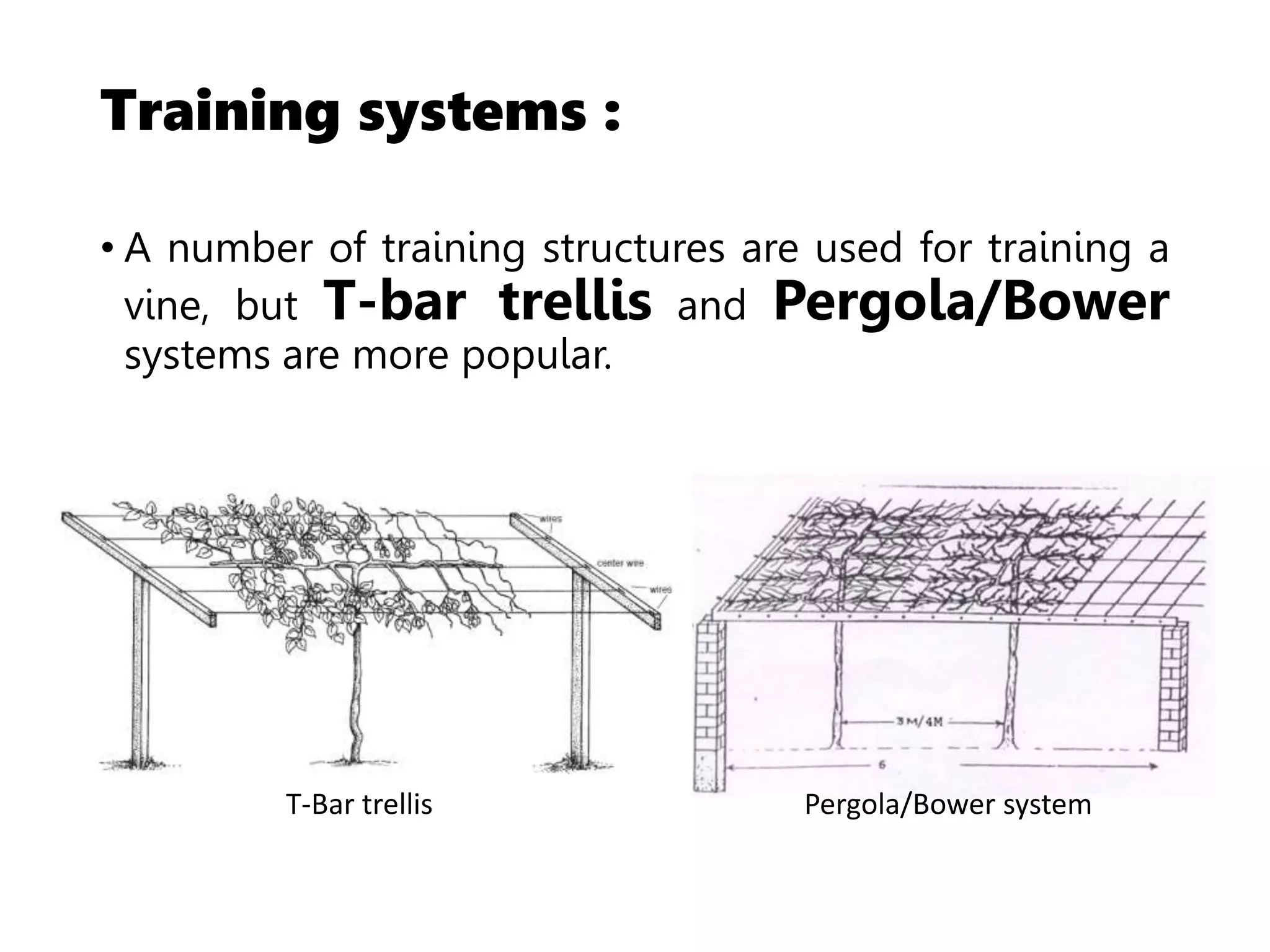
Training systems :
• A number of training structures are used for training a
vine, but T-bar trellis and Pergola/Bower
systems are more popular.
T-Bar trellis Pergola/Bower system
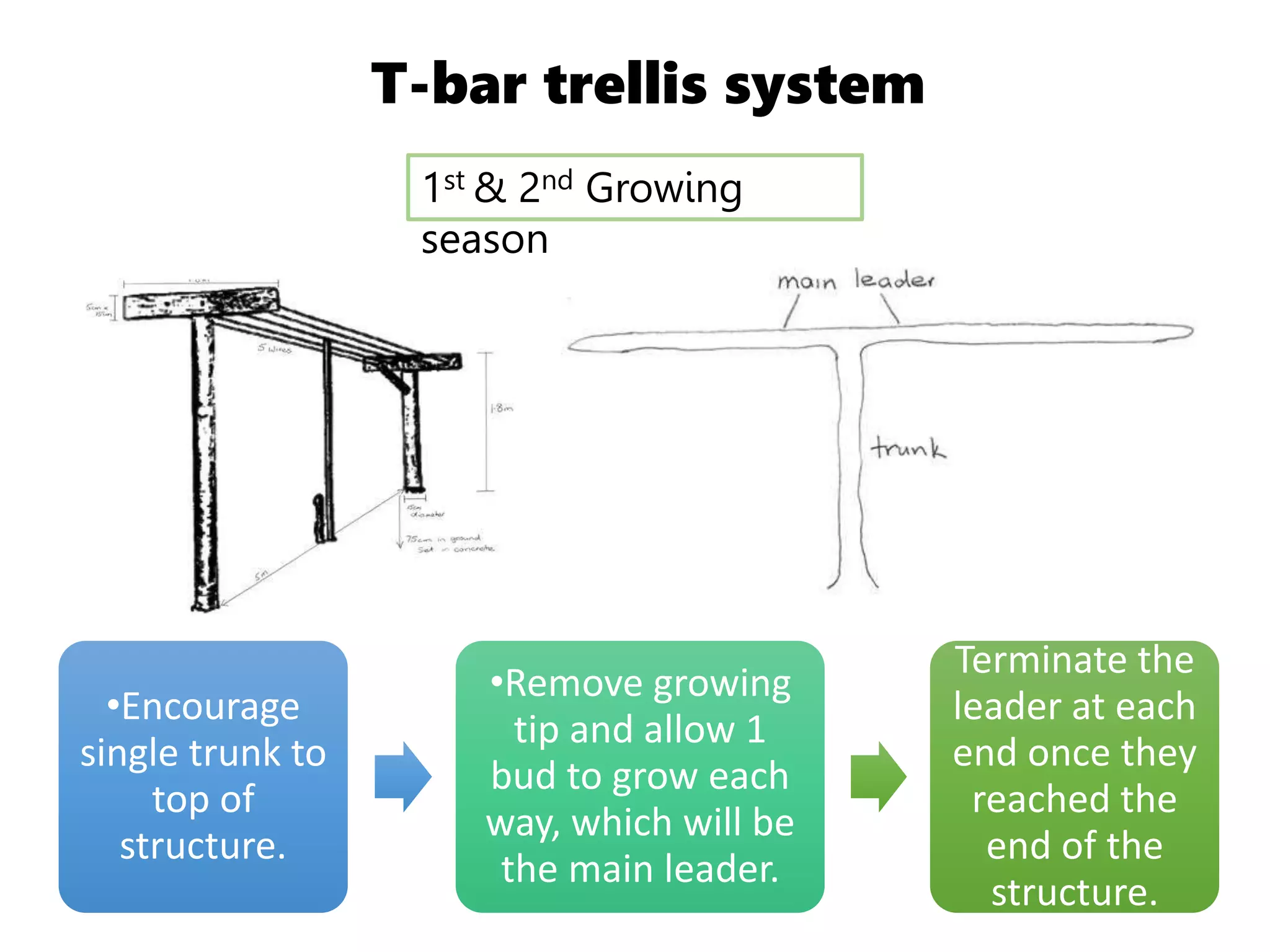
T-bar trellis system
•Encourage
single trunk to
top of
structure.
•Remove growing
tip and allow 1
bud to grow each
way, which will be
the main leader.
Terminate the
leader at each
end once they
reached the
end of the
structure.
1st & 2nd Growing
season
3rd Growing
season
Remove
surplus
canes.
•Tie canes
down to wire
at 40cm
spacing
along leader.
•Buds will
break from
the leader
and form the
canes.
4th Growing
season
Fruiting spurs will develop on the
main leader and one year old canes in
spring then flower and carry fruit in
the autumn.
Pruning
Female Winter Pruning
• Remove dead, diseased
and tangled wood
• Prune to desired
formation as described
in season 1-3
oPrior to
fruiting in
the first 3
years
• Remove all
previously fruited
wood
• Replacement canes
form close to the
main leader to be
tied down.
oAfter
fruiting
Male Winter Pruning
The only purpose of male kiwi fruit vines is to produce flowers for pollination.
The winter pruning of male vines is actually carried out much later in spring,
straight after flowering.
After flowering prune back the canes to 15-30cm long. The new growth
produced in summer will produce flowers in the following year.
Summer Pruning
In summer kiwi fruit will grow very vigorously, and most of
this new growth should be removed.
If the kiwi vine has fruited, cut back the canes to 3-4 buds
(leaves) after the fruit so the vine puts its energy into
developing the fruit rather than more green growth.
Prune back all vigorous upright growth (water shoots)
back to two buds.
•Remove tangles and again restrict the vine to its allocated
space.
Training and pruning of Kiwi.pptx

Training and pruning of Kiwi.pptx

  • 1.
    Training and Pruningof Kiwi Presented by F. Lalnunmawia M.Sc 2nd Semester Presented to Dr. T.K. Hazarika Professor Dept. of HAMP
  • 2.
    Introduction • Kiwifruit isa vine like grape, thus require similar training structure but more stronger than grapes. • Bearing starts at the age of 4-5 years.
  • 3.
    Training systems : •A number of training structures are used for training a vine, but T-bar trellis and Pergola/Bower systems are more popular. T-Bar trellis Pergola/Bower system
  • 4.
    T-bar trellis system •Encourage singletrunk to top of structure. •Remove growing tip and allow 1 bud to grow each way, which will be the main leader. Terminate the leader at each end once they reached the end of the structure. 1st & 2nd Growing season
  • 5.
    3rd Growing season Remove surplus canes. •Tie canes downto wire at 40cm spacing along leader. •Buds will break from the leader and form the canes.
  • 6.
    4th Growing season Fruiting spurswill develop on the main leader and one year old canes in spring then flower and carry fruit in the autumn.
  • 7.
    Pruning Female Winter Pruning •Remove dead, diseased and tangled wood • Prune to desired formation as described in season 1-3 oPrior to fruiting in the first 3 years • Remove all previously fruited wood • Replacement canes form close to the main leader to be tied down. oAfter fruiting
  • 8.
    Male Winter Pruning Theonly purpose of male kiwi fruit vines is to produce flowers for pollination. The winter pruning of male vines is actually carried out much later in spring, straight after flowering. After flowering prune back the canes to 15-30cm long. The new growth produced in summer will produce flowers in the following year.
  • 9.
    Summer Pruning In summerkiwi fruit will grow very vigorously, and most of this new growth should be removed. If the kiwi vine has fruited, cut back the canes to 3-4 buds (leaves) after the fruit so the vine puts its energy into developing the fruit rather than more green growth. Prune back all vigorous upright growth (water shoots) back to two buds. •Remove tangles and again restrict the vine to its allocated space.