PREPARED BY :
MD ZEESHAN
RAHMANI
MHA 1st Semester 2016-
17
GENESIS INSTITUTE OF MANAGEMENT &
TECHNOLOGY
PROJECT BASED ON TRAINING
1470, Rajdanga Main Road
Kolkata-700107, West Bengal
Contents
1. TRAINING
2. IMPORTANCE OF TRAINING
3. TYPES OF TRAINING
4. METHODS OF TRAINING
5. TRAINING PROCESS MODEL
6. THANK YOU
Training is teaching, or developing in oneself or
others, any skills and knowledge that relate to
specific useful competencies. Training has
specific goals of improving one's capability,
capacity, productivity and performance.
TRAINING
IMPORTANCE OF TRAINING
1. Respond to technology changes affecting job
requirements.
2. Respond to organizational restructuring.
3. Adapt to increased diversity of the workforce.
4. Support career development.
5. Fulfill employee need for growth.
TYPES OF TRAINING
skills TRAINING
Focus on job knowledge and skill for:
• Instructing new hires.
• Overcoming performance deficits of the
workforce.
Maintaining worker knowledge and skill as job
requirements change due to:
 Technological innovation
 Organizational restructuring
reTRAINING
Training employees to perform a wider variety
of tasks in order to gain:
 Flexibility in work scheduling.
 Improved coordination.
Cross functional TRAINING
Training self-directed teams with regard to:
 Management skills.
 Coordination skills.
 Cross-functional skills.
team TRAINING
Using innovative learning techniques to enhance
employee ability to spawn new ideas and new
approaches.
creativity TRAINING
Improving basic skills of the workforce such as
mathematics, reading, writing, and effective
employee behaviors such as punctuality,
responsibility,
co-operation etc.
LITERACY TRAINING
Diversity training is instruction aimed at helping
participants to gain cultural awareness in order
to benefit the organization or company
diversity TRAINING
Training to improve communication, better
response to customer needs, and ways to
enhance customer satisfaction.
Customer service TRAINING
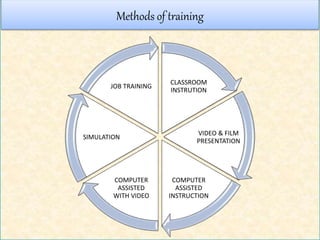
Methods of training
CLASSROOM
INSTRUTION
VIDEO & FILM
PRESENTATION
COMPUTER
ASSISTED
INSTRUCTION
COMPUTER
ASSISTED
WITH VIDEO
SIMULATION
JOB TRAINING
Training process model
Cont.
 Sales and operating plans.
 Productivity measures.
 Technology change.
 Organizational restructuring.
 Change in workforce.
1. ORGANIZATIONAL LEVEL
 Job and task analysis.
 Identify KRAs.
 Review procedural and technical manuals.
2. JOB LEVEL
Cont.
 Job and task analysis.
 Identify KRAs.
 Review procedural and technical manuals.
2. JOB LEVEL
Cont.
Determine who needs training and what
kind.
 Tests.
 Prior training and experience.
 Performance review.
 Career assessment
3.Individual level
ANURADHA MADAM
for
This Work
Training

Training

  • 1.
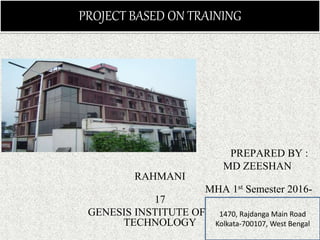
    PREPARED BY : MDZEESHAN RAHMANI MHA 1st Semester 2016- 17 GENESIS INSTITUTE OF MANAGEMENT & TECHNOLOGY PROJECT BASED ON TRAINING 1470, Rajdanga Main Road Kolkata-700107, West Bengal
  • 2.
    Contents 1. TRAINING 2. IMPORTANCEOF TRAINING 3. TYPES OF TRAINING 4. METHODS OF TRAINING 5. TRAINING PROCESS MODEL 6. THANK YOU
  • 3.
    Training is teaching,or developing in oneself or others, any skills and knowledge that relate to specific useful competencies. Training has specific goals of improving one's capability, capacity, productivity and performance. TRAINING
  • 5.
    IMPORTANCE OF TRAINING 1.Respond to technology changes affecting job requirements. 2. Respond to organizational restructuring. 3. Adapt to increased diversity of the workforce. 4. Support career development. 5. Fulfill employee need for growth.
  • 6.
  • 7.
    skills TRAINING Focus onjob knowledge and skill for: • Instructing new hires. • Overcoming performance deficits of the workforce.
  • 8.
    Maintaining worker knowledgeand skill as job requirements change due to:  Technological innovation  Organizational restructuring reTRAINING
  • 9.
    Training employees toperform a wider variety of tasks in order to gain:  Flexibility in work scheduling.  Improved coordination. Cross functional TRAINING
  • 10.
    Training self-directed teamswith regard to:  Management skills.  Coordination skills.  Cross-functional skills. team TRAINING
  • 11.
    Using innovative learningtechniques to enhance employee ability to spawn new ideas and new approaches. creativity TRAINING
  • 12.
    Improving basic skillsof the workforce such as mathematics, reading, writing, and effective employee behaviors such as punctuality, responsibility, co-operation etc. LITERACY TRAINING
  • 13.
    Diversity training isinstruction aimed at helping participants to gain cultural awareness in order to benefit the organization or company diversity TRAINING
  • 14.
    Training to improvecommunication, better response to customer needs, and ways to enhance customer satisfaction. Customer service TRAINING
  • 15.
    Methods of training CLASSROOM INSTRUTION VIDEO& FILM PRESENTATION COMPUTER ASSISTED INSTRUCTION COMPUTER ASSISTED WITH VIDEO SIMULATION JOB TRAINING
  • 16.
  • 17.
     Sales andoperating plans.  Productivity measures.  Technology change.  Organizational restructuring.  Change in workforce. 1. ORGANIZATIONAL LEVEL
  • 18.
     Job andtask analysis.  Identify KRAs.  Review procedural and technical manuals. 2. JOB LEVEL Cont.
  • 19.
     Job andtask analysis.  Identify KRAs.  Review procedural and technical manuals. 2. JOB LEVEL Cont.
  • 20.
    Determine who needstraining and what kind.  Tests.  Prior training and experience.  Performance review.  Career assessment 3.Individual level
  • 21.