COLOMBIAN 
TRADITIONS 
Valeria Ospina Sánchez 
Tenth 
English 
2014 
Celestin Freinet
TYPICAL TRADITIONS OF COLOMBIA 
INTRODUCTION 
Folklore is the compendium of all the 
manifestations of popular culture and 
therefore includes, legends, stories, dances, 
traditions, music and many different artistic 
expressions. 
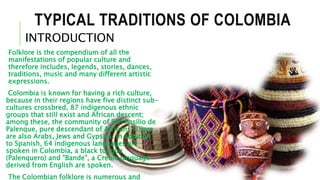
Colombia is known for having a rich culture, 
because in their regions have five distinct sub-cultures 
crossbred, 87 indigenous ethnic 
groups that still exist and African descent; 
among these, the community of San Basilio de 
Palenque, pure descendant of Africans. There 
are also Arabs, Jews and Gypsies. In addition 
to Spanish, 64 indigenous languages are 
spoken in Colombia, a black tongue 
(Palenquero) and "Bande", a Creole language 
derived from English are spoken. 
The Colombian folklore is numerous and
LOCAL FESTIVALS 
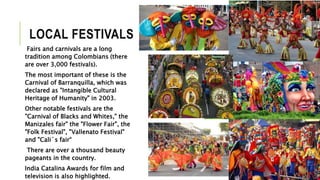
Fairs and carnivals are a long 
tradition among Colombians (there 
are over 3,000 festivals). 
The most important of these is the 
Carnival of Barranquilla, which was 
declared as "Intangible Cultural 
Heritage of Humanity" in 2003. 
Other notable festivals are the 
"Carnival of Blacks and Whites," the 
Manizales fair" the "Flower Fair", the 
"Folk Festival", "Vallenato Festival" 
and "Cali´s fair“ 
There are over a thousand beauty 
pageants in the country. 
India Catalina Awards for film and 
television is also highlighted.
CRAFTS 
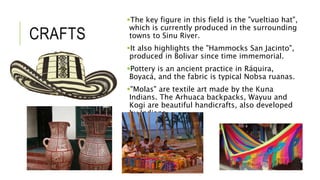
The key figure in this field is the "vueltiao hat", 
which is currently produced in the surrounding 
towns to Sinu River. 
It also highlights the "Hammocks San Jacinto", 
produced in Bolivar since time immemorial. 
Pottery is an ancient practice in Ráquira, 
Boyacá, and the fabric is typical Nobsa ruanas. 
"Molas" are textile art made by the Kuna 
Indians. The Arhuaca backpacks, Wayuu and 
Kogi are beautiful handicrafts, also developed 
by Indians.
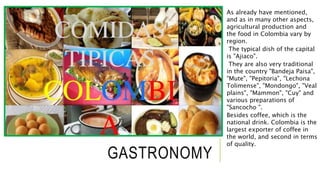
GASTRONOMY 
As already have mentioned, 
and as in many other aspects, 
agricultural production and 
the food in Colombia vary by 
region. 
The typical dish of the capital 
is "Ajiaco". 
They are also very traditional 
in the country "Bandeja Paisa", 
"Mute", "Pepitoria", "Lechona 
Tolimense", "Mondongo", "Veal 
plains", "Mammon", "Cuy" and 
various preparations of 
"Sancocho ". 
Besides coffee, which is the 
national drink. Colombia is the 
largest exporter of coffee in 
the world, and second in terms 
of quality.
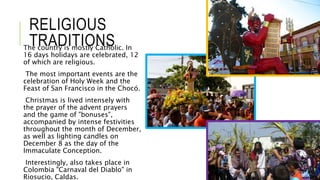
RELIGIOUS 
TRADITIONS The country is mostly Catholic. In 
16 days holidays are celebrated, 12 
of which are religious. 
The most important events are the 
celebration of Holy Week and the 
Feast of San Francisco in the Chocó. 
Christmas is lived intensely with 
the prayer of the advent prayers 
and the game of "bonuses", 
accompanied by intense festivities 
throughout the month of December, 
as well as lighting candles on 
December 8 as the day of the 
Immaculate Conception. 
Interestingly, also takes place in 
Colombia "Carnaval del Diablo" in 
Riosucio, Caldas.
CONCLUSI 
ONS 
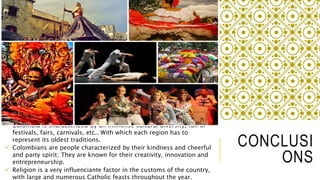
 Colombia is characterized by an immense cultural diversity, full of 
festivals, fairs, carnivals, etc.. With which each region has to 
represent its oldest traditions. 
 Colombians are people characterized by their kindness and cheerful 
and party spirit; They are known for their creativity, innovation and 
entrepreneurship. 
 Religion is a very influenciante factor in the customs of the country, 
with large and numerous Catholic feasts throughout the year.

Colombian Traditions

  • 1.
    COLOMBIAN TRADITIONS ValeriaOspina Sánchez Tenth English 2014 Celestin Freinet
  • 2.
    TYPICAL TRADITIONS OFCOLOMBIA INTRODUCTION Folklore is the compendium of all the manifestations of popular culture and therefore includes, legends, stories, dances, traditions, music and many different artistic expressions. Colombia is known for having a rich culture, because in their regions have five distinct sub-cultures crossbred, 87 indigenous ethnic groups that still exist and African descent; among these, the community of San Basilio de Palenque, pure descendant of Africans. There are also Arabs, Jews and Gypsies. In addition to Spanish, 64 indigenous languages are spoken in Colombia, a black tongue (Palenquero) and "Bande", a Creole language derived from English are spoken. The Colombian folklore is numerous and
  • 3.
    LOCAL FESTIVALS Fairsand carnivals are a long tradition among Colombians (there are over 3,000 festivals). The most important of these is the Carnival of Barranquilla, which was declared as "Intangible Cultural Heritage of Humanity" in 2003. Other notable festivals are the "Carnival of Blacks and Whites," the Manizales fair" the "Flower Fair", the "Folk Festival", "Vallenato Festival" and "Cali´s fair“ There are over a thousand beauty pageants in the country. India Catalina Awards for film and television is also highlighted.
  • 4.
    CRAFTS The keyfigure in this field is the "vueltiao hat", which is currently produced in the surrounding towns to Sinu River. It also highlights the "Hammocks San Jacinto", produced in Bolivar since time immemorial. Pottery is an ancient practice in Ráquira, Boyacá, and the fabric is typical Nobsa ruanas. "Molas" are textile art made by the Kuna Indians. The Arhuaca backpacks, Wayuu and Kogi are beautiful handicrafts, also developed by Indians.
  • 5.
    GASTRONOMY As alreadyhave mentioned, and as in many other aspects, agricultural production and the food in Colombia vary by region. The typical dish of the capital is "Ajiaco". They are also very traditional in the country "Bandeja Paisa", "Mute", "Pepitoria", "Lechona Tolimense", "Mondongo", "Veal plains", "Mammon", "Cuy" and various preparations of "Sancocho ". Besides coffee, which is the national drink. Colombia is the largest exporter of coffee in the world, and second in terms of quality.
  • 6.
    RELIGIOUS TRADITIONS Thecountry is mostly Catholic. In 16 days holidays are celebrated, 12 of which are religious. The most important events are the celebration of Holy Week and the Feast of San Francisco in the Chocó. Christmas is lived intensely with the prayer of the advent prayers and the game of "bonuses", accompanied by intense festivities throughout the month of December, as well as lighting candles on December 8 as the day of the Immaculate Conception. Interestingly, also takes place in Colombia "Carnaval del Diablo" in Riosucio, Caldas.
  • 7.
    CONCLUSI ONS Colombia is characterized by an immense cultural diversity, full of festivals, fairs, carnivals, etc.. With which each region has to represent its oldest traditions.  Colombians are people characterized by their kindness and cheerful and party spirit; They are known for their creativity, innovation and entrepreneurship.  Religion is a very influenciante factor in the customs of the country, with large and numerous Catholic feasts throughout the year.