TowerSmartTowerSmartTowerSmartTowerSmart
Tower Detailing TipsTower Detailing TipsTower Detailing TipsTower Detailing Tips
Series 4Series 4Series 4Series 4
Tower Detailing TipsTower Detailing TipsTower Detailing TipsTower Detailing Tips
Out of all the types of engineers I have worked with, I would say without doubt that transmission line
designers are the engineers I respect the most. They have a tough job, they need to come up with a
few tower designs that will suit hundreds of tower sites for the proposed line. Not only that, they need
to design the towers as light as possible to win the tender, then the towers they designed are tested,
fail at 98% then you incur the cost of a re-test, pass at 100% and you’re a hero, but pass over 110%
you become labelled as a ‘conservative’ engineer.
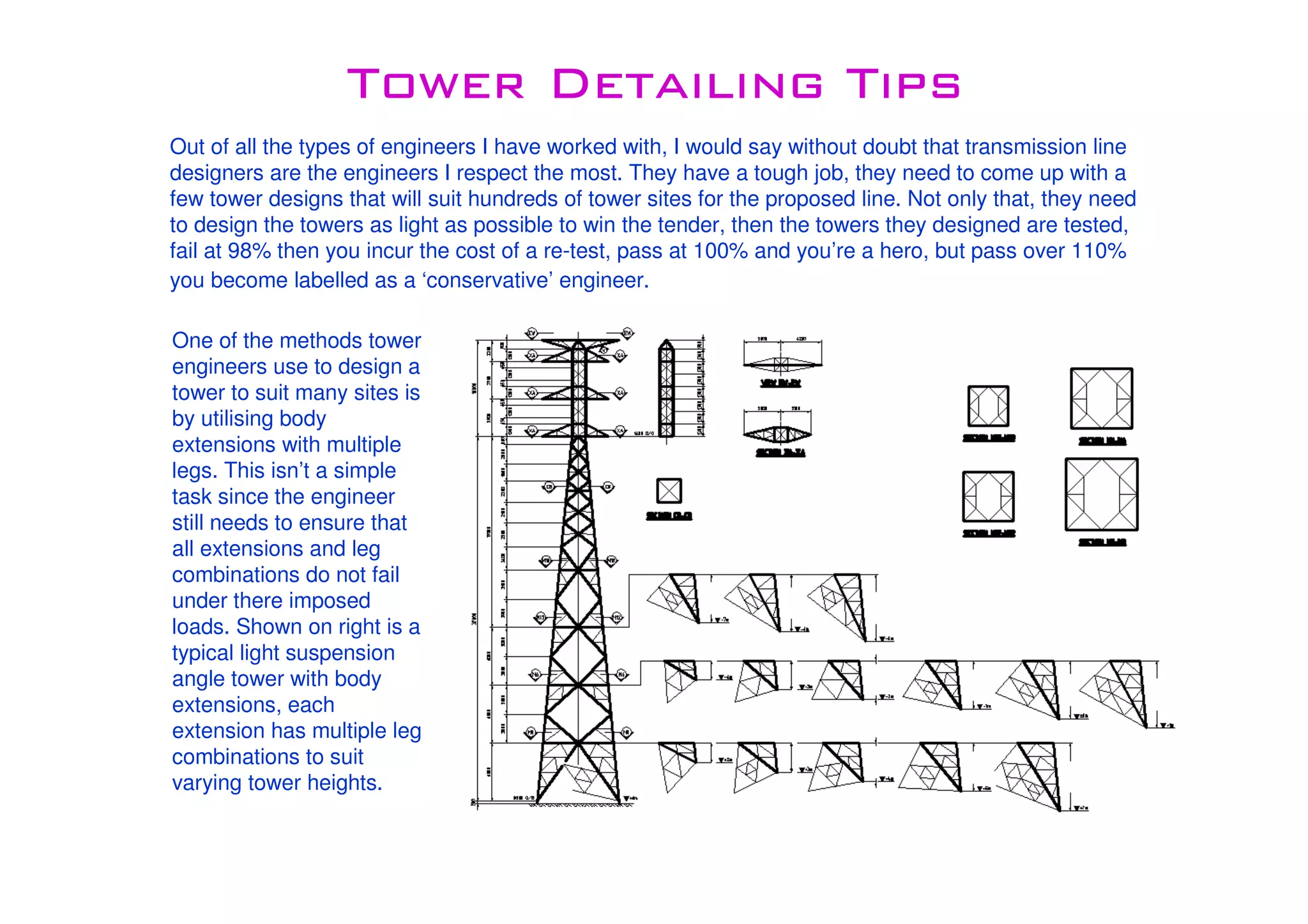
One of the methods tower
engineers use to design a
tower to suit many sites is
by utilising body
extensions with multiple
legs. This isn’t a simple
task since the engineer
still needs to ensure that
all extensions and leg
combinations do not fail
under there imposed
loads. Shown on right is a
typical light suspension
angle tower with body
extensions, each
extension has multiple leg
combinations to suit
varying tower heights.
Tower Detailing TipsTower Detailing TipsTower Detailing TipsTower Detailing Tips
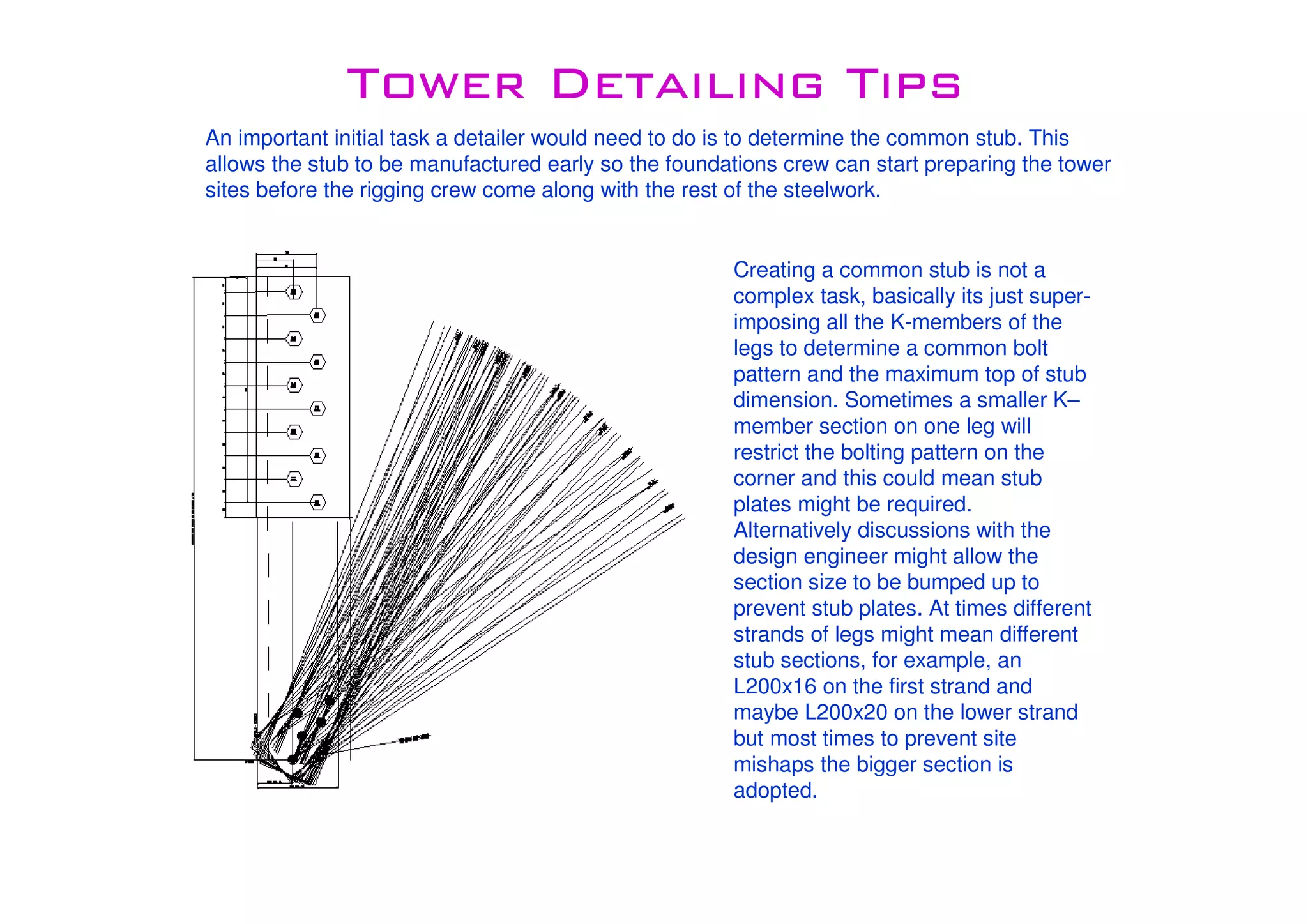
An important initial task a detailer would need to do is to determine the common stub. This
allows the stub to be manufactured early so the foundations crew can start preparing the tower
sites before the rigging crew come along with the rest of the steelwork.
Creating a common stub is not a
complex task, basically its just super-
imposing all the K-members of the
legs to determine a common bolt
pattern and the maximum top of stub
dimension. Sometimes a smaller K–
member section on one leg will
restrict the bolting pattern on the
corner and this could mean stub
plates might be required.
Alternatively discussions with the
design engineer might allow the
section size to be bumped up to
prevent stub plates. At times different
strands of legs might mean different
stub sections, for example, an
L200x16 on the first strand and
maybe L200x20 on the lower strand
but most times to prevent site
mishaps the bigger section is
adopted.
Tower Detailing TipsTower Detailing TipsTower Detailing TipsTower Detailing Tips
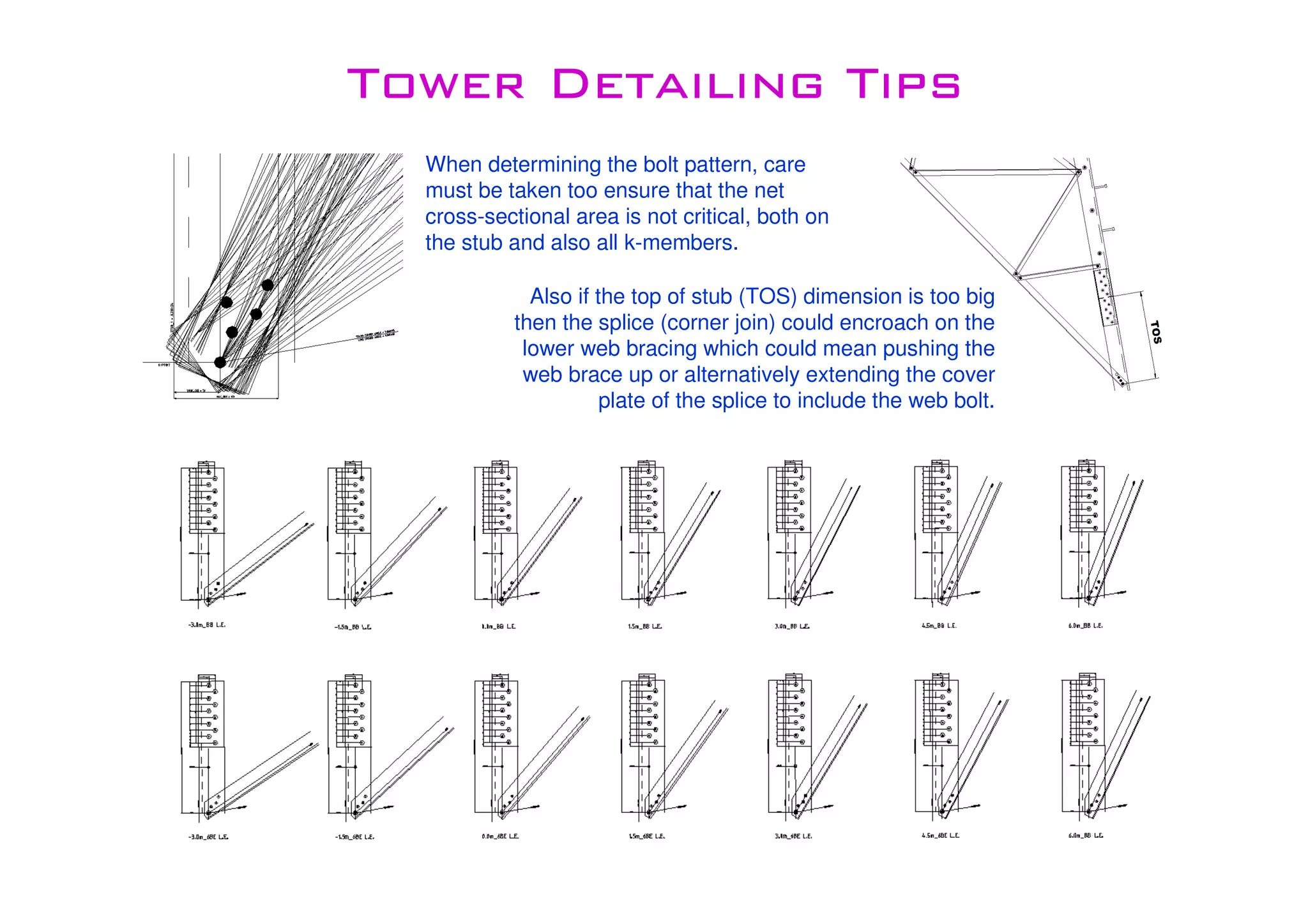
When determining the bolt pattern, care
must be taken too ensure that the net
cross-sectional area is not critical, both on
the stub and also all k-members.
Also if the top of stub (TOS) dimension is too big
then the splice (corner join) could encroach on the
lower web bracing which could mean pushing the
web brace up or alternatively extending the cover
plate of the splice to include the web bolt.
Tower Detailing TipsTower Detailing TipsTower Detailing TipsTower Detailing Tips
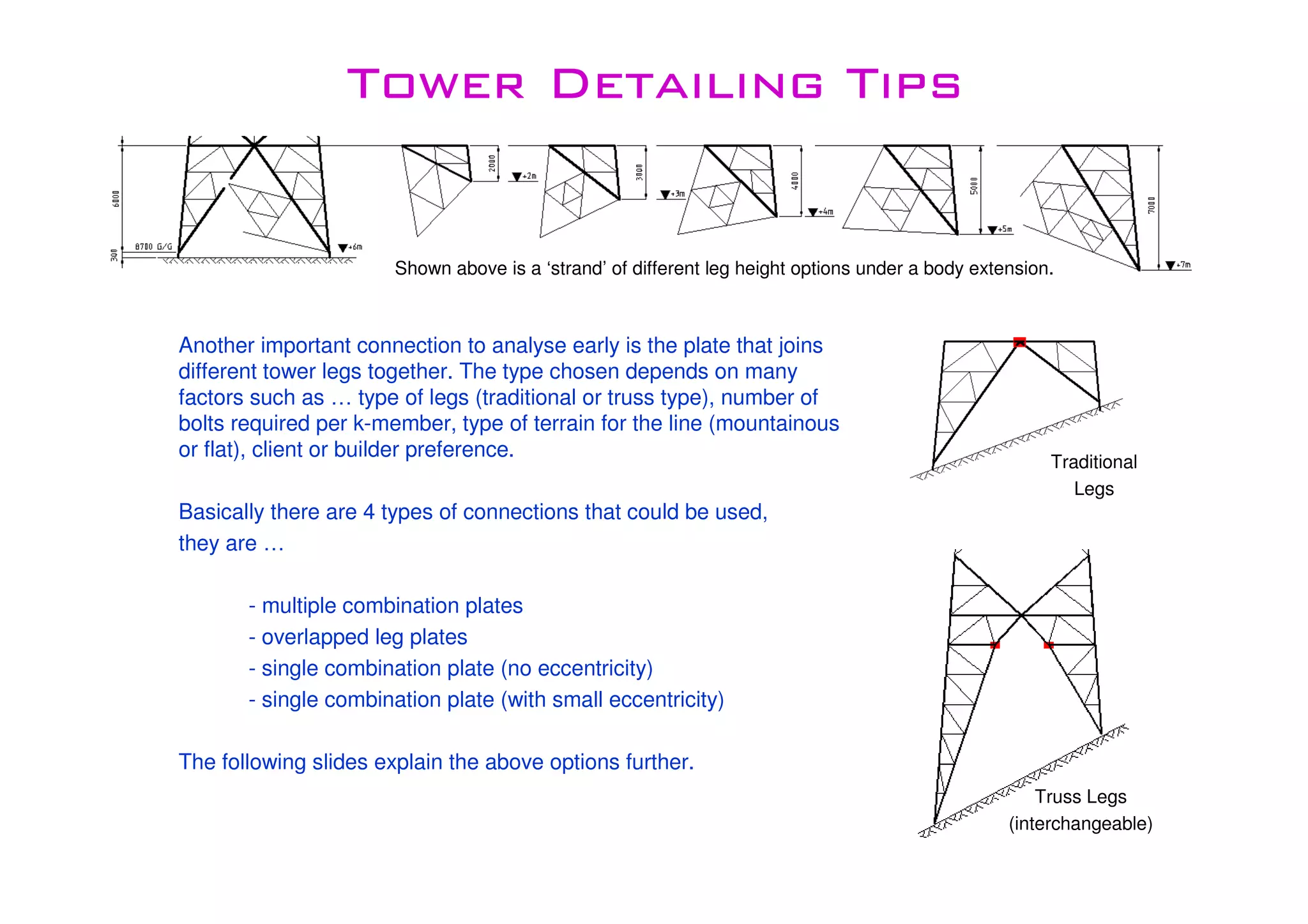
Another important connection to analyse early is the plate that joins
different tower legs together. The type chosen depends on many
factors such as … type of legs (traditional or truss type), number of
bolts required per k-member, type of terrain for the line (mountainous
or flat), client or builder preference.
Basically there are 4 types of connections that could be used,
they are …
- multiple combination plates
- overlapped leg plates
- single combination plate (no eccentricity)
- single combination plate (with small eccentricity)
The following slides explain the above options further.
Shown above is a ‘strand’ of different leg height options under a body extension.
Truss Legs
(interchangeable)
Traditional
Legs
Tower Detailing TipsTower Detailing TipsTower Detailing TipsTower Detailing Tips
Multiple combination plates are the most popular option used.
Basically a plate is created for each leg combination, that is, if 6 legs
are on a strand then 21 plates are required (6+5+4+3+2+1), that is if
all leg height combinations are requested. This option has the least
material waste but does mean more mark numbers are generated.
Some clients prefer overlapped leg plates.
The benefit is that each leg has its own
plate. The pitfall is that a bigger plate is
required so the overlapping plates don’t
interfere with the K members. Also it does
create a small eccentricity between the k-
members (plate thickness). Sometimes this
option is preferred on the first strand of legs
when truss type legs are used.
Tower Detailing TipsTower Detailing TipsTower Detailing TipsTower Detailing Tips
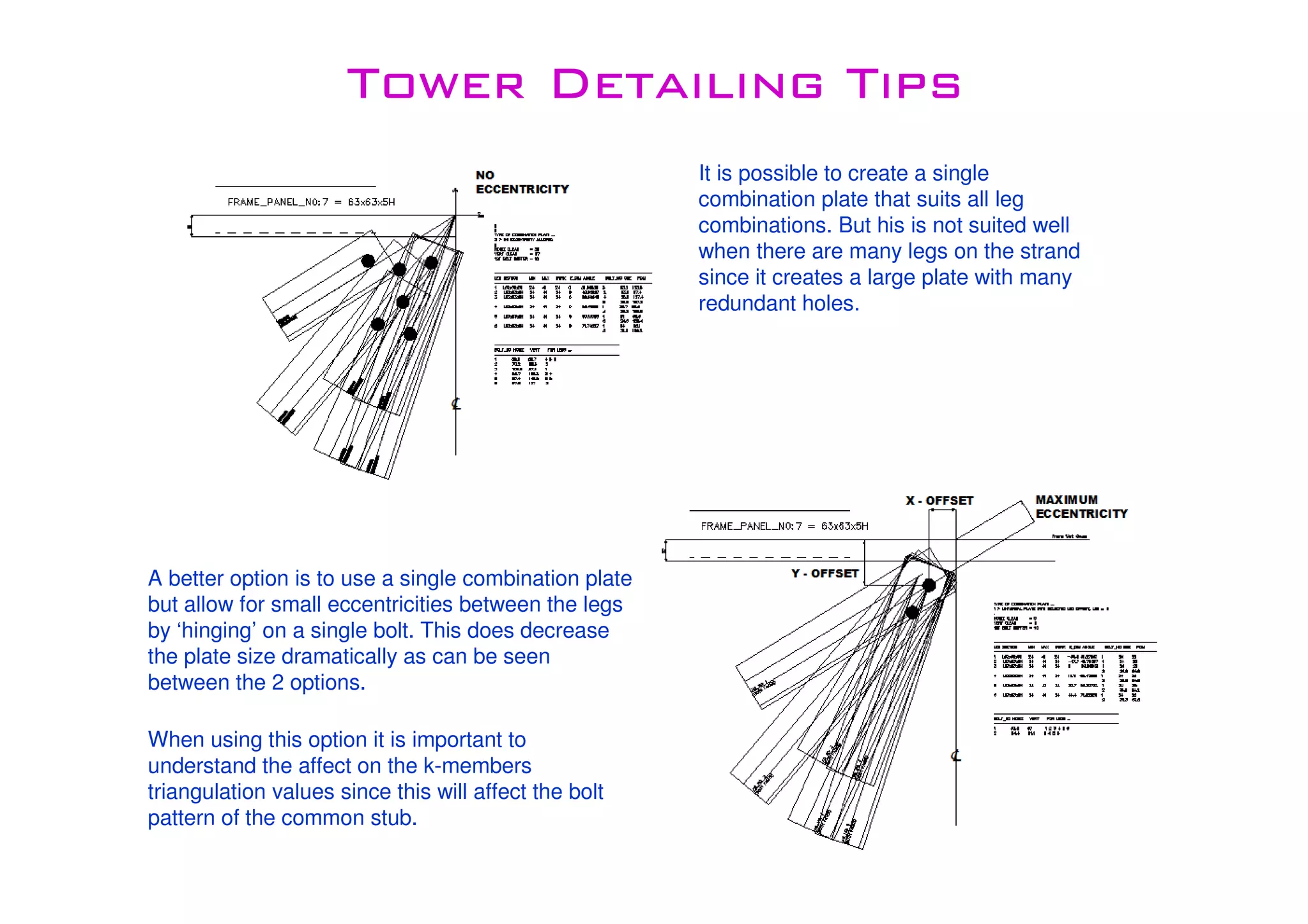
It is possible to create a single
combination plate that suits all leg
combinations. But his is not suited well
when there are many legs on the strand
since it creates a large plate with many
redundant holes.
A better option is to use a single combination plate
but allow for small eccentricities between the legs
by ‘hinging’ on a single bolt. This does decrease
the plate size dramatically as can be seen
between the 2 options.
When using this option it is important to
understand the affect on the k-members
triangulation values since this will affect the bolt
pattern of the common stub.
Tower Detailing TipsTower Detailing TipsTower Detailing TipsTower Detailing Tips
For further information on tower detailing,
visit us at …
www.towersmart.com.au
or send us an email …
enquires@towersmart.com.au
In the next presentation (Tower Detailing Tips - Series 5) we look at the tower ‘waist’,
this is a crucial area that transfers most of the forces from the upper structure
(superstructure) to the lower structure (common body).

Tower smart tower_detailing_tips_series_4

  • 1.
    TowerSmartTowerSmartTowerSmartTowerSmart Tower Detailing TipsTowerDetailing TipsTower Detailing TipsTower Detailing Tips Series 4Series 4Series 4Series 4
  • 2.
    Tower Detailing TipsTowerDetailing TipsTower Detailing TipsTower Detailing Tips Out of all the types of engineers I have worked with, I would say without doubt that transmission line designers are the engineers I respect the most. They have a tough job, they need to come up with a few tower designs that will suit hundreds of tower sites for the proposed line. Not only that, they need to design the towers as light as possible to win the tender, then the towers they designed are tested, fail at 98% then you incur the cost of a re-test, pass at 100% and you’re a hero, but pass over 110% you become labelled as a ‘conservative’ engineer. One of the methods tower engineers use to design a tower to suit many sites is by utilising body extensions with multiple legs. This isn’t a simple task since the engineer still needs to ensure that all extensions and leg combinations do not fail under there imposed loads. Shown on right is a typical light suspension angle tower with body extensions, each extension has multiple leg combinations to suit varying tower heights.
  • 3.
    Tower Detailing TipsTowerDetailing TipsTower Detailing TipsTower Detailing Tips An important initial task a detailer would need to do is to determine the common stub. This allows the stub to be manufactured early so the foundations crew can start preparing the tower sites before the rigging crew come along with the rest of the steelwork. Creating a common stub is not a complex task, basically its just super- imposing all the K-members of the legs to determine a common bolt pattern and the maximum top of stub dimension. Sometimes a smaller K– member section on one leg will restrict the bolting pattern on the corner and this could mean stub plates might be required. Alternatively discussions with the design engineer might allow the section size to be bumped up to prevent stub plates. At times different strands of legs might mean different stub sections, for example, an L200x16 on the first strand and maybe L200x20 on the lower strand but most times to prevent site mishaps the bigger section is adopted.
  • 4.
    Tower Detailing TipsTowerDetailing TipsTower Detailing TipsTower Detailing Tips When determining the bolt pattern, care must be taken too ensure that the net cross-sectional area is not critical, both on the stub and also all k-members. Also if the top of stub (TOS) dimension is too big then the splice (corner join) could encroach on the lower web bracing which could mean pushing the web brace up or alternatively extending the cover plate of the splice to include the web bolt.
  • 5.
    Tower Detailing TipsTowerDetailing TipsTower Detailing TipsTower Detailing Tips Another important connection to analyse early is the plate that joins different tower legs together. The type chosen depends on many factors such as … type of legs (traditional or truss type), number of bolts required per k-member, type of terrain for the line (mountainous or flat), client or builder preference. Basically there are 4 types of connections that could be used, they are … - multiple combination plates - overlapped leg plates - single combination plate (no eccentricity) - single combination plate (with small eccentricity) The following slides explain the above options further. Shown above is a ‘strand’ of different leg height options under a body extension. Truss Legs (interchangeable) Traditional Legs
  • 6.
    Tower Detailing TipsTowerDetailing TipsTower Detailing TipsTower Detailing Tips Multiple combination plates are the most popular option used. Basically a plate is created for each leg combination, that is, if 6 legs are on a strand then 21 plates are required (6+5+4+3+2+1), that is if all leg height combinations are requested. This option has the least material waste but does mean more mark numbers are generated. Some clients prefer overlapped leg plates. The benefit is that each leg has its own plate. The pitfall is that a bigger plate is required so the overlapping plates don’t interfere with the K members. Also it does create a small eccentricity between the k- members (plate thickness). Sometimes this option is preferred on the first strand of legs when truss type legs are used.
  • 7.
    Tower Detailing TipsTowerDetailing TipsTower Detailing TipsTower Detailing Tips It is possible to create a single combination plate that suits all leg combinations. But his is not suited well when there are many legs on the strand since it creates a large plate with many redundant holes. A better option is to use a single combination plate but allow for small eccentricities between the legs by ‘hinging’ on a single bolt. This does decrease the plate size dramatically as can be seen between the 2 options. When using this option it is important to understand the affect on the k-members triangulation values since this will affect the bolt pattern of the common stub.
  • 8.
    Tower Detailing TipsTowerDetailing TipsTower Detailing TipsTower Detailing Tips For further information on tower detailing, visit us at … www.towersmart.com.au or send us an email … enquires@towersmart.com.au In the next presentation (Tower Detailing Tips - Series 5) we look at the tower ‘waist’, this is a crucial area that transfers most of the forces from the upper structure (superstructure) to the lower structure (common body).