JOGINPALLY B R ENGINEERING COLLEGE
DEPARTMENT OF INFORMATION TECHNOLOGY
TECHNICAL SEMINAR
ON
PRESENTED
BY
UNDER THE GUIDANCE
MR.K VENKAIAH
ASSISTANT PROFESSOR
TABLE OF CONTENTS
1.Introduction
2.What is touch less touch screen?
3.History
4.Architecture
5.Technology
6.Applications
7.Advantages
8.Disadvantages
9.Research work
10.Future scope
11.Conclusion
12.References
Touchless touch screens work without direct
physical contact. They either use infrared
sensors to detect motion or interpret hand
gestures, enabling interaction without touching
the screen directly.
Touchless touch screens
enable interaction without
physical contact.
Example: using infrared
sensors or gestures to
control a screen without
touching it directly.
Touchless touch screens started
with early experiments in the 1980s,
gained momentum with Microsoft's
Kinect in 2010, and have since
evolved for hands-free interaction
using gestures and infrared
technology.
Touchless touch screens can use
infrared sensors that detect
interruptions in an infrared field or
cameras to recognize gestures,
allowing interaction without physical
touch.
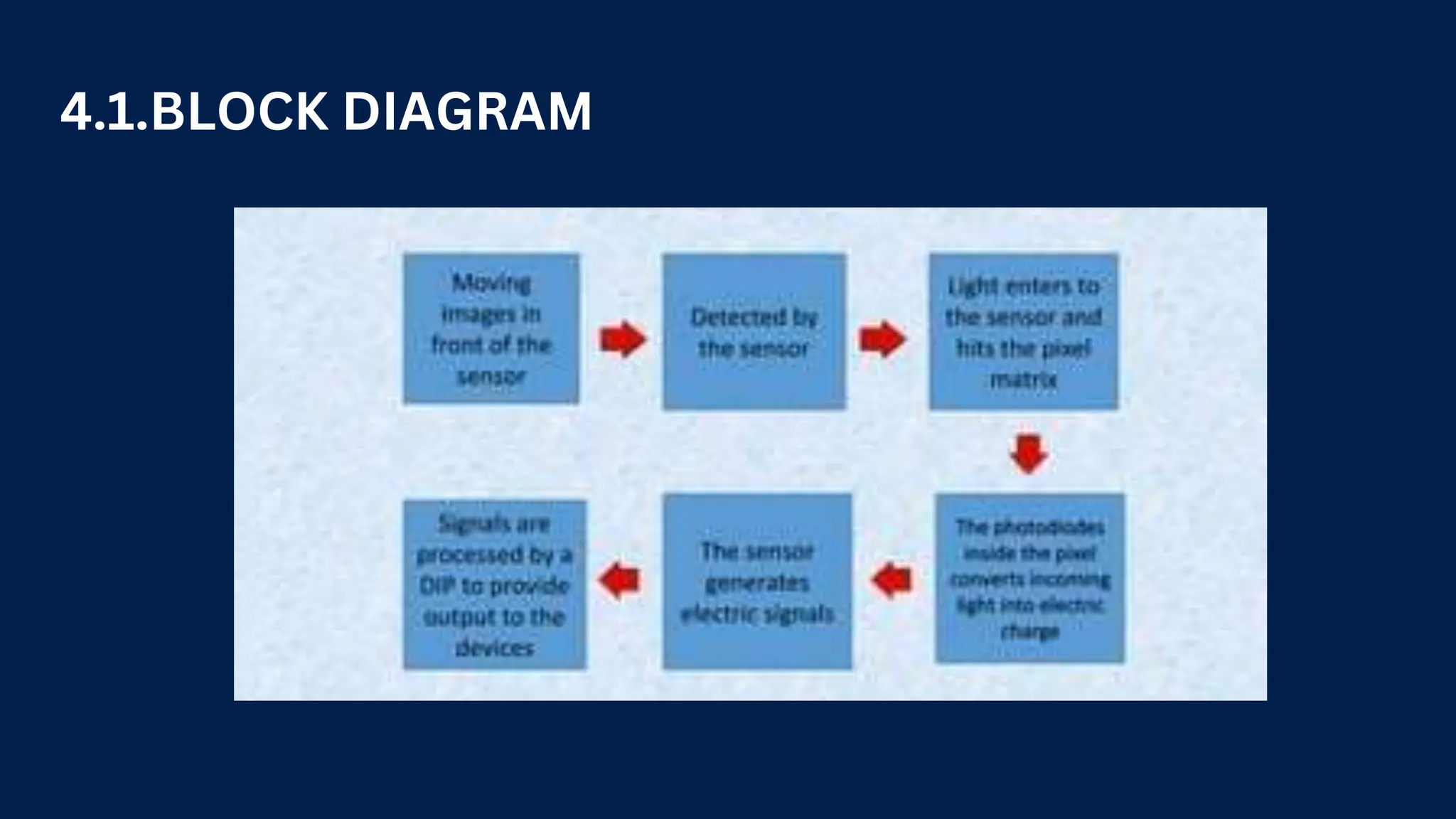
4.1.BLOCK DIAGRAM
• Touchless touchscreens often utilize
technologies like infrared sensors,
capacitive sensors, or camera-based
systems.
• Infrared sensors detect interruptions in
infrared light beams, while capacitive
sensors respond to changes in electrical
capacitance. Camera-based systems use
computer vision to interpret gestures or
movements.
• Combining these technologies enables
touchless interactions in various devices.
1.Public self
services
2.Health care
3.Gaming
4.Smart homes
1.Public Self services: Touchless
screens are used in information
kiosks at public places like
airports, museums, and shopping
centers to provide interactive and
hygienic information access.
2.Healthcare: In medical settings,
touchless technology helps control
the spread of infections. It's
employed in interfaces for medical
equipment, patient records, and
diagnostic tools
Gaming: Touchless technology is
used in gaming consoles and
arcades, offering an immersive
gaming experience with gesture-
based controls.
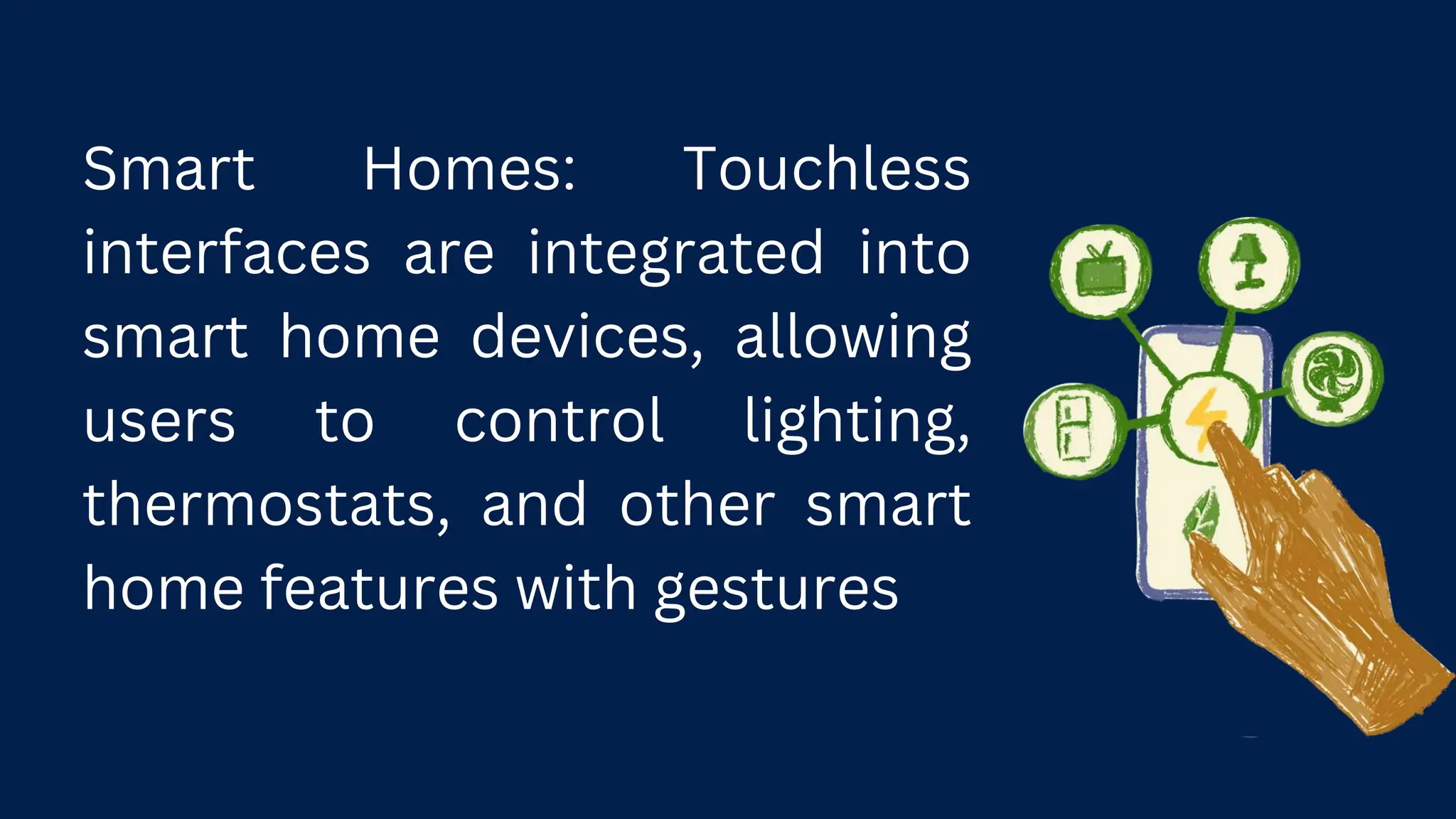
Smart Homes: Touchless
interfaces are integrated into
smart home devices, allowing
users to control lighting,
thermostats, and other smart
home features with gestures
Education:Touchless
touchscreens are integrated
into interactive whiteboards
and educational displays,
promoting a more engaging
and hygienic learning
environment.
• Cleanliness: Touchless touchscreens help keep
things clean by letting you interact without
physically touching the screen, reducing the
spread of germs.
• Safety: They make things safer by minimizing
direct physical contact, which is especially
important in places like hospitals or during
health concerns.
• Lasting Longer: These screens might last longer
because they don't suffer as much wear and tear from
people touching them all the time
• Easy to Use: They're easy to use, allowing for gestures or
voice commands, which can be helpful for people with
difficulty using traditional touchscreens
• Fun and Creative: They can be fun and creative,
especially in games or interactive displays where you
can control things with gestures
• Cost: Implementing touchless technology can be
more expensive than traditional touchscreen
systems, potentially increasing the overall cost of
the device or system
• Complexity: Touchless systems can be more complex
to design and implement, requiring sophisticated
sensors and algorithms, which may result in increased
development time and challenges.
• Power Consumption: Some touchless technologies,
especially those using cameras or sensors, may
consume more power, impacting the device's battery
life, which is crucial for portable devices.
• Environmental Sensitivity: Certain touchless systems
may be sensitive to environmental factors like lighting
conditions, obstacles, or interference, affecting their
reliability in specific situations.
• Security Concerns: Touchless systems, particularly
those relying on facial recognition or biometric data,
may raise privacy and security concerns if not
implemented and secured properly.
• Researchers are making touchless screens better by
improving how they sense touch and studying how people
use them. They're focused on cleanliness, safety, and figuring
out where these screens work best. They're also looking at
costs, security, and finding new ways to make them more
accessible and environmentally friendly. Overall, the goal is
to make touchless technology easier, safer, and better for
everyone.
• Touchless touchscreens are getting cooler! They'll
soon recognize gestures even better and work with
fancy stuff like augmented reality.
• Everyone, from hospitals to cars, will use them
more for easy and fun experiences.
• Think holograms and super-smart voice commands.
Plus, they're focusing on being inclusive and eco-
friendly for a better future where our interactions
with computers are awesome and good for the
planet.
• In conclusion, touchless touchscreens are
changing how we interact with computers,
offering a hands-free and clean option.
They're used in healthcare, retail, and more,
making interactions convenient. Future
improvements might include better gestures
and cool features. Despite challenges, they're
set to keep making digital interactions easy
and fun.
http://www.engadget.com/tag/interface
/
http://www.etre.com/blog/2008/02/elliptic_labs_toucjless_monitor
/
http://hitslot.com/?P=21
4
TOUCH LESS TOUCH SCREEN PRESENTATION ON PPT

TOUCH LESS TOUCH SCREEN PRESENTATION ON PPT

  • 1.
    JOGINPALLY B RENGINEERING COLLEGE DEPARTMENT OF INFORMATION TECHNOLOGY TECHNICAL SEMINAR ON PRESENTED BY UNDER THE GUIDANCE MR.K VENKAIAH ASSISTANT PROFESSOR
  • 2.
    TABLE OF CONTENTS 1.Introduction 2.Whatis touch less touch screen? 3.History 4.Architecture 5.Technology 6.Applications 7.Advantages 8.Disadvantages 9.Research work 10.Future scope 11.Conclusion 12.References
  • 3.
    Touchless touch screenswork without direct physical contact. They either use infrared sensors to detect motion or interpret hand gestures, enabling interaction without touching the screen directly.
  • 4.
    Touchless touch screens enableinteraction without physical contact. Example: using infrared sensors or gestures to control a screen without touching it directly.
  • 5.
    Touchless touch screensstarted with early experiments in the 1980s, gained momentum with Microsoft's Kinect in 2010, and have since evolved for hands-free interaction using gestures and infrared technology.
  • 6.
    Touchless touch screenscan use infrared sensors that detect interruptions in an infrared field or cameras to recognize gestures, allowing interaction without physical touch.
  • 7.
  • 8.
    • Touchless touchscreensoften utilize technologies like infrared sensors, capacitive sensors, or camera-based systems. • Infrared sensors detect interruptions in infrared light beams, while capacitive sensors respond to changes in electrical capacitance. Camera-based systems use computer vision to interpret gestures or movements. • Combining these technologies enables touchless interactions in various devices.
  • 9.
  • 10.
    1.Public Self services:Touchless screens are used in information kiosks at public places like airports, museums, and shopping centers to provide interactive and hygienic information access.
  • 11.
    2.Healthcare: In medicalsettings, touchless technology helps control the spread of infections. It's employed in interfaces for medical equipment, patient records, and diagnostic tools
  • 12.
    Gaming: Touchless technologyis used in gaming consoles and arcades, offering an immersive gaming experience with gesture- based controls.
  • 13.
    Smart Homes: Touchless interfacesare integrated into smart home devices, allowing users to control lighting, thermostats, and other smart home features with gestures
  • 14.
    Education:Touchless touchscreens are integrated intointeractive whiteboards and educational displays, promoting a more engaging and hygienic learning environment.
  • 15.
    • Cleanliness: Touchlesstouchscreens help keep things clean by letting you interact without physically touching the screen, reducing the spread of germs. • Safety: They make things safer by minimizing direct physical contact, which is especially important in places like hospitals or during health concerns.
  • 16.
    • Lasting Longer:These screens might last longer because they don't suffer as much wear and tear from people touching them all the time • Easy to Use: They're easy to use, allowing for gestures or voice commands, which can be helpful for people with difficulty using traditional touchscreens • Fun and Creative: They can be fun and creative, especially in games or interactive displays where you can control things with gestures
  • 17.
    • Cost: Implementingtouchless technology can be more expensive than traditional touchscreen systems, potentially increasing the overall cost of the device or system • Complexity: Touchless systems can be more complex to design and implement, requiring sophisticated sensors and algorithms, which may result in increased development time and challenges.
  • 18.
    • Power Consumption:Some touchless technologies, especially those using cameras or sensors, may consume more power, impacting the device's battery life, which is crucial for portable devices. • Environmental Sensitivity: Certain touchless systems may be sensitive to environmental factors like lighting conditions, obstacles, or interference, affecting their reliability in specific situations. • Security Concerns: Touchless systems, particularly those relying on facial recognition or biometric data, may raise privacy and security concerns if not implemented and secured properly.
  • 19.
    • Researchers aremaking touchless screens better by improving how they sense touch and studying how people use them. They're focused on cleanliness, safety, and figuring out where these screens work best. They're also looking at costs, security, and finding new ways to make them more accessible and environmentally friendly. Overall, the goal is to make touchless technology easier, safer, and better for everyone.
  • 20.
    • Touchless touchscreensare getting cooler! They'll soon recognize gestures even better and work with fancy stuff like augmented reality. • Everyone, from hospitals to cars, will use them more for easy and fun experiences. • Think holograms and super-smart voice commands. Plus, they're focusing on being inclusive and eco- friendly for a better future where our interactions with computers are awesome and good for the planet.
  • 21.
    • In conclusion,touchless touchscreens are changing how we interact with computers, offering a hands-free and clean option. They're used in healthcare, retail, and more, making interactions convenient. Future improvements might include better gestures and cool features. Despite challenges, they're set to keep making digital interactions easy and fun.
  • 22.