DEPARTMENT OF COMPUTER SCIENCE & ENGINEERING
SEMINAR PRESENTATION -1
TITLE: TOUCHLESS TOUCH SCREEN TECHNOLOGY
WINTER SEMINAR (2024-2025)
PRESENTED BY
A.ANIL (21E11A0502)
SUPERVISED BY
Faculty Name : G.RAGHAVENDAR
Designation : ASSISTANT PROFESSOR
AGENDA
• Touchless Touch Screen Technology
• Working
• Applications
• Touchless Touch Screens vs Voice Control
• Key Technologies
• Challenges
• Benefits
• Market Trends and Growth
• Conclusion
What is Touchless Touch Screen
Technology?
• Touchless Touch Screen Technology enables
interaction with electronic devices without
physical contact.
• Instead of relying on physical touch or pressing, it
uses sensors, infrared light, or cameras to detect
hand movements.
• This technology ensures a cleaner, more hygienic,
and more convenient user experience.
HOW TOUCHLESS TOUCH SCREENS WORKS
• Touchless technology relies on various methods to detect
user input:
• 1. Infrared Sensors: Emit infrared light that detects
movement and gestures.
• 2. Optical Sensors: Use cameras or optical devices to
detect gestures and proximity.
• 3. Capacitive Sensors: Detect changes in electrical fields
near the sensor when a hand or finger approaches.
Applications in Healthcare
• Touchless screens are increasingly adopted in
healthcare environments where hygiene is crucial.
• Examples include:
• - Patient check-in systems at or hospitalsclinics
• - Medical equipment control interfaces
• - Hands-free controls in operating rooms to
prevent contamination
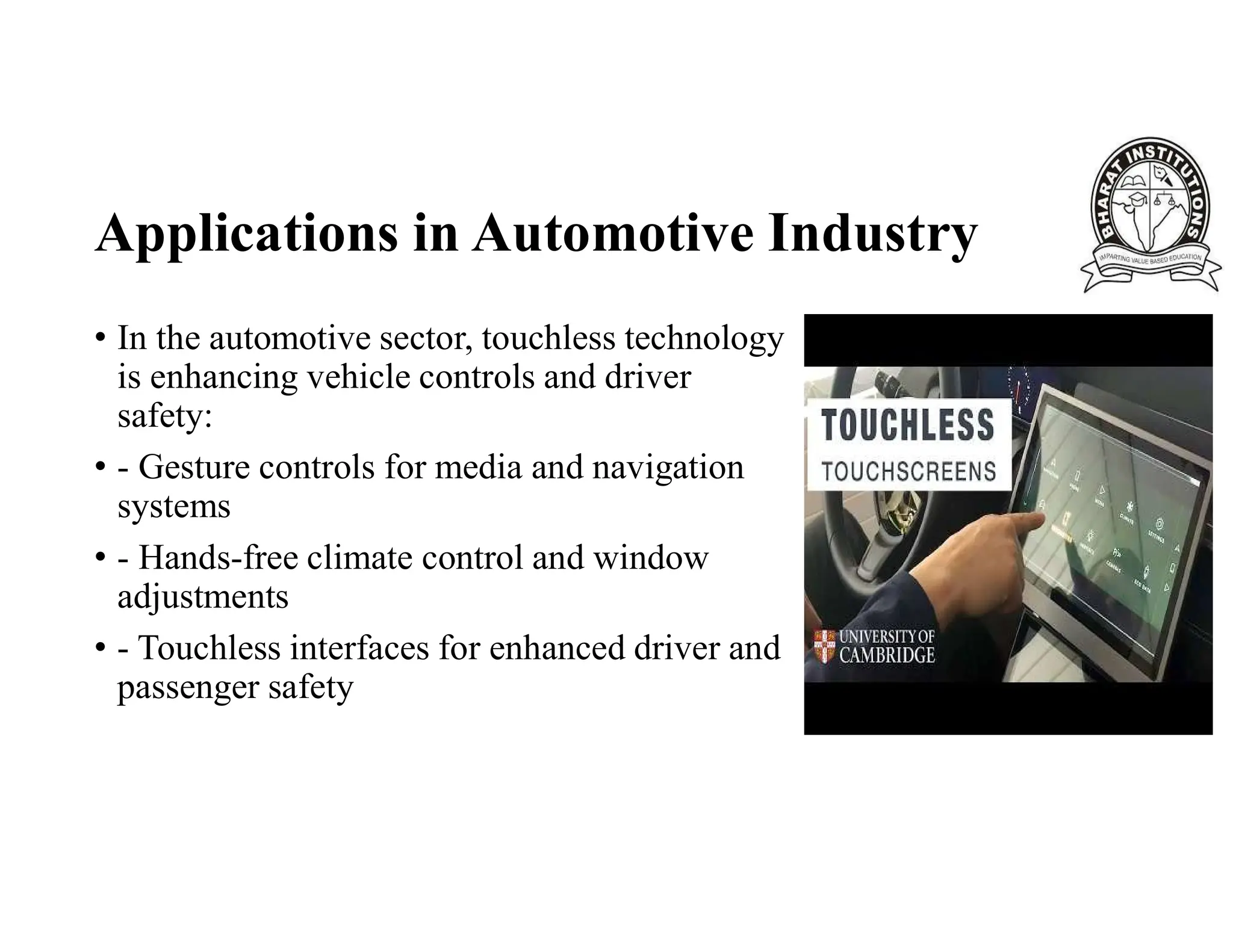
Applications in Automotive Industry
• In the automotive sector, touchless technology
is enhancing vehicle controls and driver
safety:
• - Gesture controls for media and navigation
systems
• - Hands-free climate control and window
adjustments
• - Touchless interfaces for enhanced driver and
passenger safety
Benefits of Touchless Touch Screens
• 1. Hygiene: Reduces physical contact,
minimizing the spread of bacteria and germs.
• 2. Convenience: Allows users to interact
without having to physically touch the
screen, which is ideal for public kiosks and
environments where hygiene is critical.
• 3. Enhanced Experience: Offers new forms
of interaction, such as air gestures and
touchless commands.
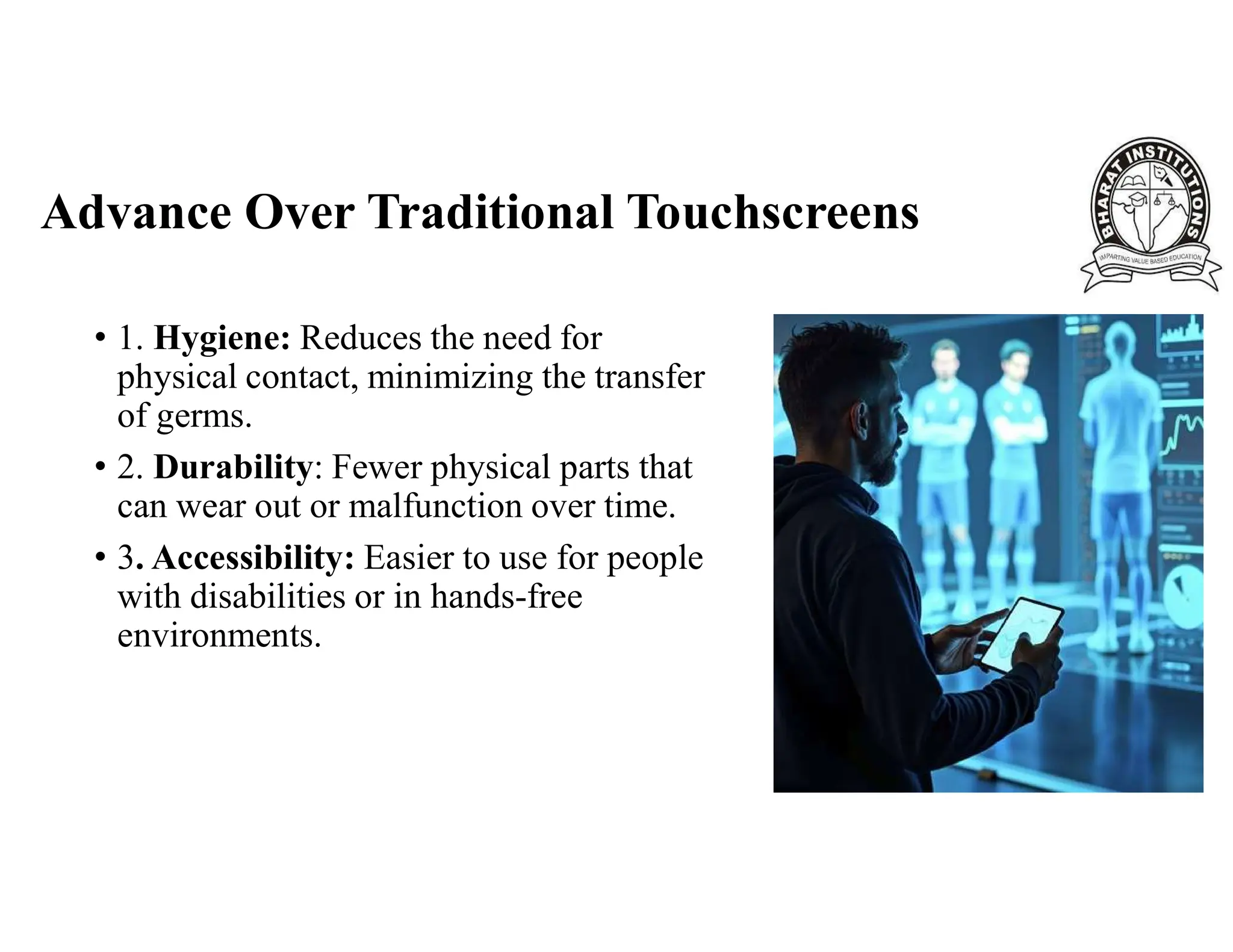
Advance Over Traditional Touchscreens
• 1. Hygiene: Reduces the need for
physical contact, minimizing the transfer
of germs.
• 2. Durability: Fewer physical parts that
can wear out or malfunction over time.
• 3. Accessibility: Easier to use for people
with disabilities or in hands-free
environments.
Touchless Touch Screens vs Voice Control
• While both touchless touch screens and voice
control offer hands-free interaction, they have
their differences:
• Touchless Touch Screens:
• - Detect gestures and movements without
physical contact.
• - Provide intuitive control without reliance on
voice recognition.
• Voice Control:
• - Requires vocal input, making it suitable for
tasks where hands cannot be used.
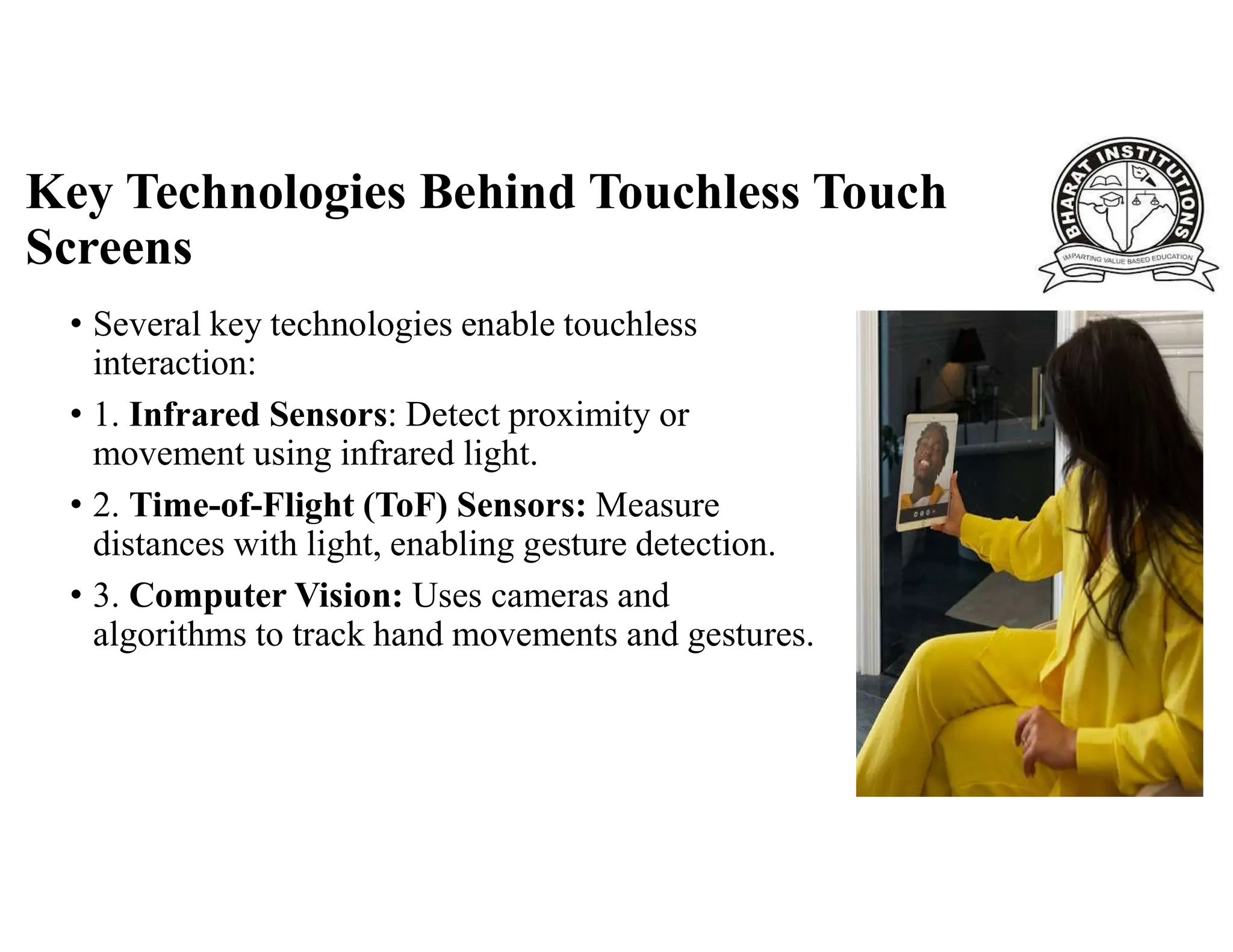
Key Technologies Behind Touchless Touch
Screens
• Several key technologies enable touchless
interaction:
• 1. Infrared Sensors: Detect proximity or
movement using infrared light.
• 2. Time-of-Flight (ToF) Sensors: Measure
distances with light, enabling gesture detection.
• 3. Computer Vision: Uses cameras and
algorithms to track hand movements and gestures.
Challenges of Touchless Technology
• 1. Environmental Factors: Lighting,
background interference, or cluttered
environments can impact sensor
performance.
• 2. High Cost: Advanced sensor systems and
cameras can increase the cost of touchless
devices.
• 3. Limited Precision: Detecting small
gestures or fine movements may be
challenging in certain applications.
The Future of Touchless Touch Screens
• The future of touchless touch screen
technology looks promising with ongoing
advancements in:
• 1. More accurate gesture recognition using AI
and machine learning.
• 2. Reduced costs with the mass production of
sensors and cameras.
• 3. Wider adoption in consumer electronics,
home automation, and robotics.
Market Trends and Growth
• The market for touchless touch screen technology is
expected to grow rapidly in the coming years. The
key drivers for growth include:
• 1. Increased adoption in healthcare and retail.
• 2. Rising demand for contactless interfaces due to
hygiene concerns.
• 3. Advancements in sensor technology.
Conclusion
• Touchless touch screen technology offers a
transformative way to interact with devices,
making them more hygienic, efficient, and
innovative. As the technology advances, its
applications will continue to expand across
multiple industries, enhancing user
experiences.
Thank You

Touchless touch screen technology seminar ppt

  • 1.
    DEPARTMENT OF COMPUTERSCIENCE & ENGINEERING SEMINAR PRESENTATION -1 TITLE: TOUCHLESS TOUCH SCREEN TECHNOLOGY WINTER SEMINAR (2024-2025) PRESENTED BY A.ANIL (21E11A0502) SUPERVISED BY Faculty Name : G.RAGHAVENDAR Designation : ASSISTANT PROFESSOR
  • 2.
    AGENDA • Touchless TouchScreen Technology • Working • Applications • Touchless Touch Screens vs Voice Control • Key Technologies • Challenges • Benefits • Market Trends and Growth • Conclusion
  • 3.
    What is TouchlessTouch Screen Technology? • Touchless Touch Screen Technology enables interaction with electronic devices without physical contact. • Instead of relying on physical touch or pressing, it uses sensors, infrared light, or cameras to detect hand movements. • This technology ensures a cleaner, more hygienic, and more convenient user experience.
  • 4.
    HOW TOUCHLESS TOUCHSCREENS WORKS • Touchless technology relies on various methods to detect user input: • 1. Infrared Sensors: Emit infrared light that detects movement and gestures. • 2. Optical Sensors: Use cameras or optical devices to detect gestures and proximity. • 3. Capacitive Sensors: Detect changes in electrical fields near the sensor when a hand or finger approaches.
  • 5.
    Applications in Healthcare •Touchless screens are increasingly adopted in healthcare environments where hygiene is crucial. • Examples include: • - Patient check-in systems at or hospitalsclinics • - Medical equipment control interfaces • - Hands-free controls in operating rooms to prevent contamination
  • 6.
    Applications in AutomotiveIndustry • In the automotive sector, touchless technology is enhancing vehicle controls and driver safety: • - Gesture controls for media and navigation systems • - Hands-free climate control and window adjustments • - Touchless interfaces for enhanced driver and passenger safety
  • 7.
    Benefits of TouchlessTouch Screens • 1. Hygiene: Reduces physical contact, minimizing the spread of bacteria and germs. • 2. Convenience: Allows users to interact without having to physically touch the screen, which is ideal for public kiosks and environments where hygiene is critical. • 3. Enhanced Experience: Offers new forms of interaction, such as air gestures and touchless commands.
  • 8.
    Advance Over TraditionalTouchscreens • 1. Hygiene: Reduces the need for physical contact, minimizing the transfer of germs. • 2. Durability: Fewer physical parts that can wear out or malfunction over time. • 3. Accessibility: Easier to use for people with disabilities or in hands-free environments.
  • 9.
    Touchless Touch Screensvs Voice Control • While both touchless touch screens and voice control offer hands-free interaction, they have their differences: • Touchless Touch Screens: • - Detect gestures and movements without physical contact. • - Provide intuitive control without reliance on voice recognition. • Voice Control: • - Requires vocal input, making it suitable for tasks where hands cannot be used.
  • 10.
    Key Technologies BehindTouchless Touch Screens • Several key technologies enable touchless interaction: • 1. Infrared Sensors: Detect proximity or movement using infrared light. • 2. Time-of-Flight (ToF) Sensors: Measure distances with light, enabling gesture detection. • 3. Computer Vision: Uses cameras and algorithms to track hand movements and gestures.
  • 11.
    Challenges of TouchlessTechnology • 1. Environmental Factors: Lighting, background interference, or cluttered environments can impact sensor performance. • 2. High Cost: Advanced sensor systems and cameras can increase the cost of touchless devices. • 3. Limited Precision: Detecting small gestures or fine movements may be challenging in certain applications.
  • 12.
    The Future ofTouchless Touch Screens • The future of touchless touch screen technology looks promising with ongoing advancements in: • 1. More accurate gesture recognition using AI and machine learning. • 2. Reduced costs with the mass production of sensors and cameras. • 3. Wider adoption in consumer electronics, home automation, and robotics.
  • 13.
    Market Trends andGrowth • The market for touchless touch screen technology is expected to grow rapidly in the coming years. The key drivers for growth include: • 1. Increased adoption in healthcare and retail. • 2. Rising demand for contactless interfaces due to hygiene concerns. • 3. Advancements in sensor technology.
  • 14.
    Conclusion • Touchless touchscreen technology offers a transformative way to interact with devices, making them more hygienic, efficient, and innovative. As the technology advances, its applications will continue to expand across multiple industries, enhancing user experiences.
  • 15.