Total Quality Management -  Shalem
Points covered: What is TQM History of TQM Total Quality Management (TQM)  TQM Compared to ISO 9001  TQM as a Foundation  Ten Steps to Total Quality Management (TQM)
Points covered…. Principles of TQM  Processes must be Managed and Improved  Key to Quality  Planning a Change  TQM Process Improvement and Problem Solving Sequence  Conclusion  Application of TQM in Medical Imaging Department
T Q M ?? T  – Total  Q  – Quality  M  – Management
T   Total Made up of whole (Involving entire organization, supply chain, life cycle)
Q   Quality Degree of Excellence a product or service provided
M   Management act, art or manner of planning, organizing, staffing, directing co-ordination, reporting & budgeting
In short.. “ TQM”  is the art of managing the whole to achieve excellence
Why T Q M?
Evolution of TQM… - During 1980 – 82 - Some companies lost remarkable share Reason: Attention towards quality was not up to the mark, to combat the competition..
Hence… Need for quality….
Quality of what???
Quality of ……? 1. Quality of returns to satisfy the needs of the shareholders
Quality of ……? 2. Quality of products and services to satisfy some specific needs of the consumer
Quality of ……? 3. Quality of life –  at work and outside work - to satisfy the needs of the people in the organization.
What does TQM mean? Total Quality Management means that the organization's culture is defined by and supports the constant attainment of customer satisfaction through an integrated system of tools, techniques, and training.  This involves the continuous improvement of organizational processes, resulting in high quality products and services .
As defined by ISO…. TQM is a management approach for an organization, centered on quality, based on the participation of all its members and aiming at long-term success through customer satisfaction, and benefits to all members of the organization and to society."
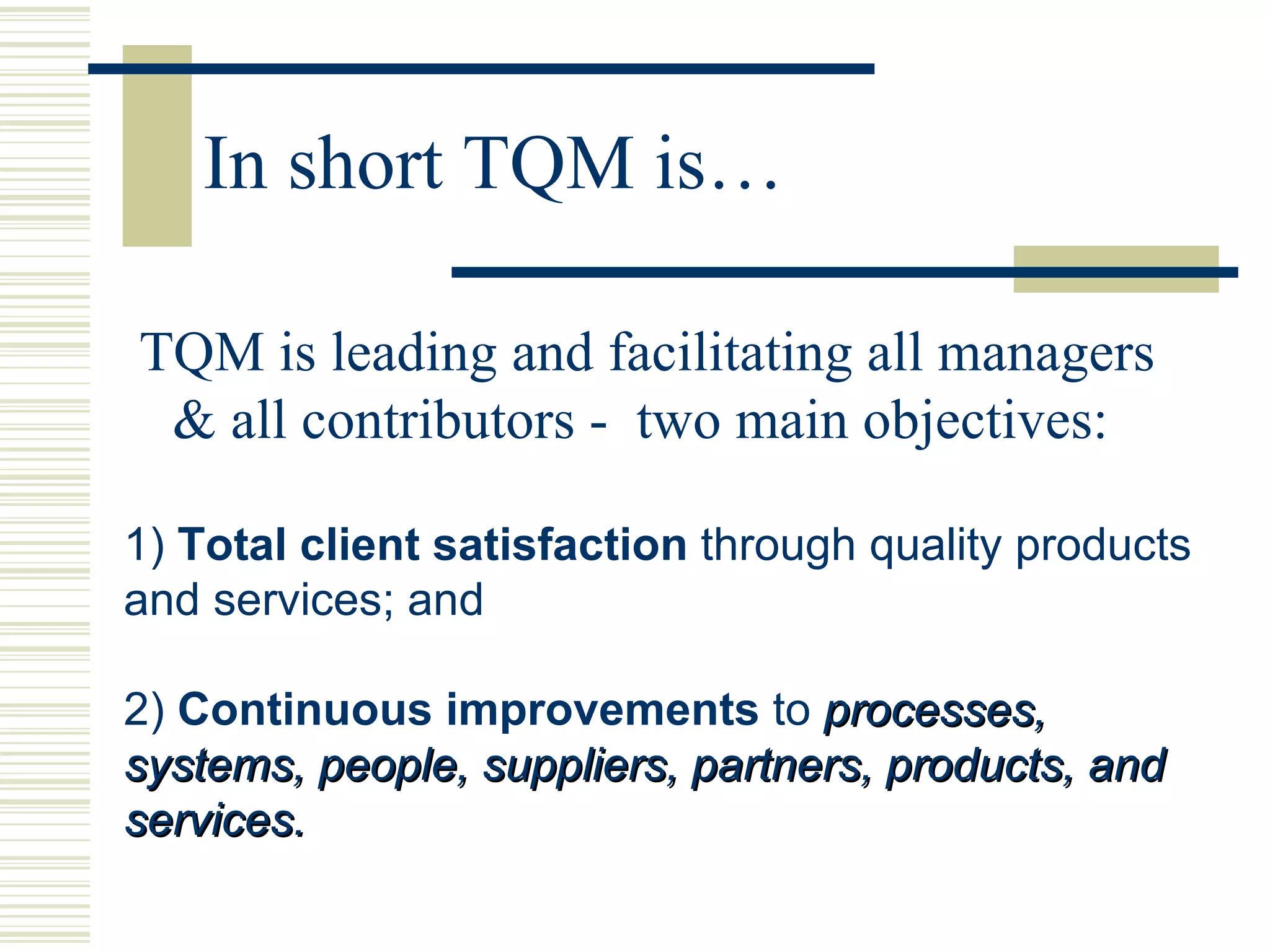
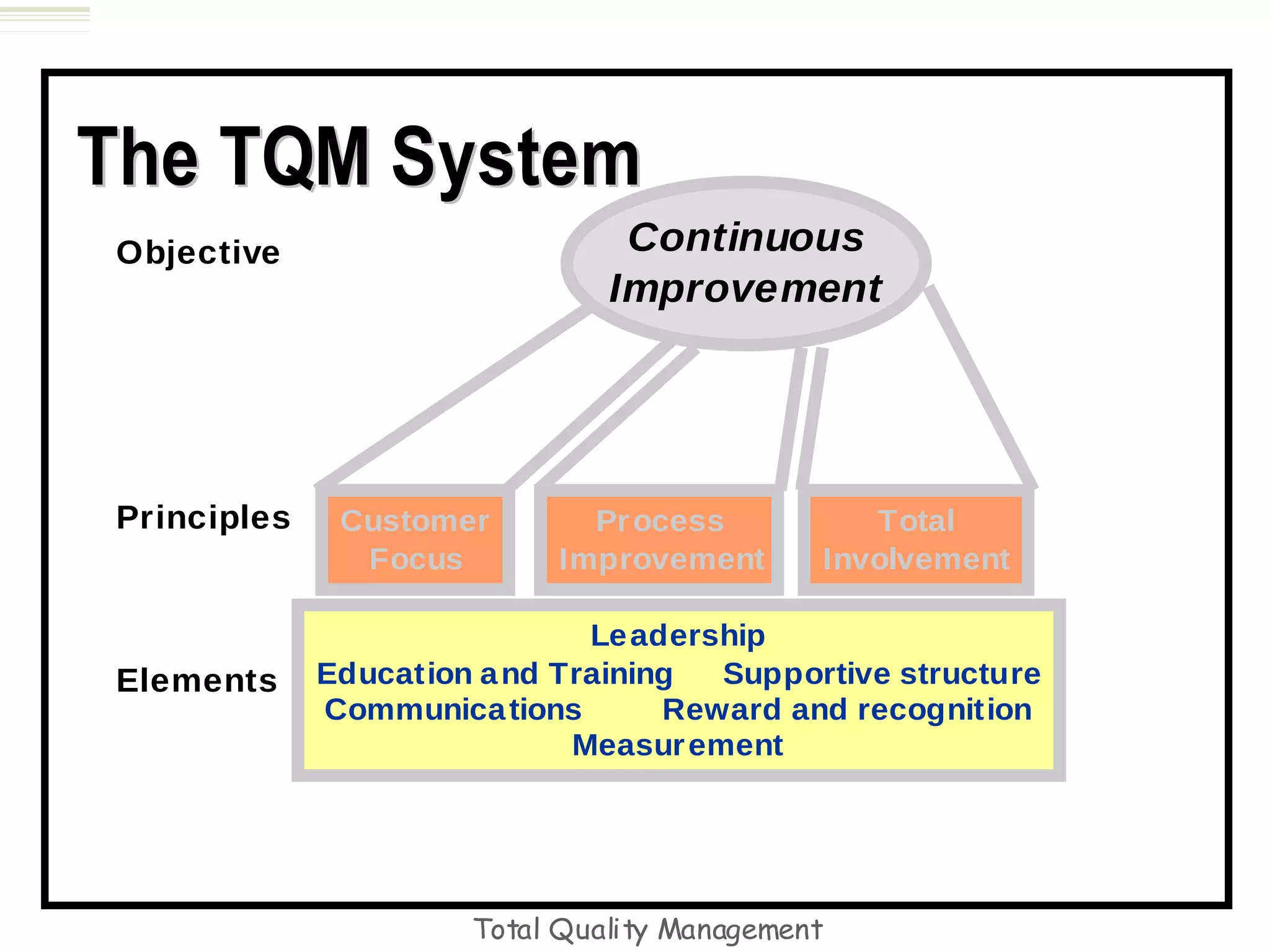
In short TQM is… TQM is leading and facilitating all managers & all contributors -  two main objectives: 1)  Total client satisfaction  through quality products and services; and 2)  Continuous improvements  to  processes, systems, people, suppliers, partners, products, and services.
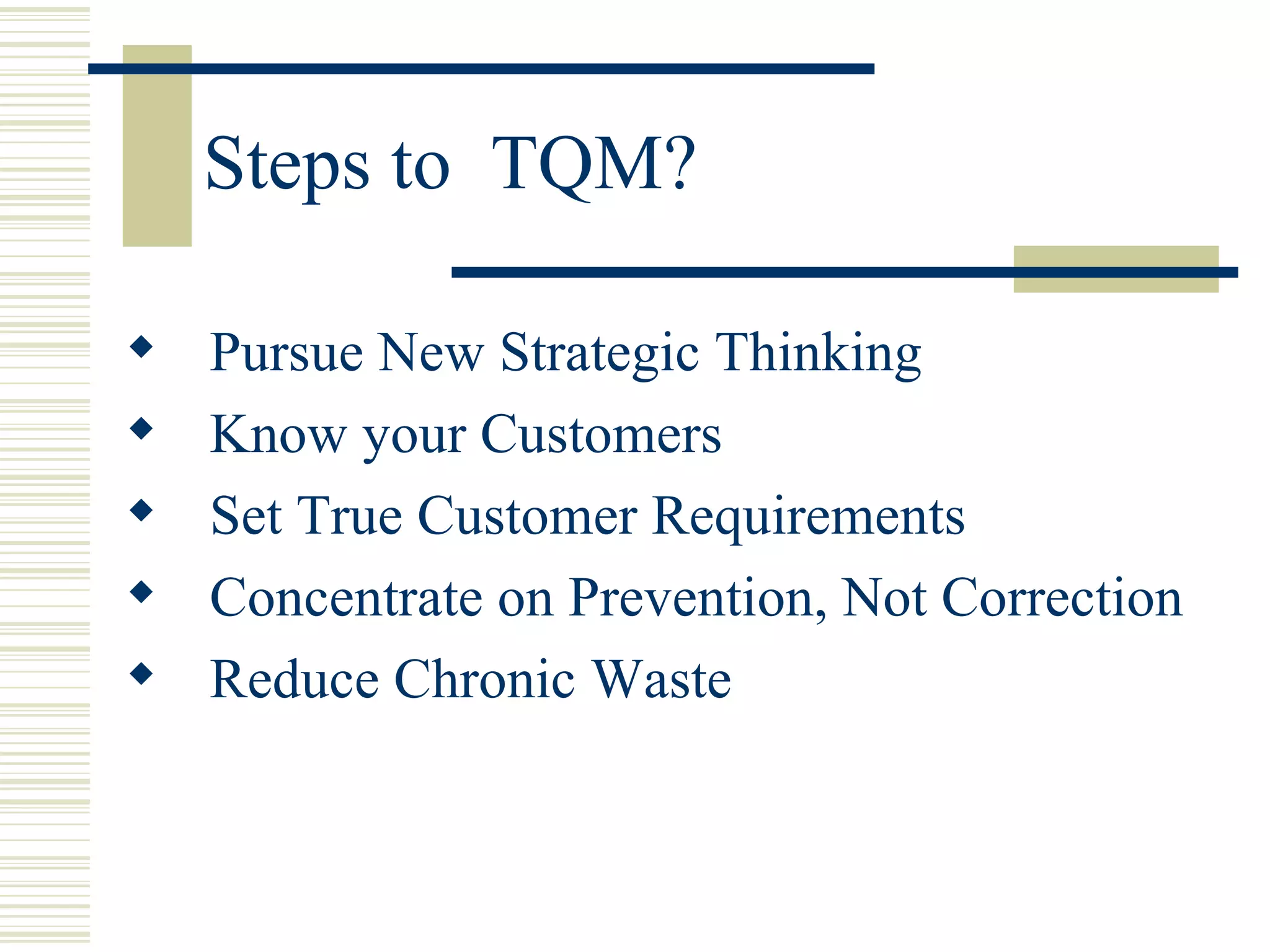
Steps to  TQM? Pursue New Strategic Thinking  Know your Customers  Set True Customer Requirements  Concentrate on Prevention, Not Correction  Reduce Chronic Waste
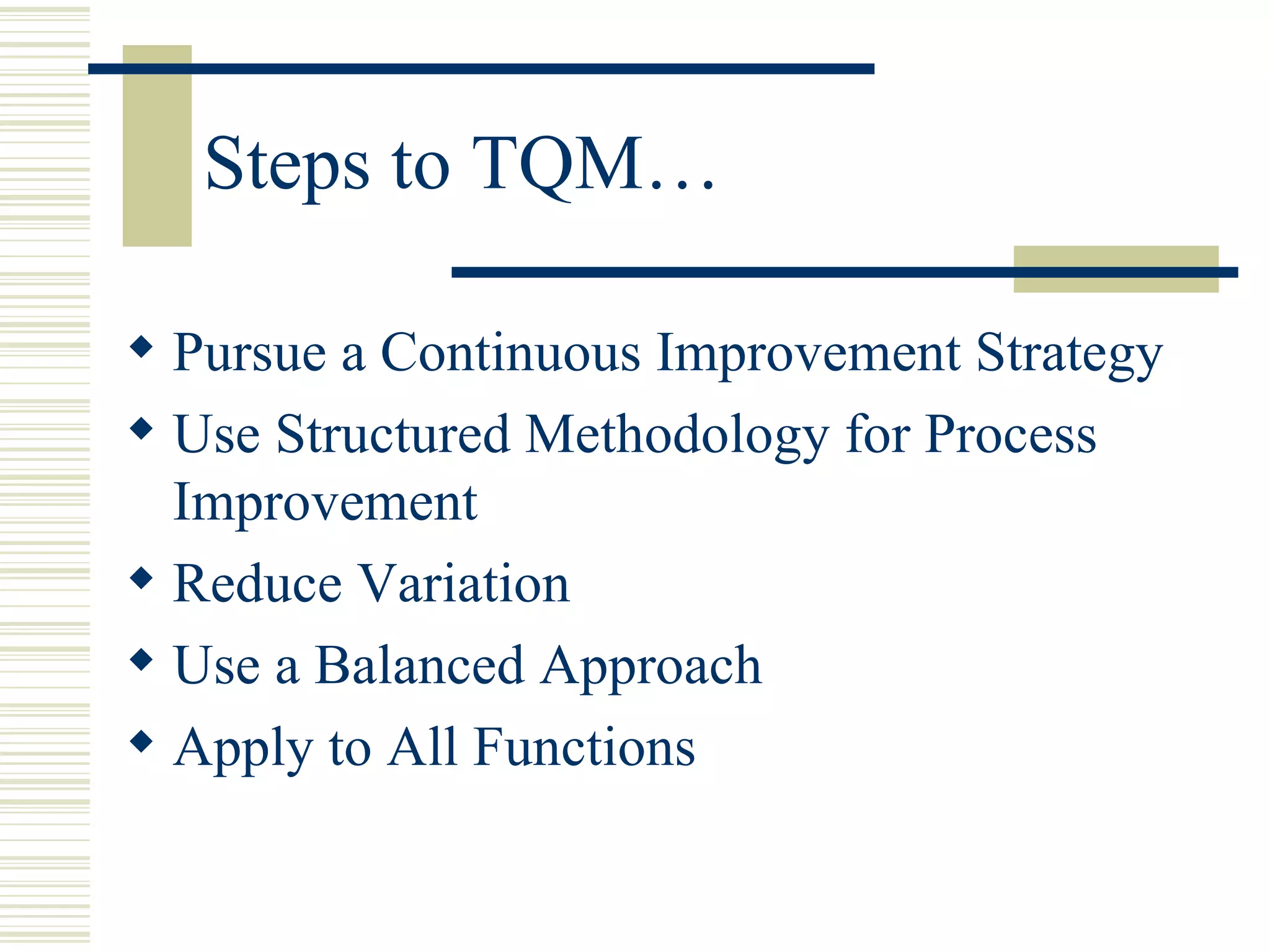
Steps to TQM… Pursue a Continuous Improvement Strategy  Use Structured Methodology for Process Improvement  Reduce Variation  Use a Balanced Approach  Apply to All Functions
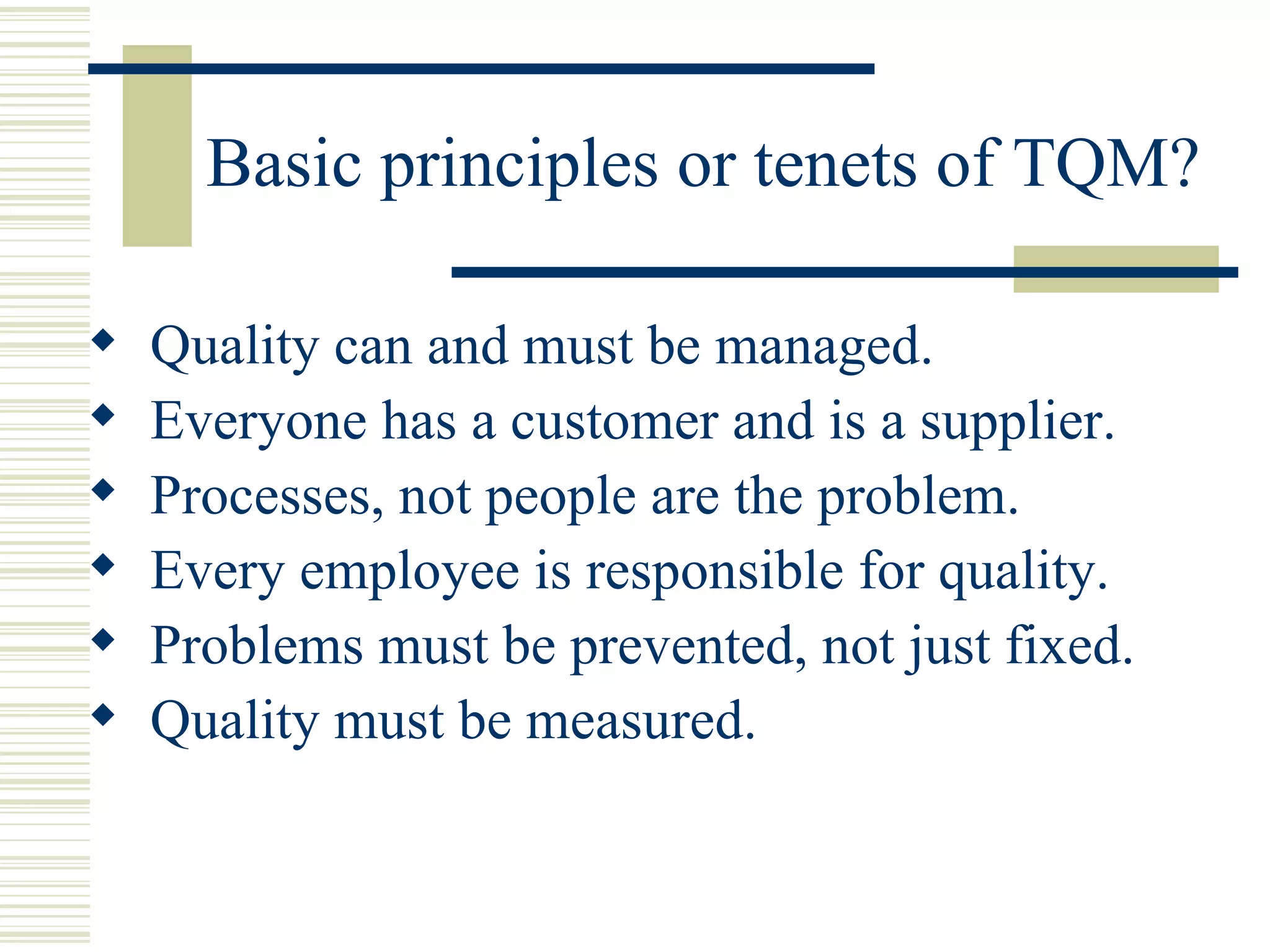
Basic principles or tenets of TQM? Quality can and must be managed.  Everyone has a customer and is a supplier.  Processes, not people are the problem.  Every employee is responsible for quality.  Problems must be prevented, not just fixed.  Quality must be measured.
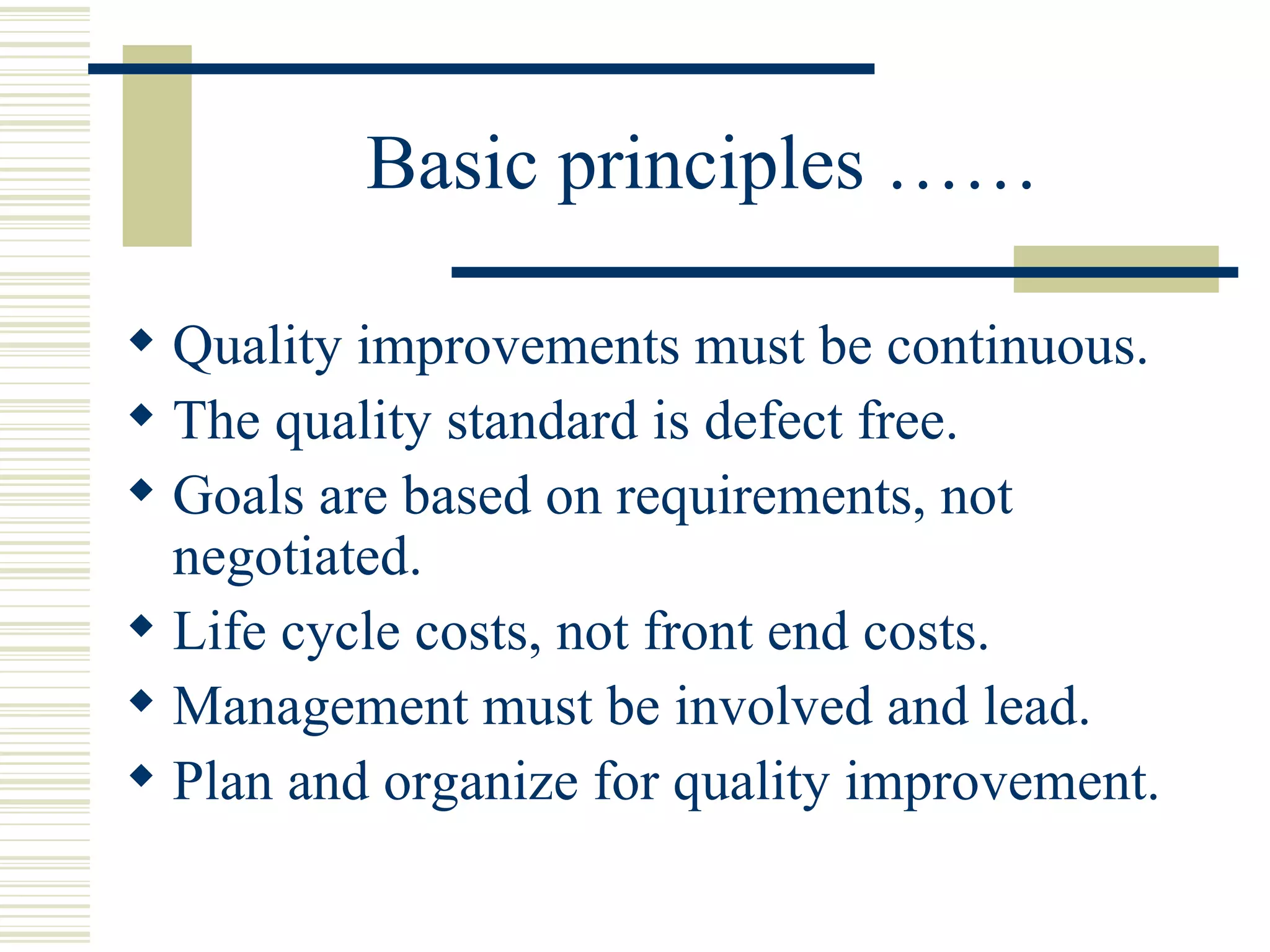
Basic principles …… Quality improvements must be continuous.  The quality standard is defect free.  Goals are based on requirements, not negotiated.  Life cycle costs, not front end costs.  Management must be involved and lead.  Plan and organize for quality improvement.
Objective of TQM? Continuous Improvement
 
Thank U….   Smile…  it improves your face value

Total Quality Management Shalem

  • 1.
  • 2.
    Points covered: Whatis TQM History of TQM Total Quality Management (TQM) TQM Compared to ISO 9001 TQM as a Foundation Ten Steps to Total Quality Management (TQM)
  • 3.
    Points covered…. Principlesof TQM Processes must be Managed and Improved Key to Quality Planning a Change TQM Process Improvement and Problem Solving Sequence Conclusion Application of TQM in Medical Imaging Department
  • 4.
    T Q M?? T – Total Q – Quality M – Management
  • 5.
    T Total Made up of whole (Involving entire organization, supply chain, life cycle)
  • 6.
    Q Quality Degree of Excellence a product or service provided
  • 7.
    M Management act, art or manner of planning, organizing, staffing, directing co-ordination, reporting & budgeting
  • 8.
    In short.. “TQM” is the art of managing the whole to achieve excellence
  • 9.
  • 10.
    Evolution of TQM…- During 1980 – 82 - Some companies lost remarkable share Reason: Attention towards quality was not up to the mark, to combat the competition..
  • 11.
    Hence… Need forquality….
  • 12.
  • 13.
    Quality of ……?1. Quality of returns to satisfy the needs of the shareholders
  • 14.
    Quality of ……?2. Quality of products and services to satisfy some specific needs of the consumer
  • 15.
    Quality of ……?3. Quality of life – at work and outside work - to satisfy the needs of the people in the organization.
  • 16.
    What does TQMmean? Total Quality Management means that the organization's culture is defined by and supports the constant attainment of customer satisfaction through an integrated system of tools, techniques, and training. This involves the continuous improvement of organizational processes, resulting in high quality products and services .
  • 17.
    As defined byISO…. TQM is a management approach for an organization, centered on quality, based on the participation of all its members and aiming at long-term success through customer satisfaction, and benefits to all members of the organization and to society."
  • 18.
    In short TQMis… TQM is leading and facilitating all managers & all contributors - two main objectives: 1) Total client satisfaction through quality products and services; and 2) Continuous improvements to processes, systems, people, suppliers, partners, products, and services.
  • 19.
    Steps to TQM? Pursue New Strategic Thinking Know your Customers Set True Customer Requirements Concentrate on Prevention, Not Correction Reduce Chronic Waste
  • 20.
    Steps to TQM…Pursue a Continuous Improvement Strategy Use Structured Methodology for Process Improvement Reduce Variation Use a Balanced Approach Apply to All Functions
  • 21.
    Basic principles ortenets of TQM? Quality can and must be managed. Everyone has a customer and is a supplier. Processes, not people are the problem. Every employee is responsible for quality. Problems must be prevented, not just fixed. Quality must be measured.
  • 22.
    Basic principles ……Quality improvements must be continuous. The quality standard is defect free. Goals are based on requirements, not negotiated. Life cycle costs, not front end costs. Management must be involved and lead. Plan and organize for quality improvement.
  • 23.
    Objective of TQM?Continuous Improvement
  • 24.
  • 25.
    Thank U….  Smile… it improves your face value