Torque & Motors
Electric Motor
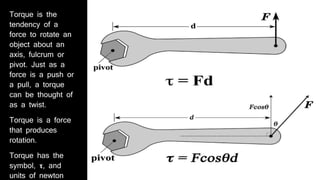
Torque is the
tendency of a
force to rotate an
object about an
axis, fulcrum or
pivot. Just as a
force is a push or
a pull, a torque
can be thought of
as a twist.
Torque is a force
that produces
rotation.
Torque has the
symbol, 𝞃, and
units of newton
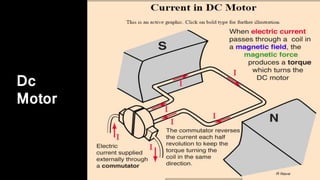
Dc
Motor
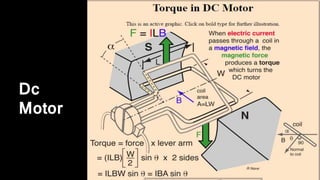
Dc
Motor
Dc
Motor
Dc
Motor
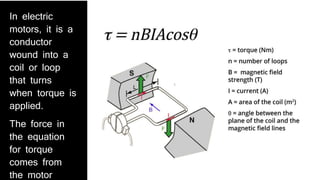
In electric
motors, it is a
conductor
wound into a
coil or loop
that turns
when torque is
applied.
The force in
the equation
for torque
comes from
the motor
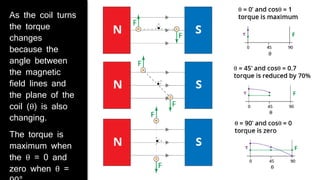
As the coil turns
the torque
changes
because the
angle between
the magnetic
field lines and
the plane of the
coil (θ) is also
changing.
The torque is
maximum when
the θ = 0 and
zero when θ =
If a radial
magnetic field is
used instead,
the field lines
are curved
between the
north and south
poles of the
magnet.
The angle θ
between the
plane of the coil
and the field
lines is kept
Measuring devices
Galvanometer
Galvanometer is an electromechanical
instrument which is used for the
detection of electric currents through
electric circuits. Being a sensitive
instrument, Galvanometer can not be
used for the measurement of heavy
currents. However we can measure
very small currents by using
galvanometer but the primary purpose
Galvanometer works on the principle of
conversion of electrical energy into mechanical
energy. When a current flows in a magnetic
field it experiences a magnetic torque. If it is
free to rotate under a controlling torque, it
rotates through an angle proportional to the
current flowing through it.
There are five essential parts of a
Galvanometer.
1. A U-shaped permanent magnet with
concave poles.
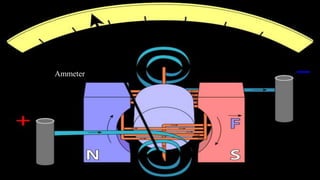
Ammeter
Ammeter is constructed with a small
spinning coil of wire in the field of a
permanent magnet. The coil is
attached to a thin pointer that
traverses a calibrated scale. A tiny
torsion spring pulls the coil and
pointer to the zero position.
When a direct current (DC) flows
through the coil, the coil generates a
magnetic field. This field acts against
SUMMARY
Thank you
for listening
Group 5

Torque and motors

  • 1.
  • 2.
  • 3.
    Torque is the tendencyof a force to rotate an object about an axis, fulcrum or pivot. Just as a force is a push or a pull, a torque can be thought of as a twist. Torque is a force that produces rotation. Torque has the symbol, 𝞃, and units of newton
  • 4.
  • 5.
  • 6.
  • 7.
  • 9.
    In electric motors, itis a conductor wound into a coil or loop that turns when torque is applied. The force in the equation for torque comes from the motor
  • 10.
    As the coilturns the torque changes because the angle between the magnetic field lines and the plane of the coil (θ) is also changing. The torque is maximum when the θ = 0 and zero when θ =
  • 11.
    If a radial magneticfield is used instead, the field lines are curved between the north and south poles of the magnet. The angle θ between the plane of the coil and the field lines is kept
  • 12.
  • 13.
    Galvanometer Galvanometer is anelectromechanical instrument which is used for the detection of electric currents through electric circuits. Being a sensitive instrument, Galvanometer can not be used for the measurement of heavy currents. However we can measure very small currents by using galvanometer but the primary purpose
  • 14.
    Galvanometer works onthe principle of conversion of electrical energy into mechanical energy. When a current flows in a magnetic field it experiences a magnetic torque. If it is free to rotate under a controlling torque, it rotates through an angle proportional to the current flowing through it. There are five essential parts of a Galvanometer. 1. A U-shaped permanent magnet with concave poles.
  • 15.
  • 16.
    Ammeter is constructedwith a small spinning coil of wire in the field of a permanent magnet. The coil is attached to a thin pointer that traverses a calibrated scale. A tiny torsion spring pulls the coil and pointer to the zero position. When a direct current (DC) flows through the coil, the coil generates a magnetic field. This field acts against
  • 21.
  • 22.