IP fragmentation attack on DNS
Original work by Amir Herzberg & Haya
Shulman
Tomas Hlavacek • tomas.hlavacek@nic.cz •
ZeroNights 0x03, 7.11.2013
IP fragmentation attack
●

●

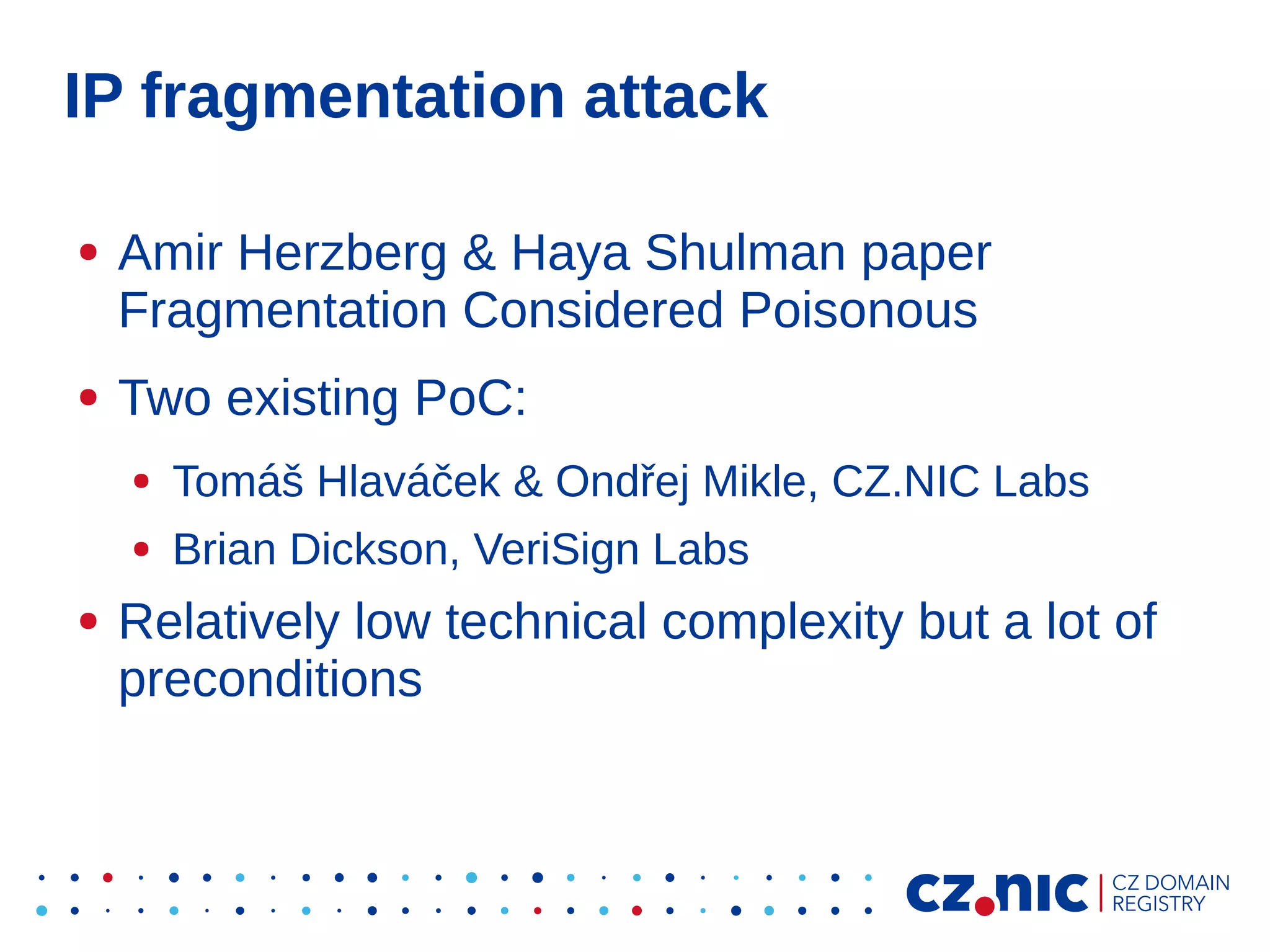
Amir Herzberg & Haya Shulman paper
Fragmentation Considered Poisonous
Two existing PoC:
●
●

●

Tomáš Hlaváček & Ondřej Mikle, CZ.NIC Labs
Brian Dickson, VeriSign Labs

Relatively low technical complexity but a lot of
preconditions
The new attack vector: Fragments
●

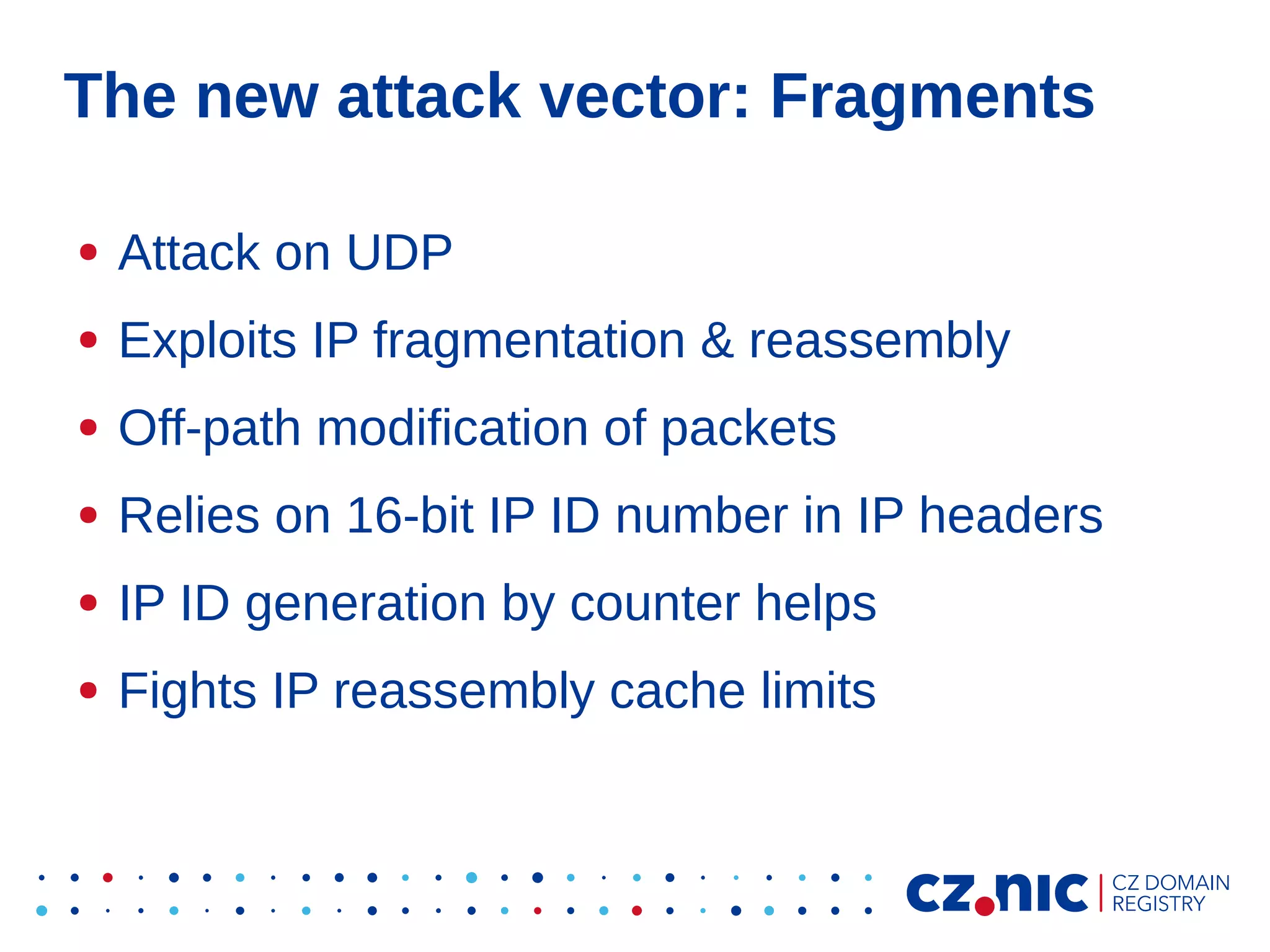
Attack on UDP

●

Exploits IP fragmentation & reassembly

●

Off-path modification of packets

●

Relies on 16-bit IP ID number in IP headers

●

IP ID generation by counter helps

●

Fights IP reassembly cache limits
IP fragmentation attack on DNS
●
●

●

●

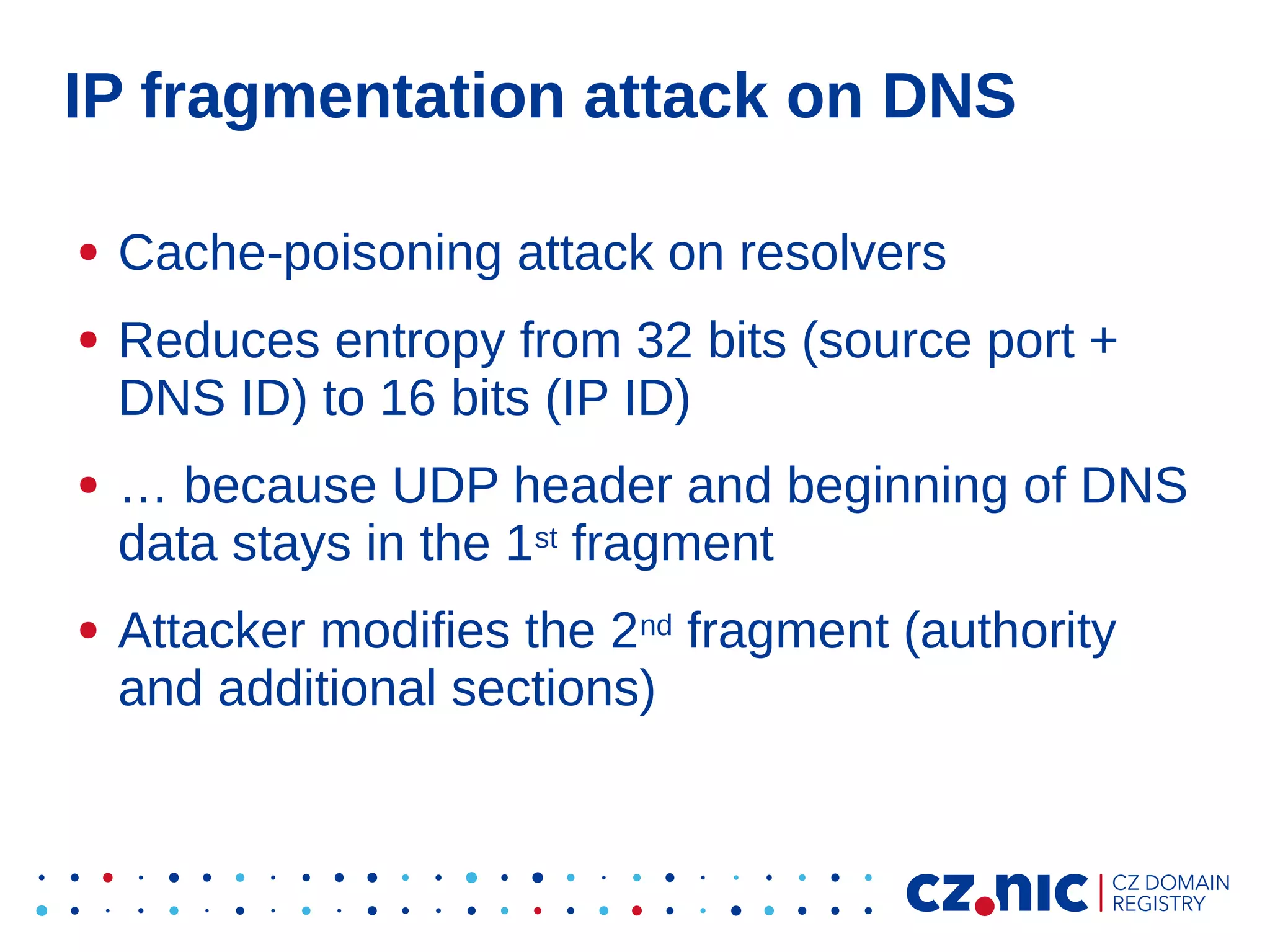
Cache-poisoning attack on resolvers
Reduces entropy from 32 bits (source port +
DNS ID) to 16 bits (IP ID)
… because UDP header and beginning of DNS
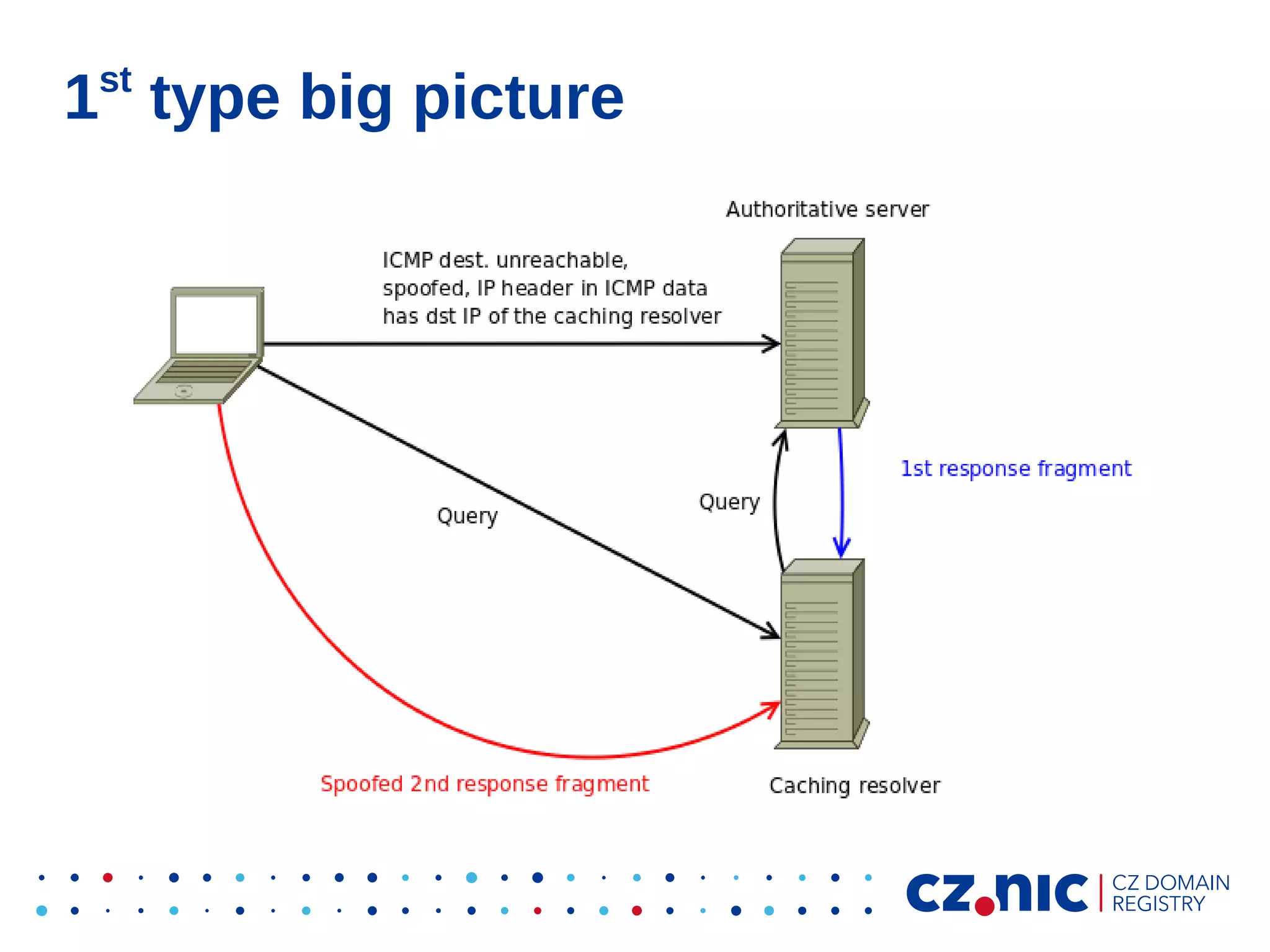
data stays in the 1st fragment
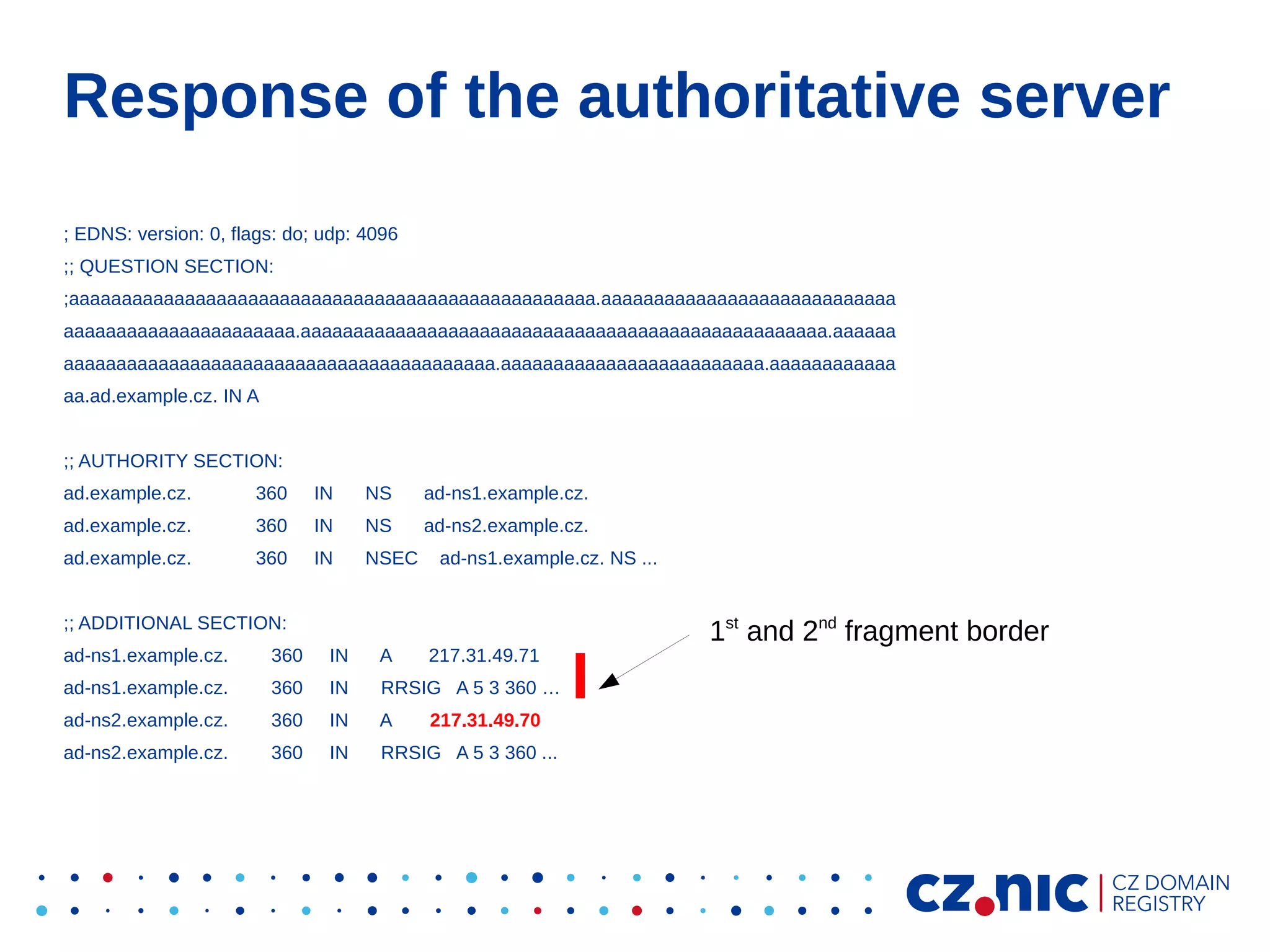
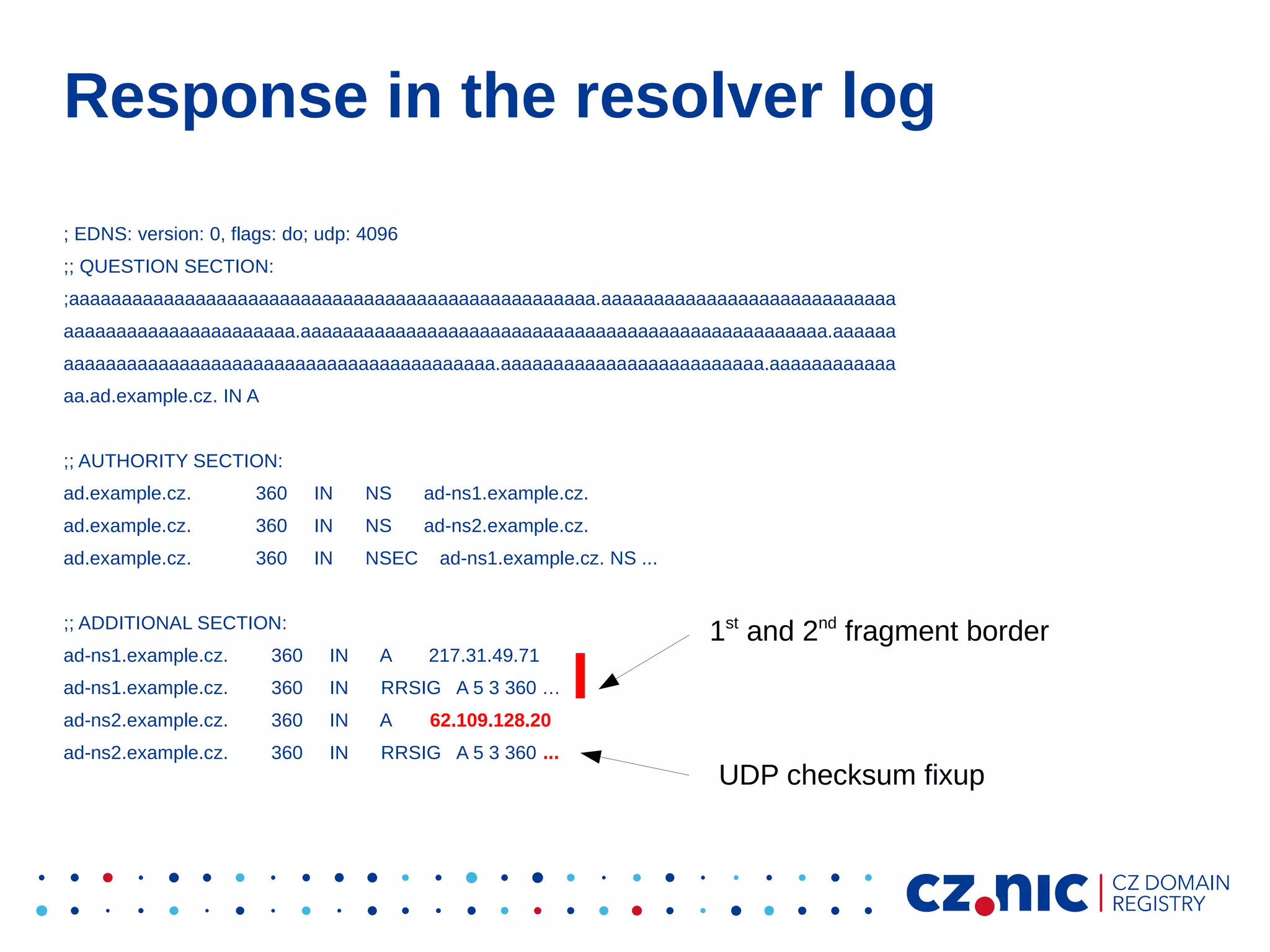
Attacker modifies the 2nd fragment (authority
and additional sections)
IP frag attack on DNS types
●

Two types so far:
●

●

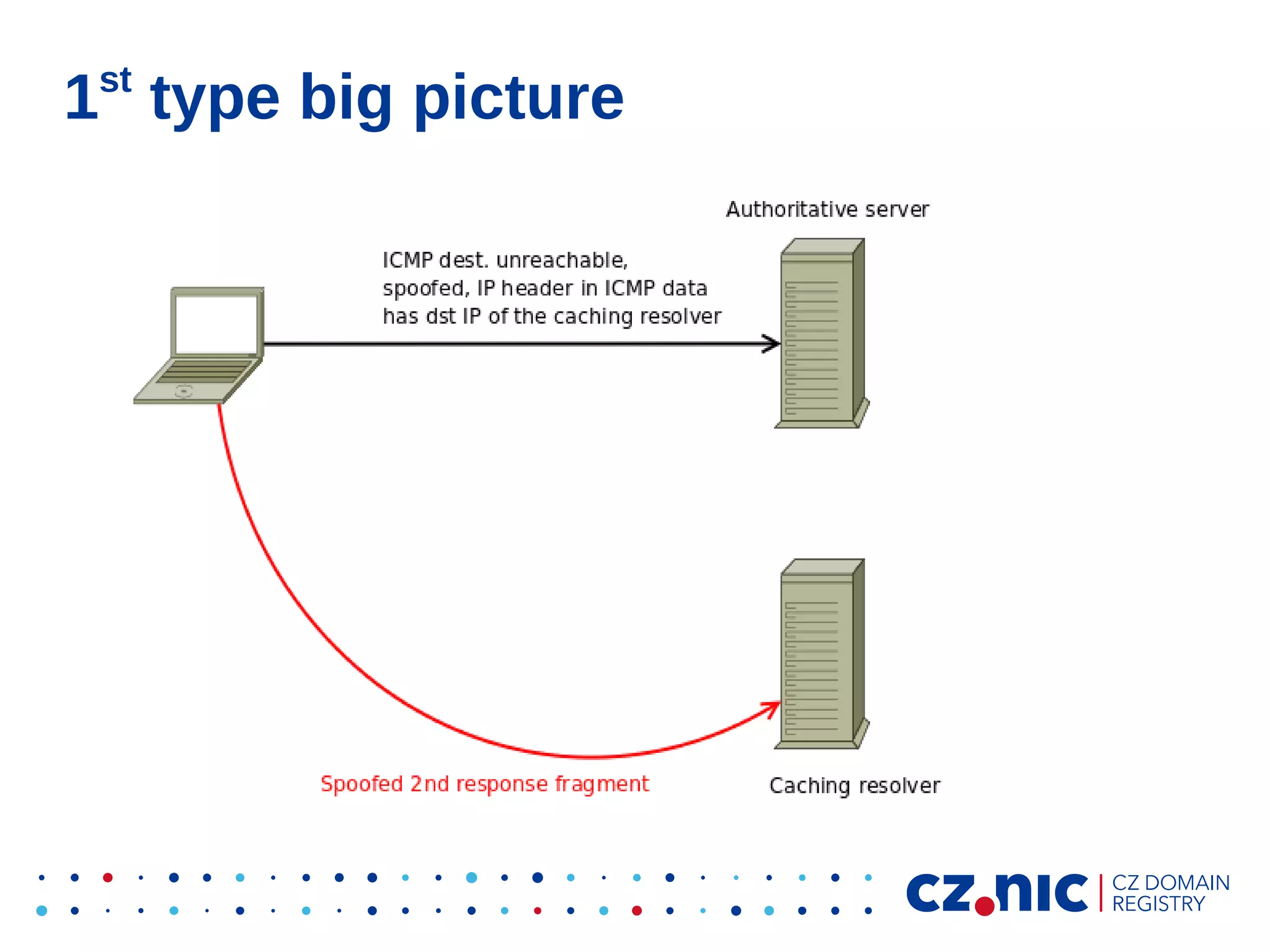
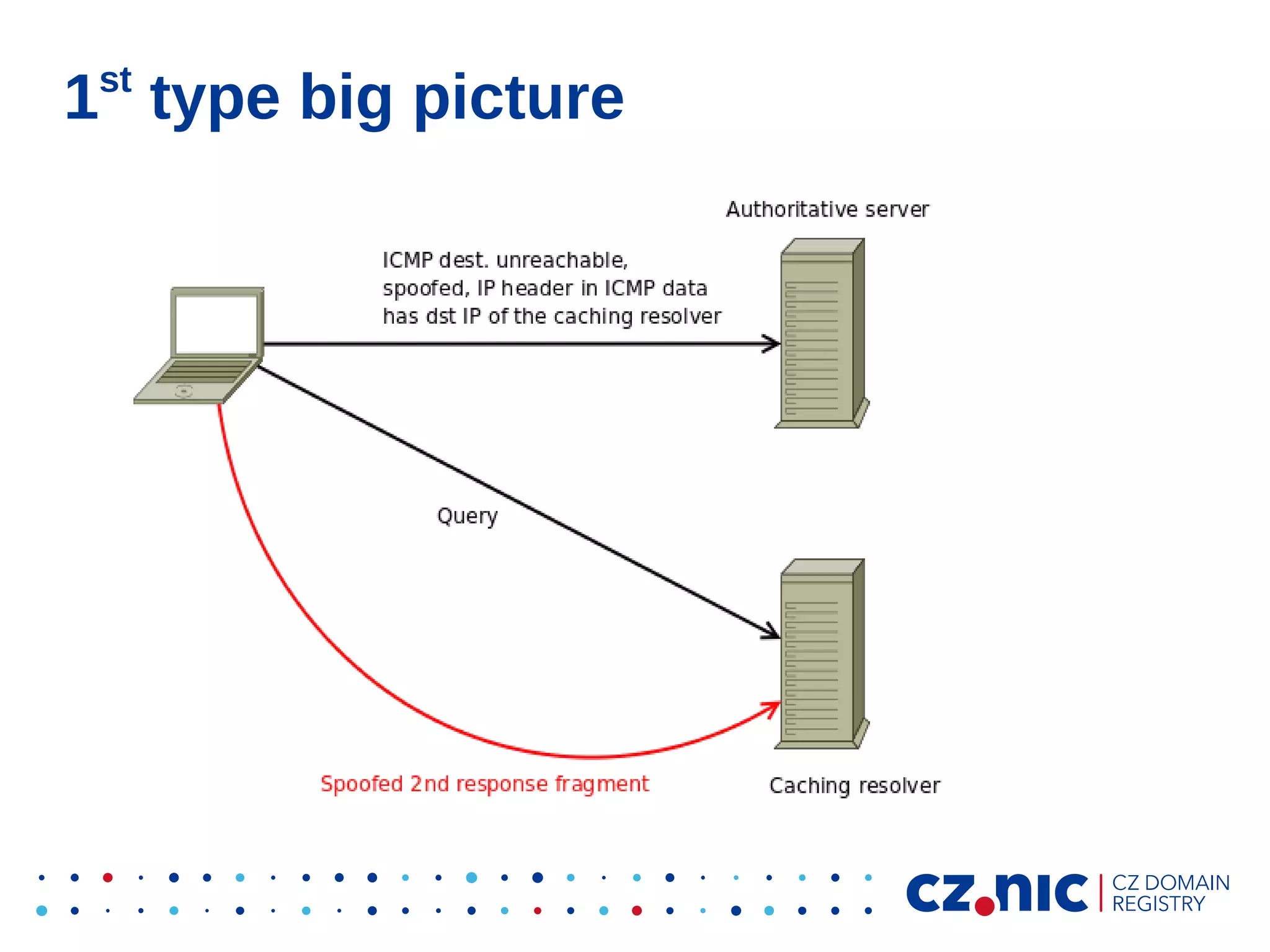
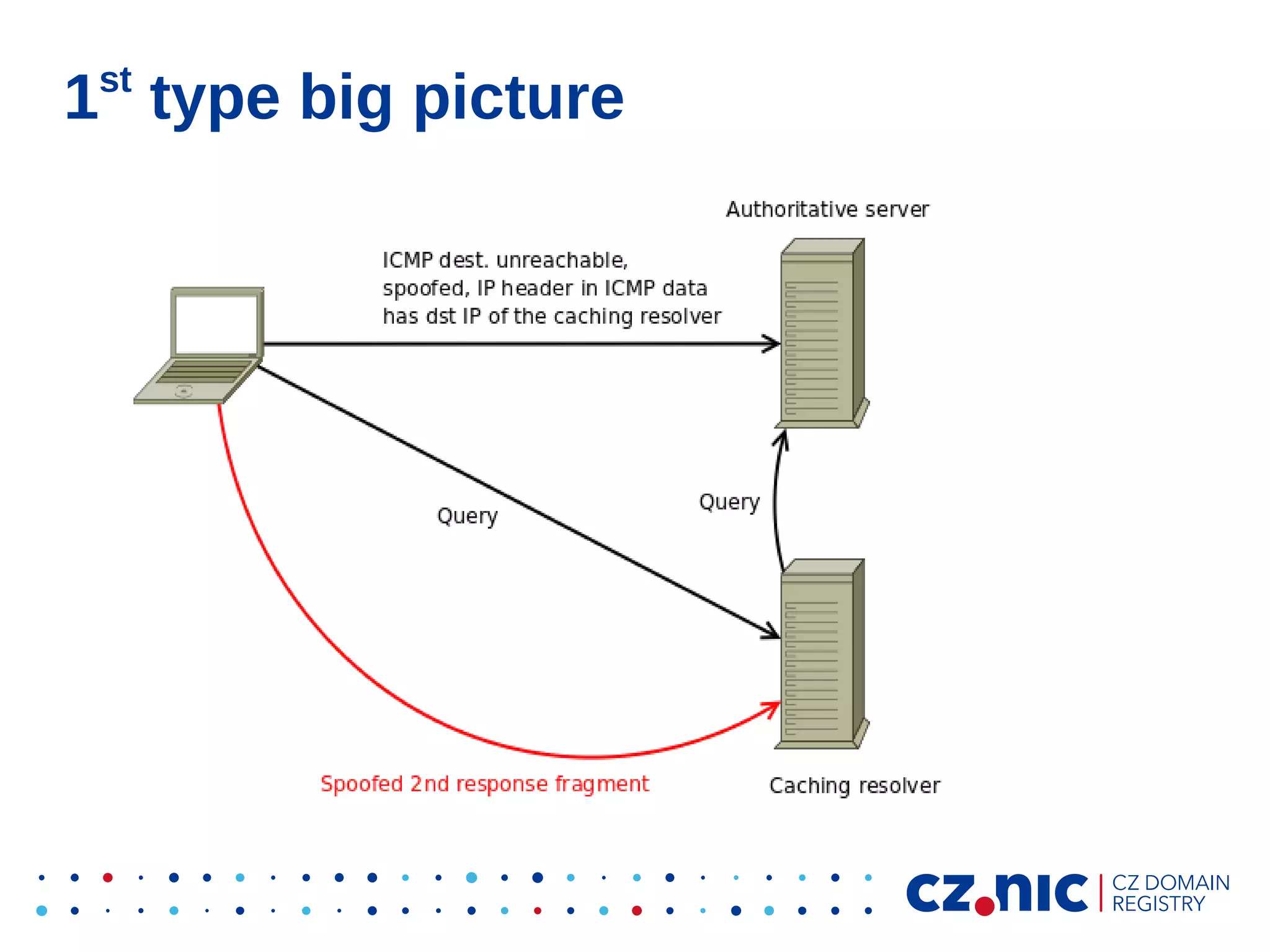
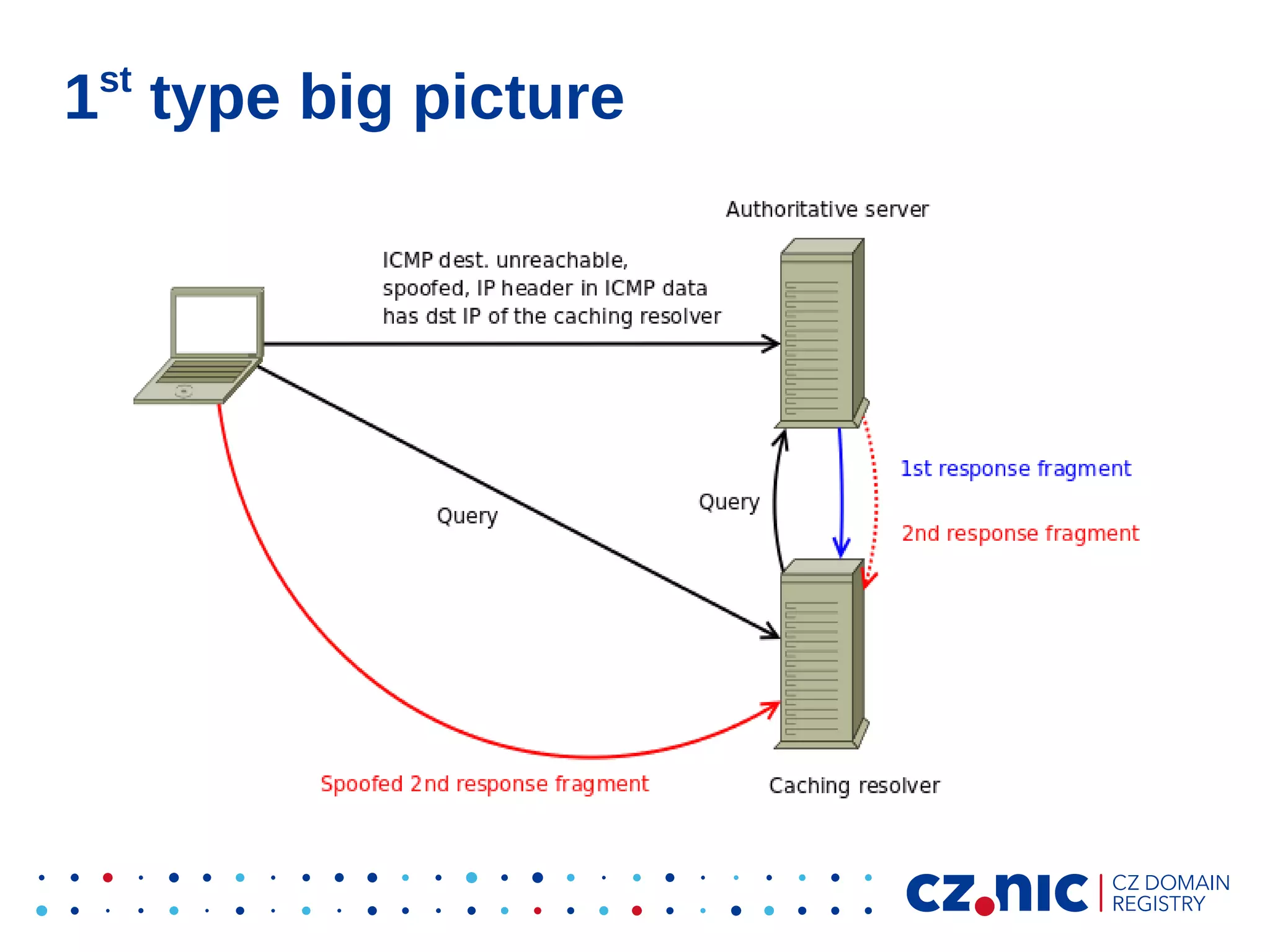
1) Convincing authoritative server to fragment
replies for real domain by spoofed ICMPs
2) Registering specially forged zone which
generates responses over 1500 B
st

Triggering fragmentation – 1 type
●

●

●

●

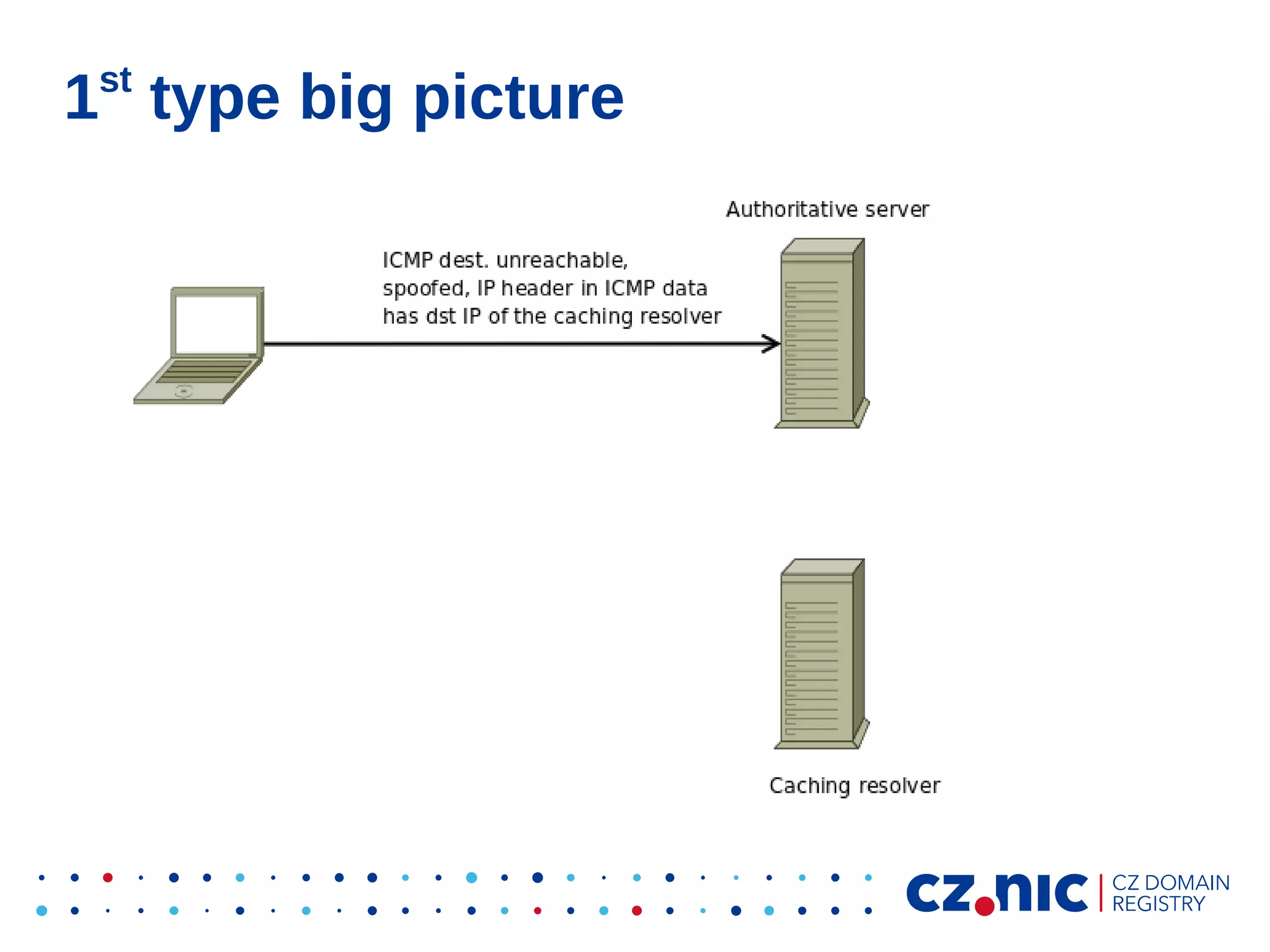
ICMP destination unreachable, frag. needed
but DF bit set (type=3, code=4)
Spoofing of ICMP (BCP38 is not a problem,
firewalls are)
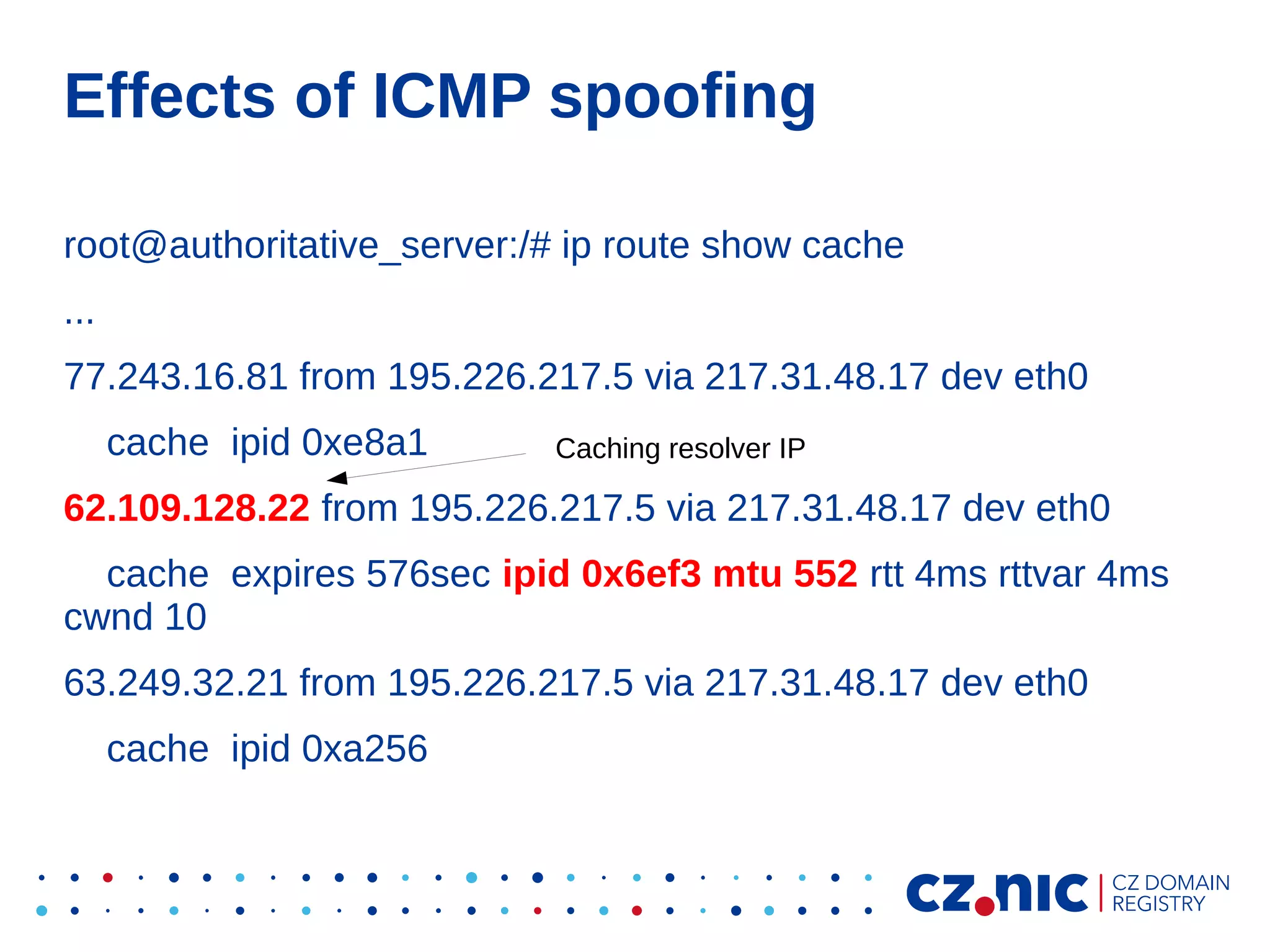
Linux accepts signaled MTU into routing cache
for 10 mins
Linux minimum MTU = 552 B
st

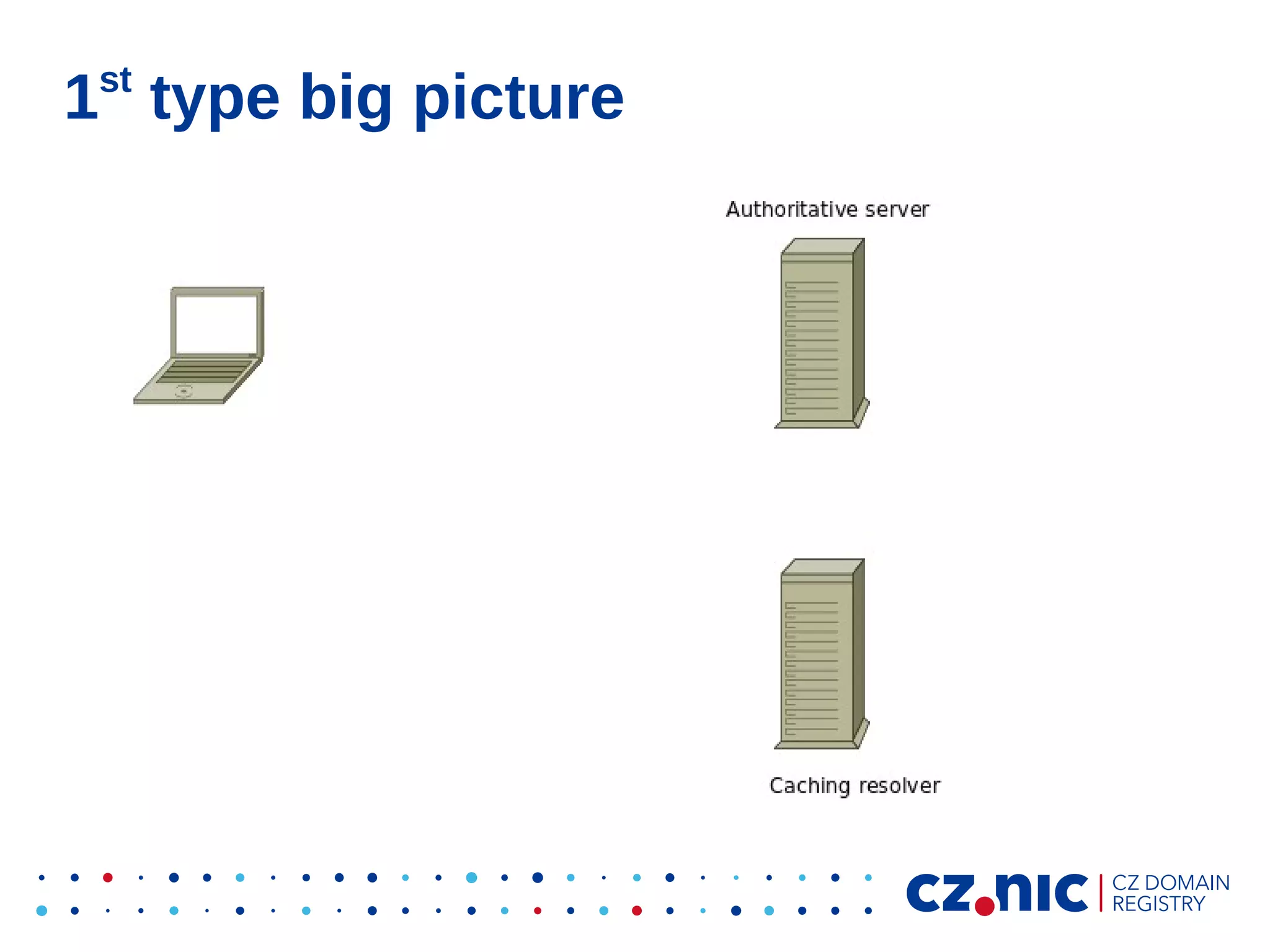
1 type big picture
st

1 type big picture
st

1 type big picture
st

1 type big picture
st

1 type big picture
st

1 type big picture
st

1 type big picture
Effects of ICMP spoofing
root@authoritative_server:/# ip route show cache
...
77.243.16.81 from 195.226.217.5 via 217.31.48.17 dev eth0
cache ipid 0xe8a1

Caching resolver IP

62.109.128.22 from 195.226.217.5 via 217.31.48.17 dev eth0
cache expires 576sec ipid 0x6ef3 mtu 552 rtt 4ms rttvar 4ms
cwnd 10
63.249.32.21 from 195.226.217.5 via 217.31.48.17 dev eth0
cache ipid 0xa256
Response of the authoritative server
; EDNS: version: 0, flags: do; udp: 4096
;; QUESTION SECTION:
;aaaaaaaaaaaaaaaaaaaaaaaaaaaaaaaaaaaaaaaaaaaaaaaaaa.aaaaaaaaaaaaaaaaaaaaaaaaaaaa
aaaaaaaaaaaaaaaaaaaaaa.aaaaaaaaaaaaaaaaaaaaaaaaaaaaaaaaaaaaaaaaaaaaaaaaaa.aaaaaa
aaaaaaaaaaaaaaaaaaaaaaaaaaaaaaaaaaaaaaaaa.aaaaaaaaaaaaaaaaaaaaaaaaa.aaaaaaaaaaaa
aa.ad.example.cz. IN A
;; AUTHORITY SECTION:
ad.example.cz.

360

IN

NS

ad-ns1.example.cz.

ad.example.cz.

360

IN

NS

ad-ns2.example.cz.

ad.example.cz.

360

IN

NSEC

ad-ns1.example.cz. NS ...

;; ADDITIONAL SECTION:
ad-ns1.example.cz.

360

IN

A

217.31.49.71

ad-ns1.example.cz.

360

IN

RRSIG A 5 3 360 …

ad-ns2.example.cz.

360

IN

A

ad-ns2.example.cz.

360

IN

RRSIG A 5 3 360 ...

217.31.49.70

1st and 2nd fragment border
Response in the resolver log
; EDNS: version: 0, flags: do; udp: 4096
;; QUESTION SECTION:
;aaaaaaaaaaaaaaaaaaaaaaaaaaaaaaaaaaaaaaaaaaaaaaaaaa.aaaaaaaaaaaaaaaaaaaaaaaaaaaa
aaaaaaaaaaaaaaaaaaaaaa.aaaaaaaaaaaaaaaaaaaaaaaaaaaaaaaaaaaaaaaaaaaaaaaaaa.aaaaaa
aaaaaaaaaaaaaaaaaaaaaaaaaaaaaaaaaaaaaaaaa.aaaaaaaaaaaaaaaaaaaaaaaaa.aaaaaaaaaaaa
aa.ad.example.cz. IN A
;; AUTHORITY SECTION:
ad.example.cz.

360

IN

NS

ad-ns1.example.cz.

ad.example.cz.

360

IN

NS

ad-ns2.example.cz.

ad.example.cz.

360

IN

NSEC

ad-ns1.example.cz. NS ...

;; ADDITIONAL SECTION:
ad-ns1.example.cz.

360

IN

A

217.31.49.71

ad-ns1.example.cz.

360

IN

RRSIG A 5 3 360 …

ad-ns2.example.cz.

360

IN

A

ad-ns2.example.cz.

360

IN

RRSIG A 5 3 360 ...

1st and 2nd fragment border

62.109.128.20

UDP checksum fixup
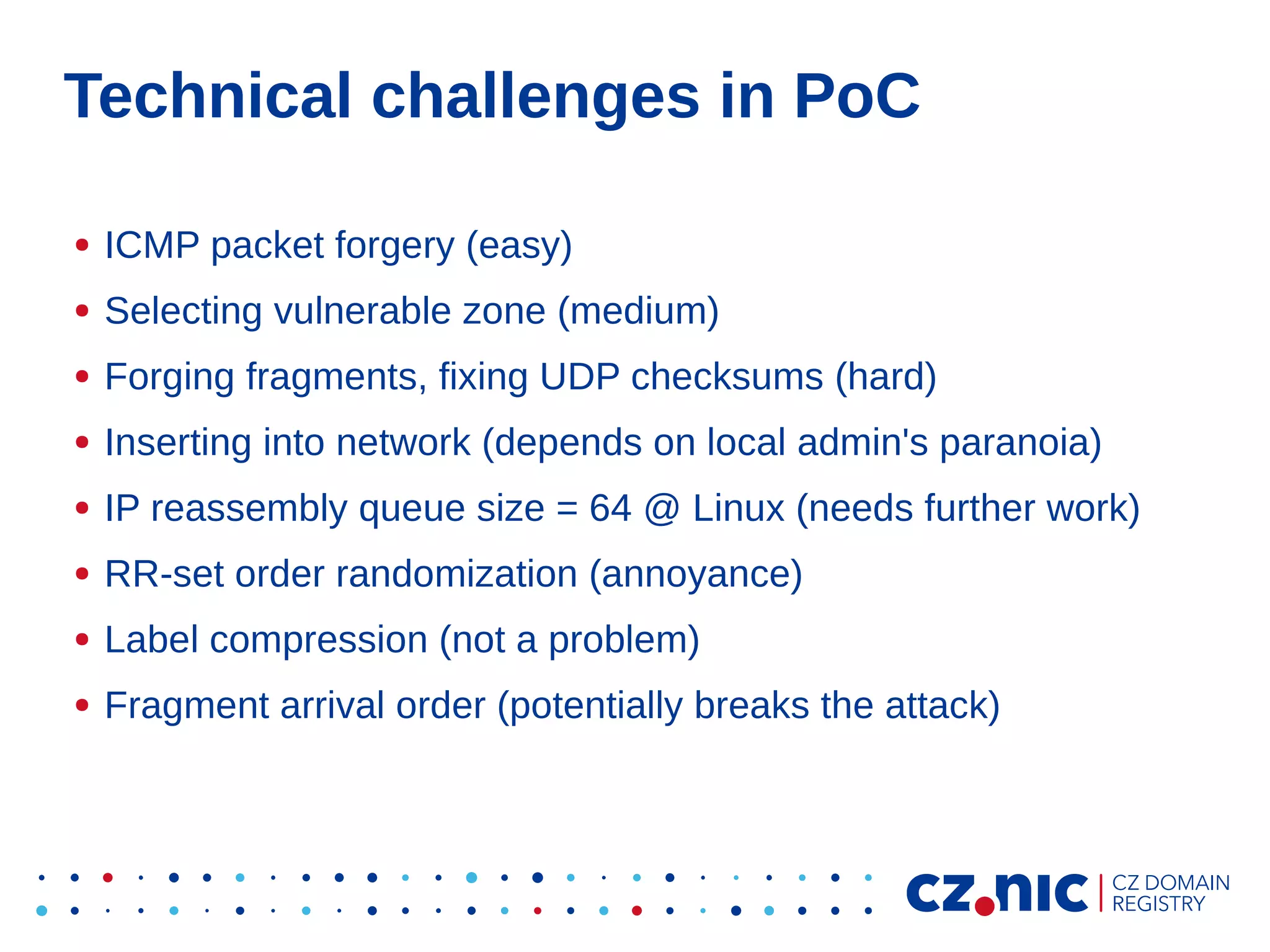
Technical challenges in PoC
●

ICMP packet forgery (easy)

●

Selecting vulnerable zone (medium)

●

Forging fragments, fixing UDP checksums (hard)

●

Inserting into network (depends on local admin's paranoia)

●

IP reassembly queue size = 64 @ Linux (needs further work)

●

RR-set order randomization (annoyance)

●

Label compression (not a problem)

●

Fragment arrival order (potentially breaks the attack)
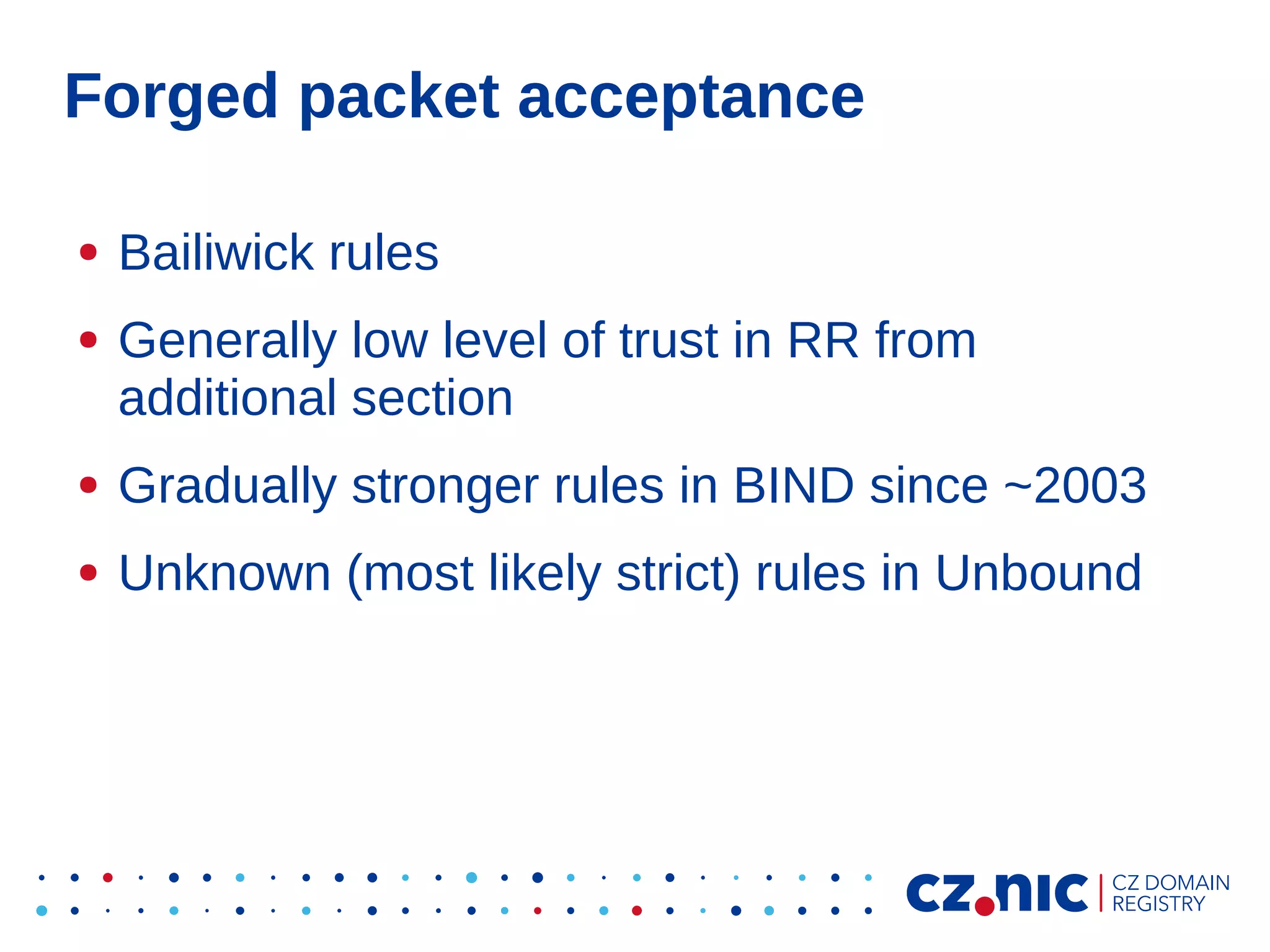
Forged packet acceptance
●
●

Bailiwick rules
Generally low level of trust in RR from
additional section

●

Gradually stronger rules in BIND since ~2003

●

Unknown (most likely strict) rules in Unbound
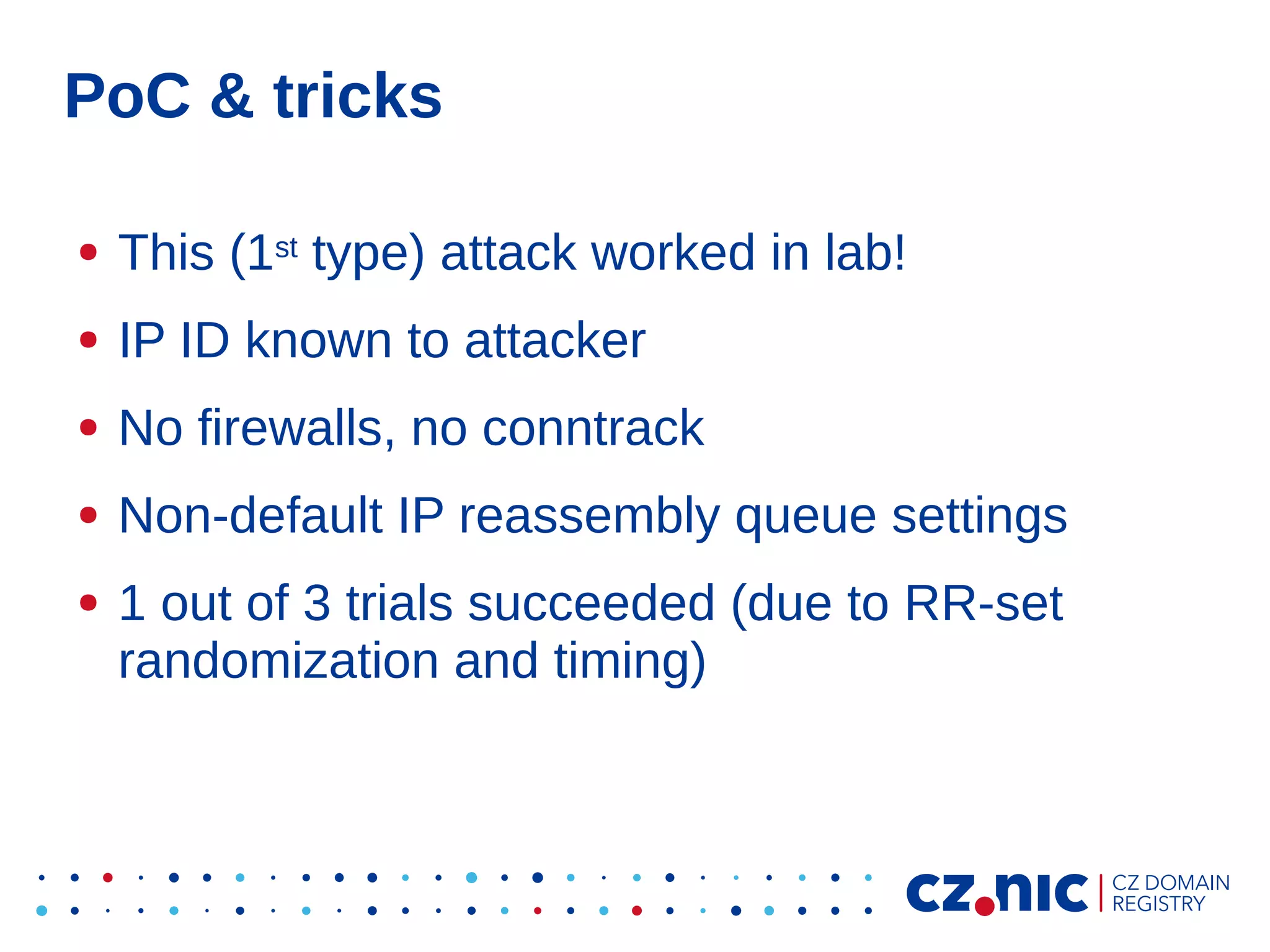
PoC & tricks
●

This (1st type) attack worked in lab!

●

IP ID known to attacker

●

No firewalls, no conntrack

●

Non-default IP reassembly queue settings

●

1 out of 3 trials succeeded (due to RR-set
randomization and timing)
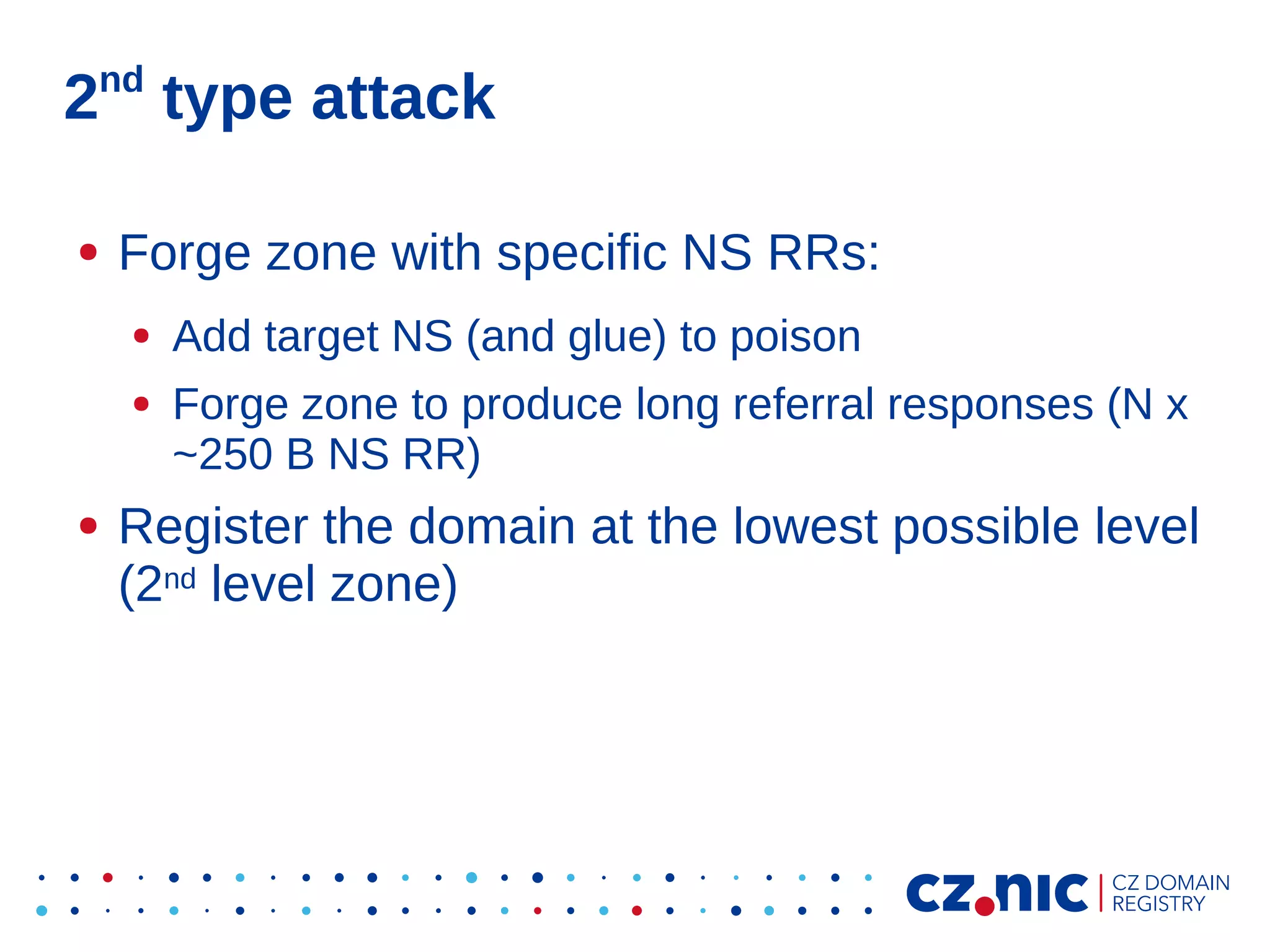
nd

2 type attack
●

Forge zone with specific NS RRs:
●
●

●

Add target NS (and glue) to poison
Forge zone to produce long referral responses (N x
~250 B NS RR)

Register the domain at the lowest possible level
(2nd level zone)
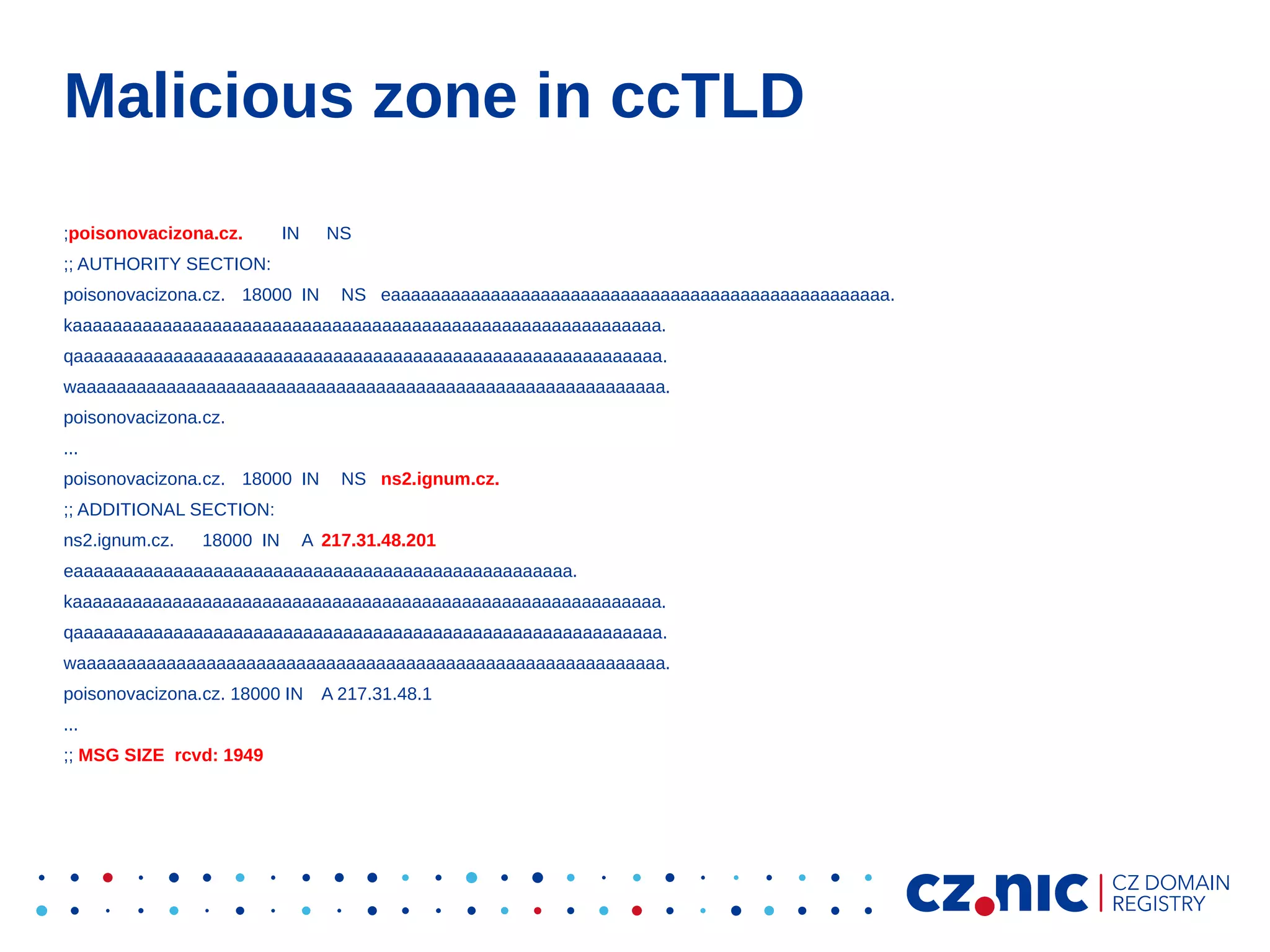
Malicious zone in ccTLD
;poisonovacizona.cz.

IN

NS

;; AUTHORITY SECTION:
poisonovacizona.cz. 18000 IN

NS eaaaaaaaaaaaaaaaaaaaaaaaaaaaaaaaaaaaaaaaaaaaaaaaaaa.

kaaaaaaaaaaaaaaaaaaaaaaaaaaaaaaaaaaaaaaaaaaaaaaaaaaaaaaaaaaa.
qaaaaaaaaaaaaaaaaaaaaaaaaaaaaaaaaaaaaaaaaaaaaaaaaaaaaaaaaaaa.
waaaaaaaaaaaaaaaaaaaaaaaaaaaaaaaaaaaaaaaaaaaaaaaaaaaaaaaaaaa.
poisonovacizona.cz.
...
poisonovacizona.cz. 18000 IN

NS ns2.ignum.cz.

;; ADDITIONAL SECTION:
ns2.ignum.cz.

18000 IN

A 217.31.48.201

eaaaaaaaaaaaaaaaaaaaaaaaaaaaaaaaaaaaaaaaaaaaaaaaaaa.
kaaaaaaaaaaaaaaaaaaaaaaaaaaaaaaaaaaaaaaaaaaaaaaaaaaaaaaaaaaa.
qaaaaaaaaaaaaaaaaaaaaaaaaaaaaaaaaaaaaaaaaaaaaaaaaaaaaaaaaaaa.
waaaaaaaaaaaaaaaaaaaaaaaaaaaaaaaaaaaaaaaaaaaaaaaaaaaaaaaaaaa.
poisonovacizona.cz. 18000 IN
...
;; MSG SIZE rcvd: 1949

A 217.31.48.1
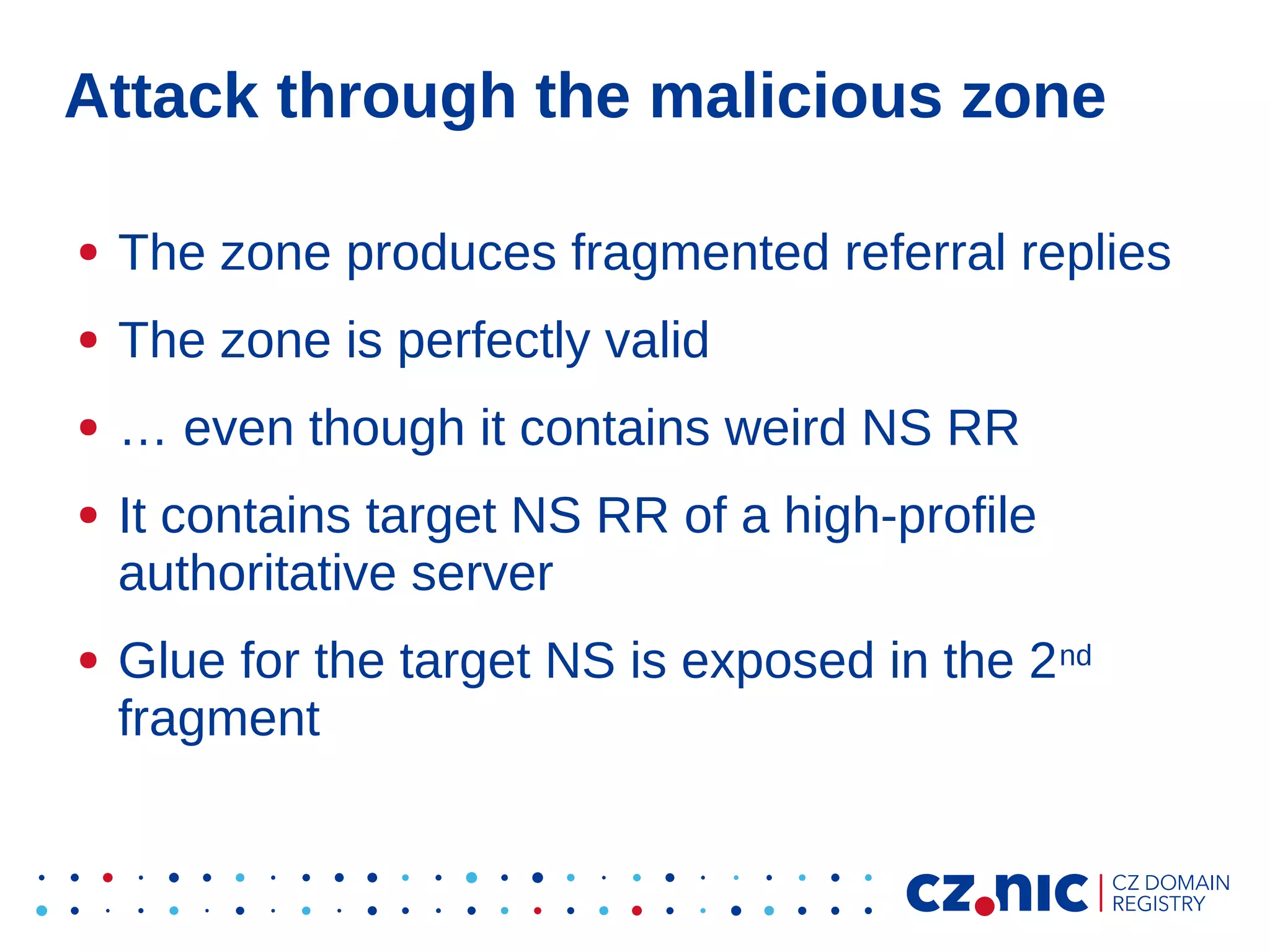
Attack through the malicious zone
●

The zone produces fragmented referral replies

●

The zone is perfectly valid

●

… even though it contains weird NS RR

●

●

It contains target NS RR of a high-profile
authoritative server
Glue for the target NS is exposed in the 2 nd
fragment
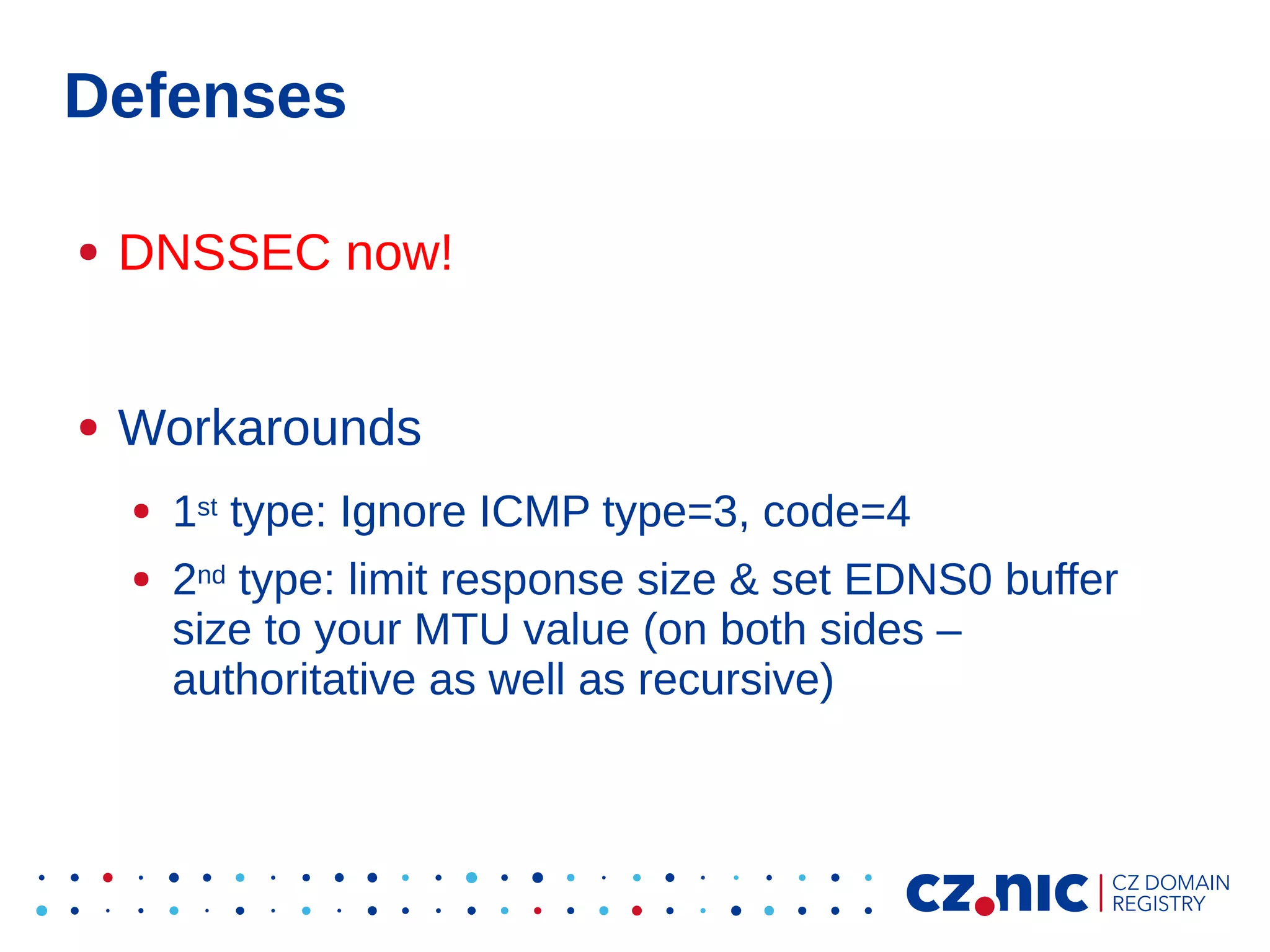
Defenses
●

DNSSEC now!

●

Workarounds
●
●

1st type: Ignore ICMP type=3, code=4
2nd type: limit response size & set EDNS0 buffer
size to your MTU value (on both sides –
authoritative as well as recursive)
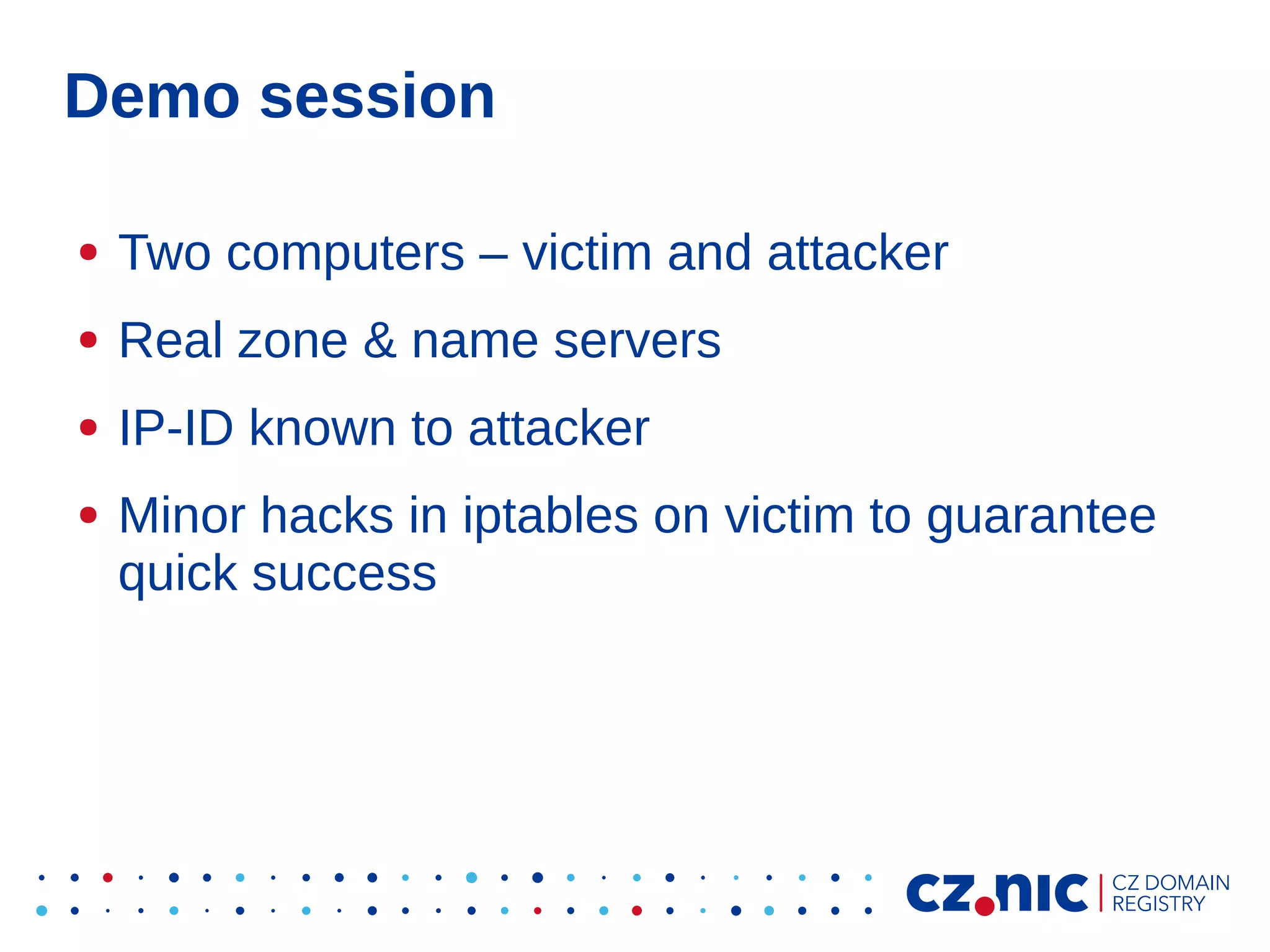
Demo session
●

Two computers – victim and attacker

●

Real zone & name servers

●

IP-ID known to attacker

●

Minor hacks in iptables on victim to guarantee
quick success
Demo session explained
●

Generate spoofed ICMP

●

Inject spoofed ICMP into network

●

Query the server and capture response

●

Modify DNS response

●

Fixup response UDP checksum & change MAC

●

Inject forged response & re-run the query
Thank You

Tomas Hlavacek • tomas.hlavacek@nic.cz •
ZeroNights 0x03, 7.11.2013

Tomas Hlavacek - IP fragmentation attack on DNS

  • 1.
    IP fragmentation attackon DNS Original work by Amir Herzberg & Haya Shulman Tomas Hlavacek • tomas.hlavacek@nic.cz • ZeroNights 0x03, 7.11.2013
  • 2.
    IP fragmentation attack ● ● AmirHerzberg & Haya Shulman paper Fragmentation Considered Poisonous Two existing PoC: ● ● ● Tomáš Hlaváček & Ondřej Mikle, CZ.NIC Labs Brian Dickson, VeriSign Labs Relatively low technical complexity but a lot of preconditions
  • 3.
    The new attackvector: Fragments ● Attack on UDP ● Exploits IP fragmentation & reassembly ● Off-path modification of packets ● Relies on 16-bit IP ID number in IP headers ● IP ID generation by counter helps ● Fights IP reassembly cache limits
  • 4.
    IP fragmentation attackon DNS ● ● ● ● Cache-poisoning attack on resolvers Reduces entropy from 32 bits (source port + DNS ID) to 16 bits (IP ID) … because UDP header and beginning of DNS data stays in the 1st fragment Attacker modifies the 2nd fragment (authority and additional sections)
  • 5.
    IP frag attackon DNS types ● Two types so far: ● ● 1) Convincing authoritative server to fragment replies for real domain by spoofed ICMPs 2) Registering specially forged zone which generates responses over 1500 B
  • 6.
    st Triggering fragmentation –1 type ● ● ● ● ICMP destination unreachable, frag. needed but DF bit set (type=3, code=4) Spoofing of ICMP (BCP38 is not a problem, firewalls are) Linux accepts signaled MTU into routing cache for 10 mins Linux minimum MTU = 552 B
  • 7.
  • 8.
  • 9.
  • 10.
  • 11.
  • 12.
  • 13.
  • 14.
    Effects of ICMPspoofing root@authoritative_server:/# ip route show cache ... 77.243.16.81 from 195.226.217.5 via 217.31.48.17 dev eth0 cache ipid 0xe8a1 Caching resolver IP 62.109.128.22 from 195.226.217.5 via 217.31.48.17 dev eth0 cache expires 576sec ipid 0x6ef3 mtu 552 rtt 4ms rttvar 4ms cwnd 10 63.249.32.21 from 195.226.217.5 via 217.31.48.17 dev eth0 cache ipid 0xa256
  • 15.
    Response of theauthoritative server ; EDNS: version: 0, flags: do; udp: 4096 ;; QUESTION SECTION: ;aaaaaaaaaaaaaaaaaaaaaaaaaaaaaaaaaaaaaaaaaaaaaaaaaa.aaaaaaaaaaaaaaaaaaaaaaaaaaaa aaaaaaaaaaaaaaaaaaaaaa.aaaaaaaaaaaaaaaaaaaaaaaaaaaaaaaaaaaaaaaaaaaaaaaaaa.aaaaaa aaaaaaaaaaaaaaaaaaaaaaaaaaaaaaaaaaaaaaaaa.aaaaaaaaaaaaaaaaaaaaaaaaa.aaaaaaaaaaaa aa.ad.example.cz. IN A ;; AUTHORITY SECTION: ad.example.cz. 360 IN NS ad-ns1.example.cz. ad.example.cz. 360 IN NS ad-ns2.example.cz. ad.example.cz. 360 IN NSEC ad-ns1.example.cz. NS ... ;; ADDITIONAL SECTION: ad-ns1.example.cz. 360 IN A 217.31.49.71 ad-ns1.example.cz. 360 IN RRSIG A 5 3 360 … ad-ns2.example.cz. 360 IN A ad-ns2.example.cz. 360 IN RRSIG A 5 3 360 ... 217.31.49.70 1st and 2nd fragment border
  • 16.
    Response in theresolver log ; EDNS: version: 0, flags: do; udp: 4096 ;; QUESTION SECTION: ;aaaaaaaaaaaaaaaaaaaaaaaaaaaaaaaaaaaaaaaaaaaaaaaaaa.aaaaaaaaaaaaaaaaaaaaaaaaaaaa aaaaaaaaaaaaaaaaaaaaaa.aaaaaaaaaaaaaaaaaaaaaaaaaaaaaaaaaaaaaaaaaaaaaaaaaa.aaaaaa aaaaaaaaaaaaaaaaaaaaaaaaaaaaaaaaaaaaaaaaa.aaaaaaaaaaaaaaaaaaaaaaaaa.aaaaaaaaaaaa aa.ad.example.cz. IN A ;; AUTHORITY SECTION: ad.example.cz. 360 IN NS ad-ns1.example.cz. ad.example.cz. 360 IN NS ad-ns2.example.cz. ad.example.cz. 360 IN NSEC ad-ns1.example.cz. NS ... ;; ADDITIONAL SECTION: ad-ns1.example.cz. 360 IN A 217.31.49.71 ad-ns1.example.cz. 360 IN RRSIG A 5 3 360 … ad-ns2.example.cz. 360 IN A ad-ns2.example.cz. 360 IN RRSIG A 5 3 360 ... 1st and 2nd fragment border 62.109.128.20 UDP checksum fixup
  • 17.
    Technical challenges inPoC ● ICMP packet forgery (easy) ● Selecting vulnerable zone (medium) ● Forging fragments, fixing UDP checksums (hard) ● Inserting into network (depends on local admin's paranoia) ● IP reassembly queue size = 64 @ Linux (needs further work) ● RR-set order randomization (annoyance) ● Label compression (not a problem) ● Fragment arrival order (potentially breaks the attack)
  • 18.
    Forged packet acceptance ● ● Bailiwickrules Generally low level of trust in RR from additional section ● Gradually stronger rules in BIND since ~2003 ● Unknown (most likely strict) rules in Unbound
  • 19.
    PoC & tricks ● This(1st type) attack worked in lab! ● IP ID known to attacker ● No firewalls, no conntrack ● Non-default IP reassembly queue settings ● 1 out of 3 trials succeeded (due to RR-set randomization and timing)
  • 20.
    nd 2 type attack ● Forgezone with specific NS RRs: ● ● ● Add target NS (and glue) to poison Forge zone to produce long referral responses (N x ~250 B NS RR) Register the domain at the lowest possible level (2nd level zone)
  • 21.
    Malicious zone inccTLD ;poisonovacizona.cz. IN NS ;; AUTHORITY SECTION: poisonovacizona.cz. 18000 IN NS eaaaaaaaaaaaaaaaaaaaaaaaaaaaaaaaaaaaaaaaaaaaaaaaaaa. kaaaaaaaaaaaaaaaaaaaaaaaaaaaaaaaaaaaaaaaaaaaaaaaaaaaaaaaaaaa. qaaaaaaaaaaaaaaaaaaaaaaaaaaaaaaaaaaaaaaaaaaaaaaaaaaaaaaaaaaa. waaaaaaaaaaaaaaaaaaaaaaaaaaaaaaaaaaaaaaaaaaaaaaaaaaaaaaaaaaa. poisonovacizona.cz. ... poisonovacizona.cz. 18000 IN NS ns2.ignum.cz. ;; ADDITIONAL SECTION: ns2.ignum.cz. 18000 IN A 217.31.48.201 eaaaaaaaaaaaaaaaaaaaaaaaaaaaaaaaaaaaaaaaaaaaaaaaaaa. kaaaaaaaaaaaaaaaaaaaaaaaaaaaaaaaaaaaaaaaaaaaaaaaaaaaaaaaaaaa. qaaaaaaaaaaaaaaaaaaaaaaaaaaaaaaaaaaaaaaaaaaaaaaaaaaaaaaaaaaa. waaaaaaaaaaaaaaaaaaaaaaaaaaaaaaaaaaaaaaaaaaaaaaaaaaaaaaaaaaa. poisonovacizona.cz. 18000 IN ... ;; MSG SIZE rcvd: 1949 A 217.31.48.1
  • 22.
    Attack through themalicious zone ● The zone produces fragmented referral replies ● The zone is perfectly valid ● … even though it contains weird NS RR ● ● It contains target NS RR of a high-profile authoritative server Glue for the target NS is exposed in the 2 nd fragment
  • 23.
    Defenses ● DNSSEC now! ● Workarounds ● ● 1st type:Ignore ICMP type=3, code=4 2nd type: limit response size & set EDNS0 buffer size to your MTU value (on both sides – authoritative as well as recursive)
  • 24.
    Demo session ● Two computers– victim and attacker ● Real zone & name servers ● IP-ID known to attacker ● Minor hacks in iptables on victim to guarantee quick success
  • 25.
    Demo session explained ● Generatespoofed ICMP ● Inject spoofed ICMP into network ● Query the server and capture response ● Modify DNS response ● Fixup response UDP checksum & change MAC ● Inject forged response & re-run the query
  • 26.
    Thank You Tomas Hlavacek• tomas.hlavacek@nic.cz • ZeroNights 0x03, 7.11.2013