Language starter
• Look at the quotations selected below.
  – Write a sentence about how they strike you,
    paying particular attention to language and
    imagery.

  –   Me only cruel immortality/ Consumes:
  –   after many a summer dies the swan
  –   Man comes and tills the field and lies beneath
  –   Thy sweet eyes brighten slowly close to mine/
      Ere yet they blind the stars
Tennyson

 Tithonus
Context for ‘Ulysses’, ‘Tithonus’
• ‘Ulysses’ was written within three weeks of his
  friend Arthur Hallam’s early death in 1833.
• According to Tennyson the poem was written
  under ‘a sense of loss and all that had gone by’;
  this is balanced by his thought that ‘still life must
  be fought out to the end.’
• ‘Tithonus’ was also written in the period following
  Hallam’s death, probably in 1833.
• It was first published in 1860
The Myth of Tithonus
•   The goddess of the Dawn, Eos, like her sister Selene , the Moon-
    Goddess, was at times inspired with the love of mortals.
•   Her greatest favourite was Tithonus son of Laomedon, king of Troy.
•   She stole him away, and prevailed on Jupiter (Zeus) to grant him
    immortality.
•   She forgot to ask for him to be granted eternal youth.
•   He grew old. She left him.
•   He still had the range of her palace, lived on ambrosial food, and
    was clad in celestial raiment.
•   At length he lost the power of using his limbs, and then she shut him
    up in his chamber, whence his feeble voice might at times be heard.
•   Finally she turned him into a grasshopper.
Form, structure, language?
• What kind of poem is this?
   – dramatic monologue
• Why is blank verse used?
   – to capture the flexibility and character of a speaking voice
• What is the impact of the versification?
   – ?


• What happens in the poem (and how is it structured,
  therefore?)
   – Is it imagined as being spoken at dawn with the gradual spread
     of light? (How is this done?)
   – What is the effect of the poet addressing Aurora?
Language:
• What is the effect of the inversion in line 5, with
  regard to rhythm and intention?
• Why does Tithonius refer to himself as ‘he’ (lines
  11-14)?
• What use is made of colour throughout?
• What use is made of formal, elevated diction?
• What use of repetition/ anaphora?
• What patterns of figurative language are there?
• What use of sound is there?
Language: contrasts
• What contrast is made between the persona
  of Tithonus and the natural world at the
  beginning of the poem?
• Find words and phrases to show the contrast
  between the aged Tithonius and Aurora.
  Analyse their impact.
• Identify the joys of youth, as presented in the
  poem. With what words are they presented?
• It has been said that the poem is a realisation of
  a long and meaningless future, after Hallam’s
  death. Your thoughts?

Tithonus

  • 1.
    Language starter • Lookat the quotations selected below. – Write a sentence about how they strike you, paying particular attention to language and imagery. – Me only cruel immortality/ Consumes: – after many a summer dies the swan – Man comes and tills the field and lies beneath – Thy sweet eyes brighten slowly close to mine/ Ere yet they blind the stars
  • 2.
  • 4.
    Context for ‘Ulysses’,‘Tithonus’ • ‘Ulysses’ was written within three weeks of his friend Arthur Hallam’s early death in 1833. • According to Tennyson the poem was written under ‘a sense of loss and all that had gone by’; this is balanced by his thought that ‘still life must be fought out to the end.’ • ‘Tithonus’ was also written in the period following Hallam’s death, probably in 1833. • It was first published in 1860
  • 5.
    The Myth ofTithonus • The goddess of the Dawn, Eos, like her sister Selene , the Moon- Goddess, was at times inspired with the love of mortals. • Her greatest favourite was Tithonus son of Laomedon, king of Troy. • She stole him away, and prevailed on Jupiter (Zeus) to grant him immortality. • She forgot to ask for him to be granted eternal youth. • He grew old. She left him. • He still had the range of her palace, lived on ambrosial food, and was clad in celestial raiment. • At length he lost the power of using his limbs, and then she shut him up in his chamber, whence his feeble voice might at times be heard. • Finally she turned him into a grasshopper.
  • 6.
    Form, structure, language? •What kind of poem is this? – dramatic monologue • Why is blank verse used? – to capture the flexibility and character of a speaking voice • What is the impact of the versification? – ? • What happens in the poem (and how is it structured, therefore?) – Is it imagined as being spoken at dawn with the gradual spread of light? (How is this done?) – What is the effect of the poet addressing Aurora?
  • 7.
    Language: • What isthe effect of the inversion in line 5, with regard to rhythm and intention? • Why does Tithonius refer to himself as ‘he’ (lines 11-14)? • What use is made of colour throughout? • What use is made of formal, elevated diction? • What use of repetition/ anaphora? • What patterns of figurative language are there? • What use of sound is there?
  • 8.
    Language: contrasts • Whatcontrast is made between the persona of Tithonus and the natural world at the beginning of the poem? • Find words and phrases to show the contrast between the aged Tithonius and Aurora. Analyse their impact. • Identify the joys of youth, as presented in the poem. With what words are they presented? • It has been said that the poem is a realisation of a long and meaningless future, after Hallam’s death. Your thoughts?

Editor's Notes

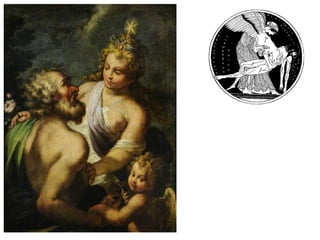
  • #4 Gregorio Lazzarini, Aurora and Tithonus; Greek stele What ’s happening here?
  • #5 Blank verse; a number of indented verse paragraphs; voice of ‘Tennyson’,
  • #6 Why does Tennyson choose this myth to write about so soon after his friend ’s death?