TIME
MANAGEMENT
Cathy Cousear
1Time Management
Time Management
• Definition: the management of time in order to
make the most out of it.
2Time Management
Lack of Time Management Causes:
• Failure to anticipate problems
• Poor organization
• Little time to plan
Inadequate Preparation
3Time Management
Common Time Wasters
• Being reactive- no planning
• Procrastination
• Frequent interruptions or distractions
• A non-effective organizing system
• Inability to say no
4Time Management
Time History
First Generation- Clocks, Watches
5Time Management
Time History
Second Generation- Calendar
6Time Management
Time History
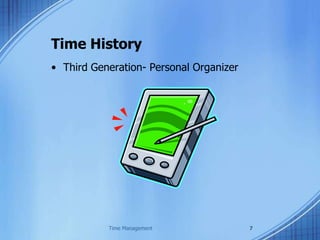
• Third Generation- Personal Organizer
7Time Management
Time History
• Fourth Generation- efficient and proactive
8Time Management
Plan Your Day in Advance
• Take 30 minutes day to plan your day.
9Time Management
Task List
• Writing what you do increases your
productivity.
• It is a an inventory tool that serves as an
alternative to memory.
• ABC Method-tasks to be done within a day, a
week, a month
10Time Management
Pareto Analysis
• 80% of tasks can be completed in 20% of the
disposable time. The remaining 20% of tasks
will take up 80% of the time.
• It is recommended that tasks that fall into the
first category be assigned a higher priority.
11Time Management
Time Management Matrix
Urgent Not Urgent Status
1. Activities:
Crisis
Pressing problems
Deadline-driven projects
2. Activities:
Prevention, activities
Relationship building
Recognizing new
opportunities, planning
recreation
Important
3. Activities
Interruptions, some calls
Some mail, reports
Meetings, pressing
matters
Popular activities
Not Important
12Time Management
Built in Time for the Unexpected
• An emergency with the participants’
• Phone calls from families, programs, or
residence
• Emergency meetings
13Time Management
Control when Communication
with Others
• Incoming phone calls
• Outgoing phone calls
• Visitors
• Checking emails
14Time Management
FIT
• “Fit” allows us to maximize our productivity
given constraints.
• 15 minutes in your schedule
• It is more efficient to complete task that would
require 15 minutes
• Than complete a task that can be done in 5
minutes or 4 weeks.
15Time Management
POSEC
• Prioritize- time
• Organizing the family and finances
• Streamlining-work and chores
• Economizing-pastimes, socializing
• Contributing-social organizing
16Time Management
Suggestions
• Set realistic goals
• Prioritize
• Create an action plan
• Don’t give in to distraction
• Accomplish your goals
• Allow for some down time
• Smaller accomplishments=greater success
17Time Management
Mental Markers
• Make a list
• Pay bills all at one(if possible)
• Get an engagement calendar
• Keep a notebook by your bed
• Choose a day or night to do shopping
• Buy things in bulk
18Time Management

Time management for professionals

  • 1.
  • 2.
    Time Management • Definition:the management of time in order to make the most out of it. 2Time Management
  • 3.
    Lack of TimeManagement Causes: • Failure to anticipate problems • Poor organization • Little time to plan Inadequate Preparation 3Time Management
  • 4.
    Common Time Wasters •Being reactive- no planning • Procrastination • Frequent interruptions or distractions • A non-effective organizing system • Inability to say no 4Time Management
  • 5.
    Time History First Generation-Clocks, Watches 5Time Management
  • 6.
    Time History Second Generation-Calendar 6Time Management
  • 7.
    Time History • ThirdGeneration- Personal Organizer 7Time Management
  • 8.
    Time History • FourthGeneration- efficient and proactive 8Time Management
  • 9.
    Plan Your Dayin Advance • Take 30 minutes day to plan your day. 9Time Management
  • 10.
    Task List • Writingwhat you do increases your productivity. • It is a an inventory tool that serves as an alternative to memory. • ABC Method-tasks to be done within a day, a week, a month 10Time Management
  • 11.
    Pareto Analysis • 80%of tasks can be completed in 20% of the disposable time. The remaining 20% of tasks will take up 80% of the time. • It is recommended that tasks that fall into the first category be assigned a higher priority. 11Time Management
  • 12.
    Time Management Matrix UrgentNot Urgent Status 1. Activities: Crisis Pressing problems Deadline-driven projects 2. Activities: Prevention, activities Relationship building Recognizing new opportunities, planning recreation Important 3. Activities Interruptions, some calls Some mail, reports Meetings, pressing matters Popular activities Not Important 12Time Management
  • 13.
    Built in Timefor the Unexpected • An emergency with the participants’ • Phone calls from families, programs, or residence • Emergency meetings 13Time Management
  • 14.
    Control when Communication withOthers • Incoming phone calls • Outgoing phone calls • Visitors • Checking emails 14Time Management
  • 15.
    FIT • “Fit” allowsus to maximize our productivity given constraints. • 15 minutes in your schedule • It is more efficient to complete task that would require 15 minutes • Than complete a task that can be done in 5 minutes or 4 weeks. 15Time Management
  • 16.
    POSEC • Prioritize- time •Organizing the family and finances • Streamlining-work and chores • Economizing-pastimes, socializing • Contributing-social organizing 16Time Management
  • 17.
    Suggestions • Set realisticgoals • Prioritize • Create an action plan • Don’t give in to distraction • Accomplish your goals • Allow for some down time • Smaller accomplishments=greater success 17Time Management
  • 18.
    Mental Markers • Makea list • Pay bills all at one(if possible) • Get an engagement calendar • Keep a notebook by your bed • Choose a day or night to do shopping • Buy things in bulk 18Time Management