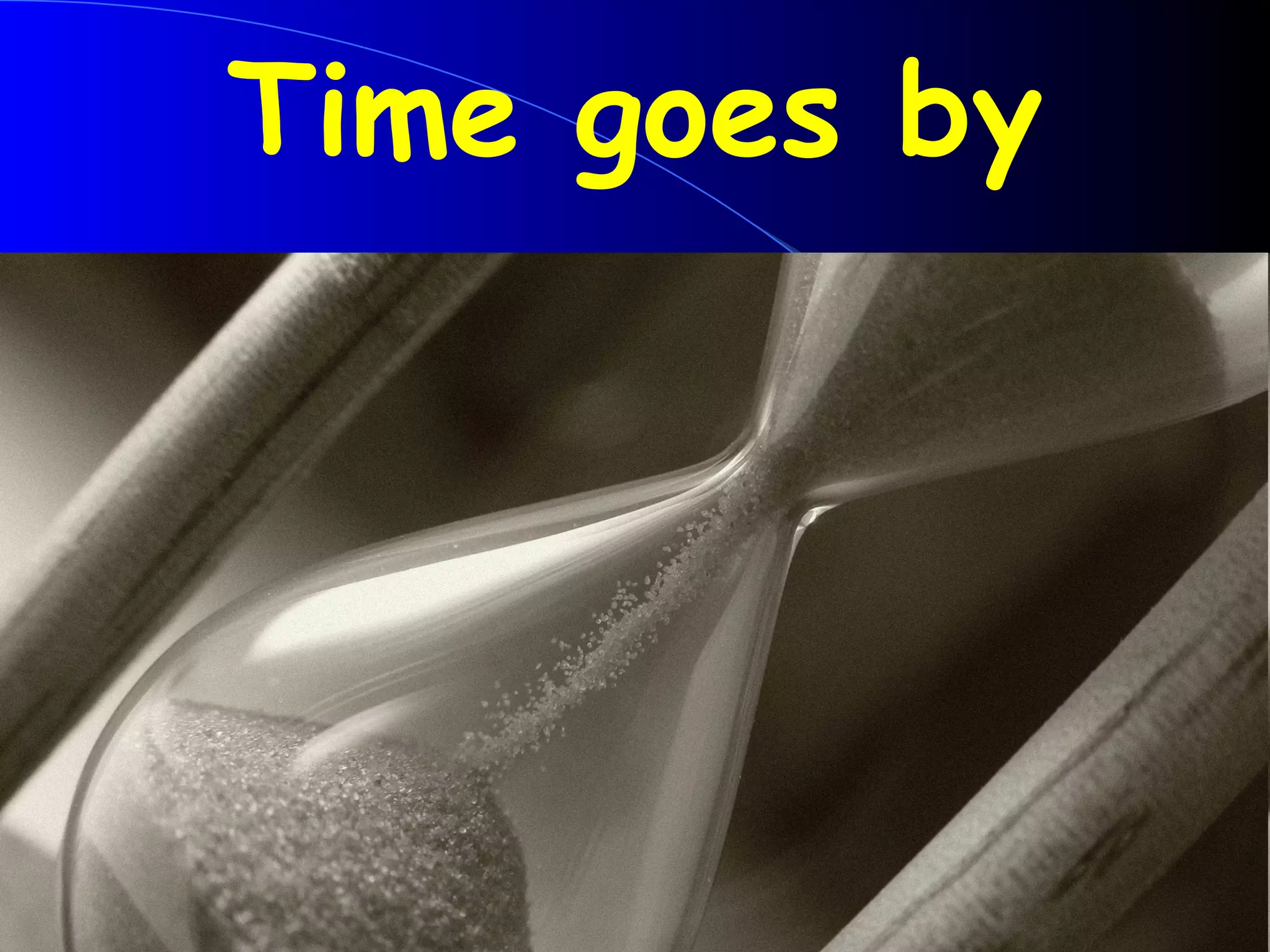
Time goes by
Introduction: Taking children‘s experience into account  (New Year‘S Eve, beginning of new year) Children should talk about their own life and be introduced into the subject “ Time goes by”. A mindmap gives some insight into the children’s previous experience   Structure of the unit: the 4 seasons the months the weeks the days the times
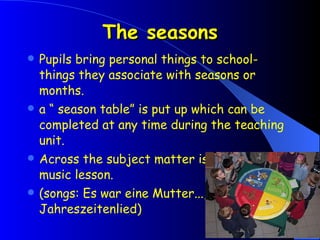
The seasons Pupils bring personal things to school- things they associate with seasons or months. a “ season table” is put up which can be completed at any time during the teaching unit. Across the subject matter is picked up in music lesson. (songs: Es war eine Mutter..., Jahreszeitenlied)  
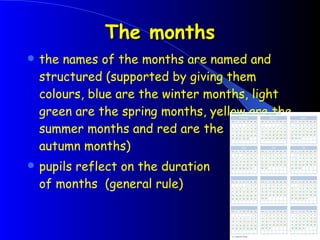
The months the names of the months are named and structured (supported by giving them colours, blue are the winter months, light green are the spring months, yellow are the summer months and red are the  autumn months) pupils reflect on the duration  of months  (general rule)
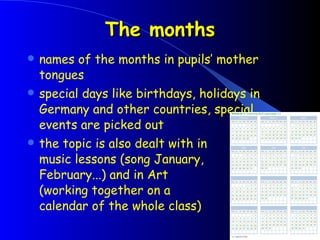
The months names of the months in pupils’ mother tongues special days like birthdays, holidays in Germany and other countries, special events are picked out the topic is also dealt with in  music lessons (song January,  February...) and in Art  (working together on a  calendar of the whole class)
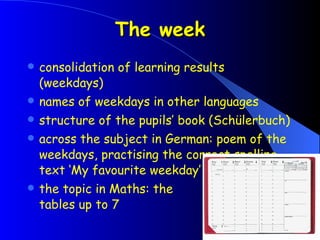
The week consolidation of learning results  (weekdays) names of weekdays in other languages structure of the pupils’ book (Schülerbuch) across the subject in German: poem of the weekdays, practising the correct spelling, text ‘My favourite weekday’ the topic in Maths: the  tables up to 7
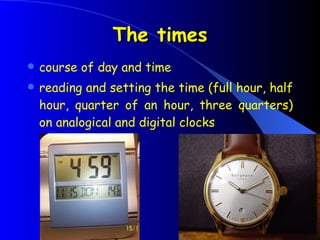
The times course of day and time reading and setting the time (full hour, half hour, quarter of an hour, three quarters) on analogical and digital clocks
Assessment of the pupils calendar quiz class calendar tests on times and weekdays pupils’ own texts
Targets practical targets :  pupils’s orientation in textbook and calendar, finding out connections between the individual months and the seasons intercultural learning :  getting to know the holidays in other countries, the weekdays and months in other languages Maths:  pupils  get to know the clock and the tables up to 7
Targets German:  pupils write down own texts so that they can be understood by others, they read and present poems and control the spelling of the weekdays Art:  making a calendar of the whole class (collages of pupils’ own pictures, cut-out pictures and photos from their own environment, such as nature, animals, plants and the weather) Music:  pupils learn new songs on the seasons and the months

Time Goes By

  • 1.
  • 2.
    Introduction: Taking children‘sexperience into account (New Year‘S Eve, beginning of new year) Children should talk about their own life and be introduced into the subject “ Time goes by”. A mindmap gives some insight into the children’s previous experience Structure of the unit: the 4 seasons the months the weeks the days the times
  • 3.
    The seasons Pupilsbring personal things to school- things they associate with seasons or months. a “ season table” is put up which can be completed at any time during the teaching unit. Across the subject matter is picked up in music lesson. (songs: Es war eine Mutter..., Jahreszeitenlied)  
  • 4.
    The months thenames of the months are named and structured (supported by giving them colours, blue are the winter months, light green are the spring months, yellow are the summer months and red are the autumn months) pupils reflect on the duration of months (general rule)
  • 5.
    The months namesof the months in pupils’ mother tongues special days like birthdays, holidays in Germany and other countries, special events are picked out the topic is also dealt with in music lessons (song January, February...) and in Art (working together on a calendar of the whole class)
  • 6.
    The week consolidationof learning results (weekdays) names of weekdays in other languages structure of the pupils’ book (Schülerbuch) across the subject in German: poem of the weekdays, practising the correct spelling, text ‘My favourite weekday’ the topic in Maths: the tables up to 7
  • 7.
    The times courseof day and time reading and setting the time (full hour, half hour, quarter of an hour, three quarters) on analogical and digital clocks
  • 8.
    Assessment of thepupils calendar quiz class calendar tests on times and weekdays pupils’ own texts
  • 9.
    Targets practical targets: pupils’s orientation in textbook and calendar, finding out connections between the individual months and the seasons intercultural learning : getting to know the holidays in other countries, the weekdays and months in other languages Maths: pupils get to know the clock and the tables up to 7
  • 10.
    Targets German: pupils write down own texts so that they can be understood by others, they read and present poems and control the spelling of the weekdays Art: making a calendar of the whole class (collages of pupils’ own pictures, cut-out pictures and photos from their own environment, such as nature, animals, plants and the weather) Music: pupils learn new songs on the seasons and the months