By
MONKEZ M YOUSIF MD AGAF
Professor of Internal Medicine
Zagazig University
2024
HYPERCOAGULABLE STATES
(THROMBOPHILIA)
“The chapter you are learning
today is going to save someone’s
life tomorrow. Pay attention.”
Bloom's Learning Domains.
Objectives
• Revise hemostatic mechanisms
• Discuss hypercoaguable states
• Focus specifically on the inherited
hypercoaguable conditions
• Briefly describe the mechanism behind each of
the inherited thrombophilias
• Review the hypercoaguable workup and when
it is appropriately done
Case 1
• A 33-year-old previously healthy man presented
with sudden-onset dyspnea and sharp right-sided
chest pain. He had noted right leg edema and
calf discomfort a week earlier.
• He denied recent trauma, surgery, or immobility.
His mother had a history of postpartum deep
vein thrombosis (DVT).
• On physical examination, he has tachycardia
with a heart rate of 114 bpm, normotensive with
a blood pressure of 102/76 mm Hg, and
hypoxemic with 88% arterial O2sat on room air.
• Contrast-enhanced chest computed tomogram
demonstrated bilateral segmental pulmonary
embolism.
• Right lower-extremity venous ultrasound
documented femoral and popliteal DVT.
Case 2
• A 78-year-old woman with hypertension and
obesity developed acute left leg edema and
pain 2 days after open reduction and internal
fixation of a right hip fracture.
• On physical examination, the patient had
severe edema and tenderness of the left lower
leg and thigh.
• Left lower extremity venous ultrasound
documented left common femoral, distal
femoral, and popliteal DVT.
Definition of Thrombophilia
A disorder associated with an
increased tendency to thrombosis.
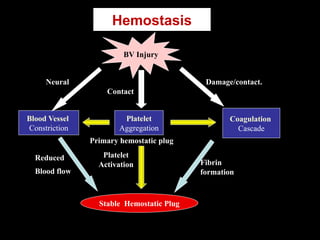
Hemostasis
BV Injury
Platelet
Aggregation
Platelet
Activation
Blood Vessel
Constriction
Coagulation
Cascade
Stable Hemostatic Plug
Fibrin
formation
Reduced
Blood flow
Damage/contact.
Primary hemostatic plug
Neural
Contact
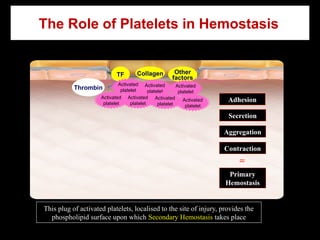
The Role of Platelets in Hemostasis
Collagen Other
factors
TF
Thrombin
Activated
platelet
Activated
platelet
Activated
platelet
Adhesion
Aggregation
Contraction
Secretion
Primary
Hemostasis
=
Activated
platelet
Activated
platelet
Activated
platelet
Activated
platelet
This plug of activated platelets, localised to the site of injury, provides the
phospholipid surface upon which Secondary Hemostasis takes place
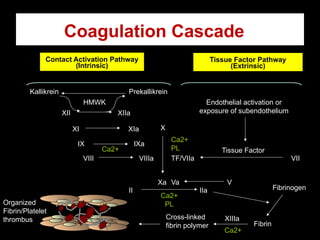
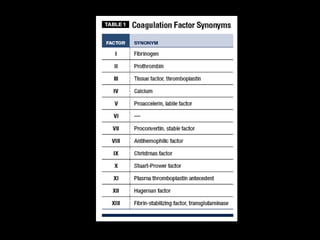
Coagulation Cascade
XII XIIa
XI XIa
IX
VIII VIIIa
X
Xa
Contact Activation Pathway
(Intrinsic)
Tissue Factor Pathway
(Extrinsic)
Endothelial activation or
exposure of subendothelium
Tissue Factor
VII
TF/VIIa
Kallikrein
HMWK
Prekallikrein
IIa
II
Ca2+
PL
Va V
Organized
Fibrin/Platelet
thrombus
Fibrinogen
Fibrin
Ca2+
PL
Ca2+
Cross-linked
fibrin polymer
XIIIa
Ca2+
IXa
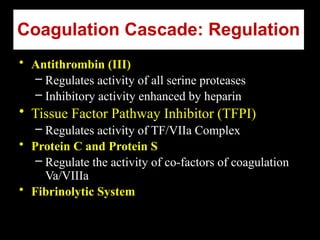
Coagulation Cascade: Regulation
• Antithrombin (III)
– Regulates activity of all serine proteases
– Inhibitory activity enhanced by heparin
• Tissue Factor Pathway Inhibitor (TFPI)
– Regulates activity of TF/VIIa Complex
• Protein C and Protein S
– Regulate the activity of co-factors of coagulation
Va/VIIIa
• Fibrinolytic System
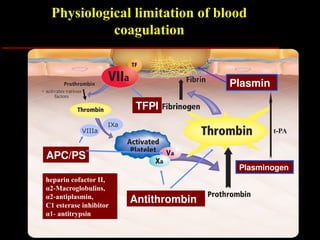
VIIIa
IXa
+ activates various
factors
APC/PS
TFPI
Antithrombin
Plasmin
Physiological limitation of blood
coagulation
heparin cofactor II,
α2 Macroglobulins,
‐
α2 antiplasmin,
‐
C1 esterase inhibitor
α1 antitrypsin
‐
Plasminogen
t-PA
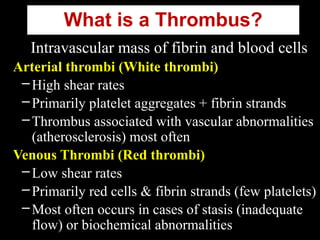
What is a Thrombus?
Intravascular mass of fibrin and blood cells
Arterial thrombi (White thrombi)
–High shear rates
–Primarily platelet aggregates + fibrin strands
–Thrombus associated with vascular abnormalities
(atherosclerosis) most often
Venous Thrombi (Red thrombi)
–Low shear rates
–Primarily red cells & fibrin strands (few platelets)
–Most often occurs in cases of stasis (inadequate
flow) or biochemical abnormalities
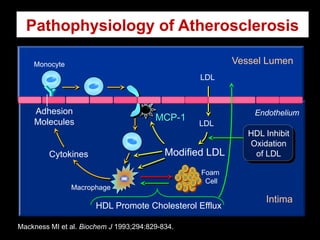
LDL
LDL
Mackness MI et al. Biochem J 1993;294:829-834.
Endothelium
Vessel Lumen
Monocyte
Modified LDL
Macrophage
MCP-1
Adhesion
Molecules
Cytokines
Pathophysiology of Atherosclerosis
Foam
Cell
HDL Promote Cholesterol Efflux
Intima
HDL Inhibit
Oxidation
of LDL
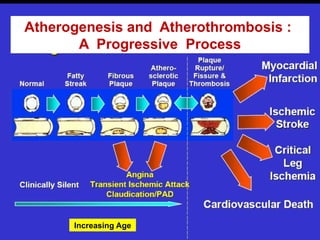
Atherogenesis and Atherothrombosis :
A Progressive Process
Increasing Age
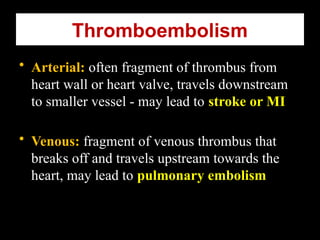
Thromboembolism
• Arterial: often fragment of thrombus from
heart wall or heart valve, travels downstream
to smaller vessel - may lead to stroke or MI
• Venous: fragment of venous thrombus that
breaks off and travels upstream towards the
heart, may lead to pulmonary embolism
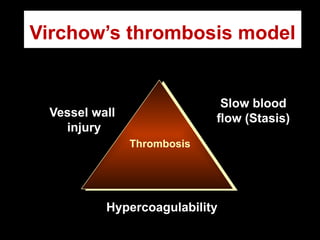
Virchow’s thrombosis model
Thrombosis
Vessel wall
injury
Slow blood
flow (Stasis)
Hypercoagulability
Injury or Activation of Endothelium
• Atherosclerosis
– Life style - smoking, obesity
• Immune mediated
– Heparin induced thrombocytopenia
– Antiphospholipid Antibody Syndrome
• Trauma
• Artificial Surface (vascular graft)
• Inflammation/Infection
Abnormal Blood Flow
 Decreased mobility
 Vessel Obstruction
 Eccomomy class syndrome
 Pregnancy
 Malignancy
 Estrogens
 Myeloproliferative disorders
 Hereditary Factors
Hereditary Risk Factors for
Venous Thrombosis
 Antithrombin Deficiency
 Protein C deficiency
 Protein S deficiency
 Factor V Leiden (FVL)
 Prothrombin G20210A
 Dysfibrinogenemias (rare)
 Hyperhomocysteinemia
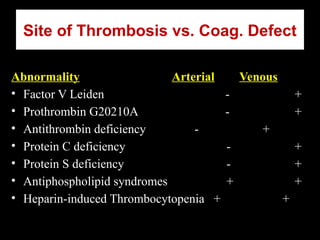
Site of Thrombosis vs. Coag. Defect
Abnormality Arterial Venous
• Factor V Leiden - +
• Prothrombin G20210A - +
• Antithrombin deficiency - +
• Protein C deficiency - +
• Protein S deficiency - +
• Antiphospholipid syndromes + +
• Heparin-induced Thrombocytopenia + +
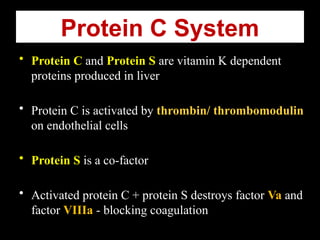
Protein C System
• Protein C and Protein S are vitamin K dependent
proteins produced in liver
• Protein C is activated by thrombin/ thrombomodulin
on endothelial cells
• Protein S is a co-factor
• Activated protein C + protein S destroys factor Va and
factor VIIIa - blocking coagulation
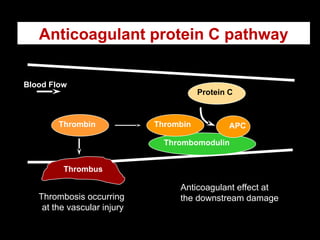
Anticoagulant protein C pathway
Blood Flow
Thrombomodulin
Protein C
APC
Anticoagulant effect at
the downstream damage
Thrombin
Thrombin
Thrombus
Thrombosis occurring
at the vascular injury
VIIIai
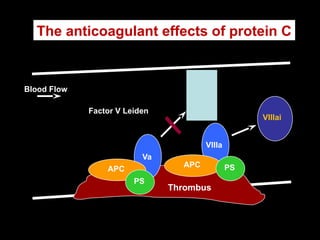
The anticoagulant effects of protein C
Blood Flow
VIIIa
Va
Thrombus
Vai
APC
APC
PS
PS
Factor V Leiden
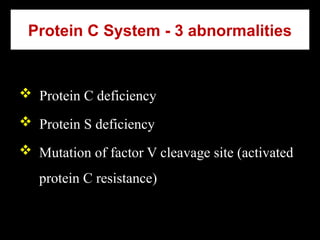
Protein C System - 3 abnormalities
 Protein C deficiency
 Protein S deficiency
 Mutation of factor V cleavage site (activated
protein C resistance)
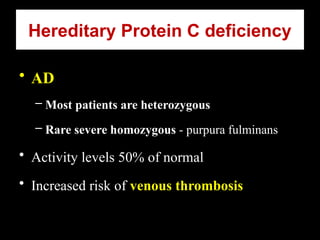
Hereditary Protein C deficiency
• AD
– Most patients are heterozygous
– Rare severe homozygous - purpura fulminans
• Activity levels 50% of normal
• Increased risk of venous thrombosis
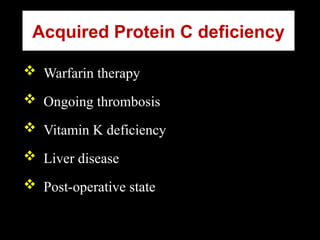
Acquired Protein C deficiency
 Warfarin therapy
 Ongoing thrombosis
 Vitamin K deficiency
 Liver disease
 Post-operative state
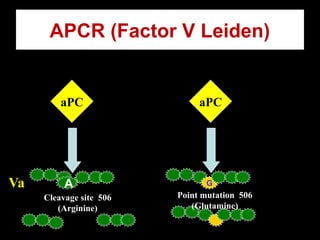
APCR (Factor V Leiden)
aPC
A G
Cleavage site 506
(Arginine)
Va
aPC
Point mutation 506
(Glutamine)
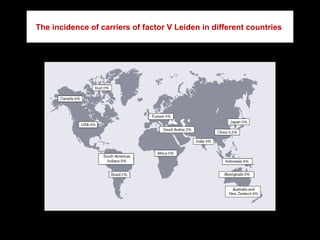
The incidence of carriers of factor V Leiden in different countries
Clinical Picture
 Increased risk of venous thrombosis (DVT,
mesenteric venous occlusion.
 First episode - 20s to 40s, associated with
pregnancy, trauma, surgery
 Warfarin associated skin necrosis
–Occurs 24 - 48 hrs after starting warfarin
APC Resistance Assay
• Determine aPTT in plasma before and after
addition of Activated Protein C.
– Failure of aPTT prolongation signifies APCR
• FVL Genetic assay (PCR)
Antithrombin deficiency
Ⅲ
• Synthesis in liver & endothelial cells
• Activated by binding to heparin-like
molecule
• Inhibits thrombin, factor a, a, XIa,
Ⅸ Ⅹ
XIIa
• Resistant to unfractionated heparin
• Must treat with low-molecular-weight
heparin (LMWH).
Cause of decreased Antithrombin
• Nephrotic syndrome
• DIC
• Hereditary deficiency (AD)
–Reduced production
–Abnormal molecule
Antithrombin Clinical
• Increased risk of venous thromboembolism
• First episode typically in 20s to 40s associated
with pregnancy, trauma or surgery
• Most common sites for thrombosis
– Lower extremities
– Pulmonary embolus
– Mesenteric vein thrombosis
– Superior sagittal sinus thrombosis
Prothrombin G20210A Mutation
 A Vitamin K-dependent protein synthesized in
the liver
 Due to substitution of adenine for guanine
 Results in 30% higher prothrombin levels
 This promotes generation of thrombin and impairs
inactivation of Factor Va by APC
 Seen in 6-10% of patients presenting with first
episode of unprovoked DVT
Immune type of HIT
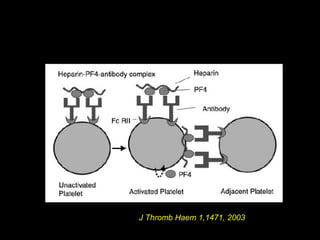
Pathogenesis involves the formation of
antibodies (usually IgG) against the heparin-
platelet factor 4 (PF 4) complex. The HIT
Abs trigger procoagulant effect
serious arterial and venous thrombosis
J Thromb Haem 1,1471, 2003
 The incidence of HIT is about 3-5% in
patients exposed to UFH, the incidence is
much lower with the use of LMWH.
 In patients with de novo exposure to heparin
a fall in the platelet count in those with HIT
occurs between day 5 and 14.
• Suspicion
• Fall in platelet count by 50% following heparin
exposure
• The clinical spectrum
• Isolated HIT
• HIT (T), that may be arterial (Stroke, MI,
PAD) or venous in nature.
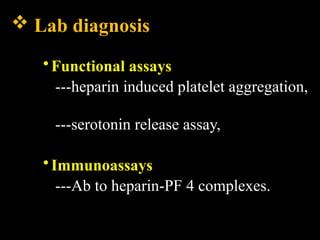
 Lab diagnosis
•Functional assays
---heparin induced platelet aggregation,
---serotonin release assay,
•Immunoassays
---Ab to heparin-PF 4 complexes.
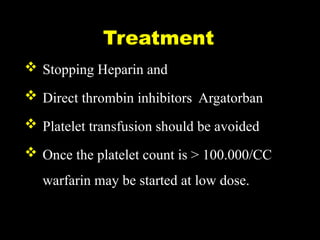
Treatment
 Stopping Heparin and
 Direct thrombin inhibitors Argatorban
 Platelet transfusion should be avoided
 Once the platelet count is > 100.000/CC
warfarin may be started at low dose.
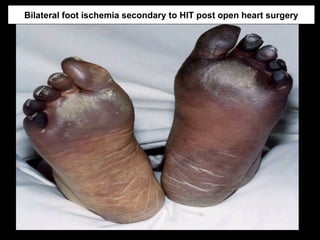
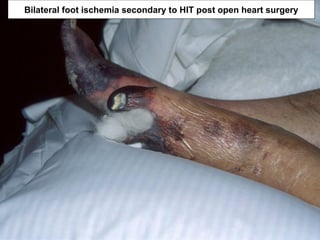
Bilateral foot ischemia secondary to HIT post open heart surgery
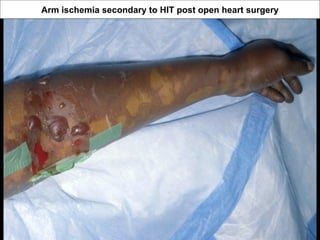
Arm ischemia secondary to HIT post open heart surgery
Antiphospholipid antibody syndrome
 Most common of Hypercoagulable disorder
 Characterized by the association of:
 Thrombosis, obstetric complications
and/or thrombocytopenia
AND
 Antibodies against phospholipids or
against proteins bound to phospholipids.
Etiology of APA Syndrome
Primary: Idiopathic
Secondary: SLE
Infection
Drug reaction
Lymphoma
Antiphospholipid Antibodies
10% of healthy donors, 30-50% of SLE
patients
1. Lupus Anticoagulant (LA) Antibodies
2. Anticardiolipin (aCL) Antibodies
3. Anti-Beta 2 Glycoprotein I Antibodies
(b2GPI)
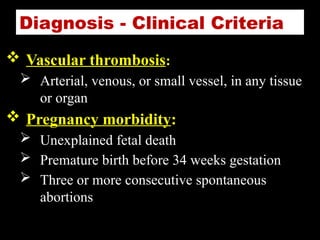
Diagnosis - Clinical Criteria
 Vascular thrombosis:
 Arterial, venous, or small vessel, in any tissue
or organ
 Pregnancy morbidity:
 Unexplained fetal death
 Premature birth before 34 weeks gestation
 Three or more consecutive spontaneous
abortions
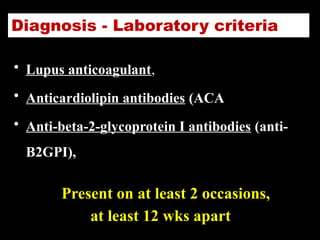
Diagnosis - Laboratory criteria
• Lupus anticoagulant,
• Anticardiolipin antibodies (ACA
• Anti-beta-2-glycoprotein I antibodies (anti-
B2GPI),
Present on at least 2 occasions,
at least 12 wks apart
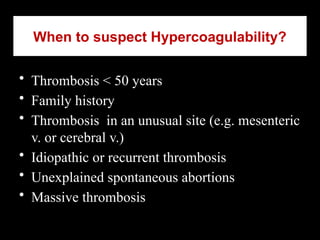
When to suspect Hypercoagulability?
• Thrombosis < 50 years
• Family history
• Thrombosis in an unusual site (e.g. mesenteric
v. or cerebral v.)
• Idiopathic or recurrent thrombosis
• Unexplained spontaneous abortions
• Massive thrombosis
Stepwise Approach For
Management of Thrombophilia
• Testing for an inherited hypercoagulable state is
costly & likely to uncover an abnormality in
more than 60% of patients presenting with
idiopathic VTEs.
• Although the remaining 40% will have
unremarkable test results, this does not imply a
true absence of a hypercoagulable state.
Diagnosis
• In the absence of validated guidelines,
testing for hypercoagulable states should
be performed only in selected patients,
and only if the results will significantly
affect the management.
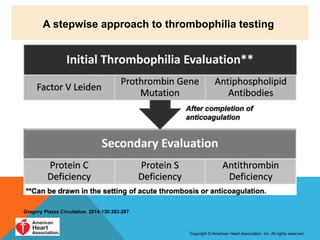
A stepwise approach to thrombophilia testing
Gregory Piazza Circulation. 2014;130:283-287
Copyright © American Heart Association, Inc. All rights reserved.
• Initiation of oral anticoagulation for primary
VTE prophylaxis in asymptomatic carriers of
any Hypercoagulable state has not been
advised.
• However, aggressive VTE prophylaxis
should be prescribed to asymptomatic
carriers of hypercoagulable states during
high-risk situations such as major or
orthopedic surgery.
Case 1
• Given the patient’s youth, family history of VTE, and
unprovoked event, thrombophilia testing was performed
after discharge from the hospital.
• A lupus anticoagulant was detected and subsequently
confirmed on a second test 6 weeks later.
• Because of a high risk of VTE recurrence in the setting
of a lupus anticoagulant and an unprovoked event, the
patient was maintained indefinitely on warfarin
anticoagulation with an INR 2 to 3.
• At the 1-year follow-up, he had recovered fully and had
not experienced another pulmonary embolism or DVT.
Case 2
• Given the patient’s age and the provoked
nature of her DVT, thrombophilia testing was
not performed. She was treated with 6 months
of anticoagulation with Warfarin.
• At the 1-year follow-up, she had recovered
fully and had not suffered a VTE recurrence.
MCQ
1. Which ONE of the following is a major
risk factor for venous thrombosis?
A. Smoking
B. Raised low density lipoprotein (LDL)
cholesterol
C. Cancer
D. Hypertension
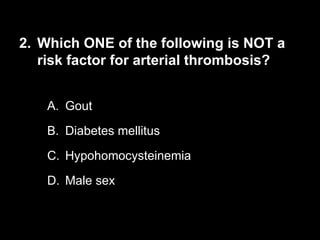
2. Which ONE of the following is NOT a
risk factor for arterial thrombosis?
A. Gout
B. Diabetes mellitus
C. Hypohomocysteinemia
D. Male sex
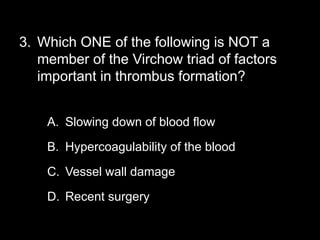
3. Which ONE of the following is NOT a
member of the Virchow triad of factors
important in thrombus formation?
A. Slowing down of blood flow
B. Hypercoagulability of the blood
C. Vessel wall damage
D. Recent surgery
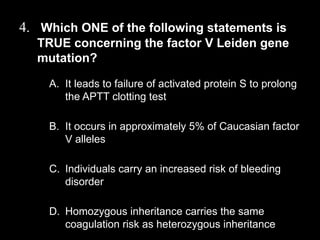
4. Which ONE of the following statements is
TRUE concerning the factor V Leiden gene
mutation?
A. It leads to failure of activated protein S to prolong
the APTT clotting test
B. It occurs in approximately 5% of Caucasian factor
V alleles
C. Individuals carry an increased risk of bleeding
disorder
D. Homozygous inheritance carries the same
coagulation risk as heterozygous inheritance
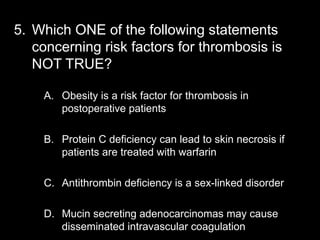
5. Which ONE of the following statements
concerning risk factors for thrombosis is
NOT TRUE?
A. Obesity is a risk factor for thrombosis in
postoperative patients
B. Protein C deficiency can lead to skin necrosis if
patients are treated with warfarin
C. Antithrombin deficiency is a sex-linked disorder
D. Mucin secreting adenocarcinomas may cause
disseminated intravascular coagulation
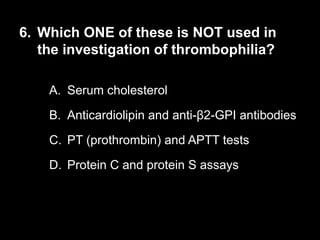
6. Which ONE of these is NOT used in
the investigation of thrombophilia?
A. Serum cholesterol
B. Anticardiolipin and anti-β2-GPI antibodies
C. PT (prothrombin) and APTT tests
D. Protein C and protein S assays
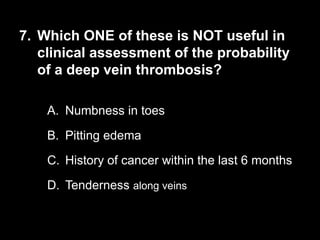
7. Which ONE of these is NOT useful in
clinical assessment of the probability
of a deep vein thrombosis?
A. Numbness in toes
B. Pitting edema
C. History of cancer within the last 6 months
D. Tenderness along veins
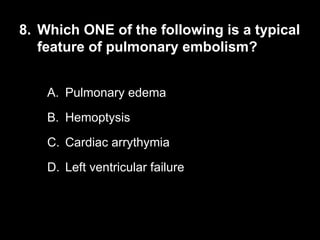
8. Which ONE of the following is a typical
feature of pulmonary embolism?
A. Pulmonary edema
B. Hemoptysis
C. Cardiac arrythymia
D. Left ventricular failure
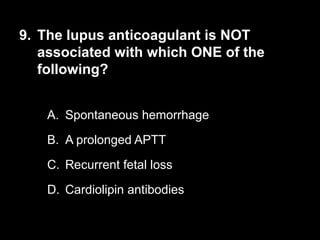
9. The lupus anticoagulant is NOT
associated with which ONE of the
following?
A. Spontaneous hemorrhage
B. A prolonged APTT
C. Recurrent fetal loss
D. Cardiolipin antibodies
PLEASE RATE THE LECTURE ON THE
FOLLOWING ITEMS
Slightly
disagree
Strongly
disagree
Slightly agree Strongly agree
Clear
Interesting
Easy to take
notes from
Well organized
Relevant to the
course
PLEASE RATE THE LECTURE ON THE
FOLLOWING ITEMS
Slightly
disagree
Strongly
disagree
Slightly agree Strongly agree
Was
enthusiastic
Was clearly
audible
Seemed
confident
Gave clear
explanation
Encouraged
participation
77
Monkez M Yousif
Thrombophilia 2022 .محاضرة أمراض دمpptx.pptx

Thrombophilia 2022 .محاضرة أمراض دمpptx.pptx

  • 1.
    By MONKEZ M YOUSIFMD AGAF Professor of Internal Medicine Zagazig University 2024 HYPERCOAGULABLE STATES (THROMBOPHILIA)
  • 3.
    “The chapter youare learning today is going to save someone’s life tomorrow. Pay attention.”
  • 4.
  • 6.
    Objectives • Revise hemostaticmechanisms • Discuss hypercoaguable states • Focus specifically on the inherited hypercoaguable conditions • Briefly describe the mechanism behind each of the inherited thrombophilias • Review the hypercoaguable workup and when it is appropriately done
  • 7.
    Case 1 • A33-year-old previously healthy man presented with sudden-onset dyspnea and sharp right-sided chest pain. He had noted right leg edema and calf discomfort a week earlier. • He denied recent trauma, surgery, or immobility. His mother had a history of postpartum deep vein thrombosis (DVT). • On physical examination, he has tachycardia with a heart rate of 114 bpm, normotensive with a blood pressure of 102/76 mm Hg, and hypoxemic with 88% arterial O2sat on room air.
  • 8.
    • Contrast-enhanced chestcomputed tomogram demonstrated bilateral segmental pulmonary embolism. • Right lower-extremity venous ultrasound documented femoral and popliteal DVT.
  • 9.
    Case 2 • A78-year-old woman with hypertension and obesity developed acute left leg edema and pain 2 days after open reduction and internal fixation of a right hip fracture. • On physical examination, the patient had severe edema and tenderness of the left lower leg and thigh. • Left lower extremity venous ultrasound documented left common femoral, distal femoral, and popliteal DVT.
  • 10.
    Definition of Thrombophilia Adisorder associated with an increased tendency to thrombosis.
  • 11.
    Hemostasis BV Injury Platelet Aggregation Platelet Activation Blood Vessel Constriction Coagulation Cascade StableHemostatic Plug Fibrin formation Reduced Blood flow Damage/contact. Primary hemostatic plug Neural Contact
  • 12.
    The Role ofPlatelets in Hemostasis Collagen Other factors TF Thrombin Activated platelet Activated platelet Activated platelet Adhesion Aggregation Contraction Secretion Primary Hemostasis = Activated platelet Activated platelet Activated platelet Activated platelet This plug of activated platelets, localised to the site of injury, provides the phospholipid surface upon which Secondary Hemostasis takes place
  • 13.
    Coagulation Cascade XII XIIa XIXIa IX VIII VIIIa X Xa Contact Activation Pathway (Intrinsic) Tissue Factor Pathway (Extrinsic) Endothelial activation or exposure of subendothelium Tissue Factor VII TF/VIIa Kallikrein HMWK Prekallikrein IIa II Ca2+ PL Va V Organized Fibrin/Platelet thrombus Fibrinogen Fibrin Ca2+ PL Ca2+ Cross-linked fibrin polymer XIIIa Ca2+ IXa
  • 15.
    Coagulation Cascade: Regulation •Antithrombin (III) – Regulates activity of all serine proteases – Inhibitory activity enhanced by heparin • Tissue Factor Pathway Inhibitor (TFPI) – Regulates activity of TF/VIIa Complex • Protein C and Protein S – Regulate the activity of co-factors of coagulation Va/VIIIa • Fibrinolytic System
  • 16.
    VIIIa IXa + activates various factors APC/PS TFPI Antithrombin Plasmin Physiologicallimitation of blood coagulation heparin cofactor II, α2 Macroglobulins, ‐ α2 antiplasmin, ‐ C1 esterase inhibitor α1 antitrypsin ‐ Plasminogen t-PA
  • 18.
    What is aThrombus? Intravascular mass of fibrin and blood cells Arterial thrombi (White thrombi) –High shear rates –Primarily platelet aggregates + fibrin strands –Thrombus associated with vascular abnormalities (atherosclerosis) most often Venous Thrombi (Red thrombi) –Low shear rates –Primarily red cells & fibrin strands (few platelets) –Most often occurs in cases of stasis (inadequate flow) or biochemical abnormalities
  • 19.
    LDL LDL Mackness MI etal. Biochem J 1993;294:829-834. Endothelium Vessel Lumen Monocyte Modified LDL Macrophage MCP-1 Adhesion Molecules Cytokines Pathophysiology of Atherosclerosis Foam Cell HDL Promote Cholesterol Efflux Intima HDL Inhibit Oxidation of LDL
  • 20.
    Atherogenesis and Atherothrombosis: A Progressive Process Increasing Age
  • 21.
    Thromboembolism • Arterial: oftenfragment of thrombus from heart wall or heart valve, travels downstream to smaller vessel - may lead to stroke or MI • Venous: fragment of venous thrombus that breaks off and travels upstream towards the heart, may lead to pulmonary embolism
  • 22.
    Virchow’s thrombosis model Thrombosis Vesselwall injury Slow blood flow (Stasis) Hypercoagulability
  • 23.
    Injury or Activationof Endothelium • Atherosclerosis – Life style - smoking, obesity • Immune mediated – Heparin induced thrombocytopenia – Antiphospholipid Antibody Syndrome • Trauma • Artificial Surface (vascular graft) • Inflammation/Infection
  • 24.
    Abnormal Blood Flow Decreased mobility  Vessel Obstruction  Eccomomy class syndrome  Pregnancy  Malignancy  Estrogens  Myeloproliferative disorders  Hereditary Factors
  • 25.
    Hereditary Risk Factorsfor Venous Thrombosis  Antithrombin Deficiency  Protein C deficiency  Protein S deficiency  Factor V Leiden (FVL)  Prothrombin G20210A  Dysfibrinogenemias (rare)  Hyperhomocysteinemia
  • 26.
    Site of Thrombosisvs. Coag. Defect Abnormality Arterial Venous • Factor V Leiden - + • Prothrombin G20210A - + • Antithrombin deficiency - + • Protein C deficiency - + • Protein S deficiency - + • Antiphospholipid syndromes + + • Heparin-induced Thrombocytopenia + +
  • 27.
    Protein C System •Protein C and Protein S are vitamin K dependent proteins produced in liver • Protein C is activated by thrombin/ thrombomodulin on endothelial cells • Protein S is a co-factor • Activated protein C + protein S destroys factor Va and factor VIIIa - blocking coagulation
  • 28.
    Anticoagulant protein Cpathway Blood Flow Thrombomodulin Protein C APC Anticoagulant effect at the downstream damage Thrombin Thrombin Thrombus Thrombosis occurring at the vascular injury
  • 29.
    VIIIai The anticoagulant effectsof protein C Blood Flow VIIIa Va Thrombus Vai APC APC PS PS Factor V Leiden
  • 30.
    Protein C System- 3 abnormalities  Protein C deficiency  Protein S deficiency  Mutation of factor V cleavage site (activated protein C resistance)
  • 31.
    Hereditary Protein Cdeficiency • AD – Most patients are heterozygous – Rare severe homozygous - purpura fulminans • Activity levels 50% of normal • Increased risk of venous thrombosis
  • 32.
    Acquired Protein Cdeficiency  Warfarin therapy  Ongoing thrombosis  Vitamin K deficiency  Liver disease  Post-operative state
  • 33.
    APCR (Factor VLeiden) aPC A G Cleavage site 506 (Arginine) Va aPC Point mutation 506 (Glutamine)
  • 34.
    The incidence ofcarriers of factor V Leiden in different countries
  • 35.
    Clinical Picture  Increasedrisk of venous thrombosis (DVT, mesenteric venous occlusion.  First episode - 20s to 40s, associated with pregnancy, trauma, surgery  Warfarin associated skin necrosis –Occurs 24 - 48 hrs after starting warfarin
  • 36.
    APC Resistance Assay •Determine aPTT in plasma before and after addition of Activated Protein C. – Failure of aPTT prolongation signifies APCR • FVL Genetic assay (PCR)
  • 37.
    Antithrombin deficiency Ⅲ • Synthesisin liver & endothelial cells • Activated by binding to heparin-like molecule • Inhibits thrombin, factor a, a, XIa, Ⅸ Ⅹ XIIa • Resistant to unfractionated heparin • Must treat with low-molecular-weight heparin (LMWH).
  • 38.
    Cause of decreasedAntithrombin • Nephrotic syndrome • DIC • Hereditary deficiency (AD) –Reduced production –Abnormal molecule
  • 39.
    Antithrombin Clinical • Increasedrisk of venous thromboembolism • First episode typically in 20s to 40s associated with pregnancy, trauma or surgery • Most common sites for thrombosis – Lower extremities – Pulmonary embolus – Mesenteric vein thrombosis – Superior sagittal sinus thrombosis
  • 40.
    Prothrombin G20210A Mutation A Vitamin K-dependent protein synthesized in the liver  Due to substitution of adenine for guanine  Results in 30% higher prothrombin levels  This promotes generation of thrombin and impairs inactivation of Factor Va by APC  Seen in 6-10% of patients presenting with first episode of unprovoked DVT
  • 41.
    Immune type ofHIT Pathogenesis involves the formation of antibodies (usually IgG) against the heparin- platelet factor 4 (PF 4) complex. The HIT Abs trigger procoagulant effect serious arterial and venous thrombosis
  • 42.
    J Thromb Haem1,1471, 2003
  • 43.
     The incidenceof HIT is about 3-5% in patients exposed to UFH, the incidence is much lower with the use of LMWH.  In patients with de novo exposure to heparin a fall in the platelet count in those with HIT occurs between day 5 and 14.
  • 44.
    • Suspicion • Fallin platelet count by 50% following heparin exposure • The clinical spectrum • Isolated HIT • HIT (T), that may be arterial (Stroke, MI, PAD) or venous in nature.
  • 45.
     Lab diagnosis •Functionalassays ---heparin induced platelet aggregation, ---serotonin release assay, •Immunoassays ---Ab to heparin-PF 4 complexes.
  • 46.
    Treatment  Stopping Heparinand  Direct thrombin inhibitors Argatorban  Platelet transfusion should be avoided  Once the platelet count is > 100.000/CC warfarin may be started at low dose.
  • 47.
    Bilateral foot ischemiasecondary to HIT post open heart surgery
  • 48.
    Bilateral foot ischemiasecondary to HIT post open heart surgery
  • 49.
    Arm ischemia secondaryto HIT post open heart surgery
  • 50.
    Antiphospholipid antibody syndrome Most common of Hypercoagulable disorder  Characterized by the association of:  Thrombosis, obstetric complications and/or thrombocytopenia AND  Antibodies against phospholipids or against proteins bound to phospholipids.
  • 51.
    Etiology of APASyndrome Primary: Idiopathic Secondary: SLE Infection Drug reaction Lymphoma
  • 52.
    Antiphospholipid Antibodies 10% ofhealthy donors, 30-50% of SLE patients 1. Lupus Anticoagulant (LA) Antibodies 2. Anticardiolipin (aCL) Antibodies 3. Anti-Beta 2 Glycoprotein I Antibodies (b2GPI)
  • 53.
    Diagnosis - ClinicalCriteria  Vascular thrombosis:  Arterial, venous, or small vessel, in any tissue or organ  Pregnancy morbidity:  Unexplained fetal death  Premature birth before 34 weeks gestation  Three or more consecutive spontaneous abortions
  • 54.
    Diagnosis - Laboratorycriteria • Lupus anticoagulant, • Anticardiolipin antibodies (ACA • Anti-beta-2-glycoprotein I antibodies (anti- B2GPI), Present on at least 2 occasions, at least 12 wks apart
  • 56.
    When to suspectHypercoagulability? • Thrombosis < 50 years • Family history • Thrombosis in an unusual site (e.g. mesenteric v. or cerebral v.) • Idiopathic or recurrent thrombosis • Unexplained spontaneous abortions • Massive thrombosis
  • 57.
  • 58.
    • Testing foran inherited hypercoagulable state is costly & likely to uncover an abnormality in more than 60% of patients presenting with idiopathic VTEs. • Although the remaining 40% will have unremarkable test results, this does not imply a true absence of a hypercoagulable state. Diagnosis
  • 59.
    • In theabsence of validated guidelines, testing for hypercoagulable states should be performed only in selected patients, and only if the results will significantly affect the management.
  • 60.
    A stepwise approachto thrombophilia testing Gregory Piazza Circulation. 2014;130:283-287 Copyright © American Heart Association, Inc. All rights reserved.
  • 61.
    • Initiation oforal anticoagulation for primary VTE prophylaxis in asymptomatic carriers of any Hypercoagulable state has not been advised.
  • 62.
    • However, aggressiveVTE prophylaxis should be prescribed to asymptomatic carriers of hypercoagulable states during high-risk situations such as major or orthopedic surgery.
  • 63.
    Case 1 • Giventhe patient’s youth, family history of VTE, and unprovoked event, thrombophilia testing was performed after discharge from the hospital. • A lupus anticoagulant was detected and subsequently confirmed on a second test 6 weeks later. • Because of a high risk of VTE recurrence in the setting of a lupus anticoagulant and an unprovoked event, the patient was maintained indefinitely on warfarin anticoagulation with an INR 2 to 3. • At the 1-year follow-up, he had recovered fully and had not experienced another pulmonary embolism or DVT.
  • 64.
    Case 2 • Giventhe patient’s age and the provoked nature of her DVT, thrombophilia testing was not performed. She was treated with 6 months of anticoagulation with Warfarin. • At the 1-year follow-up, she had recovered fully and had not suffered a VTE recurrence.
  • 65.
  • 66.
    1. Which ONEof the following is a major risk factor for venous thrombosis? A. Smoking B. Raised low density lipoprotein (LDL) cholesterol C. Cancer D. Hypertension
  • 67.
    2. Which ONEof the following is NOT a risk factor for arterial thrombosis? A. Gout B. Diabetes mellitus C. Hypohomocysteinemia D. Male sex
  • 68.
    3. Which ONEof the following is NOT a member of the Virchow triad of factors important in thrombus formation? A. Slowing down of blood flow B. Hypercoagulability of the blood C. Vessel wall damage D. Recent surgery
  • 69.
    4. Which ONEof the following statements is TRUE concerning the factor V Leiden gene mutation? A. It leads to failure of activated protein S to prolong the APTT clotting test B. It occurs in approximately 5% of Caucasian factor V alleles C. Individuals carry an increased risk of bleeding disorder D. Homozygous inheritance carries the same coagulation risk as heterozygous inheritance
  • 70.
    5. Which ONEof the following statements concerning risk factors for thrombosis is NOT TRUE? A. Obesity is a risk factor for thrombosis in postoperative patients B. Protein C deficiency can lead to skin necrosis if patients are treated with warfarin C. Antithrombin deficiency is a sex-linked disorder D. Mucin secreting adenocarcinomas may cause disseminated intravascular coagulation
  • 71.
    6. Which ONEof these is NOT used in the investigation of thrombophilia? A. Serum cholesterol B. Anticardiolipin and anti-β2-GPI antibodies C. PT (prothrombin) and APTT tests D. Protein C and protein S assays
  • 72.
    7. Which ONEof these is NOT useful in clinical assessment of the probability of a deep vein thrombosis? A. Numbness in toes B. Pitting edema C. History of cancer within the last 6 months D. Tenderness along veins
  • 73.
    8. Which ONEof the following is a typical feature of pulmonary embolism? A. Pulmonary edema B. Hemoptysis C. Cardiac arrythymia D. Left ventricular failure
  • 74.
    9. The lupusanticoagulant is NOT associated with which ONE of the following? A. Spontaneous hemorrhage B. A prolonged APTT C. Recurrent fetal loss D. Cardiolipin antibodies
  • 75.
    PLEASE RATE THELECTURE ON THE FOLLOWING ITEMS Slightly disagree Strongly disagree Slightly agree Strongly agree Clear Interesting Easy to take notes from Well organized Relevant to the course
  • 76.
    PLEASE RATE THELECTURE ON THE FOLLOWING ITEMS Slightly disagree Strongly disagree Slightly agree Strongly agree Was enthusiastic Was clearly audible Seemed confident Gave clear explanation Encouraged participation
  • 77.

Editor's Notes

  • #2 Sir William Osler, 1st Baronet, FRS FRCP (/ˈɒzlər/; July 12, 1849 – December 29, 1919) was a Canadian physician and one of the four founding professors of Johns Hopkins Hospital. Osler created the first residency program for specialty training of physicians, and he was the first to bring medical students out of the lecture hall for bedside clinical training. Eponyms Osler lent his name to a number of diseases, signs and symptoms, as well as to a number of buildings that have been named for him. Osler's sign is an artificially high systolic blood pressure reading due to the calcification of atherosclerotic arteries Osler's nodes are raised tender nodules on the pulps of fingertips or toes, suggestive of subacute bacterial endocarditis. Osler described them as "ephemeral spots of a painful nodular erythema, chiefly in the skin of the hands and feet." Osler nodes are usually painful, as opposed to Janeway lesions which are due to emboli and are painless. Osler–Weber–Rendu disease (also known as hereditary hemorrhagic telangiectasia) is a syndrome of multiple vascular malformations on the skin, in the nasal and oral mucosa, in the lungs and elsewhere. Osler–Vaquez disease (also known as Polycythemia vera) Osler–Libman–Sacks syndrome is an atypical, verrucous, nonbacterial, valvular and mural endocarditis. Final stage of systemic lupus erythematosus. Osler's manoeuvre: in pseudohypertension, the blood pressure as measured by the sphygmomanometer is artificially high because of arterial wall calcification. Osler's manoeuvre takes a patient who has a palpable, although pulseless, radial artery while the blood pressure cuff is inflated above systolic pressure; thus they are considered to have "Osler's sign."[citation needed] Osler's rule: States that a neurological defect has to be related to a specific lesion, in contrast to Hickam's dictum, which states that the neurological defect can be due to several lesions.[citation needed] Osler's syndrome is a syndrome of recurrent episodes of colic pain, with typical radiation to back, cold shiverings and fever; due to the presence in Vater's diverticulum of a free-moving gallstone which is larger than the orifice.[citation needed] Osler's triad (also known as Austrian Syndrome): association of pneumonia, endocarditis, and meningitis.
  • #11 In biology, homeostasis is the state of steady internal, physical, and chemical conditions maintained by living systems.[1] This is the condition of optimal functioning for the organism and includes many variables, such as body temperature and fluid balance, being kept within certain pre-set limits (homeostatic range). Other variables include the pH of extracellular fluid, the concentrations of sodium, potassium and calcium ions, as well as that of the blood sugar level, and these need to be regulated despite changes in the environment, diet, or level of activity. Each of these variables is controlled by one or more regulators or homeostatic mechanisms, which together maintain life. Homeostasis of hemodynamics refers to the regulation of the blood circulation to meet the demands of the different organ and tissue systems.
  • #12 When a vessel wall is damaged, various signaling molecules are expressed / exposed, including tissue factor and collagen The TF leads to the production of a small local amount of thrombin, which is the initiation step of the coagulation process The exposed signaling molecules attract circulating platelets, which attach themselves to the exposed sub-endothelial tissue (a mechanism to be discussed later): this is adhesion These platelets become activated – principally through the presence of the thrombin – and release further attractant chemicals, which attract more platelets: this is the secretion These new platelets bind to the adhered platelets (a mechanism to be discussed later) and themselves become activated: this is the aggregation Through the conformational changes inherent in activation, the loose platelet plug contracts to form a dense, adherent plug: this is the contraction Together these steps comprise primary hemostasis, which may well be sufficient to achieve hemostasis if the injury is relatively minor The activated platelets also present a substantial area of negatively-charged phospholipid membrane at the site of the injury, upon which the subsequent processes of coagulation (secondary hemostasis) can occur if needed.
  • #16 Unchecked, blood coagulation would lead to dangerous occlusion of blood vessels (thrombosis) if the protective mechanisms of coagulation factor inhibitors, blood flow and fibrinolysis were not in operation. t-PA= tissue-type plasminogen activator   Coagulation factor inhibitors It is important that the effect of thrombin is limited to the site of injury. The first inhibitor to act is TFPI, which is synthesized in endothelial cells and is present in plasma and platelets and accumulates at the site of injury caused by local platelet activation. TFPI inhibits Xa and VIIa and tissue factor to limit the main in vivo pathway. There is also direct inactivation of thrombin and other serine protease factors by other circulating inhibitors, of which antithrombin is the most potent. It inactivates serine proteases. Heparin potentiates its action markedly. Another protein, heparin cofactor II, also inhibits thrombin. α2‐Macroglobulins, α2‐antiplasmin, C1 esterase inhibitor and α1‐ antitrypsin also exert inhibitory effects on circulating serine proteases.   Protein C and protein S These are inhibitors of coagulation cofactors V and VIII. Thrombin binds to an endothelial cell surface receptor, thrombomodulin. The resulting complex activates the vitamin K dependent serine protease, protein C, which is able to destroy activated factors V and VIII, thus preventing further thrombin generation. The action of protein C is enhanced by another vitamin K‐dependent protein, S, which binds protein C to the platelet surface. An endothelial protein C receptor localizes protein C to the endothelial surface, promoting protein C activation by the thrombin–thrombomodulin complex. In addition, activated protein C enhances fibrinolysis. As with other serine proteases, activated protein C is subject to inactivation by serum protease inactivators (serpins), e.g. antithrombin.   Blood flow At the periphery of a damaged area of tissue, blood flow rapidly achieves dilution and dispersal of activated factors before fibrin formation has occurred. Activated factors are destroyed by liver parenchymal cells and particulate matter is removed by liver Kupffer cells and other reticuloendothelial cells. Fibrinolysis Fibrinolysis (like coagulation) is a normal haemostatic response to vascular injury. Plasminogen, a proenzyme in blood and tissue fluid, is converted to the serine protease plasmin by activators either from the vessel wall (intrinsic activation) or from the tissues (extrinsic activation). The most important route follows the release of tissue plasminogen activator (TPA) from endothelial cells. TPA is a serine protease that binds to fibrin. This enhances its capacity to convert thrombus‐bound plasminogen into plasmin. This fibrin dependence of TPA action strongly localizes plasmin generation by TPA to the fibrin clot. Release of TPA occurs after such stimuli as trauma, exercise or emotional stress. Activated protein C stimulates fibrinolysis by destroying plasma inhibitors of TPA. Plasmin generation at the site of injury limits the extent of the evolving thrombus. The split products of fibrinolysis are also competitive inhibitors of thrombin and fibrin polymerization. Normally, α2‐antiplasmin inhibits any local free plasmin. Fibrinolytic agents are widely used in clinical practice. Recombinant TPA, the bacterial agent, streptokinase, and urokinase, initially isolated from human urine, are available.   Plasmin is capable of digesting fibrinogen, fibrin, factors V and VIII and many other proteins. Cleavage of peptide bonds in fibrin and fibrinogen produces a variety of split (degradation) products. Large amounts of the smallest fragments can be detected in the plasma of patients with disseminated intravascular coagulation.     Inactivation of plasmin Tissue plasminogen activator is inactivated by plasminogen activator inhibitor (PAI). Circulating plasmin is inactivated by the potent inhibitors α2‐antiplasmin and α2‐macroglobulin.
  • #22 Pathogenesis - Virchow postulated thathrombi are formed as a result of the one or more abnormalities in: blood vessels blood flow blood coagulability
  • #25 It is named after the Dutch city Leiden south of Holland Hyperhomocysteinemia or hyperhomocysteinaemia is a medical condition characterized by an abnormally high level of homocysteine in the blood, conventionally described as above 15 µmol/L. As a consequence of the biochemical reactions in which homocysteine is involved, deficiencies of vitamin B6, folic acid (vitamin B9), and vitamin B12 can lead to high homocysteine levels. Hyperhomocysteinemia is typically managed with vitamin B6, vitamin B9 and vitamin B12 supplementation. Supplements of these vitamins; however, do not change outcomes
  • #33 It is named after the Dutch city Leiden, where it was first identified in 1994 by Prof R. Bertina et al.
  • #35 Seen in heterozygotes when giving large loading doses of warfarin and heparin not given concomitantly Occurs within days of starting therapy and develops over fatty tissue (thigh, buttocks, breasts) or extremities Begins as a painful erythematous lesion and leads to necrosis Occurs because of the shorter half life of Protein C verses the other vitamin K-dependent proteins As a result, protein C levels decrease rapidly once warfarin therapy has been initiated (reduced to 50% of normal within one day) This effect is even more pronounce in Protein C deficiency Protein C is lost before the anticoagulant effects of warfarin are established and thrombosis develops Treatment: stop warfarin, give heparin, Vitamin K, protein C concentrate Can restart warfarin once skin lesions resolve, restart in low doses and give with heparin
  • #36 Failure of PTT Prolongation The activated partial thromboplastin time (APTT or PTT) is a functional measure of the intrinsic and common pathways of the coagulation cascade. The aPTT test is used to measure and evaluate all the clotting factors of the intrinsic and common pathways of the clotting cascade by measuring the time (in seconds) it takes a clot to form after adding calcium and phospholipid emulsion to a plasma sample.
  • #60 A stepwise approach to thrombophilia testing.
  • #66 C
  • #67 c
  • #68 D
  • #69 B
  • #70 C
  • #71 A
  • #72 A
  • #73 B
  • #74 A