
AIPMM Webcast Series
Three Key Elements of Software
Product Marketing and
How to Apply Them
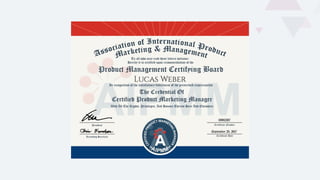
Lucas Weber
Our Speaker
Product Management
Product Marketing
Product Marketing
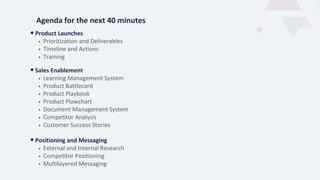
•Positioning and Messaging
• External and Internal Research
• Competitor Positioning
• Multilayered Messaging
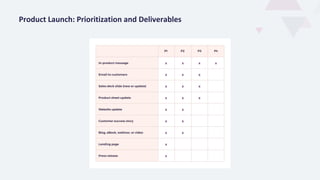
•Product Launches
• Prioritization and Deliverables
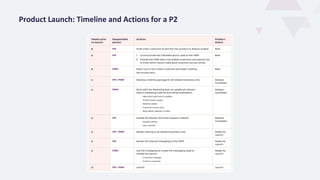
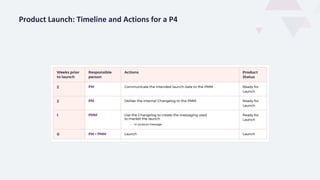
• Timeline and Actions
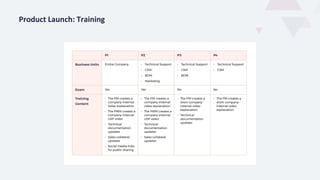
• Training
•Sales Enablement
• Learning Management System
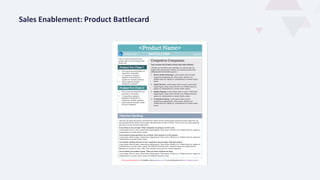
• Product Battlecard
• Product Playbook
• Product Flowchart
• Document Management System
• Competitor Analysis
• Customer Success Stories
Agenda for the next 40 minutes
Product Launches
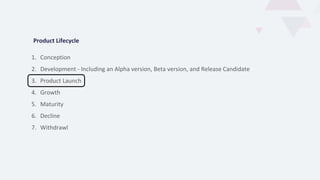
Product Lifecycle
1. Conception
2. Development - Including an Alpha version, Beta version, and Release Candidate
3. Product Launch
4. Growth
5. Maturity
6. Decline
7. Withdrawl
Product Launch: Prioritization and Deliverables
Product Launch: Timeline and Actions for a P2
Product Launch: Timeline and Actions for a P4
Product Launch: Training
Sales Enablement
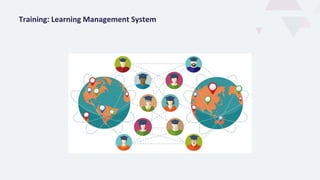
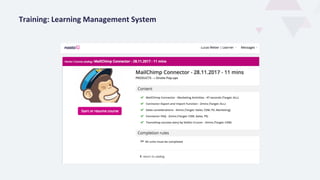
Training: Learning Management System
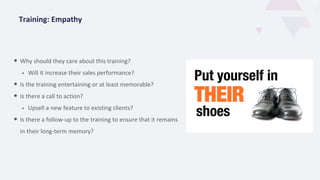
Training: Empathy
• Why should they care about this training?
• Will it increase their sales performance?
• Is the training entertaining or at least memorable?
• Is there a call to action?
• Upsell a new feature to existing clients?
• Is there a follow-up to the training to ensure that it remains
in their long-term memory?
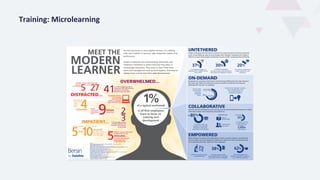
Training: Microlearning
Sales Enablement: Product Battlecard
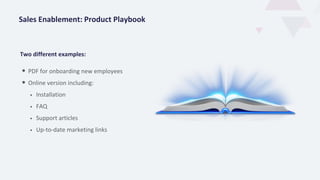
Sales Enablement: Product Playbook
• PDF for onboarding new employees
• Online version including:
• Installation
• FAQ
• Support articles
• Up-to-date marketing links
Two different examples:
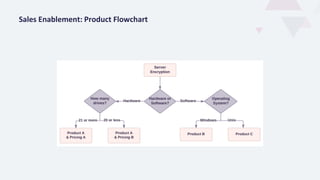
Sales Enablement: Product Flowchart
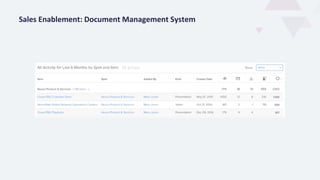
Sales Enablement: Document Management System
• Company in a Nutshell
• Product Positioning
• Company Strengths
• Company Weaknesses
• Products/Services Overview
• Pricing
• Product Strengths
• Product Weaknesses
• Reasons Why They Win Against Us
• Reasons Why We Win Against Them
• What is Expected From Them When They Sell
Against Us
Sales Enablement: Competitor Analysis
• Office Locations
• Investors
• Latest Financial Information
• Number of Employees
• Partners
• Market Presence
• Customers
• Industries
• Sales Strategy
1. The customer’s background
2. The challenges and pain points the customer was experiencing
before finding your product
3. Why the customer specifically chose your product
4. What the results and impact were to the customer’s business
Sales Enablement: Customer Success Stories
Positioning and Messaging
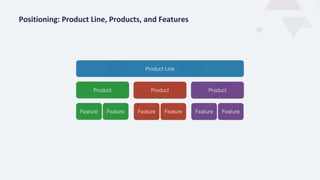
Positioning: Product Line, Products, and Features
Product Line
Product Product Product
Feature Feature Feature Feature Feature Feature
1. Using no more than five words, what is your product offering?
2. What is the elevator pitch to expand upon the first question?
3. What are some differentiation points that set our product apart from its
competition?
Positioning: Consistent Company-wide Pitch
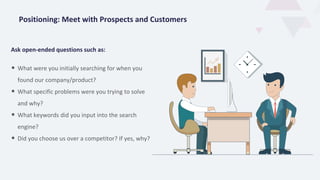
Ask open-ended questions such as:
• What were you initially searching for when you
found our company/product?
• What specific problems were you trying to solve
and why?
• What keywords did you input into the search
engine?
• Did you choose us over a competitor? If yes, why?
Positioning: Meet with Prospects and Customers
When positioning a new product, interview the following groups
in this order:
1. Development
2. Product Managers
3. Management
Positioning: Company Internal Research
When researching your competitors, document the following
information:
• What is their Unique Selling Proposition?
• Patents?
• What is their pricing?
• What is their messaging?
• Do they use specific buzzwords?
Positioning: Competitor Positioning
Avoid getting into a feature war!
Persuasive:
• Answers the “Why?”
• Why should someone request a demo?
• Why should someone switch from a
competitor?
• Why should some purchase it?
Positioning: Multilayered Messaging
Descriptive:
• Answers the “What?” and “How?”
• Enforces the persuasive
Marketing Funnel:
1. Paid Ads
2. Case Studies
3. Free Trial
1. In-product marketing
Positioning: Multilayered Messaging
Website:
1. Homepage
2. Product page
3. “Request a demo” page
Upcoming Webcast
March 30, 2018
Positioning Simplified: The Fast Track to Marketing Success! (Part 2)
WWW.AIPMM.COM/AIPMM_WEBINARS
AIPMM Webinar Series:
http://aipmm.com/aipmm_webinars
Topic Suggestions: support@aipmm.com
Announcements: http://www.aipmm.com
LinkedIn: http://www.linkedin.com/company/aipmm
Membership: http://www.aipmm.com/memberships
Certification: http://aipmm.com/html/certification/

Three key elements

  • 1.
    AIPMM Webcast Series ThreeKey Elements of Software Product Marketing and How to Apply Them
  • 2.
  • 3.
  • 6.
    •Positioning and Messaging •External and Internal Research • Competitor Positioning • Multilayered Messaging •Product Launches • Prioritization and Deliverables • Timeline and Actions • Training •Sales Enablement • Learning Management System • Product Battlecard • Product Playbook • Product Flowchart • Document Management System • Competitor Analysis • Customer Success Stories Agenda for the next 40 minutes
  • 7.
  • 8.
    Product Lifecycle 1. Conception 2.Development - Including an Alpha version, Beta version, and Release Candidate 3. Product Launch 4. Growth 5. Maturity 6. Decline 7. Withdrawl
  • 9.
  • 10.
    Product Launch: Timelineand Actions for a P2
  • 11.
    Product Launch: Timelineand Actions for a P4
  • 12.
  • 13.
  • 14.
  • 15.
  • 16.
    Training: Empathy • Whyshould they care about this training? • Will it increase their sales performance? • Is the training entertaining or at least memorable? • Is there a call to action? • Upsell a new feature to existing clients? • Is there a follow-up to the training to ensure that it remains in their long-term memory?
  • 17.
  • 18.
  • 19.
    Sales Enablement: ProductPlaybook • PDF for onboarding new employees • Online version including: • Installation • FAQ • Support articles • Up-to-date marketing links Two different examples:
  • 20.
  • 21.
    Sales Enablement: DocumentManagement System
  • 22.
    • Company ina Nutshell • Product Positioning • Company Strengths • Company Weaknesses • Products/Services Overview • Pricing • Product Strengths • Product Weaknesses • Reasons Why They Win Against Us • Reasons Why We Win Against Them • What is Expected From Them When They Sell Against Us Sales Enablement: Competitor Analysis • Office Locations • Investors • Latest Financial Information • Number of Employees • Partners • Market Presence • Customers • Industries • Sales Strategy
  • 23.
    1. The customer’sbackground 2. The challenges and pain points the customer was experiencing before finding your product 3. Why the customer specifically chose your product 4. What the results and impact were to the customer’s business Sales Enablement: Customer Success Stories
  • 24.
  • 25.
    Positioning: Product Line,Products, and Features Product Line Product Product Product Feature Feature Feature Feature Feature Feature
  • 26.
    1. Using nomore than five words, what is your product offering? 2. What is the elevator pitch to expand upon the first question? 3. What are some differentiation points that set our product apart from its competition? Positioning: Consistent Company-wide Pitch
  • 27.
    Ask open-ended questionssuch as: • What were you initially searching for when you found our company/product? • What specific problems were you trying to solve and why? • What keywords did you input into the search engine? • Did you choose us over a competitor? If yes, why? Positioning: Meet with Prospects and Customers
  • 28.
    When positioning anew product, interview the following groups in this order: 1. Development 2. Product Managers 3. Management Positioning: Company Internal Research
  • 29.
    When researching yourcompetitors, document the following information: • What is their Unique Selling Proposition? • Patents? • What is their pricing? • What is their messaging? • Do they use specific buzzwords? Positioning: Competitor Positioning Avoid getting into a feature war!
  • 30.
    Persuasive: • Answers the“Why?” • Why should someone request a demo? • Why should someone switch from a competitor? • Why should some purchase it? Positioning: Multilayered Messaging Descriptive: • Answers the “What?” and “How?” • Enforces the persuasive
  • 31.
    Marketing Funnel: 1. PaidAds 2. Case Studies 3. Free Trial 1. In-product marketing Positioning: Multilayered Messaging Website: 1. Homepage 2. Product page 3. “Request a demo” page
  • 32.
    Upcoming Webcast March 30,2018 Positioning Simplified: The Fast Track to Marketing Success! (Part 2) WWW.AIPMM.COM/AIPMM_WEBINARS AIPMM Webinar Series: http://aipmm.com/aipmm_webinars Topic Suggestions: support@aipmm.com Announcements: http://www.aipmm.com LinkedIn: http://www.linkedin.com/company/aipmm Membership: http://www.aipmm.com/memberships Certification: http://aipmm.com/html/certification/