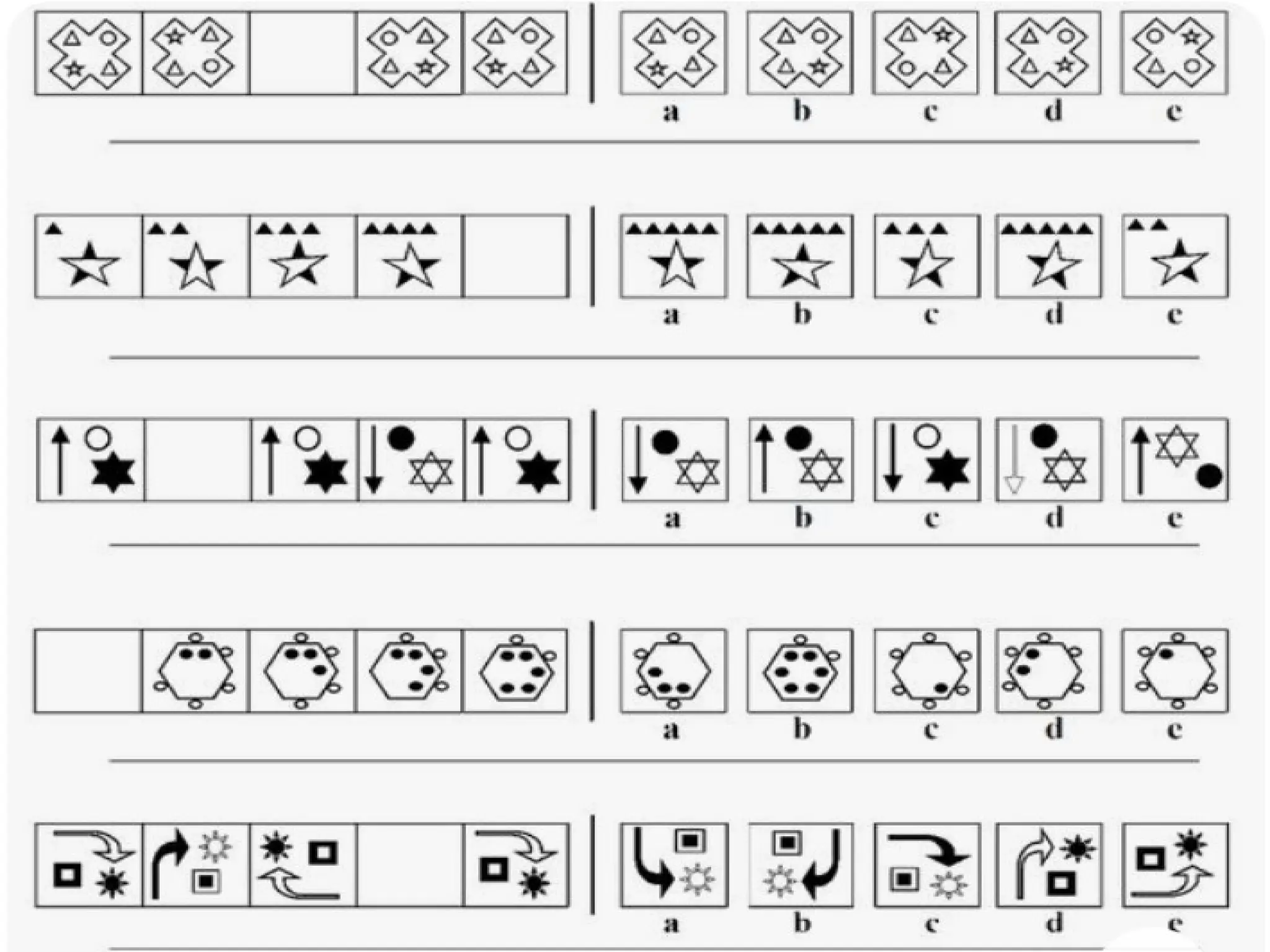
Patterns indicate asense of
structure and organization that it seems
only humans are capable of producing
these intricate, creative, and amazing
formations. It is from these this
perspective that some people see an
“intelligent design” in the way that nature
forms.
5.
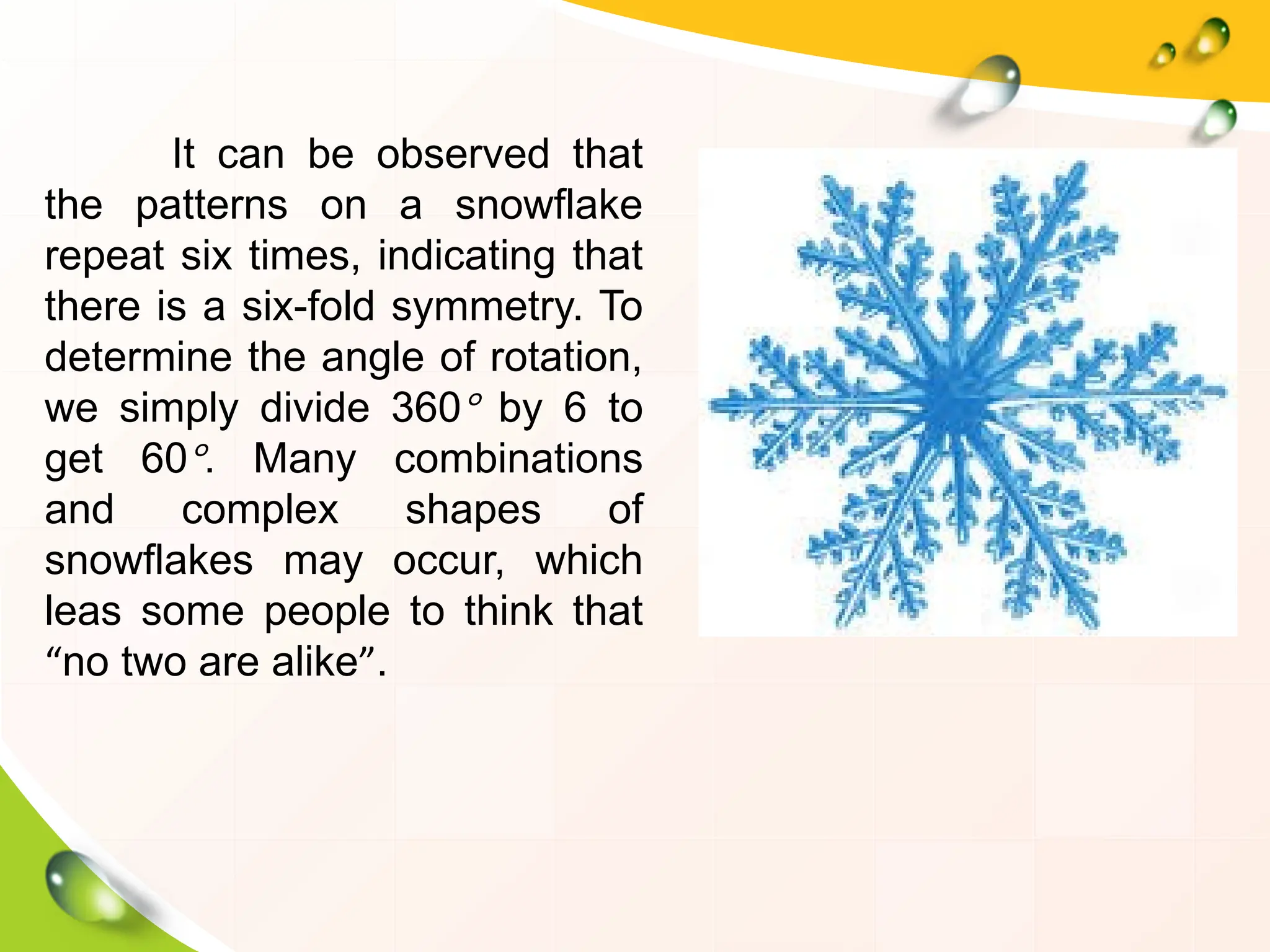
It can beobserved that
the patterns on a snowflake
repeat six times, indicating that
there is a six-fold symmetry. To
determine the angle of rotation,
we simply divide 360° by 6 to
get 60°. Many combinations
and complex shapes of
snowflakes may occur, which
leas some people to think that
“no two are alike”.
6.
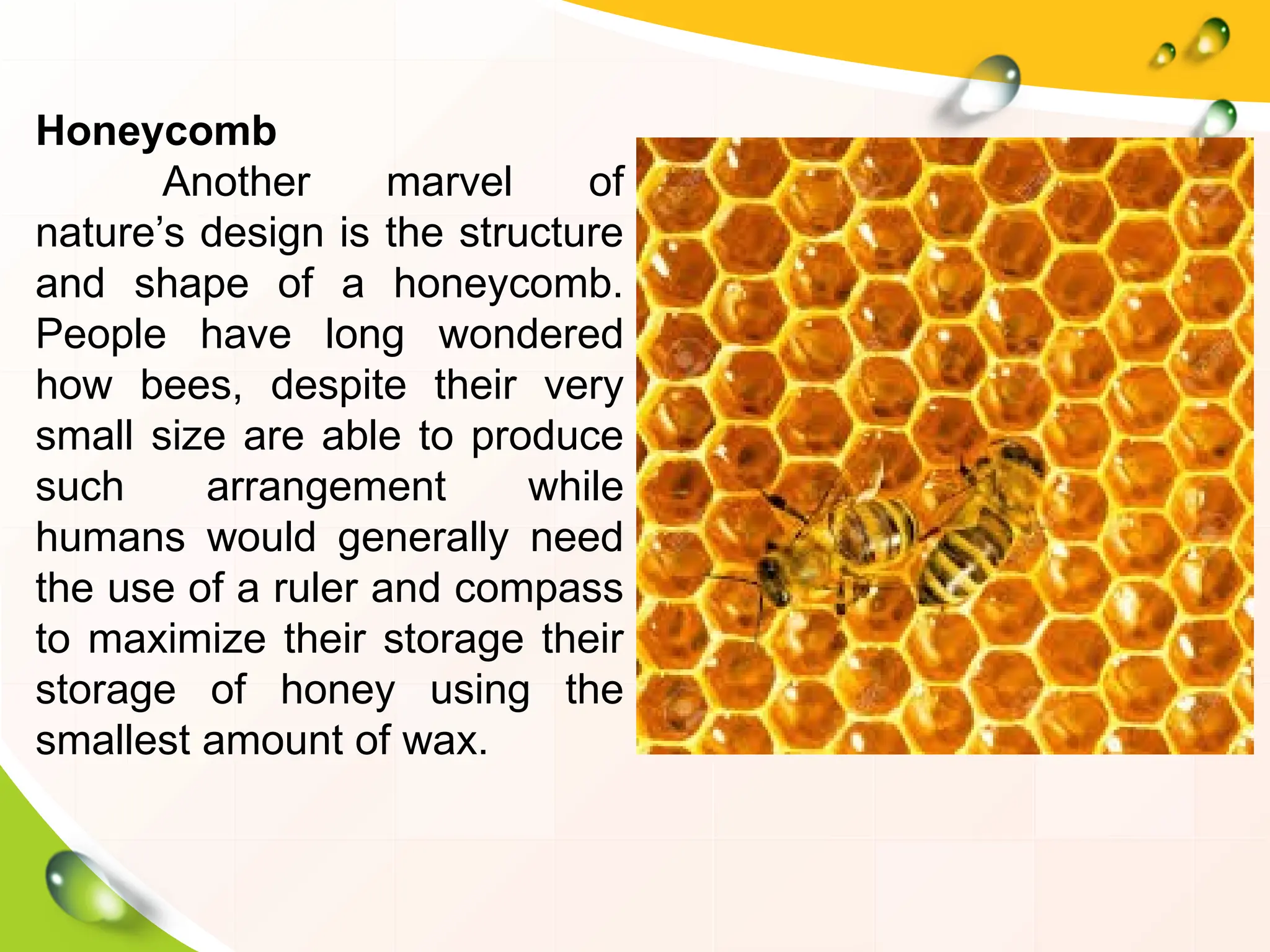
Honeycomb
Another marvel of
nature’sdesign is the structure
and shape of a honeycomb.
People have long wondered
how bees, despite their very
small size are able to produce
such arrangement while
humans would generally need
the use of a ruler and compass
to maximize their storage their
storage of honey using the
smallest amount of wax.
7.
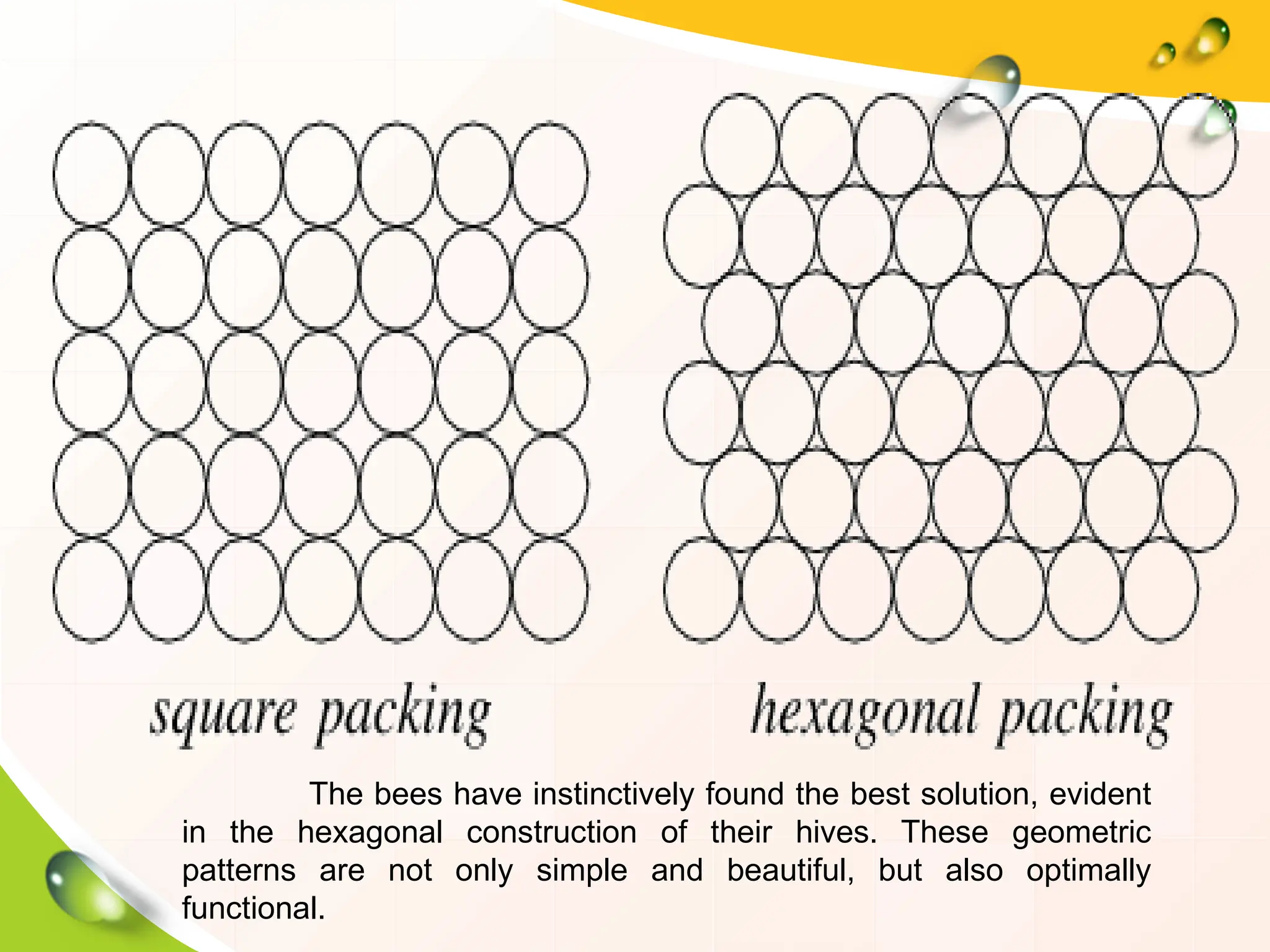
The bees haveinstinctively found the best solution, evident
in the hexagonal construction of their hives. These geometric
patterns are not only simple and beautiful, but also optimally
functional.
8.
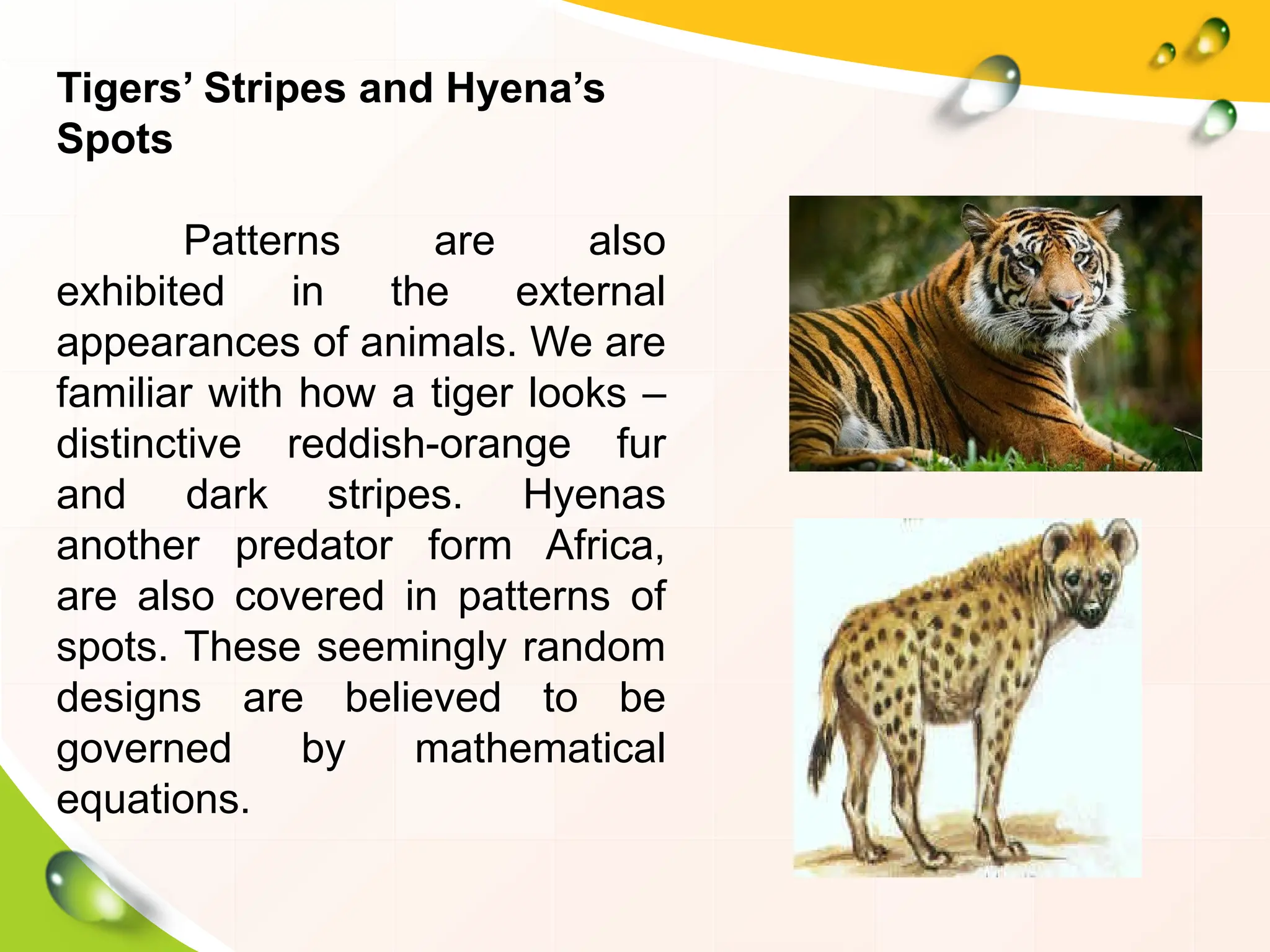
Tigers’ Stripes andHyena’s
Spots
Patterns are also
exhibited in the external
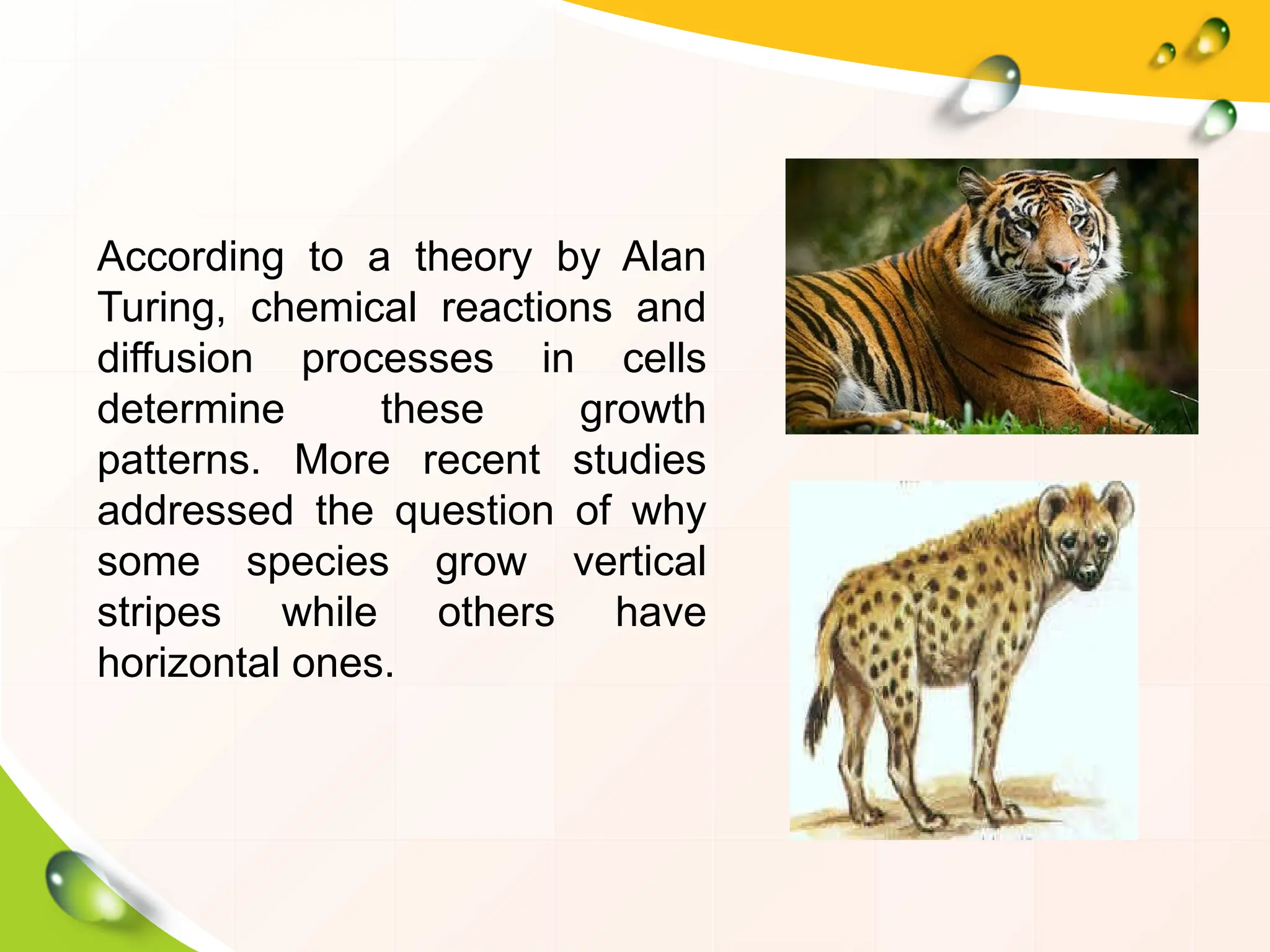
appearances of animals. We are
familiar with how a tiger looks –
distinctive reddish-orange fur
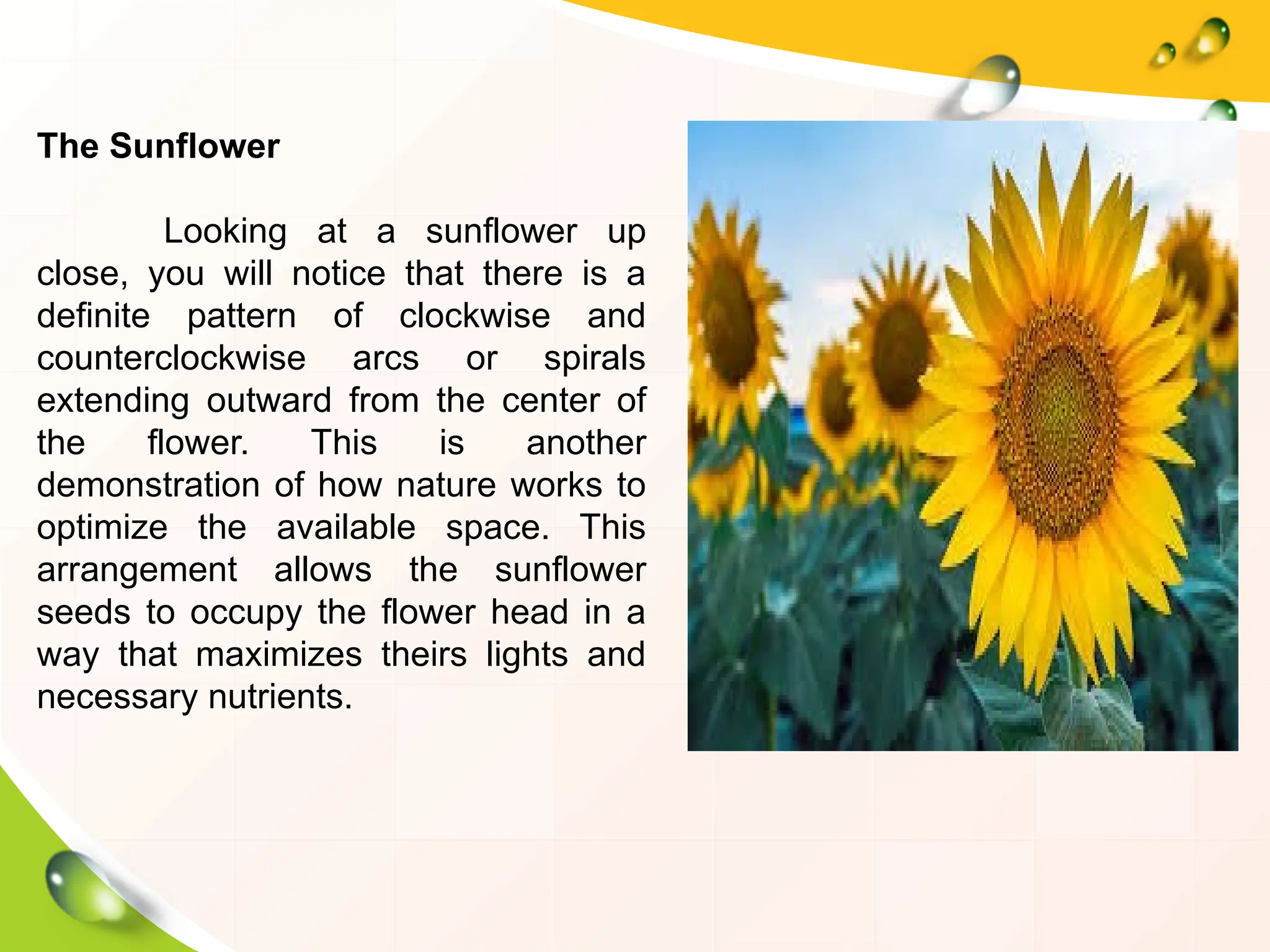
and dark stripes. Hyenas
another predator form Africa,
are also covered in patterns of
spots. These seemingly random
designs are believed to be
governed by mathematical
equations.
9.
According to atheory by Alan
Turing, chemical reactions and
diffusion processes in cells
determine these growth
patterns. More recent studies
addressed the question of why
some species grow vertical
stripes while others have
horizontal ones.
10.
The Sunflower
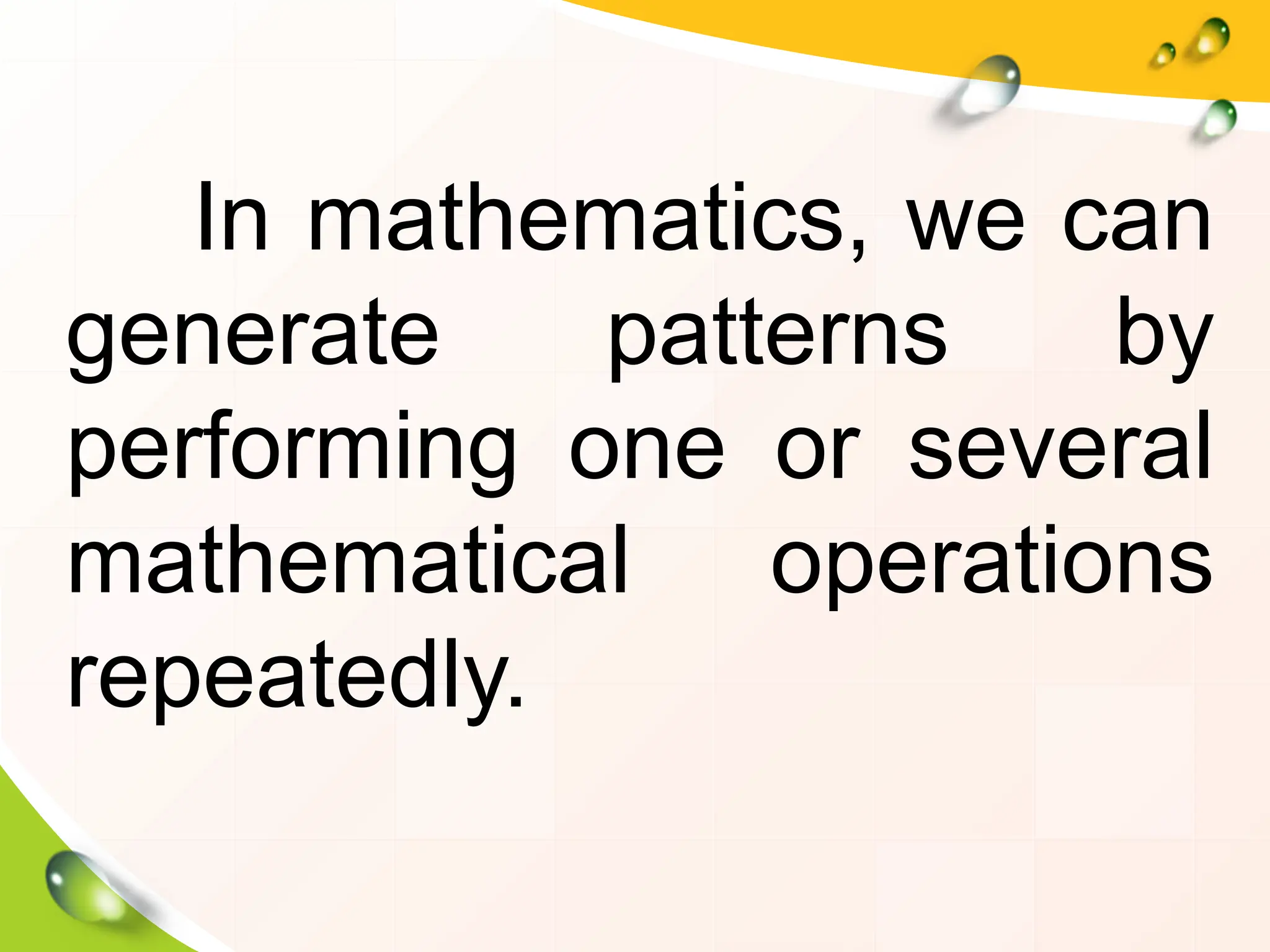
Looking ata sunflower up
close, you will notice that there is a
definite pattern of clockwise and
counterclockwise arcs or spirals
extending outward from the center of
the flower. This is another
demonstration of how nature works to
optimize the available space. This
arrangement allows the sunflower
seeds to occupy the flower head in a
way that maximizes theirs lights and
necessary nutrients.
11.
In mathematics, wecan
generate patterns by
performing one or several
mathematical operations
repeatedly.
Editor's Notes
#1 Look at the Unit assessment Matrix.
What does it contain?
In the OHSP, KPUP questions are all in Multiple Choice.
In the Non-online, we can still make use of Multiple Choice but only for the KTS and P only.
Understanding Test item should be in constructed-response form.
How do we design it? (Review)
What practice assessments would be needed to help students do well in the summative assessments?