Introduction to Thin Layer
Chromatography (TLC)
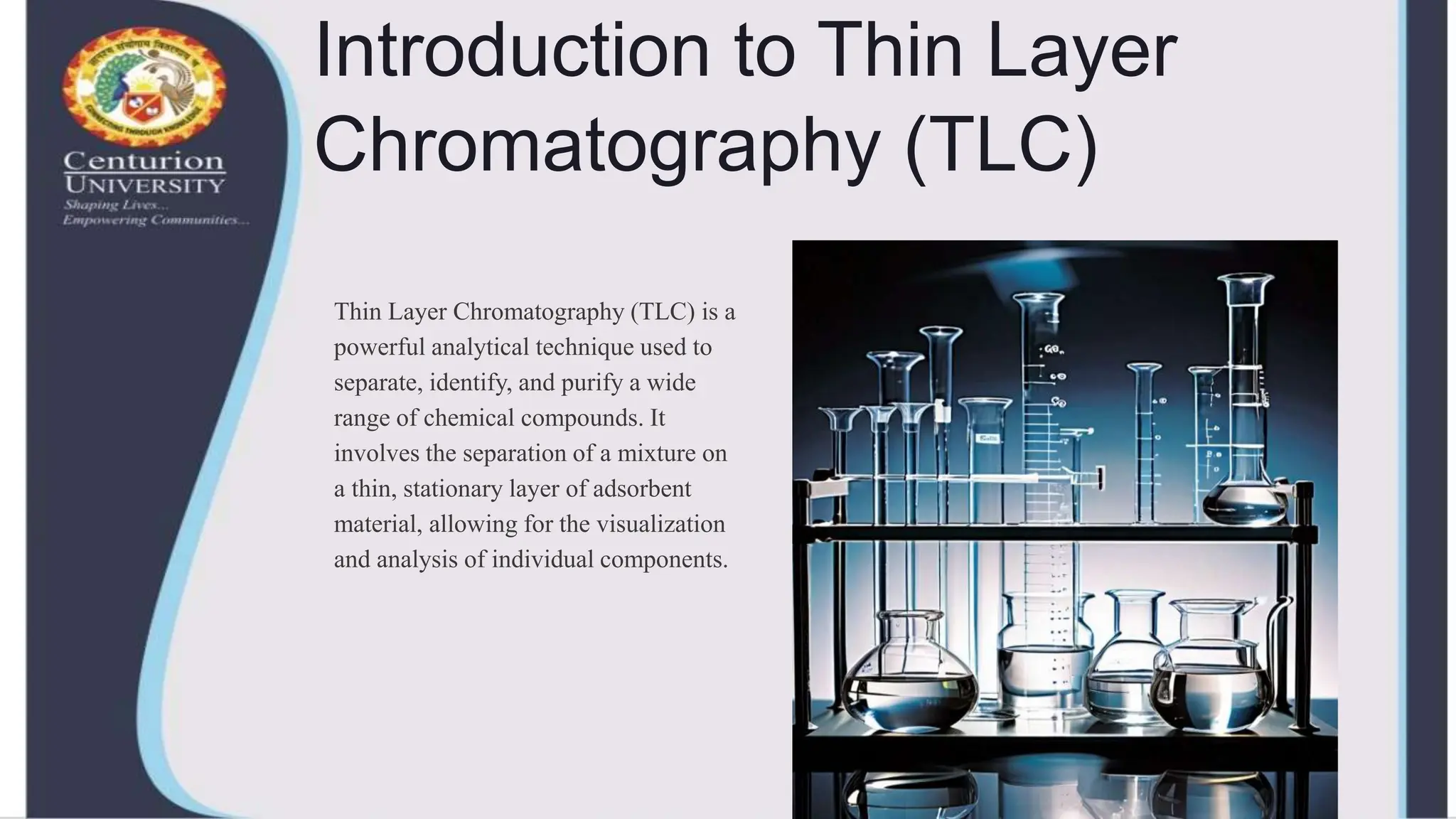
Thin Layer Chromatography (TLC) is a
powerful analytical technique used to
separate, identify, and purify a wide
range of chemical compounds. It
involves the separation of a mixture on
a thin, stationary layer of adsorbent
material, allowing for the visualization
and analysis of individual components.
Principles of TLC
1 Adsorption
Compounds separate based on their
relative affinities for the stationary
phase and the mobile phase.
2 Capillary Action
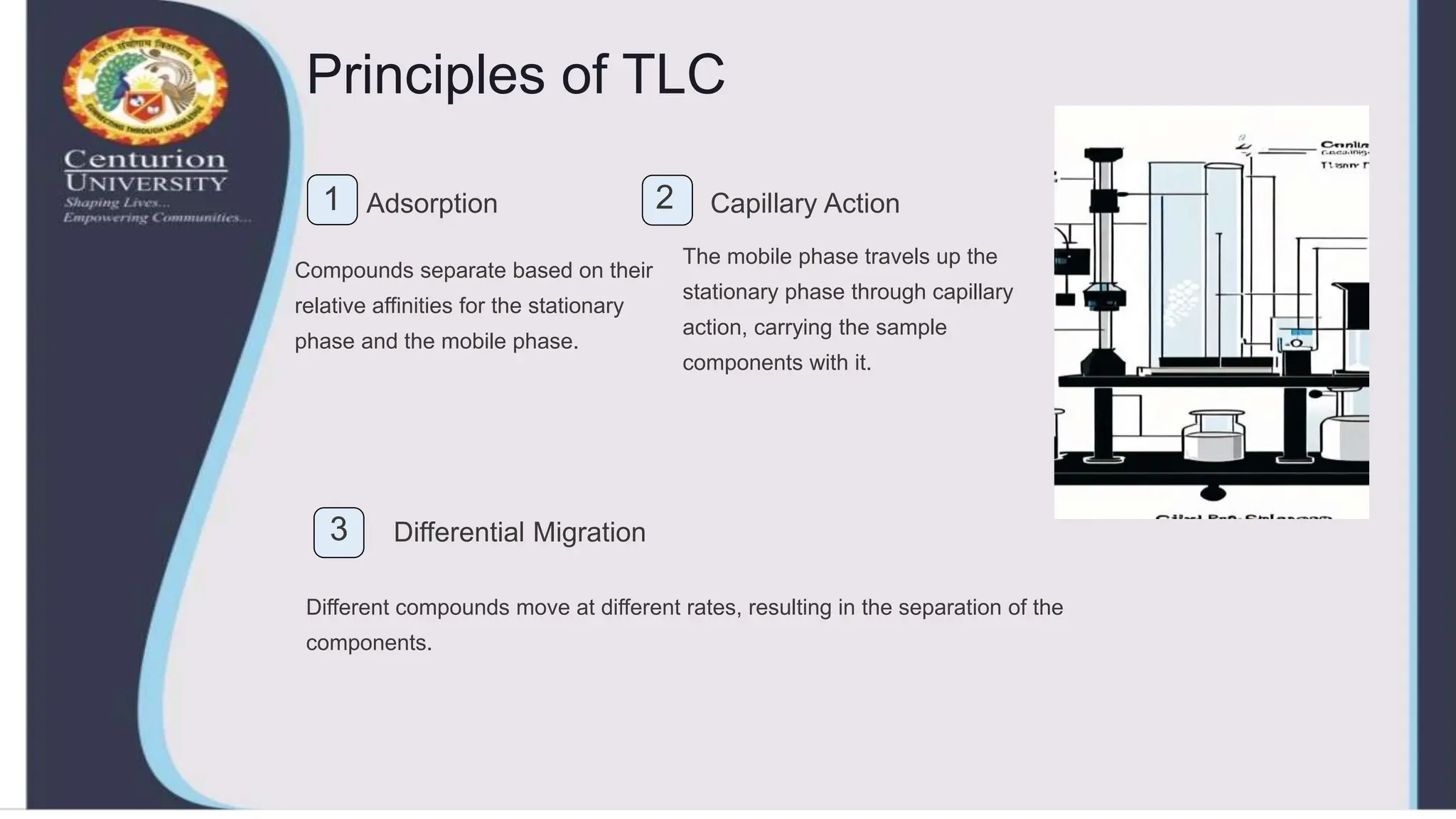
The mobile phase travels up the
stationary phase through capillary
action, carrying the sample
components with it.
3 Differential Migration
Different compounds move at different rates, resulting in the separation of the
components.
Stationary Phase Selection
Adsorbent Materials
Common stationary phases
include silica gel, alumina,
and cellulose. The choice
depends on the polarity and
chemical properties of the
analytes.
Plate Formats
TLC plates are available in
different formats, such as pre-
coated, ready-to-use plates or
plates that can be manually
coated with the desired
adsorbent.
Plate Dimensions
Plate size and shape can be
selected based on the
separation requirements and
the available instrumentation.
Mobile Phase Considerations
Solvent Polarity
The mobile phase polarity is
chosen to optimize the
separation of the target
compounds based on their
polarity.
Solvent Mixtures
Binary or ternary solvent
systems are often used to
fine-tune the selectivity and
elution order of the analytes.
Optimization
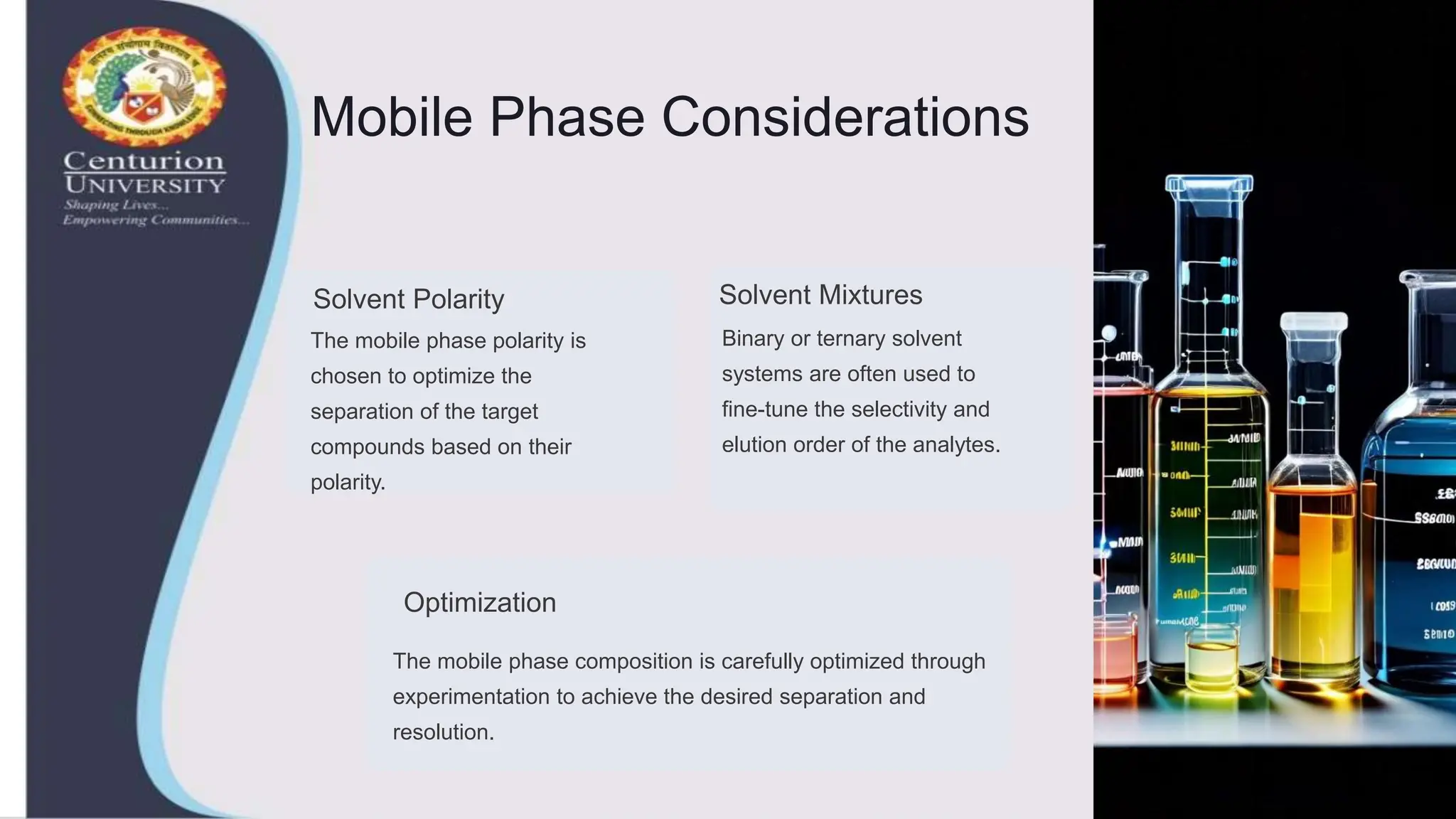
The mobile phase composition is carefully optimized through
experimentation to achieve the desired separation and
resolution.
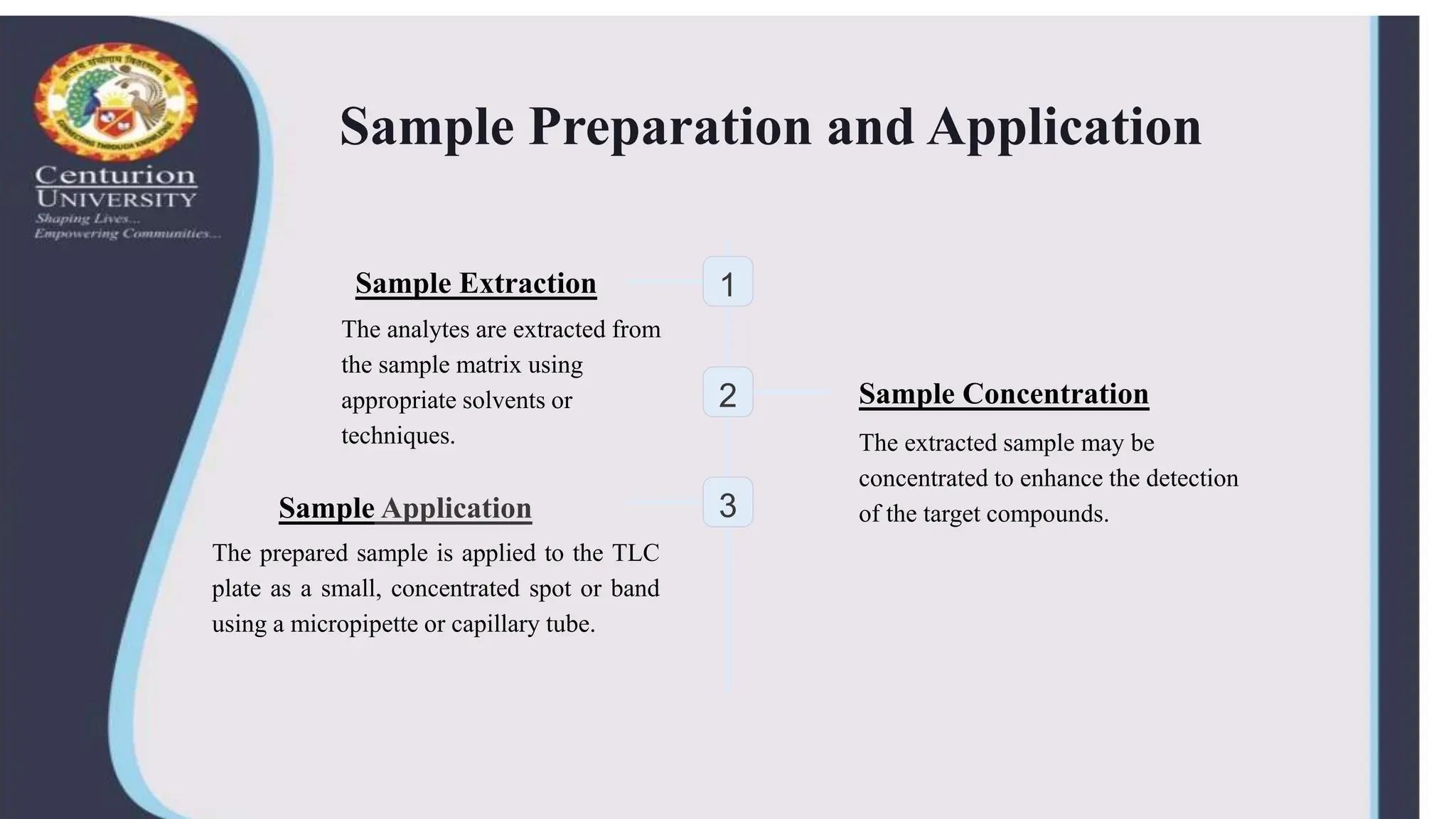
Sample Preparation and Application
1
Sample Extraction
The analytes are extracted from
the sample matrix using
appropriate solvents or
techniques.
2 Sample Concentration
The extracted sample may be
concentrated to enhance the detection
of the target compounds.
3
Sample Application
The prepared sample is applied to the TLC
plate as a small, concentrated spot or band
using a micropipette or capillary tube.
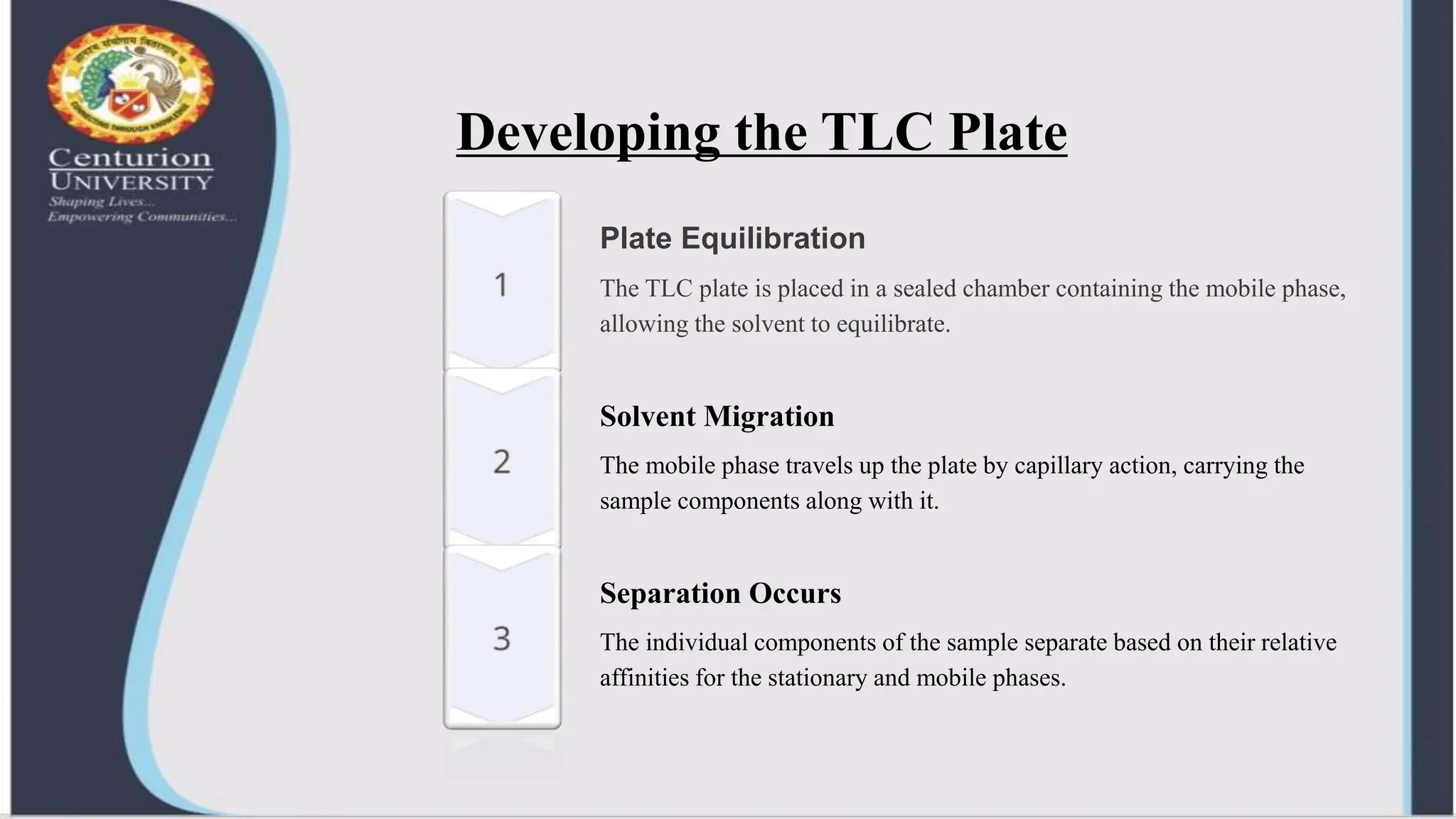
Developing the TLC Plate
Plate Equilibration
The TLC plate is placed in a sealed chamber containing the mobile phase,
allowing the solvent to equilibrate.
Solvent Migration
The mobile phase travels up the plate by capillary action, carrying the
sample components along with it.
Separation Occurs
The individual components of the sample separate based on their relative
affinities for the stationary and mobile phases.
Visualization and Detection
UV Visualization
Compounds with
chromophores can be
detected under UV light,
which causes them to
fluoresce.
Staining Reagents
Chemical reagents can be
used to visualize non-
fluorescent compounds by
forming colored or fluorescent
derivatives.
Instrumental Detection
Specialized detectors, such as
densitometers, can quantify
the separated compounds for
further analysis.
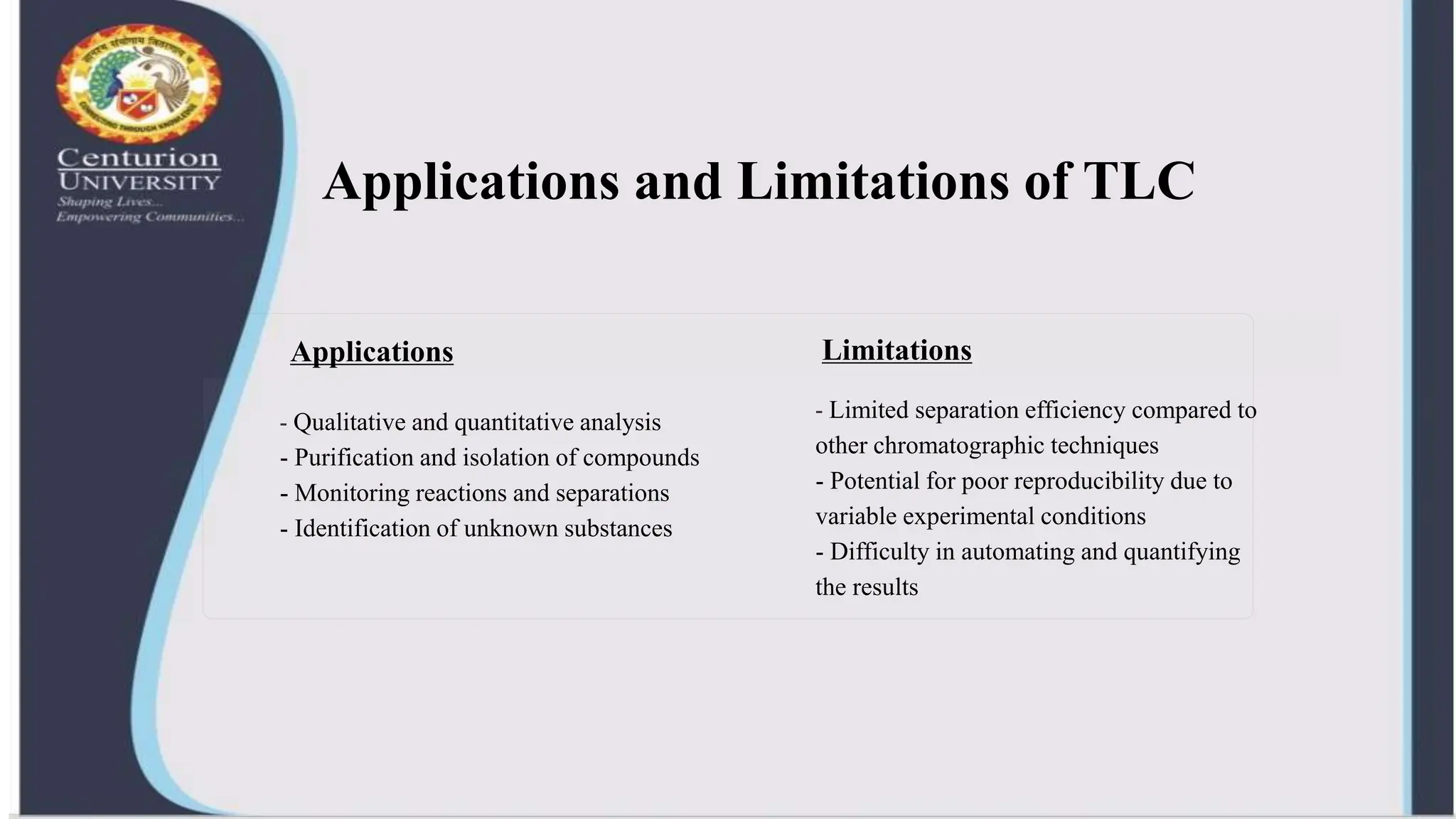
Applications and Limitations of TLC
Applications Limitations
- Qualitative and quantitative analysis
- Purification and isolation of compounds
- Monitoring reactions and separations
- Identification of unknown substances
- Limited separation efficiency compared to
other chromatographic techniques
- Potential for poor reproducibility due to
variable experimental conditions
- Difficulty in automating and quantifying
the results
CONCLUSION

Thin-Layer-Chromatography-TLC---pptx......

  • 1.
    Introduction to ThinLayer Chromatography (TLC) Thin Layer Chromatography (TLC) is a powerful analytical technique used to separate, identify, and purify a wide range of chemical compounds. It involves the separation of a mixture on a thin, stationary layer of adsorbent material, allowing for the visualization and analysis of individual components.
  • 2.
    Principles of TLC 1Adsorption Compounds separate based on their relative affinities for the stationary phase and the mobile phase. 2 Capillary Action The mobile phase travels up the stationary phase through capillary action, carrying the sample components with it. 3 Differential Migration Different compounds move at different rates, resulting in the separation of the components.
  • 3.
    Stationary Phase Selection AdsorbentMaterials Common stationary phases include silica gel, alumina, and cellulose. The choice depends on the polarity and chemical properties of the analytes. Plate Formats TLC plates are available in different formats, such as pre- coated, ready-to-use plates or plates that can be manually coated with the desired adsorbent. Plate Dimensions Plate size and shape can be selected based on the separation requirements and the available instrumentation.
  • 4.
    Mobile Phase Considerations SolventPolarity The mobile phase polarity is chosen to optimize the separation of the target compounds based on their polarity. Solvent Mixtures Binary or ternary solvent systems are often used to fine-tune the selectivity and elution order of the analytes. Optimization The mobile phase composition is carefully optimized through experimentation to achieve the desired separation and resolution.
  • 5.
    Sample Preparation andApplication 1 Sample Extraction The analytes are extracted from the sample matrix using appropriate solvents or techniques. 2 Sample Concentration The extracted sample may be concentrated to enhance the detection of the target compounds. 3 Sample Application The prepared sample is applied to the TLC plate as a small, concentrated spot or band using a micropipette or capillary tube.
  • 6.
    Developing the TLCPlate Plate Equilibration The TLC plate is placed in a sealed chamber containing the mobile phase, allowing the solvent to equilibrate. Solvent Migration The mobile phase travels up the plate by capillary action, carrying the sample components along with it. Separation Occurs The individual components of the sample separate based on their relative affinities for the stationary and mobile phases.
  • 7.
    Visualization and Detection UVVisualization Compounds with chromophores can be detected under UV light, which causes them to fluoresce. Staining Reagents Chemical reagents can be used to visualize non- fluorescent compounds by forming colored or fluorescent derivatives. Instrumental Detection Specialized detectors, such as densitometers, can quantify the separated compounds for further analysis.
  • 8.
    Applications and Limitationsof TLC Applications Limitations - Qualitative and quantitative analysis - Purification and isolation of compounds - Monitoring reactions and separations - Identification of unknown substances - Limited separation efficiency compared to other chromatographic techniques - Potential for poor reproducibility due to variable experimental conditions - Difficulty in automating and quantifying the results
  • 9.