THERMOREGULATION
Ginus Partadiredja
The Department of Physiology
UGM, Yogyakarta
Normal Body Temperature
• Skin temperature  rise and falls  surroundings
• Core temperature  constant (36C – 37.5C)
Body Temperature = Heat Production >< Heat Loss
Heat Production
• Metabolic rate of the body:
• Basal rate of metabolism of cells
• Muscle activity
• Thyroxine
• Epinephrine, norepinephrine, sympathetic stimulation
• Chemical activity in cells
• Extra metabolism for digestion, absorption, storage of
food
Heat Loss
• Heat is mostly produced in the liver, brain, heart, exercised
skeletal muscle
• The rate of heat lost:
• Conduction from the body core to the skin
• The degree of vasoconstriction (sympathetic nerves)
• Transfer from the skin to the surroundings
• Insulator system (skin, subcutaneous tissue, fat)
• Fat  transfer 1/3 heat
• Women = better insulation
• Clothing; wet clothing
Heat Loss
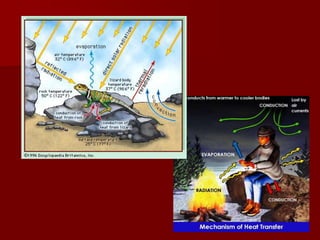
• Radiation  infrared heat rays (60% total heat loss)
• Conduction  to solid objects (3%)
 to air (15%)  to water 30x of air
• Convection  conduction to the air first  convection (air
currents)  heat loss  wind speed
 heat conductivity in water >> than in air
• Evaporation  insensible evaporation (lungs + skin) = 600
– 700 ml/ day  cannot be controlled
 sweating evaporation can be controlled
 the only means to get rid of heat in high
temperature environment
• Respiration  evaporation (water droplets evaporated)
 contribute to hypothermia in cool, windy, and dry
environments
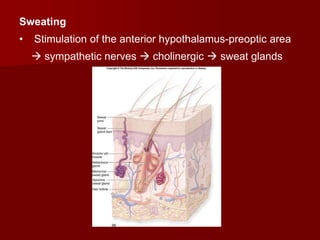
Sweating
• Stimulation of the anterior hypothalamus-preoptic area
 sympathetic nerves  cholinergic  sweat glands
• Sweat secretion
• coiled/ glandular portion  primary secretion ≈ plasma
(except protein); Na = 142 mEq/L, Cl = 104 mEq/L
• duct portion
• slight stimulation  low level salt
• strong stimulation  high level salt (50 – 60 mEq/L)
• Aldosterone  15– 30 g/day salt excreted (unacclimatized)
 3 – 5 g/day salt
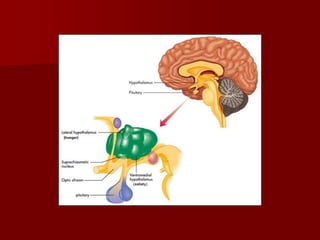
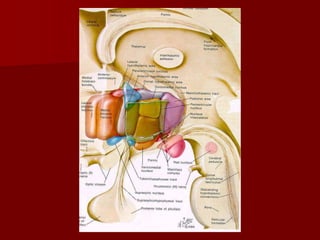
Role of the Hypothalamus
• Anterior hypothalamic-preoptic area  heat-sensitive
neurons & 1/3 cold-sensitive neurons (temperature
sensors)
• Skin receptors: 10x cold receptors > warmth receptors
 preventing hypothermia
• Chilled body causes:
1. shivering
2. sweating inhibition
3. skin vasoconstriction
• Deep tissue receptors (spinal cord, abdominal viscera,
great veins around upper abdomen & thorax)
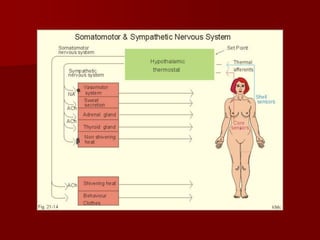
• Posterior hypothalamus  combine & integrate
temperature sensory signals
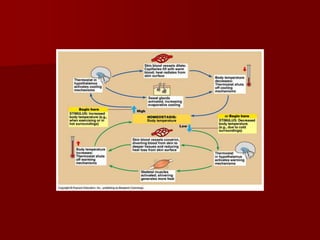
Temperature – Decreasing Mechanisms:
1. Vasodilation of skin blood vessels
• Inhibition of the sympathetic center (posterior
hypothalamus)
2. Sweating
3. Decrease in heat production
Temperature – Increasing Mechanisms:
1. Skin vasoconstriction
• Stimulation of sympathetic centers (posterior
hypothalamus)
2. Piloerection
• Entrapping “insulator air”
3. Increase in thermogenesis
• Shivering
• Sympathetic excitation
• Thyroxine
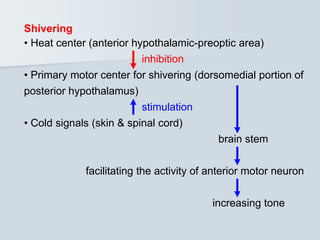
Shivering
• Heat center (anterior hypothalamic-preoptic area)
inhibition
• Primary motor center for shivering (dorsomedial portion of
posterior hypothalamus)
stimulation
• Cold signals (skin & spinal cord)
brain stem
facilitating the activity of anterior motor neuron
increasing tone
Sympathetic excitation of heat production
• Sympathetic stimulation  the rate of cellular metabolism
increase (chemical thermogenesis; excess foodstuff
oxidized)
• Brown fat (animals, not adult humans) large number of
special mitochondria
• Infants  brown fat in interscapular space  the rate of
heat production increase 100%
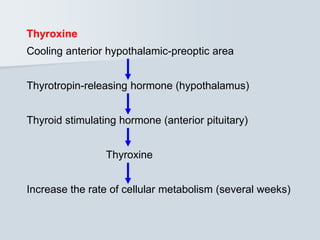
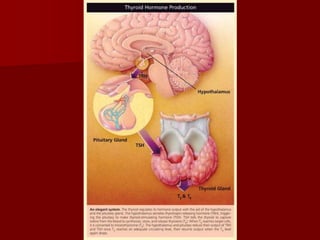
Thyroxine
Cooling anterior hypothalamic-preoptic area
Thyrotropin-releasing hormone (hypothalamus)
Thyroid stimulating hormone (anterior pituitary)
Thyroxine
Increase the rate of cellular metabolism (several weeks)
Behavioral Control of Body Temperature
• Feeling hot or cold due to the changes of internal body
temperature  moving into heated room or wearing well-
insulated clothing
Local Skin Temperature Reflexes
• Local vasodilatation or sweating
Set Point for Temperature Control
• 37.1°C  set point of the temperature control mechanism
• The set point  the degree of activity of the heat
temperature receptors in the anterior hypothalamic-preoptic
area
• Skin & deep body tissues (spinal cord & abdominal viscera)
also affect body temperature regulation  change of
hypothalamic set point
• Set point increase as skin temperature decrease (sweating
at high skin temperature & low hypothalamic temperature)
Abnormalities of Body Temperature Regulation
• Fever
• Abnormalities in the brain (brain tumor)  increase
body temperature
• Toxic substances on temperature-regulating centers
(pyrogens)  rising the set-point
• Pyrogens: proteins, breakdown products of proteins,
lipopolysaccharide toxins of bacteria or degenerating body
tissues
• The increase of set-point  heat conservation & heat
production increase
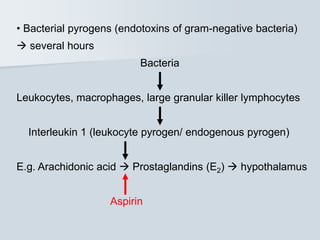
• Bacterial pyrogens (endotoxins of gram-negative bacteria)
 several hours
Bacteria
Leukocytes, macrophages, large granular killer lymphocytes
Interleukin 1 (leukocyte pyrogen/ endogenous pyrogen)
E.g. Arachidonic acid  Prostaglandins (E2)  hypothalamus
Aspirin
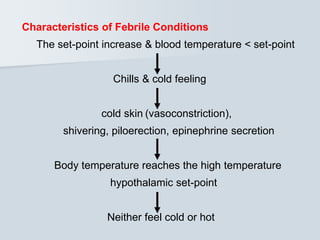
Characteristics of Febrile Conditions
The set-point increase & blood temperature < set-point
Chills & cold feeling
cold skin (vasoconstriction),
shivering, piloerection, epinephrine secretion
Body temperature reaches the high temperature
hypothalamic set-point
Neither feel cold or hot
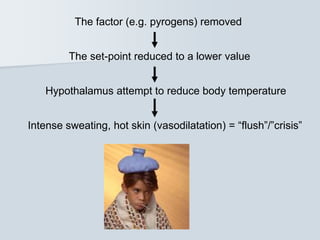
The factor (e.g. pyrogens) removed
The set-point reduced to a lower value
Hypothalamus attempt to reduce body temperature
Intense sweating, hot skin (vasodilatation) = “flush”/”crisis”
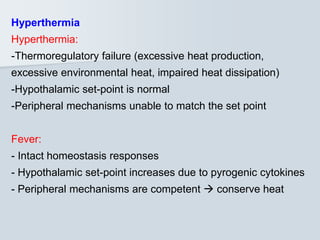
Hyperthermia
Hyperthermia:
-Thermoregulatory failure (excessive heat production,
excessive environmental heat, impaired heat dissipation)
-Hypothalamic set-point is normal
-Peripheral mechanisms unable to match the set point
Fever:
- Intact homeostasis responses
- Hypothalamic set-point increases due to pyrogenic cytokines
- Peripheral mechanisms are competent  conserve heat
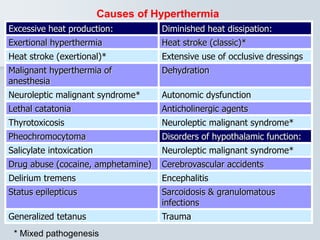
Excessive heat production: Diminished heat dissipation:
Exertional hyperthermia Heat stroke (classic)*
Heat stroke (exertional)* Extensive use of occlusive dressings
Malignant hyperthermia of
anesthesia
Dehydration
Neuroleptic malignant syndrome* Autonomic dysfunction
Lethal catatonia Anticholinergic agents
Thyrotoxicosis Neuroleptic malignant syndrome*
Pheochromocytoma Disorders of hypothalamic function:
Salicylate intoxication Neuroleptic malignant syndrome*
Drug abuse (cocaine, amphetamine) Cerebrovascular accidents
Delirium tremens Encephalitis
Status epilepticus Sarcoidosis & granulomatous
infections
Generalized tetanus Trauma
Causes of Hyperthermia
* Mixed pathogenesis
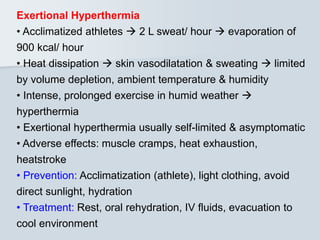
Exertional Hyperthermia
• Acclimatized athletes  2 L sweat/ hour  evaporation of
900 kcal/ hour
• Heat dissipation  skin vasodilatation & sweating  limited
by volume depletion, ambient temperature & humidity
• Intense, prolonged exercise in humid weather 
hyperthermia
• Exertional hyperthermia usually self-limited & asymptomatic
• Adverse effects: muscle cramps, heat exhaustion,
heatstroke
• Prevention: Acclimatization (athlete), light clothing, avoid
direct sunlight, hydration
• Treatment: Rest, oral rehydration, IV fluids, evacuation to
cool environment
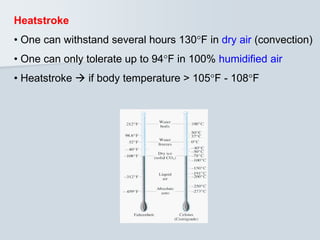
Heatstroke
• One can withstand several hours 130F in dry air (convection)
• One can only tolerate up to 94F in 100% humidified air
• Heatstroke  if body temperature > 105F - 108F
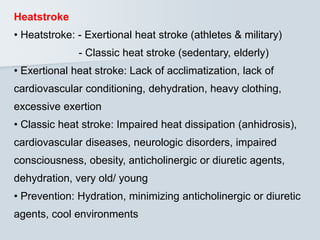
Heatstroke
• Heatstroke: - Exertional heat stroke (athletes & military)
- Classic heat stroke (sedentary, elderly)
• Exertional heat stroke: Lack of acclimatization, lack of
cardiovascular conditioning, dehydration, heavy clothing,
excessive exertion
• Classic heat stroke: Impaired heat dissipation (anhidrosis),
cardiovascular diseases, neurologic disorders, impaired
consciousness, obesity, anticholinergic or diuretic agents,
dehydration, very old/ young
• Prevention: Hydration, minimizing anticholinergic or diuretic
agents, cool environments
• Symptoms & signs: Dizziness, abdominal distress,
vomiting, delirium/ stupor/ coma, hypotension, tachycardia,
hyperventilation, hemorrhages, degeneration, in brain, liver,
kidneys
• Laboratory findings: Hemoconcentration, proteinuria,
microscopic hematuria, abnormal liver function, elevated
muscle enzymes levels, rhabdomyolysis (exertional),
disseminated intravascular coagulation (exertional),
hypoglycemia (exertional), electrolyte & acid-base
disturbance; respiratory alkalosis & hypokalemia (early
phase)  lactic acidosis & hyperkalemia (later phase)
• Mortality: shock, arrhythmias, myocardial ischemia, renal
failure, neurologic dysfunction
• Treatment:
- Removal of clothing
- Sponge/ spray cooling/ cold water bath/ ice  body surface
- Oral hydration
- Intravenous hydration with room temperature fluids
- Correction of electrolyte/ acid-base disturbance
- Cardiovascular monitoring & support
Malignant Hyperthermia of Anesthesia
• Excessive release of calcium from the sarcoplasmic reticulum
(in response to anesthetic drugs)  severe muscle
hypermetabolism
• Hereditary, autosomal dominant
• Most anesthetic drugs, especially halogenated inhalation &
depolarizing muscle relaxants
• Symptoms & signs: > 41°C, severe muscle rigidity,
hypotension, hyperpnea, tachycardia, arrhythmias, hypoxia,
hypercapnia, lactic acidosis, hyperkalemia, rhabdomyolysis,
disseminated intravascular coagulation
• Treatment: Dantrolene sodium IV (inhibit the release of
calcium), interruption of anesthesia, correction of hypoxia &
metabolic disturbance, cardiovascular support, physical cooling
Neuroleptic Malignant Syndrome
• Neuroleptic agents: phenotiazines, butyrophenones,
thioxanthenes, haloperidol (most often)
• Blockade of dopaminergic receptors in the corpus striatum
• Symptoms & signs: > 41°C, skeletal muscle rigidity 
excessive heat  impairs hypothalamic thermoregulation,
extrapyramidal abnormalities, altered consciousness,
autonomic dysfunction (labile blood pressure,
tachyarrhythmias, incontinence)  impairs heat dissipation
• Laboratory findings: Hemoconcentration, leukocytosis,
hypernatremia, acidosis, electrolyte disturbances,
rhabdomyolysis, abnormal renal & hepatic functions
• Treatment: Neuroleptic withdrawal, metabolic &
cardiovascular support, dantrolene sodium, bromocriptine
mesylate (dopamine agonist)
Hormonal Hyperthermia
• Thyrotoxicosis (most common)
• Pheochromocytoma crisis: High level of norepinephrine 
skin vasoconstriction & hypermetabolism
• Adrenal insufficiency
• Hypoglycemia
• Hyperparathyroidism
Miscellaneous Causes of Hyperthermia
• Simple dehydration  volume depletion  vasoconstrition
& decreased sweating  impair heat dissipation
• Extensive occlusive dressings
• Infections
• Anticholinergic drugs
• Cocaine
• Amphetamine
• Alcohol abuse & withdrawal
• Salicylate intoxication
Therapeutic Hyperthermia
• Nasal hyperthermia for viral nasopharyngitis
• Adjunctive therapy for cancers
The Consequences of Hyperthermia
• Extreme hyperthermia: Confusion, delirium, stupor, coma
• Metabolic abnormalities: Hypoxia, respiratory alkalosis,
metabolic acidosis, hypokalemia, hyperkalemia,
hypernatremia, hypophosphatemia, hypomagnesemia,
hypoglycemia
• Hematologic abnormalities: Hemoconcentration,
leukocytosis, thrombocytosis, disseminated intravascular
coagulation
• Azotemia, elevated serum levels of liver and muscle
enzymes
Management of Hyperthermia
1. Diagnose & treat underlying disoder
2. Cardiovascular & metabolic support
3. Antipyretic therapy (39C, young, elderly, underlying
diseases)  mandatory in heat stroke, malignant
hyperthermia; indicated in neuroleptic malignat syndrome,
thyrotoxic crisis
4. Pharmacologic agents to lower hypothalamic set-point (in
fever)  acetaminophen, aspirin
5. Physical cooling (in hyperthermia)  removing
bedclothes, bedside fans, sponging with tepid water/
alcohol, hypothermic mattresses, ice packs, ice water
immersion (most effective)
6. IP cool fluid, gastric lavage or ice water enema,
extracorporeal circulation
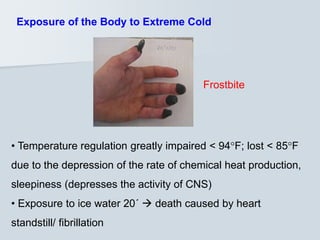
Exposure of the Body to Extreme Cold
• Temperature regulation greatly impaired < 94F; lost < 85F
due to the depression of the rate of chemical heat production,
sleepiness (depresses the activity of CNS)
• Exposure to ice water 20΄  death caused by heart
standstill/ fibrillation
Frostbite
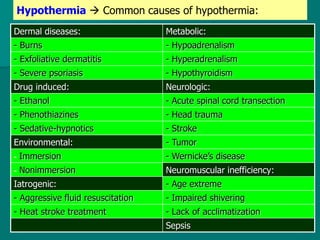
Hypothermia  Common causes of hypothermia:
Dermal diseases: Metabolic:
- Burns - Hypoadrenalism
- Exfoliative dermatitis - Hyperadrenalism
- Severe psoriasis - Hypothyroidism
Drug induced: Neurologic:
- Ethanol - Acute spinal cord transection
- Phenothiazines - Head trauma
- Sedative-hypnotics - Stroke
Environmental: - Tumor
- Immersion - Wernicke’s disease
- Nonimmersion Neuromuscular inefficiency:
Iatrogenic: - Age extreme
- Aggressive fluid resuscitation - Impaired shivering
- Heat stroke treatment - Lack of acclimatization
Sepsis
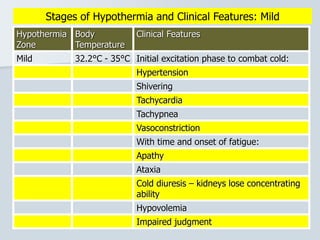
Stages of Hypothermia and Clinical Features: Mild
Hypothermia
Zone
Body
Temperature
Clinical Features
Mild 32.2°C - 35°C Initial excitation phase to combat cold:
Hypertension
Shivering
Tachycardia
Tachypnea
Vasoconstriction
With time and onset of fatigue:
Apathy
Ataxia
Cold diuresis – kidneys lose concentrating
ability
Hypovolemia
Impaired judgment
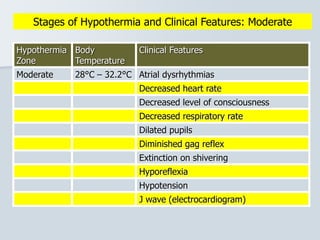
Stages of Hypothermia and Clinical Features: Moderate
Hypothermia
Zone
Body
Temperature
Clinical Features
Moderate 28°C – 32.2°C Atrial dysrhythmias
Decreased heart rate
Decreased level of consciousness
Decreased respiratory rate
Dilated pupils
Diminished gag reflex
Extinction on shivering
Hyporeflexia
Hypotension
J wave (electrocardiogram)
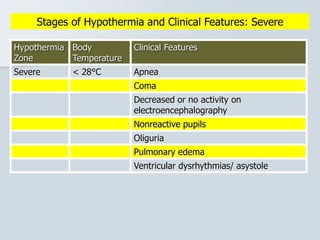
Stages of Hypothermia and Clinical Features: Severe
Hypothermia
Zone
Body
Temperature
Clinical Features
Severe < 28°C Apnea
Coma
Decreased or no activity on
electroencephalography
Nonreactive pupils
Oliguria
Pulmonary edema
Ventricular dysrhythmias/ asystole
Laboratory Findings in Hypothermia
1. Renal failure (secondary to rhabdomyolysis/ acute tubular
necrosis
2. Rapid changes of electrolyte levels (potassium, due to
rewarming)
3. Coagulopathies  self limited
4. Inaccurate leukocytes count  antibiotics in neonates,
elderly, immunocompromised patients
Management of Hypothermia
1. Glucose (most patients  depleted glycogen stores)
2. Thiamine (a possibility of alcohol abuse)
3. Remove wet clothing, replaced with blankets
4. Avoid excessive movement and nasogastric tube
5. Aggressive resuscitation with warm fluid
6. Restricted steroids for adrenal insufficiency & failure of
temperature normalization
7. Defibrillation for ventricular fibrillation (many
electrocardiographic changes: tachycardia, bradycardia,
atrial fibrillation, ventricular fibrillation, asystole,
prolongation of PR, QRS, and QT intervals, J waves)
Rewarming
1. Mild hypothermia, intact thermoregulatory mechanisms,
normal endocrine function, adequate energy stores 
passive rewarming (insulation, moving patient to warm, dry
environment)
2. Intact circulation  active external rewarming (hot water
bottles, heating pads, forced-air warming system,
immersion of hands or feet in 45°C water, negative
pressure to forearm inserted in device containing heated
air in a vacuum of -40 mmHg)
Complications: core temperature afterdrop, rewarming
acidosis (lactic acid from the periphery  central
circulation, rewarming shock (peripheral vasodilatation)
3. Active core rewarming  moderate & severe hypothermia:
a. Airway rewarming with humidified oxygen at 40°C
(increases core temperature by 1°C- 2.5°C/ hour)
b. Intravenous fluids (5% dextrose and normal saline) heated
to 40°C - 45°C
c. Extracorporeal blood rewarming  most effective
(cardiopulmonary bypass, arteriovenous rewarming,
venovenous rewarming, hemodialysis)  increases core
temperature by 1°C - 2°C/ 3-5 minutes
d. Warm lavage (gastric, colonic, bladder lavage, peritoneal
dialysis). Peritoneal dialysis  normal saline, lactated
ringers, dialysate solution heated 40°C - 45°C, 6 – 10 L/
hour combined with O2  increases body temperature 1°C
- 3°C/ hour
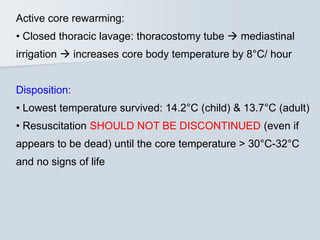
Active core rewarming:
• Closed thoracic lavage: thoracostomy tube  mediastinal
irrigation  increases core body temperature by 8°C/ hour
Disposition:
• Lowest temperature survived: 14.2°C (child) & 13.7°C (adult)
• Resuscitation SHOULD NOT BE DISCONTINUED (even if
appears to be dead) until the core temperature > 30°C-32°C
and no signs of life
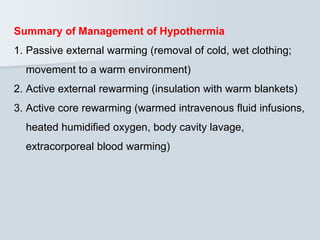
Summary of Management of Hypothermia
1. Passive external warming (removal of cold, wet clothing;
movement to a warm environment)
2. Active external rewarming (insulation with warm blankets)
3. Active core rewarming (warmed intravenous fluid infusions,
heated humidified oxygen, body cavity lavage,
extracorporeal blood warming)
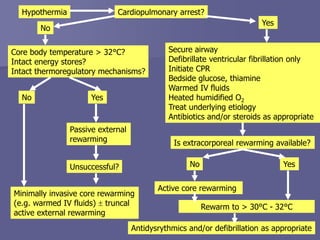
Cardiopulmonary arrest?
No
Yes
Core body temperature > 32°C?
Intact energy stores?
Intact thermoregulatory mechanisms?
No
No
Yes
Yes
Passive external
rewarming
Unsuccessful?
Minimally invasive core rewarming
(e.g. warmed IV fluids)  truncal
active external rewarming
Secure airway
Defibrillate ventricular fibrillation only
Initiate CPR
Bedside glucose, thiamine
Warmed IV fluids
Heated humidified O2
Treat underlying etiology
Antibiotics and/or steroids as appropriate
Hypothermia
Is extracorporeal rewarming available?
Active core rewarming
Rewarm to > 30°C - 32°C
Antidysrythmics and/or defibrillation as appropriate
References
1. Guyton AC & Hall JE (2006). Textbook of Medical
Physiology, 11th ed. Chapter 73, Pages: 889 – 901
2. McCullough L & Arora S (2004). Diagnosis and
Treatment of Hypothermia. American Family Physician
70(12): 2325 – 2332
3. Simon HB (1993). Hyperthermia. The New England
Journal of Medicine 329: 483 - 487

Thermoregulation pathophysiology and FUO work up

  • 1.
  • 2.
    Normal Body Temperature •Skin temperature  rise and falls  surroundings • Core temperature  constant (36C – 37.5C) Body Temperature = Heat Production >< Heat Loss
  • 3.
    Heat Production • Metabolicrate of the body: • Basal rate of metabolism of cells • Muscle activity • Thyroxine • Epinephrine, norepinephrine, sympathetic stimulation • Chemical activity in cells • Extra metabolism for digestion, absorption, storage of food
  • 4.
    Heat Loss • Heatis mostly produced in the liver, brain, heart, exercised skeletal muscle • The rate of heat lost: • Conduction from the body core to the skin • The degree of vasoconstriction (sympathetic nerves) • Transfer from the skin to the surroundings • Insulator system (skin, subcutaneous tissue, fat) • Fat  transfer 1/3 heat • Women = better insulation • Clothing; wet clothing
  • 5.
    Heat Loss • Radiation infrared heat rays (60% total heat loss) • Conduction  to solid objects (3%)  to air (15%)  to water 30x of air • Convection  conduction to the air first  convection (air currents)  heat loss  wind speed  heat conductivity in water >> than in air • Evaporation  insensible evaporation (lungs + skin) = 600 – 700 ml/ day  cannot be controlled  sweating evaporation can be controlled  the only means to get rid of heat in high temperature environment
  • 6.
    • Respiration evaporation (water droplets evaporated)  contribute to hypothermia in cool, windy, and dry environments
  • 8.
    Sweating • Stimulation ofthe anterior hypothalamus-preoptic area  sympathetic nerves  cholinergic  sweat glands
  • 9.
    • Sweat secretion •coiled/ glandular portion  primary secretion ≈ plasma (except protein); Na = 142 mEq/L, Cl = 104 mEq/L • duct portion • slight stimulation  low level salt • strong stimulation  high level salt (50 – 60 mEq/L) • Aldosterone  15– 30 g/day salt excreted (unacclimatized)  3 – 5 g/day salt
  • 10.
    Role of theHypothalamus • Anterior hypothalamic-preoptic area  heat-sensitive neurons & 1/3 cold-sensitive neurons (temperature sensors) • Skin receptors: 10x cold receptors > warmth receptors  preventing hypothermia • Chilled body causes: 1. shivering 2. sweating inhibition 3. skin vasoconstriction • Deep tissue receptors (spinal cord, abdominal viscera, great veins around upper abdomen & thorax) • Posterior hypothalamus  combine & integrate temperature sensory signals
  • 13.
    Temperature – DecreasingMechanisms: 1. Vasodilation of skin blood vessels • Inhibition of the sympathetic center (posterior hypothalamus) 2. Sweating 3. Decrease in heat production
  • 14.
    Temperature – IncreasingMechanisms: 1. Skin vasoconstriction • Stimulation of sympathetic centers (posterior hypothalamus) 2. Piloerection • Entrapping “insulator air” 3. Increase in thermogenesis • Shivering • Sympathetic excitation • Thyroxine
  • 15.
    Shivering • Heat center(anterior hypothalamic-preoptic area) inhibition • Primary motor center for shivering (dorsomedial portion of posterior hypothalamus) stimulation • Cold signals (skin & spinal cord) brain stem facilitating the activity of anterior motor neuron increasing tone
  • 16.
    Sympathetic excitation ofheat production • Sympathetic stimulation  the rate of cellular metabolism increase (chemical thermogenesis; excess foodstuff oxidized) • Brown fat (animals, not adult humans) large number of special mitochondria • Infants  brown fat in interscapular space  the rate of heat production increase 100%
  • 17.
    Thyroxine Cooling anterior hypothalamic-preopticarea Thyrotropin-releasing hormone (hypothalamus) Thyroid stimulating hormone (anterior pituitary) Thyroxine Increase the rate of cellular metabolism (several weeks)
  • 21.
    Behavioral Control ofBody Temperature • Feeling hot or cold due to the changes of internal body temperature  moving into heated room or wearing well- insulated clothing Local Skin Temperature Reflexes • Local vasodilatation or sweating
  • 22.
    Set Point forTemperature Control • 37.1°C  set point of the temperature control mechanism • The set point  the degree of activity of the heat temperature receptors in the anterior hypothalamic-preoptic area • Skin & deep body tissues (spinal cord & abdominal viscera) also affect body temperature regulation  change of hypothalamic set point • Set point increase as skin temperature decrease (sweating at high skin temperature & low hypothalamic temperature)
  • 23.
    Abnormalities of BodyTemperature Regulation • Fever • Abnormalities in the brain (brain tumor)  increase body temperature • Toxic substances on temperature-regulating centers (pyrogens)  rising the set-point • Pyrogens: proteins, breakdown products of proteins, lipopolysaccharide toxins of bacteria or degenerating body tissues • The increase of set-point  heat conservation & heat production increase
  • 24.
    • Bacterial pyrogens(endotoxins of gram-negative bacteria)  several hours Bacteria Leukocytes, macrophages, large granular killer lymphocytes Interleukin 1 (leukocyte pyrogen/ endogenous pyrogen) E.g. Arachidonic acid  Prostaglandins (E2)  hypothalamus Aspirin
  • 25.
    Characteristics of FebrileConditions The set-point increase & blood temperature < set-point Chills & cold feeling cold skin (vasoconstriction), shivering, piloerection, epinephrine secretion Body temperature reaches the high temperature hypothalamic set-point Neither feel cold or hot
  • 26.
    The factor (e.g.pyrogens) removed The set-point reduced to a lower value Hypothalamus attempt to reduce body temperature Intense sweating, hot skin (vasodilatation) = “flush”/”crisis”
  • 27.
    Hyperthermia Hyperthermia: -Thermoregulatory failure (excessiveheat production, excessive environmental heat, impaired heat dissipation) -Hypothalamic set-point is normal -Peripheral mechanisms unable to match the set point Fever: - Intact homeostasis responses - Hypothalamic set-point increases due to pyrogenic cytokines - Peripheral mechanisms are competent  conserve heat
  • 28.
    Excessive heat production:Diminished heat dissipation: Exertional hyperthermia Heat stroke (classic)* Heat stroke (exertional)* Extensive use of occlusive dressings Malignant hyperthermia of anesthesia Dehydration Neuroleptic malignant syndrome* Autonomic dysfunction Lethal catatonia Anticholinergic agents Thyrotoxicosis Neuroleptic malignant syndrome* Pheochromocytoma Disorders of hypothalamic function: Salicylate intoxication Neuroleptic malignant syndrome* Drug abuse (cocaine, amphetamine) Cerebrovascular accidents Delirium tremens Encephalitis Status epilepticus Sarcoidosis & granulomatous infections Generalized tetanus Trauma Causes of Hyperthermia * Mixed pathogenesis
  • 29.
    Exertional Hyperthermia • Acclimatizedathletes  2 L sweat/ hour  evaporation of 900 kcal/ hour • Heat dissipation  skin vasodilatation & sweating  limited by volume depletion, ambient temperature & humidity • Intense, prolonged exercise in humid weather  hyperthermia • Exertional hyperthermia usually self-limited & asymptomatic • Adverse effects: muscle cramps, heat exhaustion, heatstroke • Prevention: Acclimatization (athlete), light clothing, avoid direct sunlight, hydration • Treatment: Rest, oral rehydration, IV fluids, evacuation to cool environment
  • 30.
    Heatstroke • One canwithstand several hours 130F in dry air (convection) • One can only tolerate up to 94F in 100% humidified air • Heatstroke  if body temperature > 105F - 108F
  • 31.
    Heatstroke • Heatstroke: -Exertional heat stroke (athletes & military) - Classic heat stroke (sedentary, elderly) • Exertional heat stroke: Lack of acclimatization, lack of cardiovascular conditioning, dehydration, heavy clothing, excessive exertion • Classic heat stroke: Impaired heat dissipation (anhidrosis), cardiovascular diseases, neurologic disorders, impaired consciousness, obesity, anticholinergic or diuretic agents, dehydration, very old/ young • Prevention: Hydration, minimizing anticholinergic or diuretic agents, cool environments
  • 32.
    • Symptoms &signs: Dizziness, abdominal distress, vomiting, delirium/ stupor/ coma, hypotension, tachycardia, hyperventilation, hemorrhages, degeneration, in brain, liver, kidneys • Laboratory findings: Hemoconcentration, proteinuria, microscopic hematuria, abnormal liver function, elevated muscle enzymes levels, rhabdomyolysis (exertional), disseminated intravascular coagulation (exertional), hypoglycemia (exertional), electrolyte & acid-base disturbance; respiratory alkalosis & hypokalemia (early phase)  lactic acidosis & hyperkalemia (later phase)
  • 33.
    • Mortality: shock,arrhythmias, myocardial ischemia, renal failure, neurologic dysfunction • Treatment: - Removal of clothing - Sponge/ spray cooling/ cold water bath/ ice  body surface - Oral hydration - Intravenous hydration with room temperature fluids - Correction of electrolyte/ acid-base disturbance - Cardiovascular monitoring & support
  • 34.
    Malignant Hyperthermia ofAnesthesia • Excessive release of calcium from the sarcoplasmic reticulum (in response to anesthetic drugs)  severe muscle hypermetabolism • Hereditary, autosomal dominant • Most anesthetic drugs, especially halogenated inhalation & depolarizing muscle relaxants • Symptoms & signs: > 41°C, severe muscle rigidity, hypotension, hyperpnea, tachycardia, arrhythmias, hypoxia, hypercapnia, lactic acidosis, hyperkalemia, rhabdomyolysis, disseminated intravascular coagulation • Treatment: Dantrolene sodium IV (inhibit the release of calcium), interruption of anesthesia, correction of hypoxia & metabolic disturbance, cardiovascular support, physical cooling
  • 35.
    Neuroleptic Malignant Syndrome •Neuroleptic agents: phenotiazines, butyrophenones, thioxanthenes, haloperidol (most often) • Blockade of dopaminergic receptors in the corpus striatum • Symptoms & signs: > 41°C, skeletal muscle rigidity  excessive heat  impairs hypothalamic thermoregulation, extrapyramidal abnormalities, altered consciousness, autonomic dysfunction (labile blood pressure, tachyarrhythmias, incontinence)  impairs heat dissipation • Laboratory findings: Hemoconcentration, leukocytosis, hypernatremia, acidosis, electrolyte disturbances, rhabdomyolysis, abnormal renal & hepatic functions • Treatment: Neuroleptic withdrawal, metabolic & cardiovascular support, dantrolene sodium, bromocriptine mesylate (dopamine agonist)
  • 36.
    Hormonal Hyperthermia • Thyrotoxicosis(most common) • Pheochromocytoma crisis: High level of norepinephrine  skin vasoconstriction & hypermetabolism • Adrenal insufficiency • Hypoglycemia • Hyperparathyroidism
  • 37.
    Miscellaneous Causes ofHyperthermia • Simple dehydration  volume depletion  vasoconstrition & decreased sweating  impair heat dissipation • Extensive occlusive dressings • Infections • Anticholinergic drugs • Cocaine • Amphetamine • Alcohol abuse & withdrawal • Salicylate intoxication Therapeutic Hyperthermia • Nasal hyperthermia for viral nasopharyngitis • Adjunctive therapy for cancers
  • 38.
    The Consequences ofHyperthermia • Extreme hyperthermia: Confusion, delirium, stupor, coma • Metabolic abnormalities: Hypoxia, respiratory alkalosis, metabolic acidosis, hypokalemia, hyperkalemia, hypernatremia, hypophosphatemia, hypomagnesemia, hypoglycemia • Hematologic abnormalities: Hemoconcentration, leukocytosis, thrombocytosis, disseminated intravascular coagulation • Azotemia, elevated serum levels of liver and muscle enzymes
  • 39.
    Management of Hyperthermia 1.Diagnose & treat underlying disoder 2. Cardiovascular & metabolic support 3. Antipyretic therapy (39C, young, elderly, underlying diseases)  mandatory in heat stroke, malignant hyperthermia; indicated in neuroleptic malignat syndrome, thyrotoxic crisis 4. Pharmacologic agents to lower hypothalamic set-point (in fever)  acetaminophen, aspirin 5. Physical cooling (in hyperthermia)  removing bedclothes, bedside fans, sponging with tepid water/ alcohol, hypothermic mattresses, ice packs, ice water immersion (most effective) 6. IP cool fluid, gastric lavage or ice water enema, extracorporeal circulation
  • 40.
    Exposure of theBody to Extreme Cold • Temperature regulation greatly impaired < 94F; lost < 85F due to the depression of the rate of chemical heat production, sleepiness (depresses the activity of CNS) • Exposure to ice water 20΄  death caused by heart standstill/ fibrillation Frostbite
  • 41.
    Hypothermia  Commoncauses of hypothermia: Dermal diseases: Metabolic: - Burns - Hypoadrenalism - Exfoliative dermatitis - Hyperadrenalism - Severe psoriasis - Hypothyroidism Drug induced: Neurologic: - Ethanol - Acute spinal cord transection - Phenothiazines - Head trauma - Sedative-hypnotics - Stroke Environmental: - Tumor - Immersion - Wernicke’s disease - Nonimmersion Neuromuscular inefficiency: Iatrogenic: - Age extreme - Aggressive fluid resuscitation - Impaired shivering - Heat stroke treatment - Lack of acclimatization Sepsis
  • 42.
    Stages of Hypothermiaand Clinical Features: Mild Hypothermia Zone Body Temperature Clinical Features Mild 32.2°C - 35°C Initial excitation phase to combat cold: Hypertension Shivering Tachycardia Tachypnea Vasoconstriction With time and onset of fatigue: Apathy Ataxia Cold diuresis – kidneys lose concentrating ability Hypovolemia Impaired judgment
  • 43.
    Stages of Hypothermiaand Clinical Features: Moderate Hypothermia Zone Body Temperature Clinical Features Moderate 28°C – 32.2°C Atrial dysrhythmias Decreased heart rate Decreased level of consciousness Decreased respiratory rate Dilated pupils Diminished gag reflex Extinction on shivering Hyporeflexia Hypotension J wave (electrocardiogram)
  • 44.
    Stages of Hypothermiaand Clinical Features: Severe Hypothermia Zone Body Temperature Clinical Features Severe < 28°C Apnea Coma Decreased or no activity on electroencephalography Nonreactive pupils Oliguria Pulmonary edema Ventricular dysrhythmias/ asystole
  • 45.
    Laboratory Findings inHypothermia 1. Renal failure (secondary to rhabdomyolysis/ acute tubular necrosis 2. Rapid changes of electrolyte levels (potassium, due to rewarming) 3. Coagulopathies  self limited 4. Inaccurate leukocytes count  antibiotics in neonates, elderly, immunocompromised patients
  • 46.
    Management of Hypothermia 1.Glucose (most patients  depleted glycogen stores) 2. Thiamine (a possibility of alcohol abuse) 3. Remove wet clothing, replaced with blankets 4. Avoid excessive movement and nasogastric tube 5. Aggressive resuscitation with warm fluid 6. Restricted steroids for adrenal insufficiency & failure of temperature normalization 7. Defibrillation for ventricular fibrillation (many electrocardiographic changes: tachycardia, bradycardia, atrial fibrillation, ventricular fibrillation, asystole, prolongation of PR, QRS, and QT intervals, J waves)
  • 47.
    Rewarming 1. Mild hypothermia,intact thermoregulatory mechanisms, normal endocrine function, adequate energy stores  passive rewarming (insulation, moving patient to warm, dry environment) 2. Intact circulation  active external rewarming (hot water bottles, heating pads, forced-air warming system, immersion of hands or feet in 45°C water, negative pressure to forearm inserted in device containing heated air in a vacuum of -40 mmHg) Complications: core temperature afterdrop, rewarming acidosis (lactic acid from the periphery  central circulation, rewarming shock (peripheral vasodilatation)
  • 48.
    3. Active corerewarming  moderate & severe hypothermia: a. Airway rewarming with humidified oxygen at 40°C (increases core temperature by 1°C- 2.5°C/ hour) b. Intravenous fluids (5% dextrose and normal saline) heated to 40°C - 45°C c. Extracorporeal blood rewarming  most effective (cardiopulmonary bypass, arteriovenous rewarming, venovenous rewarming, hemodialysis)  increases core temperature by 1°C - 2°C/ 3-5 minutes d. Warm lavage (gastric, colonic, bladder lavage, peritoneal dialysis). Peritoneal dialysis  normal saline, lactated ringers, dialysate solution heated 40°C - 45°C, 6 – 10 L/ hour combined with O2  increases body temperature 1°C - 3°C/ hour
  • 49.
    Active core rewarming: •Closed thoracic lavage: thoracostomy tube  mediastinal irrigation  increases core body temperature by 8°C/ hour Disposition: • Lowest temperature survived: 14.2°C (child) & 13.7°C (adult) • Resuscitation SHOULD NOT BE DISCONTINUED (even if appears to be dead) until the core temperature > 30°C-32°C and no signs of life
  • 50.
    Summary of Managementof Hypothermia 1. Passive external warming (removal of cold, wet clothing; movement to a warm environment) 2. Active external rewarming (insulation with warm blankets) 3. Active core rewarming (warmed intravenous fluid infusions, heated humidified oxygen, body cavity lavage, extracorporeal blood warming)
  • 51.
    Cardiopulmonary arrest? No Yes Core bodytemperature > 32°C? Intact energy stores? Intact thermoregulatory mechanisms? No No Yes Yes Passive external rewarming Unsuccessful? Minimally invasive core rewarming (e.g. warmed IV fluids)  truncal active external rewarming Secure airway Defibrillate ventricular fibrillation only Initiate CPR Bedside glucose, thiamine Warmed IV fluids Heated humidified O2 Treat underlying etiology Antibiotics and/or steroids as appropriate Hypothermia Is extracorporeal rewarming available? Active core rewarming Rewarm to > 30°C - 32°C Antidysrythmics and/or defibrillation as appropriate
  • 52.
    References 1. Guyton AC& Hall JE (2006). Textbook of Medical Physiology, 11th ed. Chapter 73, Pages: 889 – 901 2. McCullough L & Arora S (2004). Diagnosis and Treatment of Hypothermia. American Family Physician 70(12): 2325 – 2332 3. Simon HB (1993). Hyperthermia. The New England Journal of Medicine 329: 483 - 487