English Colonies of North America   Theme 4 Part 2 History 71183
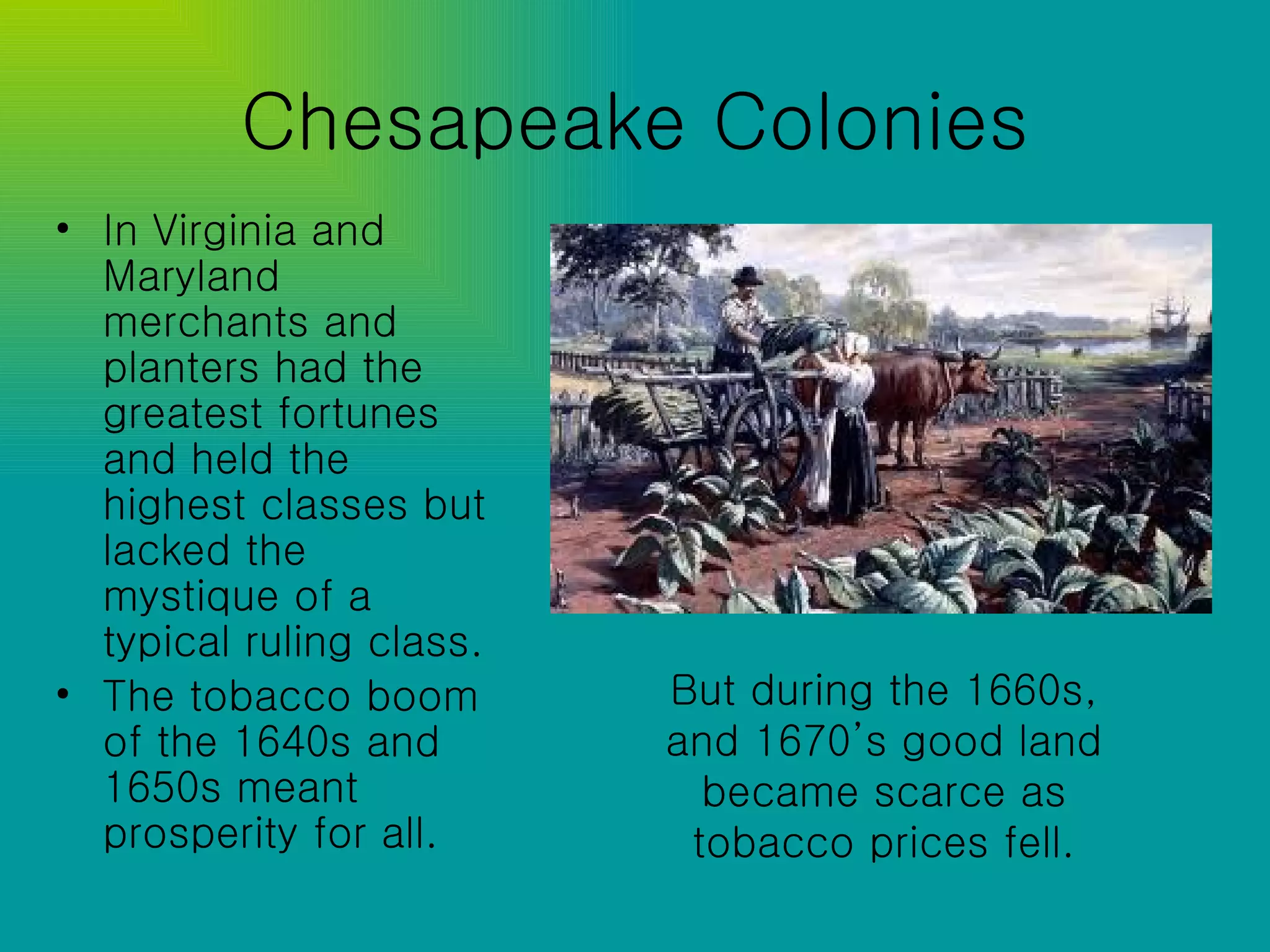
Chesapeake Colonies In Virginia and Maryland merchants and planters had the greatest fortunes and held the highest classes but lacked the mystique of a typical ruling class.  The tobacco boom of the 1640s and 1650s meant prosperity for all.   But during the 1660s, and 1670’s good land became scarce as tobacco prices fell.
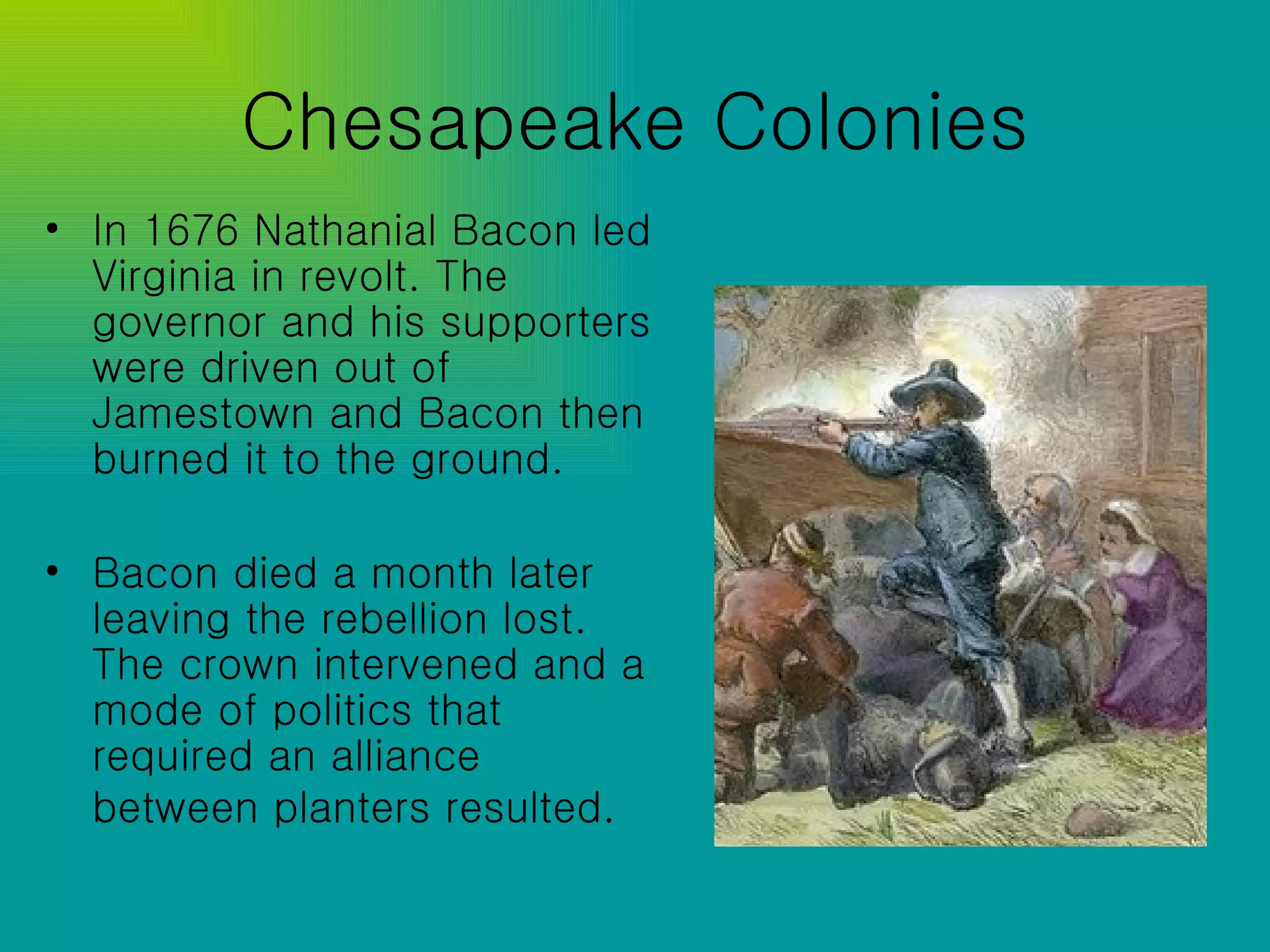
Chesapeake Colonies In 1676 Nathanial Bacon led Virginia in revolt. The governor and his supporters were driven out of Jamestown and Bacon then burned it to the ground. Bacon died a month later leaving the rebellion lost. The crown intervened and a mode of politics that required an alliance between planters resulted.
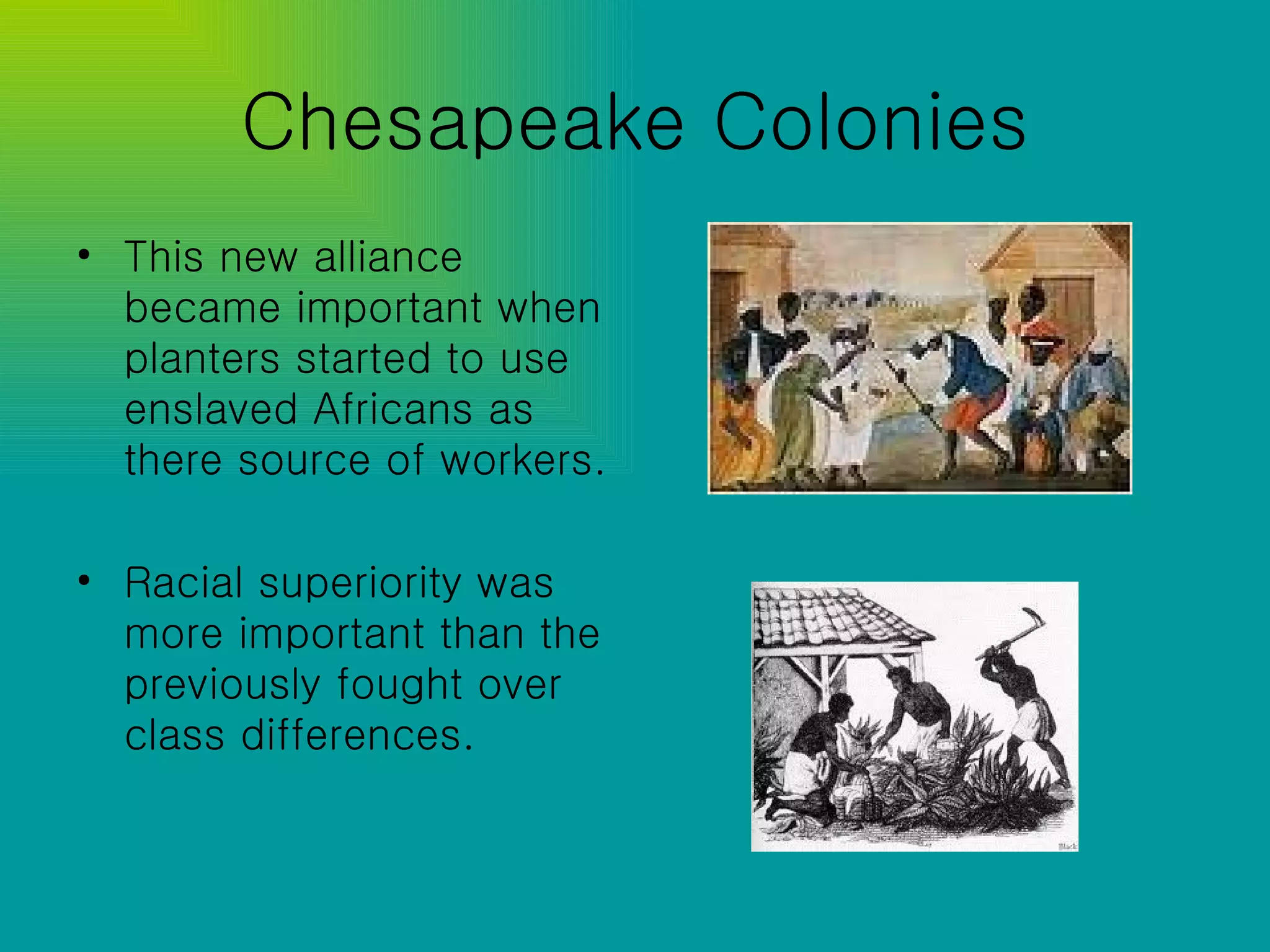
Chesapeake Colonies This new alliance became important when planters started to use enslaved Africans as there source of workers. Racial superiority was more important than the previously fought over class differences.
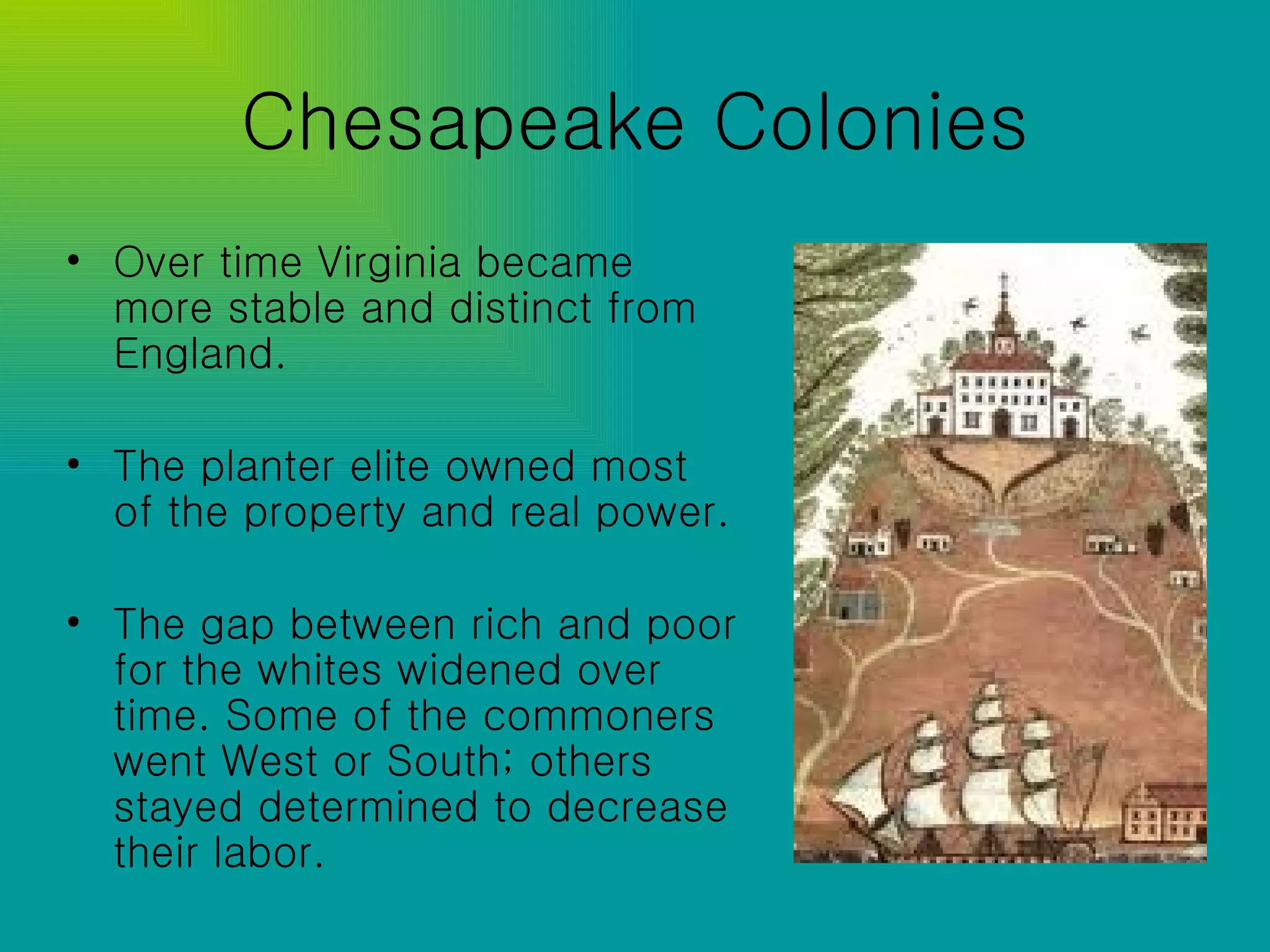
Chesapeake Colonies Over time Virginia became more stable and distinct from England. The planter elite owned most of the property and real power. The gap between rich and poor for the whites widened over time. Some of the commoners went West or South; others stayed determined to decrease their labor.
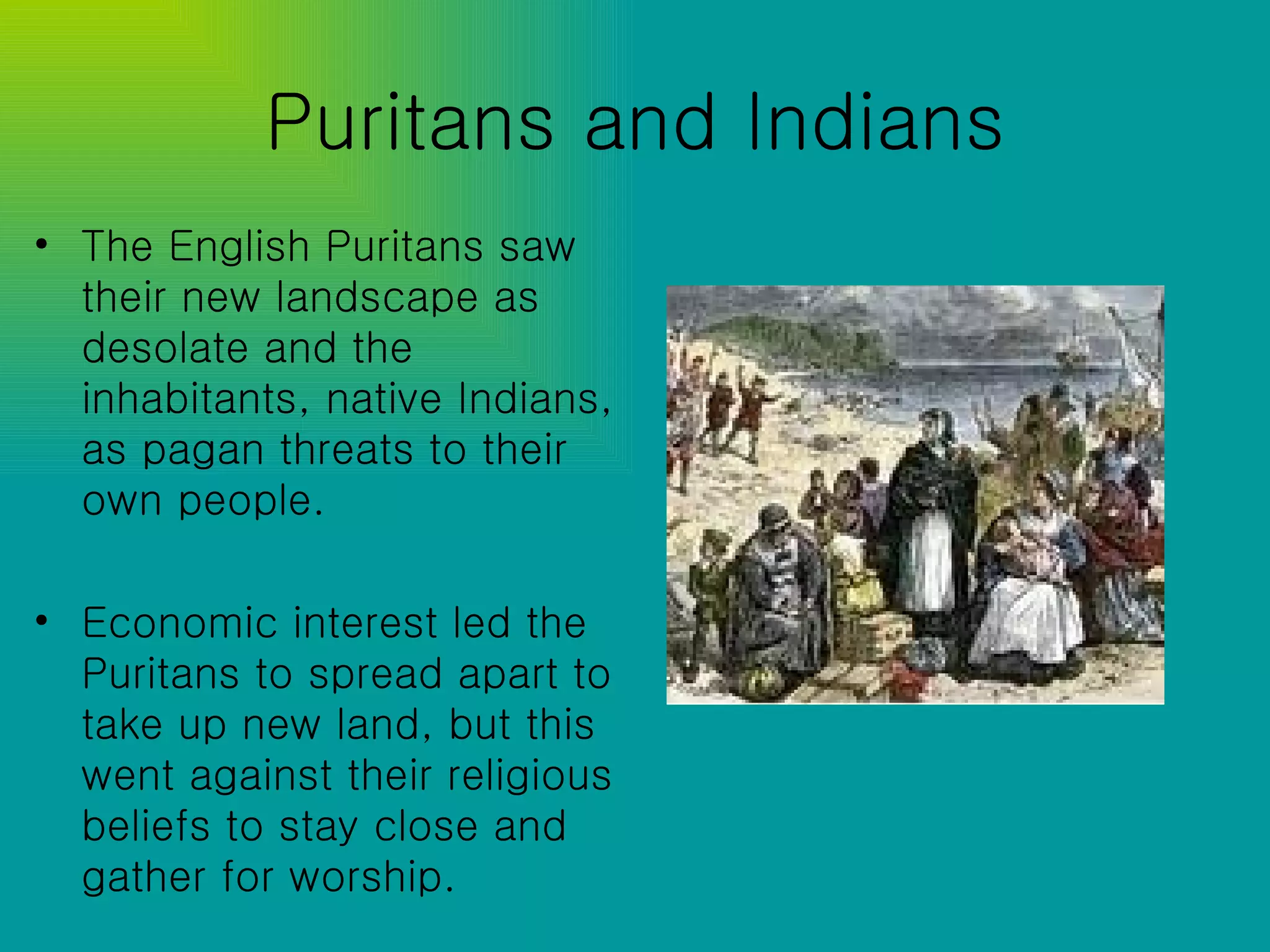
Puritans and Indians The English Puritans saw their new landscape as desolate and the inhabitants, native Indians, as pagan threats to their own people. Economic interest led the Puritans to spread apart to take up new land, but this went against their religious beliefs to stay close and gather for worship.
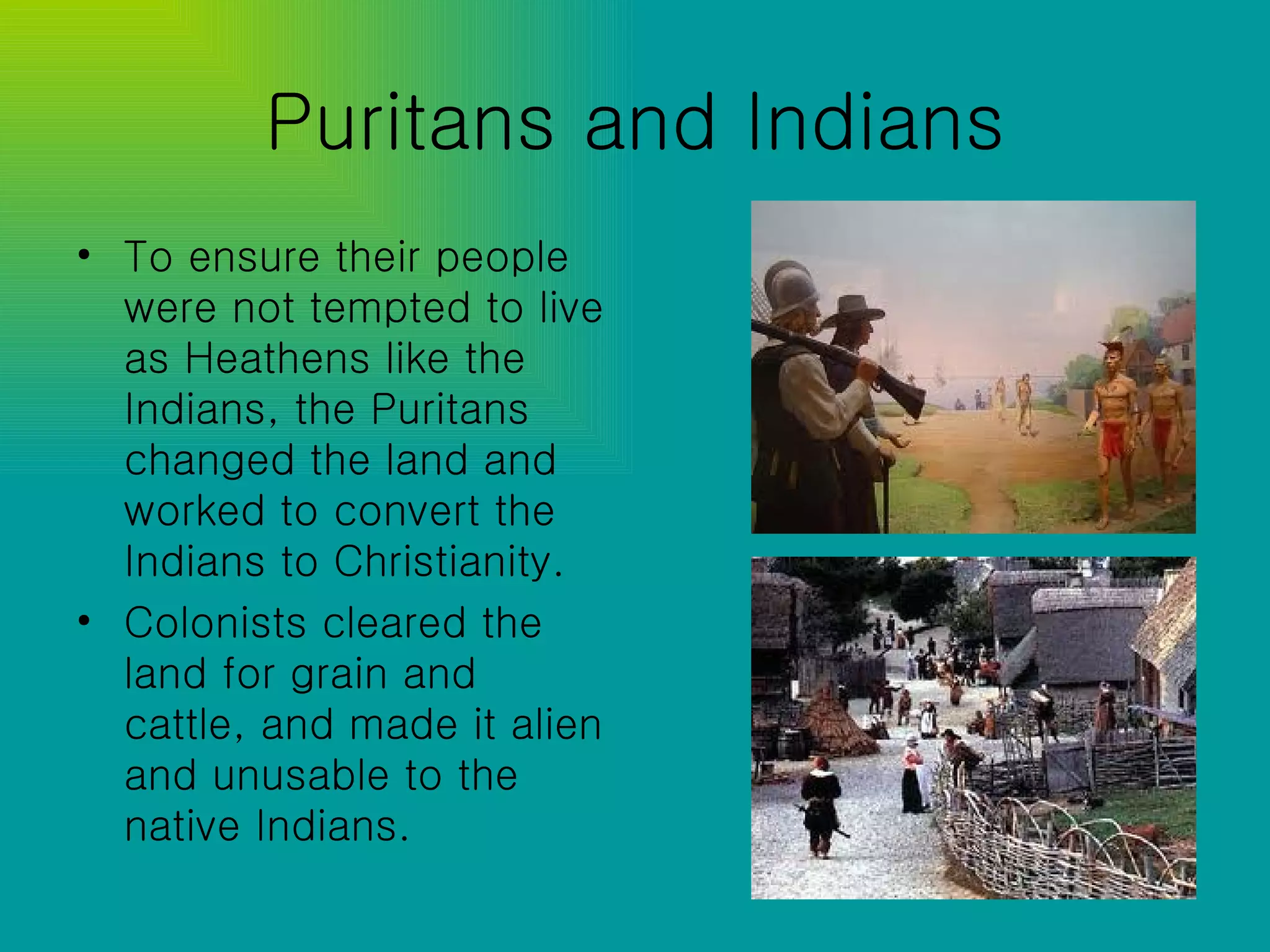
Puritans and Indians To ensure their people were not tempted to live as Heathens like the Indians, the Puritans changed the land and worked to convert the Indians to Christianity. Colonists cleared the land for grain and cattle, and made it alien and unusable to the native Indians.
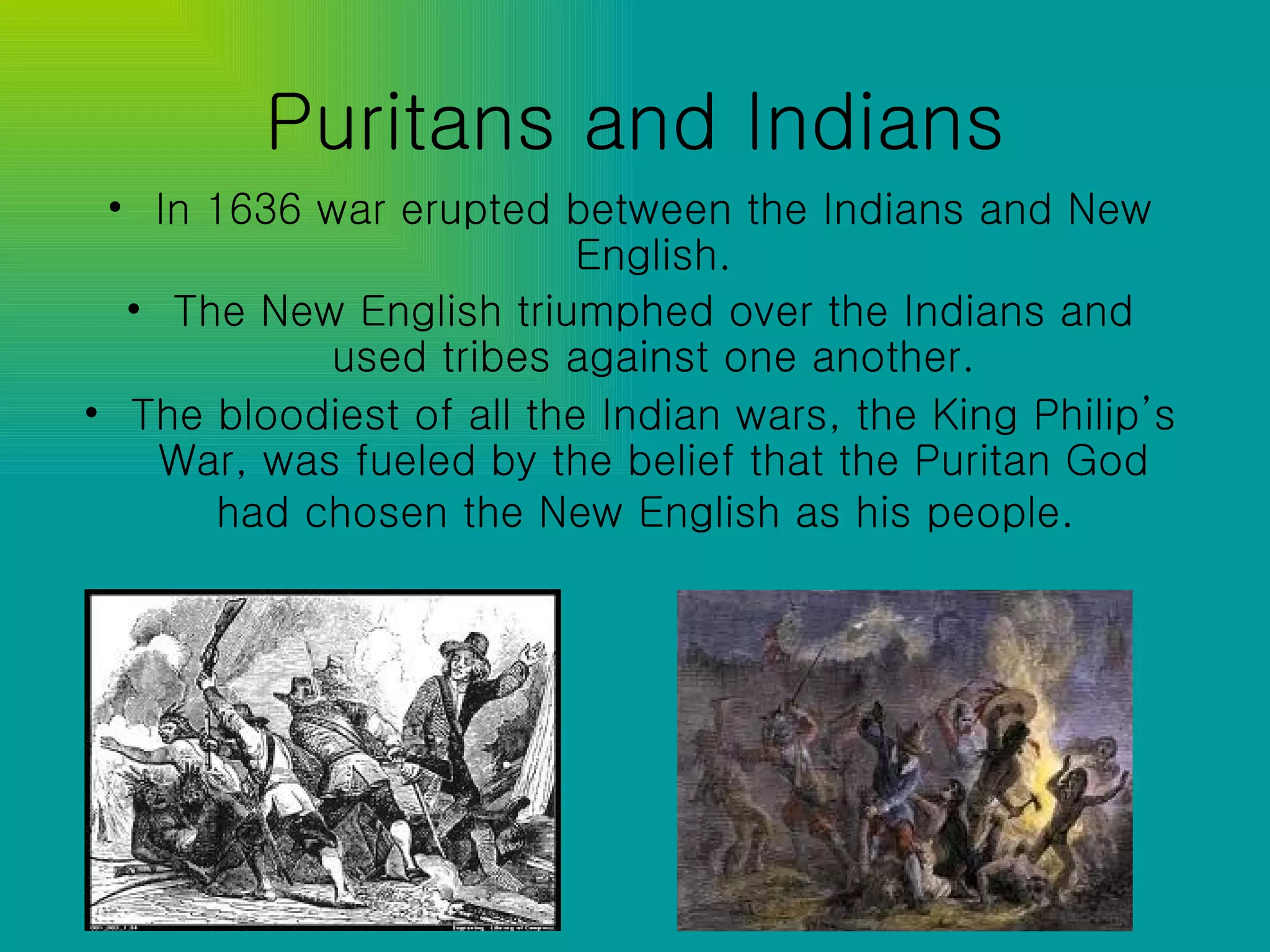
Puritans and Indians In 1636 war erupted between the Indians and New English. The New English triumphed over the Indians and used tribes against one another. The bloodiest of all the Indian wars, the King Philip’s War, was fueled by the belief that the Puritan God had chosen the New English as his people.
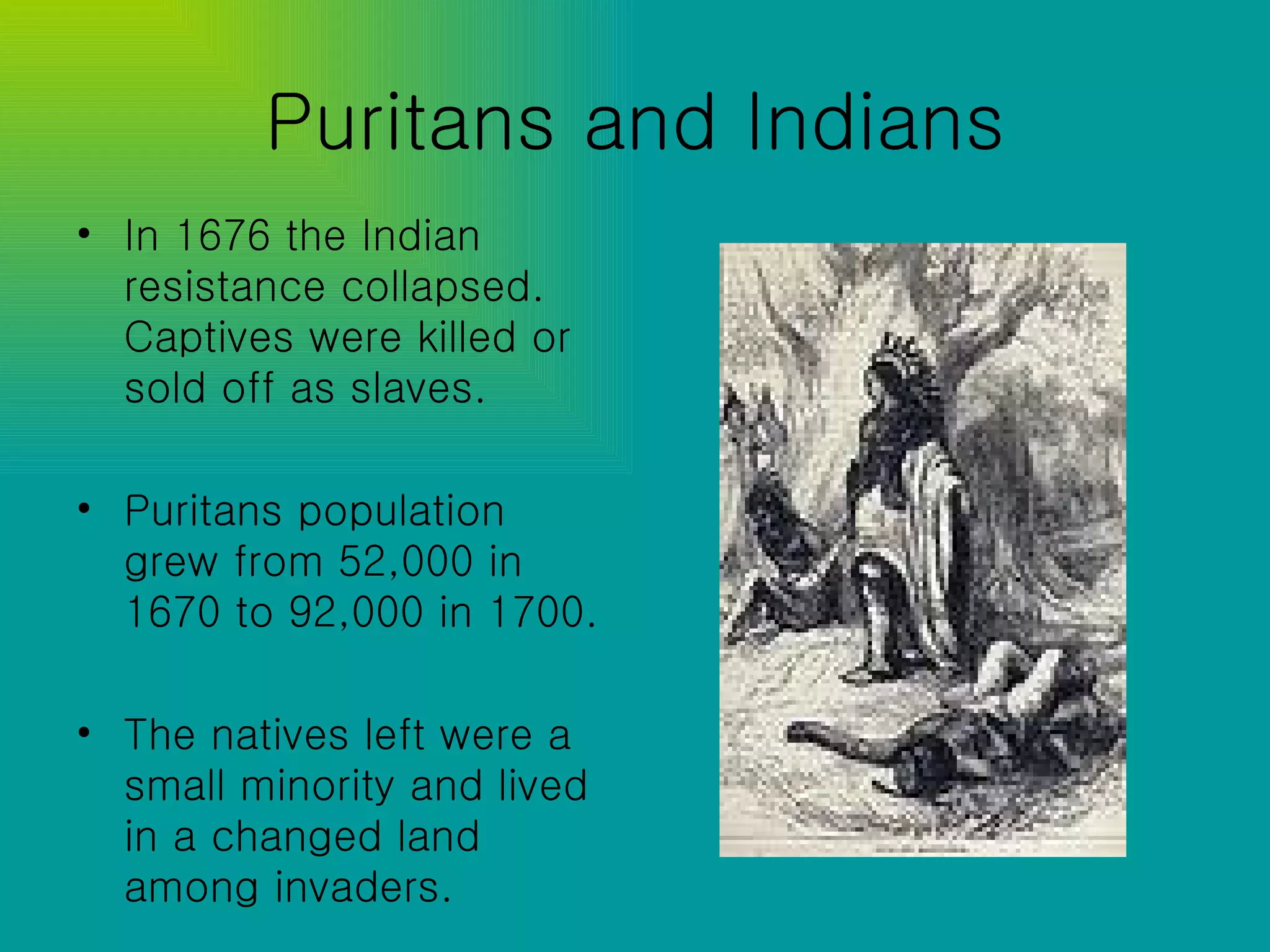
Puritans and Indians In 1676 the Indian resistance collapsed. Captives were killed or sold off as slaves. Puritans population grew from 52,000 in 1670 to 92,000 in 1700. The natives left were a small minority and lived in a changed land among invaders.

Theme 4 part 2

  • 1.
    English Colonies ofNorth America Theme 4 Part 2 History 71183
  • 2.
    Chesapeake Colonies InVirginia and Maryland merchants and planters had the greatest fortunes and held the highest classes but lacked the mystique of a typical ruling class. The tobacco boom of the 1640s and 1650s meant prosperity for all. But during the 1660s, and 1670’s good land became scarce as tobacco prices fell.
  • 3.
    Chesapeake Colonies In1676 Nathanial Bacon led Virginia in revolt. The governor and his supporters were driven out of Jamestown and Bacon then burned it to the ground. Bacon died a month later leaving the rebellion lost. The crown intervened and a mode of politics that required an alliance between planters resulted.
  • 4.
    Chesapeake Colonies Thisnew alliance became important when planters started to use enslaved Africans as there source of workers. Racial superiority was more important than the previously fought over class differences.
  • 5.
    Chesapeake Colonies Overtime Virginia became more stable and distinct from England. The planter elite owned most of the property and real power. The gap between rich and poor for the whites widened over time. Some of the commoners went West or South; others stayed determined to decrease their labor.
  • 6.
    Puritans and IndiansThe English Puritans saw their new landscape as desolate and the inhabitants, native Indians, as pagan threats to their own people. Economic interest led the Puritans to spread apart to take up new land, but this went against their religious beliefs to stay close and gather for worship.
  • 7.
    Puritans and IndiansTo ensure their people were not tempted to live as Heathens like the Indians, the Puritans changed the land and worked to convert the Indians to Christianity. Colonists cleared the land for grain and cattle, and made it alien and unusable to the native Indians.
  • 8.
    Puritans and IndiansIn 1636 war erupted between the Indians and New English. The New English triumphed over the Indians and used tribes against one another. The bloodiest of all the Indian wars, the King Philip’s War, was fueled by the belief that the Puritan God had chosen the New English as his people.
  • 9.
    Puritans and IndiansIn 1676 the Indian resistance collapsed. Captives were killed or sold off as slaves. Puritans population grew from 52,000 in 1670 to 92,000 in 1700. The natives left were a small minority and lived in a changed land among invaders.