The Elements
and Principles
of Art
The Elements of Art
The building blocks
or ingredients of art.
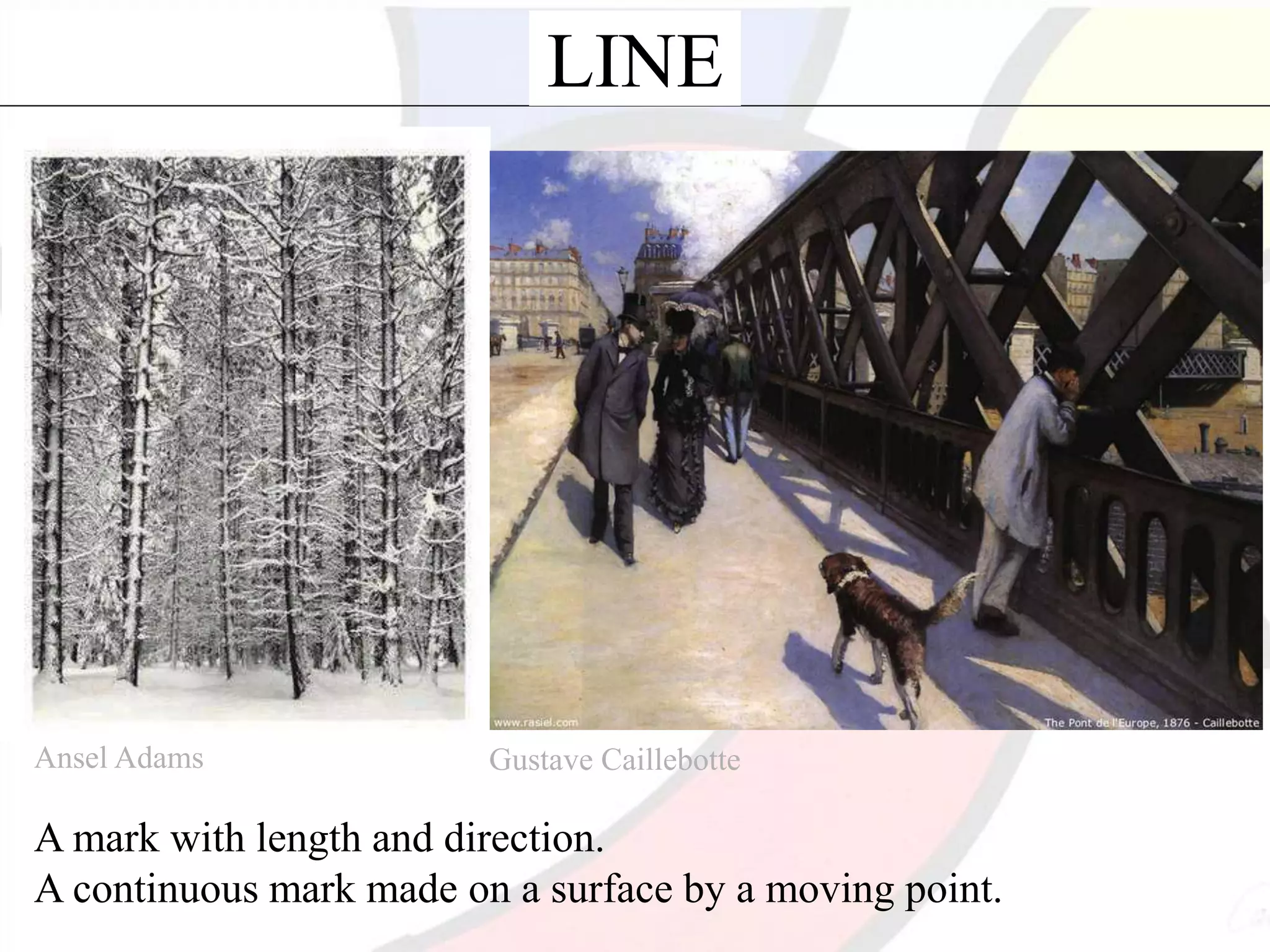
LINE
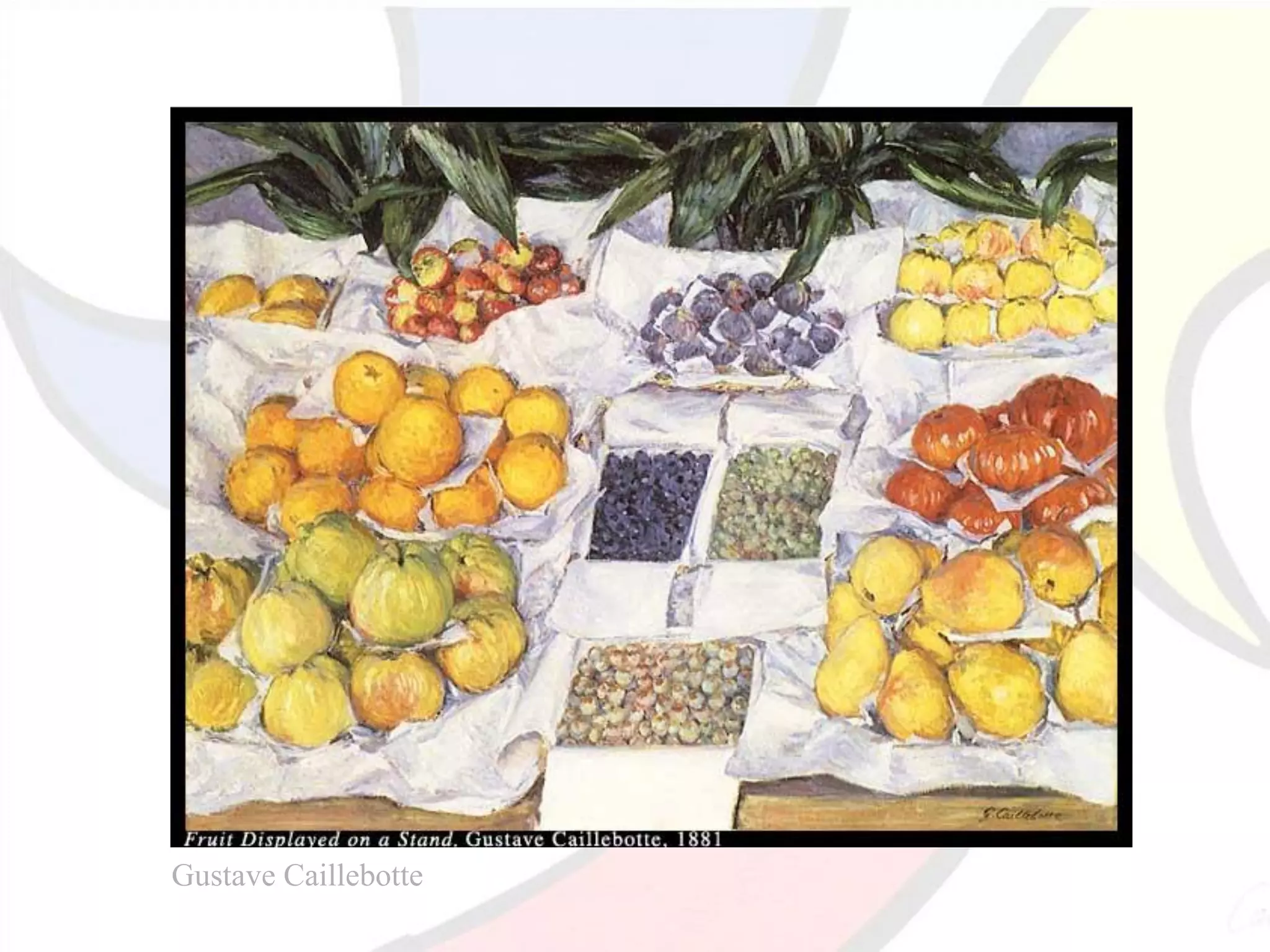
Ansel Adams Gustave Caillebotte
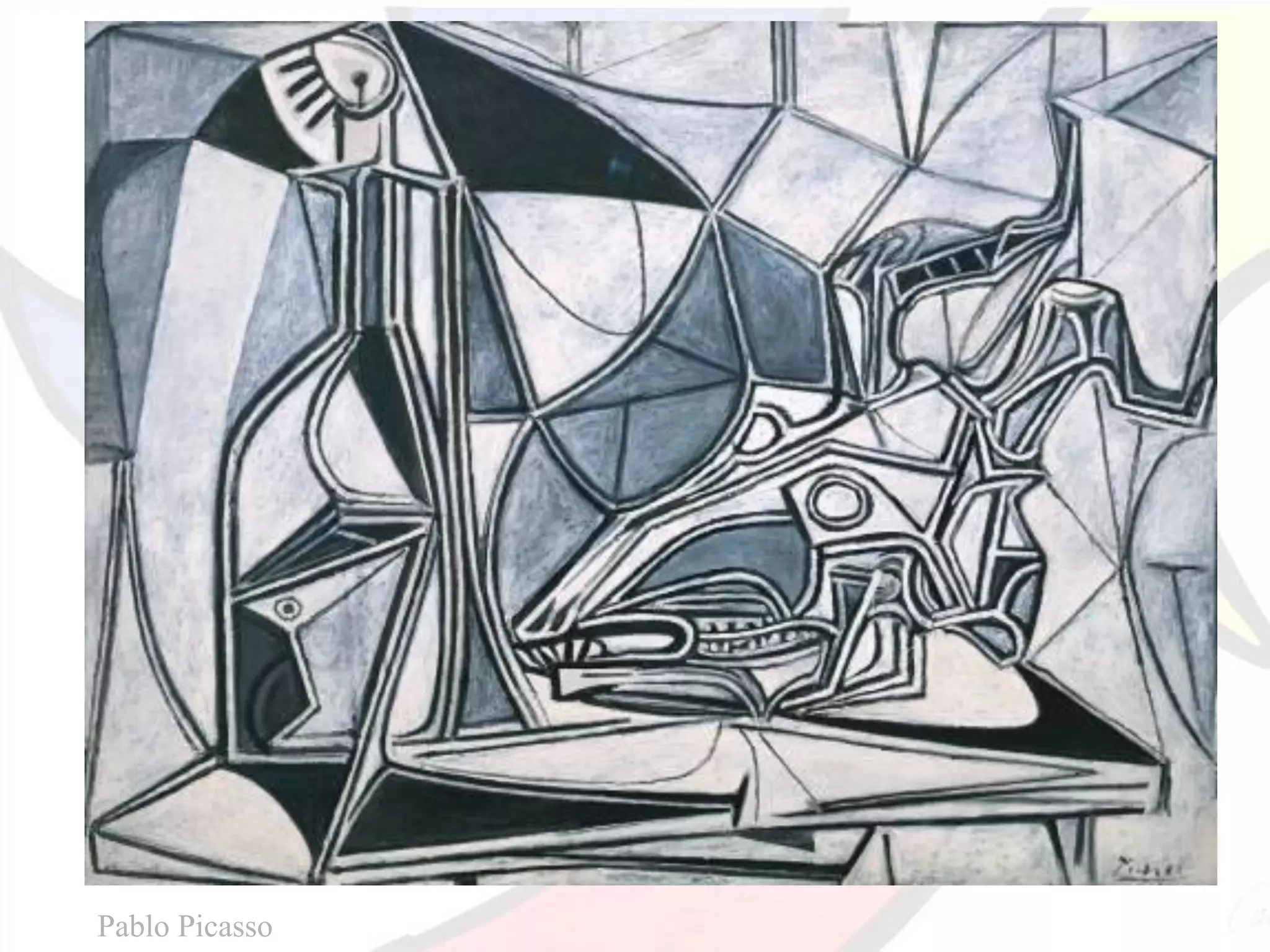
A mark with length and direction.
A continuous mark made on a surface by a moving point.
Pablo Picasso
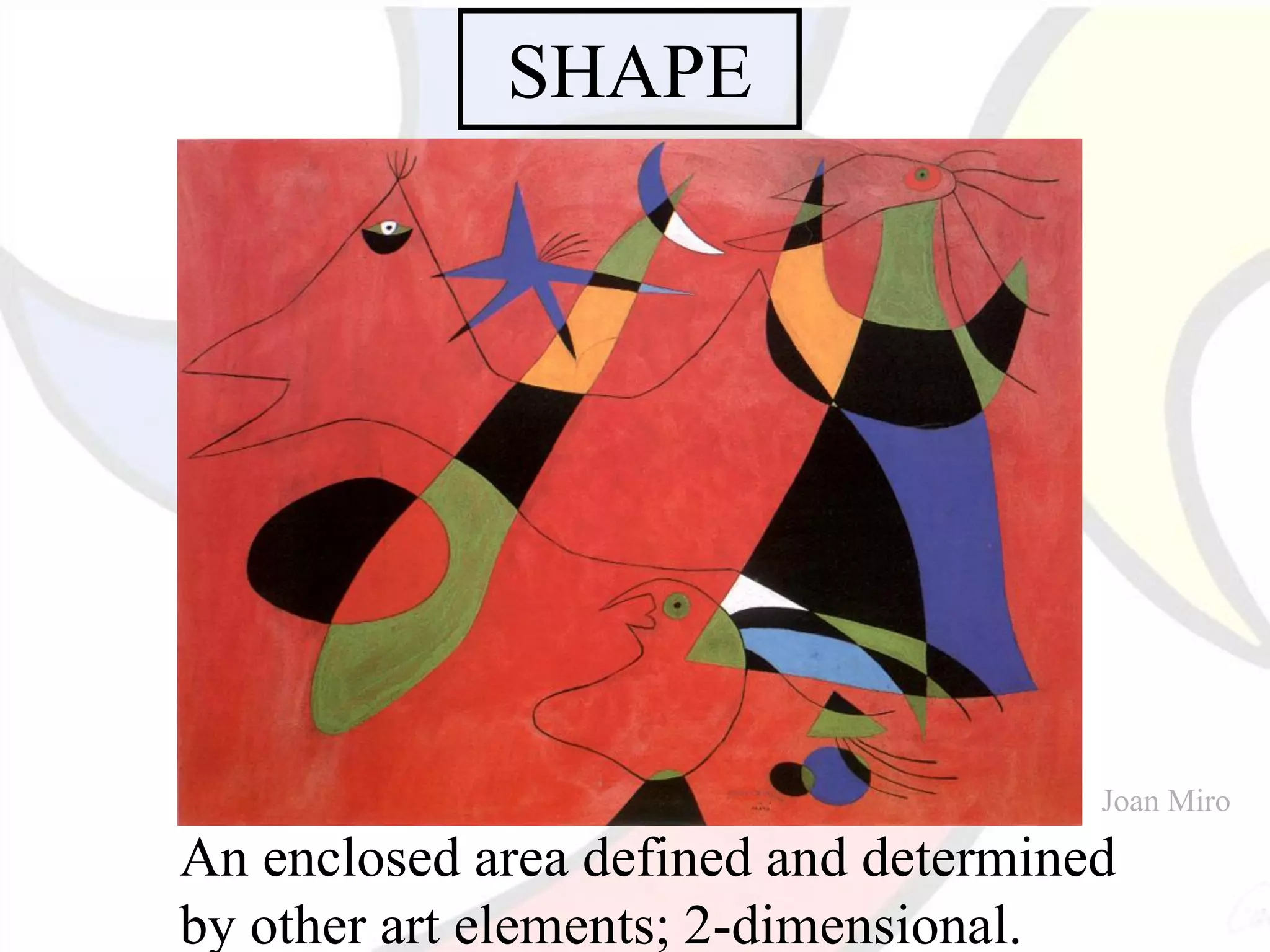
SHAPE
An enclosed area defined and determined
by other art elements; 2-dimensional.
Joan Miro
Gustave Caillebotte
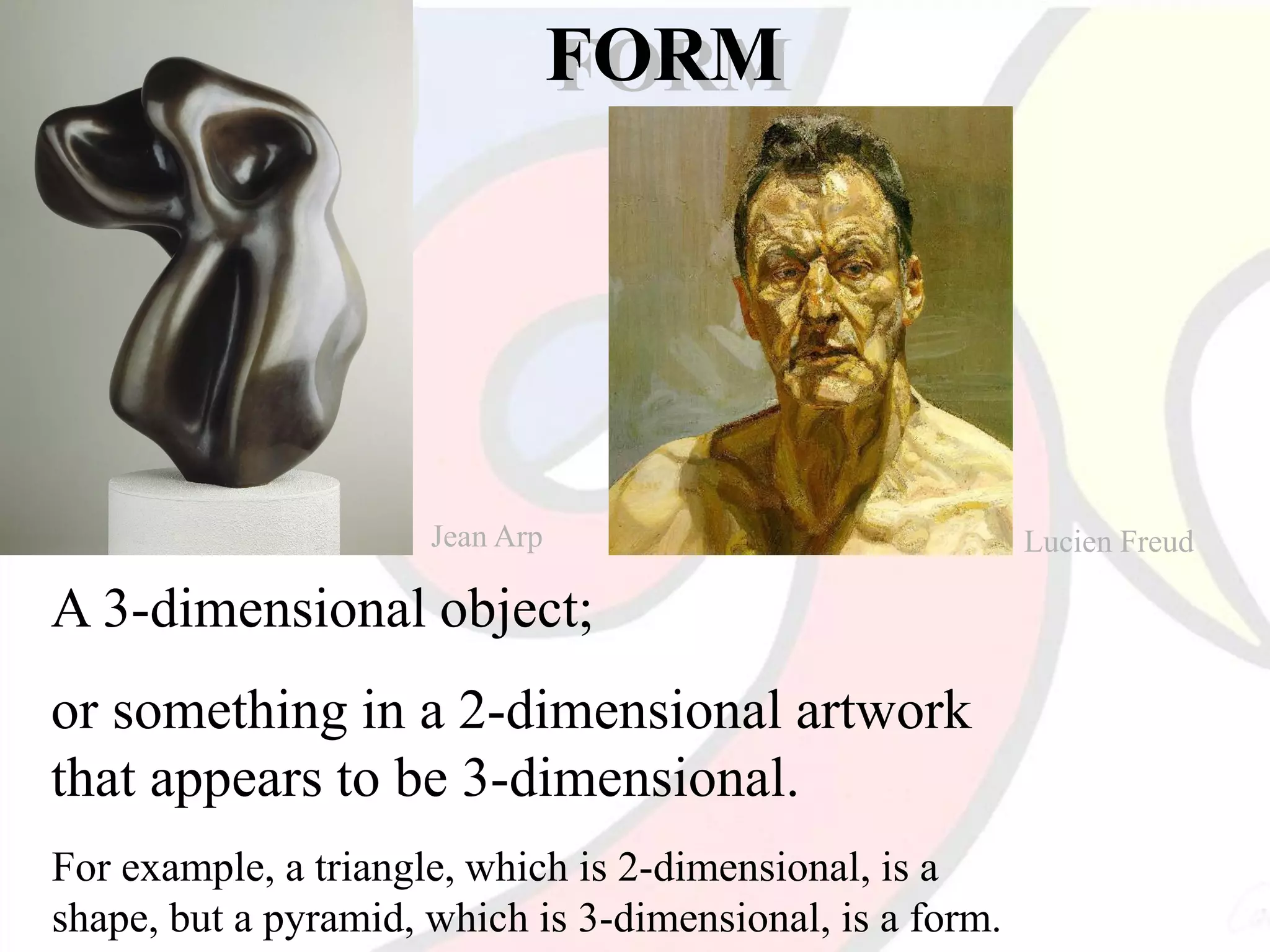
FORM
A 3-dimensional object;
or something in a 2-dimensional artwork
that appears to be 3-dimensional.
For example, a triangle, which is 2-dimensional, is a
shape, but a pyramid, which is 3-dimensional, is a form.
Jean Arp Lucien Freud
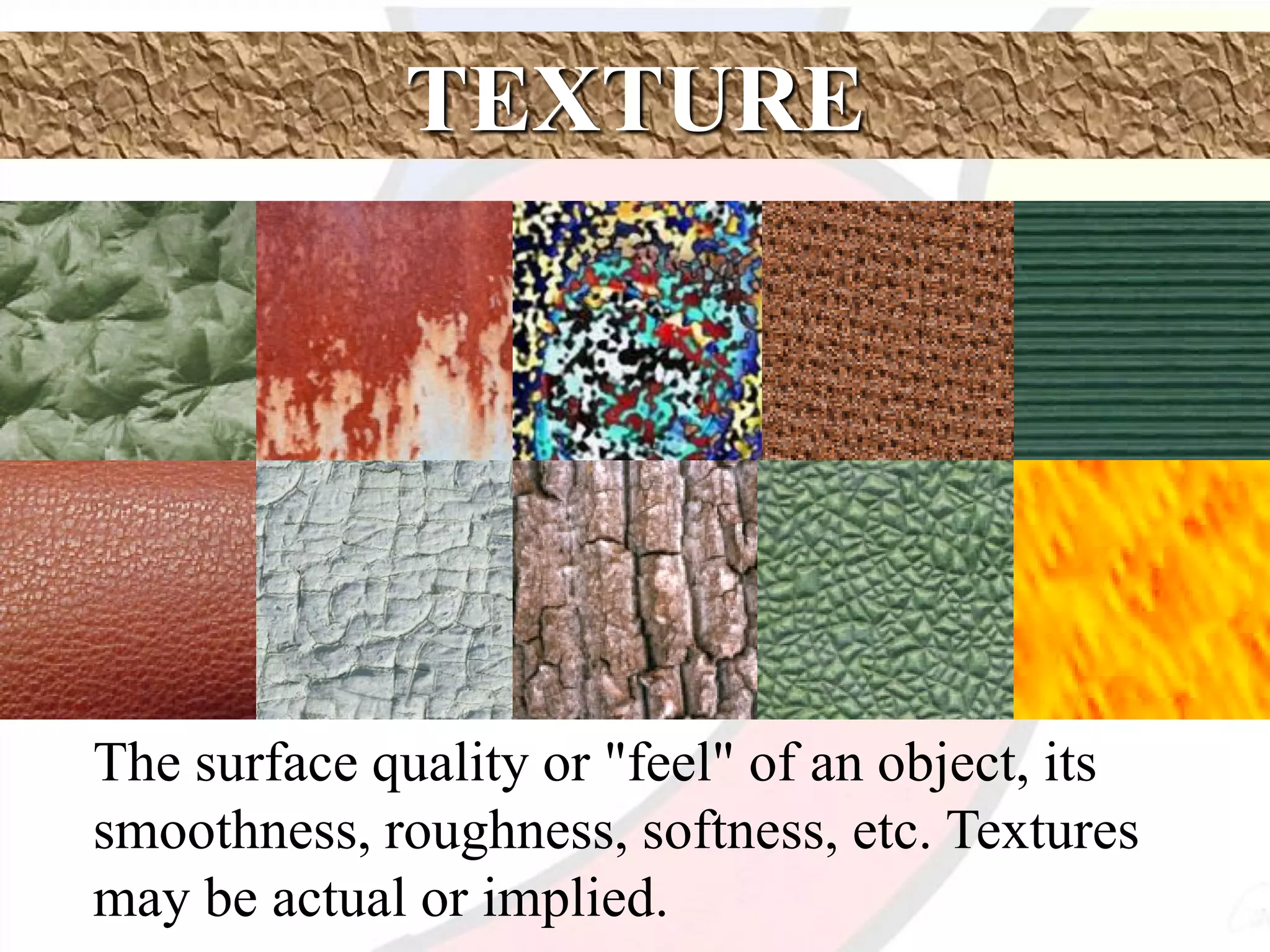
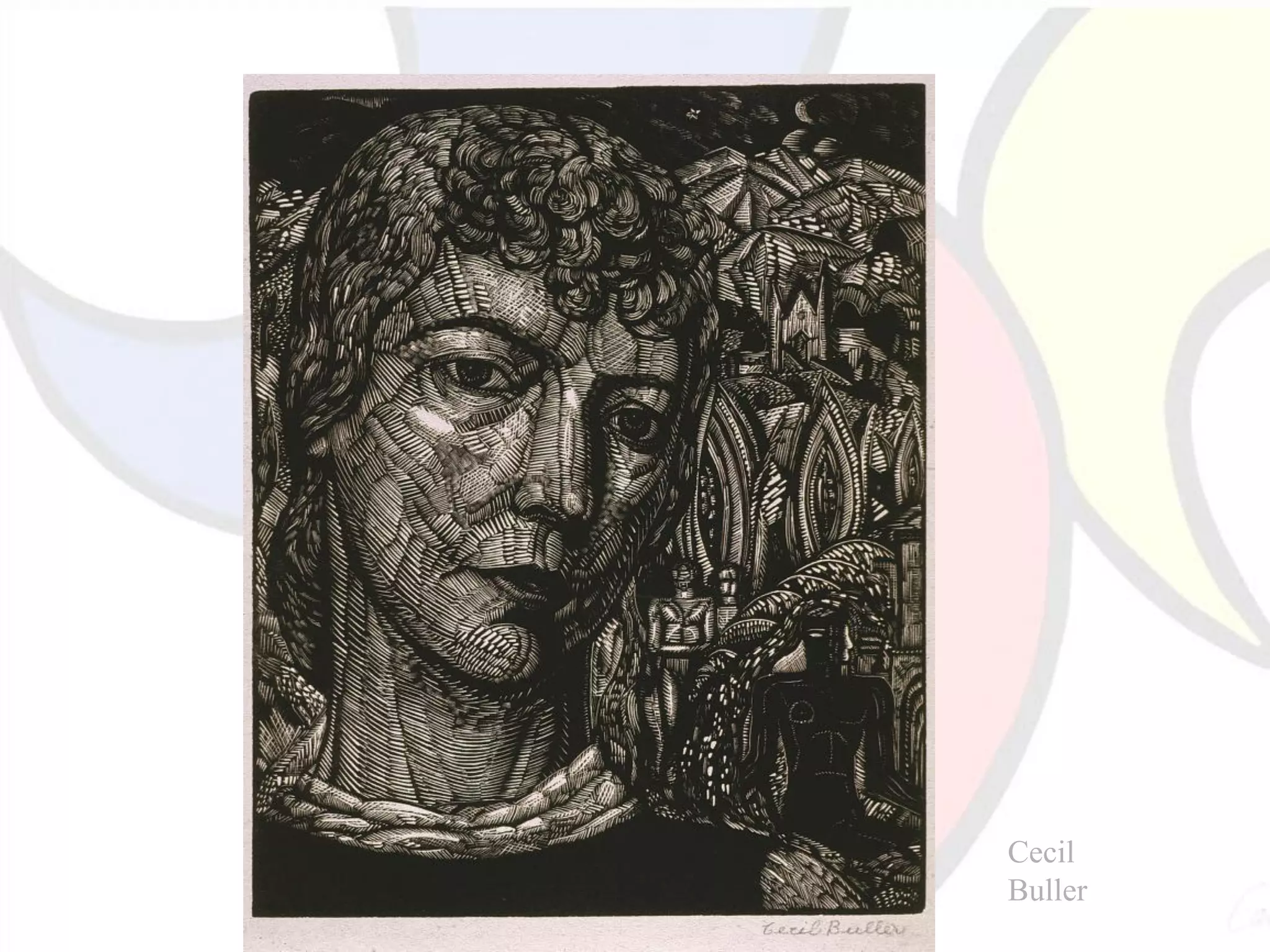
TEXTURE
The surface quality or "feel" of an object, its
smoothness, roughness, softness, etc. Textures
may be actual or implied.
Cecil
Buller
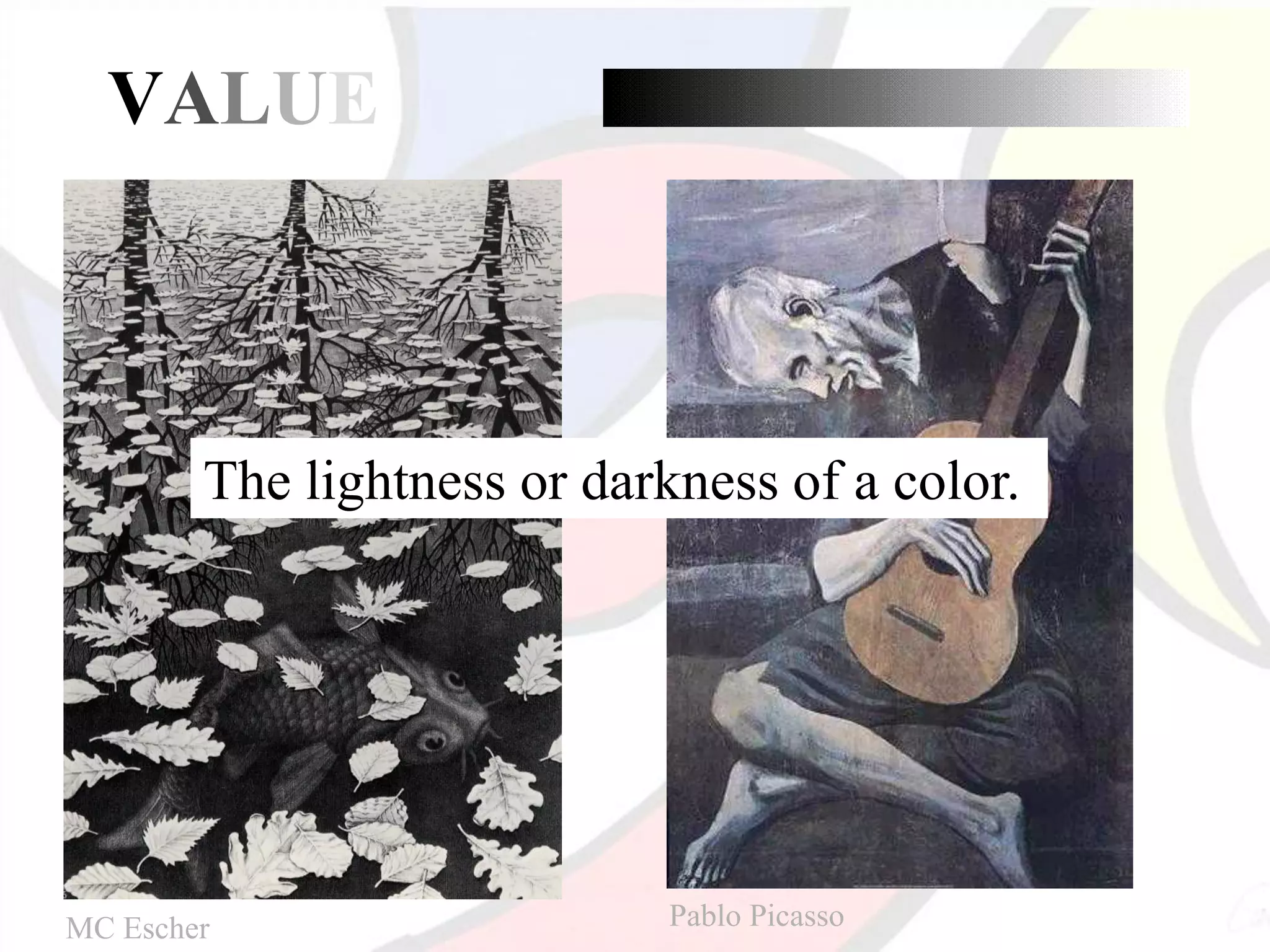
VALUE
The lightness or darkness of a color.
MC Escher Pablo Picasso
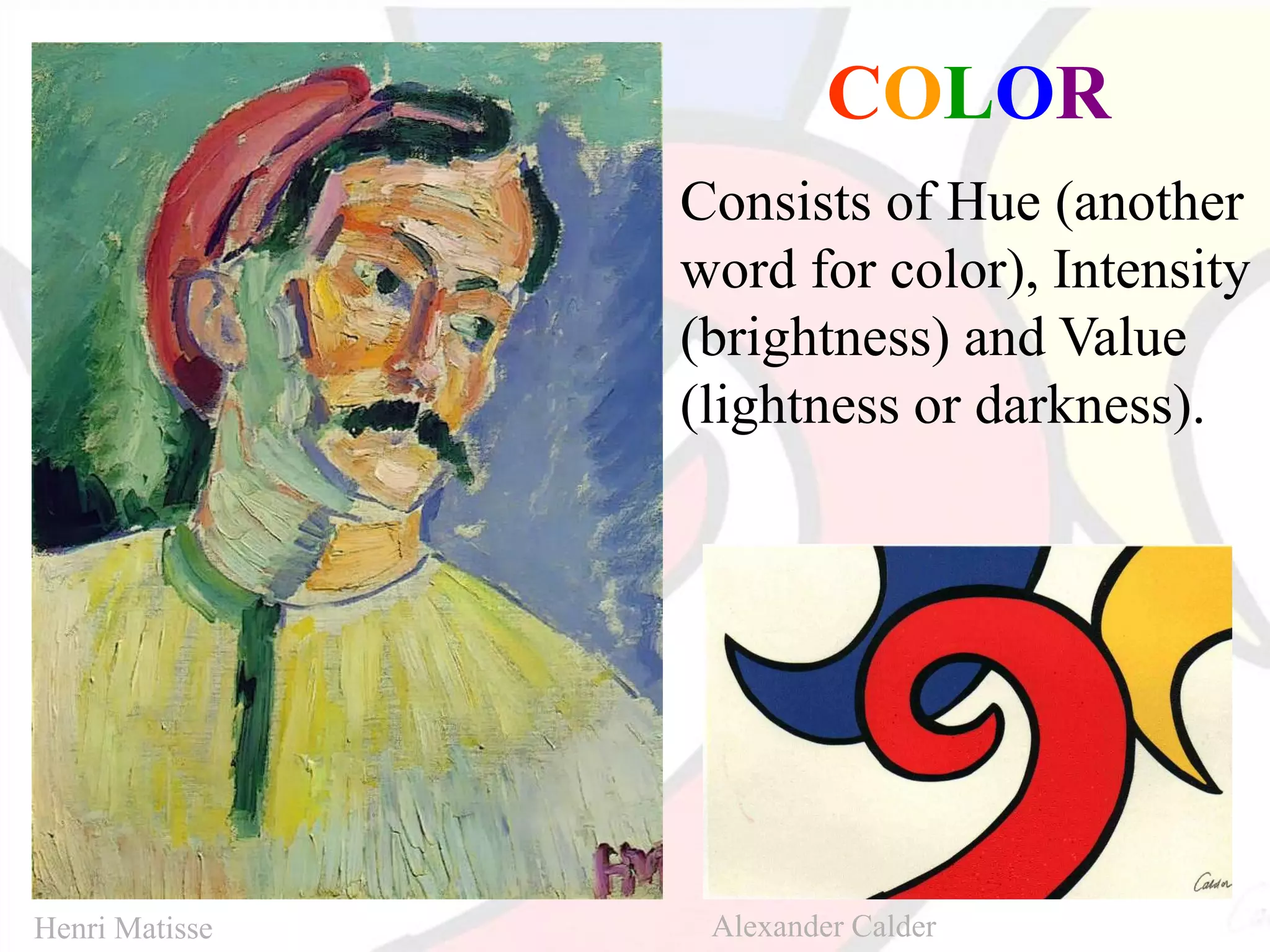
COLOR
Consists of Hue (another
word for color), Intensity
(brightness) and Value
(lightness or darkness).
Henri Matisse Alexander Calder
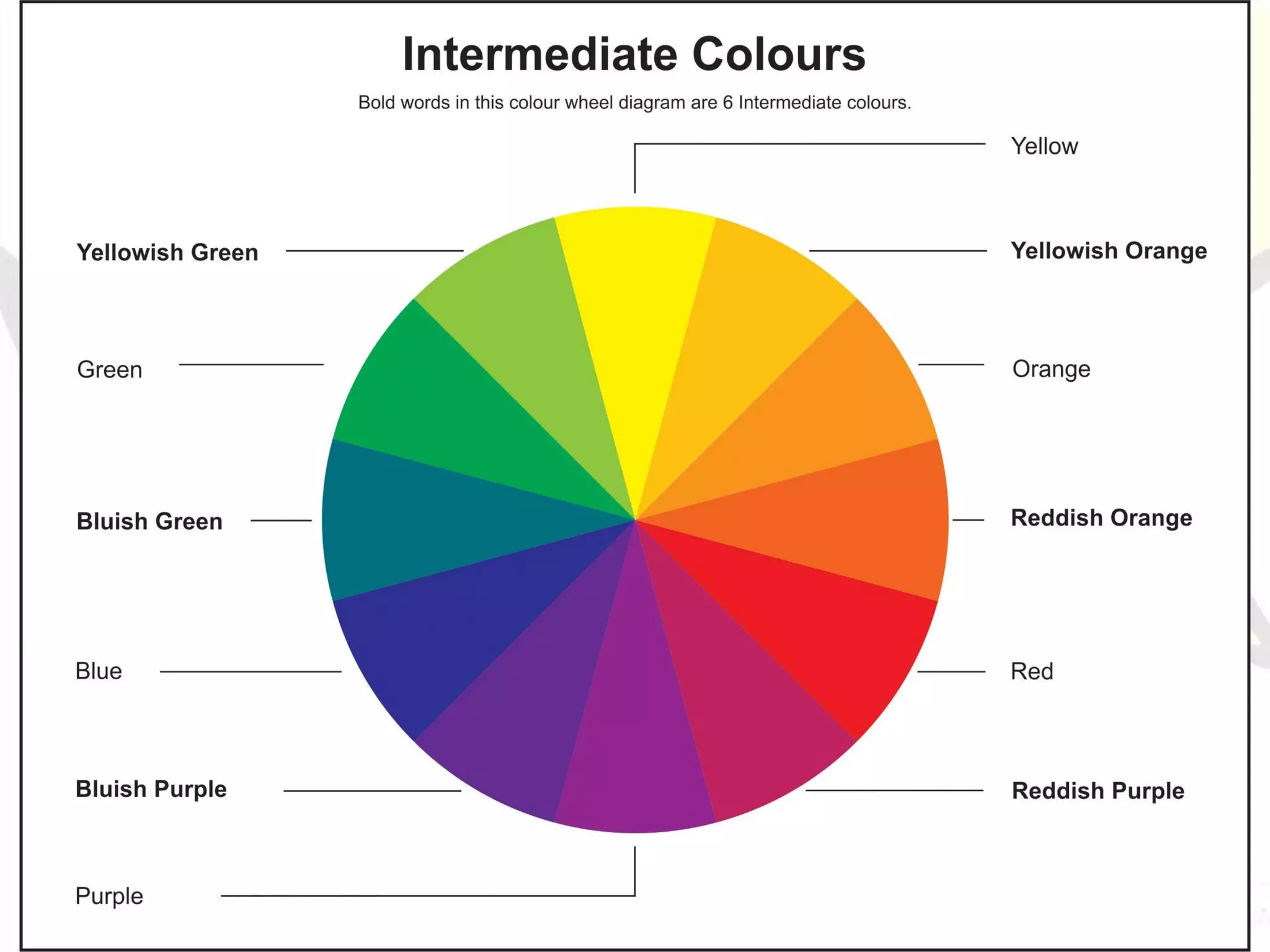
Primary Colors
Red, Yellow & Blue
Secondary Colors
Red + Yellow = Orange
Yellow + Blue = Green
Blue + Red = Violet
Complementary Colors
Red & Green
Yellow & Violet
Blue & Orange
Tint is the mixture of a
color with white, which
increases lightness.
Shade is the mixture of a
color with black, which
reduces lightness.
Tone is produced either
by the mixture of a color
with gray, or by both
tinting and shading.
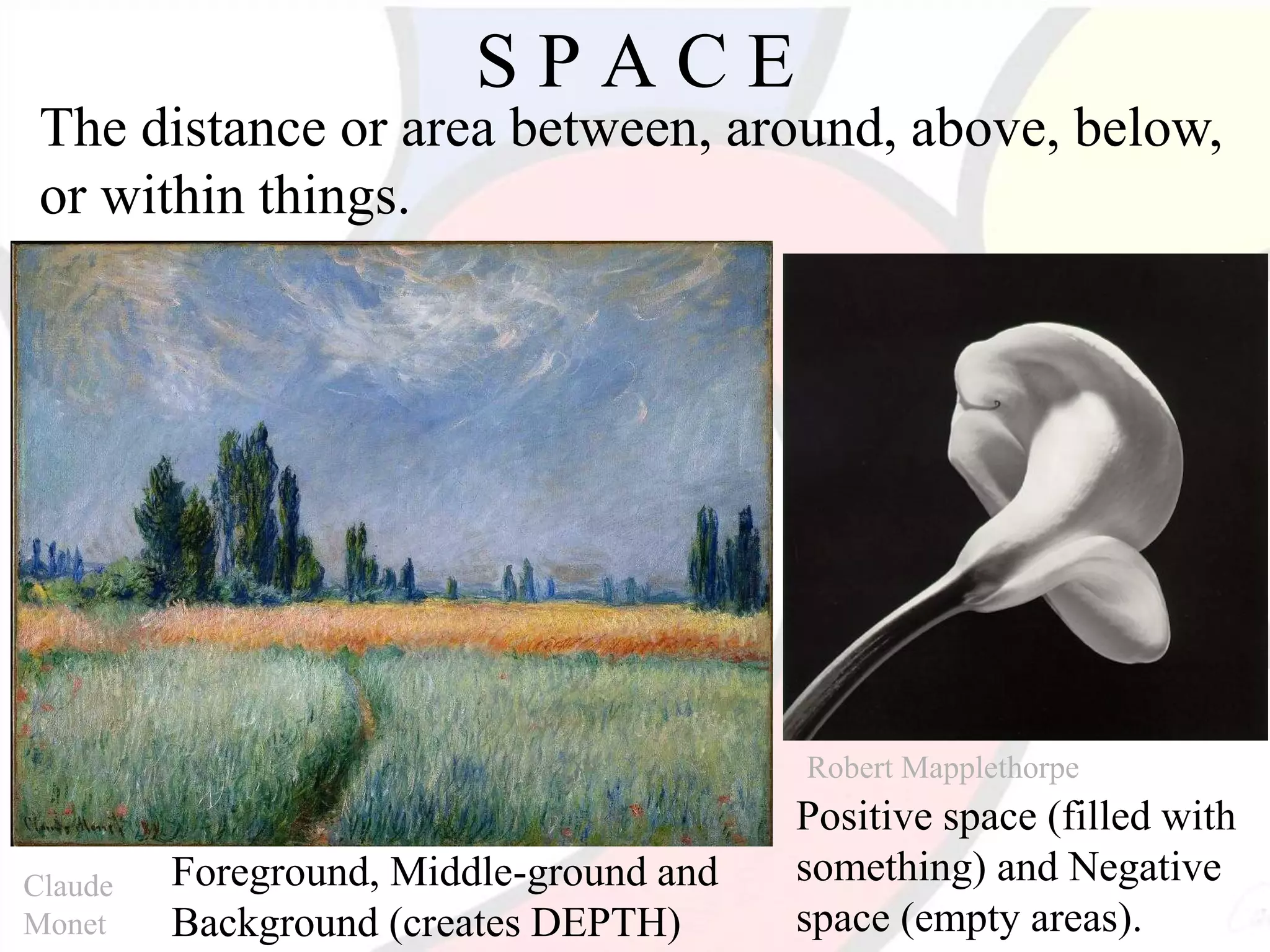
Robert Mapplethorpe
Claude
Monet
S P A C E
The distance or area between, around, above, below,
or within things.
Positive space (filled with
something) and Negative
space (empty areas).
Foreground, Middle-ground and
Background (creates DEPTH)
The Principles of Art
What we use to organize the
Elements of Art,
or the tools to make art.
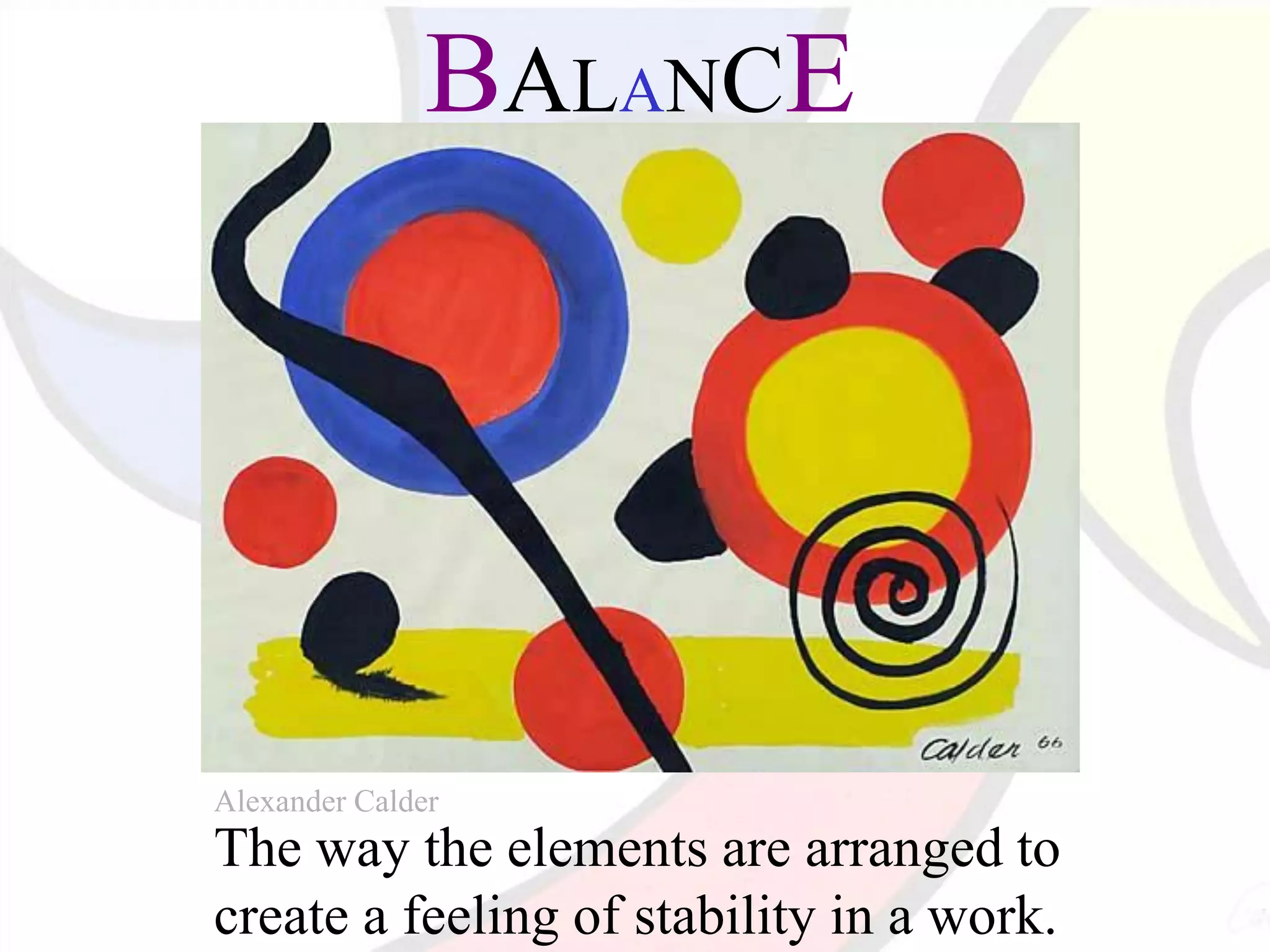
BALANCE
The way the elements are arranged to
create a feeling of stability in a work.
Alexander Calder
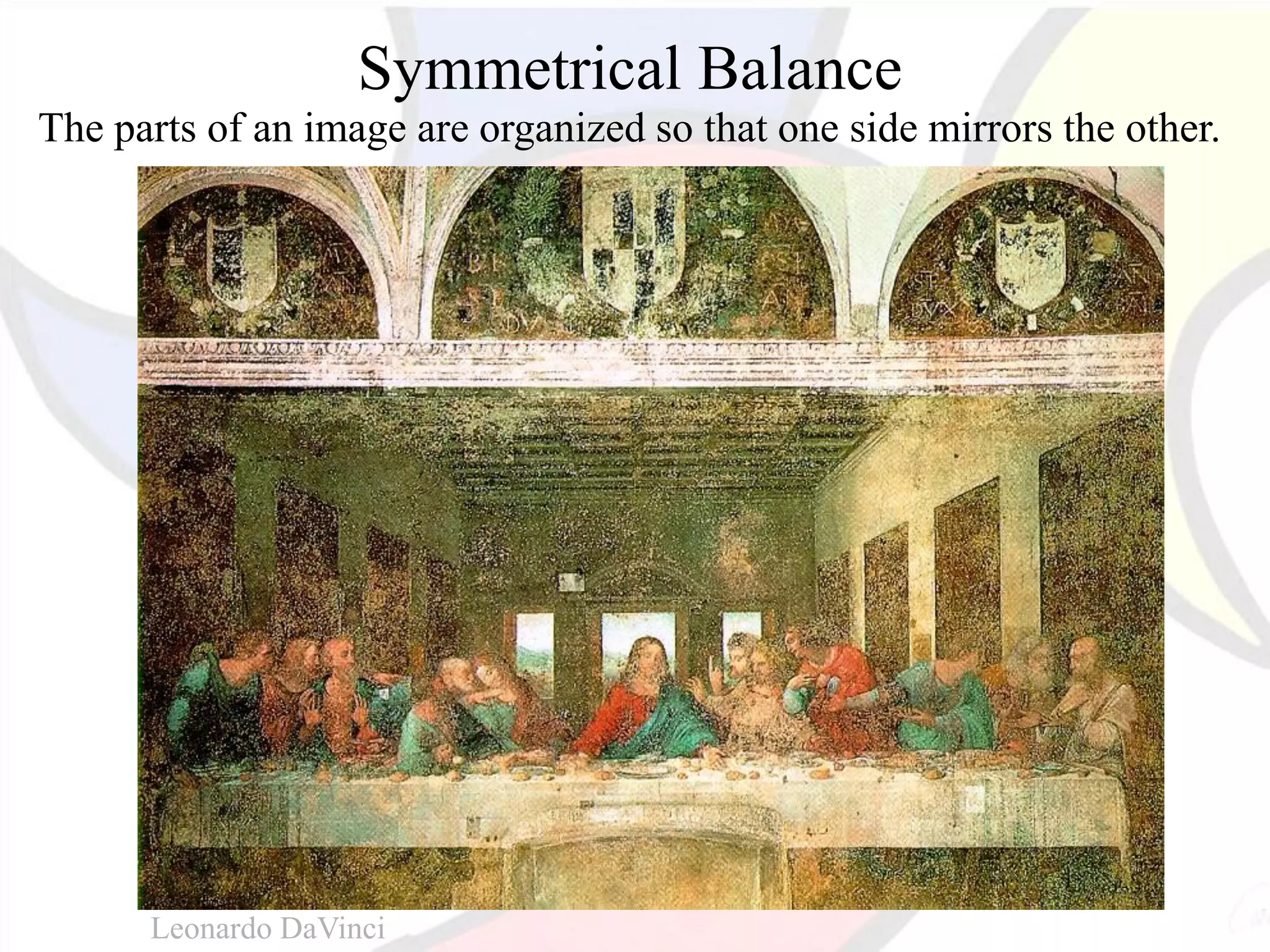
Symmetrical Balance
The parts of an image are organized so that one side mirrors the other.
Leonardo DaVinci
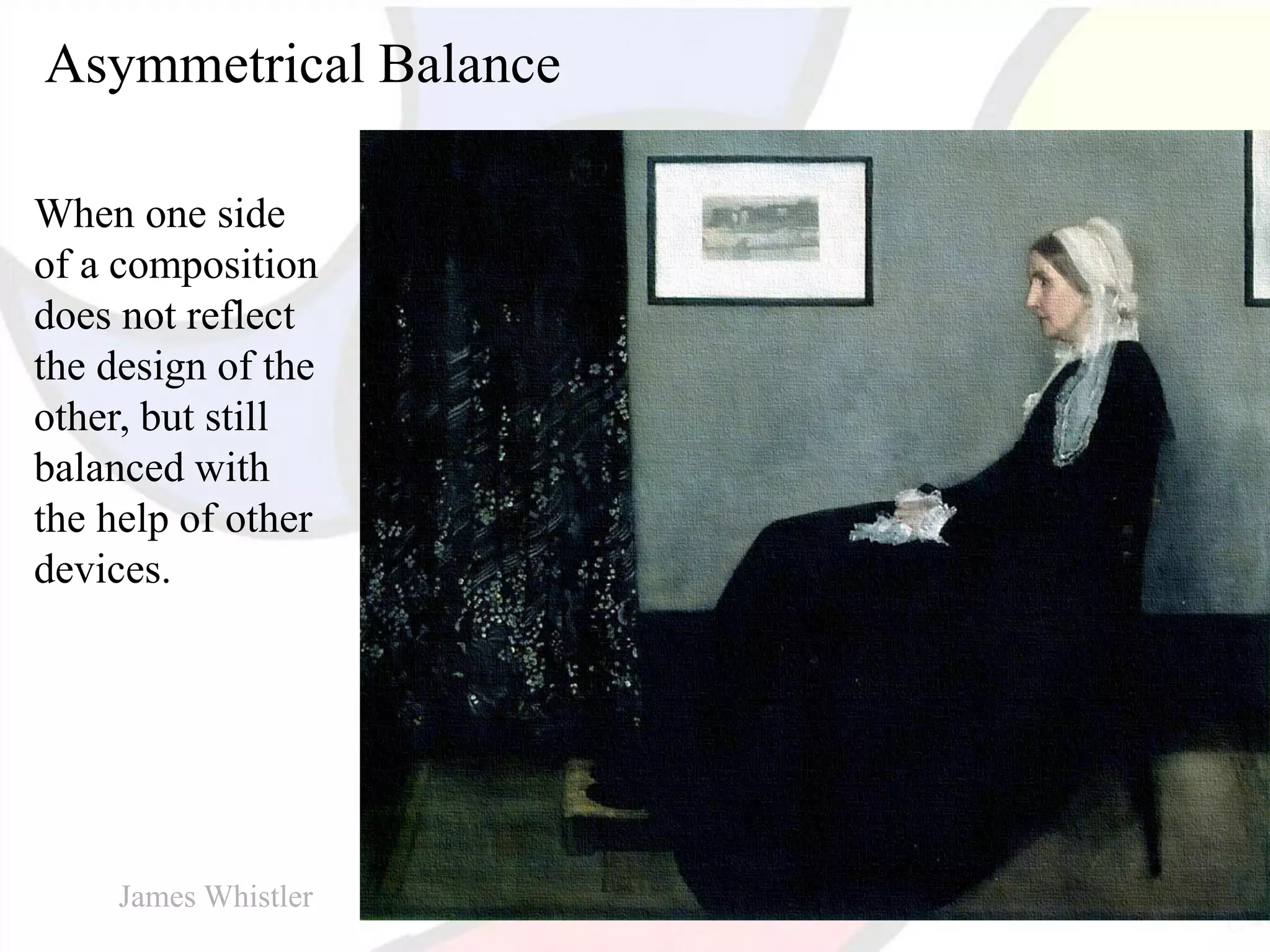
Asymmetrical Balance
When one side
of a composition
does not reflect
the design of the
other, but still
balanced with
the help of other
devices.
James Whistler
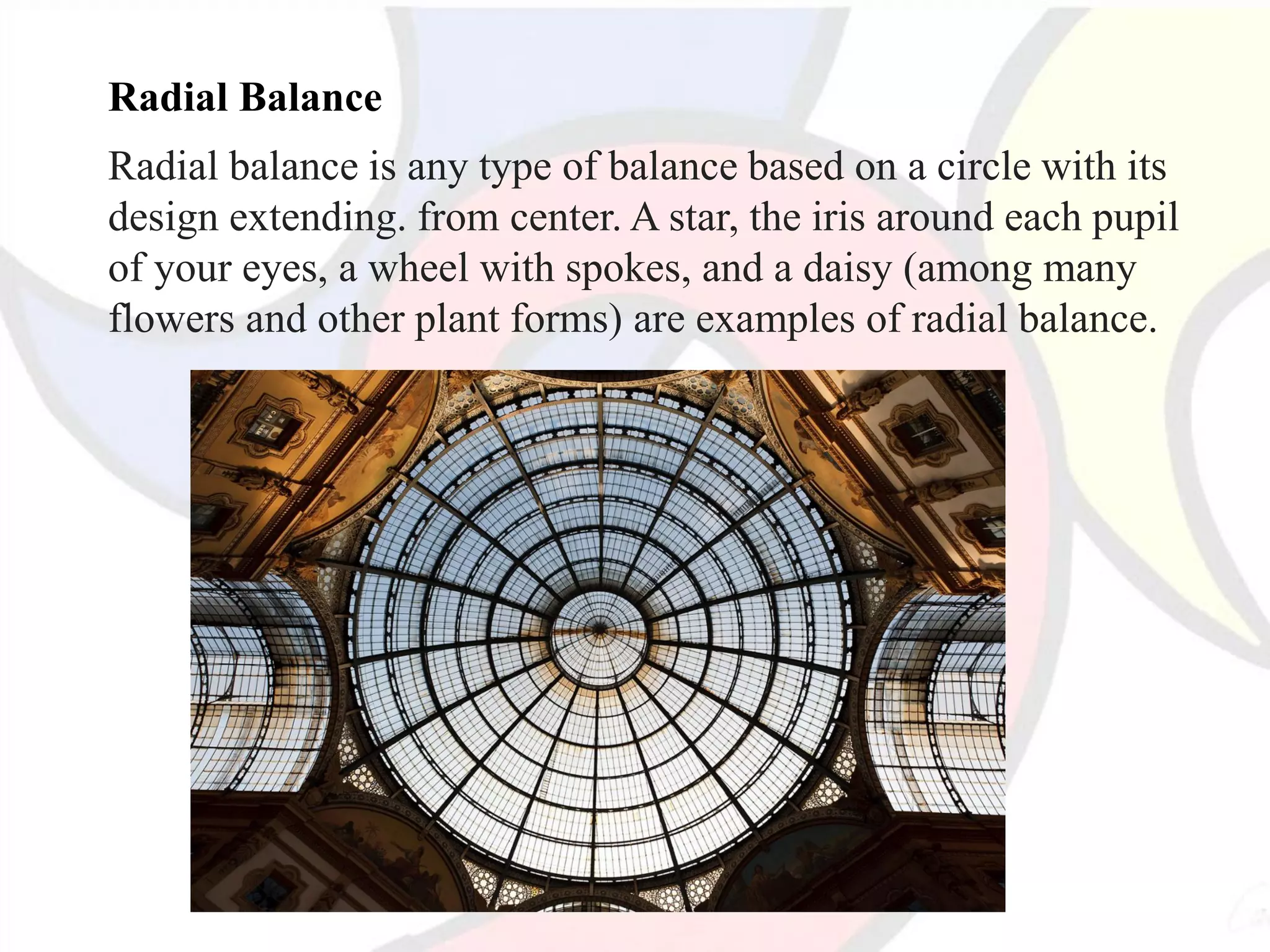
Radial Balance
Radial balance is any type of balance based on a circle with its
design extending. from center. A star, the iris around each pupil
of your eyes, a wheel with spokes, and a daisy (among many
flowers and other plant forms) are examples of radial balance.
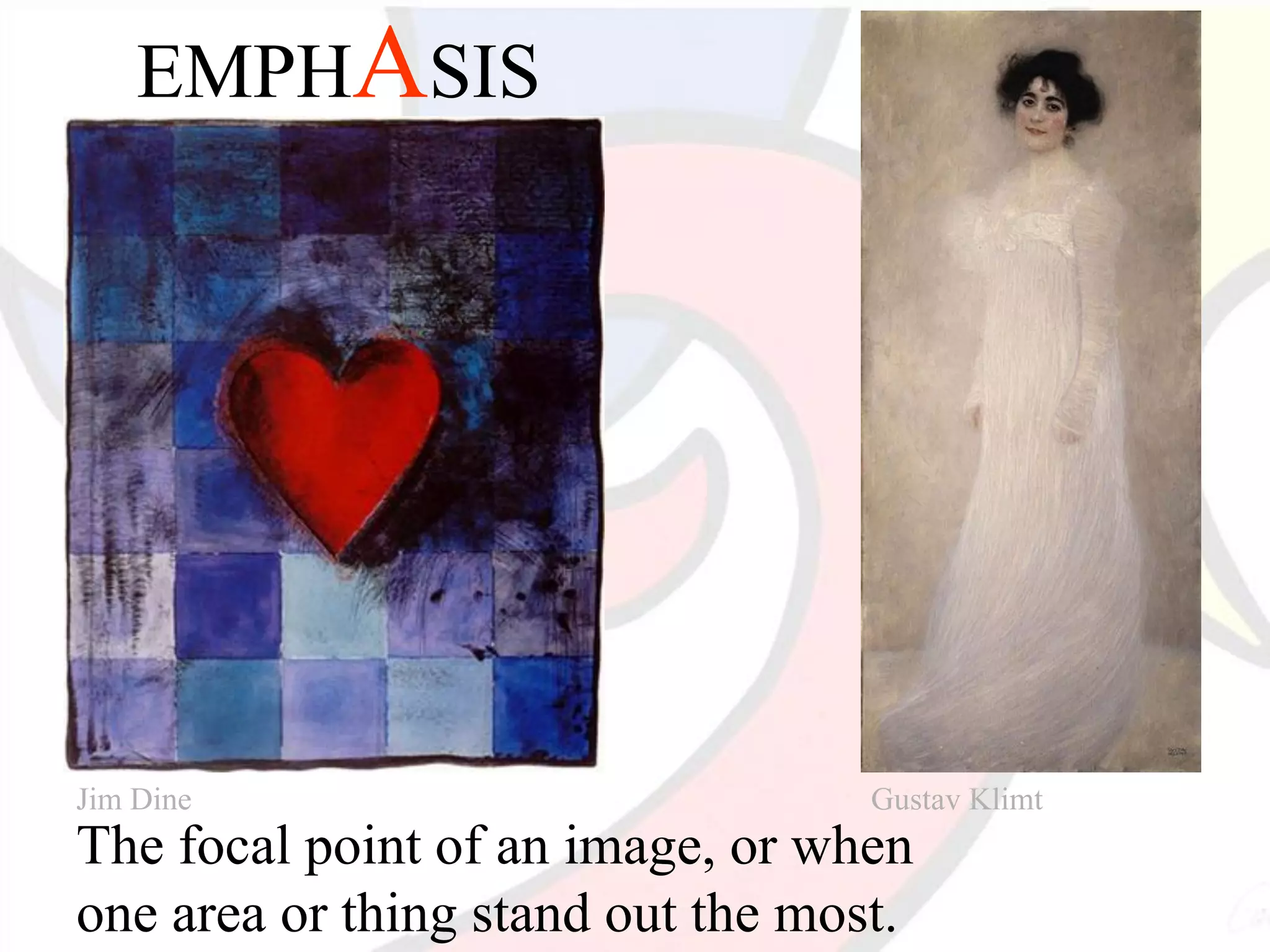
EMPHASIS
The focal point of an image, or when
one area or thing stand out the most.
Jim Dine Gustav Klimt
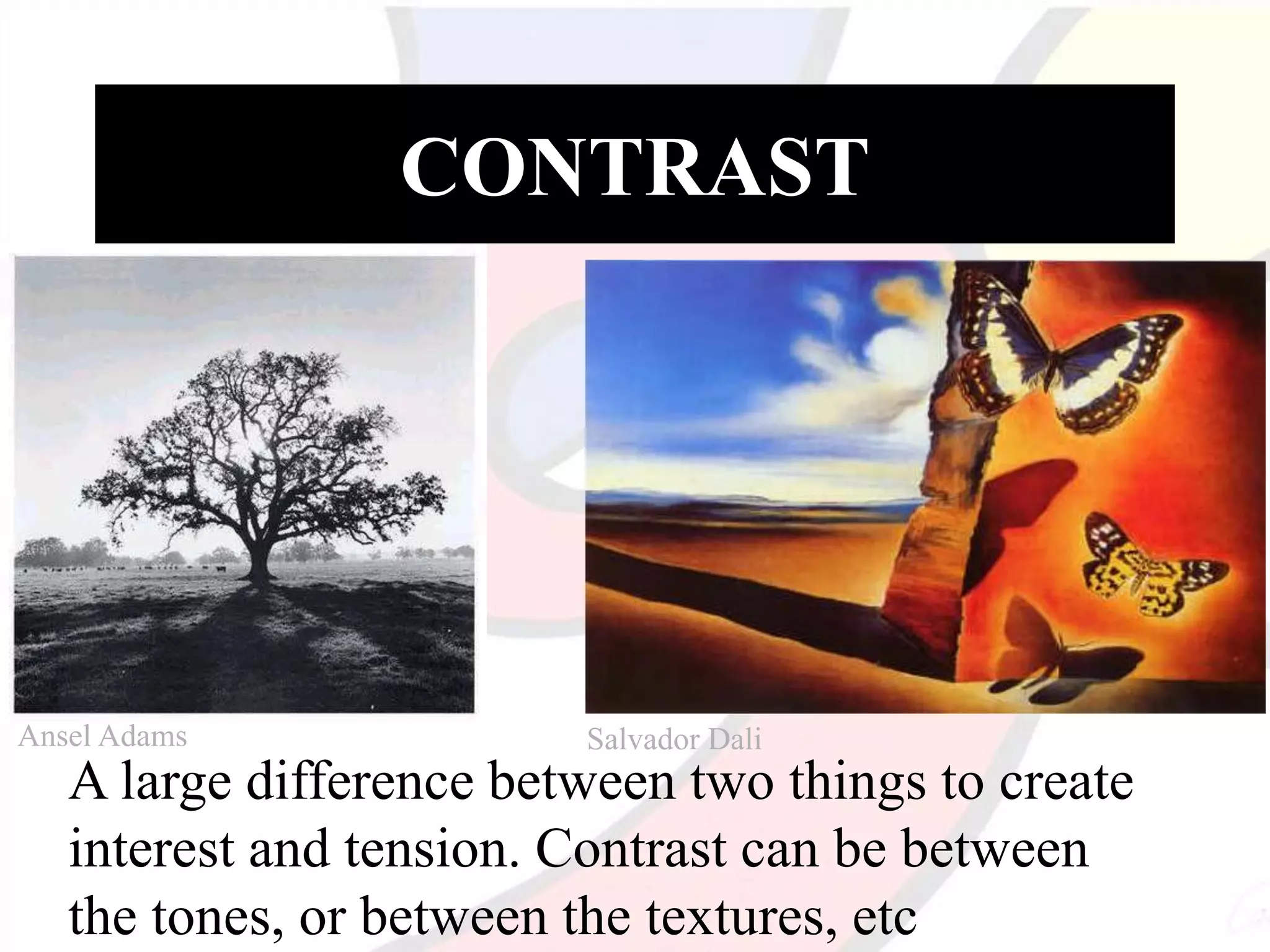
CONTRAST
A large difference between two things to create
interest and tension. Contrast can be between
the tones, or between the textures, etc
Ansel Adams Salvador Dali
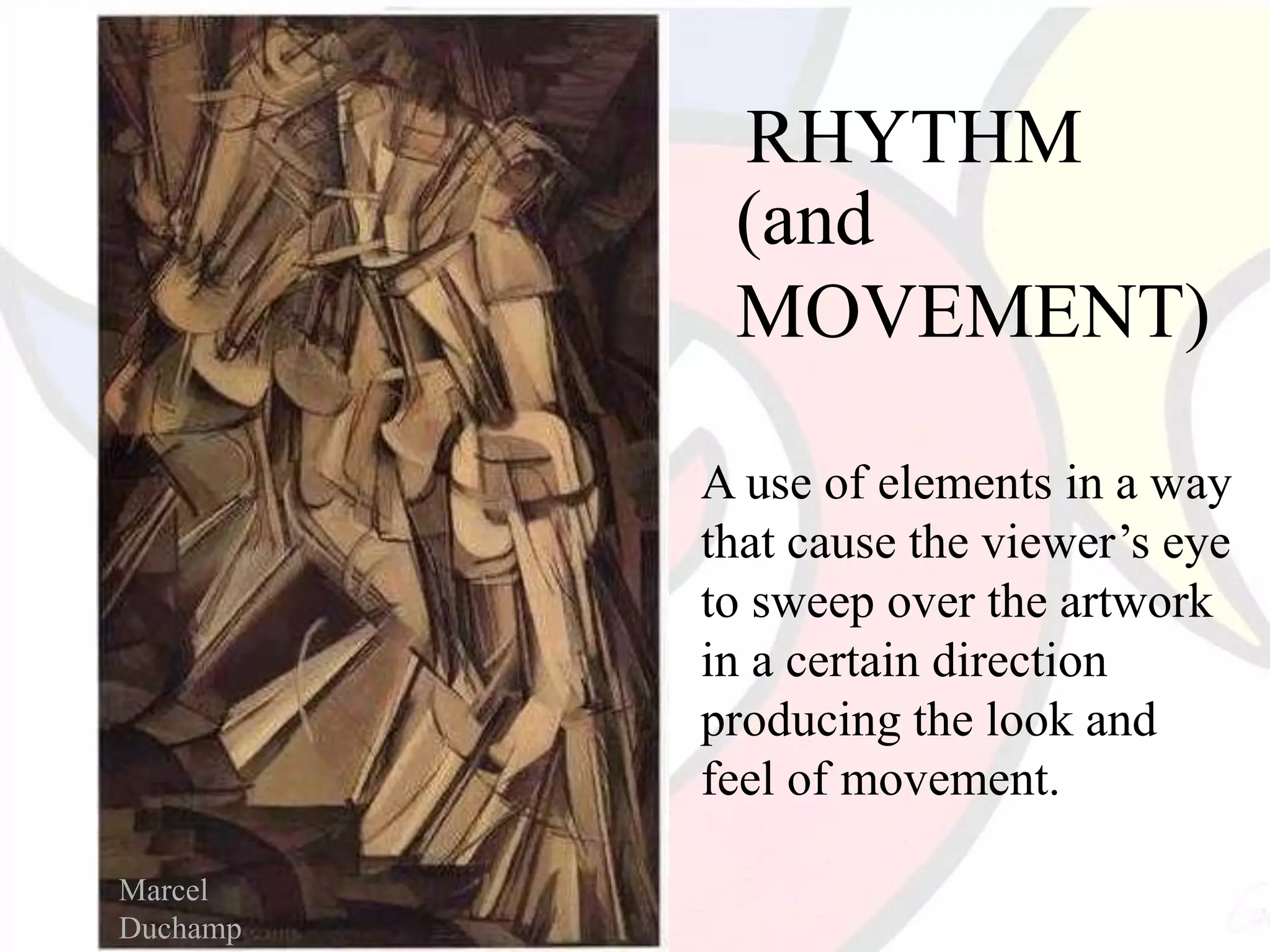
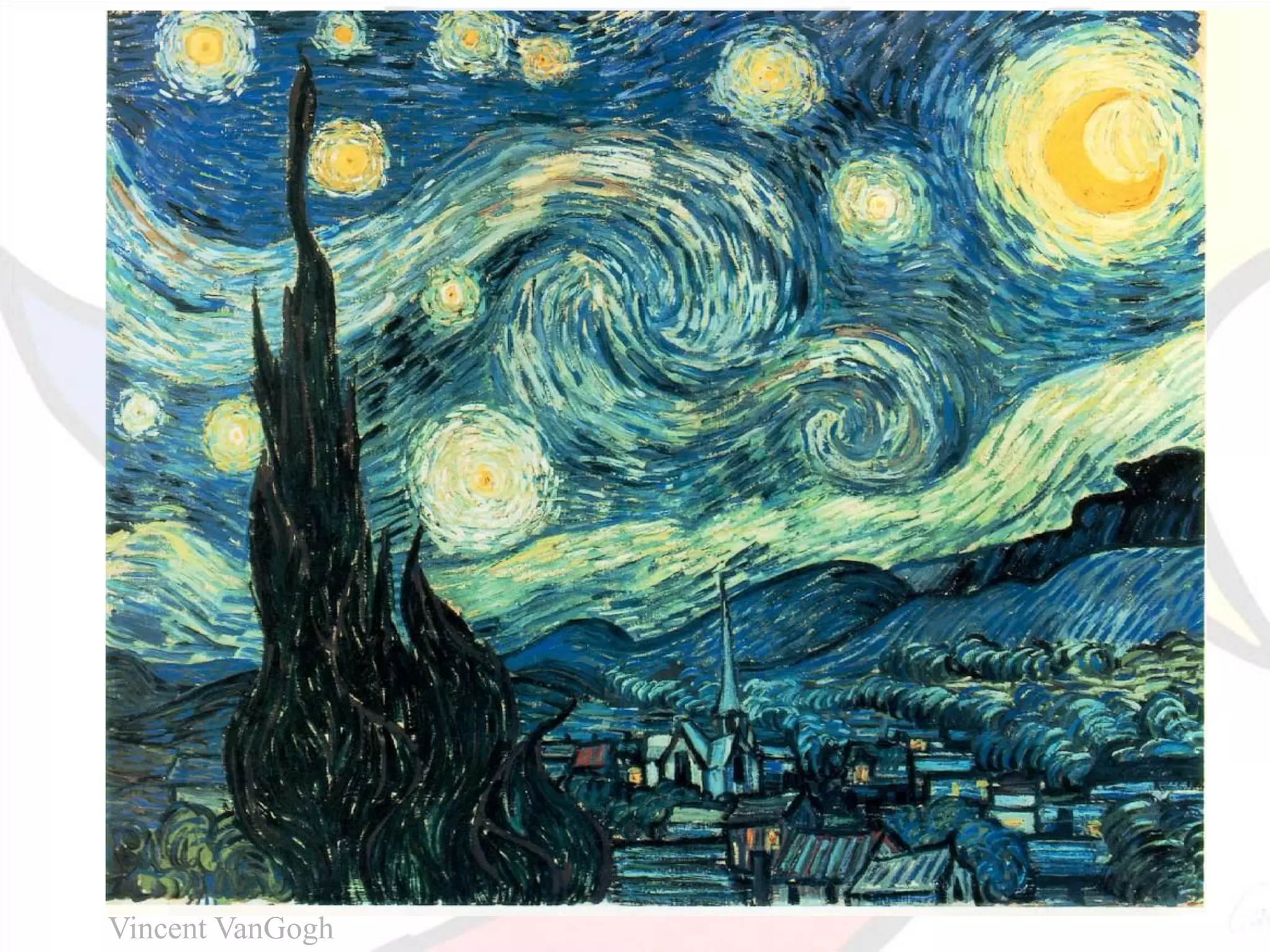
RHYTHM
(and
MOVEMENT)
A use of elements in a way
that cause the viewer’s eye
to sweep over the artwork
in a certain direction
producing the look and
feel of movement.
Marcel
Duchamp
Vincent VanGogh
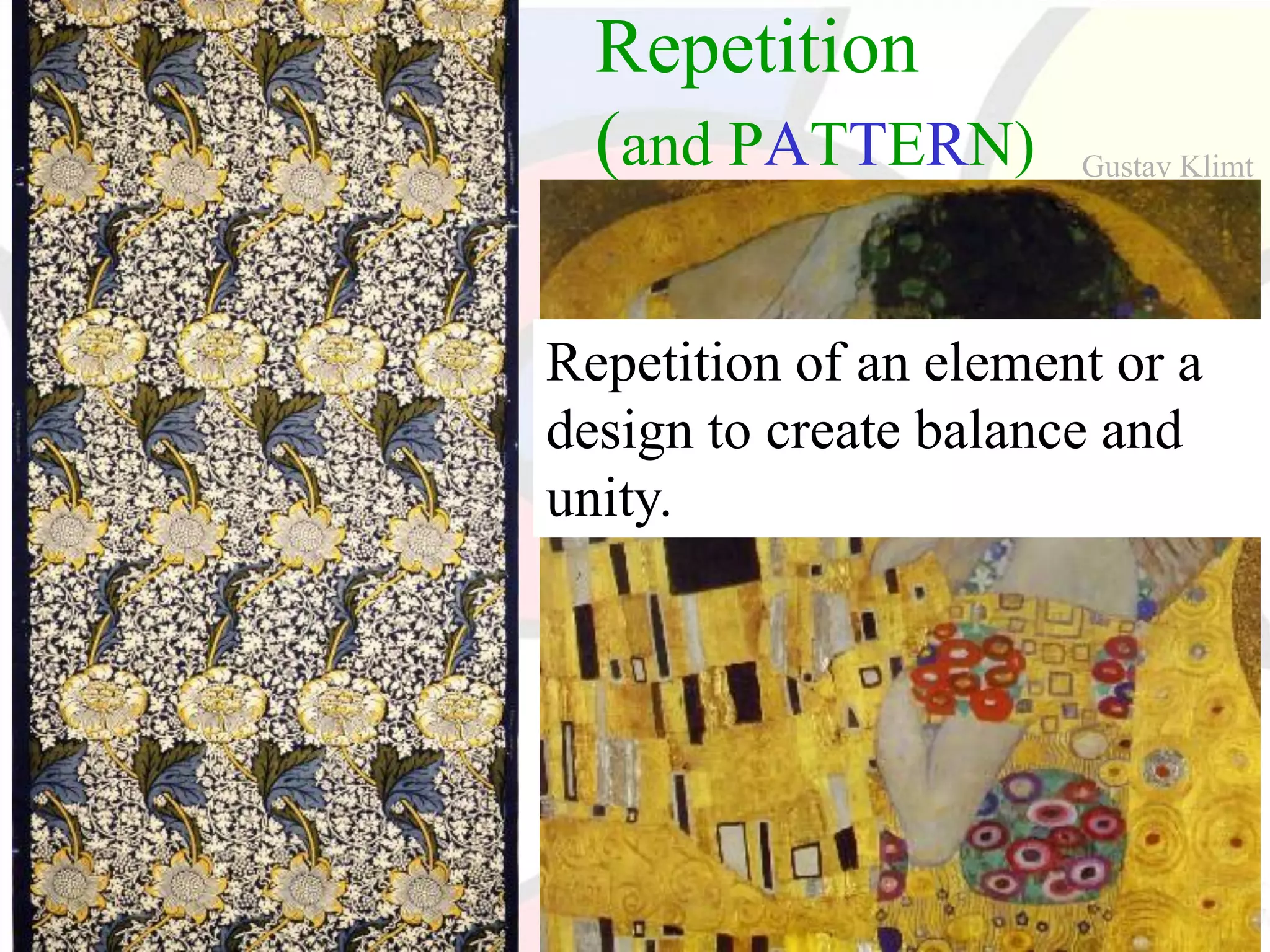
Repetition
(and PATTERN)
Repetition of an element or a
design to create balance and
unity.
Gustav Klimt
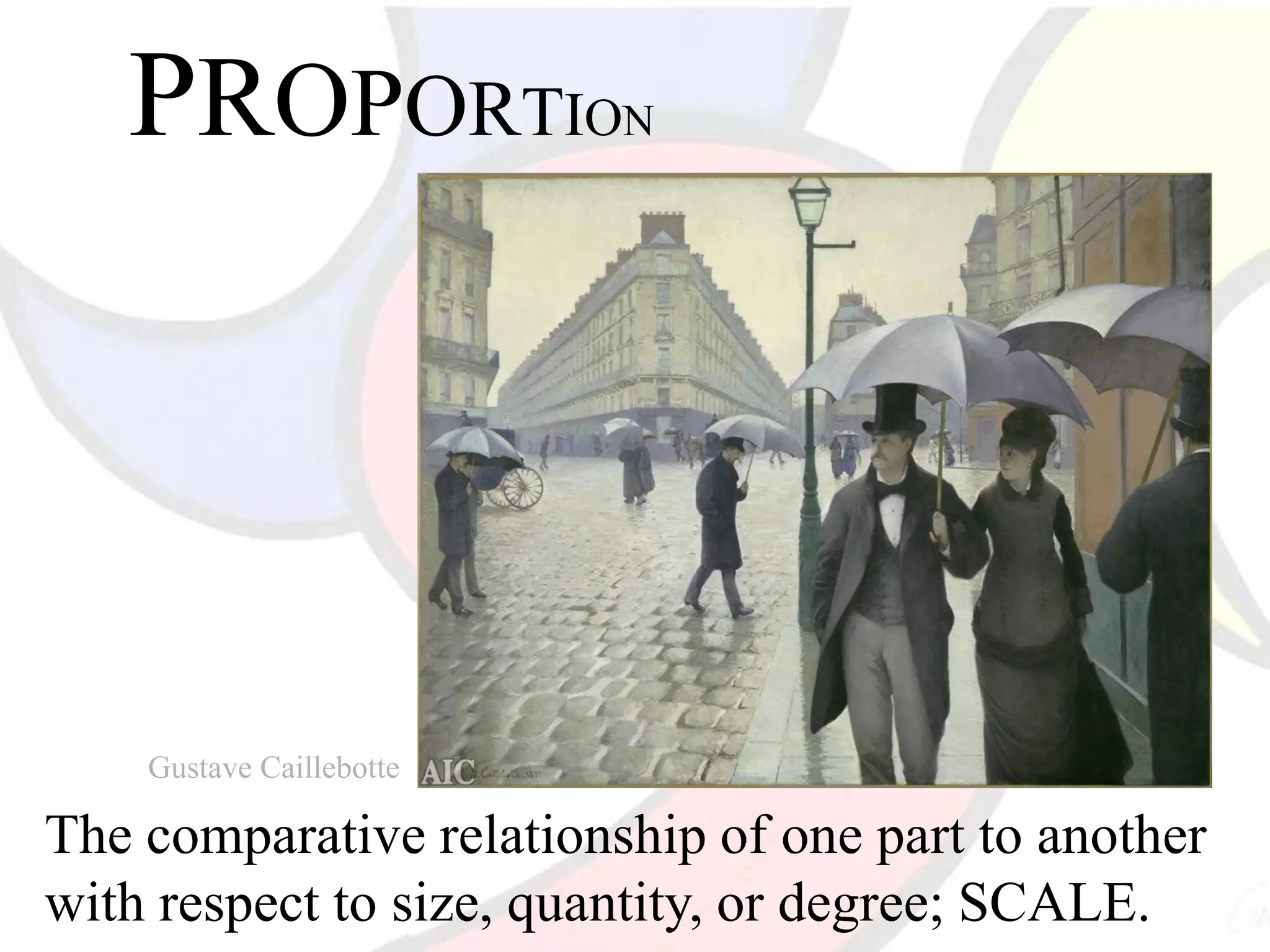
PROPORTION
The comparative relationship of one part to another
with respect to size, quantity, or degree; SCALE.
Gustave Caillebotte
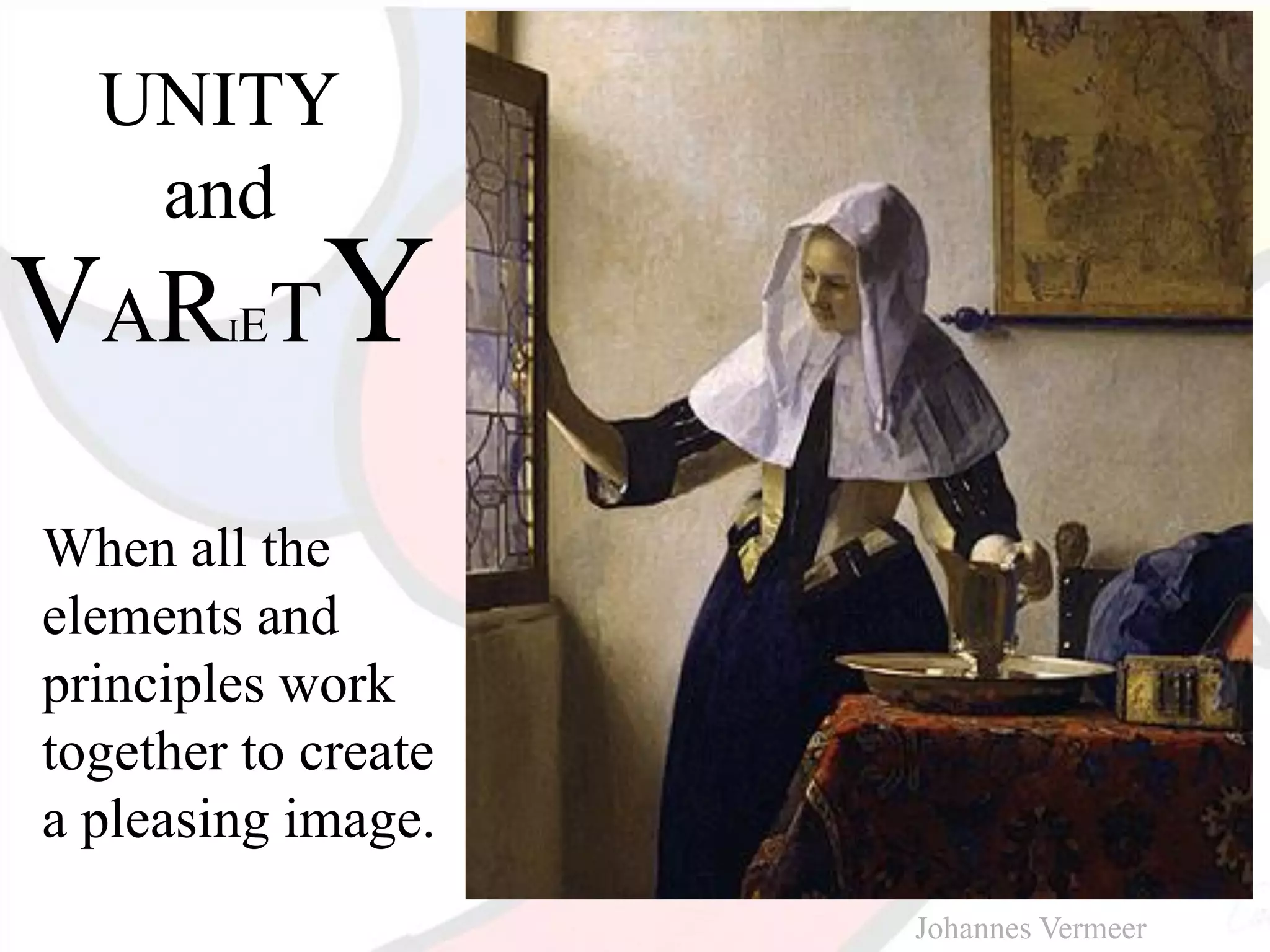
UNITY
and
When all the
elements and
principles work
together to create
a pleasing image.
Johannes Vermeer
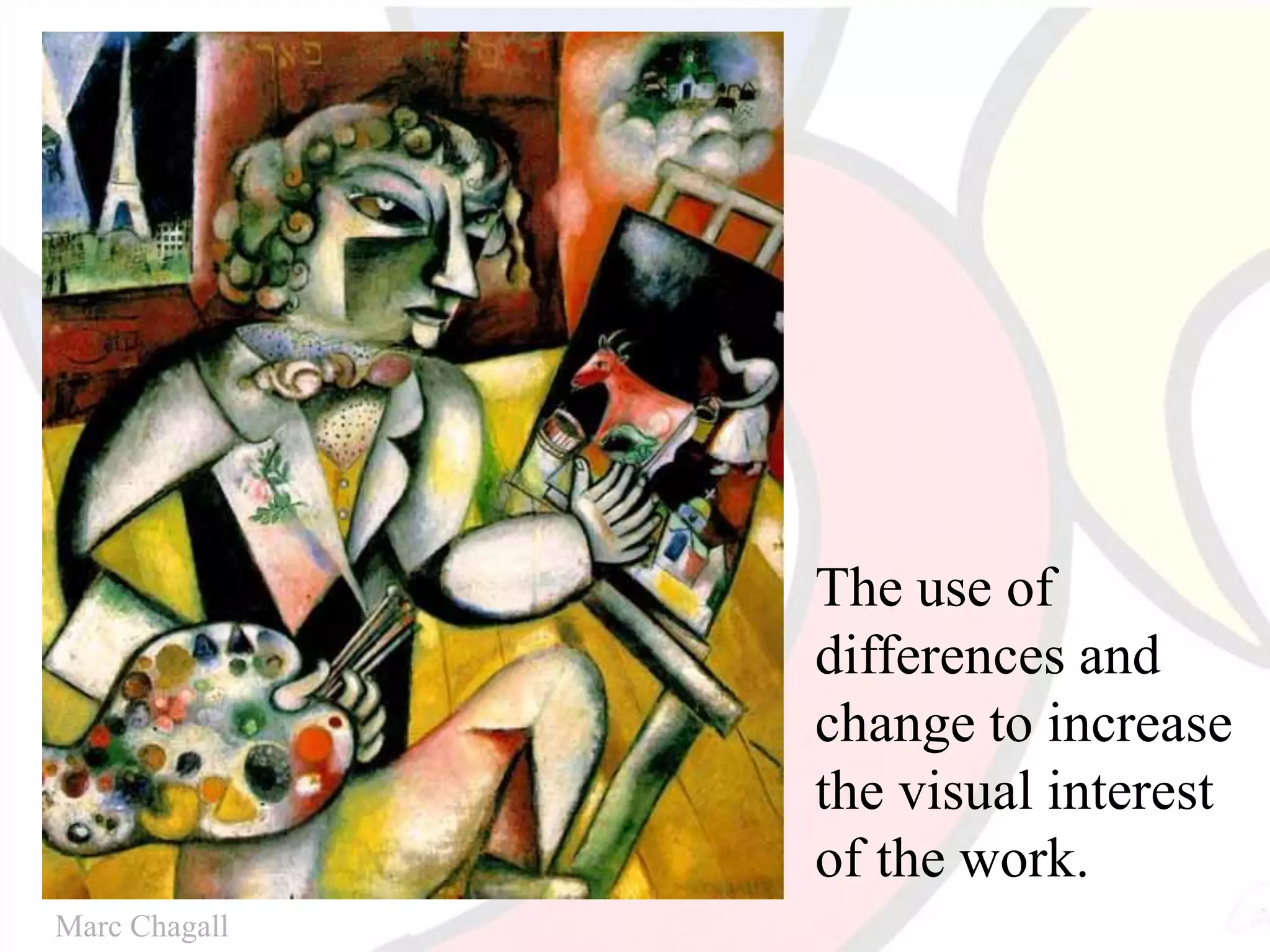
VARIETY
The use of
differences and
change to increase
the visual interest
of the work.
Marc Chagall

1.1 elements and principles of Art.pdf

  • 1.
  • 2.
    The Elements ofArt The building blocks or ingredients of art.
  • 3.
    LINE Ansel Adams GustaveCaillebotte A mark with length and direction. A continuous mark made on a surface by a moving point.
  • 4.
  • 5.
    SHAPE An enclosed areadefined and determined by other art elements; 2-dimensional. Joan Miro
  • 6.
  • 7.
    FORM A 3-dimensional object; orsomething in a 2-dimensional artwork that appears to be 3-dimensional. For example, a triangle, which is 2-dimensional, is a shape, but a pyramid, which is 3-dimensional, is a form. Jean Arp Lucien Freud
  • 8.
    TEXTURE The surface qualityor "feel" of an object, its smoothness, roughness, softness, etc. Textures may be actual or implied.
  • 9.
  • 10.
    VALUE The lightness ordarkness of a color. MC Escher Pablo Picasso
  • 11.
    COLOR Consists of Hue(another word for color), Intensity (brightness) and Value (lightness or darkness). Henri Matisse Alexander Calder
  • 12.
    Primary Colors Red, Yellow& Blue Secondary Colors Red + Yellow = Orange Yellow + Blue = Green Blue + Red = Violet Complementary Colors Red & Green Yellow & Violet Blue & Orange Tint is the mixture of a color with white, which increases lightness. Shade is the mixture of a color with black, which reduces lightness. Tone is produced either by the mixture of a color with gray, or by both tinting and shading.
  • 14.
    Robert Mapplethorpe Claude Monet S PA C E The distance or area between, around, above, below, or within things. Positive space (filled with something) and Negative space (empty areas). Foreground, Middle-ground and Background (creates DEPTH)
  • 15.
    The Principles ofArt What we use to organize the Elements of Art, or the tools to make art.
  • 16.
    BALANCE The way theelements are arranged to create a feeling of stability in a work. Alexander Calder
  • 17.
    Symmetrical Balance The partsof an image are organized so that one side mirrors the other. Leonardo DaVinci
  • 18.
    Asymmetrical Balance When oneside of a composition does not reflect the design of the other, but still balanced with the help of other devices. James Whistler
  • 19.
    Radial Balance Radial balanceis any type of balance based on a circle with its design extending. from center. A star, the iris around each pupil of your eyes, a wheel with spokes, and a daisy (among many flowers and other plant forms) are examples of radial balance.
  • 20.
    EMPHASIS The focal pointof an image, or when one area or thing stand out the most. Jim Dine Gustav Klimt
  • 21.
    CONTRAST A large differencebetween two things to create interest and tension. Contrast can be between the tones, or between the textures, etc Ansel Adams Salvador Dali
  • 22.
    RHYTHM (and MOVEMENT) A use ofelements in a way that cause the viewer’s eye to sweep over the artwork in a certain direction producing the look and feel of movement. Marcel Duchamp
  • 23.
  • 24.
    Repetition (and PATTERN) Repetition ofan element or a design to create balance and unity. Gustav Klimt
  • 25.
    PROPORTION The comparative relationshipof one part to another with respect to size, quantity, or degree; SCALE. Gustave Caillebotte
  • 26.
    UNITY and When all the elementsand principles work together to create a pleasing image. Johannes Vermeer VARIETY
  • 27.
    The use of differencesand change to increase the visual interest of the work. Marc Chagall