theater
Theater Arts
• The art of staging a play or drama.
• Also refers to the building designed to hold plays or
dramatic performances.
• It has changed throughout its history. The changes reflect
the growth and change of drama and culture.
• Ancient Greece is the birthplace of the THEATER.
Theater Arts
• All the arts are found in THEATER…such as,
Pelophonnesus, Greece
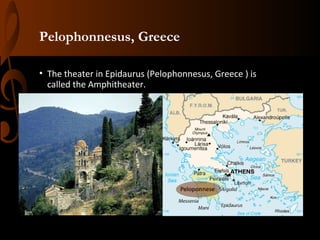
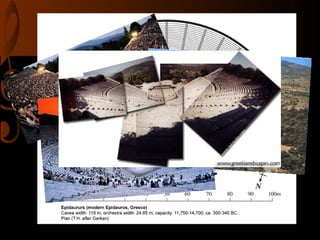
• The theater in Epidaurus (Pelophonnesus, Greece ) is
called the Amphitheater.
Epidaurus
• Is a small city in ancient Greece.
• It is located somewhere in the Saronic Gulf and reputed to
be the birthplace of
Asklepios - The healer and son of Apollo.
• The modern town is now known as Epidauros.
• Epidaurus is known both for its huge theater and as the
most celebrated healing center of the Classical World.
Amphitheater
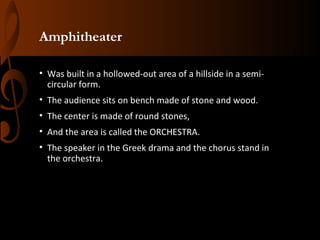
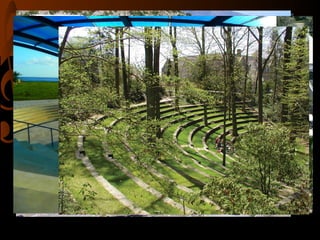
• Was built in a hollowed-out area of a hillside in a semicircular form.
• The audience sits on bench made of stone and wood.
• The center is made of round stones,
• And the area is called the ORCHESTRA.
• The speaker in the Greek drama and the chorus stand in
the orchestra.
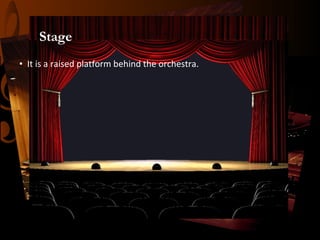
Stage
• It is a raised platform behind the orchestra.
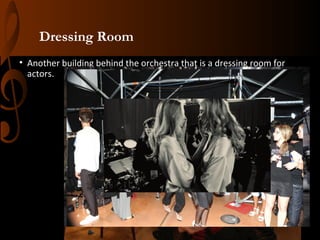
Dressing Room
• Another building behind the orchestra that is a dressing room for
actors.
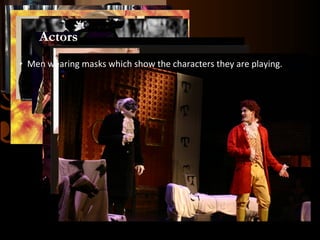
Actors
• Men wearing masks which show the characters they are playing.
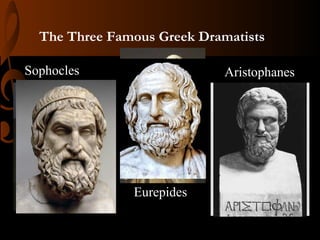
The Three Famous Greek Dramatists
Sophocles

Aristophanes

Eurepides
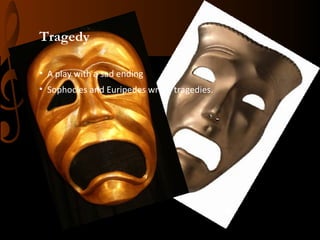
Tragedy
• A play with a sad ending
• Sophocles and Euripedes wrote tragedies.
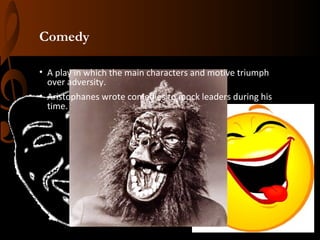
Comedy
• A play in which the main characters and motive triumph
over adversity.
• Aristophanes wrote comedies to mock leaders during his
time.
Two Theater Forms
• Pagan or Aboriginal Myth (Pre-Christian Era)
• Christian Form
Pagan or Aboriginal Myth
(Pre-Christian Era)
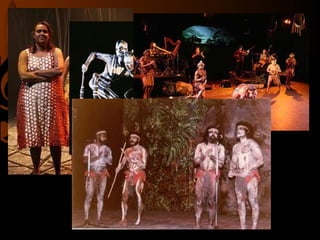
• The aboriginal theater involves the community gathered in
the open under the sky.
• Nature provides the backdrop and scenery.
• The action is interdisciplinary.
• The entire performance is unscripted.
• The actors use masks, dances, songs and rituals.
• The community interferes and shapes things according
their needs.
• Stories are told and reflected the values and world view of
the people.
Christian Form
• It is focused on the actor.
• The community becomes the listener.
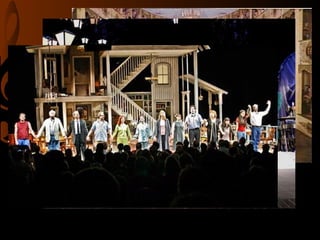
• The performances are moved indoors on a stage raised
above the people under artificial lights.
• Words are the focus of attention.
• Symbolic meaning is open to interpretation.
William Shakespeare of England
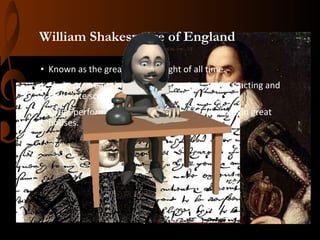
• Known as the greatest playwright of all time.
• Shakespearean theaters often requires artificial acting and
elaborate scenography.
• Often performed by students at universities and in great
houses.
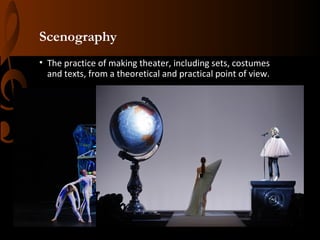
Scenography
• The practice of making theater, including sets, costumes
and texts, from a theoretical and practical point of view.
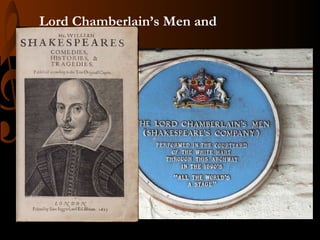
Lord Chamberlain’s Men and
the King’s Men
• Most notably sought-after theater companies during the
17th century.
• The same companies where William Shakespeare first
gained extensive experience in theater, both as an actor
and a playwright.
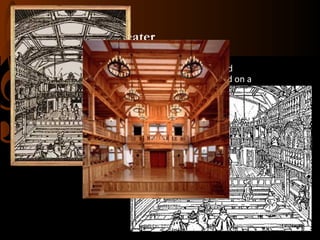
Blackfriars Theater
• The first private indoor theater where the Lord
Chamberlain’s Men and King’s Men performed on a
regular basis.
• Notorious for charging high admission fees to ensure that
it’s audiences were sophisticated.
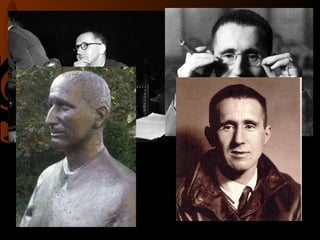
Bertolt Brecht of Germany
• Influential German dramatist, director and poet of the 20th
century.
• Known for his learning plays.
• Required impromptu actors to come up on stage, rather
than allow them to be just passive spectators.
• Challenged the audience through his alienation technique.
• Used slogan-projected back walls, and sometimes
characters carrying picket sign, or stood with their back to
the audience as an unconventional way of communicating
or expressing the drama.
Bertolt Brecht of Germany
• His style belongs to modernism.
• Also believed to have pioneered contemporary
postmodernism in theater.
• Incorporated multimedia into the semiotics of theater.
• Pioneered in the establishment of a uniquely political
theater involving the audience in meaning-making.
Semiotics
• The study of signs and symbols in different fields especially
language.

Theater

  • 1.
  • 2.
    Theater Arts • Theart of staging a play or drama. • Also refers to the building designed to hold plays or dramatic performances. • It has changed throughout its history. The changes reflect the growth and change of drama and culture. • Ancient Greece is the birthplace of the THEATER.
  • 3.
    Theater Arts • Allthe arts are found in THEATER…such as,
  • 4.
    Pelophonnesus, Greece • Thetheater in Epidaurus (Pelophonnesus, Greece ) is called the Amphitheater.
  • 5.
    Epidaurus • Is asmall city in ancient Greece. • It is located somewhere in the Saronic Gulf and reputed to be the birthplace of Asklepios - The healer and son of Apollo. • The modern town is now known as Epidauros. • Epidaurus is known both for its huge theater and as the most celebrated healing center of the Classical World.
  • 7.
    Amphitheater • Was builtin a hollowed-out area of a hillside in a semicircular form. • The audience sits on bench made of stone and wood. • The center is made of round stones, • And the area is called the ORCHESTRA. • The speaker in the Greek drama and the chorus stand in the orchestra.
  • 9.
    Stage • It isa raised platform behind the orchestra.
  • 10.
    Dressing Room • Anotherbuilding behind the orchestra that is a dressing room for actors.
  • 11.
    Actors • Men wearingmasks which show the characters they are playing.
  • 12.
    The Three FamousGreek Dramatists Sophocles Aristophanes Eurepides
  • 13.
    Tragedy • A playwith a sad ending • Sophocles and Euripedes wrote tragedies.
  • 14.
    Comedy • A playin which the main characters and motive triumph over adversity. • Aristophanes wrote comedies to mock leaders during his time.
  • 15.
    Two Theater Forms •Pagan or Aboriginal Myth (Pre-Christian Era) • Christian Form
  • 16.
    Pagan or AboriginalMyth (Pre-Christian Era) • The aboriginal theater involves the community gathered in the open under the sky. • Nature provides the backdrop and scenery. • The action is interdisciplinary. • The entire performance is unscripted. • The actors use masks, dances, songs and rituals. • The community interferes and shapes things according their needs. • Stories are told and reflected the values and world view of the people.
  • 18.
    Christian Form • Itis focused on the actor. • The community becomes the listener. • The performances are moved indoors on a stage raised above the people under artificial lights. • Words are the focus of attention. • Symbolic meaning is open to interpretation.
  • 20.
    William Shakespeare ofEngland • Known as the greatest playwright of all time. • Shakespearean theaters often requires artificial acting and elaborate scenography. • Often performed by students at universities and in great houses.
  • 21.
    Scenography • The practiceof making theater, including sets, costumes and texts, from a theoretical and practical point of view.
  • 22.
    Lord Chamberlain’s Menand the King’s Men • Most notably sought-after theater companies during the 17th century. • The same companies where William Shakespeare first gained extensive experience in theater, both as an actor and a playwright.
  • 23.
    Blackfriars Theater • Thefirst private indoor theater where the Lord Chamberlain’s Men and King’s Men performed on a regular basis. • Notorious for charging high admission fees to ensure that it’s audiences were sophisticated.
  • 24.
    Bertolt Brecht ofGermany • Influential German dramatist, director and poet of the 20th century. • Known for his learning plays. • Required impromptu actors to come up on stage, rather than allow them to be just passive spectators. • Challenged the audience through his alienation technique. • Used slogan-projected back walls, and sometimes characters carrying picket sign, or stood with their back to the audience as an unconventional way of communicating or expressing the drama.
  • 25.
    Bertolt Brecht ofGermany • His style belongs to modernism. • Also believed to have pioneered contemporary postmodernism in theater. • Incorporated multimedia into the semiotics of theater. • Pioneered in the establishment of a uniquely political theater involving the audience in meaning-making.
  • 27.
    Semiotics • The studyof signs and symbols in different fields especially language.