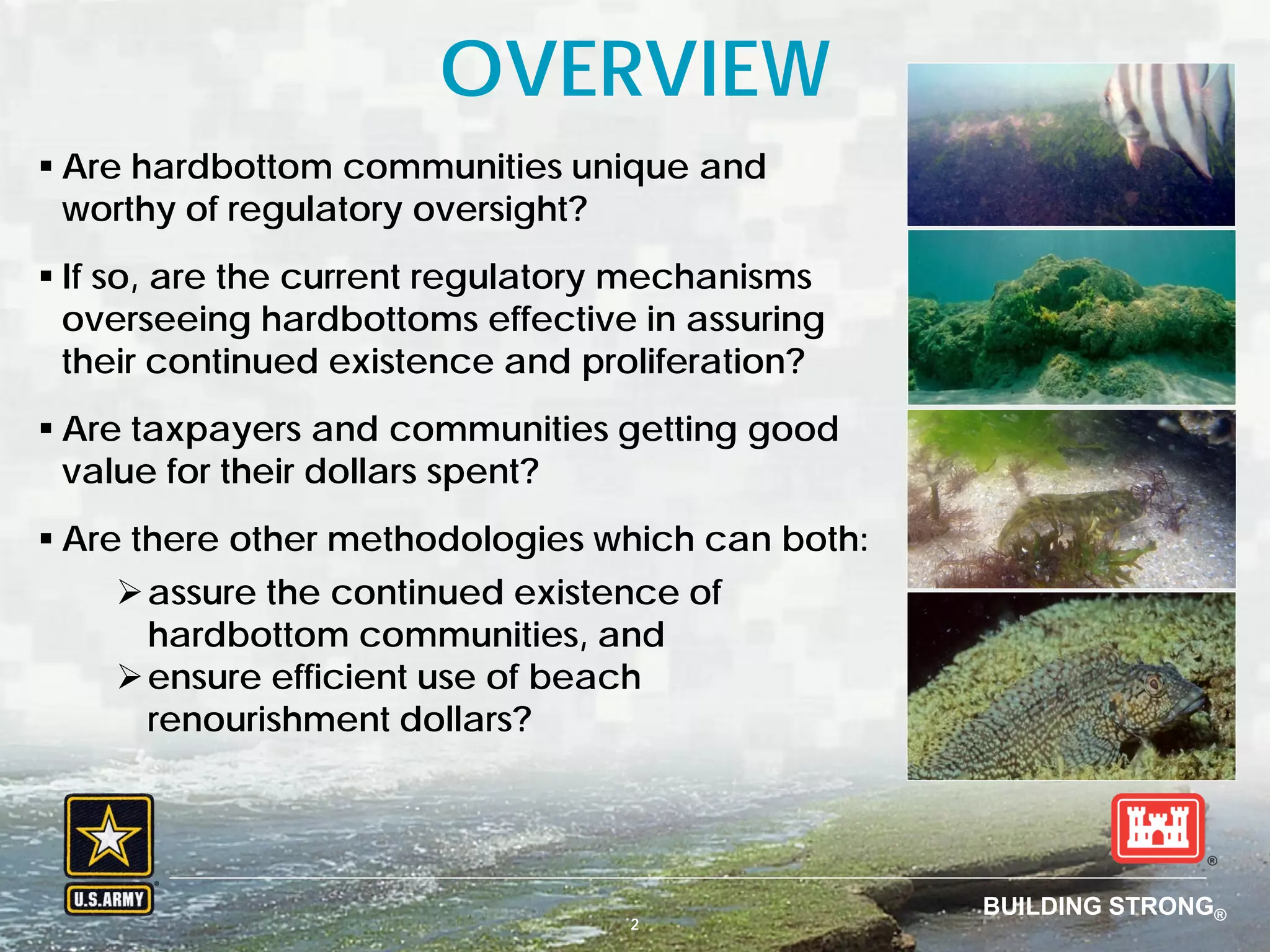
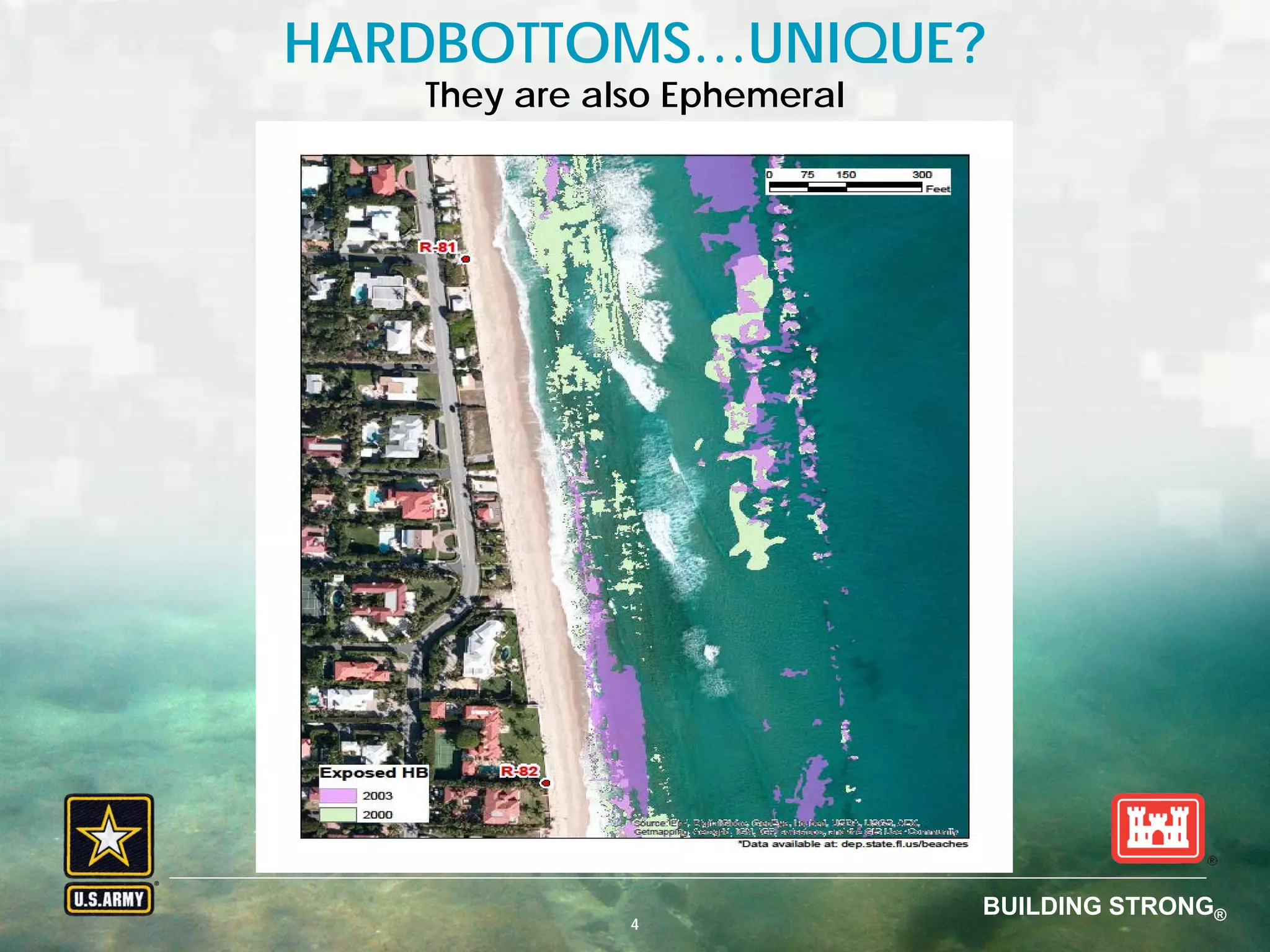
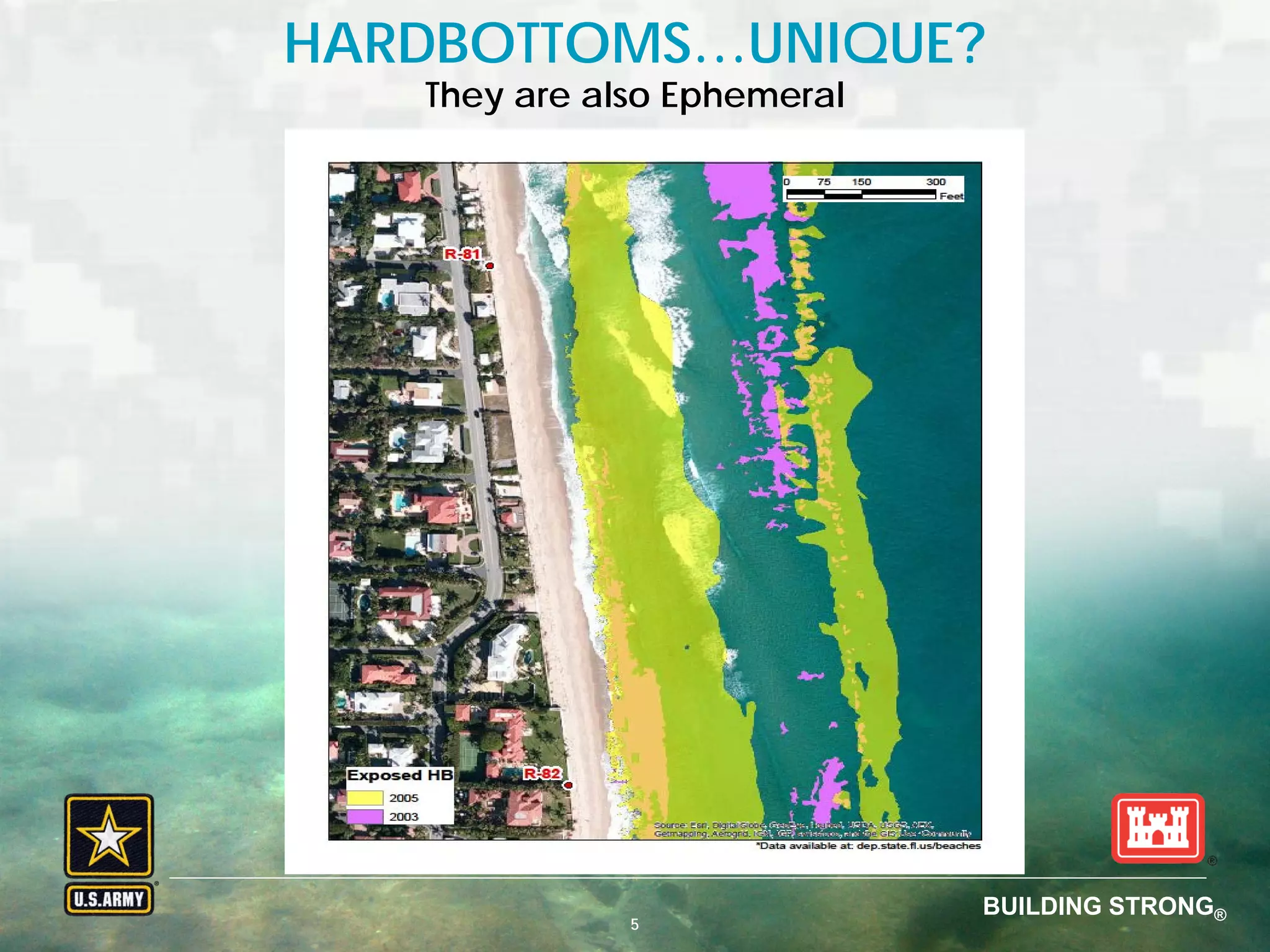
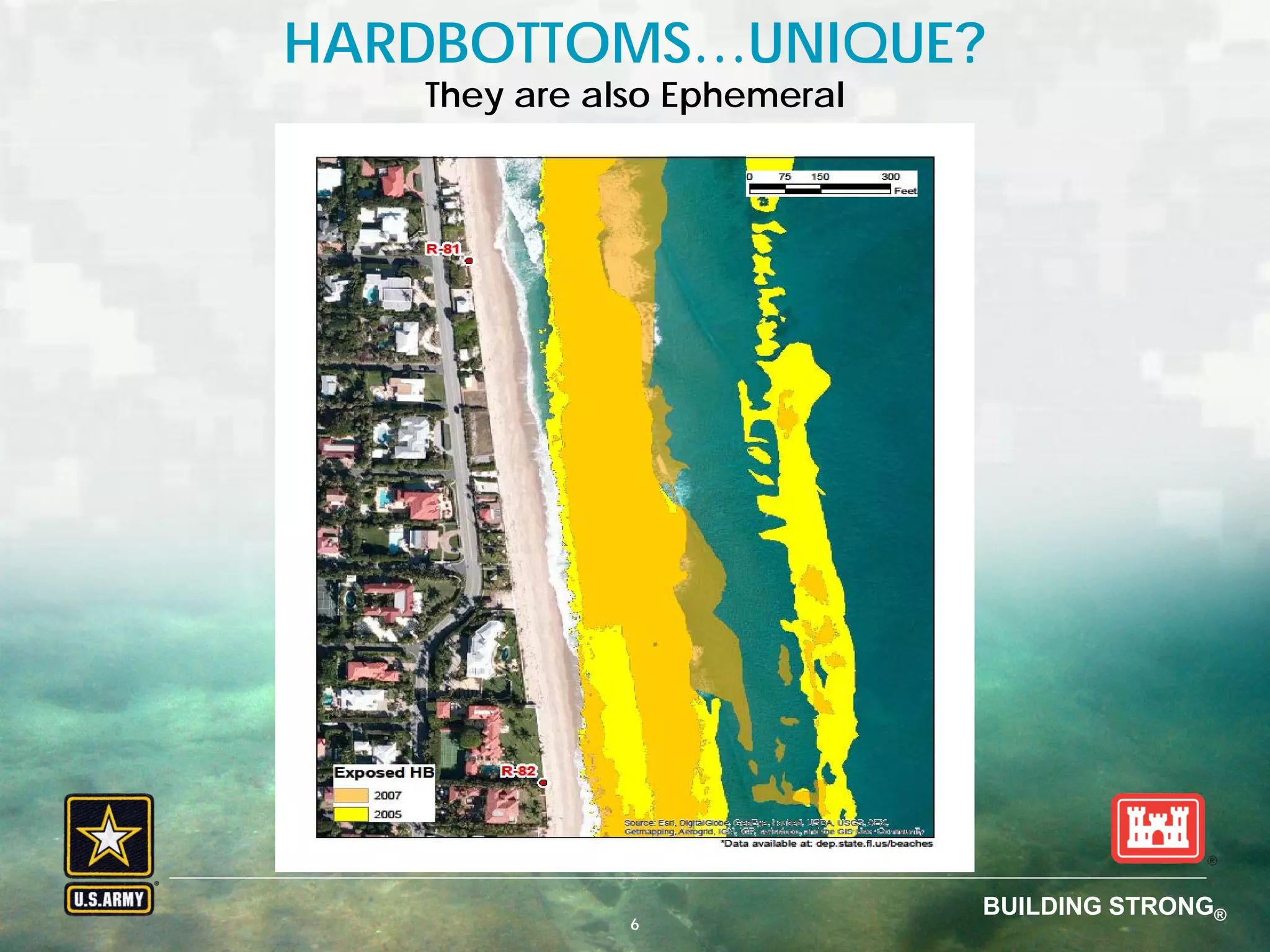
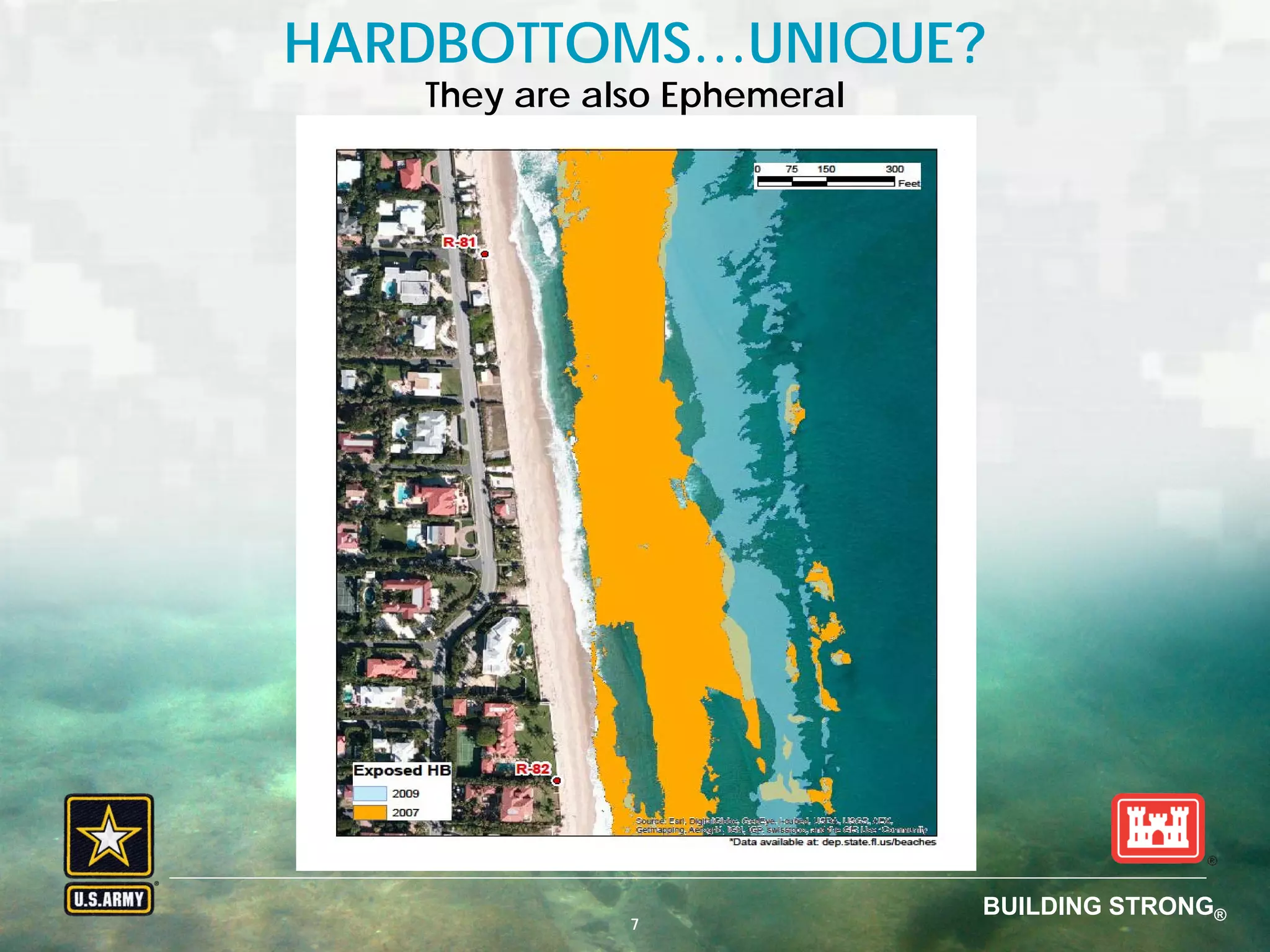
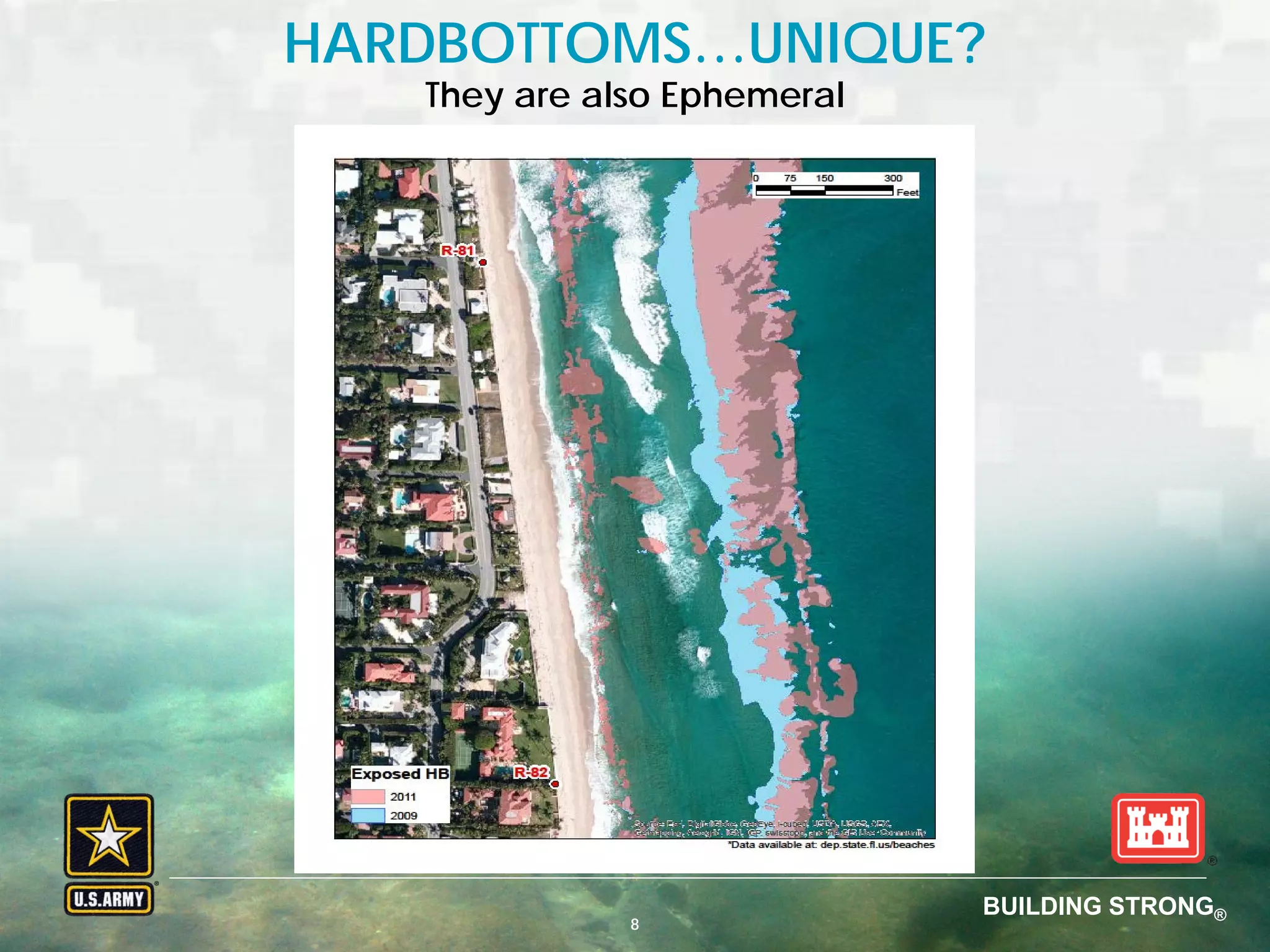
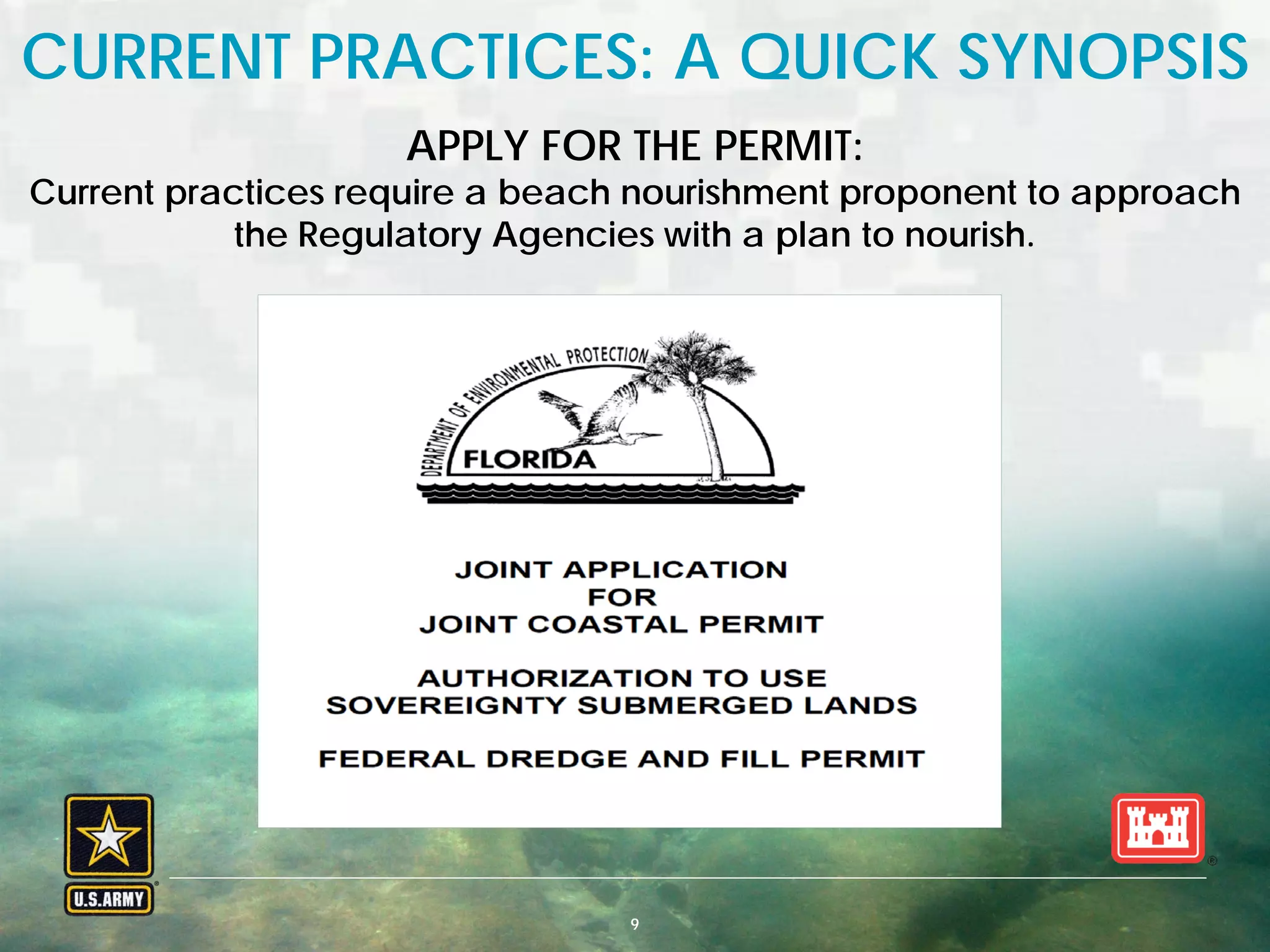
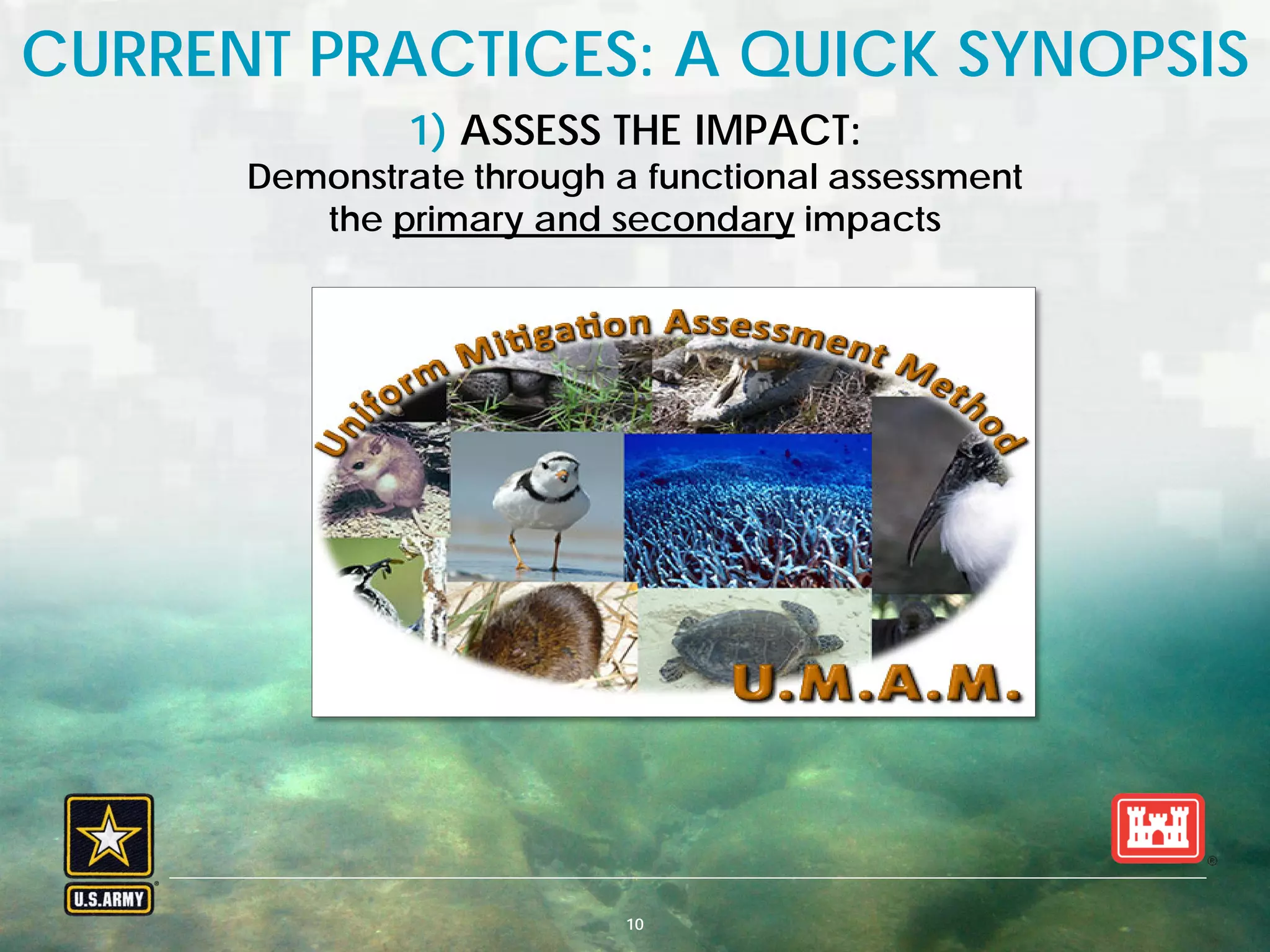
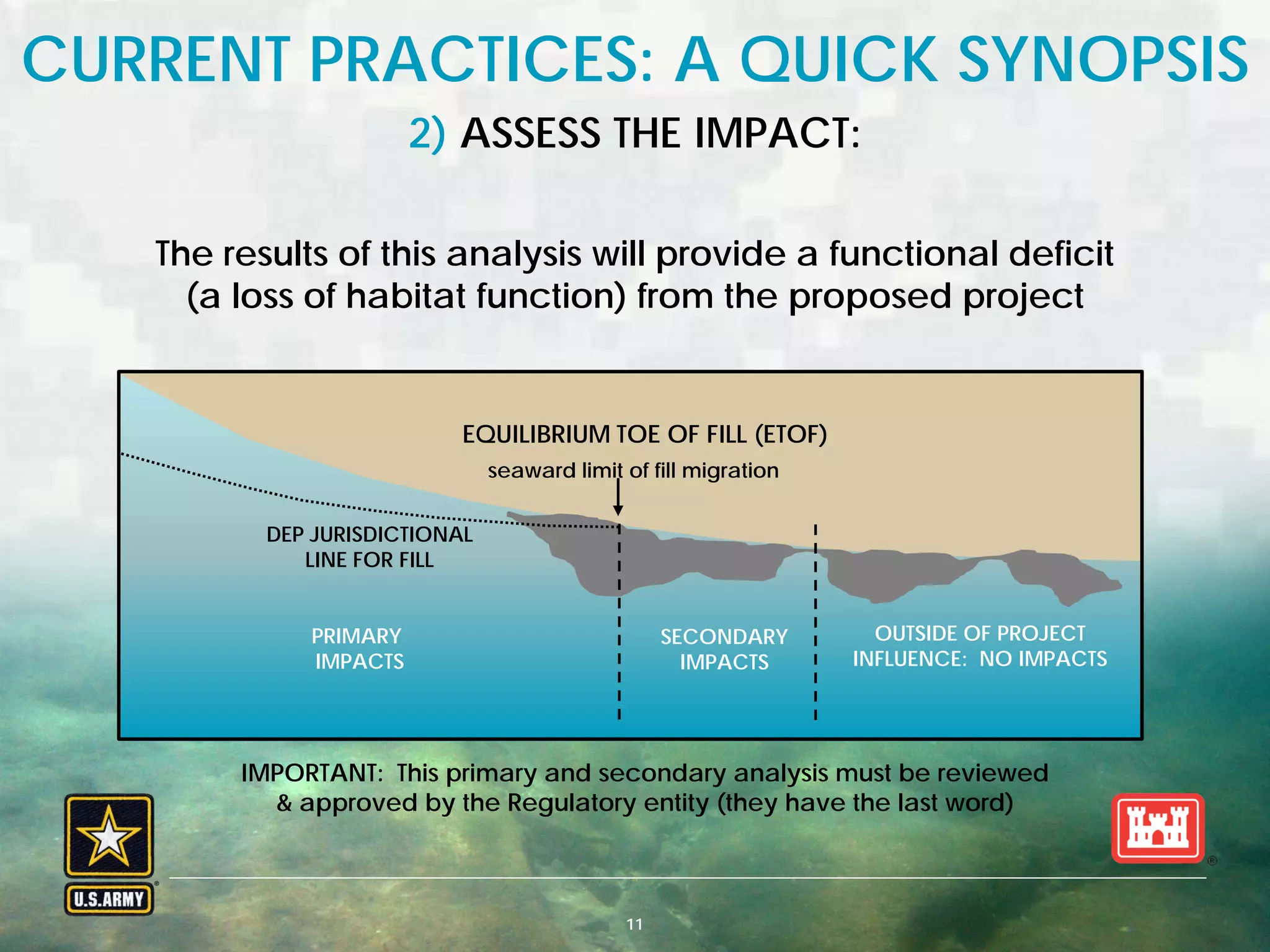
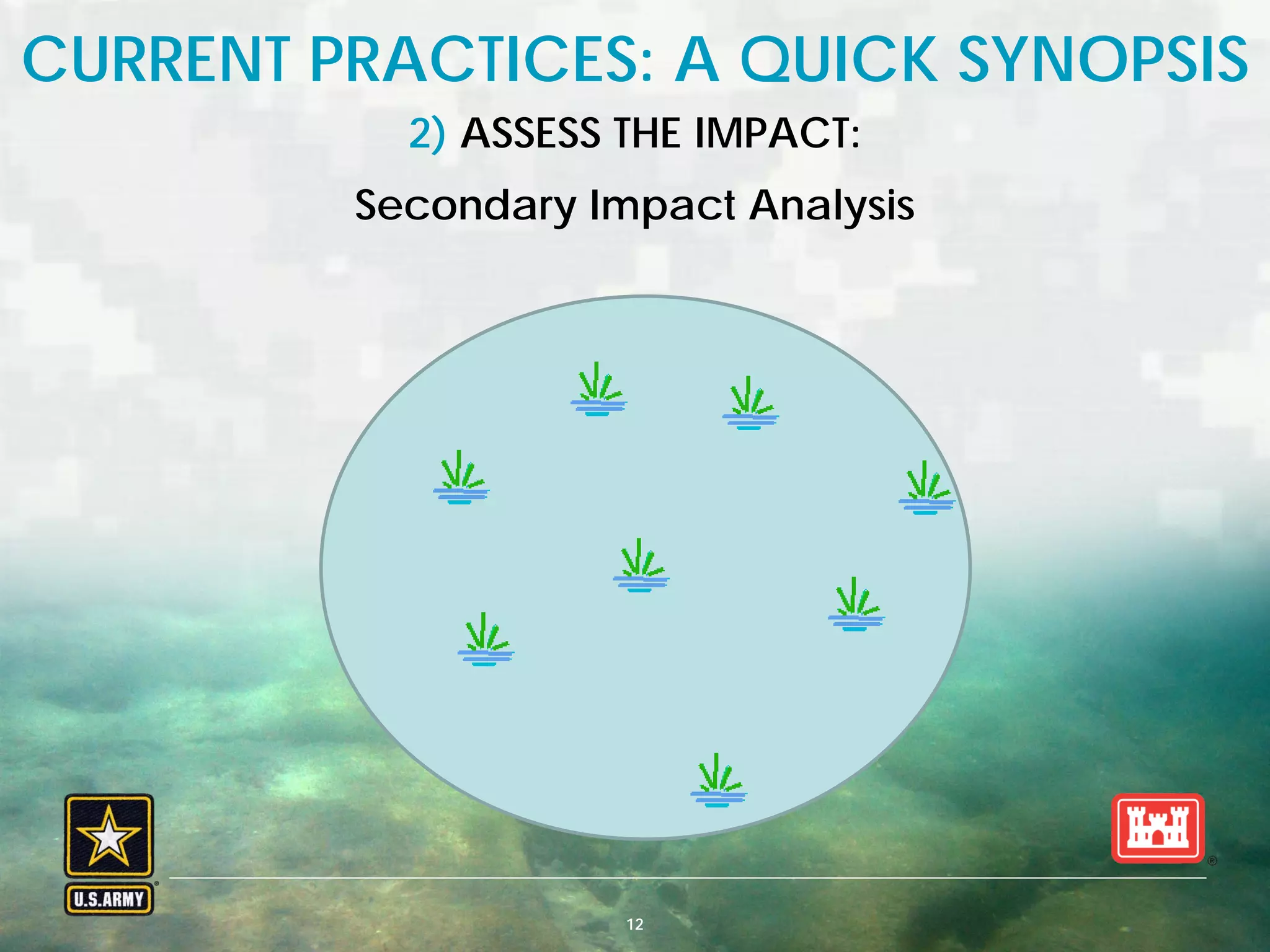
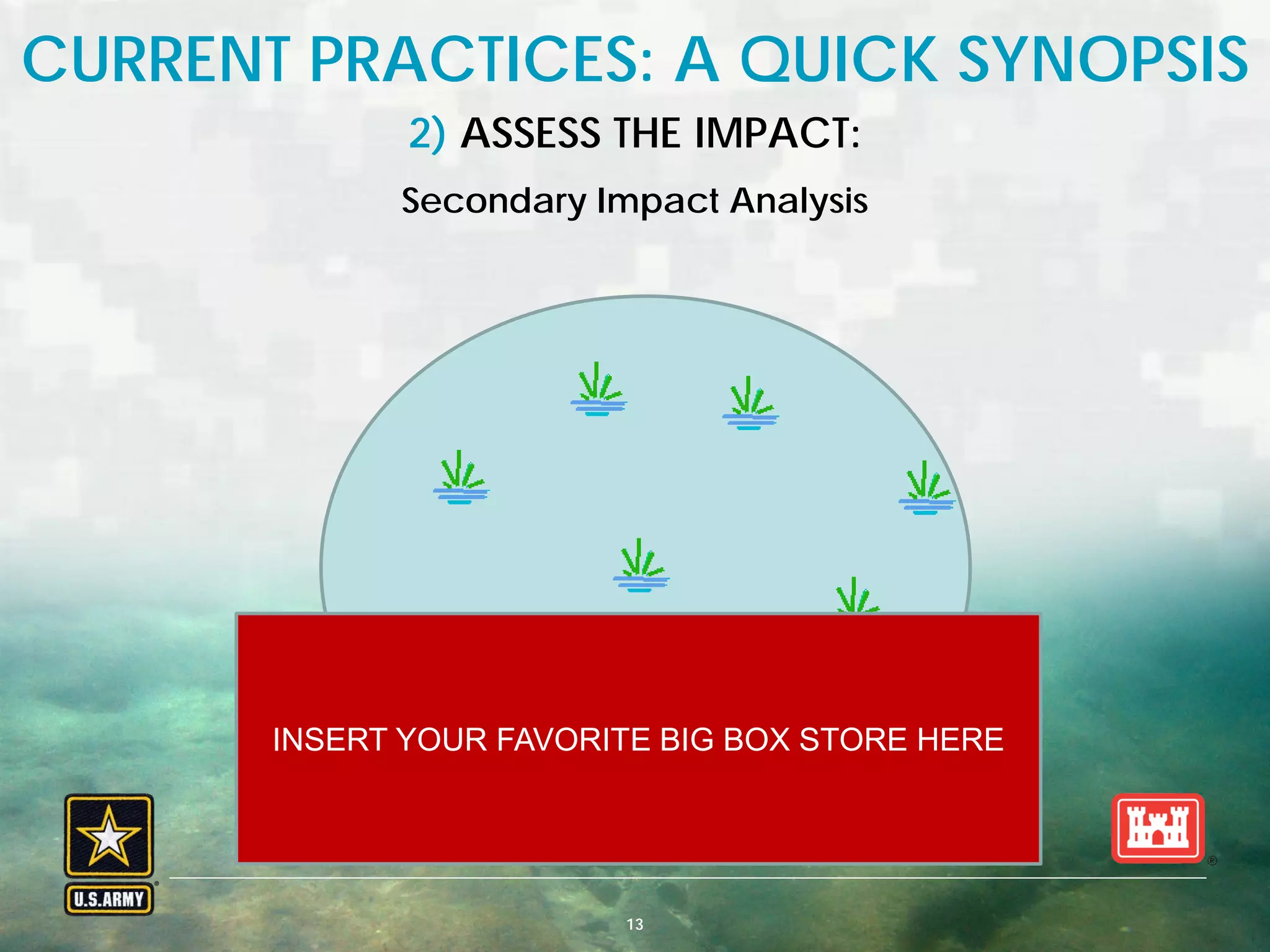
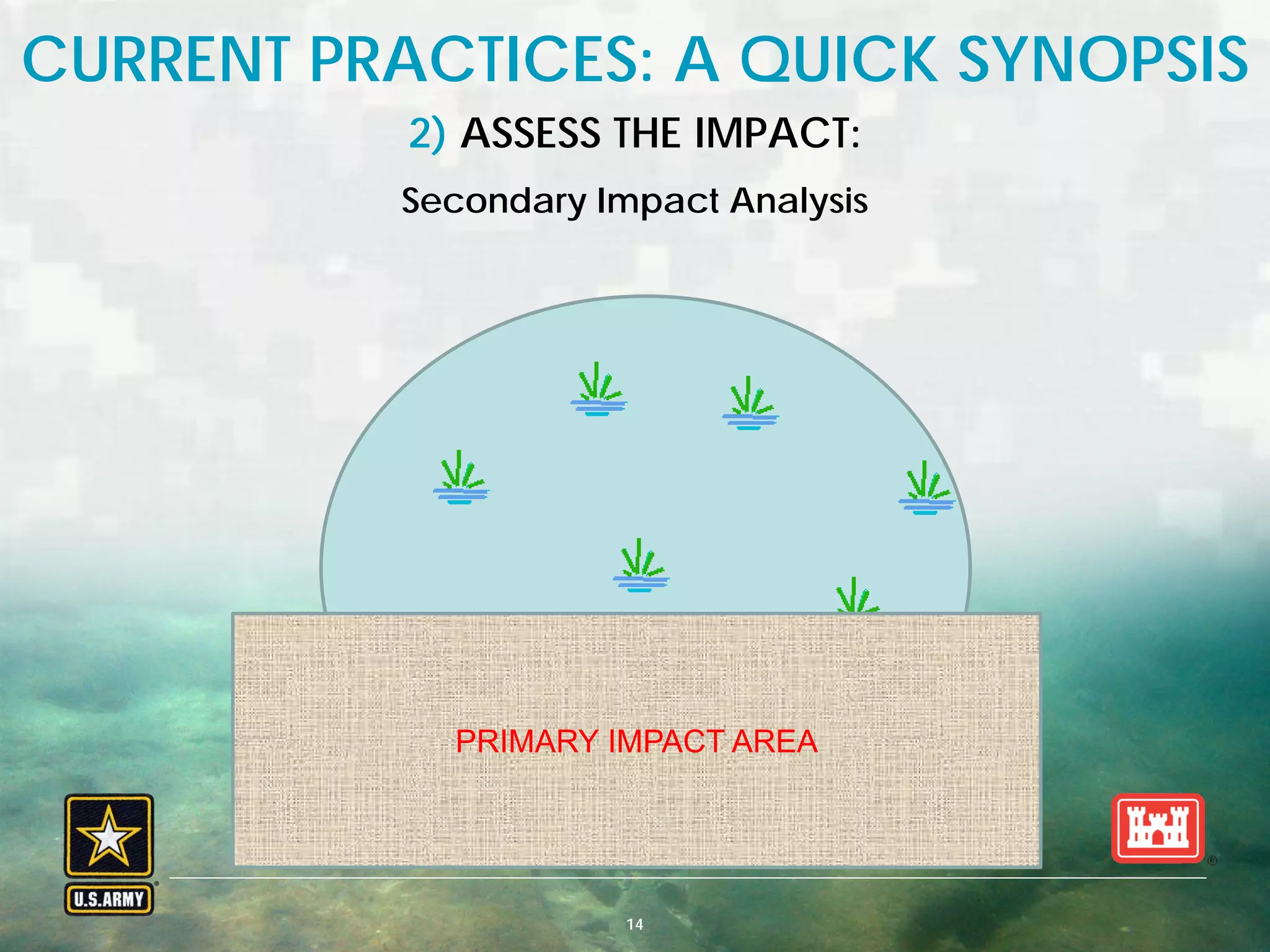
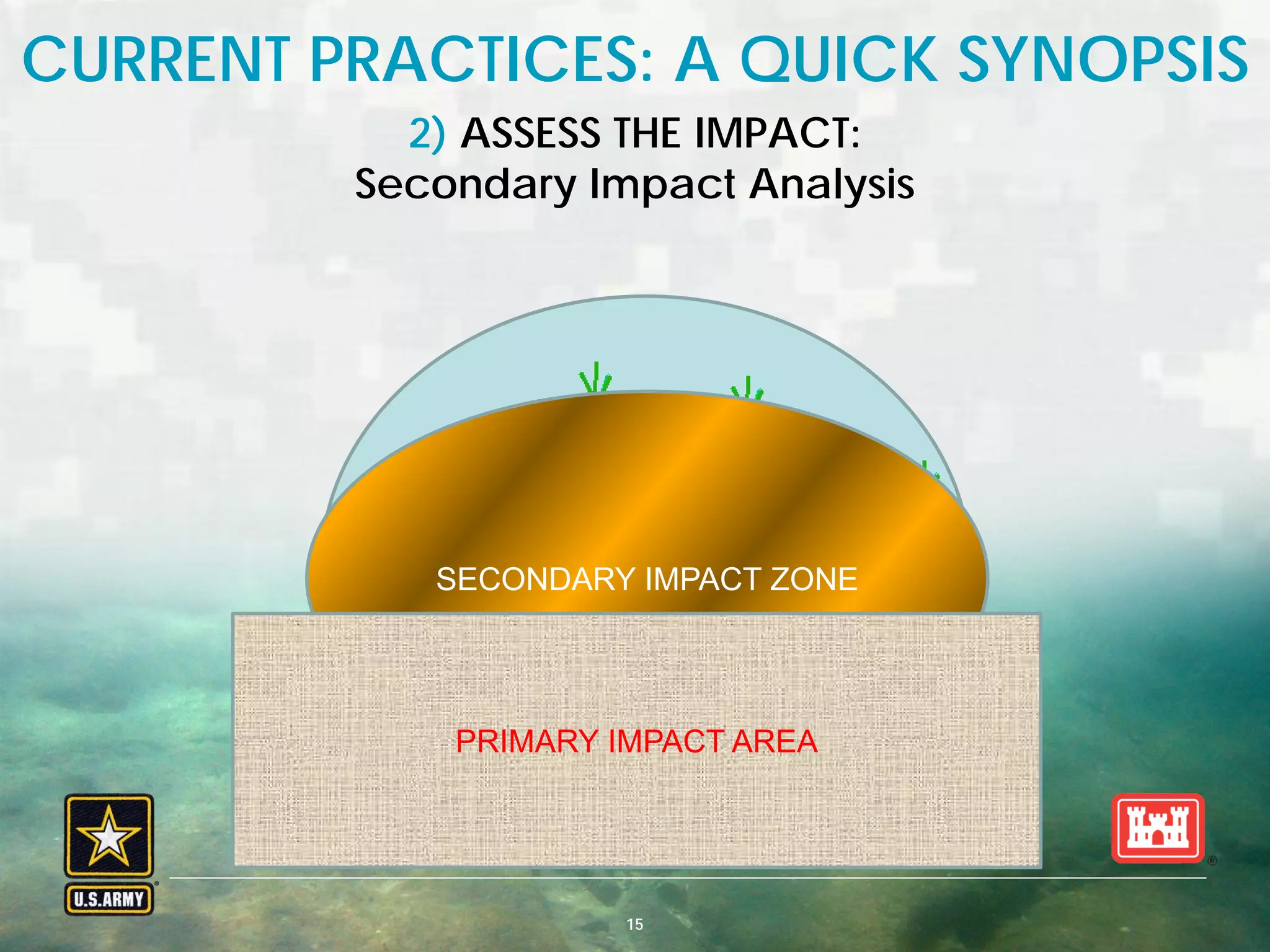
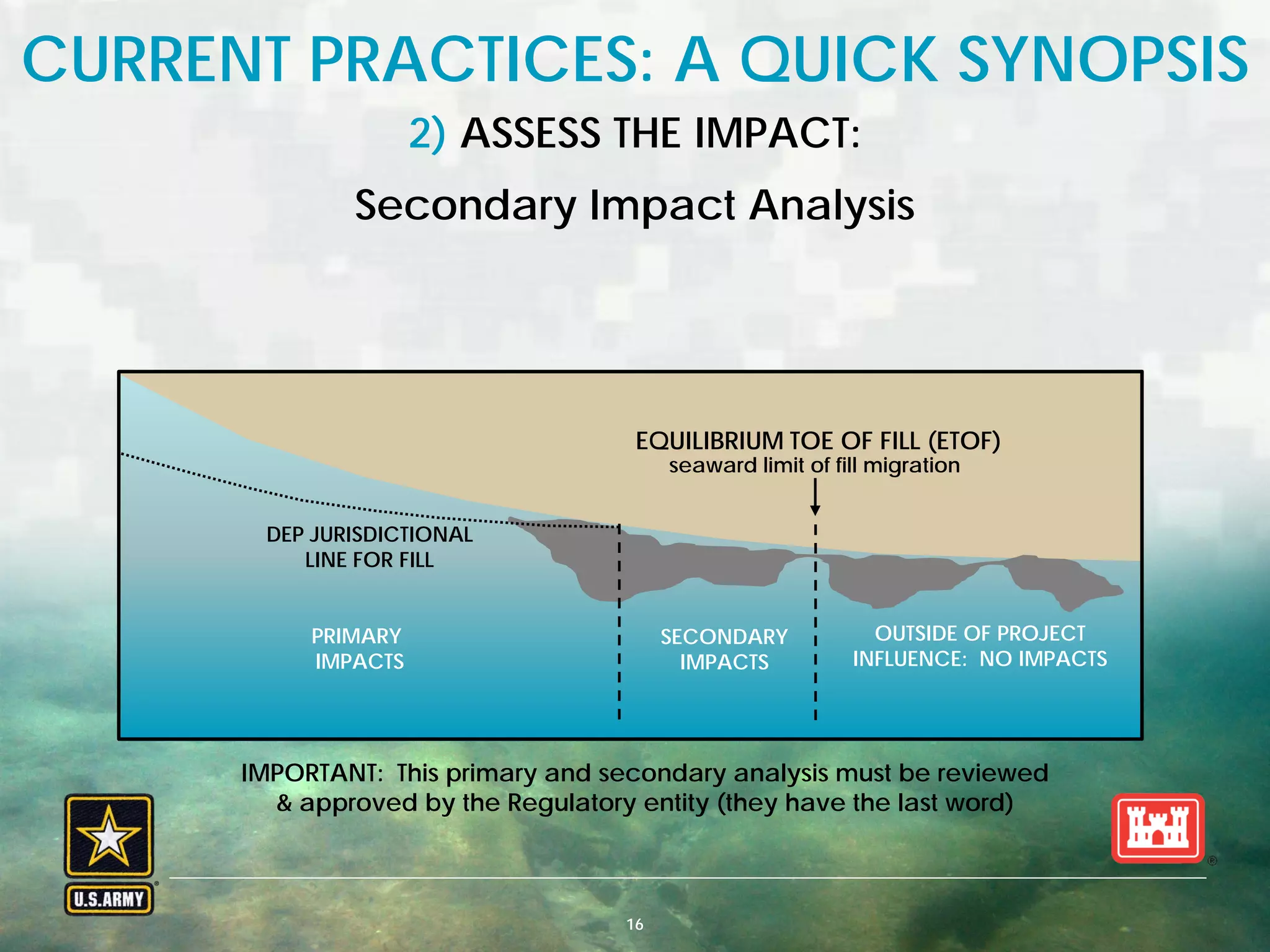
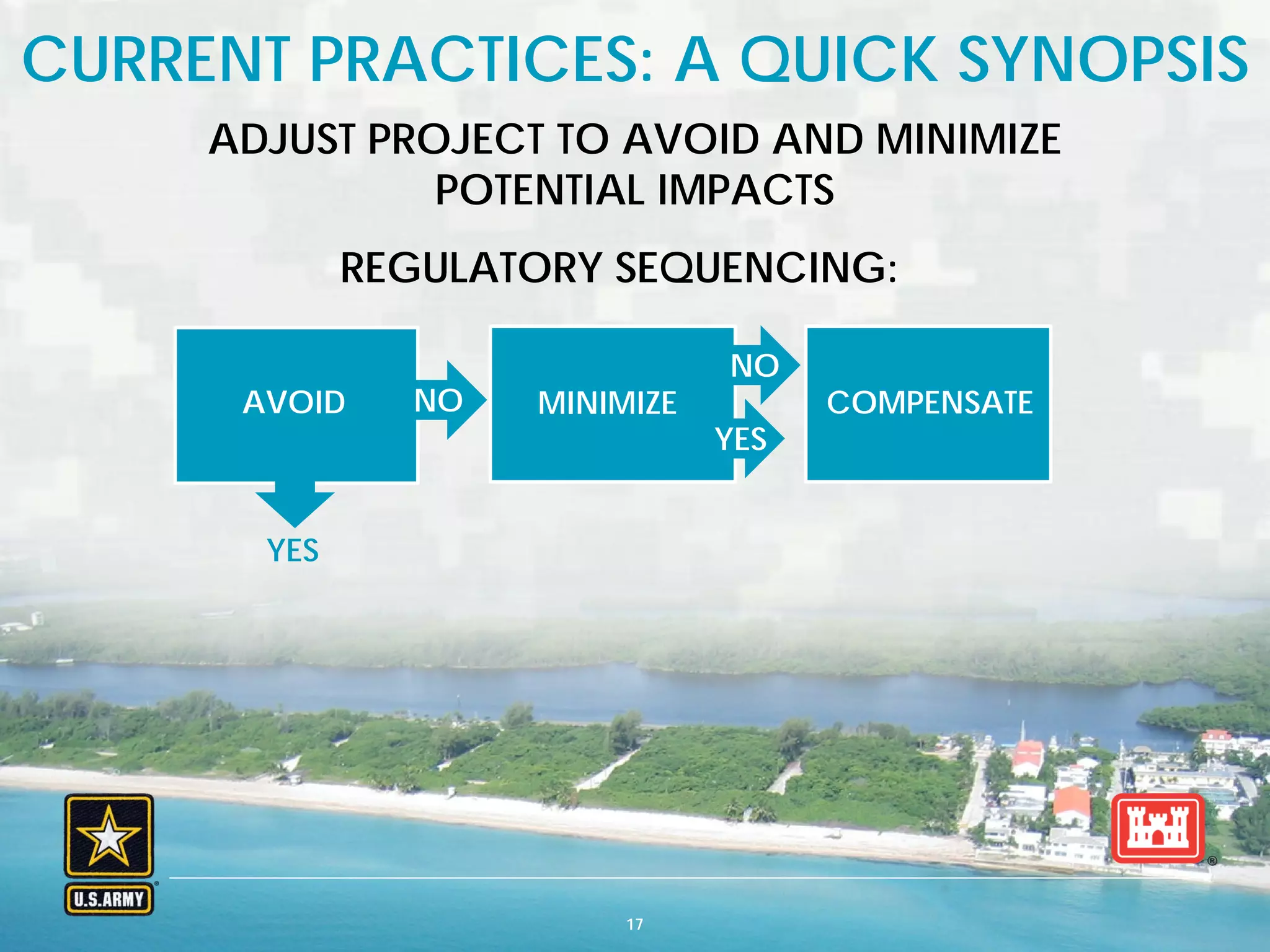
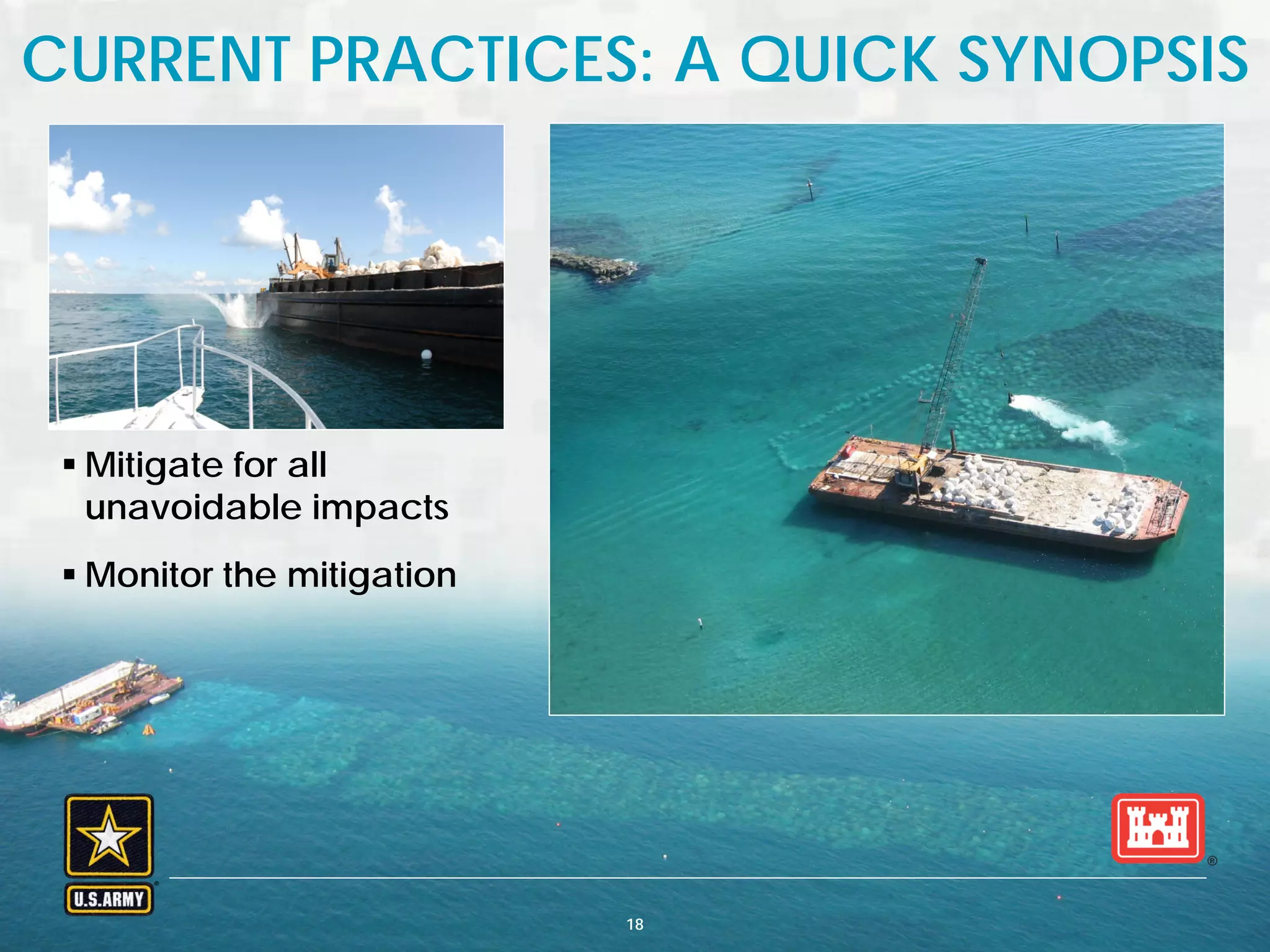
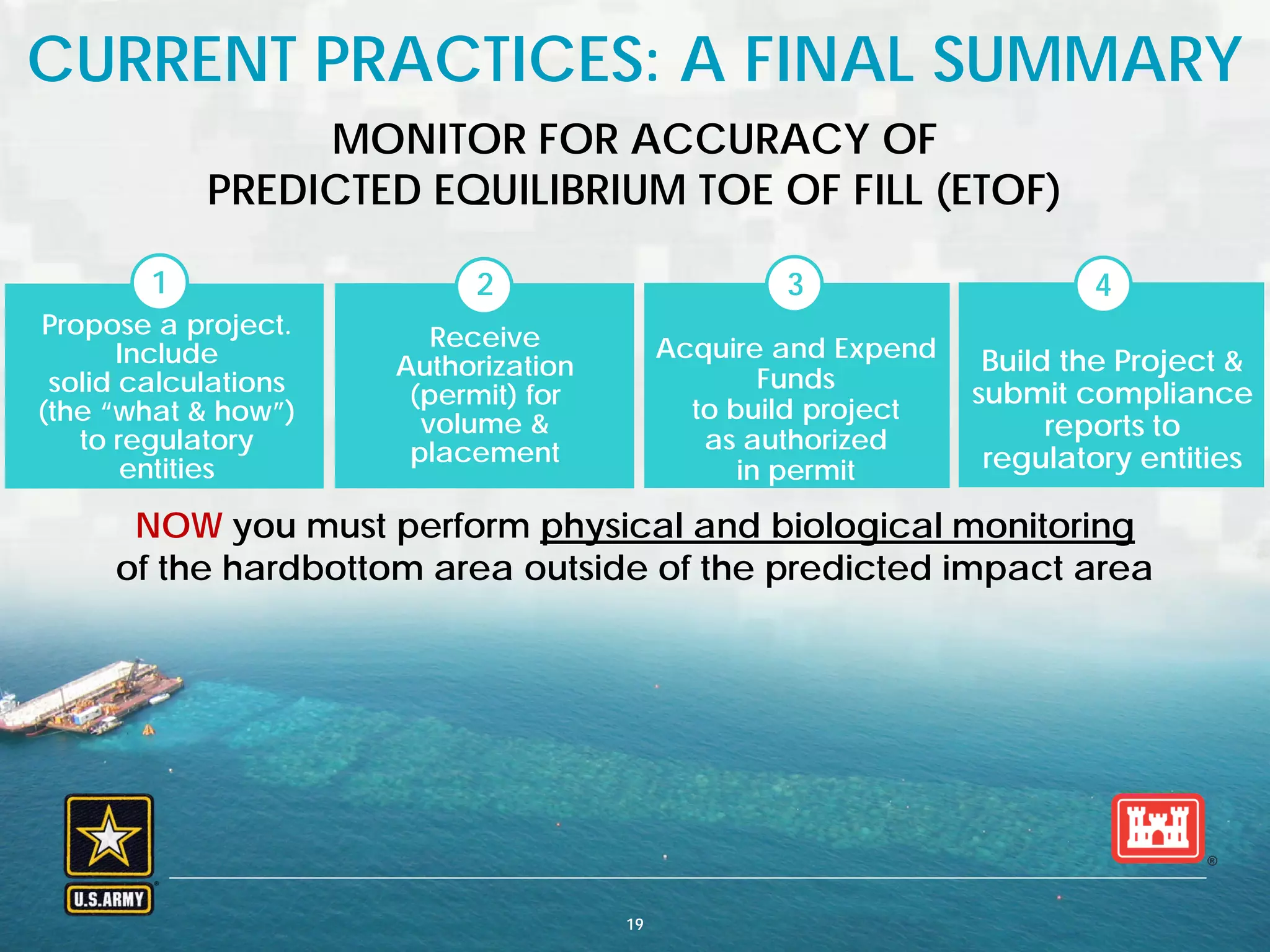
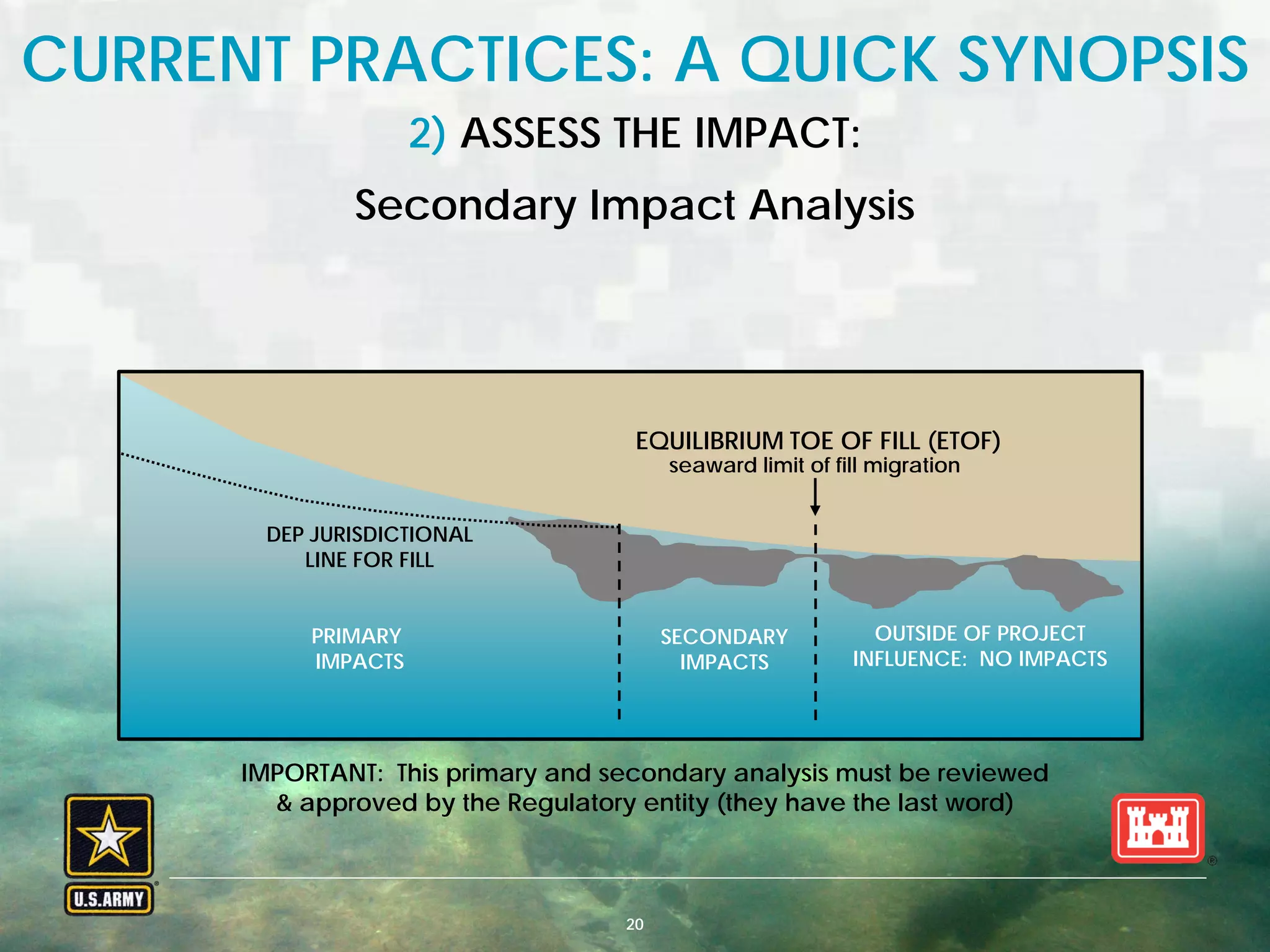
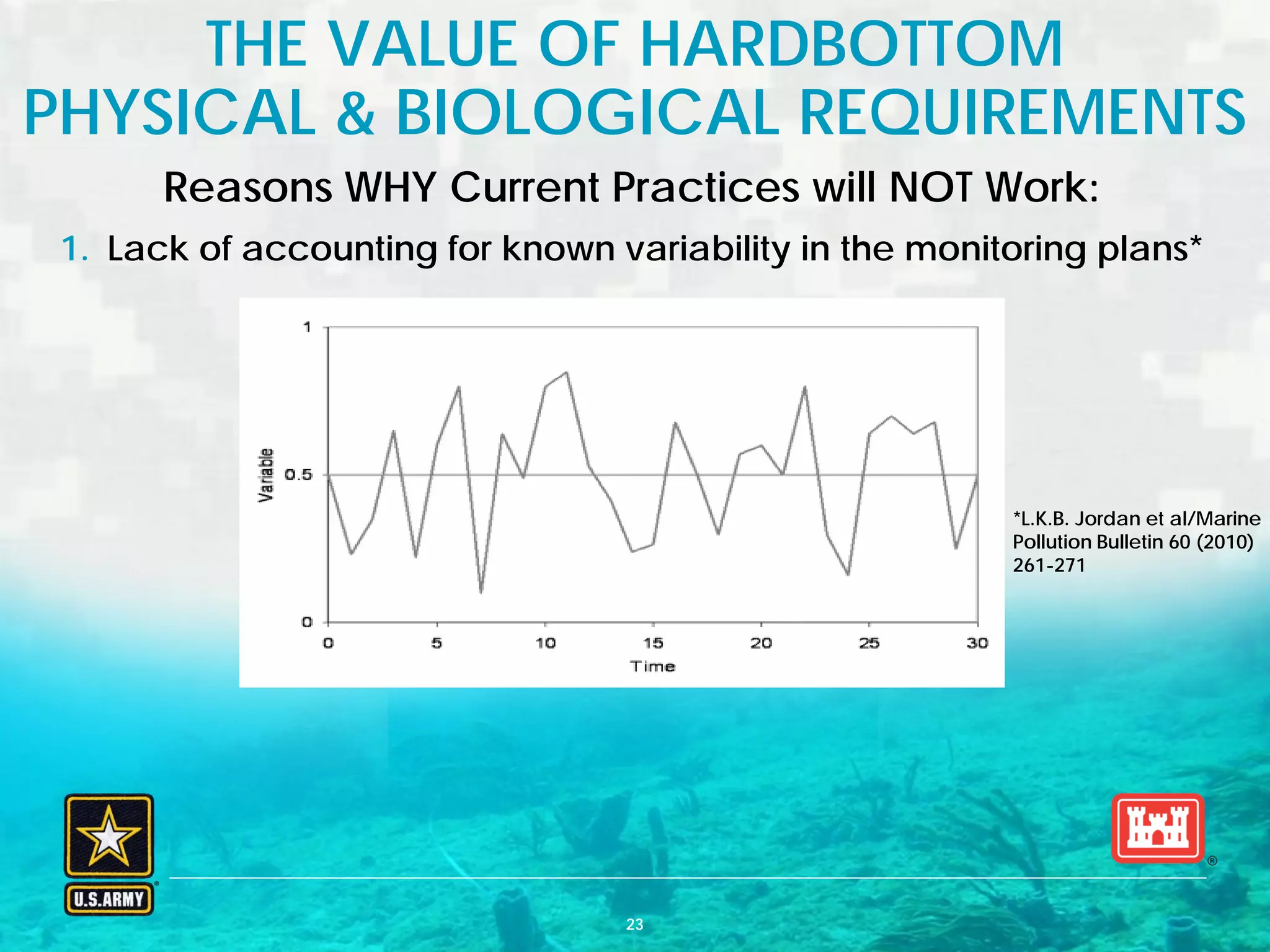
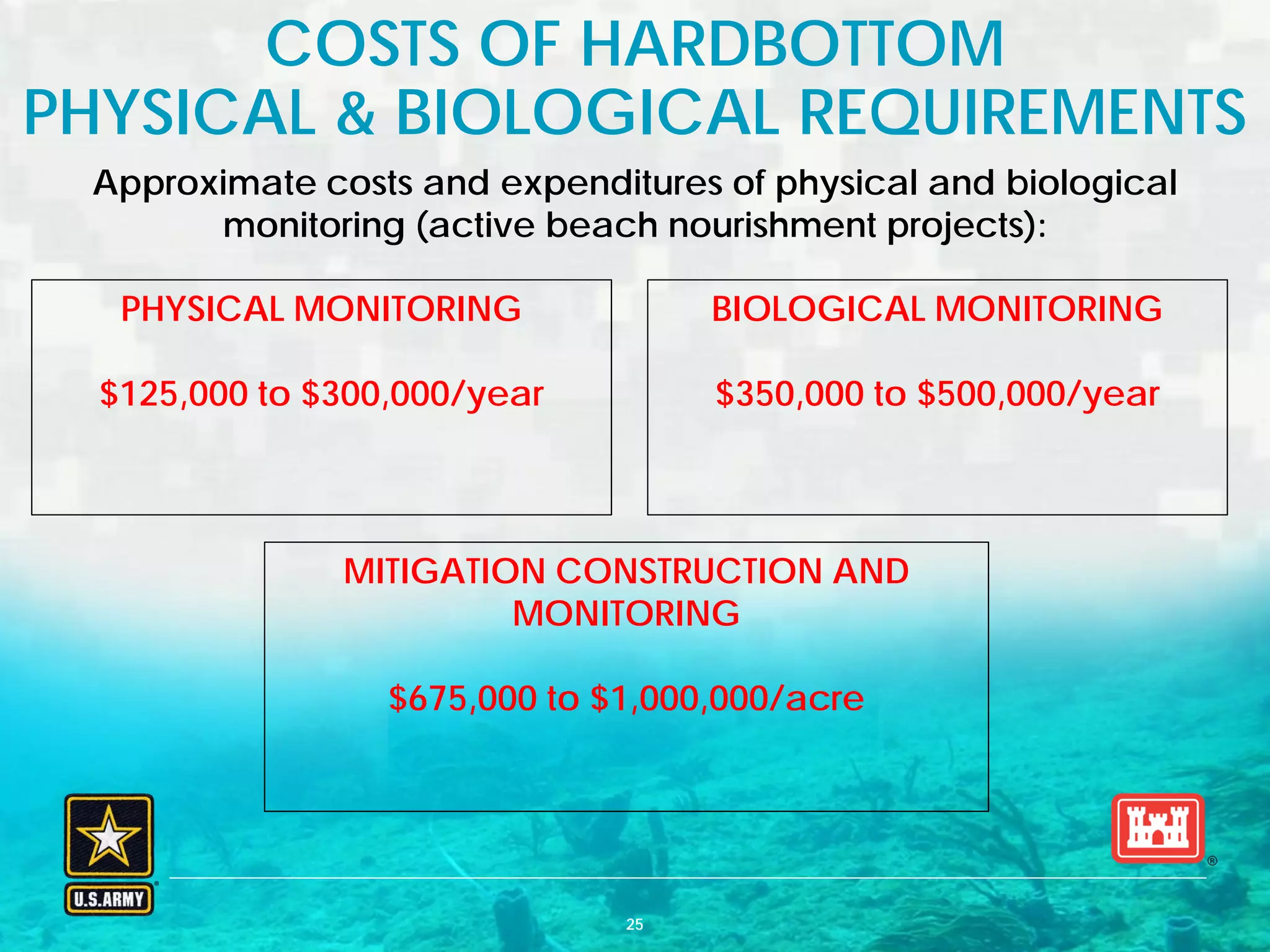
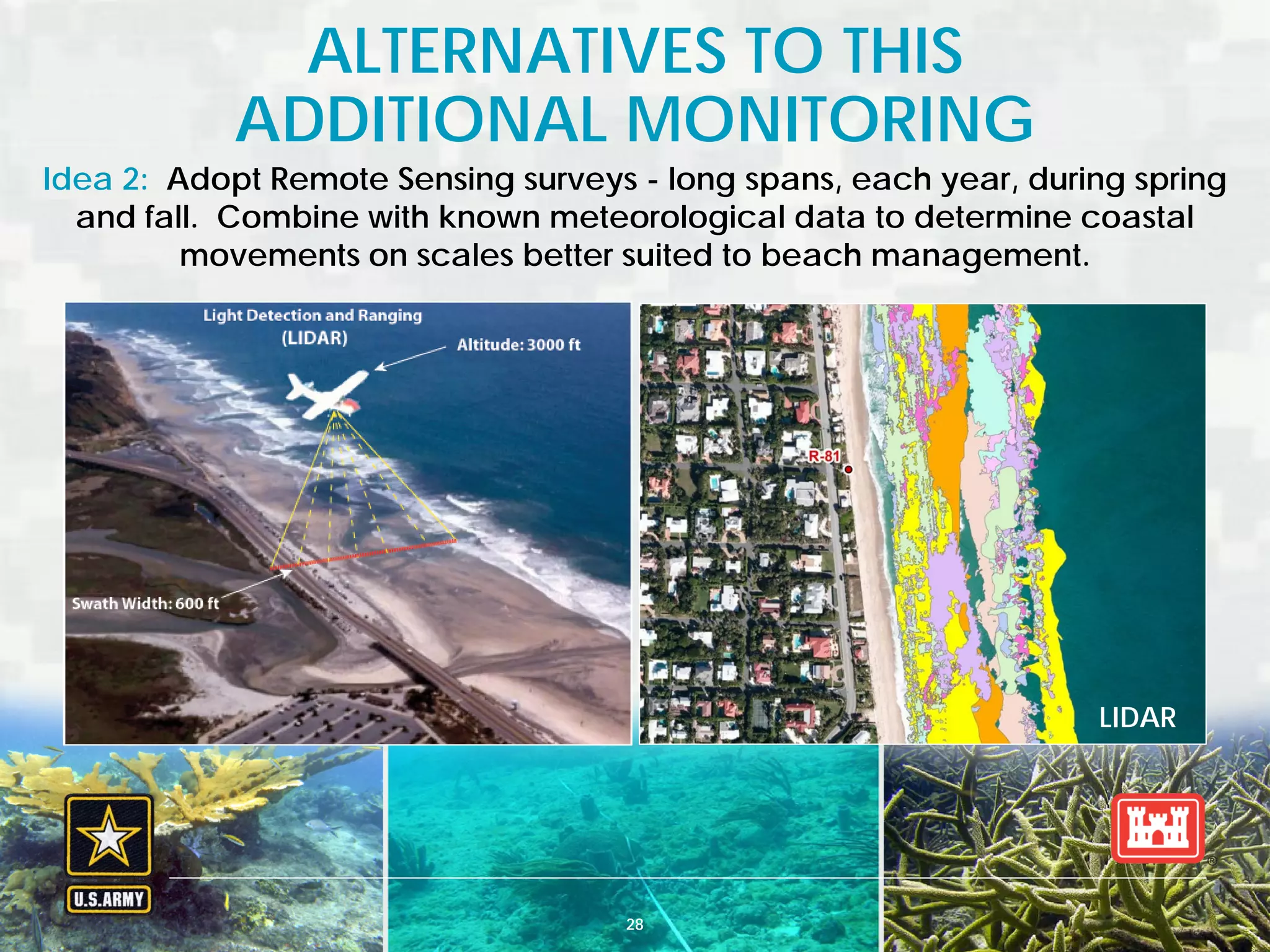
This document discusses the current regulatory practices for monitoring hard bottom communities impacted by beach nourishment projects and proposes alternatives. It notes that hard bottoms are unique ephemeral ecosystems worthy of protection. Current practices require assessing primary and secondary impacts, adjusting projects to avoid impacts, and long-term physical and biological monitoring, which is costly. However, monitoring plans do not account for natural variability and may lack sufficient baseline data. The document proposes alternatives like re-examining risk and mitigation, using remote sensing, establishing a task force, or combining approaches to improve protection of hard bottoms while ensuring efficient use of nourishment funds.