THE URINARY BLADDER
              ANATOMY AND
               PHYSIOLOGY


Dr. Ali Kamal M. Sami
M.B.Ch.B.  M.A.U.A.
F.I.B.M.S.  M.I.U.A.
A hollow muscular organ
A reservoir for urine
The adult bladder normally has a capacity of 400–500 ml.
When empty, bladder lies behind the pubic
symphysis &it is a pelvic organ.

In infants and children , it is situated higher.

When it is full, it rises above the symphysis
and can readily be palpated or percussed.

When over distended, as in acute or chronic
urinary retention, it may cause the lower
abdomen to bulge visibly.
Extending from
the dome of the
bladder to the
umbilicus
is a fibrous
cord, the
median
umbilical
ligament, which
represents the
obliterated
urachus .
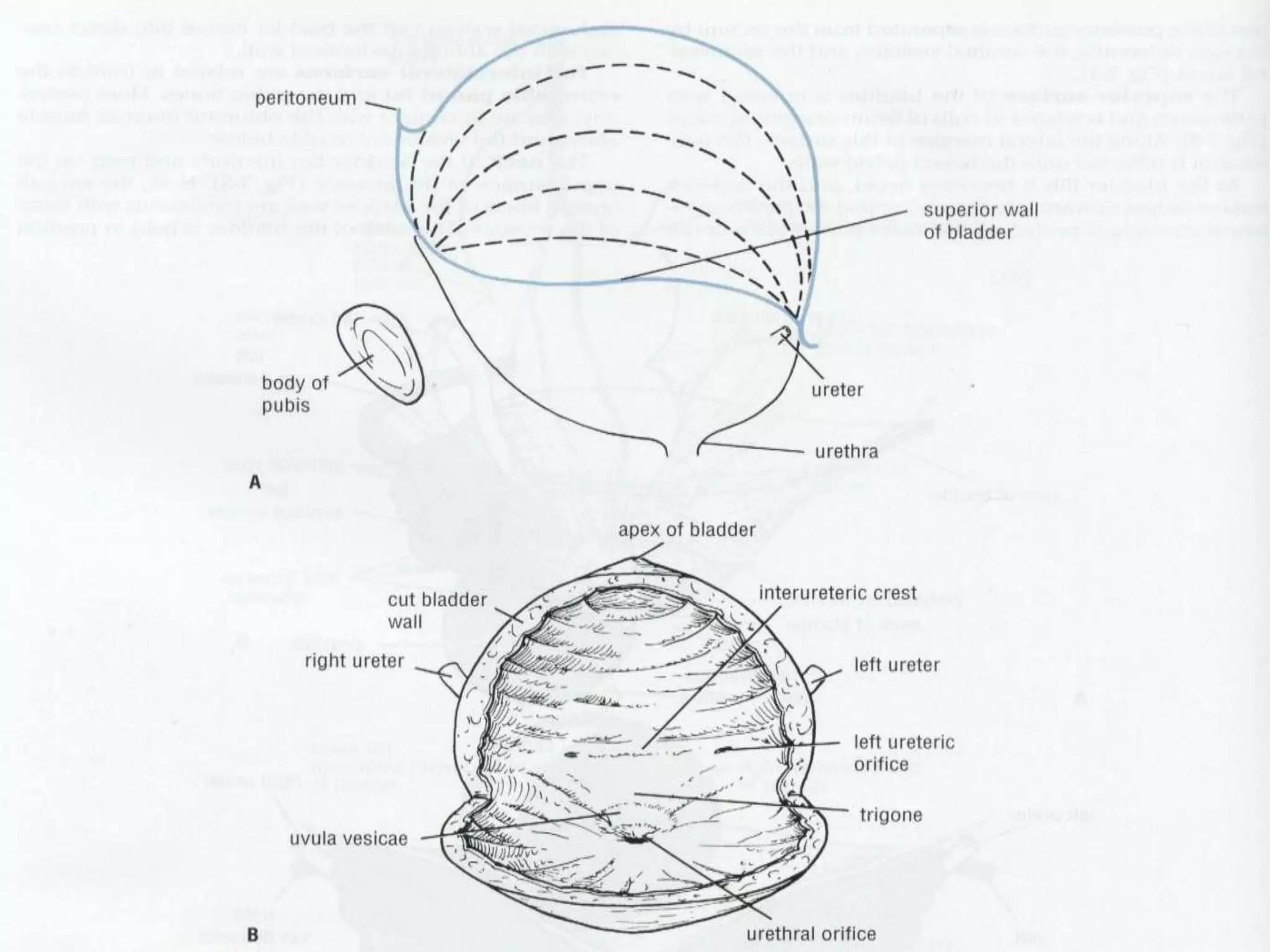
Ureters enter the bladder
posteroinferiorly are about 5 cm apart
.

The orifices,situated at interureteric
ridge that forms the proximal border
of the trigone, are about 2.5 cm apart.

The trigone occupies the area between
the ridge and the bladder neck.
The internal
 sphincter, or
bladder neck, is
   not a true


          circular sphincter
           but a thickening
              formed by
              interlaced


                         and converging
                        muscle fibers of the
                         detrusor as they
                               pass


                                           distally to become
                                           the smooth
                                           musculature of the
                                           urethra.
RELATIONS
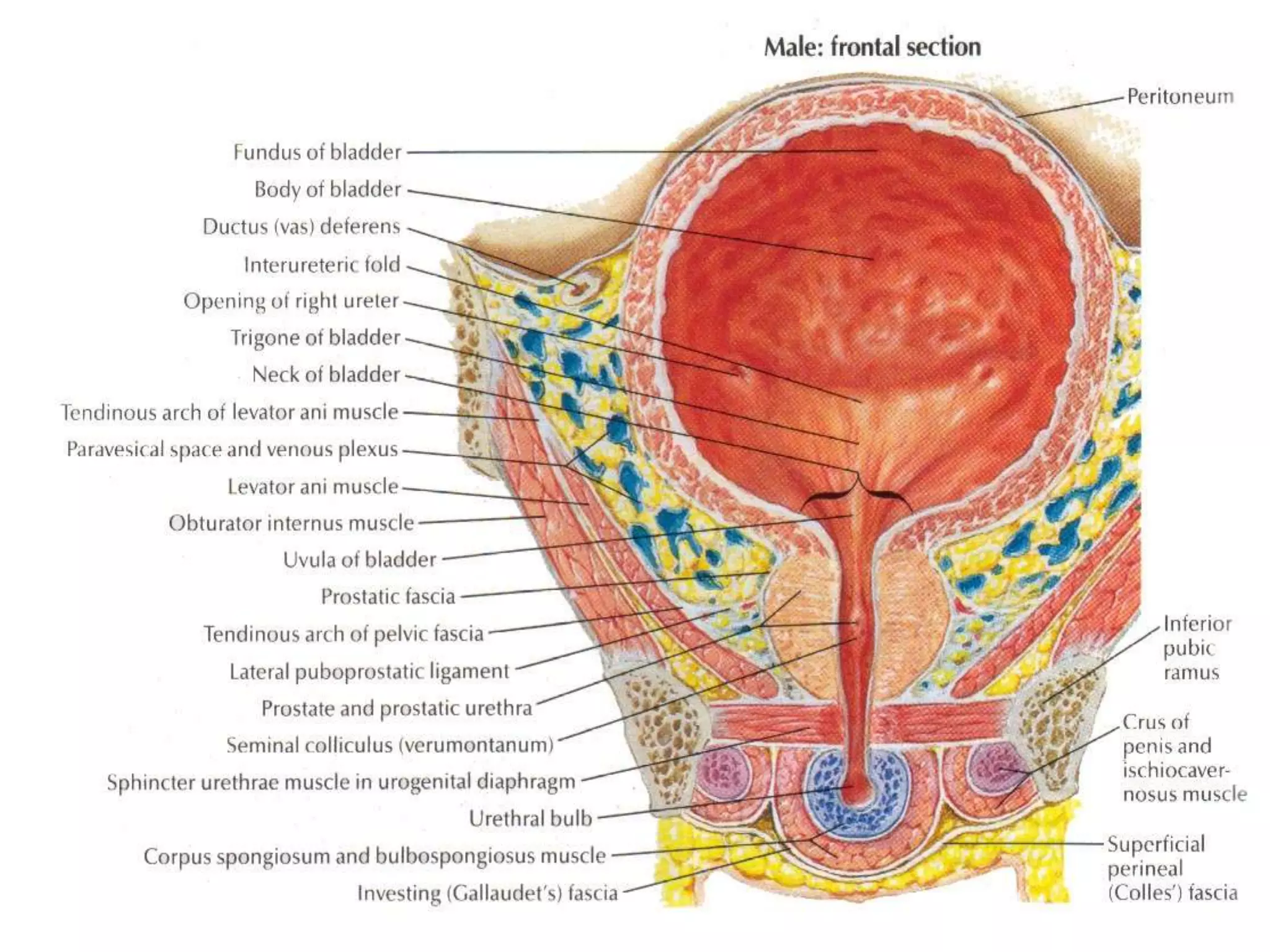
In males, the bladder is related
posteriorly to the seminal
vesicles, vasa deferentia, ureters,
and rectum .
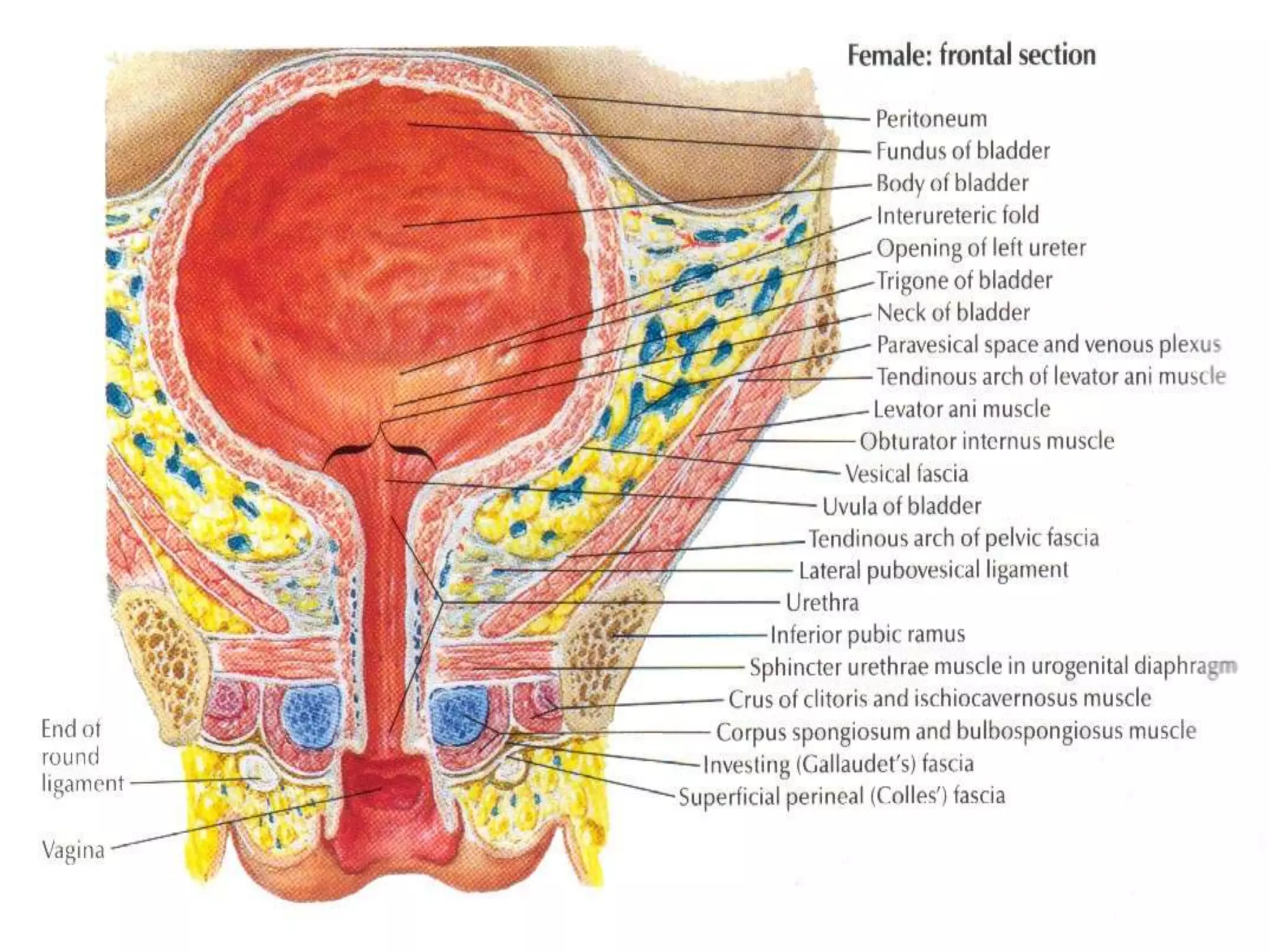
In females, the uterus and
vagina are interposed
between the bladder and
rectum .
The dome and posterior
surfaces are covered by
peritoneum.

So in this area the bladder is
related to the small intestine
and sigmoid colon.
Histology
The mucosa of the
bladder is composed
of transitional
epithelium.

 Beneath it ,is a
submucosal layer
formed of connective
and elastic tissues

External to the
submucosa is the
detrusor muscle
the detrusor muscle which is made up of a
mixture of smooth muscle fibers arranged at
random in a longitudinal, circular, and spiral
manner without any layer formation or specific
orientation

Except close to the internal meatus,
where the detrusor muscle assumes 3
definite layers:

Inner longitudinal,
middle circular,
and outer longitudinal.
Blood Supply
A. ARTERIAL

1-Superior Vesical,
2-Middle Vesical,
3-Inferior Vesical
arteries, which arise
from
the anterior trunk of
the internal iliac
(hypogastric)artery,
4-The obturator
artery.
5-The inferior gluteal
artery.
In females, the 6-uterine and 7-vaginal
arteries also send branches to the bladder.
B. VENOUS

Surrounding the bladder is a rich plexus of veins
that ultimately empties into the internal iliac
(hypogastric) veins.
Lymphatics
The lymphatics of the bladder
drain into
1-the vesical,
2-external iliac,
3-internal iliac (hypogastric),
4-common iliac lymph nodes.
Physiology
The nerves concerned in micturition are as follows.

1-The parasympathetic input; derived
from the anterior primary divisions of the
second, third and fourth sacral segments ( S2
,S3,S4).       These fibers pass through the pelvic
splanchnic nerves        inferior hypo gastric
plexus,       from which they are distributed to the
bladder.

The pelvic plexus is easily damaged during
excisions of the rectum, following which
disturbances of micturition and sexual function may
occur.
2-The sympathetic input;
These nerves arise in the 11th
thoracic to the second lumbar
segments (T11,T12,L1,L2).
Pass via the presacral hypo
gastric nerve and the sympathetic
chains         to the inferior hypo
gastric plexus, which is situated
lateral to the rectum,       the
bladder
3-Somatic innervations;
 passes to the distal sphincter
through the Pudendal nerves and
through the inferior hypo gastric
plexus .
The sympathetic nerves convey afferent painful
stimuli following over distension of the fundus , from the
mucosa where they respond to touch, temperature and
pain, and also from the muscle of the detrusor and
lamina propria where they convey stretch information.
 These afferents pass via the inferior hypo gastric
plexus .
Efferent fibers pass via the pelvic parasympathetics.
Normal micturition is coordinated in the Pons in the
midbrain where detrusor contraction is timed with
inhibition of the distal sphincter mechanism.
Thank
 you

THE URINARY BLADDER

  • 1.
    THE URINARY BLADDER ANATOMY AND PHYSIOLOGY Dr. Ali Kamal M. Sami M.B.Ch.B. M.A.U.A. F.I.B.M.S. M.I.U.A.
  • 2.
    A hollow muscularorgan A reservoir for urine The adult bladder normally has a capacity of 400–500 ml.
  • 3.
    When empty, bladderlies behind the pubic symphysis &it is a pelvic organ. In infants and children , it is situated higher. When it is full, it rises above the symphysis and can readily be palpated or percussed. When over distended, as in acute or chronic urinary retention, it may cause the lower abdomen to bulge visibly.
  • 4.
    Extending from the domeof the bladder to the umbilicus is a fibrous cord, the median umbilical ligament, which represents the obliterated urachus .
  • 5.
    Ureters enter thebladder posteroinferiorly are about 5 cm apart . The orifices,situated at interureteric ridge that forms the proximal border of the trigone, are about 2.5 cm apart. The trigone occupies the area between the ridge and the bladder neck.
  • 7.
    The internal sphincter,or bladder neck, is not a true circular sphincter but a thickening formed by interlaced and converging muscle fibers of the detrusor as they pass distally to become the smooth musculature of the urethra.
  • 9.
    RELATIONS In males, thebladder is related posteriorly to the seminal vesicles, vasa deferentia, ureters, and rectum . In females, the uterus and vagina are interposed between the bladder and rectum . The dome and posterior surfaces are covered by peritoneum. So in this area the bladder is related to the small intestine and sigmoid colon.
  • 18.
    Histology The mucosa ofthe bladder is composed of transitional epithelium. Beneath it ,is a submucosal layer formed of connective and elastic tissues External to the submucosa is the detrusor muscle
  • 19.
    the detrusor musclewhich is made up of a mixture of smooth muscle fibers arranged at random in a longitudinal, circular, and spiral manner without any layer formation or specific orientation Except close to the internal meatus, where the detrusor muscle assumes 3 definite layers: Inner longitudinal, middle circular, and outer longitudinal.
  • 20.
  • 22.
    A. ARTERIAL 1-Superior Vesical, 2-MiddleVesical, 3-Inferior Vesical arteries, which arise from the anterior trunk of the internal iliac (hypogastric)artery, 4-The obturator artery. 5-The inferior gluteal artery. In females, the 6-uterine and 7-vaginal arteries also send branches to the bladder.
  • 23.
    B. VENOUS Surrounding thebladder is a rich plexus of veins that ultimately empties into the internal iliac (hypogastric) veins.
  • 24.
    Lymphatics The lymphatics ofthe bladder drain into 1-the vesical, 2-external iliac, 3-internal iliac (hypogastric), 4-common iliac lymph nodes.
  • 25.
  • 26.
    The nerves concernedin micturition are as follows. 1-The parasympathetic input; derived from the anterior primary divisions of the second, third and fourth sacral segments ( S2 ,S3,S4). These fibers pass through the pelvic splanchnic nerves inferior hypo gastric plexus, from which they are distributed to the bladder. The pelvic plexus is easily damaged during excisions of the rectum, following which disturbances of micturition and sexual function may occur.
  • 27.
    2-The sympathetic input; Thesenerves arise in the 11th thoracic to the second lumbar segments (T11,T12,L1,L2). Pass via the presacral hypo gastric nerve and the sympathetic chains to the inferior hypo gastric plexus, which is situated lateral to the rectum, the bladder
  • 28.
    3-Somatic innervations; passesto the distal sphincter through the Pudendal nerves and through the inferior hypo gastric plexus .
  • 29.
    The sympathetic nervesconvey afferent painful stimuli following over distension of the fundus , from the mucosa where they respond to touch, temperature and pain, and also from the muscle of the detrusor and lamina propria where they convey stretch information. These afferents pass via the inferior hypo gastric plexus . Efferent fibers pass via the pelvic parasympathetics. Normal micturition is coordinated in the Pons in the midbrain where detrusor contraction is timed with inhibition of the distal sphincter mechanism.
  • 30.