
Entertainment and Information TechnologyThe UnderdogsMicheal HoffmanEric SolonJoshua SmithHomero CardenasUpahar Sood
Early Technologies1895 First public display of a motion picture1901 Tuned or Syntonic telegraphy –(Led to Radio)1936 First Television broadcast made1977 First personal computers were available to public1992 The Internet was made available to the public1997 First streamed videos over the internet2001 3G cell phones are introduced with ability to stream media
The Computer AgeThe computer age is driven by Moore’s LawAdvances in IC’s, memory, connectivity has made streaming media possiblePortable devices becoming more powerful at cheaper pricesiPodsSmart PhonesLaptopsTablets
Traditional Media DistributionMedia was distributed via:Hard copies (Cassettes, CDs, DVDs)Cable TVRadioAlbums and movies sold in retail storesRequired stores to hold inventoryMaintain a supply chain.
Digital Media DistributionThe Internet has allowed alternative ways to distribute mediaUniversal availability of music and videoOnline digital media stores (iTunes)YouTubePandora RadioOn demand video streamingNetflix HuluGoogle TV
Competition Between ProvidersComcast (Hulu, NBC) vs Netflix (Level 3 Communications)ABC, NBC, CBS vs Google (Google TV)Cable Providers vs Internet/ Network Providers
Media ConsumptionThe Internet has changed the way people consume and share mediaDigital media is easier to shareSharing with the world, not just your friendsPost YouTube videosLive streams and podcastsPeer-to-Peer sitesDigital media is easier to copyCopies made by a click of a mouse
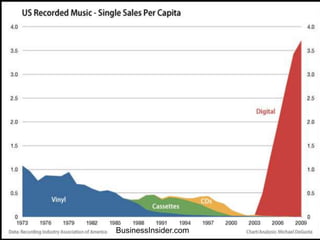
BusinessInsider.com
Digital RightsThe need for digital rights protectionCopyrights and piracyNapsterPirate-BayDigital Rights Management (DRM) Apple/Real Networks controversy
Effects on the IndustryFactors hurting the industry:Online piracyPoor market conditionsIncomes are shifting as the business model of entertainment changesContent delivery over the internet vs. traditional storesIncomes that come from distribution of the media are most affected
Royalties vs. LicensingRoyalties are generated by sales of media (CDs, DVDs)Typically low payouts to the artistsLicensing revenue is generally from commercials and moviesHigher payouts to the artistsiTunes Store sales are considered licensed content
Increasing Internet TrafficIn 2010 almost 2 billion people around the world connected to the InternetInternet traffic is increasing by 27% a year, but carrier’s revenue only by 5% a yearBy 2014, video transmission will be 90% of all internet trafficWireless cellphone traffic is expected to increase 65 times by 2014, most in the form of streaming digital video
Can Networks Keep Up?Carriers need to increase their investments by 20% every yearThe carrier’s business models break down in 2014, when investments exceed revenue growthThe influx of video traffic could also grind networks to a halt3G and 4G networks won’t be able to support the bandwidth requirements
Possible SolutionsPrivate sector solutions:Technological advancesMore service providersGovernment interventionFCC regulationsSubsidies

The Underdogs - Information technology and Entertainment

  • 1.
    Entertainment and InformationTechnologyThe UnderdogsMicheal HoffmanEric SolonJoshua SmithHomero CardenasUpahar Sood
  • 2.
    Early Technologies1895 Firstpublic display of a motion picture1901 Tuned or Syntonic telegraphy –(Led to Radio)1936 First Television broadcast made1977 First personal computers were available to public1992 The Internet was made available to the public1997 First streamed videos over the internet2001 3G cell phones are introduced with ability to stream media
  • 3.
    The Computer AgeThecomputer age is driven by Moore’s LawAdvances in IC’s, memory, connectivity has made streaming media possiblePortable devices becoming more powerful at cheaper pricesiPodsSmart PhonesLaptopsTablets
  • 4.
    Traditional Media DistributionMediawas distributed via:Hard copies (Cassettes, CDs, DVDs)Cable TVRadioAlbums and movies sold in retail storesRequired stores to hold inventoryMaintain a supply chain.
  • 5.
    Digital Media DistributionTheInternet has allowed alternative ways to distribute mediaUniversal availability of music and videoOnline digital media stores (iTunes)YouTubePandora RadioOn demand video streamingNetflix HuluGoogle TV
  • 6.
    Competition Between ProvidersComcast(Hulu, NBC) vs Netflix (Level 3 Communications)ABC, NBC, CBS vs Google (Google TV)Cable Providers vs Internet/ Network Providers
  • 7.
    Media ConsumptionThe Internethas changed the way people consume and share mediaDigital media is easier to shareSharing with the world, not just your friendsPost YouTube videosLive streams and podcastsPeer-to-Peer sitesDigital media is easier to copyCopies made by a click of a mouse
  • 8.
  • 9.
    Digital RightsThe needfor digital rights protectionCopyrights and piracyNapsterPirate-BayDigital Rights Management (DRM) Apple/Real Networks controversy
  • 10.
    Effects on theIndustryFactors hurting the industry:Online piracyPoor market conditionsIncomes are shifting as the business model of entertainment changesContent delivery over the internet vs. traditional storesIncomes that come from distribution of the media are most affected
  • 11.
    Royalties vs. LicensingRoyaltiesare generated by sales of media (CDs, DVDs)Typically low payouts to the artistsLicensing revenue is generally from commercials and moviesHigher payouts to the artistsiTunes Store sales are considered licensed content
  • 12.
    Increasing Internet TrafficIn2010 almost 2 billion people around the world connected to the InternetInternet traffic is increasing by 27% a year, but carrier’s revenue only by 5% a yearBy 2014, video transmission will be 90% of all internet trafficWireless cellphone traffic is expected to increase 65 times by 2014, most in the form of streaming digital video
  • 13.
    Can Networks KeepUp?Carriers need to increase their investments by 20% every yearThe carrier’s business models break down in 2014, when investments exceed revenue growthThe influx of video traffic could also grind networks to a halt3G and 4G networks won’t be able to support the bandwidth requirements
  • 14.
    Possible SolutionsPrivate sectorsolutions:Technological advancesMore service providersGovernment interventionFCC regulationsSubsidies