The RevTech Stack Playbook:
Going from $1M to $100M
Sydney Sloan
CMO
Salesloft
@sydsloan
Connect with people to
solve problems.
#thisissales
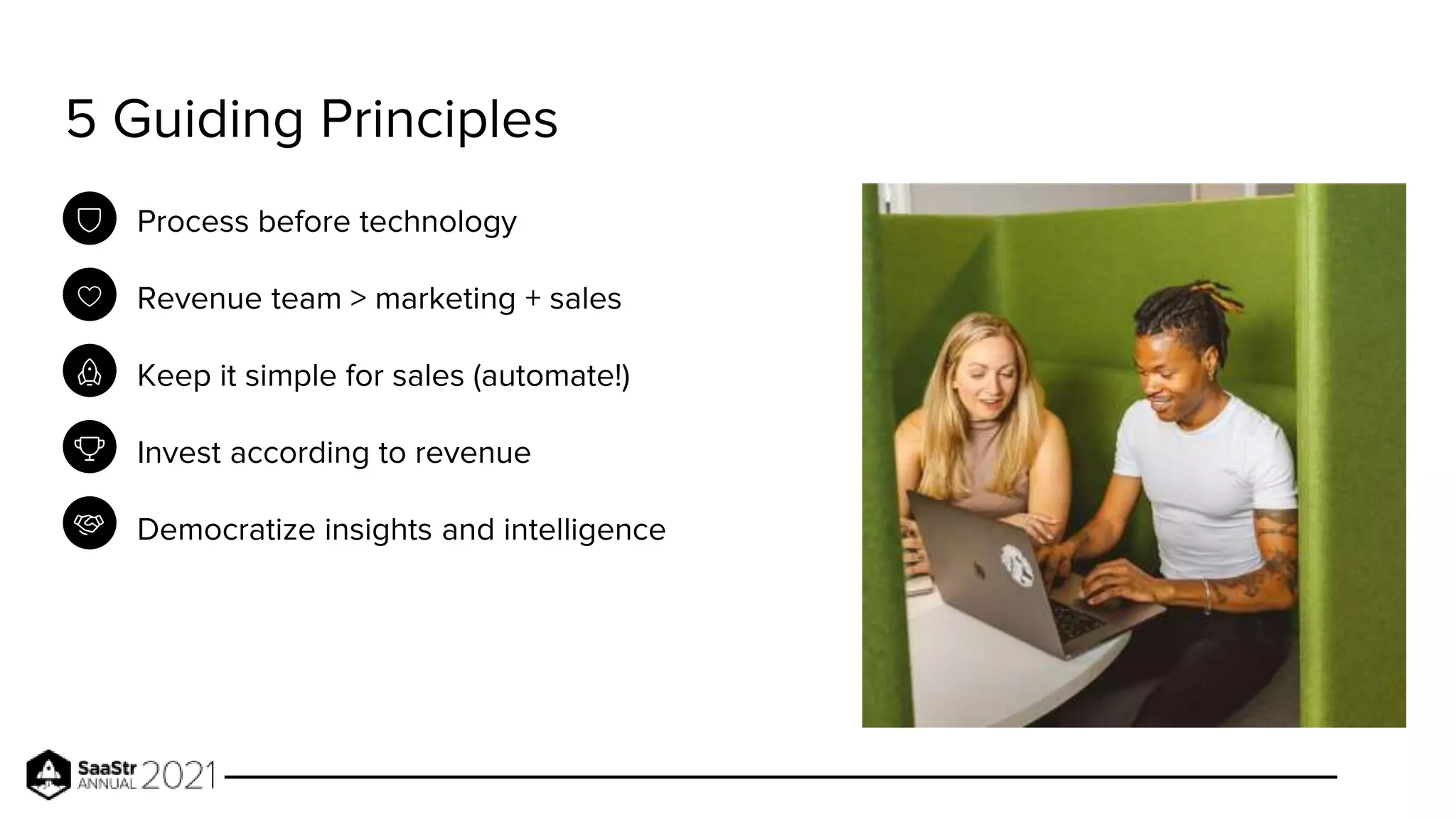
5 Guiding Principles
Process before technology
Revenue team > marketing + sales
Keep it simple for sales (automate!)
Invest according to revenue
Democratize insights and intelligence
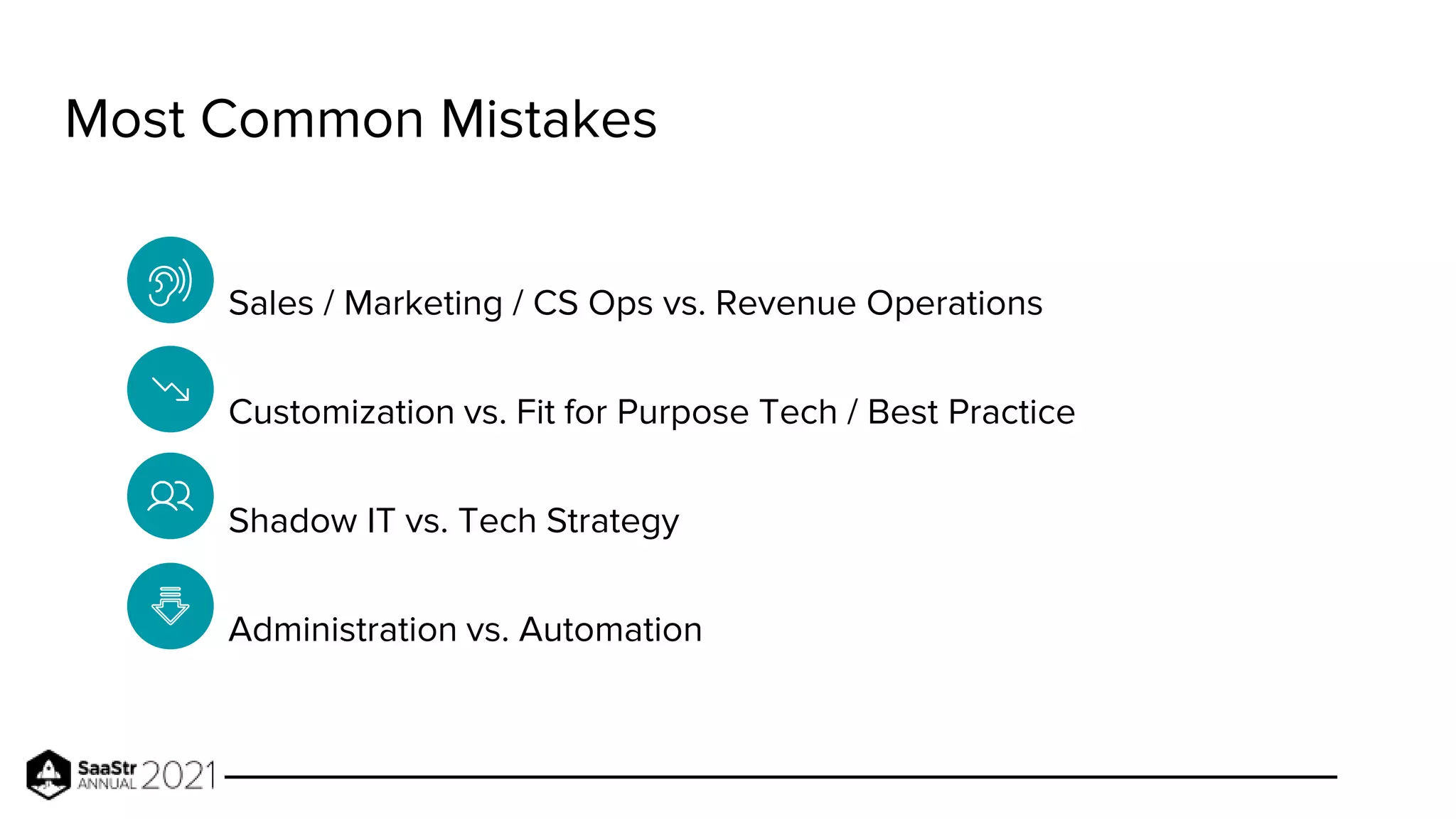
Most Common Mistakes
Sales / Marketing / CS Ops vs. Revenue Operations
Customization vs. Fit for Purpose Tech / Best Practice
Shadow IT vs. Tech Strategy
Administration vs. Automation
What is the Right Tech for
Your Growth Stage?
Level 1
Start-up $1M to $10M
Necessities: Agile, Flexible,
Immediate insights
Level 1: Start-up $1M to $10M
Drive
Demand
Generate
Pipeline
Manage
Deals
Engage
Customers
CRM
Channels
Website
Sales Engagement: Phone, Email, SMS, Calendar, Conversations
Sales Data
+
Blog
Social
4.7x
More Prospect Engagement
multi-channel vs. single channel
Level 2
Scale-up <$30M
Level 2: Scale-up <$30M
Drive
Demand
Generate
Pipeline
Manage
Deals
Engage
Customers
CRM
Channels
Website
Sales Data
+
Blog
Digital Events
SEO/ PPC
Video
Sales Engagement: Phone, Email, SMS, Calendar, Conversations
Gifting
Revenue
Intelligence,
AI
Chat
Deal Management
Coaching
Necessities: Scale Engagement,
Build Relationships, Coach Sellers
Social
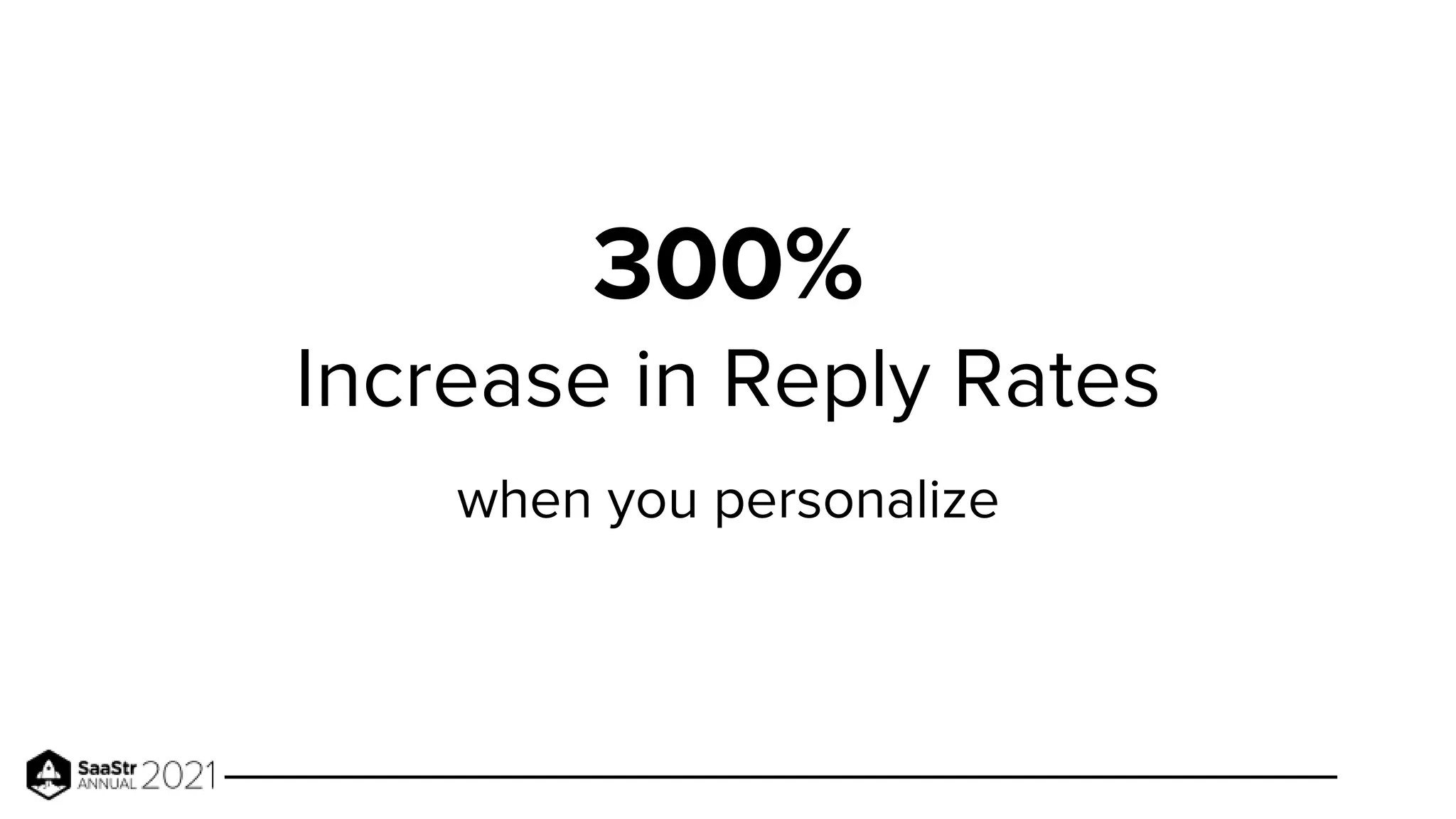
300%
Increase in Reply Rates
when you personalize
Level 3
Established > $30M
Level 3: Established >$30M
Drive
Demand
Generate
Pipeline
Manage
Deals
Engage
Customers
CRM
Channels
Website
Sales Data
+
Blog
Digital Events
SEO/ PPC
Content
Sales Engagement: Phone, Email, SMS, Calendar, Conversations
Gifting
Deal Management
Revenue
Intelligence,
AI,
Governance
Chat
Marketing Automation +
Account Based: Orchestration, Buyer Intent, Account/ Contact
Sales Enablement & Training
Video
Coaching
Necessities: Scale Personalization,
AI & Intel, Enablement & Learning
Social
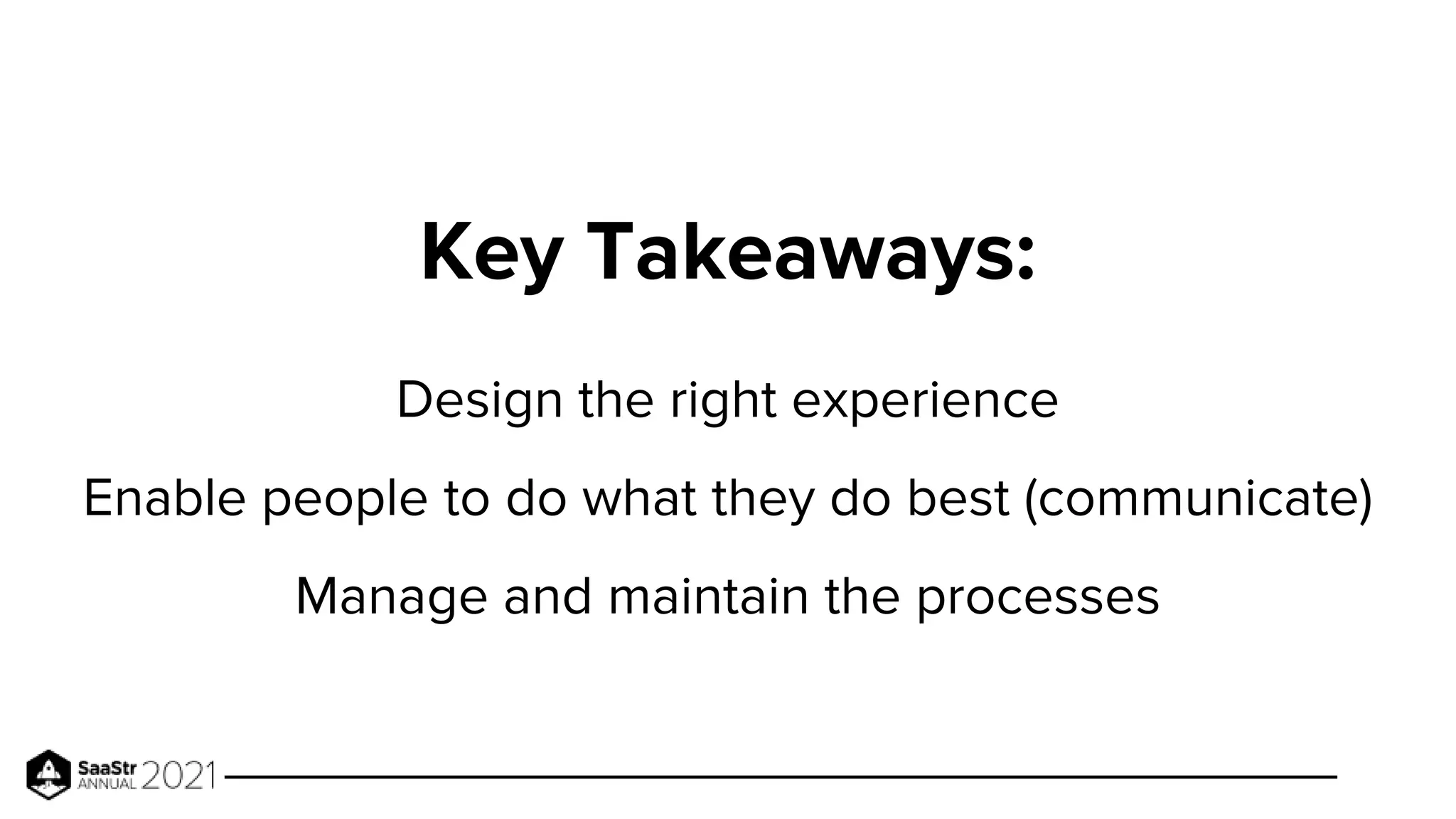
Key Takeaways:
Design the right experience
Enable people to do what they do best (communicate)
Manage and maintain the processes
© 2021. Salesloft. All Rights Reserved.
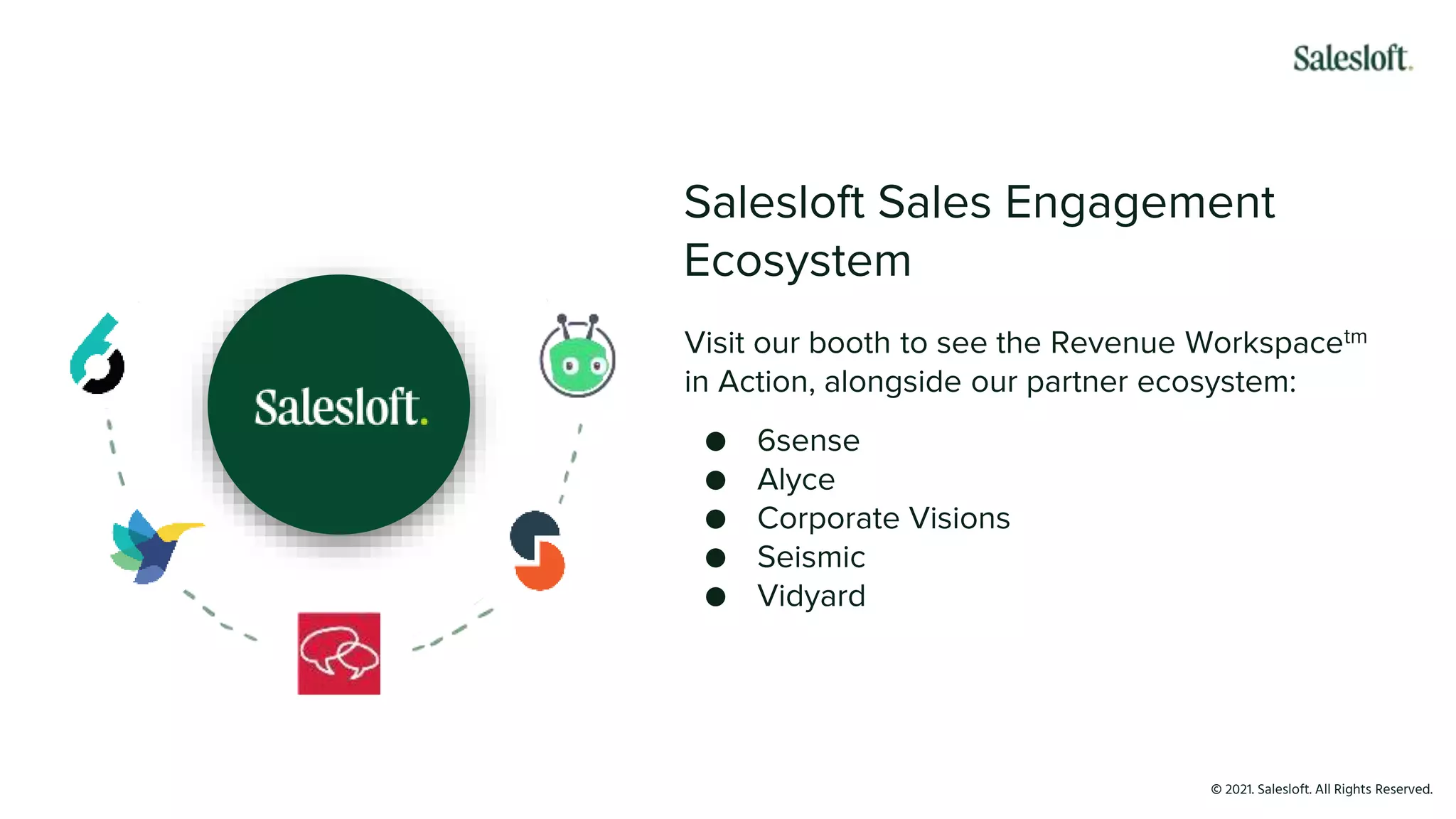
Visit our booth to see the Revenue Workspacetm
in Action, alongside our partner ecosystem:
● 6sense
● Alyce
● Corporate Visions
● Seismic
● Vidyard
Salesloft Sales Engagement
Ecosystem
THANK YOU

The RevTech Stack Playbook: Going from $1M to $100M with SalesLoft's CMO

  • 1.
    The RevTech StackPlaybook: Going from $1M to $100M Sydney Sloan CMO Salesloft @sydsloan
  • 2.
    Connect with peopleto solve problems. #thisissales
  • 3.
    5 Guiding Principles Processbefore technology Revenue team > marketing + sales Keep it simple for sales (automate!) Invest according to revenue Democratize insights and intelligence
  • 4.
    Most Common Mistakes Sales/ Marketing / CS Ops vs. Revenue Operations Customization vs. Fit for Purpose Tech / Best Practice Shadow IT vs. Tech Strategy Administration vs. Automation
  • 5.
    What is theRight Tech for Your Growth Stage?
  • 6.
  • 7.
    Necessities: Agile, Flexible, Immediateinsights Level 1: Start-up $1M to $10M Drive Demand Generate Pipeline Manage Deals Engage Customers CRM Channels Website Sales Engagement: Phone, Email, SMS, Calendar, Conversations Sales Data + Blog Social
  • 8.
  • 9.
  • 10.
    Level 2: Scale-up<$30M Drive Demand Generate Pipeline Manage Deals Engage Customers CRM Channels Website Sales Data + Blog Digital Events SEO/ PPC Video Sales Engagement: Phone, Email, SMS, Calendar, Conversations Gifting Revenue Intelligence, AI Chat Deal Management Coaching Necessities: Scale Engagement, Build Relationships, Coach Sellers Social
  • 11.
    300% Increase in ReplyRates when you personalize
  • 12.
  • 13.
    Level 3: Established>$30M Drive Demand Generate Pipeline Manage Deals Engage Customers CRM Channels Website Sales Data + Blog Digital Events SEO/ PPC Content Sales Engagement: Phone, Email, SMS, Calendar, Conversations Gifting Deal Management Revenue Intelligence, AI, Governance Chat Marketing Automation + Account Based: Orchestration, Buyer Intent, Account/ Contact Sales Enablement & Training Video Coaching Necessities: Scale Personalization, AI & Intel, Enablement & Learning Social
  • 14.
    Key Takeaways: Design theright experience Enable people to do what they do best (communicate) Manage and maintain the processes
  • 15.
    © 2021. Salesloft.All Rights Reserved. Visit our booth to see the Revenue Workspacetm in Action, alongside our partner ecosystem: ● 6sense ● Alyce ● Corporate Visions ● Seismic ● Vidyard Salesloft Sales Engagement Ecosystem
  • 16.

Editor's Notes

  • #3 The core purpose of your revenue team is this: connect with people to solve problems. Buyers are already overwhelmed with noise, and sellers need the RIGHT technology to reach them. It’s critical that you select the right tech for your revenue organization for your growth stage. Adding too many tools only increases the cognitive load for your team. Tools that are too often not seller focused only slow your team down rather than help them connect with prospective buyers. Even worse, solutions that add feature/ function without a focus on the buyer experience are making it more difficult for your team to sell.
  • #4 *Tell story about my dad (Architects build buildings to spec, Psychology assess the needs of people. Architectural Psychology => D-School. Think about your tech stack the same way you would think about building a product. What do your users needs (experience, processes) and then figure out how to build it. Process before Tech - Technology is an enabler of process. If you do not yet understand the process or workflows your team is trying to achieve - based on the conversations and connections they need to have, then you are flying blind. Take the time to understand these processes - what activities need to be performed? what types of conversations resonate? What is the best way to connect? Answer these questions in context of your ICP, and then you can use technology to scale to deliver your story. Revenue Team is greater than marketing and/or sales. Consider technologies that enable your entire revenue team, not just marketing or sales. Trust me - building separate tech stacks for marketing versus sales creates an invisible barrier - and information silos - that your team will struggle to overcome. Focus on a primary revenue workspace. You cannot expect your revenue team to connect with customers in a meaningful way while also expecting them to log-in to multiple tools to complete their work. Focus on a primary workspace, understand which processes are possible, and layer in the tech from there. Invest according to revenue. The right tech stack will grow with you - yes, as you grow you may have to graduate to more robust solutions, but consider your growth expectations as you invest and negotiate accordingly. Democratize insights and intelligence. Do not create an artificial hierarchy within your team based on who has the most or best information. Select the technologies that will give your entire revenue organization immediate insights so they can fine-tune their activities...without having to layer in a custom code driven intelligence infrastructure.
  • #5 Org Design: The role of a Revenue Operations leader is critical to marketing and sales alignment in achieving a pedigree buyer experience. This role, or team, focuses on optimizing the revenue tech stack and fine tuning the process that both marketing and sales adhere to...always learning and injecting best practices or benchmarks where possible Customization vs. Fit for purpose: We all think the way we work is unique - it’s what sets us apart. RedBull story of keeping vanilla versions of software. Especially as a start up - just don’t do it. You’ll get stuck. The “guy or gal that builds your one off special is going to leave, then what? Don’t. Do. It. IT goes rogue … bad bad bad. : A highly efficient tech stack also relies on an aligned marketing and sales leadership team. Too often have I seen ‘shadow IT’ emerge because the revenue leadership team isn’t aligned and marketing chooses to invest in their tech stack without sales, and vice versa. The revenue team cannot support each other without this alignment and the buyer experience can be completely disrupted. Automation vs. Administration: Do not invest in technology that creates more administrative work for your team...this happens when we invest in technology without understanding our processes. Too much administrative work distracts your revenue team...which leads to poor insights and buyer experience.
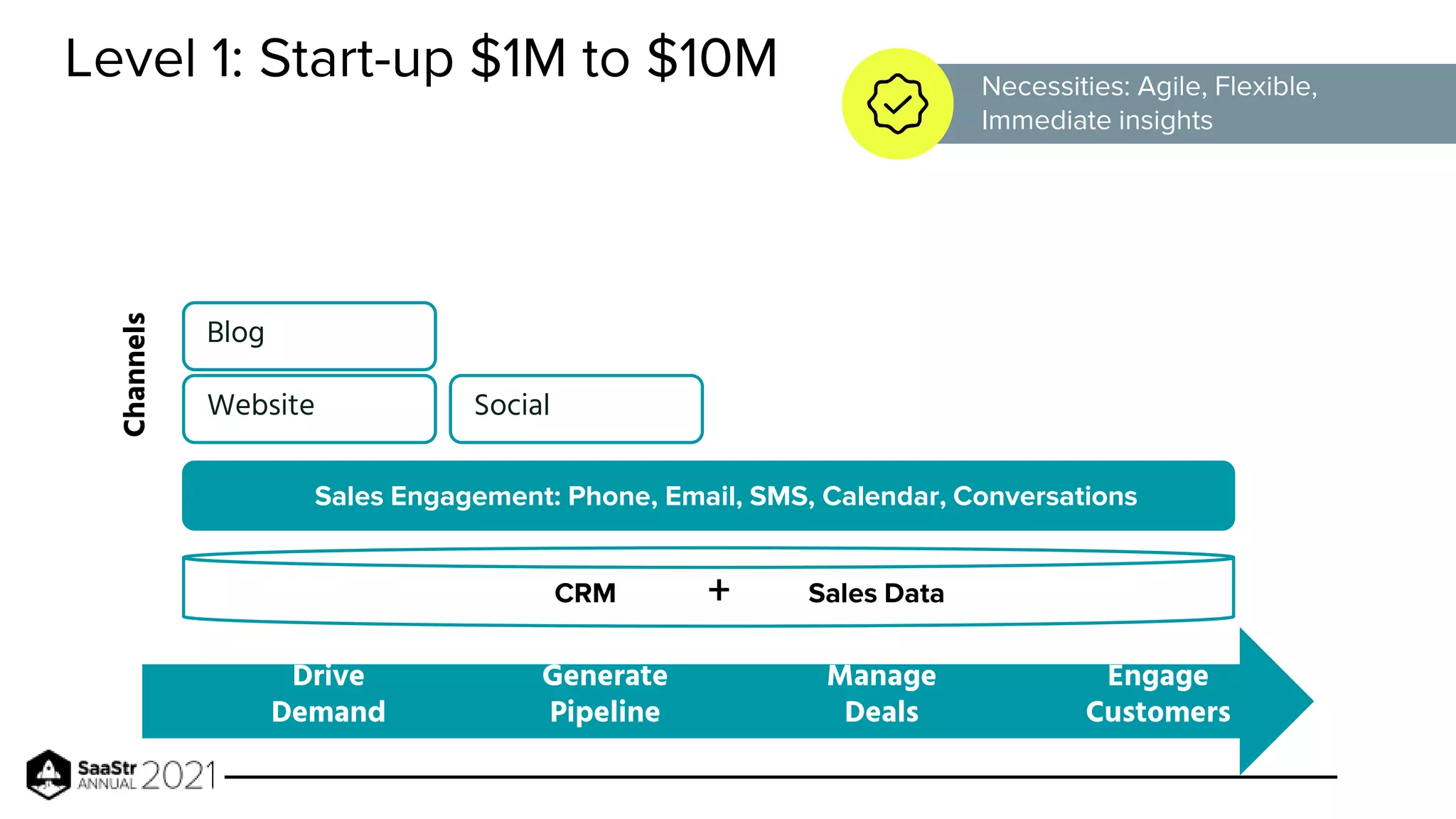
  • #8 The core principles for your tech stack at this stage should be to enable a fail fast environment - implement with agility, learn what works, iterate, and continue to test. You’re learning what works at this stage based on your target personas, ICP, messaging, and sales tactics. You’re not setting-up hard scale processes. You need to enable your team to reach more people and learn what works and what doesn’t. Sales Engagement is critical at this stage as it enables those connections - and enables your team to quickly learn what works and what doesn’t. You’ll notice that marketing automation (marketo, pardot) is not here. I debate this all the time w/ start ups. If you’re going after a tight ICP and you’re not building up a massive inbound flow you may not need MAP just yet. I was able to grow Salesloft to 75M before implementing a MAP
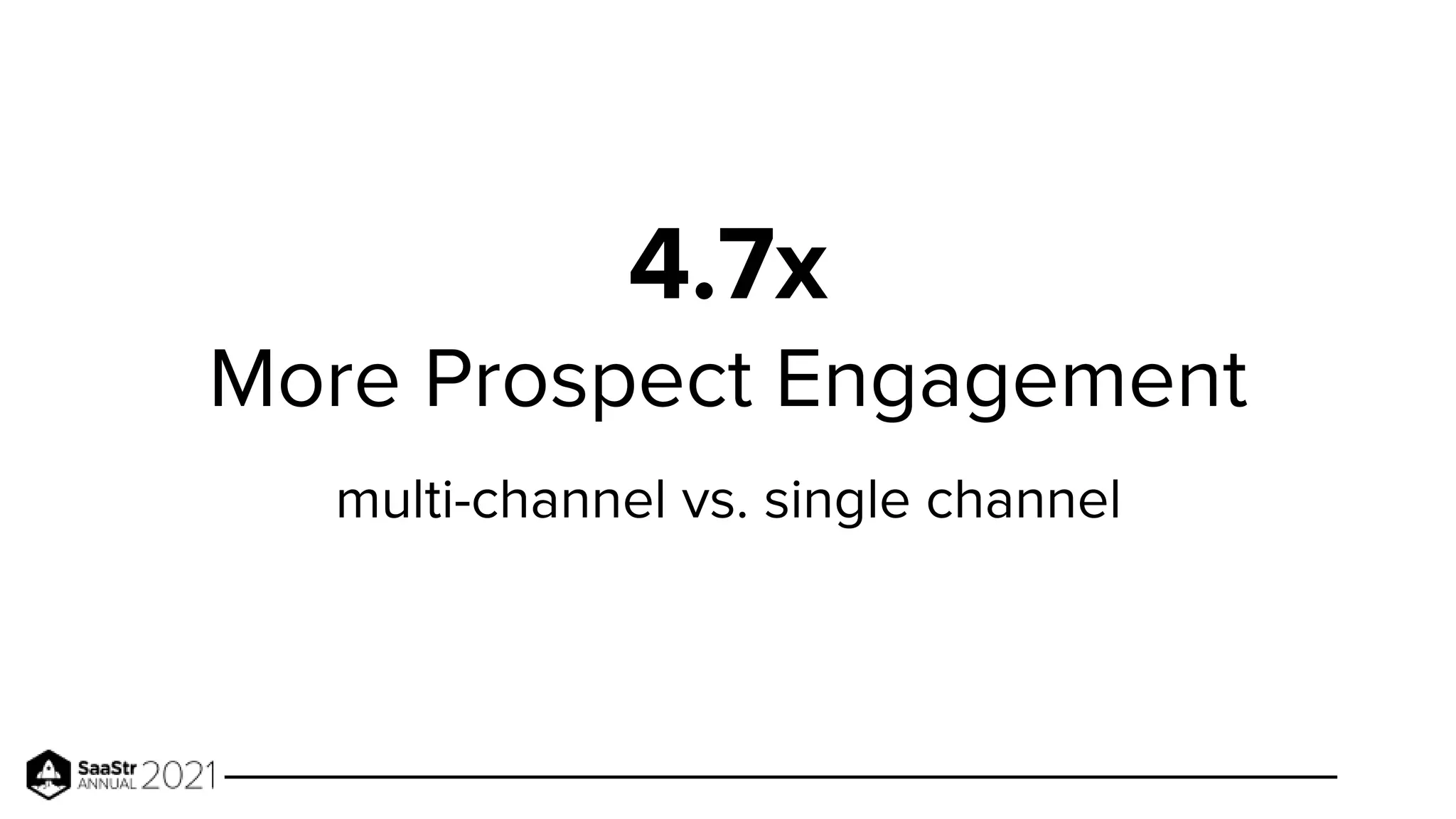
  • #9 Another reason to wait on marketing automation is that it’s an email only platform. And frankly, email only just isn’t converting anymore. At this stage in your growth, you should have a firm understanding of the steps you have to take to engage and win your buyers. However, you should also begin experimenting with different ways to engage prospects and interact with them digitally. Our own data science team has analyzed the interactions across millions of Cadences sent from our sales engagement platform. From this research we’ve found that engaging prospects shouldn’t be done with email alone. The research revealed that our customers experience 4.7x more prospect engagement for multi-channel vs. single channel. They experience 3.2x prospect engagement with a multi-touch Cadence, 2.9x prospect engagement with multi-touch in a single day.
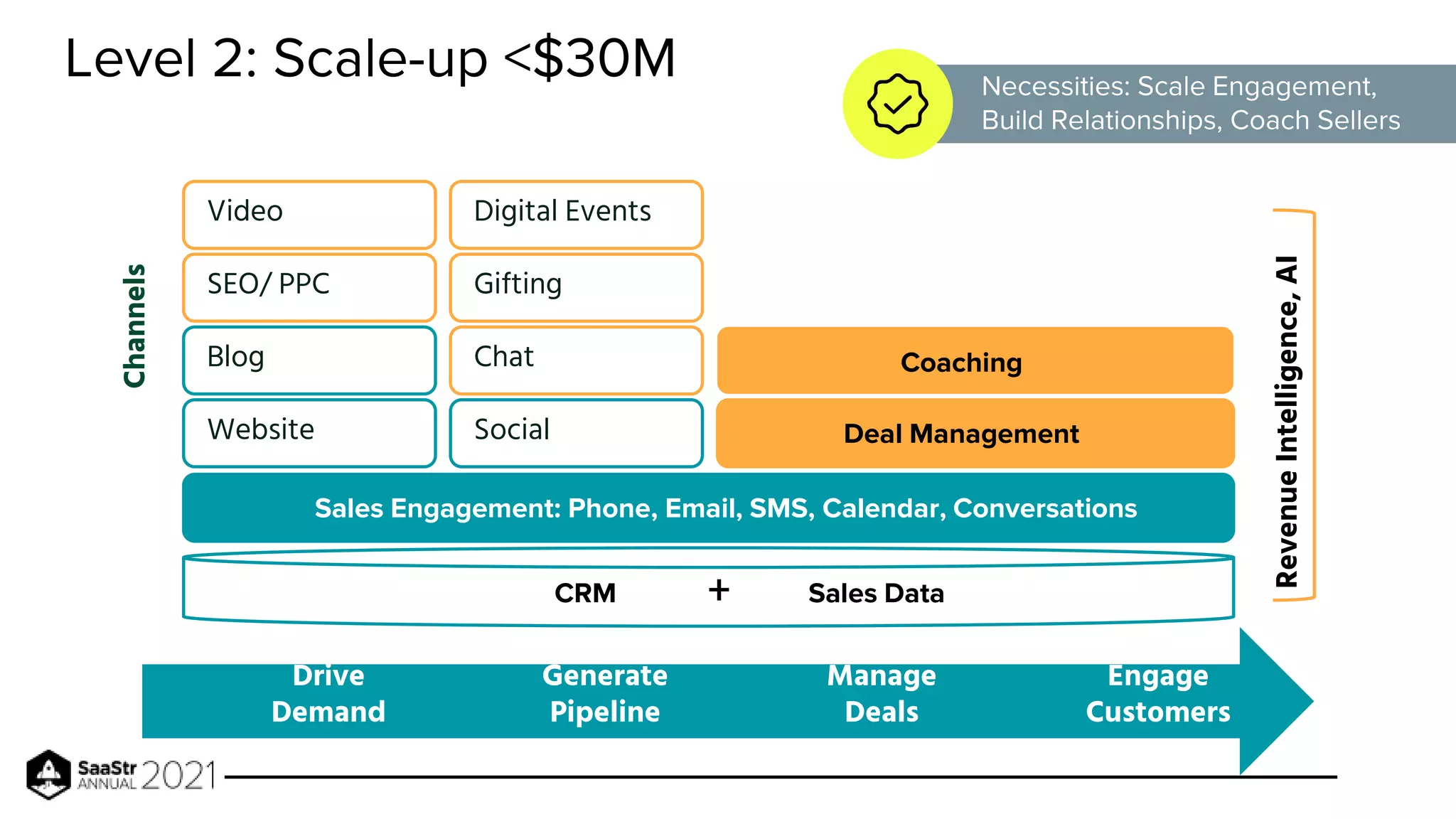
  • #11 As you’re growing and move to scale-up status, you’re working to also scale your processes and the reach of your team. Your process efficiency frees up the time of your team to begin to build more substantial relationships with your buyers through digital channels such as chat, video, gifting, and virtual experiences. You’re also developing your team by evaluating pipeline, setting benchmarks, and coaching their performance with conversation capabilities and deal insights. Back to my data democratization comment earlier, Revenue Intelligence is critical at this stage so your team can stay agile and effective. Data comment - improving process and performance based on data...train algorithms and learning models, channel effectiveness...etc.
  • #12 SalesLoft data science research across hundreds of millions of emails sent from our sales engagement platform shows that going from no email personalization to just 25% skyrockets reply rates to upwards of 300%. Achieving personalization - at scale with insights from buyer intent / keywords, incorporating gifting into your outbound cadences and videos.
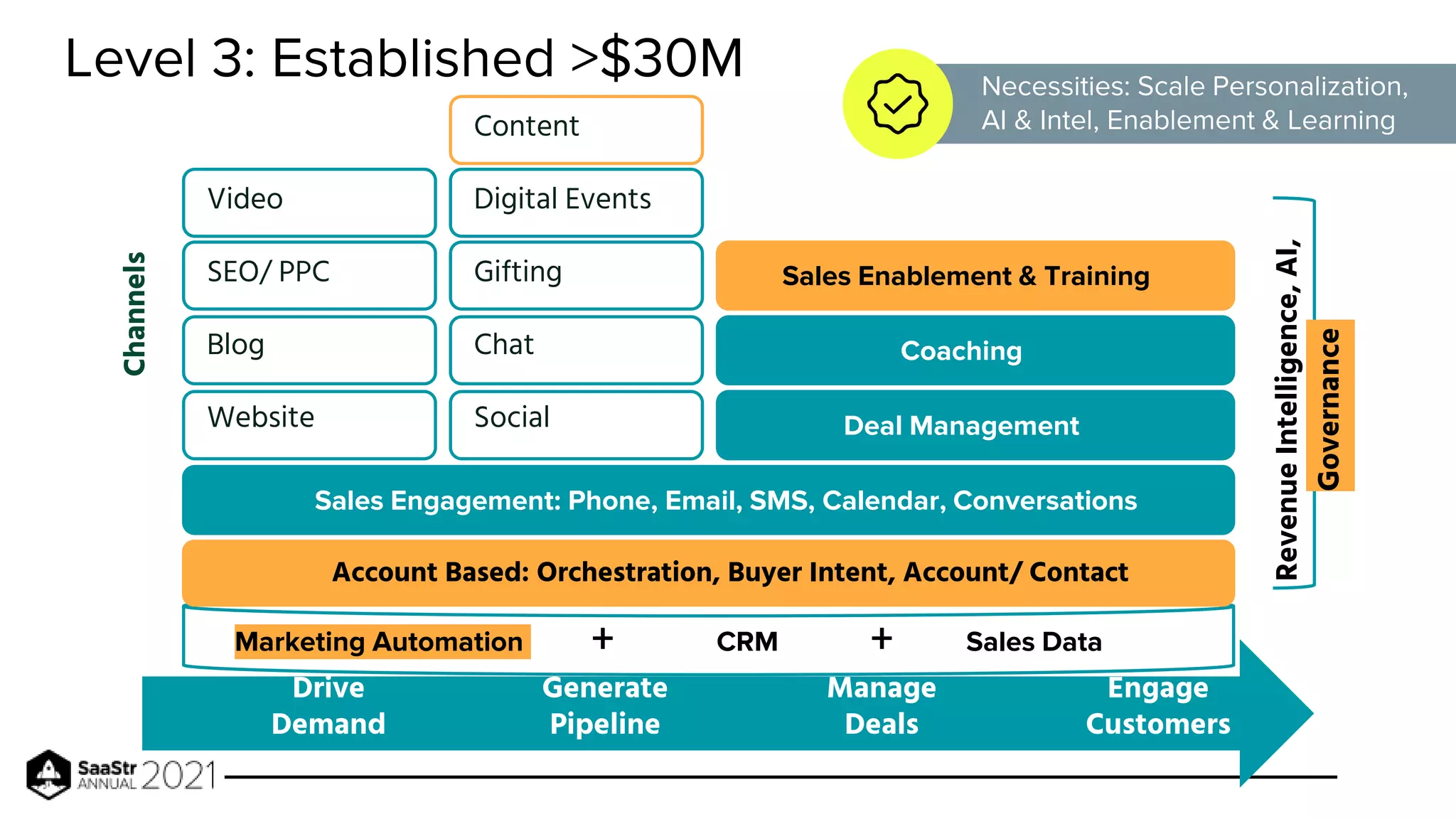
  • #14 As you work your way to Unicorn status, you likely have more more automation in your processes than ever before. At this stage, you’re thinking about: How do I ensure I deliver a personalized, connected buyer experience AND How do I ensure my team is focusing on the right accounts. You may layer in technologies that provide buyer intent insights, enable account-based orchestration, and incorporate personalized content experiences. Your revenue team is also growing...perhaps rapidly. You are thinking about enabling and training those teams in a repetitive, tested way, and ensuring they’re representing your brand and messaging correctly to buyers.
  • #15 As you’re scaling your business and your tech stack to support the growth, you have to be constantly evaluating the people, process, and technology and how they come together to orchestrate moving customers most efficiently through your process. Keep coming back to ensuring you have the right experience for your buyer/ customer. Ask yourself - what role does my team play in delivering that buyer experience and what are their strengths? And how can you make them more effective AND productive by using technology to codify the process and relying on their strengths. Keep the workflow as clean as possible.