
The How and Why of Creating
Purposeful and Enduring Business
Relationships
Relationships:
The Asset that Doesn’t Appear
on the Balance Sheet
Make Relationships a
Deliberate Priority
 Relationship Building is an important
element of every business plan.
 Building Purposeful relationships takes time
and focus.
 Networks- formal and informal- help CEOs
and senior management create and grow
businesses.
The basic fact of all human networks is that two
people who feel connected have something in
common
Why Relationships Matter
A Networking Mindset is Based on
These Beliefs
 I need help: without it my company can’t succeed.
 My resources are limited.
 I don’t know everything I need to.
 There are people who know what I dont know.
 Many of these people are happy to help.
 I can reach them through relationships that provide
benefit to all parties invovled
Steps to Efficiently Expand Resources
Through Networking
1. Build on connections that already exists
Organized support networks are networking points –
Entrepreneurial centers, Chamber of
Commerce, incubators, economic development
organizations, web sites
2. Get to know regional angels and VCs as experts and mentors
3. Engage contacts/associates at university and research institutions.
4. Seek advice from other successful entrepreneurs.
5. Associations and industry groups provide connections and
leadership opportunities
6. Community leaders are looking for up and coming business people
7. Media relationships – attract attention without a large budget
Local media look for local stories – volunteer an article
Get to know local reporters, local publications, industry blogs
Human Networking
leads to
Mentoring
 The first thing an entrepreneur needs is
mentoring, not money
 Mentors help add core disciplines to your
personal expertise
 Be targeted and specific when asking for
advice
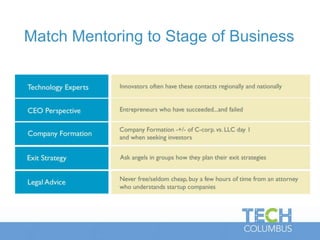
Match Mentoring to Stage of Business
(cont.)
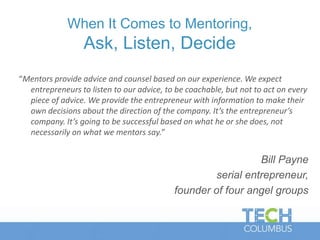
“Mentors provide advice and counsel based on our experience. We expect
entrepreneurs to listen to our advice, to be coachable, but not to act on every
piece of advice. We provide the entrepreneur with information to make their
own decisions about the direction of the company. It’s the entrepreneur’s
company. It’s going to be successful based on what he or she does, not
necessarily on what we mentors say.”
Bill Payne
serial entrepreneur,
founder of four angel groups
When It Comes to Mentoring,
Ask, Listen, Decide
Build a Board of Advisors First
 Supplement skills/talents of current team with volunteers
 3 to 5 people you know and trust- talent, not bulk
 Industry/functional experts with interest and willingness to prioritize
advising your company for a specified period
 Set a timeline for building an advisory boar, but don’t rush
 Be clear about your needs and expectations
 Seek a mix of tactical and strategic talent
 Draw on your pool of mentors for suggestions and possible
participation
 Advisors have no fiduciary responsibility
 Friends and family have their place, but not on your advisory board
Board of Advisors-
Operating Principles
 Be specific about requests- do you need a contact, a
referral, a sounding board
 Meet with entire advisory board every quarter or so, in
person or via Skype
 Follow an agenda/Keep advisory board notes
 Update advisors with periodic email communications
 Consider appropriate compensation
-pay all expenses
-further compensation can evolve as company evolves
Considerations for Selecting Board
of Directors
 External Capital creates rqmt. for BoD.
 Advisory Board experience gives an entrepreneur a head
start
 Investors typically take 1-2 seats
 Ensure that goals of investors, founded company officers are
aligned
 Be proactive with BoD selection
Considerations for Selecting Board
of Directors (cont.)
 Be proactive with BoD selection
 Use the relationships you’ve built up for ideas,
recommendations, and referrals
 Board members with industry or customer contacts are
extra valuable
 Choose 5-7 board members
 Be wary of egos, especially your own.
 Remain coachable
BoD Roles and Responsibilities are
specific and prescribed by law
 The Board is in place to serve the company
 Duties of Care and Loyalty
 Boards are not authorized to sign contracts
 Boards elect corporate officers
 Boards hire/fire CEOs
 Define which CEO decision require Board approval
 Define term limits/process for electing Chair
Board Meetings
 CEO sets the date, tone, and tempo
 Monthly meetings are common
 Face-to-face meetings are best
 Prepare for meetings
-CEO/ Chair jointly develop agenda
-Cover all topics with Board members in
advance
-Send Board materials at least 2 days ahead,
including detailed financial info for offline
review
-Standardize the format of
communications/slides
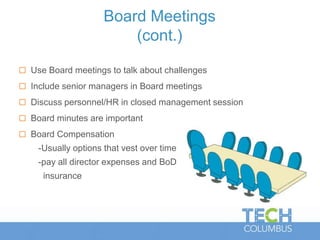
Board Meetings
(cont.)
 Use Board meetings to talk about challenges
 Include senior managers in Board meetings
 Discuss personnel/HR in closed management session
 Board minutes are important
 Board Compensation
-Usually options that vest over time
-pay all director expenses and BoD
insurance
“As you build advisory and board relationships: Have people with relevant
experience, have people who can ask the questions that you haven’t heard of
or thought of, and bucketize so there is no question around the table who is
primarily responsible for providing each essential business skill.”
John O. Huston
founder/manager, Ohio TechAngels Fund
Angles Capital Association Chairman Emeritus
Setting Up Boards of Directors and
Advisors
Attitudes/Behaviors to Build
Effective Relationships
 Operate with complete integrity
 Follow the intent AND letter of the law
 Respect others
 Keep your commitments
 Be willing to change your mind, say you were wrong, stand your
ground
 Remain Coachable
 Reciprocate...Give back to the relationship
Do what for new entrepreneurs that
others have done for you
“There is a great pool of talent available for entrepreneurs to use as
sounding boards, particularly when the company is small and early
stage. Go ahead and dream big, but get some help. Don’t diminish
the vision and the dream, but to keep it going, get some help to
implement and stay focused on your mission.”
Bill Botts
serial entrepreneur and investor

Relationships

  • 1.
    The How andWhy of Creating Purposeful and Enduring Business Relationships Relationships: The Asset that Doesn’t Appear on the Balance Sheet
  • 2.
    Make Relationships a DeliberatePriority  Relationship Building is an important element of every business plan.  Building Purposeful relationships takes time and focus.  Networks- formal and informal- help CEOs and senior management create and grow businesses.
  • 3.
    The basic factof all human networks is that two people who feel connected have something in common
  • 4.
  • 5.
    A Networking Mindsetis Based on These Beliefs  I need help: without it my company can’t succeed.  My resources are limited.  I don’t know everything I need to.  There are people who know what I dont know.  Many of these people are happy to help.  I can reach them through relationships that provide benefit to all parties invovled
  • 6.
    Steps to EfficientlyExpand Resources Through Networking 1. Build on connections that already exists Organized support networks are networking points – Entrepreneurial centers, Chamber of Commerce, incubators, economic development organizations, web sites 2. Get to know regional angels and VCs as experts and mentors 3. Engage contacts/associates at university and research institutions. 4. Seek advice from other successful entrepreneurs. 5. Associations and industry groups provide connections and leadership opportunities 6. Community leaders are looking for up and coming business people 7. Media relationships – attract attention without a large budget Local media look for local stories – volunteer an article Get to know local reporters, local publications, industry blogs
  • 7.
    Human Networking leads to Mentoring The first thing an entrepreneur needs is mentoring, not money  Mentors help add core disciplines to your personal expertise  Be targeted and specific when asking for advice
  • 8.
    Match Mentoring toStage of Business
  • 9.
    Match Mentoring toStage of Business (cont.)
  • 10.
    “Mentors provide adviceand counsel based on our experience. We expect entrepreneurs to listen to our advice, to be coachable, but not to act on every piece of advice. We provide the entrepreneur with information to make their own decisions about the direction of the company. It’s the entrepreneur’s company. It’s going to be successful based on what he or she does, not necessarily on what we mentors say.” Bill Payne serial entrepreneur, founder of four angel groups When It Comes to Mentoring, Ask, Listen, Decide
  • 11.
    Build a Boardof Advisors First  Supplement skills/talents of current team with volunteers  3 to 5 people you know and trust- talent, not bulk  Industry/functional experts with interest and willingness to prioritize advising your company for a specified period  Set a timeline for building an advisory boar, but don’t rush  Be clear about your needs and expectations  Seek a mix of tactical and strategic talent  Draw on your pool of mentors for suggestions and possible participation  Advisors have no fiduciary responsibility  Friends and family have their place, but not on your advisory board
  • 12.
    Board of Advisors- OperatingPrinciples  Be specific about requests- do you need a contact, a referral, a sounding board  Meet with entire advisory board every quarter or so, in person or via Skype  Follow an agenda/Keep advisory board notes  Update advisors with periodic email communications  Consider appropriate compensation -pay all expenses -further compensation can evolve as company evolves
  • 13.
    Considerations for SelectingBoard of Directors  External Capital creates rqmt. for BoD.  Advisory Board experience gives an entrepreneur a head start  Investors typically take 1-2 seats  Ensure that goals of investors, founded company officers are aligned  Be proactive with BoD selection
  • 14.
    Considerations for SelectingBoard of Directors (cont.)  Be proactive with BoD selection  Use the relationships you’ve built up for ideas, recommendations, and referrals  Board members with industry or customer contacts are extra valuable  Choose 5-7 board members  Be wary of egos, especially your own.  Remain coachable
  • 15.
    BoD Roles andResponsibilities are specific and prescribed by law  The Board is in place to serve the company  Duties of Care and Loyalty  Boards are not authorized to sign contracts  Boards elect corporate officers  Boards hire/fire CEOs  Define which CEO decision require Board approval  Define term limits/process for electing Chair
  • 16.
    Board Meetings  CEOsets the date, tone, and tempo  Monthly meetings are common  Face-to-face meetings are best  Prepare for meetings -CEO/ Chair jointly develop agenda -Cover all topics with Board members in advance -Send Board materials at least 2 days ahead, including detailed financial info for offline review -Standardize the format of communications/slides
  • 17.
    Board Meetings (cont.)  UseBoard meetings to talk about challenges  Include senior managers in Board meetings  Discuss personnel/HR in closed management session  Board minutes are important  Board Compensation -Usually options that vest over time -pay all director expenses and BoD insurance
  • 18.
    “As you buildadvisory and board relationships: Have people with relevant experience, have people who can ask the questions that you haven’t heard of or thought of, and bucketize so there is no question around the table who is primarily responsible for providing each essential business skill.” John O. Huston founder/manager, Ohio TechAngels Fund Angles Capital Association Chairman Emeritus Setting Up Boards of Directors and Advisors
  • 19.
    Attitudes/Behaviors to Build EffectiveRelationships  Operate with complete integrity  Follow the intent AND letter of the law  Respect others  Keep your commitments  Be willing to change your mind, say you were wrong, stand your ground  Remain Coachable  Reciprocate...Give back to the relationship Do what for new entrepreneurs that others have done for you
  • 20.
    “There is agreat pool of talent available for entrepreneurs to use as sounding boards, particularly when the company is small and early stage. Go ahead and dream big, but get some help. Don’t diminish the vision and the dream, but to keep it going, get some help to implement and stay focused on your mission.” Bill Botts serial entrepreneur and investor