Welcome
to SCIENCE
5
The Material World
Today's Lesson
create useful
products from
recyclable
materials
Objectives:
At the end of the lesson the student will:
Understand
the
properties of
different
materials
identify and
distinguish between
useful and harmful
materials base on
their properties.
what is
matter?
Matter is anything that takes
up space and can be
weighed. In other words,
matter has volume and mass.
What is matter?
the properties
of material
should be
studied to
know how it
can be used
The Material World
properties
properties are the
distinguishing
qualities of an object,
such as its Color,
Shape, and Weight.
• Material Science is the study
of the properties and
application of different
materials.
• wood
• paper
• Rubber
• Metals
• Plastic
• Ceramic
• Glass
• Textile
Wood
wood is the natural product from trees. wood that we
cut from trees is called timber . because wood is hard,
flexible, long-lasting, it is commonly used to build
structures such as houses and furniture.
Paper is made from wood or plants pulps. paper is used to make
other materials such as carboards, notebooks, and books.
Its tensile strength and durability make it ideal for making bags and other
containers.
Paper
Rubber
Rubber is made from milky
juice of rubber trees called latex.
Rubber is widely used because it
is strong, elastic, durable and
waterproof. Rubber also has
other properties such as
adhesiveness and electrical
resistance.
Different properties of rubber
Elasticity
it is ability to return to its original shape after
being stretched.
Water resistance
it is ability to prevent water from passing
through. objects that have this property are
said to be waterproof.
Adhesiveness
it is ability to make surfaces join(or adhere)
together.
Metals
Metals come from rocks or minerals called ores. minerals ores are
extracted trough mining. To obtain the pure metals, the ores must be
crushed and then the metals isolated with the used of chemicals and
heat.
Alloys
alloys are combinations of two or more metals that result in an
improved property of metals.
Plastic
• Plastic is considered as useful because it is lightweight, flexible,
waterproof, and easy to used.
• Plastic products have replaced some of our products that are
traditionally made of wood and metals.
• Plastic product are synthetically made from oil or coal by converting the
natural products into polymers.
Ceramic
• Ceramics are made of clay shaped into forms and hardened in high-
temperature oven called kiln. Generally, ceramics are hard, brittle, and
corrosion-resistant. These properties make ceramics as ideal materials to
make some household objects.
Glass
• Glass is made by melting a mixture of sand and other minerals in a
furnace and then cooling it afterward. If glass is heated further, it can be
formed into various shapes. When made property glass is strong,
transparent, and waterproof. It can be used in cars as tinted glass.
Textile
• Textile is made by weaving or knitting the threads of different fibers,
which can be natural or synthetic.
• Natural fibers can be obtained from cotton, silk, wool, and pineapple .
Composite materials
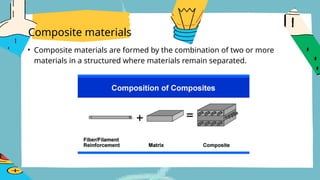
• Composite materials are formed by the combination of two or more
materials in a structured where materials remain separated.
Check point
1.What are the similarities between
ceramics and glass?
2.In what ways can ceramics be useful
materials?
3.In what ways can glass be useful
materials?

the material world.pptx.................

  • 1.
  • 2.
  • 3.
    create useful products from recyclable materials Objectives: Atthe end of the lesson the student will: Understand the properties of different materials identify and distinguish between useful and harmful materials base on their properties.
  • 4.
  • 5.
    Matter is anythingthat takes up space and can be weighed. In other words, matter has volume and mass. What is matter?
  • 6.
    the properties of material shouldbe studied to know how it can be used The Material World
  • 7.
    properties properties are the distinguishing qualitiesof an object, such as its Color, Shape, and Weight.
  • 8.
    • Material Scienceis the study of the properties and application of different materials. • wood • paper • Rubber • Metals • Plastic • Ceramic • Glass • Textile
  • 9.
    Wood wood is thenatural product from trees. wood that we cut from trees is called timber . because wood is hard, flexible, long-lasting, it is commonly used to build structures such as houses and furniture.
  • 10.
    Paper is madefrom wood or plants pulps. paper is used to make other materials such as carboards, notebooks, and books. Its tensile strength and durability make it ideal for making bags and other containers. Paper
  • 11.
    Rubber Rubber is madefrom milky juice of rubber trees called latex. Rubber is widely used because it is strong, elastic, durable and waterproof. Rubber also has other properties such as adhesiveness and electrical resistance.
  • 12.
    Different properties ofrubber Elasticity it is ability to return to its original shape after being stretched. Water resistance it is ability to prevent water from passing through. objects that have this property are said to be waterproof. Adhesiveness it is ability to make surfaces join(or adhere) together.
  • 13.
    Metals Metals come fromrocks or minerals called ores. minerals ores are extracted trough mining. To obtain the pure metals, the ores must be crushed and then the metals isolated with the used of chemicals and heat.
  • 14.
    Alloys alloys are combinationsof two or more metals that result in an improved property of metals.
  • 15.
    Plastic • Plastic isconsidered as useful because it is lightweight, flexible, waterproof, and easy to used. • Plastic products have replaced some of our products that are traditionally made of wood and metals. • Plastic product are synthetically made from oil or coal by converting the natural products into polymers.
  • 16.
    Ceramic • Ceramics aremade of clay shaped into forms and hardened in high- temperature oven called kiln. Generally, ceramics are hard, brittle, and corrosion-resistant. These properties make ceramics as ideal materials to make some household objects.
  • 17.
    Glass • Glass ismade by melting a mixture of sand and other minerals in a furnace and then cooling it afterward. If glass is heated further, it can be formed into various shapes. When made property glass is strong, transparent, and waterproof. It can be used in cars as tinted glass.
  • 18.
    Textile • Textile ismade by weaving or knitting the threads of different fibers, which can be natural or synthetic. • Natural fibers can be obtained from cotton, silk, wool, and pineapple .
  • 19.
    Composite materials • Compositematerials are formed by the combination of two or more materials in a structured where materials remain separated.
  • 20.
    Check point 1.What arethe similarities between ceramics and glass? 2.In what ways can ceramics be useful materials? 3.In what ways can glass be useful materials?