Downloaded 90 times


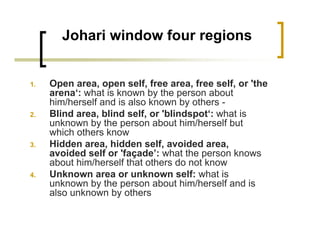
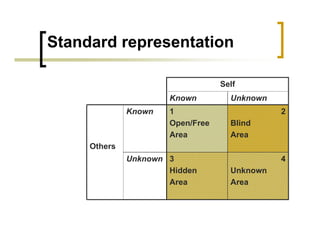
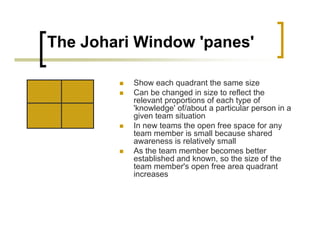
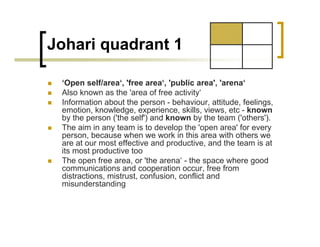
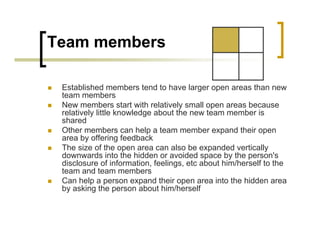
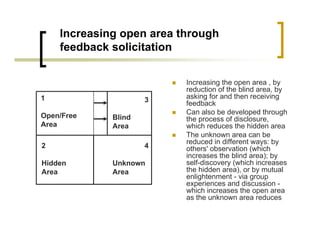
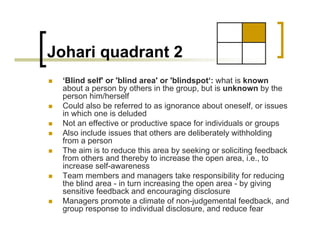
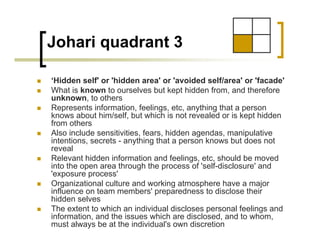
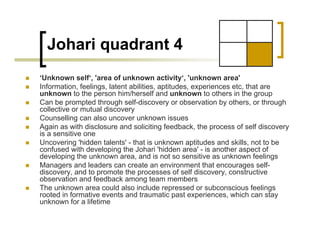
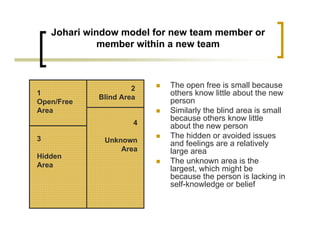
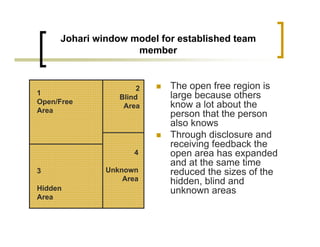
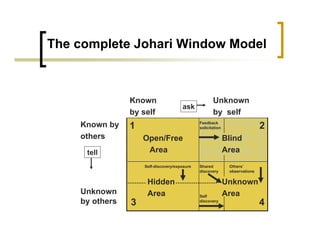

The document discusses the Johari Window model, which is a tool for self-awareness, personal development, and understanding relationships. It was developed in the 1950s by American psychologists Joseph Luft and Harry Ingham. The model represents information about a person from four perspectives: open area (known to self and others), blind area (unknown to self but known to others), hidden area (known to self but unknown to others), and unknown area (unknown to both self and others). The goal is to increase the open area through feedback, disclosure, and discovery in order to improve communication and relationships.


