The Introduction and Establishment of Horror Conventions
       The Horror Genre and institution: The Rise and Fall of Hammer Horror
                                  (1950’s -1960’s)

What is Hammer Horror?

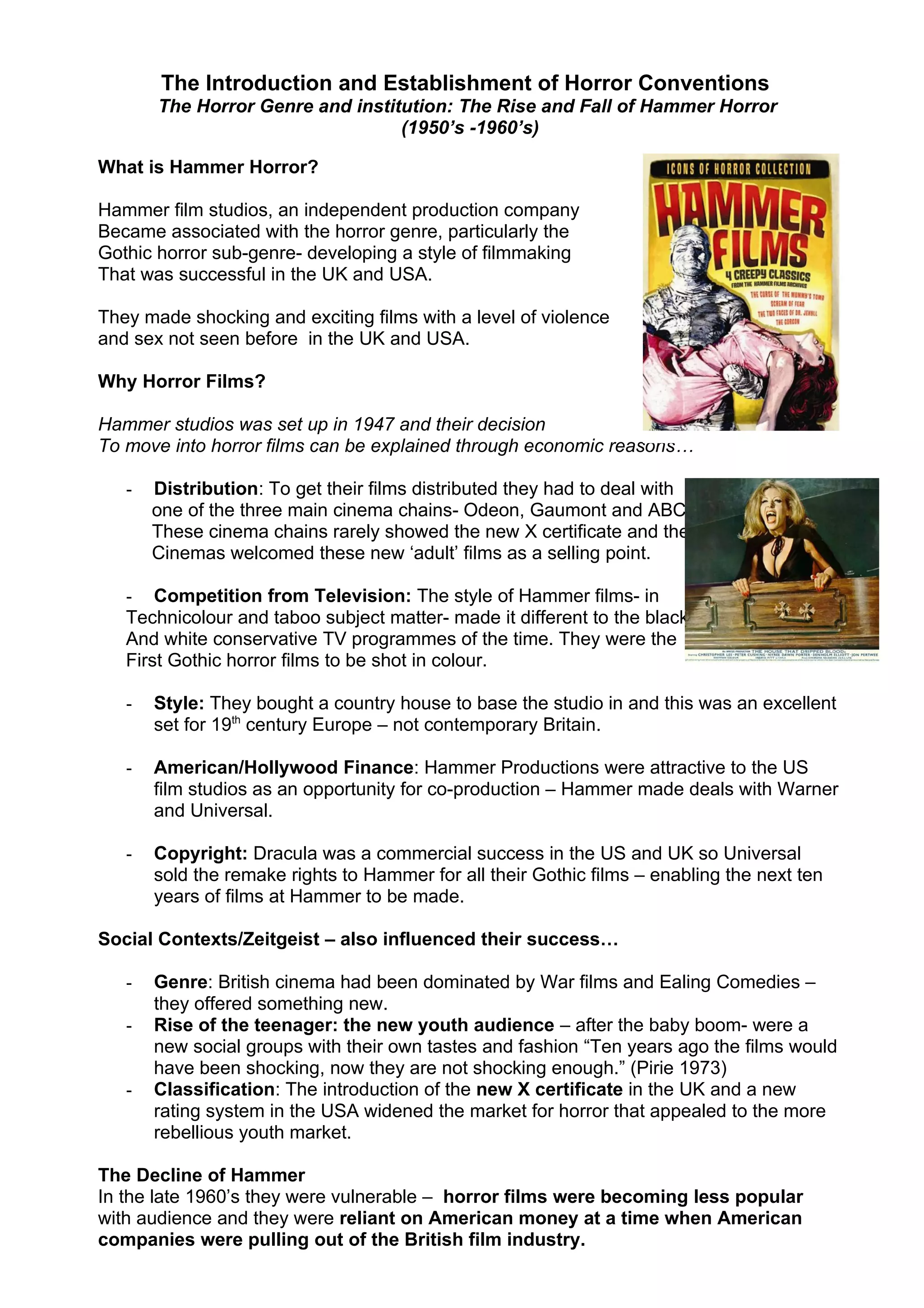
Hammer film studios, an independent production company
Became associated with the horror genre, particularly the
Gothic horror sub-genre- developing a style of filmmaking
That was successful in the UK and USA.

They made shocking and exciting films with a level of violence
and sex not seen before in the UK and USA.

Why Horror Films?

Hammer studios was set up in 1947 and their decision
To move into horror films can be explained through economic reasons…

   -   Distribution: To get their films distributed they had to deal with
       one of the three main cinema chains- Odeon, Gaumont and ABC
       These cinema chains rarely showed the new X certificate and the
       Cinemas welcomed these new ‘adult’ films as a selling point.

   - Competition from Television: The style of Hammer films- in
   Technicolour and taboo subject matter- made it different to the black
   And white conservative TV programmes of the time. They were the
   First Gothic horror films to be shot in colour.

   -   Style: They bought a country house to base the studio in and this was an excellent
       set for 19th century Europe – not contemporary Britain.

   -   American/Hollywood Finance: Hammer Productions were attractive to the US
       film studios as an opportunity for co-production – Hammer made deals with Warner
       and Universal.

   -   Copyright: Dracula was a commercial success in the US and UK so Universal
       sold the remake rights to Hammer for all their Gothic films – enabling the next ten
       years of films at Hammer to be made.

Social Contexts/Zeitgeist – also influenced their success…

   -   Genre: British cinema had been dominated by War films and Ealing Comedies –
       they offered something new.
   -   Rise of the teenager: the new youth audience – after the baby boom- were a
       new social groups with their own tastes and fashion “Ten years ago the films would
       have been shocking, now they are not shocking enough.” (Pirie 1973)
   -   Classification: The introduction of the new X certificate in the UK and a new
       rating system in the USA widened the market for horror that appealed to the more
       rebellious youth market.

The Decline of Hammer
In the late 1960’s they were vulnerable – horror films were becoming less popular
with audience and they were reliant on American money at a time when American
companies were pulling out of the British film industry.

The introduction and establishment of horror conventions

  • 1.
    The Introduction andEstablishment of Horror Conventions The Horror Genre and institution: The Rise and Fall of Hammer Horror (1950’s -1960’s) What is Hammer Horror? Hammer film studios, an independent production company Became associated with the horror genre, particularly the Gothic horror sub-genre- developing a style of filmmaking That was successful in the UK and USA. They made shocking and exciting films with a level of violence and sex not seen before in the UK and USA. Why Horror Films? Hammer studios was set up in 1947 and their decision To move into horror films can be explained through economic reasons… - Distribution: To get their films distributed they had to deal with one of the three main cinema chains- Odeon, Gaumont and ABC These cinema chains rarely showed the new X certificate and the Cinemas welcomed these new ‘adult’ films as a selling point. - Competition from Television: The style of Hammer films- in Technicolour and taboo subject matter- made it different to the black And white conservative TV programmes of the time. They were the First Gothic horror films to be shot in colour. - Style: They bought a country house to base the studio in and this was an excellent set for 19th century Europe – not contemporary Britain. - American/Hollywood Finance: Hammer Productions were attractive to the US film studios as an opportunity for co-production – Hammer made deals with Warner and Universal. - Copyright: Dracula was a commercial success in the US and UK so Universal sold the remake rights to Hammer for all their Gothic films – enabling the next ten years of films at Hammer to be made. Social Contexts/Zeitgeist – also influenced their success… - Genre: British cinema had been dominated by War films and Ealing Comedies – they offered something new. - Rise of the teenager: the new youth audience – after the baby boom- were a new social groups with their own tastes and fashion “Ten years ago the films would have been shocking, now they are not shocking enough.” (Pirie 1973) - Classification: The introduction of the new X certificate in the UK and a new rating system in the USA widened the market for horror that appealed to the more rebellious youth market. The Decline of Hammer In the late 1960’s they were vulnerable – horror films were becoming less popular with audience and they were reliant on American money at a time when American companies were pulling out of the British film industry.