The genres of cinema: horror
               by
         Marco Renzelli
What is horror fiction?
• The main aim of Horror fiction is to scare, to drive strong
  emotions in the audience.
• There are many ways to scare, using features of fantasy,
  science fiction or thriller fiction.
• This sometimes create confusion, however the aim of
  horror fiction is to scare, all the other things are only
  means to an end.
Why fear?
• Fear is the strongest of all emotion, only love can compare.
• This is the reason why there are only two genres based on emotion:
  horror and love stories.
• Fear is the oldest of all emotions, even reptiles or frogs are fearful.
• Fear is so important that many psychiatrists and psychoanalist think
  that personality type is linked with existential fears and ways of fear
  management.
• Paul Ekman published in 1957 the first of a series of revolutionary
  works that proved that fear is one of the few emotion, like anger and
  happiness, that is the same on the faces of people from all countries
  of the world.
• The first modern horror fiction stories arose during the eighteenth
  century, with the gothic fiction tradition melding horror and romance.
• The Castle of Otranto, Vathek, The Monk, The Mysteries of
  Udolpho introduced many troupes of the genre, like ghosts,
  haunted manors, damsels in distress.
• During the nineteenth century were written many of the most famous
  horror stories: Frankenstein, The Strange Case of Dr Jekyll and
  Mr Hyde, The Picture of Dorian Gray, Dracula.
• Other great authors of the time were Sheridan Le Fanu, Edgar Allan
  Poe and, in the early twentieth century, H.P.Lovecraft.
What are the sub-genres of horror?
•   Action horror: horror & guns
•   Body horror: monstrous transformation of the body.
•   Comedy horror: horror & comedy
•   Gothic horror:horror with victorian themes.
•   Natural horror: the monsters are normal animals.
•   Psychological horror:character-centered horrors.
•   Science fiction horror: horror in space.
•   Slasher films: bad guys with knives.
•   Splatter films: horror centered on gore and blood.
•   Zombie films: who need an explanation?
The first big hit of horror
  cinema-Nosferatu
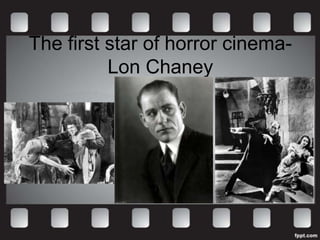
The first star of horror cinema-
          Lon Chaney
The first American age of
             horror:’30-’40
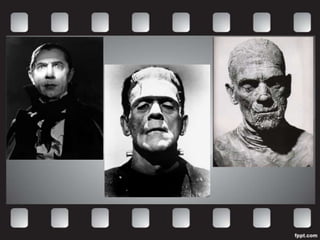
• Universal studios produced many of the classic of the
  genre, Dracula, Frankenstein, The Mummy, The Wolf
  Man, made by the duo Karloff-Lugosi
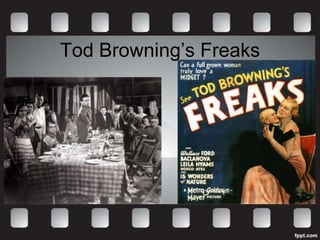
• The other companies, especially MGM, tried to pursuit
  Universal’ successes with Freaks, Dr. Jekill and Mr.
  Hyde, The Island of Lost Souls, The Mysteries of the
  Wax Museum.
Tod Browning’s Freaks
The British age of horror: the ’50
          up until 1964
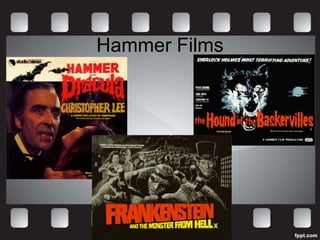
• Hammer films was the leading movie company of the time for horror
  films, making new colour version of Universal’s Dracula,
  Frankenstein, The Mummy, The Wolfman, made by the duo Peter
  Cushing-Christopher Lee.
• This films influenced the other side of Atlantic, with the American
  International Pictures’ Poe-themed films starring Vincent Price.
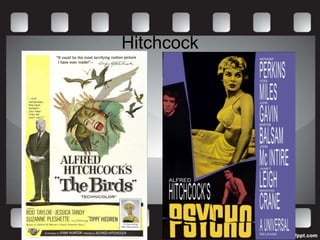
• The great british director Alfred Hitchcock made two of the most
  earning horror films of the time: Psycho and The Birds.
Hammer Films
American International Pictures
Hitchcock
The second American age: from 1964
             up to the nineties
•   1964 was the year of the great change: the end of the Motion Picture
    Production Code, moral guidelines for the movie industry, spurred a new
    wave of violent, blood filled, esoteric-themed films, previously not allowed.
•   We have the beginning of the splatter and zombie genre with Night of the
    Living Dead, the beginning of body and demonic horror with Rosemary’s
    baby.
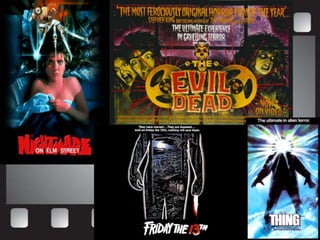
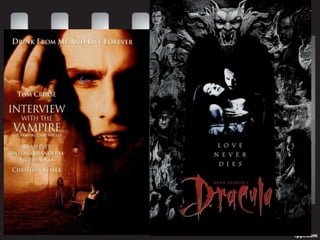
•   With the seventies the genre explode with The Exorcist, The Texas Chain
    Saw Massacre, The Hills Have Eyes, The Shining, Jaws , Alien, Dawn
    of the Dead in the eighties with A Nightmare on Elm Street, The Thing,
    The Evil Dead, Friday the 13 th, Halloween, up to the nineties with Bram
    Stocker’s Dracula, In the Mouth of Madness and Interview with the
    Vampire: The Vampire Chronicles
The decay of the horror genre
• In the nineties the production of films became a giant,
  well-oiled industry, with SFX companies and specialized
  directors for every genre; however the rising costs of
  films drove the need to avoid problems with public
  opinion, eliminating from mainstream movies gore, sex,
  violence and social criticism. The search for ever-
  increasing audiences had the outcome that modern
  «horror» movies are rarely forbidden to the youngs!
Hope for the future
• As for other art, like music or videogames, innovation and daring
  now are the province only of small to medium developers, using
  internet as the medium of choice; the first of this new wave of works
  was The Blair Witch Project.
• There has been a renaissance of the violent, gore films, with a wave
  of remake of classics of the seventies. The good results at the box
  office is encouraging some to begin anew to produce horror films.
  Only time will tell if is a fad or a true trend.

Horror movies

  • 1.
    The genres ofcinema: horror by Marco Renzelli
  • 2.
    What is horrorfiction? • The main aim of Horror fiction is to scare, to drive strong emotions in the audience. • There are many ways to scare, using features of fantasy, science fiction or thriller fiction. • This sometimes create confusion, however the aim of horror fiction is to scare, all the other things are only means to an end.
  • 3.
    Why fear? • Fearis the strongest of all emotion, only love can compare. • This is the reason why there are only two genres based on emotion: horror and love stories. • Fear is the oldest of all emotions, even reptiles or frogs are fearful. • Fear is so important that many psychiatrists and psychoanalist think that personality type is linked with existential fears and ways of fear management. • Paul Ekman published in 1957 the first of a series of revolutionary works that proved that fear is one of the few emotion, like anger and happiness, that is the same on the faces of people from all countries of the world.
  • 4.
    • The firstmodern horror fiction stories arose during the eighteenth century, with the gothic fiction tradition melding horror and romance. • The Castle of Otranto, Vathek, The Monk, The Mysteries of Udolpho introduced many troupes of the genre, like ghosts, haunted manors, damsels in distress. • During the nineteenth century were written many of the most famous horror stories: Frankenstein, The Strange Case of Dr Jekyll and Mr Hyde, The Picture of Dorian Gray, Dracula. • Other great authors of the time were Sheridan Le Fanu, Edgar Allan Poe and, in the early twentieth century, H.P.Lovecraft.
  • 5.
    What are thesub-genres of horror? • Action horror: horror & guns • Body horror: monstrous transformation of the body. • Comedy horror: horror & comedy • Gothic horror:horror with victorian themes. • Natural horror: the monsters are normal animals. • Psychological horror:character-centered horrors. • Science fiction horror: horror in space. • Slasher films: bad guys with knives. • Splatter films: horror centered on gore and blood. • Zombie films: who need an explanation?
  • 6.
    The first bighit of horror cinema-Nosferatu
  • 7.
    The first starof horror cinema- Lon Chaney
  • 8.
    The first Americanage of horror:’30-’40 • Universal studios produced many of the classic of the genre, Dracula, Frankenstein, The Mummy, The Wolf Man, made by the duo Karloff-Lugosi • The other companies, especially MGM, tried to pursuit Universal’ successes with Freaks, Dr. Jekill and Mr. Hyde, The Island of Lost Souls, The Mysteries of the Wax Museum.
  • 10.
  • 11.
    The British ageof horror: the ’50 up until 1964 • Hammer films was the leading movie company of the time for horror films, making new colour version of Universal’s Dracula, Frankenstein, The Mummy, The Wolfman, made by the duo Peter Cushing-Christopher Lee. • This films influenced the other side of Atlantic, with the American International Pictures’ Poe-themed films starring Vincent Price. • The great british director Alfred Hitchcock made two of the most earning horror films of the time: Psycho and The Birds.
  • 12.
  • 13.
  • 14.
  • 15.
    The second Americanage: from 1964 up to the nineties • 1964 was the year of the great change: the end of the Motion Picture Production Code, moral guidelines for the movie industry, spurred a new wave of violent, blood filled, esoteric-themed films, previously not allowed. • We have the beginning of the splatter and zombie genre with Night of the Living Dead, the beginning of body and demonic horror with Rosemary’s baby. • With the seventies the genre explode with The Exorcist, The Texas Chain Saw Massacre, The Hills Have Eyes, The Shining, Jaws , Alien, Dawn of the Dead in the eighties with A Nightmare on Elm Street, The Thing, The Evil Dead, Friday the 13 th, Halloween, up to the nineties with Bram Stocker’s Dracula, In the Mouth of Madness and Interview with the Vampire: The Vampire Chronicles
  • 19.
    The decay ofthe horror genre • In the nineties the production of films became a giant, well-oiled industry, with SFX companies and specialized directors for every genre; however the rising costs of films drove the need to avoid problems with public opinion, eliminating from mainstream movies gore, sex, violence and social criticism. The search for ever- increasing audiences had the outcome that modern «horror» movies are rarely forbidden to the youngs!
  • 20.
    Hope for thefuture • As for other art, like music or videogames, innovation and daring now are the province only of small to medium developers, using internet as the medium of choice; the first of this new wave of works was The Blair Witch Project. • There has been a renaissance of the violent, gore films, with a wave of remake of classics of the seventies. The good results at the box office is encouraging some to begin anew to produce horror films. Only time will tell if is a fad or a true trend.