1
 The word ‘’INTEGUMENT’’ comes from a LATIN word
that means “to COVER”.
 The integument as an organ and is an alternative name
for skin.
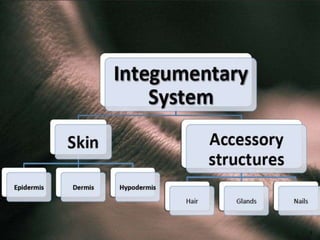
 Skin and its accessories such as-the hair, nails and a
variety of glands, make up the Integumentary system.
2
3
4
5
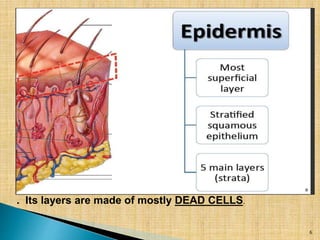
. Its layers are made of mostly DEAD CELLS.
6
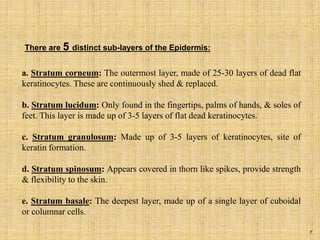
There are 5 distinct sub-layers of the Epidermis:
a. Stratum corneum: The outermost layer, made of 25-30 layers of dead flat
keratinocytes. These are continuously shed & replaced.
b. Stratum lucidum: Only found in the fingertips, palms of hands, & soles of
feet. This layer is made up of 3-5 layers of flat dead keratinocytes.
c. Stratum granulosum: Made up of 3-5 layers of keratinocytes, site of
keratin formation.
d. Stratum spinosum: Appears covered in thorn like spikes, provide strength
& flexibility to the skin.
e. Stratum basale: The deepest layer, made up of a single layer of cuboidal
or columnar cells.
7
8
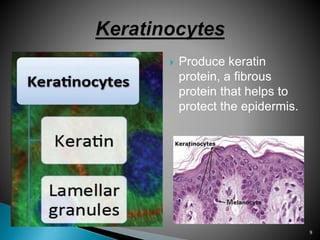
 Produce keratin
protein, a fibrous
protein that helps to
protect the epidermis.
9
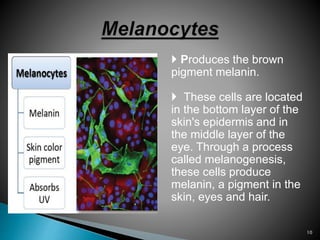
 Produces the brown
pigment melanin.
 These cells are located
in the bottom layer of the
skin's epidermis and in
the middle layer of the
eye. Through a process
called melanogenesis,
these cells produce
melanin, a pigment in the
skin, eyes and hair.
10
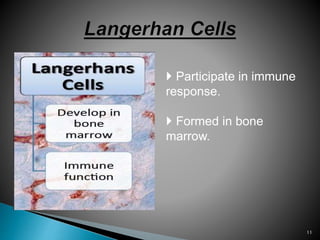
 Participate in immune
response.
 Formed in bone
marrow.
11
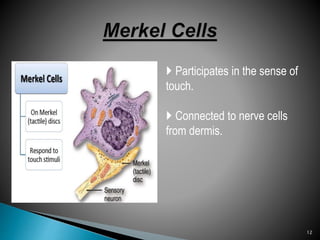
 Participates in the sense of
touch.
 Connected to nerve cells
from dermis.
12
13
14
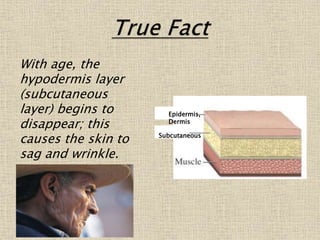
With age, the
hypodermis layer
(subcutaneous
layer) begins to
disappear; this
causes the skin to
sag and wrinkle.
Subcutaneous
Epidermis,
Dermis
16
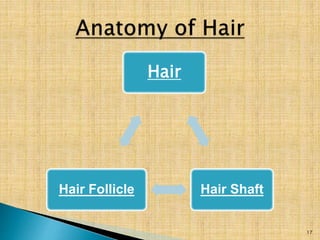
Hair
Hair ShaftHair Follicle
17
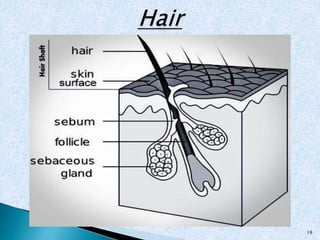
The hair has 2 part, namely:
 Hair Follicle :
• The hair follicle is the point from which the hair
grows. It is a tiny cup-shaped pit, buried in the fat of
the scalp.
 Hair Shaft :
• The part of the hair seen above the skin is called the
hair shaft. The hair shaft is made up of dead cells that
have turned into keratin and binding material, together
with small amounts of water. This structure explains
why we do not feel any pain while our hair is being cut.
18
19
20
21
22
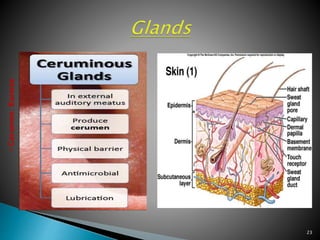
•Cerumen:Earwax
23
24
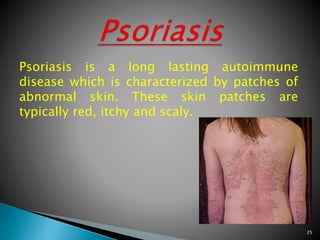
Psoriasis is a long lasting autoimmune
disease which is characterized by patches of
abnormal skin. These skin patches are
typically red, itchy and scaly.
25
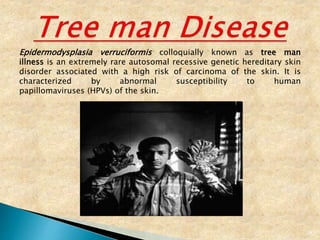
Epidermodysplasia verruciformis colloquially known as tree man
illness is an extremely rare autosomal recessive genetic hereditary skin
disorder associated with a high risk of carcinoma of the skin. It is
characterized by abnormal susceptibility to human
papillomaviruses (HPVs) of the skin.
26
27
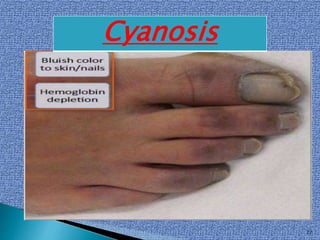
Cyanosis
28
 A condition in
which the
pigment is lost
from areas of the
skin, causing
whitish patches,
often with no
clear cause.
29
30
•Carcinogenesis or oncogenesis or tumorigenesis is the formation of a
cancer, whereby normal cells are transformed into cancer cells.
31
32

The integummentary system

  • 1.
  • 2.
     The word‘’INTEGUMENT’’ comes from a LATIN word that means “to COVER”.  The integument as an organ and is an alternative name for skin.  Skin and its accessories such as-the hair, nails and a variety of glands, make up the Integumentary system. 2
  • 3.
  • 4.
  • 5.
  • 6.
    . Its layersare made of mostly DEAD CELLS. 6
  • 7.
    There are 5distinct sub-layers of the Epidermis: a. Stratum corneum: The outermost layer, made of 25-30 layers of dead flat keratinocytes. These are continuously shed & replaced. b. Stratum lucidum: Only found in the fingertips, palms of hands, & soles of feet. This layer is made up of 3-5 layers of flat dead keratinocytes. c. Stratum granulosum: Made up of 3-5 layers of keratinocytes, site of keratin formation. d. Stratum spinosum: Appears covered in thorn like spikes, provide strength & flexibility to the skin. e. Stratum basale: The deepest layer, made up of a single layer of cuboidal or columnar cells. 7
  • 8.
  • 9.
     Produce keratin protein,a fibrous protein that helps to protect the epidermis. 9
  • 10.
     Produces thebrown pigment melanin.  These cells are located in the bottom layer of the skin's epidermis and in the middle layer of the eye. Through a process called melanogenesis, these cells produce melanin, a pigment in the skin, eyes and hair. 10
  • 11.
     Participate inimmune response.  Formed in bone marrow. 11
  • 12.
     Participates inthe sense of touch.  Connected to nerve cells from dermis. 12
  • 13.
  • 14.
  • 15.
    With age, the hypodermislayer (subcutaneous layer) begins to disappear; this causes the skin to sag and wrinkle. Subcutaneous Epidermis, Dermis
  • 16.
  • 17.
  • 18.
    The hair has2 part, namely:  Hair Follicle : • The hair follicle is the point from which the hair grows. It is a tiny cup-shaped pit, buried in the fat of the scalp.  Hair Shaft : • The part of the hair seen above the skin is called the hair shaft. The hair shaft is made up of dead cells that have turned into keratin and binding material, together with small amounts of water. This structure explains why we do not feel any pain while our hair is being cut. 18
  • 19.
  • 20.
  • 21.
  • 22.
  • 23.
  • 24.
  • 25.
    Psoriasis is along lasting autoimmune disease which is characterized by patches of abnormal skin. These skin patches are typically red, itchy and scaly. 25
  • 26.
    Epidermodysplasia verruciformis colloquiallyknown as tree man illness is an extremely rare autosomal recessive genetic hereditary skin disorder associated with a high risk of carcinoma of the skin. It is characterized by abnormal susceptibility to human papillomaviruses (HPVs) of the skin. 26
  • 27.
  • 28.
  • 29.
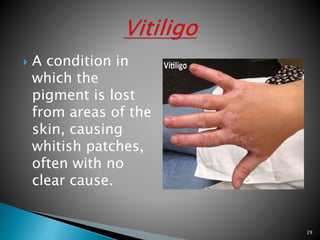
     A conditionin which the pigment is lost from areas of the skin, causing whitish patches, often with no clear cause. 29
  • 30.
  • 31.
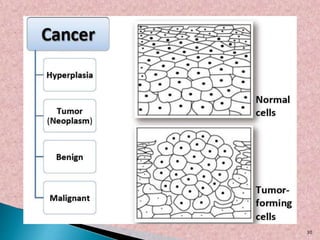
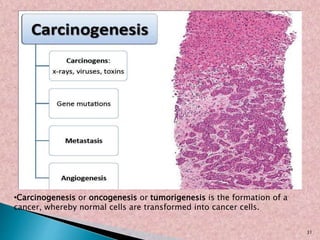
    •Carcinogenesis or oncogenesisor tumorigenesis is the formation of a cancer, whereby normal cells are transformed into cancer cells. 31
  • 32.