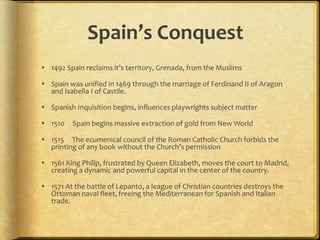
Spain’s Conquest
 1492 Spain reclaims it’s territory, Grenada, from the Muslims
 Spain was unified in 1469 through the marriage of Ferdinand II of Aragon
and Isabella I of Castile.
 Spanish Inquisition begins, influences playwrights subject matter
 1510 Spain begins massive extraction of gold from New World
 1515 The ecumenical council of the Roman Catholic Church forbids the
printing of any book without the Church’s permission
 1561 King Philip, frustrated by Queen Elizabeth, moves the court to Madrid,
creating a dynamic and powerful capital in the center of the country.
 1571 At the battle of Lepanto, a league of Christian countries destroys the
Ottoman naval fleet, freeing the Mediterranean for Spanish and Italian
trade.
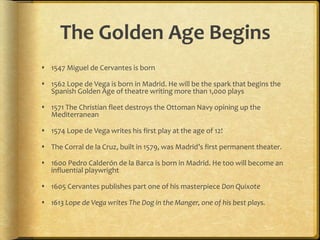
The Golden Age Begins
 1547 Miguel de Cervantes is born
 1562 Lope de Vega is born in Madrid. He will be the spark that begins the
Spanish Golden Age of theatre writing more than 1,000 plays
 1571 The Christian fleet destroys the Ottoman Navy opining up the
Mediterranean
 1574 Lope de Vega writes his first play at the age of 12!
 The Corral de la Cruz, built in 1579, was Madrid’s first permanent theater.
 1600 Pedro Calderón de la Barca is born in Madrid. He too will become an
influential playwright
 1605 Cervantes publishes part one of his masterpiece Don Quixote
 1613 Lope de Vega writes The Dog in the Manger, one of his best plays.
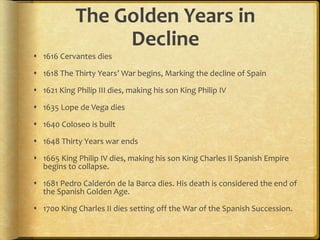
The Golden Years in
Decline
 1616 Cervantes dies
 1618 The Thirty Years’ War begins, Marking the decline of Spain
 1621 King Philip III dies, making his son King Philip IV
 1635 Lope de Vega dies
 1640 Coloseo is built
 1648 Thirty Years war ends
 1665 King Philip IV dies, making his son King Charles II Spanish Empire
begins to collapse.
 1681 Pedro Calderón de la Barca dies. His death is considered the end of
the Spanish Golden Age.
 1700 King Charles II dies setting off the War of the Spanish Succession.
Religious Drama
 Autos Sacramentales: uses human and supernatural
qualities, in a usualy allegorical drama
 2-4 Carros, Wagons, were used to celebrate Corpus
Christi
 They were produced by the trade guilds
 Often with professional, touring groups performing or
religious clergy
Public Theatre
 Corrales
 Professional theatre produced in major cities
 Corral de la Cruz Built moved court yard
performances into a permanent theatre
 Often a raucous crowd
 State controlled by 1615
Autores
 1603 only licensed actors could perform
 Actors after 1615 were hired by the state
 Women, if you remember, were allowed to perform,
but after 1599 women must be married to continue
 Actors who made it into the court were heavily
praised and rewarded for their hard work
 Unemployed actors joined companias de la legua
(companies of the road) and went around the
country side
Theatre in the Court
 Phillip the second brought about the practice in 1600
 Colliseo is built by Lotti
 1590’s comedia nueva was the new fad
 Genre’s include: cape and sword, romance and intrigue,
comedies of manners
 Lope de Vega and Tirso de Molina are two most famous
writers in this style
 Calderon de la Barca brings Corrales and opera style
grandeur
 Wrote all auto’s for Madrid
The times…
 Lavish Kings rich off south American gold brought a
need for artists
 Galileo, the New world, a unified country
 The Inquisition is finally easing up as the entire
country converts to Catholicism
 And Lope De Vega returns from battle…
 All the makings for the Golden Age of Spain.
Sources
 http://www.wwnorton.com/college/english/nadrama
/content/review/shorthistory/antiquity-
18c/spanish.aspx
 http://www.shakespearetheatre.org/plays/articles.as
px?&id=707
 http://en.wikipedia.org/wiki/Spanish_Golden_Age
 http://tiltingatwindmillsblog.wordpress.com/2007/04
/30/historical-timeline-spain-1510-1616/

The golden age

  • 2.
    Spain’s Conquest  1492Spain reclaims it’s territory, Grenada, from the Muslims  Spain was unified in 1469 through the marriage of Ferdinand II of Aragon and Isabella I of Castile.  Spanish Inquisition begins, influences playwrights subject matter  1510 Spain begins massive extraction of gold from New World  1515 The ecumenical council of the Roman Catholic Church forbids the printing of any book without the Church’s permission  1561 King Philip, frustrated by Queen Elizabeth, moves the court to Madrid, creating a dynamic and powerful capital in the center of the country.  1571 At the battle of Lepanto, a league of Christian countries destroys the Ottoman naval fleet, freeing the Mediterranean for Spanish and Italian trade.
  • 3.
    The Golden AgeBegins  1547 Miguel de Cervantes is born  1562 Lope de Vega is born in Madrid. He will be the spark that begins the Spanish Golden Age of theatre writing more than 1,000 plays  1571 The Christian fleet destroys the Ottoman Navy opining up the Mediterranean  1574 Lope de Vega writes his first play at the age of 12!  The Corral de la Cruz, built in 1579, was Madrid’s first permanent theater.  1600 Pedro Calderón de la Barca is born in Madrid. He too will become an influential playwright  1605 Cervantes publishes part one of his masterpiece Don Quixote  1613 Lope de Vega writes The Dog in the Manger, one of his best plays.
  • 4.
    The Golden Yearsin Decline  1616 Cervantes dies  1618 The Thirty Years’ War begins, Marking the decline of Spain  1621 King Philip III dies, making his son King Philip IV  1635 Lope de Vega dies  1640 Coloseo is built  1648 Thirty Years war ends  1665 King Philip IV dies, making his son King Charles II Spanish Empire begins to collapse.  1681 Pedro Calderón de la Barca dies. His death is considered the end of the Spanish Golden Age.  1700 King Charles II dies setting off the War of the Spanish Succession.
  • 5.
    Religious Drama  AutosSacramentales: uses human and supernatural qualities, in a usualy allegorical drama  2-4 Carros, Wagons, were used to celebrate Corpus Christi  They were produced by the trade guilds  Often with professional, touring groups performing or religious clergy
  • 6.
    Public Theatre  Corrales Professional theatre produced in major cities  Corral de la Cruz Built moved court yard performances into a permanent theatre  Often a raucous crowd  State controlled by 1615
  • 7.
    Autores  1603 onlylicensed actors could perform  Actors after 1615 were hired by the state  Women, if you remember, were allowed to perform, but after 1599 women must be married to continue  Actors who made it into the court were heavily praised and rewarded for their hard work  Unemployed actors joined companias de la legua (companies of the road) and went around the country side
  • 8.
    Theatre in theCourt  Phillip the second brought about the practice in 1600  Colliseo is built by Lotti  1590’s comedia nueva was the new fad  Genre’s include: cape and sword, romance and intrigue, comedies of manners  Lope de Vega and Tirso de Molina are two most famous writers in this style  Calderon de la Barca brings Corrales and opera style grandeur  Wrote all auto’s for Madrid
  • 9.
    The times…  LavishKings rich off south American gold brought a need for artists  Galileo, the New world, a unified country  The Inquisition is finally easing up as the entire country converts to Catholicism  And Lope De Vega returns from battle…  All the makings for the Golden Age of Spain.
  • 10.
    Sources  http://www.wwnorton.com/college/english/nadrama /content/review/shorthistory/antiquity- 18c/spanish.aspx  http://www.shakespearetheatre.org/plays/articles.as px?&id=707 http://en.wikipedia.org/wiki/Spanish_Golden_Age  http://tiltingatwindmillsblog.wordpress.com/2007/04 /30/historical-timeline-spain-1510-1616/