Sound
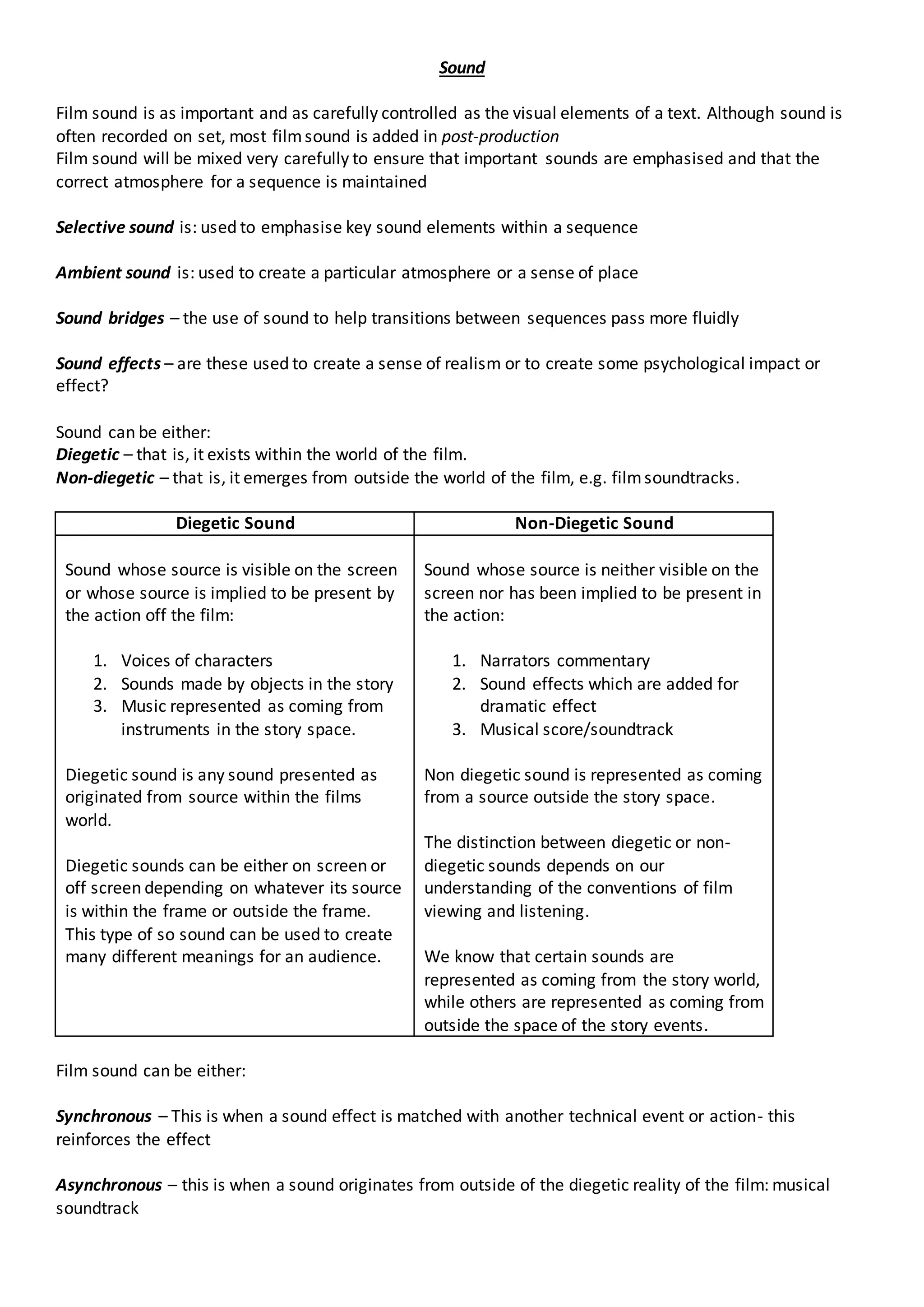
Film sound is as important and as carefully controlled as the visual elements of a text. Although sound is
often recorded on set, most filmsound is added in post-production
Film sound will be mixed very carefully to ensure that important sounds are emphasised and that the
correct atmosphere for a sequence is maintained
Selective sound is: used to emphasise key sound elements within a sequence
Ambient sound is: used to create a particular atmosphere or a sense of place
Sound bridges – the use of sound to help transitions between sequences pass more fluidly
Sound effects – are these used to create a sense of realism or to create some psychological impact or
effect?
Sound can be either:
Diegetic – that is, it exists within the world of the film.
Non-diegetic – that is, it emerges from outside the world of the film, e.g. filmsoundtracks.
Diegetic Sound Non-Diegetic Sound
Sound whose source is visible on the screen
or whose source is implied to be present by
the action off the film:
1. Voices of characters
2. Sounds made by objects in the story
3. Music represented as coming from
instruments in the story space.
Diegetic sound is any sound presented as
originated from source within the films
world.
Diegetic sounds can be either on screen or
off screen depending on whatever its source
is within the frame or outside the frame.
This type of so sound can be used to create
many different meanings for an audience.
Sound whose source is neither visible on the
screen nor has been implied to be present in
the action:
1. Narrators commentary
2. Sound effects which are added for
dramatic effect
3. Musical score/soundtrack
Non diegetic sound is represented as coming
from a source outside the story space.
The distinction between diegetic or non-
diegetic sounds depends on our
understanding of the conventions of film
viewing and listening.
We know that certain sounds are
represented as coming from the story world,
while others are represented as coming from
outside the space of the story events.
Film sound can be either:
Synchronous – This is when a sound effect is matched with another technical event or action- this
reinforces the effect
Asynchronous – this is when a sound originates from outside of the diegetic reality of the film: musical
soundtrack
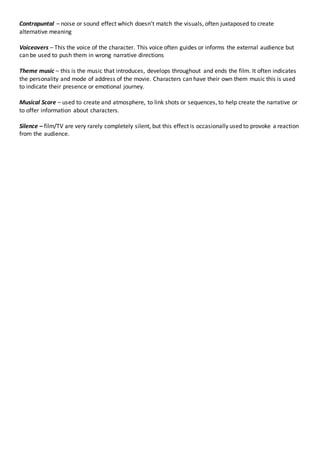
Contrapuntal – noise or sound effect which doesn’t match the visuals, often juxtaposed to create
alternative meaning
Voiceovers – This the voice of the character. This voice often guides or informs the external audience but
can be used to push them in wrong narrative directions
Theme music – this is the music that introduces, develops throughout and ends the film. It often indicates
the personality and mode of address of the movie. Characters can have their own them music this is used
to indicate their presence or emotional journey.
Musical Score – used to create and atmosphere, to link shots or sequences, to help create the narrative or
to offer information about characters.
Silence – film/TV are very rarely completely silent, but this effect is occasionally used to provoke a reaction
from the audience.

Sound

  • 1.
    Sound Film sound isas important and as carefully controlled as the visual elements of a text. Although sound is often recorded on set, most filmsound is added in post-production Film sound will be mixed very carefully to ensure that important sounds are emphasised and that the correct atmosphere for a sequence is maintained Selective sound is: used to emphasise key sound elements within a sequence Ambient sound is: used to create a particular atmosphere or a sense of place Sound bridges – the use of sound to help transitions between sequences pass more fluidly Sound effects – are these used to create a sense of realism or to create some psychological impact or effect? Sound can be either: Diegetic – that is, it exists within the world of the film. Non-diegetic – that is, it emerges from outside the world of the film, e.g. filmsoundtracks. Diegetic Sound Non-Diegetic Sound Sound whose source is visible on the screen or whose source is implied to be present by the action off the film: 1. Voices of characters 2. Sounds made by objects in the story 3. Music represented as coming from instruments in the story space. Diegetic sound is any sound presented as originated from source within the films world. Diegetic sounds can be either on screen or off screen depending on whatever its source is within the frame or outside the frame. This type of so sound can be used to create many different meanings for an audience. Sound whose source is neither visible on the screen nor has been implied to be present in the action: 1. Narrators commentary 2. Sound effects which are added for dramatic effect 3. Musical score/soundtrack Non diegetic sound is represented as coming from a source outside the story space. The distinction between diegetic or non- diegetic sounds depends on our understanding of the conventions of film viewing and listening. We know that certain sounds are represented as coming from the story world, while others are represented as coming from outside the space of the story events. Film sound can be either: Synchronous – This is when a sound effect is matched with another technical event or action- this reinforces the effect Asynchronous – this is when a sound originates from outside of the diegetic reality of the film: musical soundtrack
  • 2.
    Contrapuntal – noiseor sound effect which doesn’t match the visuals, often juxtaposed to create alternative meaning Voiceovers – This the voice of the character. This voice often guides or informs the external audience but can be used to push them in wrong narrative directions Theme music – this is the music that introduces, develops throughout and ends the film. It often indicates the personality and mode of address of the movie. Characters can have their own them music this is used to indicate their presence or emotional journey. Musical Score – used to create and atmosphere, to link shots or sequences, to help create the narrative or to offer information about characters. Silence – film/TV are very rarely completely silent, but this effect is occasionally used to provoke a reaction from the audience.