J. Quigley
2012

THE ENVIRONMENT
Humans and the Environment

 We depend on the environment for food,
  water, air, shelter, fuel and many other
  resources. However, human actions can
  affect the quality and availability of these
  important resources. The study of the impact
  of humans on the environment is called
  environmental science
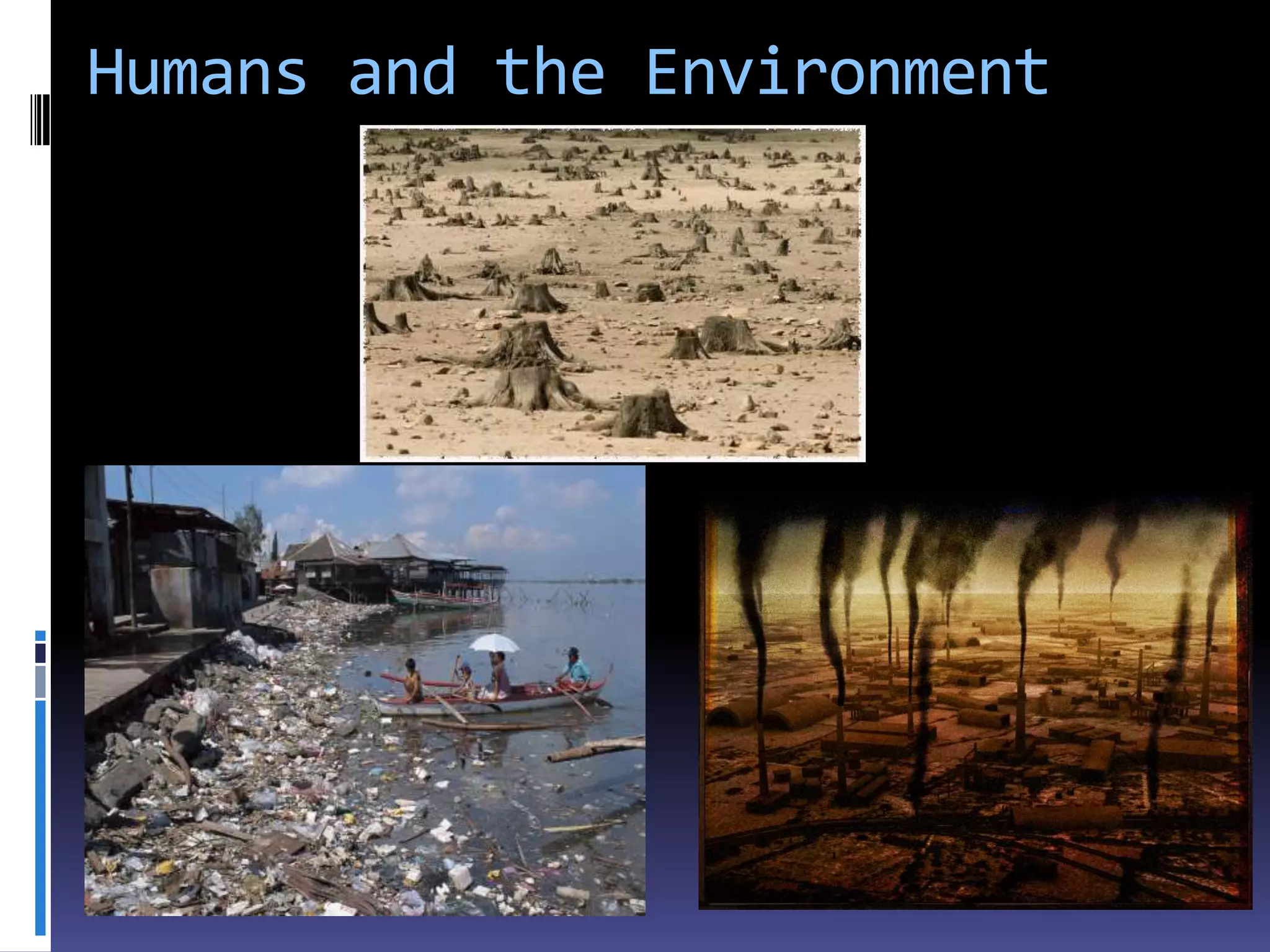
Humans and the Environment

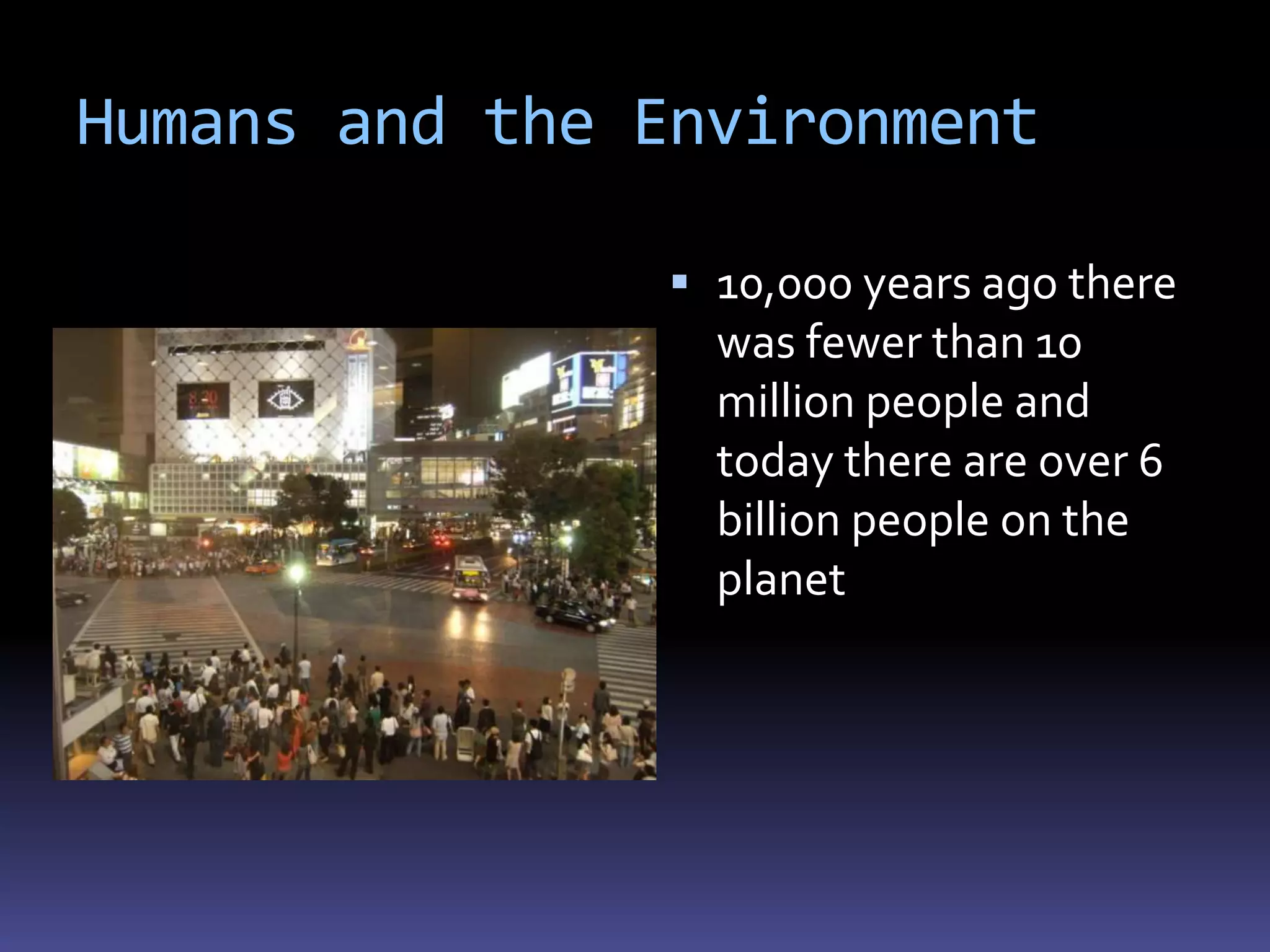
                10,000 years ago there
                 was fewer than 10
                 million people and
                 today there are over 6
                 billion people on the
                 planet
Humans and the Environment
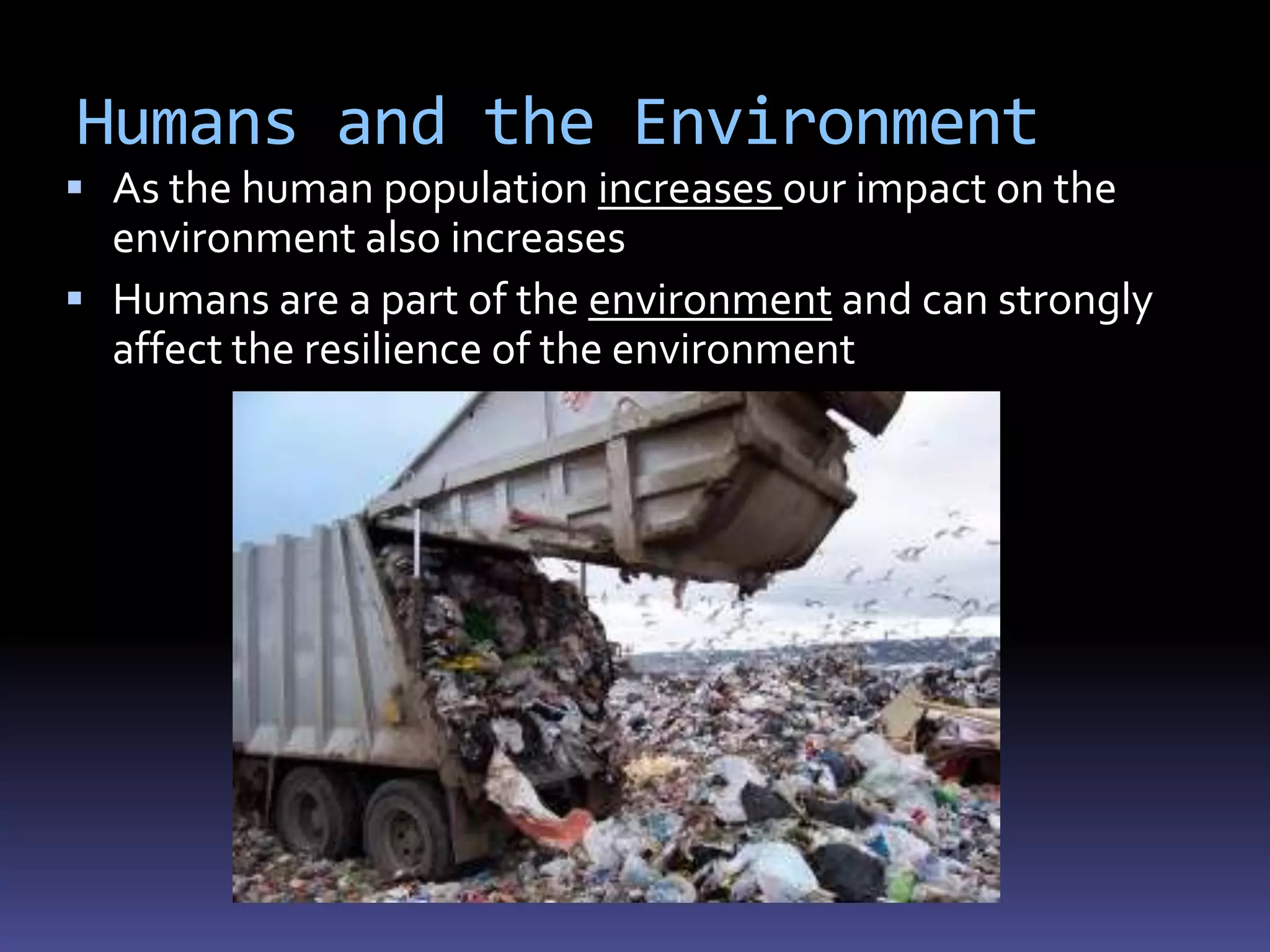
 As the human population increases our impact on the
  environment also increases
 Humans are a part of the environment and can strongly
  affect the resilience of the environment
Humans and the environment

 Humans are using more resources than our
  ancestors did and eventually we will run out
 Earth is an interconnected planet: we depend
  on the environment and the environment is
  affected by our actions.
 Learning about the connectedness helps us
  care about the environment and help ensure
  that the environment will continue to support
  us and other species on earth
Resources
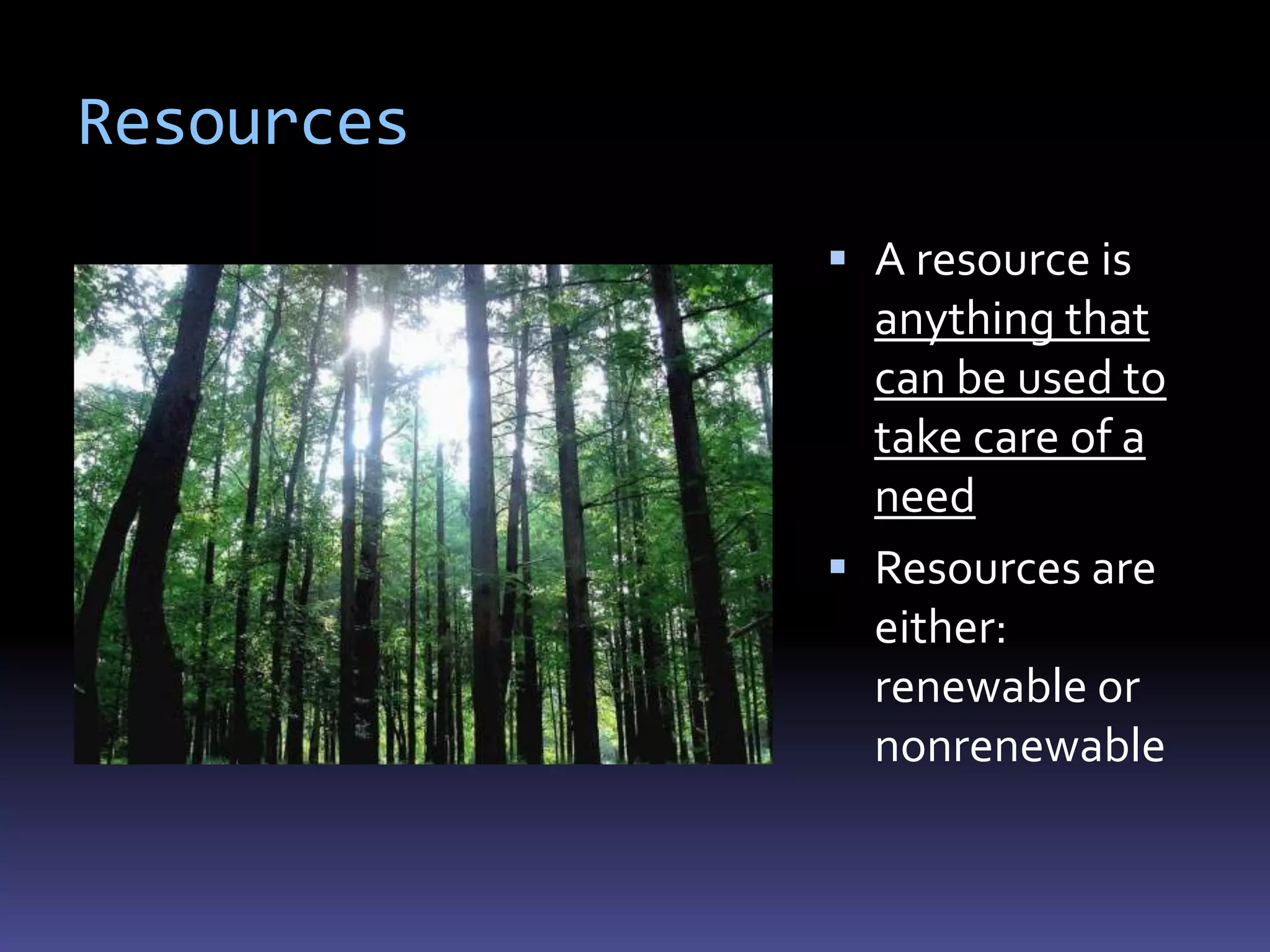
             A resource is
              anything that
              can be used to
              take care of a
              need
             Resources are
              either:
              renewable or
              nonrenewable
Renewable Resources
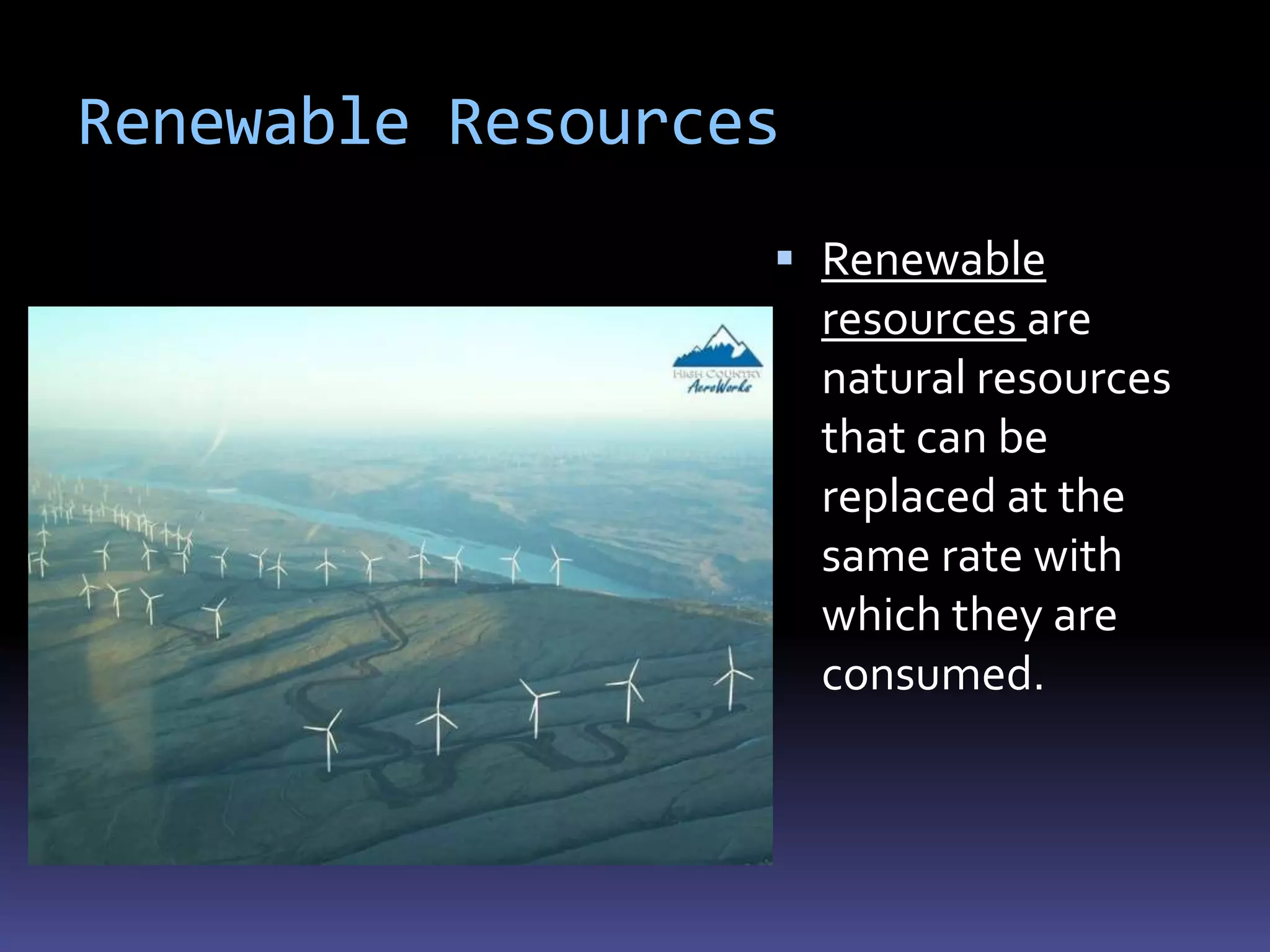
                   Renewable
                      resources are
                      natural resources
                      that can be
                      replaced at the
                      same rate with
                      which they are
                      consumed.
Renewable Resources

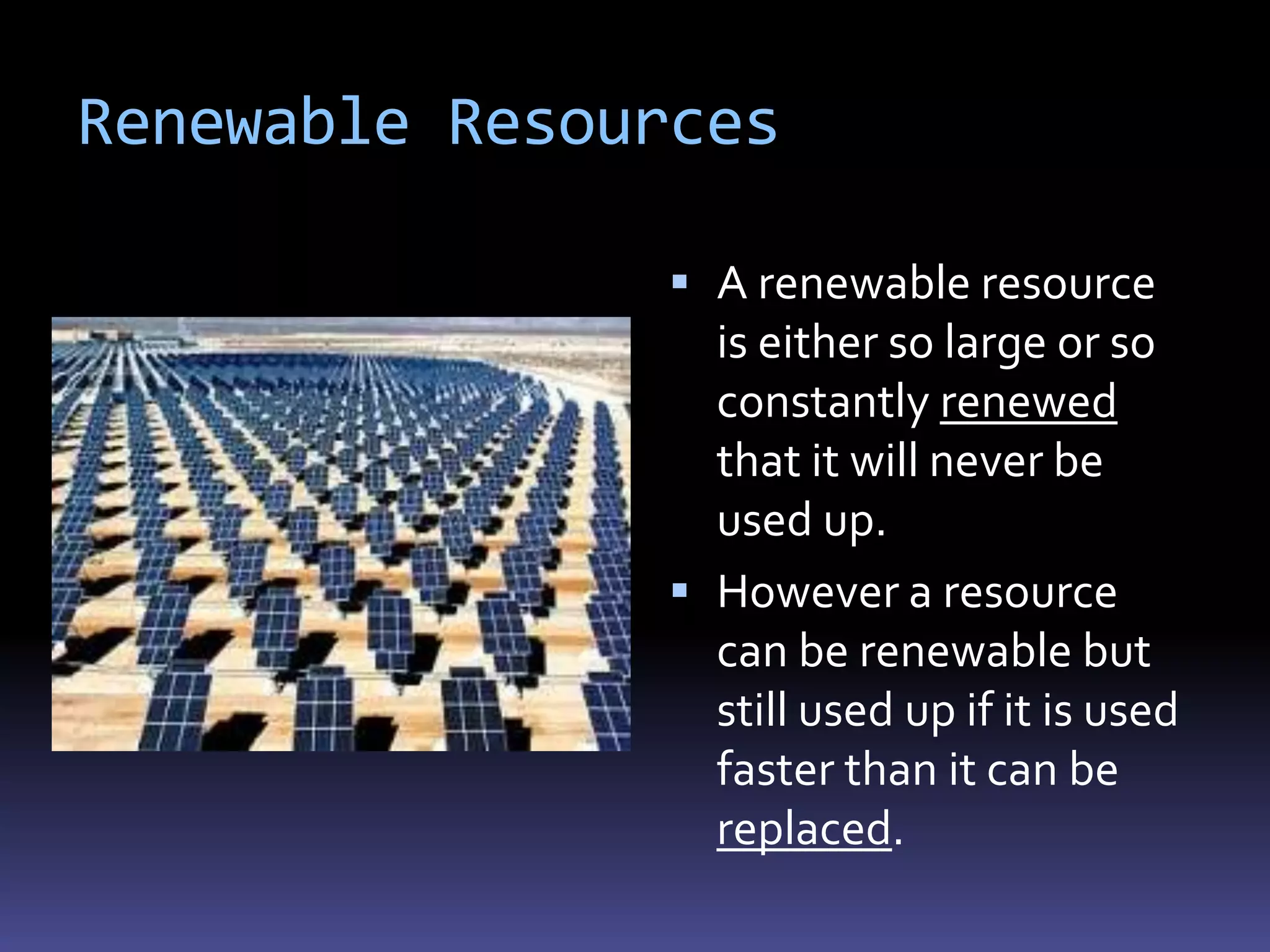
                A renewable resource
                 is either so large or so
                 constantly renewed
                 that it will never be
                 used up.
                However a resource
                 can be renewable but
                 still used up if it is used
                 faster than it can be
                 replaced.
Renewable Resources

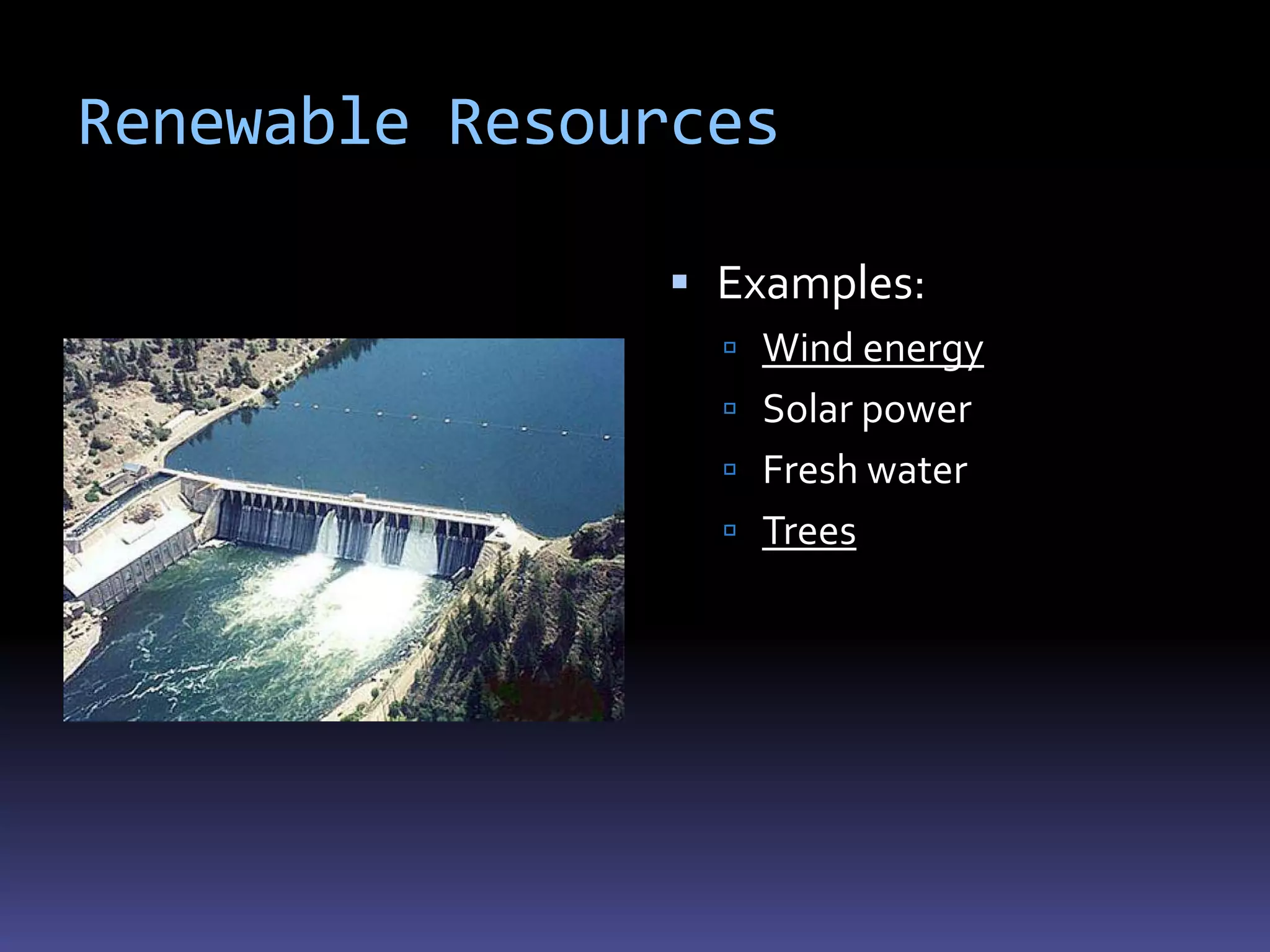
                Examples:
                  Wind energy
                  Solar power
                  Fresh water
                  Trees
Nonrenewable Resources

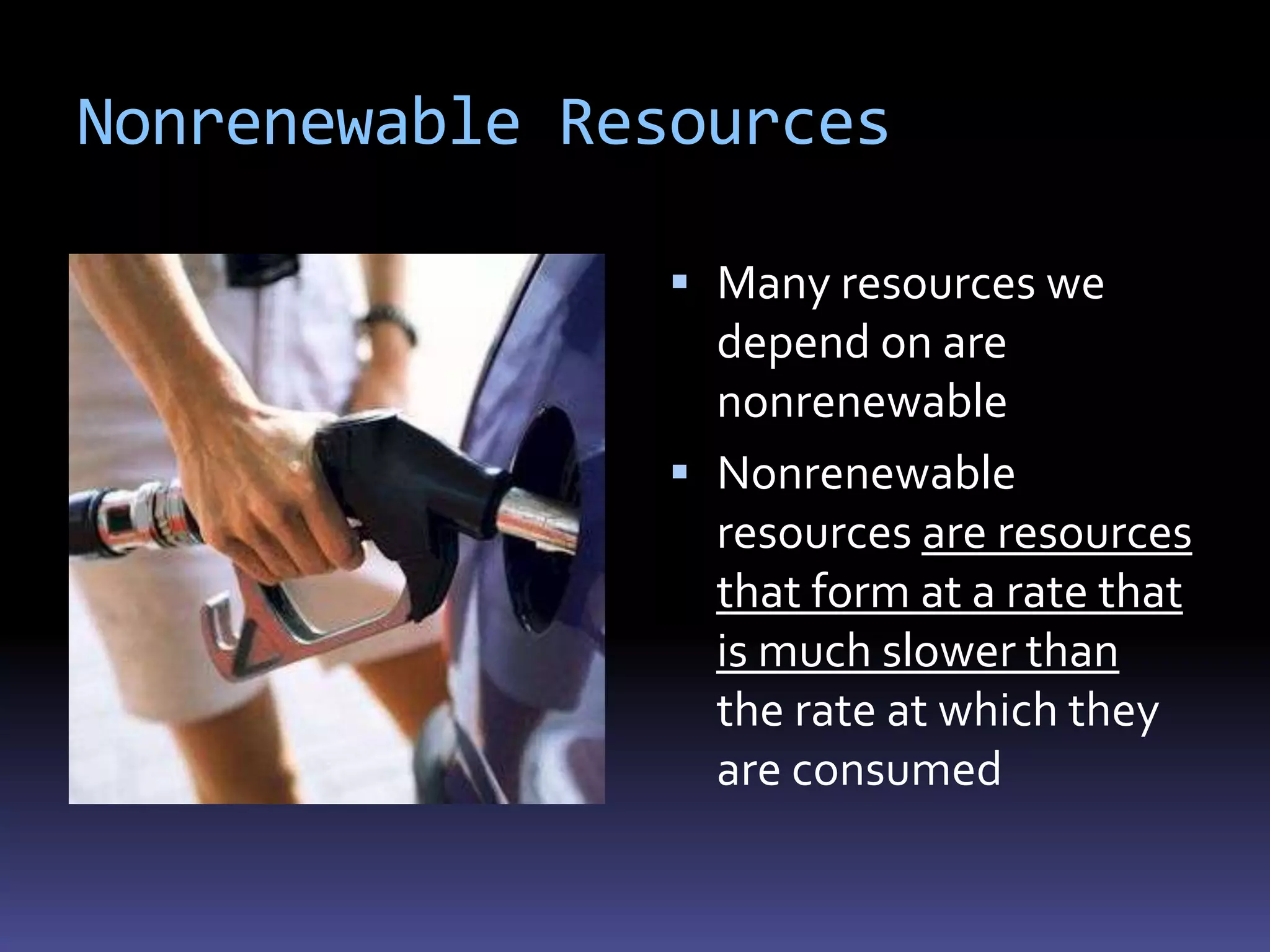
                Many resources we
                 depend on are
                 nonrenewable
                Nonrenewable
                 resources are resources
                 that form at a rate that
                 is much slower than
                 the rate at which they
                 are consumed
Nonrenewable Resources

                Most of our energy
                 comes from fossil fuels,
                 which are a
                 nonrenewable energy
                 resource that formed
                 from the remains of
                 organisms that lived
                 long ago and take
                 millions of years to
                 form
                  Coal, oil and natural gas
The Environment and Health

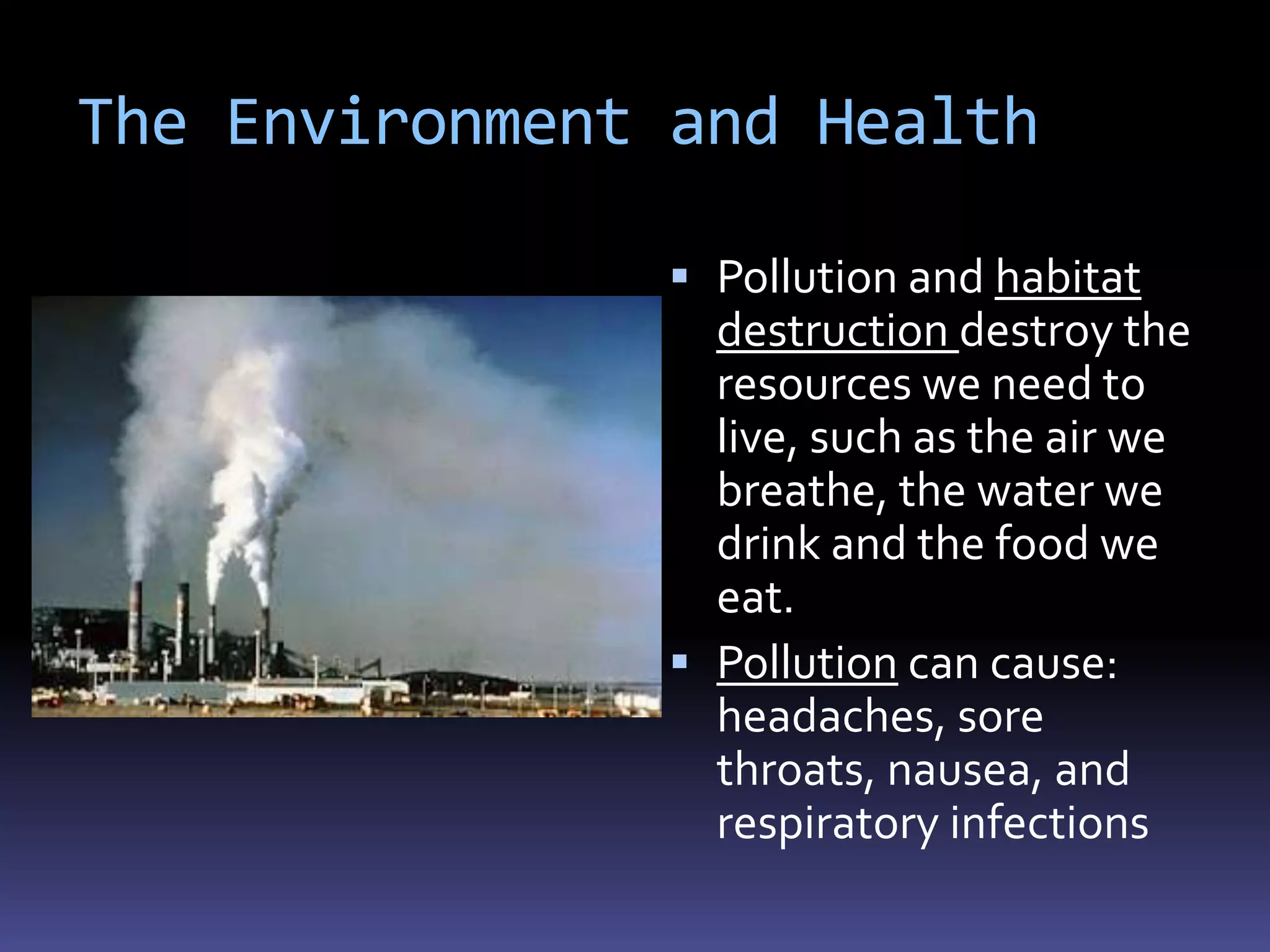
                Pollution and habitat
                 destruction destroy the
                 resources we need to
                 live, such as the air we
                 breathe, the water we
                 drink and the food we
                 eat.
                Pollution can cause:
                 headaches, sore
                 throats, nausea, and
                 respiratory infections
Environmental Issues

 Air Pollution
 Global Warming
 Water Pollution
 Soil Damage
 Ecosystem Disruption
Environmental Issues

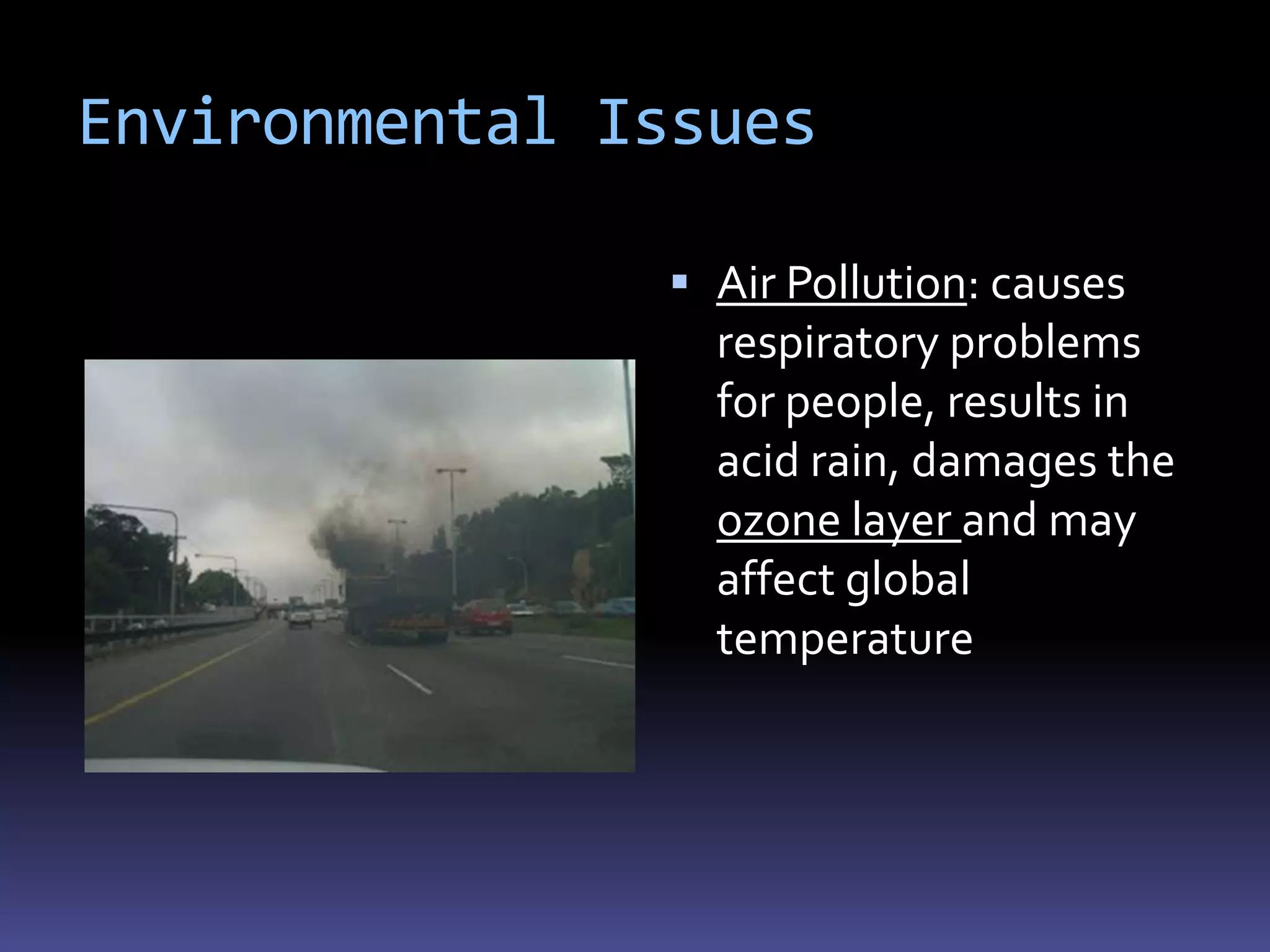
                Air Pollution: causes
                 respiratory problems
                 for people, results in
                 acid rain, damages the
                 ozone layer and may
                 affect global
                 temperature
Environmental Issues
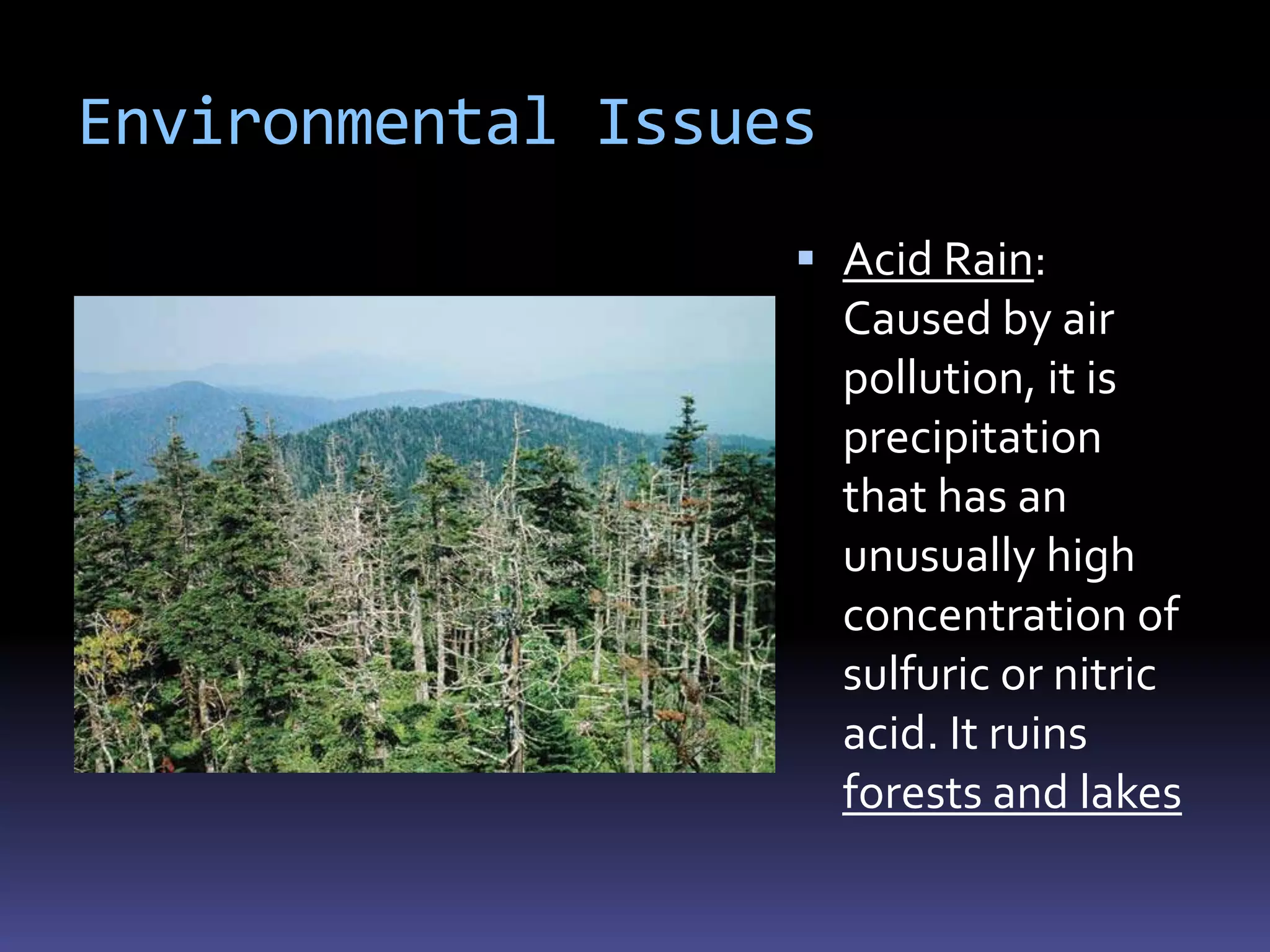
                    Acid Rain:
                       Caused by air
                       pollution, it is
                       precipitation
                       that has an
                       unusually high
                       concentration of
                       sulfuric or nitric
                       acid. It ruins
                       forests and lakes
Environmental Issues
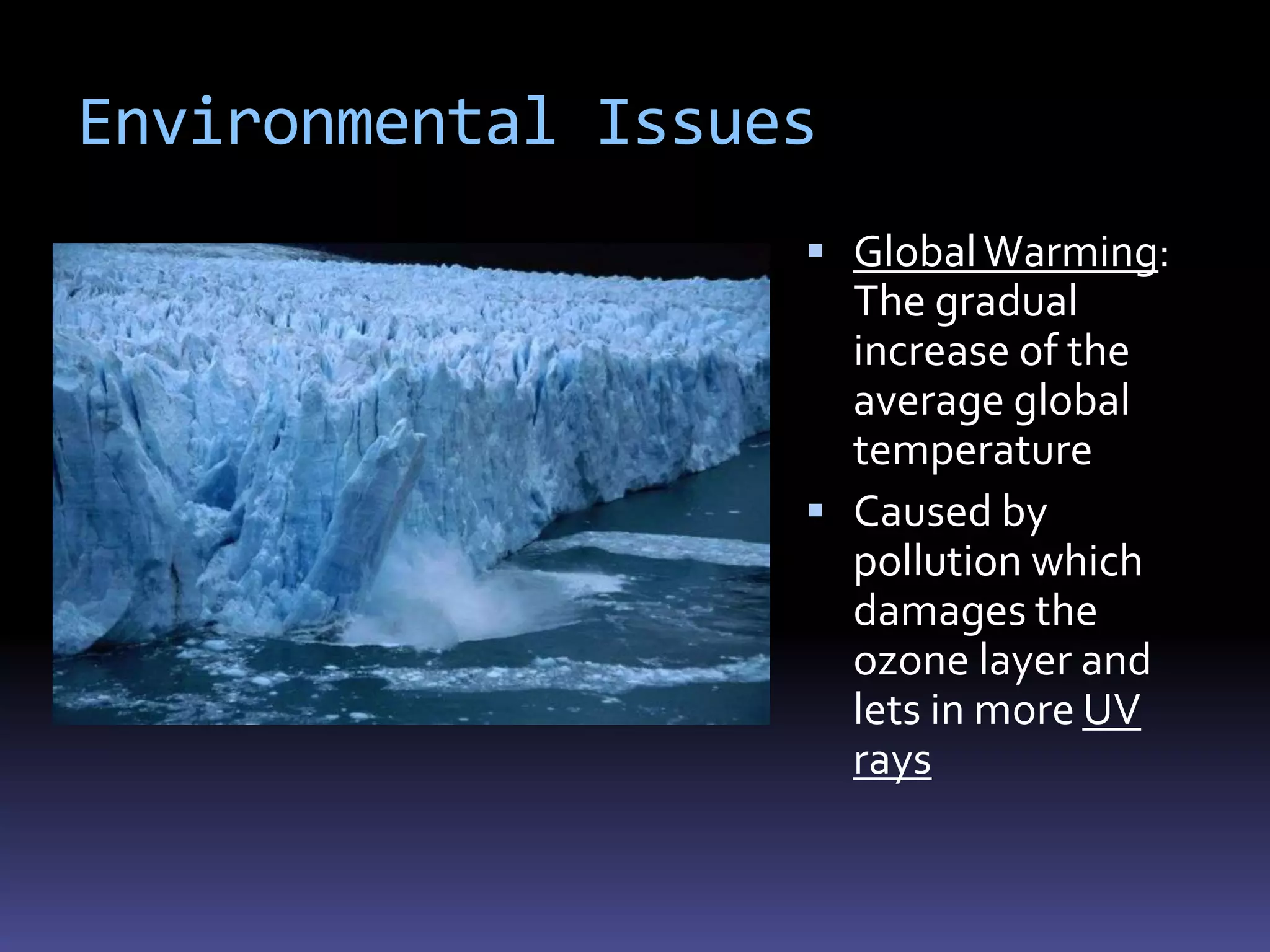
                    Global Warming:
                     The gradual
                     increase of the
                     average global
                     temperature
                    Caused by
                     pollution which
                     damages the
                     ozone layer and
                     lets in more UV
                     rays
Environmental Issues

 When it is hot outside, the inside of your car
  gets REALLY hot… why? The Greenhouse
  Effect
 The greenhouse effect is the warming of the
  surface and lower atmosphere of the earth
  that happens when greenhouse gases (CO2
  and H2O) absorb and reradiate heat
 Burning of fossil fuels increases the amount
  of CO2 in the atmosphere, which causes an
  increase in global temperatures
Environmental Issues

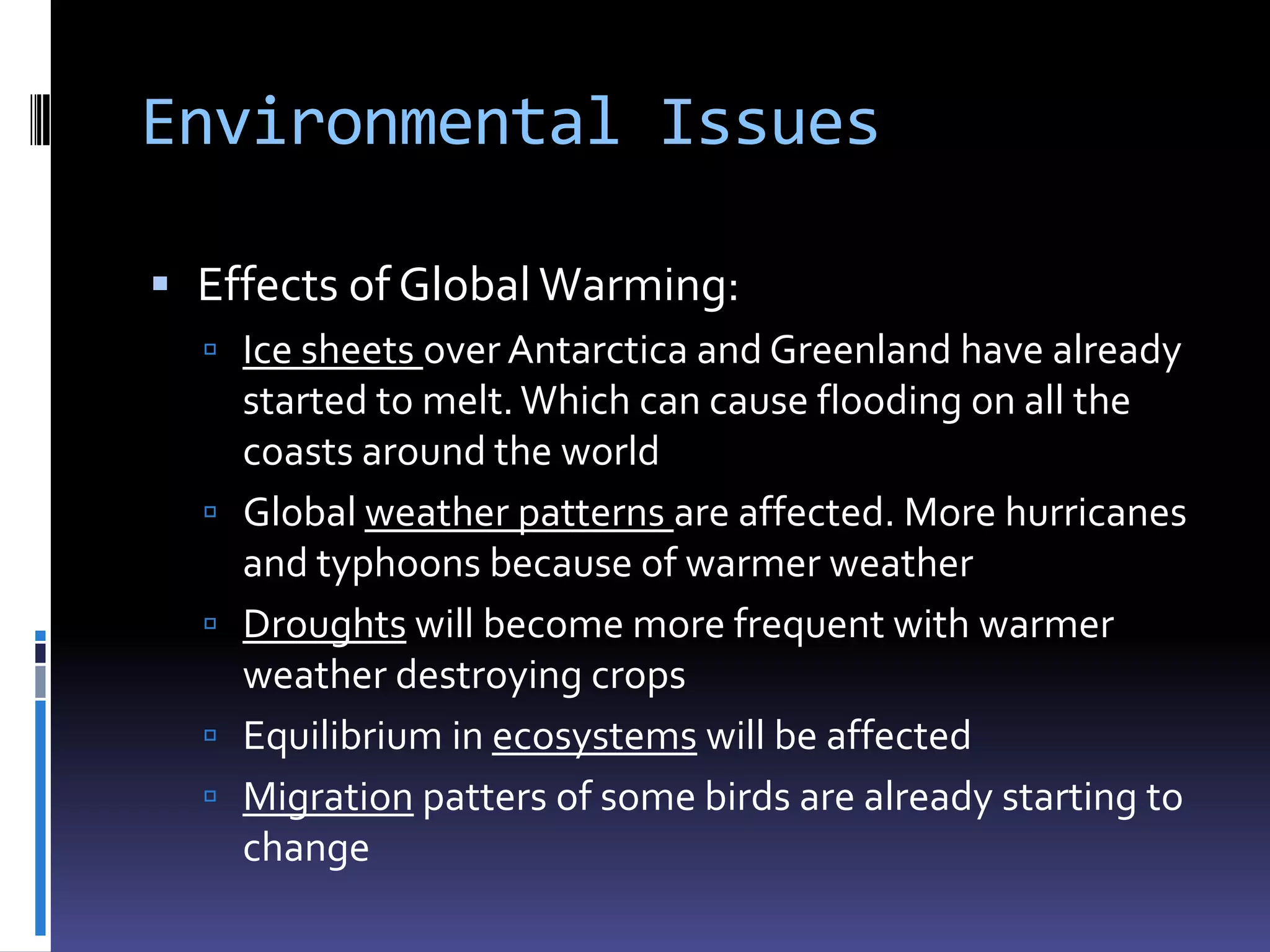
 Effects of Global Warming:
   Ice sheets over Antarctica and Greenland have already
      started to melt. Which can cause flooding on all the
      coasts around the world
     Global weather patterns are affected. More hurricanes
      and typhoons because of warmer weather
     Droughts will become more frequent with warmer
      weather destroying crops
     Equilibrium in ecosystems will be affected
     Migration patters of some birds are already starting to
      change
Environmental Issues
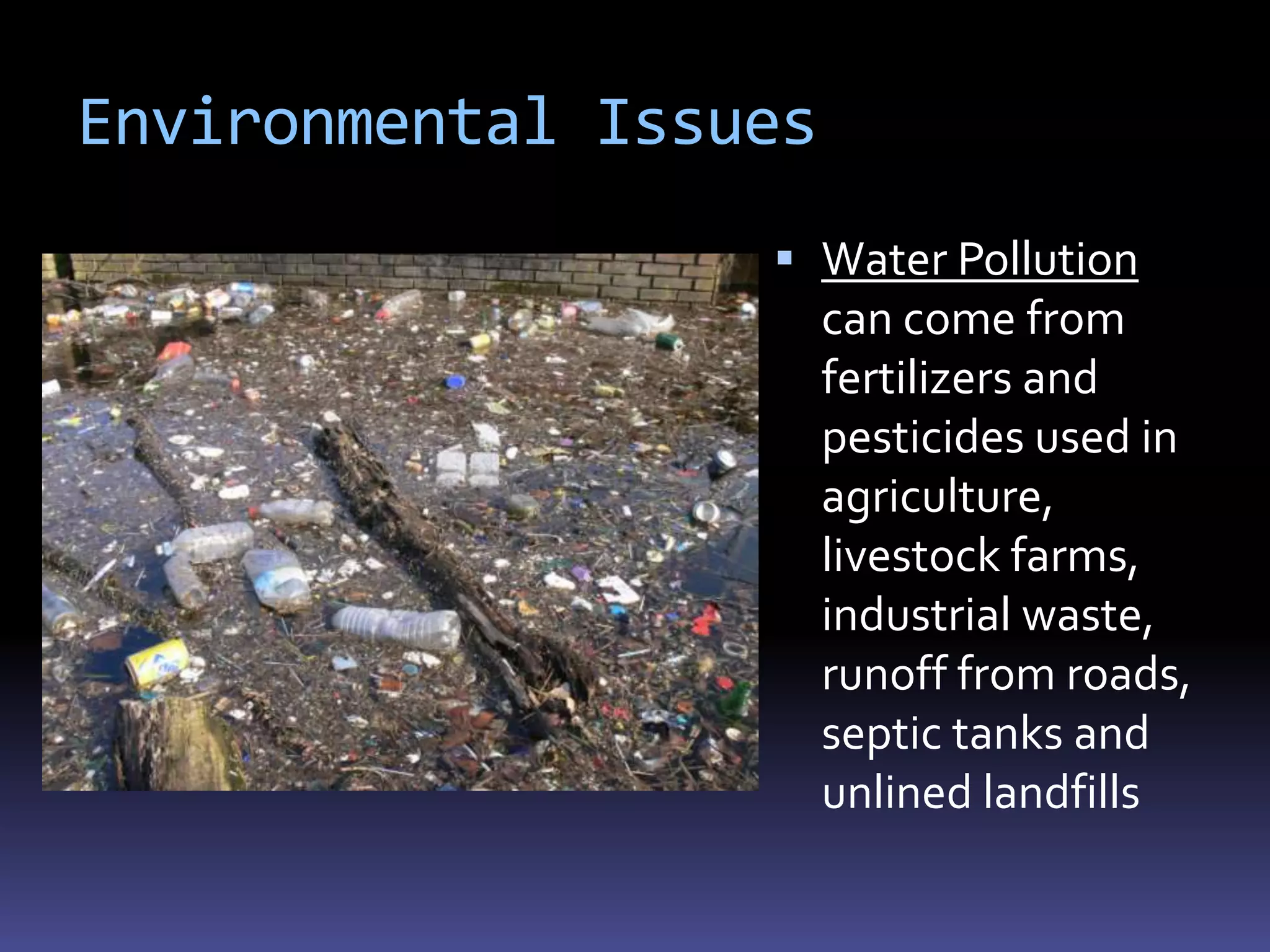
                   Water Pollution
                       can come from
                       fertilizers and
                       pesticides used in
                       agriculture,
                       livestock farms,
                       industrial waste,
                       runoff from roads,
                       septic tanks and
                       unlined landfills
Environmental Issues
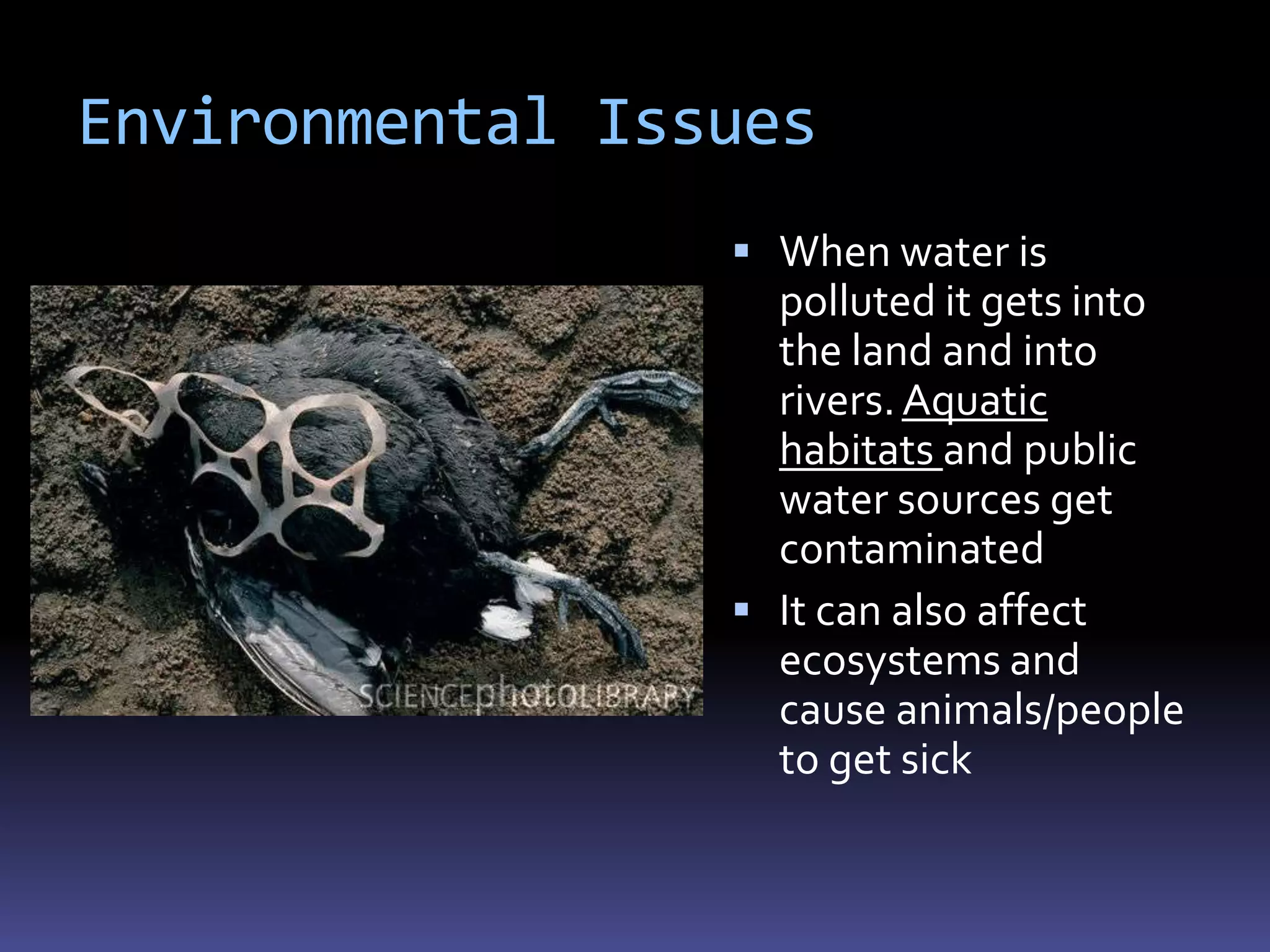
                  When water is
                   polluted it gets into
                   the land and into
                   rivers. Aquatic
                   habitats and public
                   water sources get
                   contaminated
                  It can also affect
                   ecosystems and
                   cause animals/people
                   to get sick
Environmental Issues

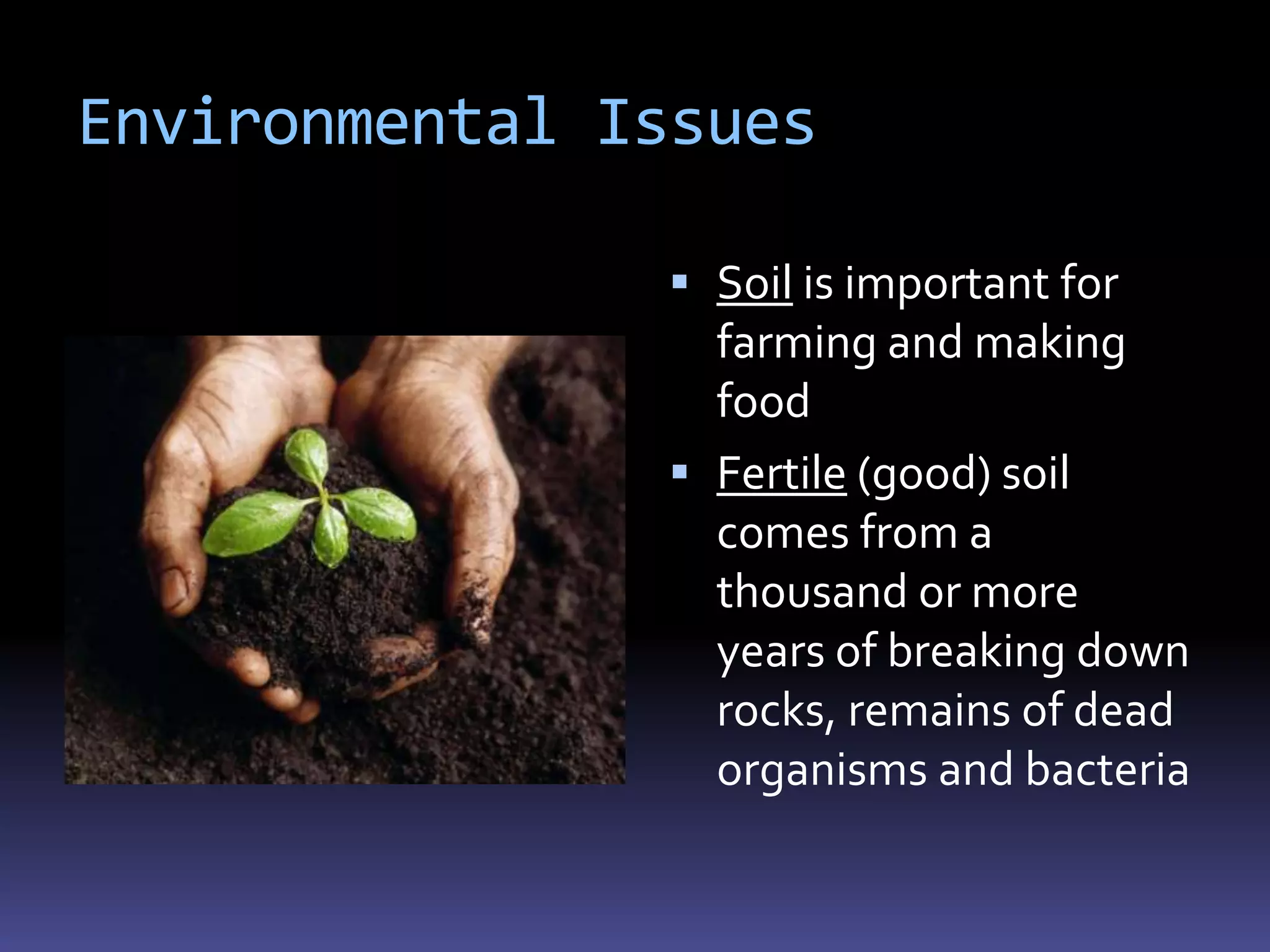
                Soil is important for
                 farming and making
                 food
                Fertile (good) soil
                 comes from a
                 thousand or more
                 years of breaking down
                 rocks, remains of dead
                 organisms and bacteria
Environmental Issues

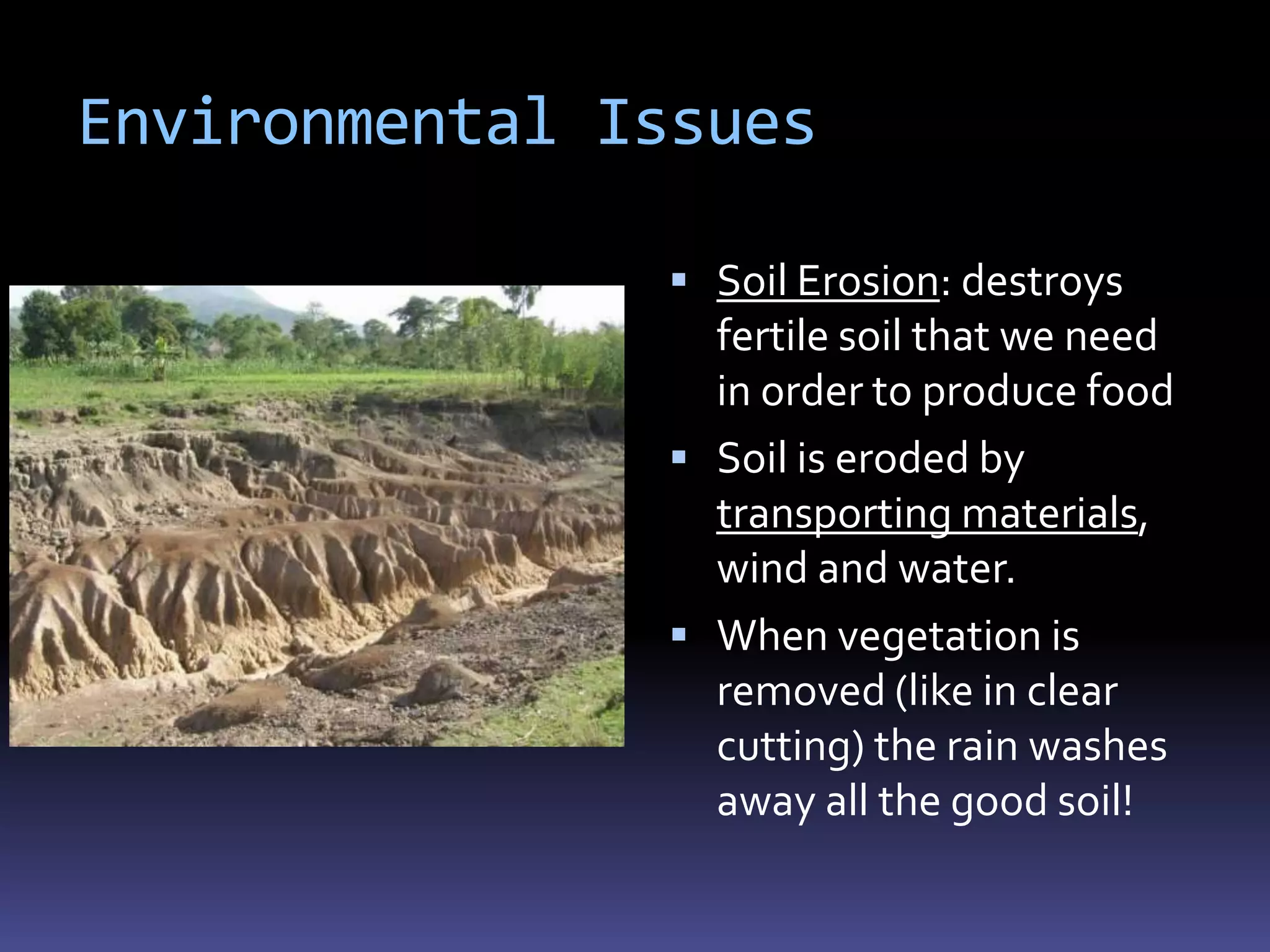
                Soil Erosion: destroys
                 fertile soil that we need
                 in order to produce food
                Soil is eroded by
                 transporting materials,
                 wind and water.
                When vegetation is
                 removed (like in clear
                 cutting) the rain washes
                 away all the good soil!
Environmental Issues

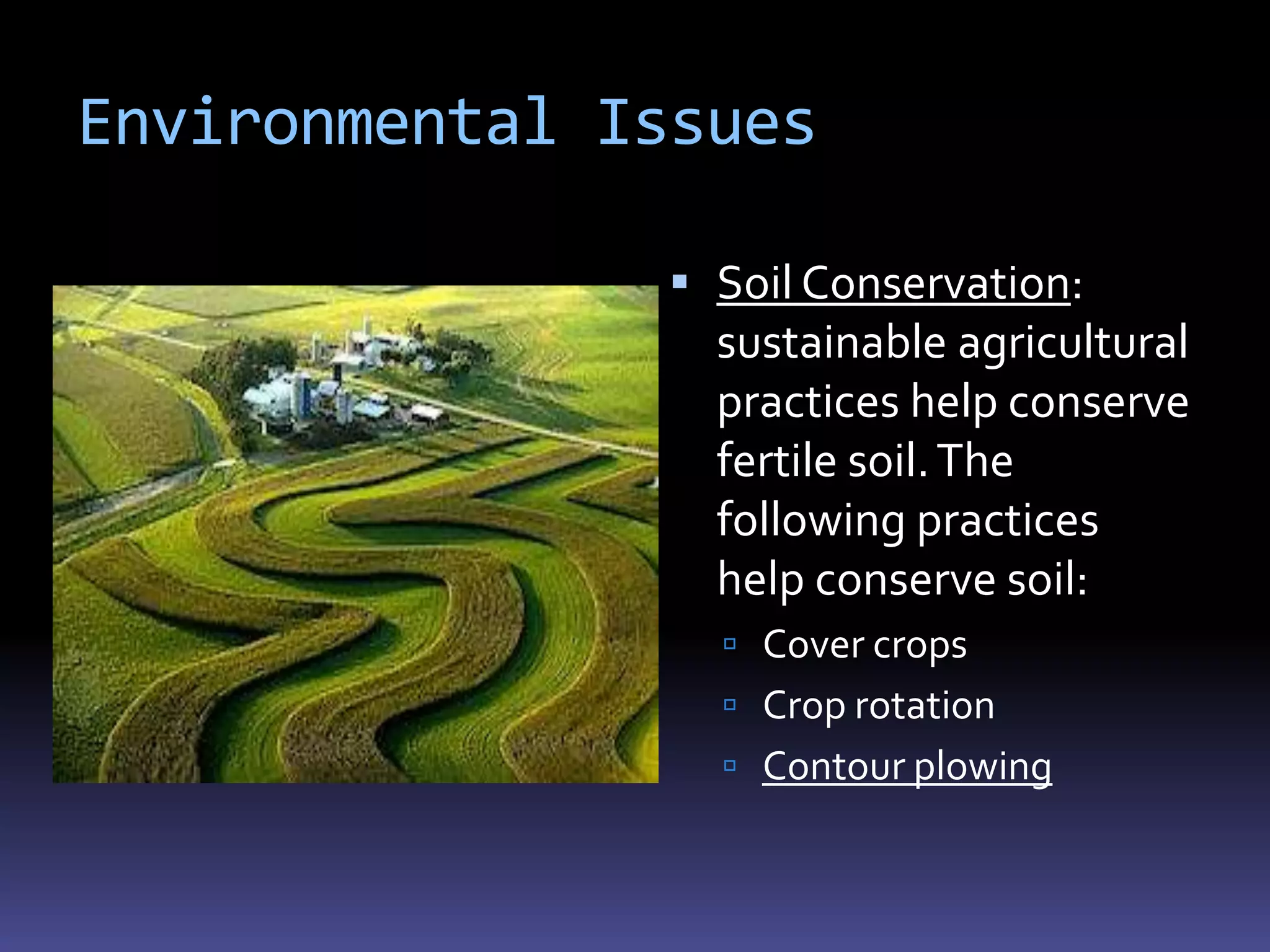
                Soil Conservation:
                 sustainable agricultural
                 practices help conserve
                 fertile soil. The
                 following practices
                 help conserve soil:
                  Cover crops
                  Crop rotation
                  Contour plowing
Environmental Issues

 Ecosystem Disruption can result in the loss of
  biodiversity, food supplies, potential cures for
  diseases and the balance of ecosystems that
  supports all life on earth
Environmental Issues

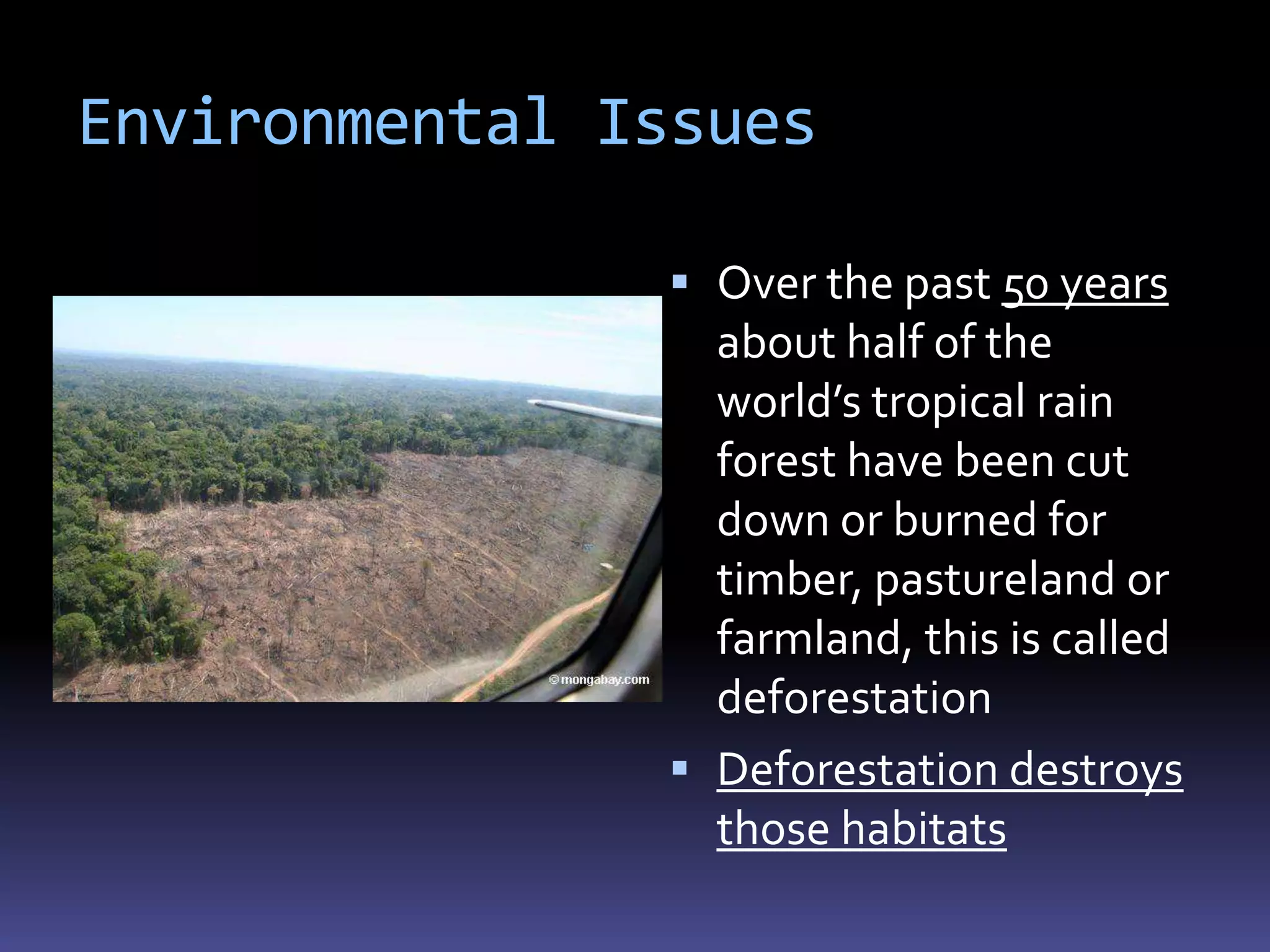
                Over the past 50 years
                 about half of the
                 world’s tropical rain
                 forest have been cut
                 down or burned for
                 timber, pastureland or
                 farmland, this is called
                 deforestation
                Deforestation destroys
                 those habitats
Environmental Issues
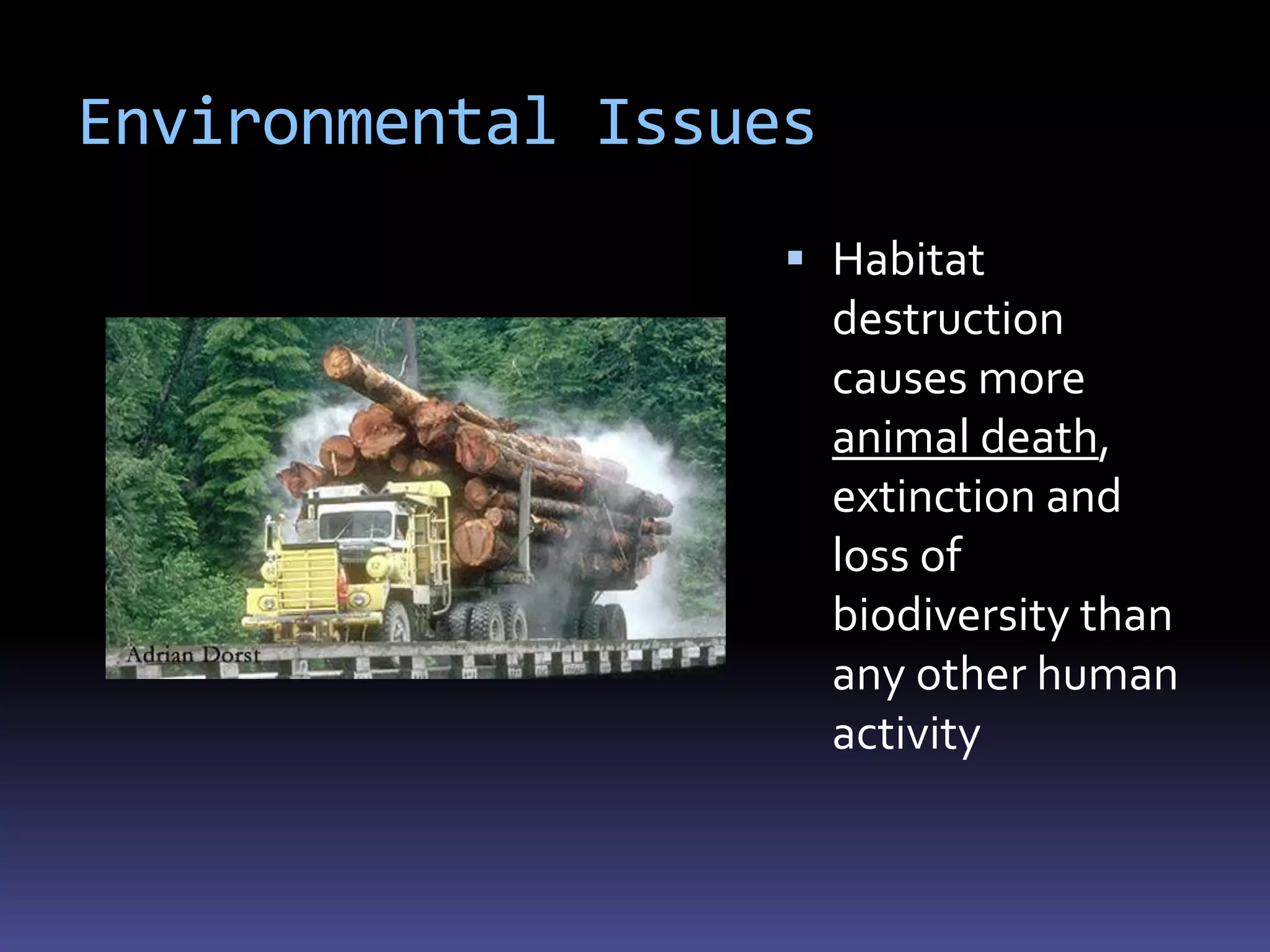
                    Habitat
                       destruction
                       causes more
                       animal death,
                       extinction and
                       loss of
                       biodiversity than
                       any other human
                       activity
Environmental Issues

 Ecosystem disruption decreases the number of
  Earth’s species. Biodiversity affects the stability
  of ecosystems and the sustainability of
  populations.
 Biodiversity is the variety of organisms in a given
  area. Every species plays an important role in
  cycling of energy and nutrients in an ecosystem.
  Each species depends on or is depended on by at
  least one other species…
 When a single species disappears, a strand of the
  food web disappears… it causes catastrophic
  problems!
Environmental Issues
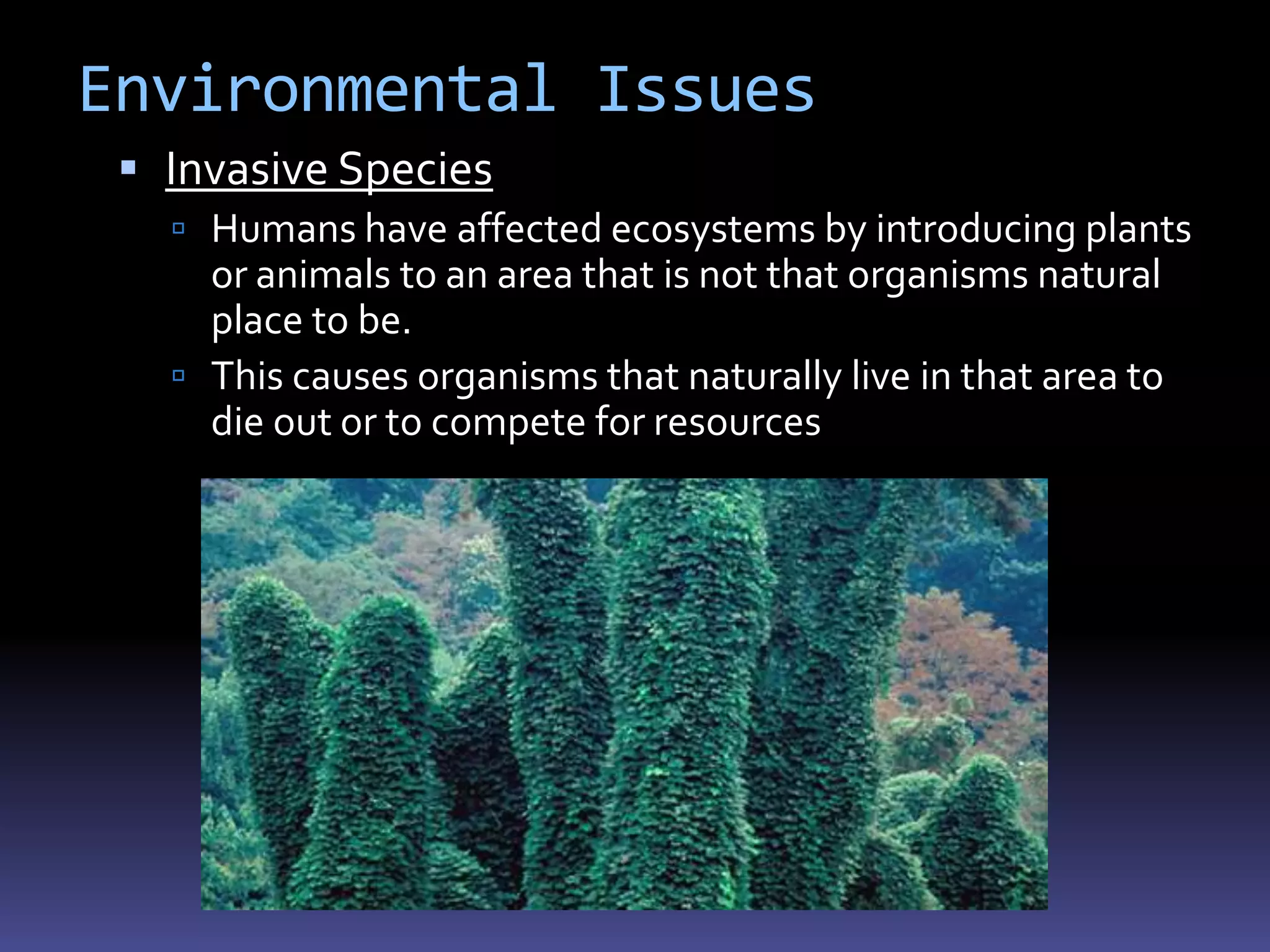
  Invasive Species
    Humans have affected ecosystems by introducing plants
     or animals to an area that is not that organisms natural
     place to be.
    This causes organisms that naturally live in that area to
     die out or to compete for resources
Environmental Issues

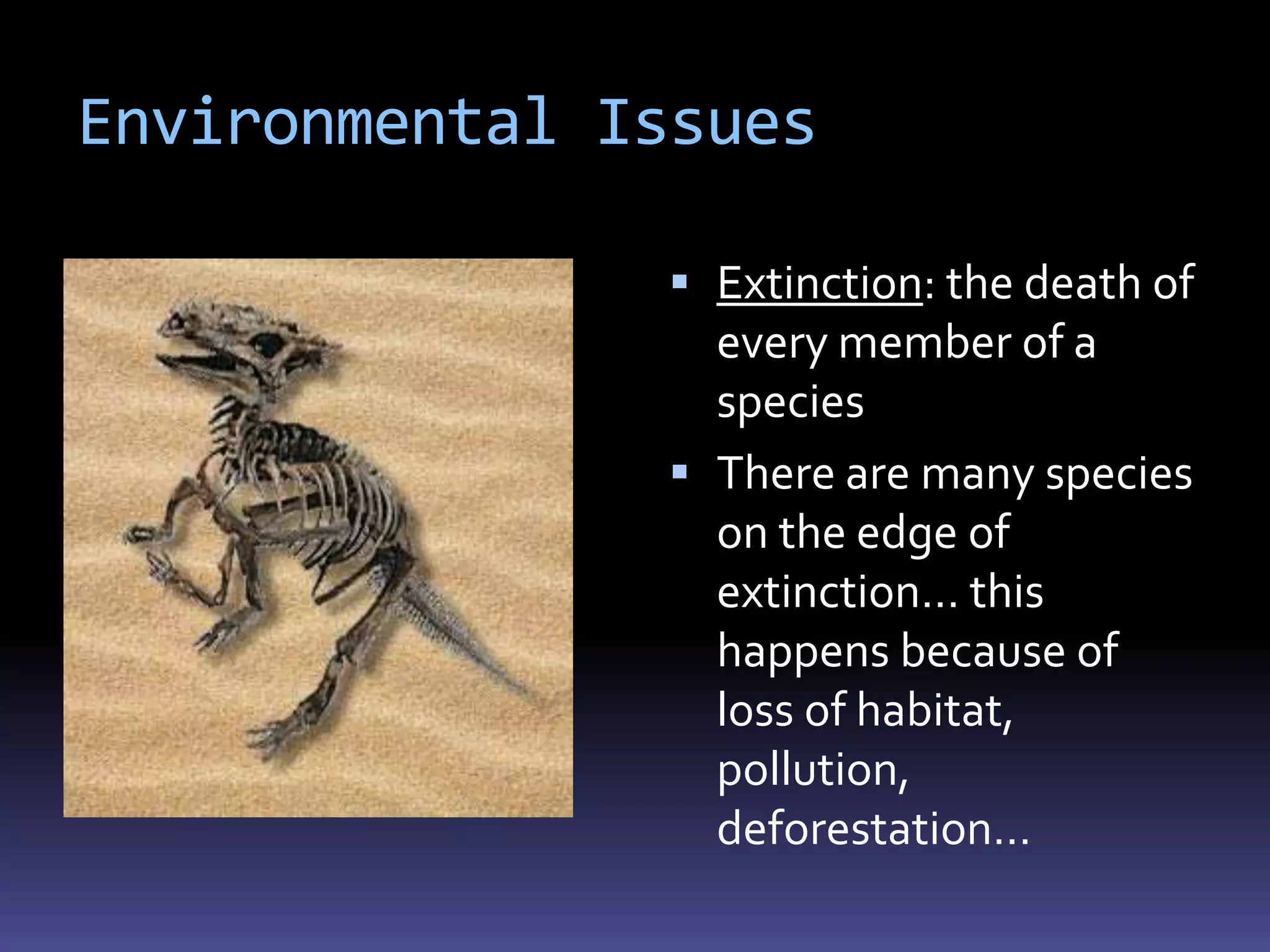
                Extinction: the death of
                 every member of a
                 species
                There are many species
                 on the edge of
                 extinction… this
                 happens because of
                 loss of habitat,
                 pollution,
                 deforestation…
Environmental SOLUTIONS!!
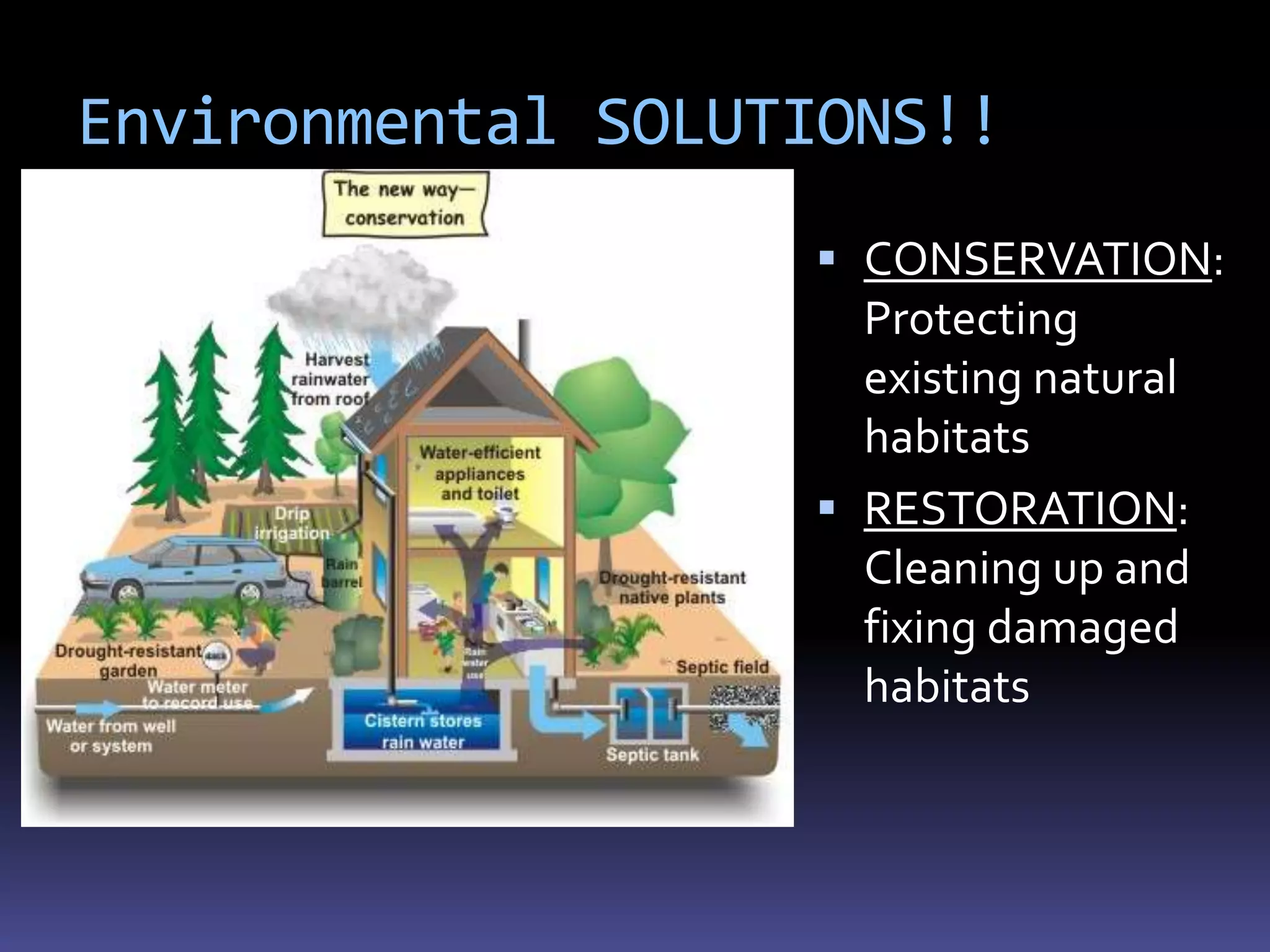
                    CONSERVATION:
                     Protecting
                     existing natural
                     habitats
                    RESTORATION:
                     Cleaning up and
                     fixing damaged
                     habitats
Environmental SOLUTIONS!!

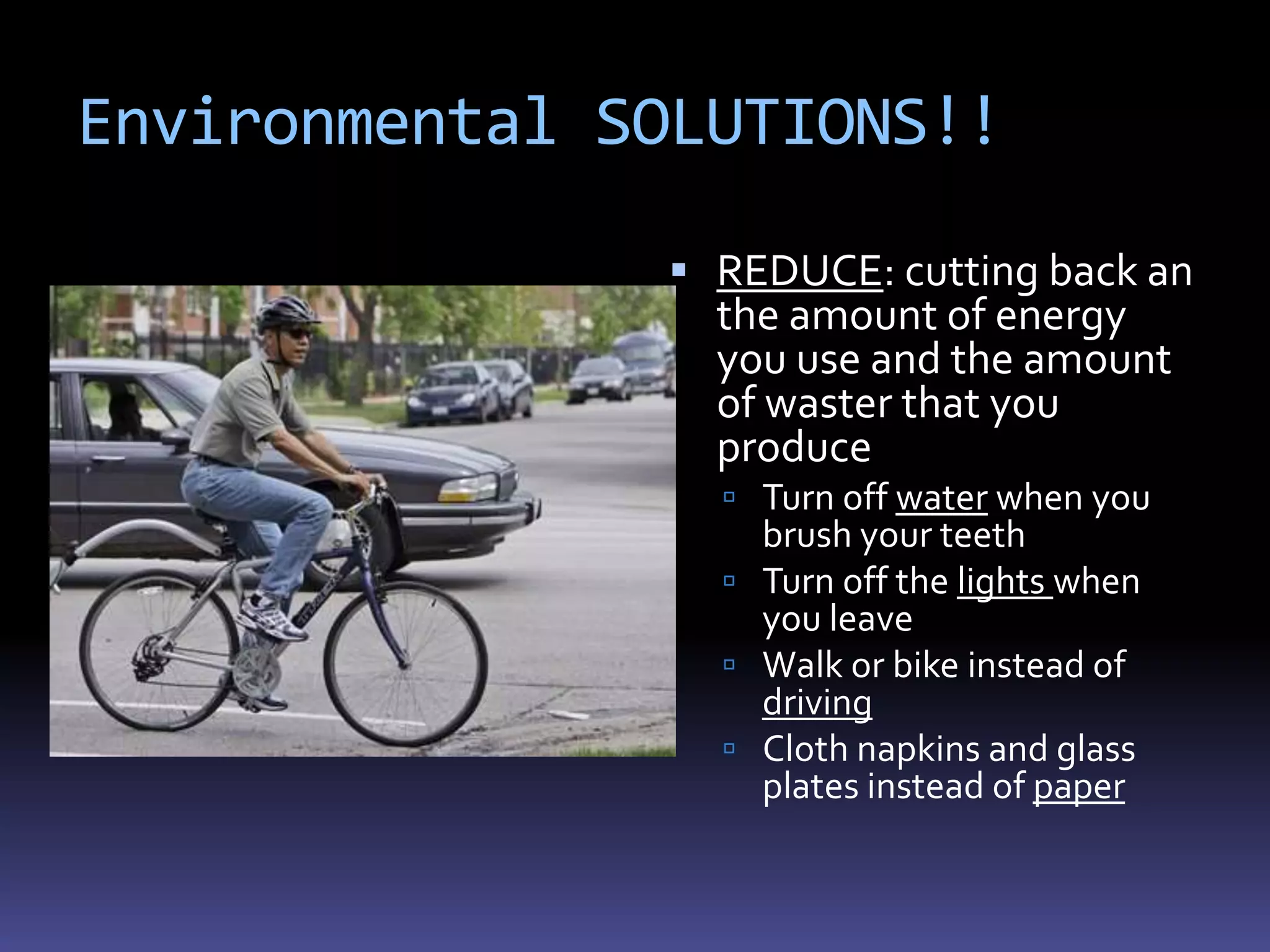
                REDUCE: cutting back an
                 the amount of energy
                 you use and the amount
                 of waster that you
                 produce
                  Turn off water when you
                   brush your teeth
                  Turn off the lights when
                   you leave
                  Walk or bike instead of
                   driving
                  Cloth napkins and glass
                   plates instead of paper
Environmental SOLUTIONS!!

                REUSE: reusing goods
                 saves both money and
                 resources.
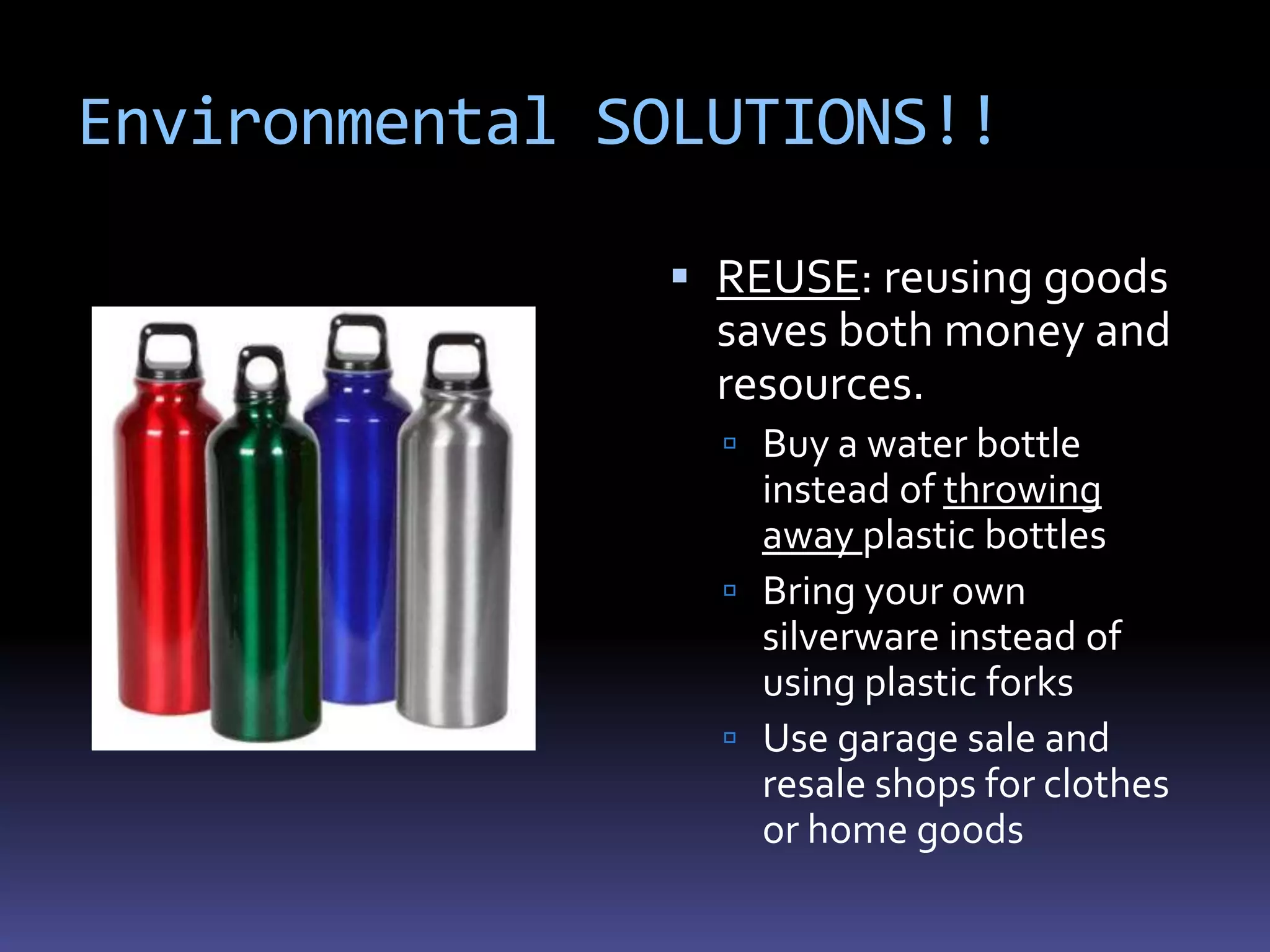
                  Buy a water bottle
                   instead of throwing
                   away plastic bottles
                  Bring your own
                   silverware instead of
                   using plastic forks
                  Use garage sale and
                   resale shops for clothes
                   or home goods
Environmental SOLUTIONS!!

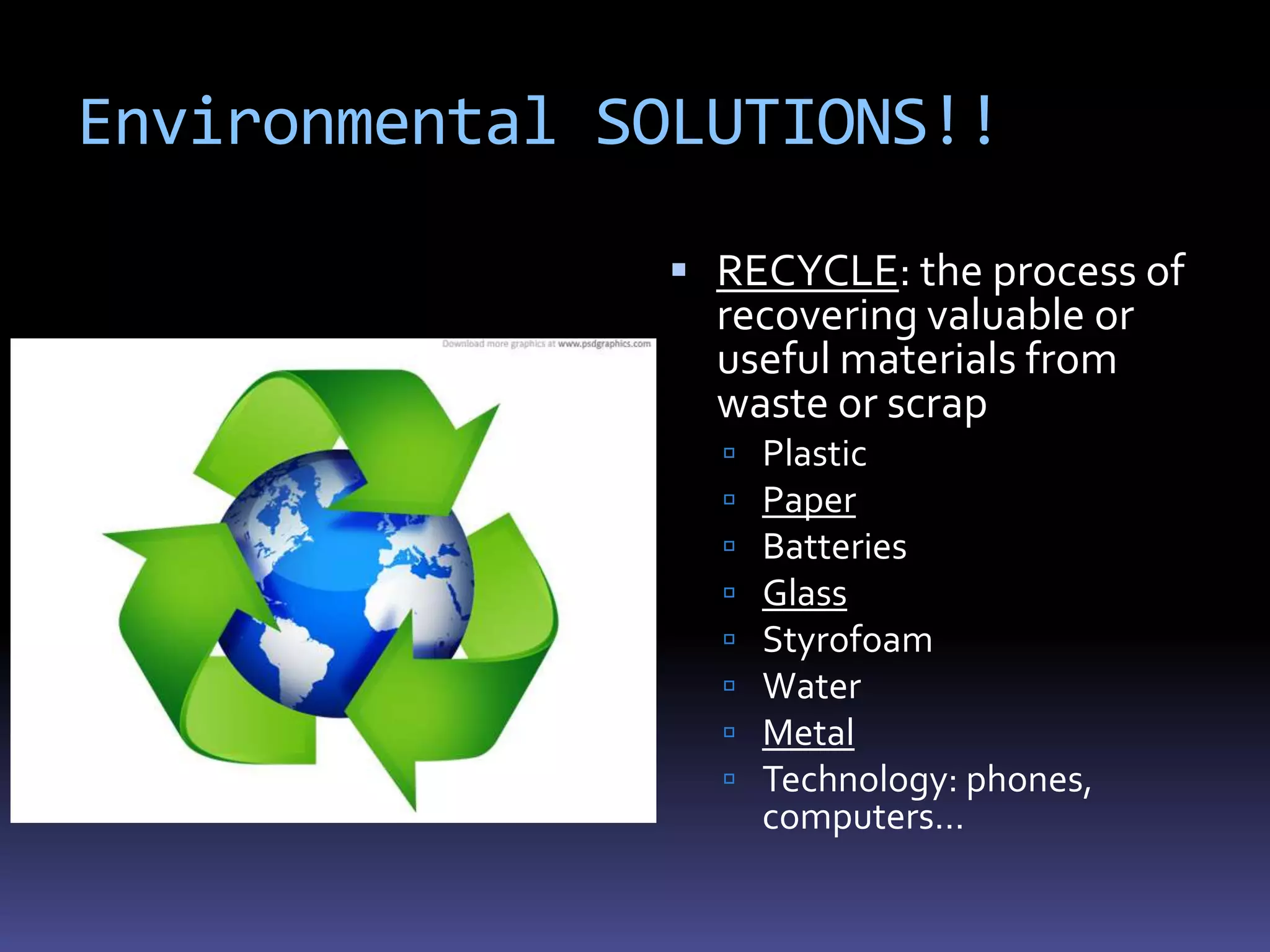
                RECYCLE: the process of
                 recovering valuable or
                 useful materials from
                 waste or scrap
                    Plastic
                    Paper
                    Batteries
                    Glass
                    Styrofoam
                    Water
                    Metal
                    Technology: phones,
                     computers…
Environmental SOLUTIONS!!

 Research and technology can help protect our
  environment by providing cleaner energy sources,
  better ways to deal with waste and improved
  methods for cleaning up pollution
 Education makes people more aware of
  environmental issues. Education also shows people
  how they can help address each issue. Expressing
  support or advocating for efforts to protect the
  environment can help get more people involved in
  these efforts
 Careful planning for the future can help us avoid
  damaging the environment and can help us solve the
  environmental issues that we face.

The environment

  • 1.
  • 2.
    Humans and theEnvironment  We depend on the environment for food, water, air, shelter, fuel and many other resources. However, human actions can affect the quality and availability of these important resources. The study of the impact of humans on the environment is called environmental science
  • 3.
    Humans and theEnvironment
  • 4.
    Humans and theEnvironment  10,000 years ago there was fewer than 10 million people and today there are over 6 billion people on the planet
  • 5.
    Humans and theEnvironment  As the human population increases our impact on the environment also increases  Humans are a part of the environment and can strongly affect the resilience of the environment
  • 6.
    Humans and theenvironment  Humans are using more resources than our ancestors did and eventually we will run out  Earth is an interconnected planet: we depend on the environment and the environment is affected by our actions.  Learning about the connectedness helps us care about the environment and help ensure that the environment will continue to support us and other species on earth
  • 7.
    Resources  A resource is anything that can be used to take care of a need  Resources are either: renewable or nonrenewable
  • 8.
    Renewable Resources  Renewable resources are natural resources that can be replaced at the same rate with which they are consumed.
  • 9.
    Renewable Resources  A renewable resource is either so large or so constantly renewed that it will never be used up.  However a resource can be renewable but still used up if it is used faster than it can be replaced.
  • 10.
    Renewable Resources  Examples:  Wind energy  Solar power  Fresh water  Trees
  • 11.
    Nonrenewable Resources  Many resources we depend on are nonrenewable  Nonrenewable resources are resources that form at a rate that is much slower than the rate at which they are consumed
  • 12.
    Nonrenewable Resources  Most of our energy comes from fossil fuels, which are a nonrenewable energy resource that formed from the remains of organisms that lived long ago and take millions of years to form  Coal, oil and natural gas
  • 13.
    The Environment andHealth  Pollution and habitat destruction destroy the resources we need to live, such as the air we breathe, the water we drink and the food we eat.  Pollution can cause: headaches, sore throats, nausea, and respiratory infections
  • 14.
    Environmental Issues  AirPollution  Global Warming  Water Pollution  Soil Damage  Ecosystem Disruption
  • 15.
    Environmental Issues  Air Pollution: causes respiratory problems for people, results in acid rain, damages the ozone layer and may affect global temperature
  • 16.
    Environmental Issues  Acid Rain: Caused by air pollution, it is precipitation that has an unusually high concentration of sulfuric or nitric acid. It ruins forests and lakes
  • 17.
    Environmental Issues  Global Warming: The gradual increase of the average global temperature  Caused by pollution which damages the ozone layer and lets in more UV rays
  • 18.
    Environmental Issues  Whenit is hot outside, the inside of your car gets REALLY hot… why? The Greenhouse Effect  The greenhouse effect is the warming of the surface and lower atmosphere of the earth that happens when greenhouse gases (CO2 and H2O) absorb and reradiate heat  Burning of fossil fuels increases the amount of CO2 in the atmosphere, which causes an increase in global temperatures
  • 19.
    Environmental Issues  Effectsof Global Warming:  Ice sheets over Antarctica and Greenland have already started to melt. Which can cause flooding on all the coasts around the world  Global weather patterns are affected. More hurricanes and typhoons because of warmer weather  Droughts will become more frequent with warmer weather destroying crops  Equilibrium in ecosystems will be affected  Migration patters of some birds are already starting to change
  • 20.
    Environmental Issues  Water Pollution can come from fertilizers and pesticides used in agriculture, livestock farms, industrial waste, runoff from roads, septic tanks and unlined landfills
  • 21.
    Environmental Issues  When water is polluted it gets into the land and into rivers. Aquatic habitats and public water sources get contaminated  It can also affect ecosystems and cause animals/people to get sick
  • 22.
    Environmental Issues  Soil is important for farming and making food  Fertile (good) soil comes from a thousand or more years of breaking down rocks, remains of dead organisms and bacteria
  • 23.
    Environmental Issues  Soil Erosion: destroys fertile soil that we need in order to produce food  Soil is eroded by transporting materials, wind and water.  When vegetation is removed (like in clear cutting) the rain washes away all the good soil!
  • 24.
    Environmental Issues  Soil Conservation: sustainable agricultural practices help conserve fertile soil. The following practices help conserve soil:  Cover crops  Crop rotation  Contour plowing
  • 25.
    Environmental Issues  EcosystemDisruption can result in the loss of biodiversity, food supplies, potential cures for diseases and the balance of ecosystems that supports all life on earth
  • 26.
    Environmental Issues  Over the past 50 years about half of the world’s tropical rain forest have been cut down or burned for timber, pastureland or farmland, this is called deforestation  Deforestation destroys those habitats
  • 27.
    Environmental Issues  Habitat destruction causes more animal death, extinction and loss of biodiversity than any other human activity
  • 28.
    Environmental Issues  Ecosystemdisruption decreases the number of Earth’s species. Biodiversity affects the stability of ecosystems and the sustainability of populations.  Biodiversity is the variety of organisms in a given area. Every species plays an important role in cycling of energy and nutrients in an ecosystem. Each species depends on or is depended on by at least one other species…  When a single species disappears, a strand of the food web disappears… it causes catastrophic problems!
  • 29.
    Environmental Issues Invasive Species  Humans have affected ecosystems by introducing plants or animals to an area that is not that organisms natural place to be.  This causes organisms that naturally live in that area to die out or to compete for resources
  • 30.
    Environmental Issues  Extinction: the death of every member of a species  There are many species on the edge of extinction… this happens because of loss of habitat, pollution, deforestation…
  • 31.
    Environmental SOLUTIONS!!  CONSERVATION: Protecting existing natural habitats  RESTORATION: Cleaning up and fixing damaged habitats
  • 32.
    Environmental SOLUTIONS!!  REDUCE: cutting back an the amount of energy you use and the amount of waster that you produce  Turn off water when you brush your teeth  Turn off the lights when you leave  Walk or bike instead of driving  Cloth napkins and glass plates instead of paper
  • 33.
    Environmental SOLUTIONS!!  REUSE: reusing goods saves both money and resources.  Buy a water bottle instead of throwing away plastic bottles  Bring your own silverware instead of using plastic forks  Use garage sale and resale shops for clothes or home goods
  • 34.
    Environmental SOLUTIONS!!  RECYCLE: the process of recovering valuable or useful materials from waste or scrap  Plastic  Paper  Batteries  Glass  Styrofoam  Water  Metal  Technology: phones, computers…
  • 35.
    Environmental SOLUTIONS!!  Researchand technology can help protect our environment by providing cleaner energy sources, better ways to deal with waste and improved methods for cleaning up pollution  Education makes people more aware of environmental issues. Education also shows people how they can help address each issue. Expressing support or advocating for efforts to protect the environment can help get more people involved in these efforts  Careful planning for the future can help us avoid damaging the environment and can help us solve the environmental issues that we face.