Welcome to Chemistry II – Day III
Portland Evening Scholars
Mr. Treothe Bullock – Instructor






Complete - Chapter Review
Presentations
 Last chance to present for full
credit
Build a Molecule Simulation Lab
 Debrief & Questions
Chemical Naming and
Composition - The Language of
Chemistry
 Formulae & Naming
Systems
 Practice reading and writing
names



Final Project Work time





Be ready to share what you think
you will research
It is an option to work with a
partner – you will double the
components you research on your
object
Today’s Goal – Research and
build slides I-III







Identify Your specific Object
Develop a list of
components / ingredients
Choose a component to
focus on
Research raw materials
sourcing
Chapter 7


Chemical Formula’s




Are single charged atoms

Binary Ionic Compounds






Naming Binary Molecular
Compounds


Monatomic Ions




Be able to read elements
and number of atoms



Use ide at the end of the
element name (Main group
elements or Stock system
Roman numerals (d block)
(Table 7-1)

Naming Binary Ionic
Compounds


2 elements in these
compounds








Nomenclature or naming
systems rely on both
elements.
The prefix system of
naming describes the
number of atoms (Table 73 & 4)
Some elements have more
than one ionic form
requiring stock system ID
Polyatomic ions exist and
have unique names
(Table 7-2)
Chapter 7


Covalent Network Compounds




These compounds are written
in the simplest ratio of
elements despite large
networks

Using Oxidation Numbers for
Formulas and Names



Acids and Salts









Most are either binary
(2 elements H & a halogen)
or
oxyacids (H, O & 3rd nonmetal
element)
Table 7-5





Formula Masses


Oxidation Numbers




Indicates general distribution
of electrons in molecular
compound or ion
Rules on p 216



Many nonmetals have more
than one oxidation state
Table 7-6 and Appendix Table
A-15 list common oxidation
numbers
2 naming systems exist –
prefix and Stock (stock is the
oxidation number)
Is the sum of the average
atomic masses of all atoms
represented in its formula.

Molar Masses


Mass if one mole of a
substance
Chapter 7


Molar Mass as a
Conversion Factor








Moles x molar mass =
mass in grams

Percentage
Composition


Calculation of empirical
formulas

Mass of element in
sample of compound /
mass of compound x
100 = % element in
compound





Consists of the symbols for
the elements combined in a
compound, with subscripts
showing the smallest wholenumber ratio of the different
atoms in the compound.
Use % composition and
determine mass of individual
elements – establish a molar
ratio

Calculation of Molecular
formulas



X (empirical formula) =
molecular formula
X (empirical formula mass) =
molecular formula mass
Welcome to Chemistry II – Week II
Homework for next week





Complete Chapter 7 review sheets –
sections 1 & 2
Remember lab safety sign off if needed.
Progress on Final Project far enough to
know you can commit on your object.
Welcome to Chemistry II – Week II
Homework for next week





Complete Chapter 7 review sheets –
sections 1 & 2
Remember lab safety sign off if needed.
Progress on Final Project far enough to
know you can commit on your object.

Chem II Week III

  • 1.
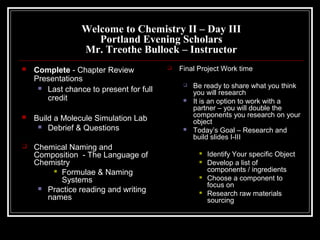
    Welcome to ChemistryII – Day III Portland Evening Scholars Mr. Treothe Bullock – Instructor    Complete - Chapter Review Presentations  Last chance to present for full credit Build a Molecule Simulation Lab  Debrief & Questions Chemical Naming and Composition - The Language of Chemistry  Formulae & Naming Systems  Practice reading and writing names  Final Project Work time    Be ready to share what you think you will research It is an option to work with a partner – you will double the components you research on your object Today’s Goal – Research and build slides I-III     Identify Your specific Object Develop a list of components / ingredients Choose a component to focus on Research raw materials sourcing
  • 2.
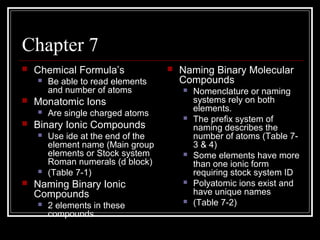
    Chapter 7  Chemical Formula’s   Aresingle charged atoms Binary Ionic Compounds    Naming Binary Molecular Compounds  Monatomic Ions   Be able to read elements and number of atoms  Use ide at the end of the element name (Main group elements or Stock system Roman numerals (d block) (Table 7-1) Naming Binary Ionic Compounds  2 elements in these compounds     Nomenclature or naming systems rely on both elements. The prefix system of naming describes the number of atoms (Table 73 & 4) Some elements have more than one ionic form requiring stock system ID Polyatomic ions exist and have unique names (Table 7-2)
  • 3.
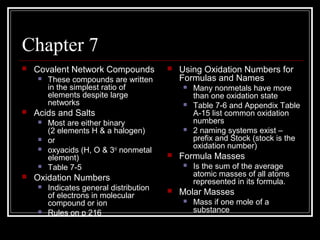
    Chapter 7  Covalent NetworkCompounds   These compounds are written in the simplest ratio of elements despite large networks Using Oxidation Numbers for Formulas and Names   Acids and Salts       Most are either binary (2 elements H & a halogen) or oxyacids (H, O & 3rd nonmetal element) Table 7-5   Formula Masses  Oxidation Numbers   Indicates general distribution of electrons in molecular compound or ion Rules on p 216  Many nonmetals have more than one oxidation state Table 7-6 and Appendix Table A-15 list common oxidation numbers 2 naming systems exist – prefix and Stock (stock is the oxidation number) Is the sum of the average atomic masses of all atoms represented in its formula. Molar Masses  Mass if one mole of a substance
  • 4.
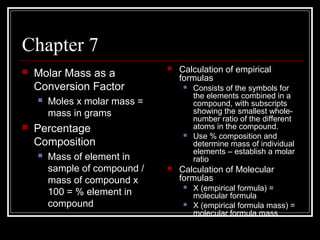
    Chapter 7  Molar Massas a Conversion Factor     Moles x molar mass = mass in grams Percentage Composition  Calculation of empirical formulas Mass of element in sample of compound / mass of compound x 100 = % element in compound   Consists of the symbols for the elements combined in a compound, with subscripts showing the smallest wholenumber ratio of the different atoms in the compound. Use % composition and determine mass of individual elements – establish a molar ratio Calculation of Molecular formulas   X (empirical formula) = molecular formula X (empirical formula mass) = molecular formula mass
  • 5.
    Welcome to ChemistryII – Week II Homework for next week    Complete Chapter 7 review sheets – sections 1 & 2 Remember lab safety sign off if needed. Progress on Final Project far enough to know you can commit on your object.
  • 6.
    Welcome to ChemistryII – Week II Homework for next week    Complete Chapter 7 review sheets – sections 1 & 2 Remember lab safety sign off if needed. Progress on Final Project far enough to know you can commit on your object.

Editor's Notes