JURISPRUDENCE
Libertarianism – Robert Norzick
Patrick A. N. Aboku
27.04.2019
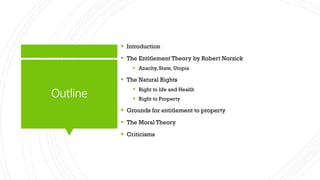
Outline
 Introduction
 The Entitlement Theory by Robert Norzick
 Anachy, State, Utopia
 The Natural Rights
 Right to life and Health
 Right to Property
 Grounds for entitlement to property
 The Moral Theory
 Criticisms
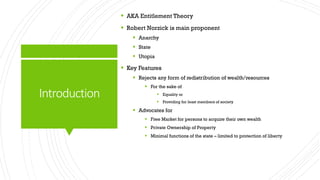
Introduction
 AKA Entitlement Theory
 Robert Norzick is main proponent
 Anarchy
 State
 Utopia
 Key Features
 Rejects any form of redistribution of wealth/resources
 For the sake of
 Equality or
 Providing for least members of society
 Advocates for
 Free Market for persons to acquire their own wealth
 Private Ownership of Property
 Minimal functions of the state – limited to protection of liberty
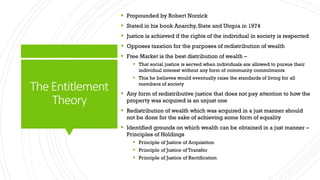
TheEntitlement
Theory
 Propounded by Robert Norzick
 Stated in his book Anarchy, State and Utopia in 1974
 Justice is achieved if the rights of the individual in society is respected
 Opposes taxation for the purposes of redistribution of wealth
 Free Market is the best distribution of wealth –
 That social justice is served when individuals are allowed to pursue their
individual interest without any form of community commitments
 This he believes would eventually raise the standards of living for all
members of society
 Any form of redistributive justice that does not pay attention to how the
property was acquired is an unjust one
 Redistribution of wealth which was acquired in a just manner should
not be done for the sake of achieving some form of equality
 Identified grounds on which wealth can be obtained in a just manner –
Principles of Holdings
 Principle of Justice of Acquisition
 Principle of Justice of Transfer
 Principle of Justice of Rectification
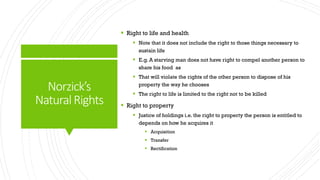
Norzick’s
NaturalRights
 Right to life and health
 Note that it does not include the right to those things necessary to
sustain life
 E.g. A starving man does not have right to compel another person to
share his food as
 That will violate the rights of the other person to dispose of his
property the way he chooses
 The right to life is limited to the right not to be killed
 Right to property
 Justice of holdings i.e. the right to property the person is entitled to
depends on how he acquires it
 Acquisition
 Transfer
 Rectification
Principlesof
Holdings
 Person who acquires a holding according to this principle is entitled to it
 Principle of Justice of Acquisition
 Manufacture
 Discovery
 Principle of Justice of Transfer
 Acquisition of property from persons who acquired them in a just manner
are entitled to them
 Principle of Justice of Rectification
 Being in possession of property not acquired through acquisition or
transfer is not just and must be rectified
 By paying the consideration for it
 Returning it
MoralTheoryof
Norzick
 Anarchy, State and Utopia
 Man existed in state of
 Anarchy
 perfect nature
 Bound only by the laws of nature
 Enjoyed absolute freedom to follow his own will
 With the proviso that he would not harm another persons health,
liberty or property
 Thus the natural rights of the individual acts also as an inbuilt
constraint upon his activities of all other individuals – “The Moral Side
restraint”
 Every individual has the right to enjoy his natural right subject to the
natural rights of others - “The Moral Side restraint”
 Problems of state of nature
 Arbitrary determination of breach of rights
 Difficulty in determining quantum of damages or reparation
 Result is anarchy leading to retaliations
 Eventually leads to development of the State
MoralTheoryof
Norzick
 Anarchy, State and Utopia
 State
 State is born to resolve the problems identified in the state of nature
 States function is limited to the protection of liberty
 That is the state is “minimal”
 A state with the least possible amount of powers
 Powers of the state are so minimal they cannot be reduced any further
 AKA night-watchman state
 Limited in the protection of individuals from theft, assault, fraud, breach of
contract
 Governmental institutions limited to military,police and the courts
 May also include civil service and emergency rescue dept, prisons, executive,
judiciary and legislature
 Minarchists – advocates of miminal states – advocates for a laissez-faire
approach to the economy by the state
 Assistance of the weak in society should be left to the voluntary of the
individuals
 Redistribution of wealth is seen a form of slavery on the owner of the
properties
MoralTheoryof
Norzick
 Anarchy, State and Utopia
 Utopia
 A place or society in which individuals will voluntarily and willingly
contract or agree to join
 It is an environment which promotes
 Laissez faire approach to economy
 People to pursue their individual goals within legitimate limitations
 Justice of holdings
Criticisms
 The idea of the individual as an isolated member of society is an
oversimplification
 It ignores the ever increasing role of the state in modern
capitalism
 He did not state how the minimal state would be kept minimal so
that the wealthy in society do not hijack it for their selfish gains
 The measures to alleviate poverty are completely ignored
 His free market and voluntary philanthropy is naïve in the extream
Thanks
Discussion
Relate theory to Ghana

The Entitlement Theory - Summary

  • 1.
    JURISPRUDENCE Libertarianism – RobertNorzick Patrick A. N. Aboku 27.04.2019
  • 2.
    Outline  Introduction  TheEntitlement Theory by Robert Norzick  Anachy, State, Utopia  The Natural Rights  Right to life and Health  Right to Property  Grounds for entitlement to property  The Moral Theory  Criticisms
  • 3.
    Introduction  AKA EntitlementTheory  Robert Norzick is main proponent  Anarchy  State  Utopia  Key Features  Rejects any form of redistribution of wealth/resources  For the sake of  Equality or  Providing for least members of society  Advocates for  Free Market for persons to acquire their own wealth  Private Ownership of Property  Minimal functions of the state – limited to protection of liberty
  • 4.
    TheEntitlement Theory  Propounded byRobert Norzick  Stated in his book Anarchy, State and Utopia in 1974  Justice is achieved if the rights of the individual in society is respected  Opposes taxation for the purposes of redistribution of wealth  Free Market is the best distribution of wealth –  That social justice is served when individuals are allowed to pursue their individual interest without any form of community commitments  This he believes would eventually raise the standards of living for all members of society  Any form of redistributive justice that does not pay attention to how the property was acquired is an unjust one  Redistribution of wealth which was acquired in a just manner should not be done for the sake of achieving some form of equality  Identified grounds on which wealth can be obtained in a just manner – Principles of Holdings  Principle of Justice of Acquisition  Principle of Justice of Transfer  Principle of Justice of Rectification
  • 5.
    Norzick’s NaturalRights  Right tolife and health  Note that it does not include the right to those things necessary to sustain life  E.g. A starving man does not have right to compel another person to share his food as  That will violate the rights of the other person to dispose of his property the way he chooses  The right to life is limited to the right not to be killed  Right to property  Justice of holdings i.e. the right to property the person is entitled to depends on how he acquires it  Acquisition  Transfer  Rectification
  • 6.
    Principlesof Holdings  Person whoacquires a holding according to this principle is entitled to it  Principle of Justice of Acquisition  Manufacture  Discovery  Principle of Justice of Transfer  Acquisition of property from persons who acquired them in a just manner are entitled to them  Principle of Justice of Rectification  Being in possession of property not acquired through acquisition or transfer is not just and must be rectified  By paying the consideration for it  Returning it
  • 7.
    MoralTheoryof Norzick  Anarchy, Stateand Utopia  Man existed in state of  Anarchy  perfect nature  Bound only by the laws of nature  Enjoyed absolute freedom to follow his own will  With the proviso that he would not harm another persons health, liberty or property  Thus the natural rights of the individual acts also as an inbuilt constraint upon his activities of all other individuals – “The Moral Side restraint”  Every individual has the right to enjoy his natural right subject to the natural rights of others - “The Moral Side restraint”  Problems of state of nature  Arbitrary determination of breach of rights  Difficulty in determining quantum of damages or reparation  Result is anarchy leading to retaliations  Eventually leads to development of the State
  • 8.
    MoralTheoryof Norzick  Anarchy, Stateand Utopia  State  State is born to resolve the problems identified in the state of nature  States function is limited to the protection of liberty  That is the state is “minimal”  A state with the least possible amount of powers  Powers of the state are so minimal they cannot be reduced any further  AKA night-watchman state  Limited in the protection of individuals from theft, assault, fraud, breach of contract  Governmental institutions limited to military,police and the courts  May also include civil service and emergency rescue dept, prisons, executive, judiciary and legislature  Minarchists – advocates of miminal states – advocates for a laissez-faire approach to the economy by the state  Assistance of the weak in society should be left to the voluntary of the individuals  Redistribution of wealth is seen a form of slavery on the owner of the properties
  • 9.
    MoralTheoryof Norzick  Anarchy, Stateand Utopia  Utopia  A place or society in which individuals will voluntarily and willingly contract or agree to join  It is an environment which promotes  Laissez faire approach to economy  People to pursue their individual goals within legitimate limitations  Justice of holdings
  • 10.
    Criticisms  The ideaof the individual as an isolated member of society is an oversimplification  It ignores the ever increasing role of the state in modern capitalism  He did not state how the minimal state would be kept minimal so that the wealthy in society do not hijack it for their selfish gains  The measures to alleviate poverty are completely ignored  His free market and voluntary philanthropy is naïve in the extream
  • 11.