The Emergence of the “Church history” and the
predicament of Orthodox Hierarchy in the Russian
Empire of the early 1800s
Eugene Lyutko
Saint Tikhon’s Orthodox University
Research center for the History of Theology and Theological education
Metropolitan of Moscow
Plato (Levshin),
1737–1812
Archbishop of Pskov
Mefodiy (Smirnov),
1761–1815
Metropolitan of Moscow
St Philaret (Drozdov),
1782–1867
Archbishop of Tver
St Innokenty (Smirnov),
1784–1819
Brief History of the
Russian Church. In 2
vol. M., 1805
Liber historicus de
rebus, in primitive sive
trium et quarti in euntis
speculum Ecclesia
Christiana (…) gestis.
M., 1805
Compend of Sacred
History for Use in
Church Schools.
St.Ptsb., 1816;
Compend of Sacred
History from Bible
Times to 18th Century
for Use in Church
Schools). In 2 divs.
St.Ptsb., 1817.
Eastern and Western
Church
“The History of the memorable
Council of Florence in terms of the
union undertaking to unify the
Eastern Church with the Western
Church”
Between Greeks and
Romans
The History of the Council of Florence
convened to restore the connection
between the Greeks and the Romans
Romans
Romans
Romans
Romans
Not “Churches” but
“nations”
but not Roman Church
Relations between nations
international relations inter-confessional relations
modernization of terminology
From
through
to
Cultural Gap
Russian clergy and nobility in the usual dress (first half of the 19th
century)
Robert Pinkerton,
Principal Agent of the
British and Foreign Bible
Society (BFBS), 1780–
1859
“The candidates for the priesthood being thus
trained up from their early years in these
secluded retreats, have but few opportunities of
mixing in civil society. Therefore, on leaving the
seminary, and entering the world, a student is
like foreigner coming into a strange country,
with the language and manner of which he has
but an imperfect acquaintance”
Robert Pinkerton. Present State of Greek Church in Russia. London,
1814. P. 10.
Modernization and Bureaucratization
Russian emperor
Alexander I
1777–1825
institutional autonomy of Hierarchy
“Church history”
modernization and secularization of property and political power
From
through
to
autonomy of “discourse”.
Civil Ecclesiastical
Education
University system (1804) Ecclesiastical education
system (1814)
Publishing Secular censorship (1804) Ecclesiastical censorship
(1804)
Science Academy of science (1724)
(1724)
Ecclesiastical academies
(1814)
Aleksey Mikhailovich and Patriarch
Nikon
(17th century)
Peter the Great and Theophan Prokopovich
(18th century)
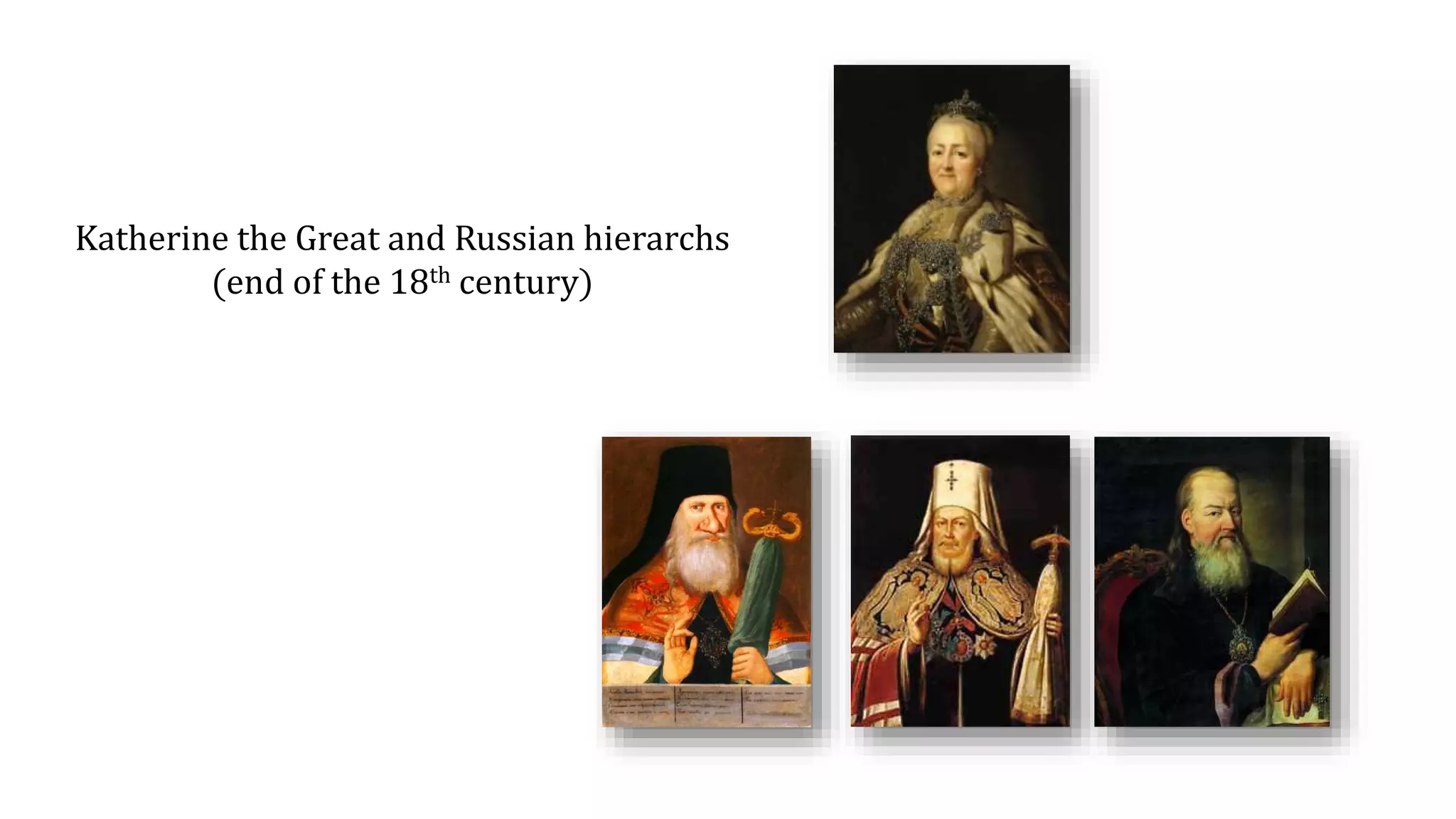
Katherine the Great and Russian hierarchs
(end of the 18th century)
bureaucracy
Alexander I and
Russian episcopate
(early 19th century)
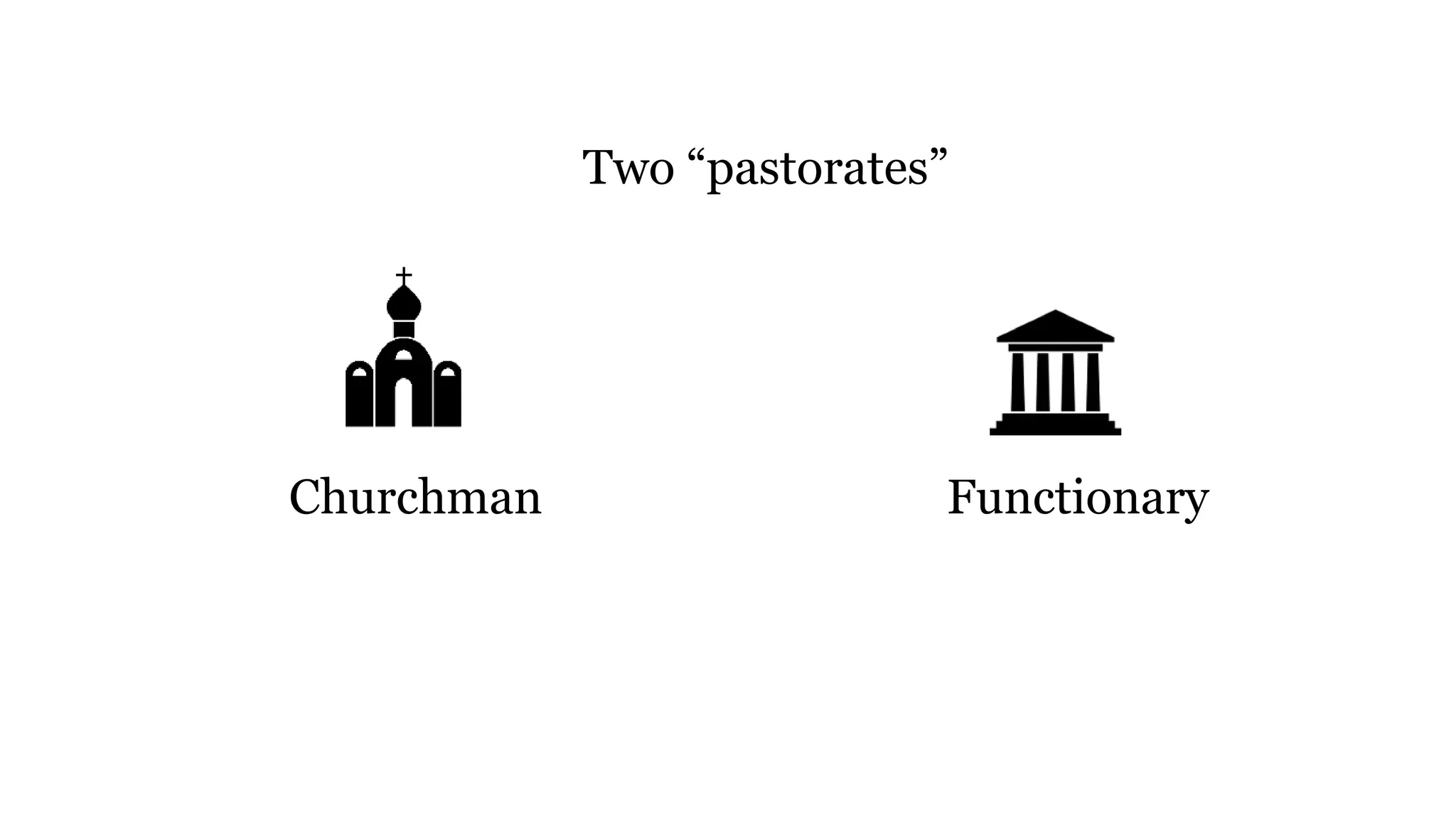
Two “pastorates”
Churchman Functionary
“Old” pastorate
Church hierarchy
Person
Monarch
Capitation tax (1718)
“person” became the unit
of fiscal taxation
“Table of Ranks” (1722)
the framework for bureaucracy
as a social phenomenon
“New” pastorate
Bureaucracy
Monarch
Ministry of National Education (1804)
“Public shepherds” begin to perform a
native function of the Church priests – to
teach people
Emergence of the “Public Sphere”
Assembly of masons in the time of Alexander I
by Alexander Moravov (1912)
Polemics with “heretics”
decreases of the religion’s influence
From
through
to
Interconfessional discussion
Metropolitan of Moscow
St Philaret (Drozdov),
1782–1867
“Conversation between a Seeker and
a Believer Concerning the Orthodoxy
of the Eastern Greco-Russian
Church” (1815)
National Identity
Problem
Prayer service on the eve of the Battle of
Borodino
Mykola Samokysh (c. 1912)
“History of Muscovy”
emergence of the “secular patriotism” and “national consciousness”
From
through
to
History of the Russian State
and Russian People
History of the (Russian) Churchvs
Conclusion: Theological Perspective
First-order
theology
Setting forth as adequately as possible a
picture of God, humankind and the world as they are
Second-order
theology
Inquiring into the grounds or justification for
accepting one
construction as compared to another in context of
increasing encounter of world cultures and the
development of sciences
Third-order
theology
All theological positions are rooted fundamentally in
imaginative construction and must be “palatable” to
the contemporary human mind
Gordon Kaufman. Essay on Theological Method. Scholars press, 1975. P. 45–47
• With other Christian confessions, representatives of which felt
increasingly free in the state elite in the beginning of the 19th
century
• With bureaucracy concerning the relationship with the monarch
and the right to teach
• With the “flickering” public space concerning the right to express
the truth authoritatively and categorically without resorting to
discussion and argumentation
• With the so-called “national identity” in connection with the right
to impose un ultimate value basis in order to determine the
historical identity of the Empire residents
Intellectual “correlation with another” for Russian hierarchy in the early 19th
century as a
consequence of the transition to the second-order theology

The Emergence of the “Church history” and the predicament of Orthodox Hierarchy in the Russian Empire of the early 1800s

  • 1.
    The Emergence ofthe “Church history” and the predicament of Orthodox Hierarchy in the Russian Empire of the early 1800s Eugene Lyutko Saint Tikhon’s Orthodox University Research center for the History of Theology and Theological education
  • 2.
    Metropolitan of Moscow Plato(Levshin), 1737–1812 Archbishop of Pskov Mefodiy (Smirnov), 1761–1815 Metropolitan of Moscow St Philaret (Drozdov), 1782–1867 Archbishop of Tver St Innokenty (Smirnov), 1784–1819 Brief History of the Russian Church. In 2 vol. M., 1805 Liber historicus de rebus, in primitive sive trium et quarti in euntis speculum Ecclesia Christiana (…) gestis. M., 1805 Compend of Sacred History for Use in Church Schools. St.Ptsb., 1816; Compend of Sacred History from Bible Times to 18th Century for Use in Church Schools). In 2 divs. St.Ptsb., 1817.
  • 3.
    Eastern and Western Church “TheHistory of the memorable Council of Florence in terms of the union undertaking to unify the Eastern Church with the Western Church”
  • 4.
    Between Greeks and Romans TheHistory of the Council of Florence convened to restore the connection between the Greeks and the Romans
  • 5.
  • 6.
    Relations between nations internationalrelations inter-confessional relations modernization of terminology From through to
  • 7.
    Cultural Gap Russian clergyand nobility in the usual dress (first half of the 19th century)
  • 8.
    Robert Pinkerton, Principal Agentof the British and Foreign Bible Society (BFBS), 1780– 1859 “The candidates for the priesthood being thus trained up from their early years in these secluded retreats, have but few opportunities of mixing in civil society. Therefore, on leaving the seminary, and entering the world, a student is like foreigner coming into a strange country, with the language and manner of which he has but an imperfect acquaintance” Robert Pinkerton. Present State of Greek Church in Russia. London, 1814. P. 10.
  • 9.
    Modernization and Bureaucratization Russianemperor Alexander I 1777–1825
  • 10.
    institutional autonomy ofHierarchy “Church history” modernization and secularization of property and political power From through to autonomy of “discourse”.
  • 11.
    Civil Ecclesiastical Education University system(1804) Ecclesiastical education system (1814) Publishing Secular censorship (1804) Ecclesiastical censorship (1804) Science Academy of science (1724) (1724) Ecclesiastical academies (1814)
  • 12.
    Aleksey Mikhailovich andPatriarch Nikon (17th century)
  • 13.
    Peter the Greatand Theophan Prokopovich (18th century)
  • 14.
    Katherine the Greatand Russian hierarchs (end of the 18th century)
  • 15.
    bureaucracy Alexander I and Russianepiscopate (early 19th century)
  • 16.
  • 17.
    “Old” pastorate Church hierarchy Person Monarch Capitationtax (1718) “person” became the unit of fiscal taxation “Table of Ranks” (1722) the framework for bureaucracy as a social phenomenon “New” pastorate Bureaucracy Monarch Ministry of National Education (1804) “Public shepherds” begin to perform a native function of the Church priests – to teach people
  • 18.
    Emergence of the“Public Sphere” Assembly of masons in the time of Alexander I by Alexander Moravov (1912)
  • 19.
    Polemics with “heretics” decreasesof the religion’s influence From through to Interconfessional discussion
  • 20.
    Metropolitan of Moscow StPhilaret (Drozdov), 1782–1867 “Conversation between a Seeker and a Believer Concerning the Orthodoxy of the Eastern Greco-Russian Church” (1815)
  • 21.
    National Identity Problem Prayer serviceon the eve of the Battle of Borodino Mykola Samokysh (c. 1912)
  • 22.
    “History of Muscovy” emergenceof the “secular patriotism” and “national consciousness” From through to History of the Russian State and Russian People History of the (Russian) Churchvs
  • 23.
  • 24.
    First-order theology Setting forth asadequately as possible a picture of God, humankind and the world as they are Second-order theology Inquiring into the grounds or justification for accepting one construction as compared to another in context of increasing encounter of world cultures and the development of sciences Third-order theology All theological positions are rooted fundamentally in imaginative construction and must be “palatable” to the contemporary human mind Gordon Kaufman. Essay on Theological Method. Scholars press, 1975. P. 45–47
  • 25.
    • With otherChristian confessions, representatives of which felt increasingly free in the state elite in the beginning of the 19th century • With bureaucracy concerning the relationship with the monarch and the right to teach • With the “flickering” public space concerning the right to express the truth authoritatively and categorically without resorting to discussion and argumentation • With the so-called “national identity” in connection with the right to impose un ultimate value basis in order to determine the historical identity of the Empire residents Intellectual “correlation with another” for Russian hierarchy in the early 19th century as a consequence of the transition to the second-order theology