Downloaded 30 times





























































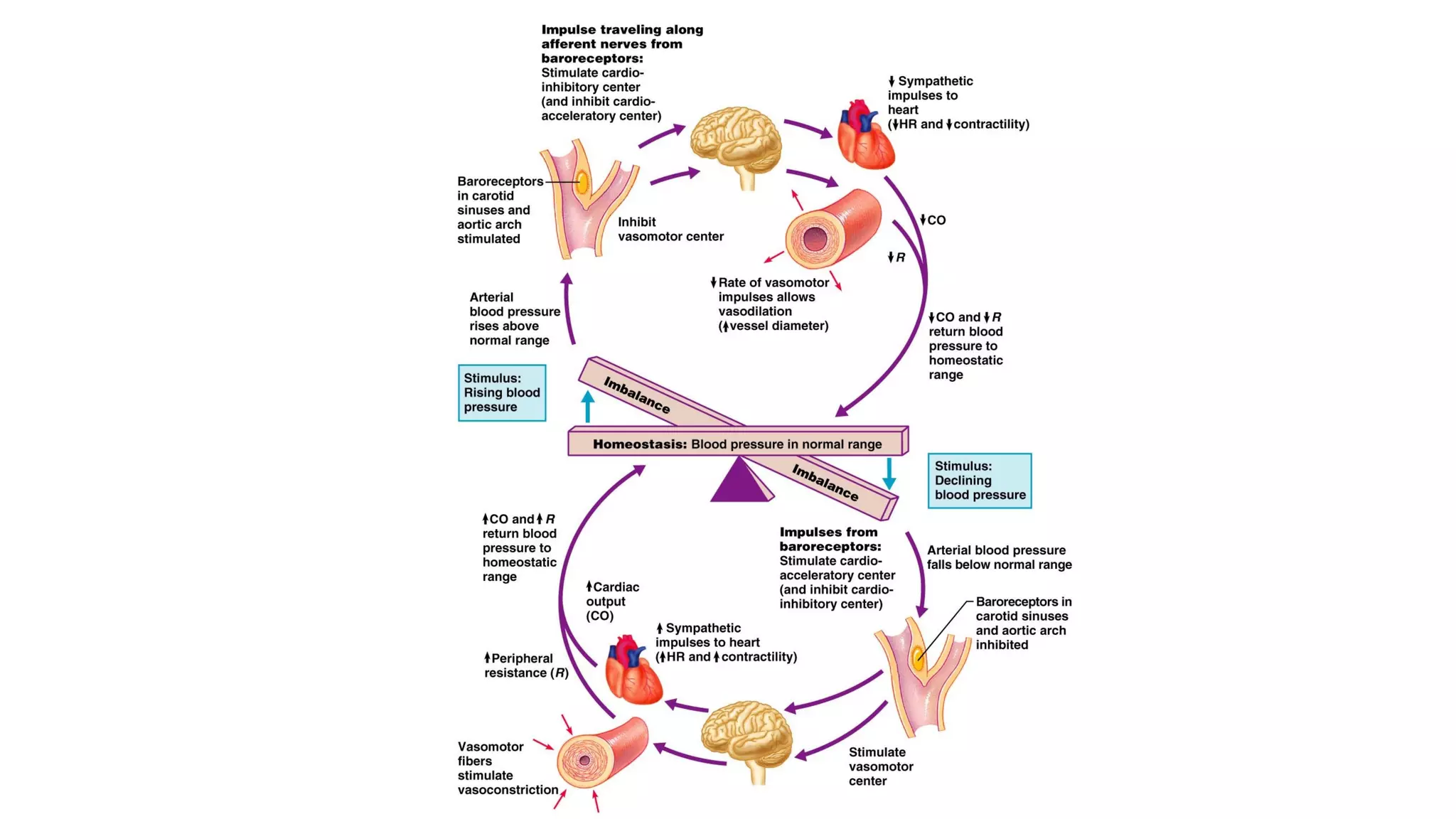
![Short Term: Neural Control
• Baroreceptors:
• Carotid sinuses (monitor blood flow to brain)
• Aortic (monitor blood flow to periphery)
• Detect changes in MAP
• Chemoreceptors: detect [O2], [CO2] & pH (carotid & aortic bodies)](https://image.slidesharecdn.com/theelectrocardiogramecg-150729133405-lva1-app6892/75/The-electrocardiogram-ecg-166-2048.jpg)






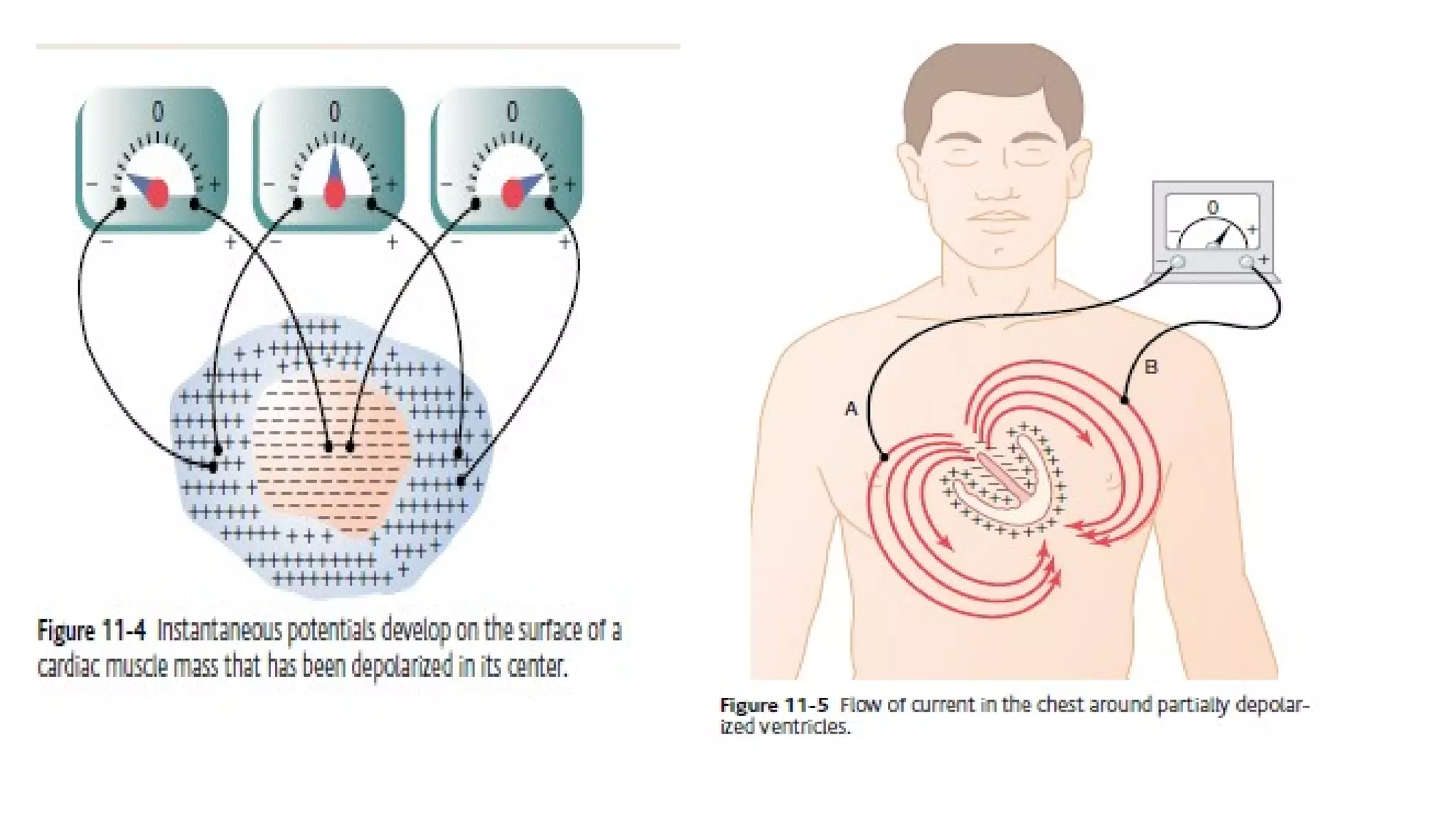
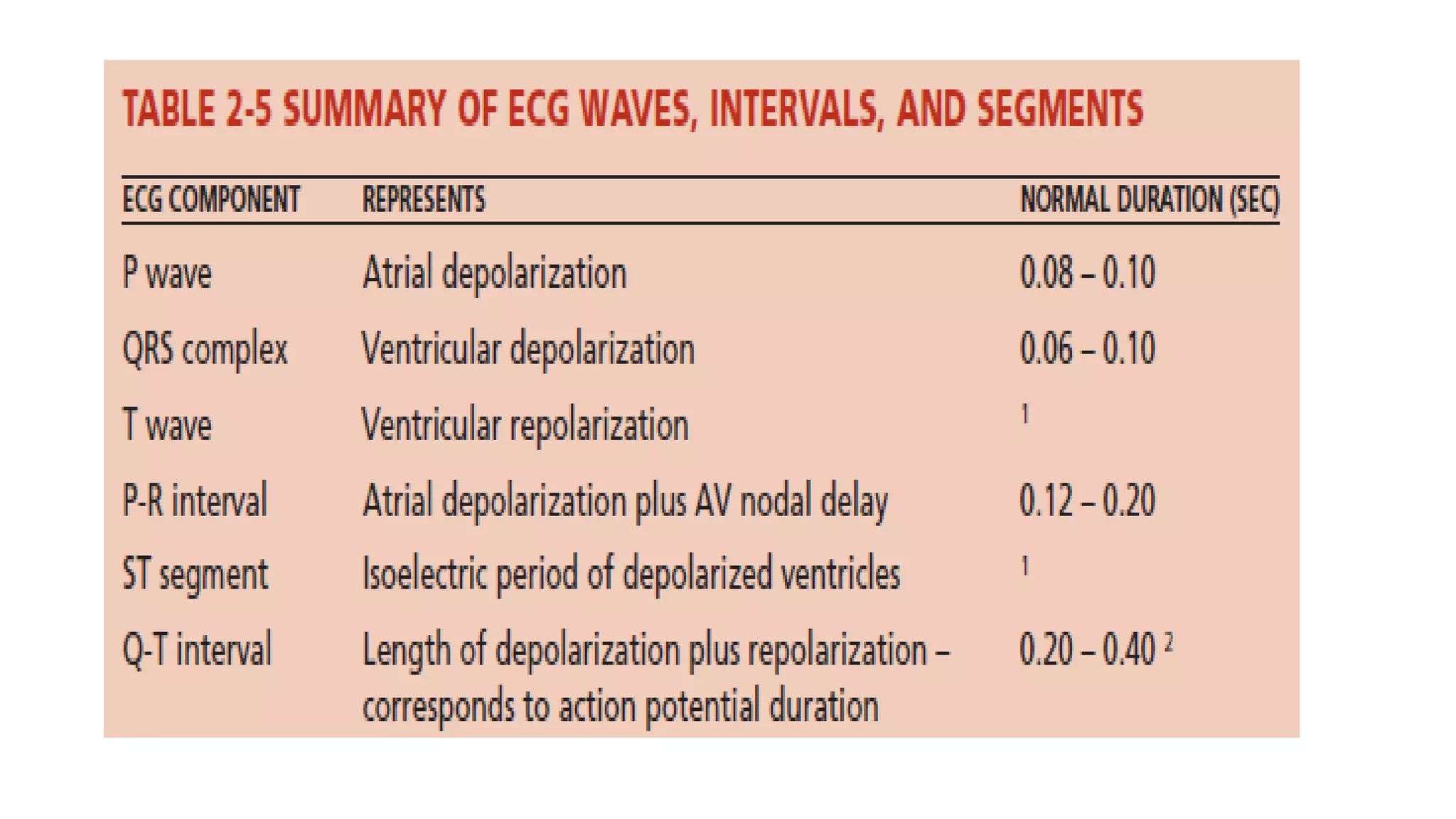
The ECG is a diagnostic tool that measures electrical currents in the heart during the cardiac cycle using electrodes placed on the body. It provides information about heart rate and rhythm, as well as signs of conditions like myocardial infarction, chamber enlargement, and conduction delays or blocks. Key aspects of the ECG include the P wave, QRS complex, T wave, and intervals between them like the PR interval. Abnormal rhythms and conduction patterns seen on ECG can help diagnose conditions affecting the heart's electrical system.


