
 Pharaohs were the kings of ancient Egypt.
 Some of them were very famous in history for their
works that they had left behind. The magnificent
tombs and monuments that were raised in their honor
tell us a lot about their lifestyles and how they belong
to that particular era.
 Pharaohs usually succeed to the throne through royal
birth. But there were some accounts where military
commanders, such as, Horemheb came to the power.
 Generally were men but there were some accounts of
few women to be made pharaoh. The most famous of
them was Queen Cleopatra VII.
General Characteristics

 The sun rises on yet another bright day in ancient Egypt. A man wakes up,
but this isn't any ordinary man: this is the pharaoh.
This is the last time he will be alone for hours. He has many officials,
servants and slaves to make sure he is always safe and perfectly
presented.
His day begins with cleaning and dressing by servants including the
splendidly named "Chief of the Scented Oils and Pastes for Rubbing His
Majesty's Body". When he is clean, he is dressed and adorned with a huge
amount of jewelry. After all, he's the pharaoh. He owns vast amounts of
gold and he needs to look the part.
One day in a pharaohn
life

 The pharaoh then walks to the "audience chamber" to hold his daily
meetings. As guests enter the room they prostrate themselves in front of
him. He is a Divine Majesty - they are mere mortals.
The day's audiences completed, he leaves for the temple. As pharaoh, he
must pay tribute to the chief god, Amen-Re. It's a pain but, if he doesn't do
it, the empire could lose its divine order, or Maat. It could descend into Isfet
(chaos) and he would be held responsible. It's not worth the risk.
Accompanied by the high priest, the pharaoh walks through the great
temple to the sanctuary, enjoying the cool air and smelling the thick
incense. Inside, he approaches the statue of Amen-Re. He asks the god
some questions and receives answers from the high priest. The questions
over, he is presented with a large bull. After prayers, the sacred butcher
cuts the bull's throat as a sacrifice to the gods.

There were many pharaohs that ruled in Ancient Egypt and
all tried to leave an eternal legacy. Of the many mighty
pharaohs that ruled only a few have actually accomplished
such a goal.
Here are the brief accounts of some famous pharaohs who
ruled Egypt with almost zeal
Famous Pharaohs
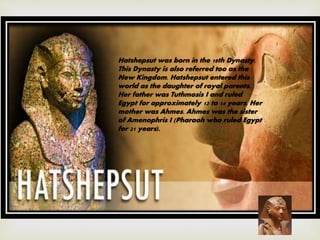
Hatshepsut was born in the 18th Dynasty.
This Dynasty is also referred too as the
New Kingdom. Hatshepsut entered this
world as the daughter of royal parents.
Her father was Tuthmosis I and ruled
Egypt for approximately 12 to 14 years. Her
mother was Ahmes. Ahmes was the sister
of Amenophris I (Pharaoh who ruled Egypt
for 21 years).
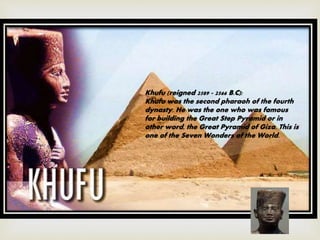
Khufu (reigned 2589 - 2566 B.C):
Khufu was the second pharaoh of the fourth
dynasty. He was the one who was famous
for building the Great Step Pyramid or in
other word, the Great Pyramid of Giza. This is
one of the Seven Wonders of the World.
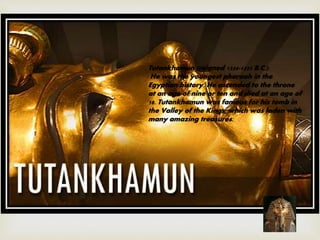
Tutankhamun (reigned 1334-1325 B.C.):
He was the youngest pharaoh in the
Egyptian history. He ascended to the throne
at an age of nine or ten and died at an age of
18. Tutankhamun was famous for his tomb in
the Valley of the Kings, which was laden with
many amazing treasures.
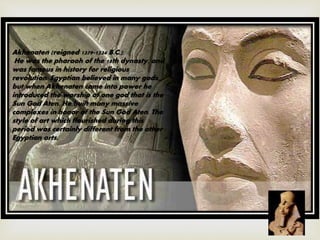
Akhenaten (reigned 1379-1334 B.C.):
He was the pharaoh of the 18th dynasty, and
was famous in history for religious
revolution. Egyptian believed in many gods,
but when Akhenaten came into power he
introduced the worship of one god that is the
Sun God Aten. He built many massive
complexes in honor of the Sun God Aten. The
style of art which flourished during this
period was certainly different from the other
Egyptian arts.
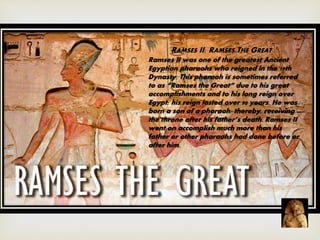
RAMSES II: RAMSES THE GREAT
Ramses II was one of the greatest Ancient
Egyptian pharaohs who reigned in the 19th
Dynasty. This pharaoh is sometimes referred
to as “Ramses the Great” due to his great
accomplishments and to his long reign over
Egypt; his reign lasted over 90 years. He was
born a son of a pharaoh; thereby, receiving
the throne after his father’s death. Ramses II
went on accomplish much more than his
father or other pharaohs had done before or
after him.
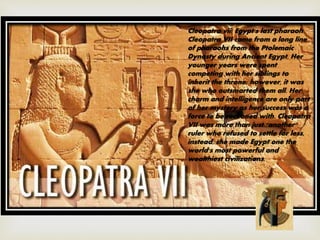
Cleopatra vii: Egypt's last pharaoh
Cleopatra VII came from a long line
of pharaohs from the Ptolemaic
Dynasty during Ancient Egypt. Her
younger years were spent
competing with her siblings to
inherit the throne; however, it was
she who outsmarted them all. Her
charm and intelligence are only part
of her mystery as her success was a
force to be reckoned with. Cleopatra
VII was more than just "another"
ruler who refused to settle for less,
instead, she made Egypt one the
world's most powerful and
wealthiest civilizations.
LINKS
http://www.kingtutone.com/pharaohs/kh
ufu/
http://library.thinkquest.org/CR0210200/
http://egypt.mrdonn.org/
http://www.kidsgen.com
Egyptian Empire Pharahos

The egyptian empire pharahos

  • 2.
      Pharaohs werethe kings of ancient Egypt.  Some of them were very famous in history for their works that they had left behind. The magnificent tombs and monuments that were raised in their honor tell us a lot about their lifestyles and how they belong to that particular era.  Pharaohs usually succeed to the throne through royal birth. But there were some accounts where military commanders, such as, Horemheb came to the power.  Generally were men but there were some accounts of few women to be made pharaoh. The most famous of them was Queen Cleopatra VII. General Characteristics
  • 3.
      The sunrises on yet another bright day in ancient Egypt. A man wakes up, but this isn't any ordinary man: this is the pharaoh. This is the last time he will be alone for hours. He has many officials, servants and slaves to make sure he is always safe and perfectly presented. His day begins with cleaning and dressing by servants including the splendidly named "Chief of the Scented Oils and Pastes for Rubbing His Majesty's Body". When he is clean, he is dressed and adorned with a huge amount of jewelry. After all, he's the pharaoh. He owns vast amounts of gold and he needs to look the part. One day in a pharaohn life
  • 4.
      The pharaohthen walks to the "audience chamber" to hold his daily meetings. As guests enter the room they prostrate themselves in front of him. He is a Divine Majesty - they are mere mortals. The day's audiences completed, he leaves for the temple. As pharaoh, he must pay tribute to the chief god, Amen-Re. It's a pain but, if he doesn't do it, the empire could lose its divine order, or Maat. It could descend into Isfet (chaos) and he would be held responsible. It's not worth the risk. Accompanied by the high priest, the pharaoh walks through the great temple to the sanctuary, enjoying the cool air and smelling the thick incense. Inside, he approaches the statue of Amen-Re. He asks the god some questions and receives answers from the high priest. The questions over, he is presented with a large bull. After prayers, the sacred butcher cuts the bull's throat as a sacrifice to the gods.
  • 5.
     There were manypharaohs that ruled in Ancient Egypt and all tried to leave an eternal legacy. Of the many mighty pharaohs that ruled only a few have actually accomplished such a goal. Here are the brief accounts of some famous pharaohs who ruled Egypt with almost zeal Famous Pharaohs
  • 6.
    Hatshepsut was bornin the 18th Dynasty. This Dynasty is also referred too as the New Kingdom. Hatshepsut entered this world as the daughter of royal parents. Her father was Tuthmosis I and ruled Egypt for approximately 12 to 14 years. Her mother was Ahmes. Ahmes was the sister of Amenophris I (Pharaoh who ruled Egypt for 21 years).
  • 7.
    Khufu (reigned 2589- 2566 B.C): Khufu was the second pharaoh of the fourth dynasty. He was the one who was famous for building the Great Step Pyramid or in other word, the Great Pyramid of Giza. This is one of the Seven Wonders of the World.
  • 8.
    Tutankhamun (reigned 1334-1325B.C.): He was the youngest pharaoh in the Egyptian history. He ascended to the throne at an age of nine or ten and died at an age of 18. Tutankhamun was famous for his tomb in the Valley of the Kings, which was laden with many amazing treasures.
  • 9.
    Akhenaten (reigned 1379-1334B.C.): He was the pharaoh of the 18th dynasty, and was famous in history for religious revolution. Egyptian believed in many gods, but when Akhenaten came into power he introduced the worship of one god that is the Sun God Aten. He built many massive complexes in honor of the Sun God Aten. The style of art which flourished during this period was certainly different from the other Egyptian arts.
  • 10.
    RAMSES II: RAMSESTHE GREAT Ramses II was one of the greatest Ancient Egyptian pharaohs who reigned in the 19th Dynasty. This pharaoh is sometimes referred to as “Ramses the Great” due to his great accomplishments and to his long reign over Egypt; his reign lasted over 90 years. He was born a son of a pharaoh; thereby, receiving the throne after his father’s death. Ramses II went on accomplish much more than his father or other pharaohs had done before or after him.
  • 11.
    Cleopatra vii: Egypt'slast pharaoh Cleopatra VII came from a long line of pharaohs from the Ptolemaic Dynasty during Ancient Egypt. Her younger years were spent competing with her siblings to inherit the throne; however, it was she who outsmarted them all. Her charm and intelligence are only part of her mystery as her success was a force to be reckoned with. Cleopatra VII was more than just "another" ruler who refused to settle for less, instead, she made Egypt one the world's most powerful and wealthiest civilizations.
  • 12.