The Change
Management
Business Analysis and
Project Management
Approach
Mohammed Yaseen
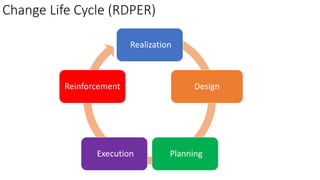
Change Life Cycle (RDPER)
Realization
Design
PlanningExecution
Reinforcement
Change Realization
Psychological
Impact of Change
Leadership
Skills to design
A change to
Address Impact
Facilitation
Skills
And
Technique
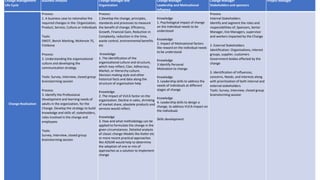
Change Management
Life Cycle
Business Analysis Change Manager and
Organization
Change Manager
Leadership and Motivational
Influence
Change Manager
Stakeholders and sponsors
Project Manager
Change Realization
Process:
1. A business case to rationalise the
required changes in the: Organization,
Product, Service, Culture or Individuals
Tools:
SWOT, Bench Marking, McKenzie 7S,
Fishbone
Process:
2. Understanding the organizational
culture and developing the
communication strategy
Tools: Survey, Interview, closed group
brainstorming session
Process:
3. Identify the Professional
Development and learning needs of
adults in the organization, for the
Change. Develop the strategy to build
knowledge and skills of; stakeholders,
roles involved in the change and
employees
Tools:
Survey, Interview, closed group
brainstorming session
Process:
1.Develop the change; principles,
standards and processes to measure
the benefit of change; Efficiency,
Growth, Financial Gain, Reduction in
Complexity, reduction in the time,
waste control, environmental benefits
etc
Knowledge
1. The identification of the
organizational culture and structure,
which may reflect; Clan, Adhocracy,
Market, or Hierarchy culture.
Decision making style and other
historical facts and data along the
structure of organization help
Knowledge
2. The impact of VUCA factor on the
organization. Decline in sales, shrinking
of market share, obsolete products and
services would reflect.
Knowledge
3. How and what methodology can be
applied to formulate the change in the
given circumstances. Detailed analysis
of classic change Models like Kotler etc
or more recent practical approaches
like ADGAR would help to determine
the adoption of one or mix of
approaches as a solution to implement
change
Knowledge
1. Psychological impact of change
on the individual needs to be
understood
Knowledge
2. Impact of Motivational factors
like reward on the individual needs
to be understood
Knowledge
3 Identify Personal
Motivation to change
Knowledge
3. Leadership skills to address the
needs of individuals at different
stages of change
Knowledge
4. Leadership skills to design a
change, to address VUCA Impact on
the individuals
Skills development
Process
Internal Stakeholders
Identify and segment the roles and
responsibilities of; Sponsors, Senior
Manager, line Managers, supervisor
and workers impacted by the Change
2. External Stakeholders
Identification: Organizations, interest
groups, supplier, customers
Government bodies effected by the
change
3. Identification of Influences,
concerns, Needs, and interests along
with prioritization of both internal and
external stakeholders
Tools: Survey, Interview, closed group
brainstorming session
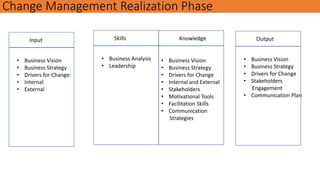
Change Management Realization Phase
Input
• Business Vision
• Business Strategy
• Drivers for Change:
• Internal
• External
Skills
• Business Analysis
• Leadership
Knowledge
• Business Vision
• Business Strategy
• Drivers for Change
• Internal and External
• Stakeholders
• Motivational Tools
• Facilitation Skills
• Communication
Strategies
Output
• Business Vision
• Business Strategy
• Drivers for Change
• Stakeholders
Engagement
• Communication Plan
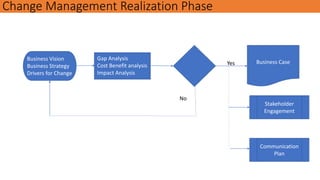
Change Management Realization Phase
Business Case
Business Vision
Business Strategy
Drivers for Change
Gap Analysis
Cost Benefit analysis
Impact Analysis
Stakeholder
Engagement
Communication
Plan
Yes
No
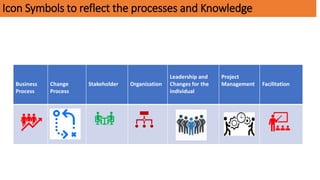
Icon Symbols to reflect the processes and Knowledge
Business
Process
Change
Process
Stakeholder Organization
Leadership and
Changes for the
individual
Project
Management Facilitation
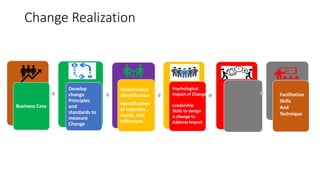
Change Realization
Business Case
Develop
change
Principles
and
standards to
measure
Change
Stakeholders
Identification
Identification
of interests ,
needs, and
influences
Psychological
Impact of Change
Leadership
Skills to design
A change to
Address Impact
Facilitation
Skills
And
Technique
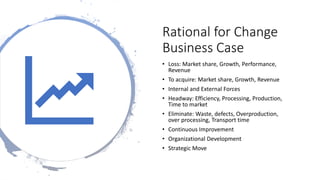
Rational for Change
Business Case
• Loss: Market share, Growth, Performance,
Revenue
• To acquire: Market share, Growth, Revenue
• Internal and External Forces
• Headway: Efficiency, Processing, Production,
Time to market
• Eliminate: Waste, defects, Overproduction,
over processing, Transport time
• Continuous Improvement
• Organizational Development
• Strategic Move
Tools to
identify the
Change
• Bench Marking Internal (Organization) and
external (Market)
• SWOT Analysis
• Fishbone
• McKinsey 7S
• Nadler-Tushman’s Congruence Model
• Strategic Goals and Operational Achievement
Metrics
• Present state and Future state
(Goals/Objectives) Metrics
• Surveys and feedback analysis (Internal and
External Customers)
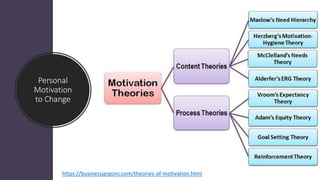
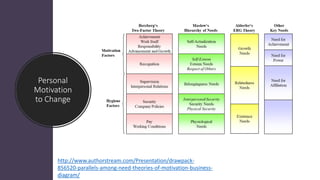
Personal
Motivation
to Change
https://businessjargons.com/theories-of-motivation.html
Personal
Motivation
to Change
http://www.authorstream.com/Presentation/drawpack-
856520-parallels-among-need-theories-of-motivation-business-
diagram/
Personal Motivational tools for Change
• 1. Motivator factors: These factors to motivate employees and
create satisfactions, The examples could be the; career progression,
feeling recognized at the work place due to the contribution and
other factors
•
2. Hygiene factors: These factors may contribute in dissatisfaction
or may cause de-motivation if not present can lead to
dissatisfaction. These factors could be the absence of life balance
policies, benefits, relationship among the management and the
teams
https://contactzilla.com/blog/5-psychological-theories-
motivation-increase-productivity/
Change Design

The change management realization

  • 1.
    The Change Management Business Analysisand Project Management Approach Mohammed Yaseen
  • 2.
    Change Life Cycle(RDPER) Realization Design PlanningExecution Reinforcement
  • 3.
  • 4.
    Psychological Impact of Change Leadership Skillsto design A change to Address Impact Facilitation Skills And Technique Change Management Life Cycle Business Analysis Change Manager and Organization Change Manager Leadership and Motivational Influence Change Manager Stakeholders and sponsors Project Manager Change Realization Process: 1. A business case to rationalise the required changes in the: Organization, Product, Service, Culture or Individuals Tools: SWOT, Bench Marking, McKenzie 7S, Fishbone Process: 2. Understanding the organizational culture and developing the communication strategy Tools: Survey, Interview, closed group brainstorming session Process: 3. Identify the Professional Development and learning needs of adults in the organization, for the Change. Develop the strategy to build knowledge and skills of; stakeholders, roles involved in the change and employees Tools: Survey, Interview, closed group brainstorming session Process: 1.Develop the change; principles, standards and processes to measure the benefit of change; Efficiency, Growth, Financial Gain, Reduction in Complexity, reduction in the time, waste control, environmental benefits etc Knowledge 1. The identification of the organizational culture and structure, which may reflect; Clan, Adhocracy, Market, or Hierarchy culture. Decision making style and other historical facts and data along the structure of organization help Knowledge 2. The impact of VUCA factor on the organization. Decline in sales, shrinking of market share, obsolete products and services would reflect. Knowledge 3. How and what methodology can be applied to formulate the change in the given circumstances. Detailed analysis of classic change Models like Kotler etc or more recent practical approaches like ADGAR would help to determine the adoption of one or mix of approaches as a solution to implement change Knowledge 1. Psychological impact of change on the individual needs to be understood Knowledge 2. Impact of Motivational factors like reward on the individual needs to be understood Knowledge 3 Identify Personal Motivation to change Knowledge 3. Leadership skills to address the needs of individuals at different stages of change Knowledge 4. Leadership skills to design a change, to address VUCA Impact on the individuals Skills development Process Internal Stakeholders Identify and segment the roles and responsibilities of; Sponsors, Senior Manager, line Managers, supervisor and workers impacted by the Change 2. External Stakeholders Identification: Organizations, interest groups, supplier, customers Government bodies effected by the change 3. Identification of Influences, concerns, Needs, and interests along with prioritization of both internal and external stakeholders Tools: Survey, Interview, closed group brainstorming session
  • 5.
    Change Management RealizationPhase Input • Business Vision • Business Strategy • Drivers for Change: • Internal • External Skills • Business Analysis • Leadership Knowledge • Business Vision • Business Strategy • Drivers for Change • Internal and External • Stakeholders • Motivational Tools • Facilitation Skills • Communication Strategies Output • Business Vision • Business Strategy • Drivers for Change • Stakeholders Engagement • Communication Plan
  • 6.
    Change Management RealizationPhase Business Case Business Vision Business Strategy Drivers for Change Gap Analysis Cost Benefit analysis Impact Analysis Stakeholder Engagement Communication Plan Yes No
  • 7.
    Icon Symbols toreflect the processes and Knowledge Business Process Change Process Stakeholder Organization Leadership and Changes for the individual Project Management Facilitation
  • 8.
    Change Realization Business Case Develop change Principles and standardsto measure Change Stakeholders Identification Identification of interests , needs, and influences Psychological Impact of Change Leadership Skills to design A change to Address Impact Facilitation Skills And Technique
  • 9.
    Rational for Change BusinessCase • Loss: Market share, Growth, Performance, Revenue • To acquire: Market share, Growth, Revenue • Internal and External Forces • Headway: Efficiency, Processing, Production, Time to market • Eliminate: Waste, defects, Overproduction, over processing, Transport time • Continuous Improvement • Organizational Development • Strategic Move
  • 10.
    Tools to identify the Change •Bench Marking Internal (Organization) and external (Market) • SWOT Analysis • Fishbone • McKinsey 7S • Nadler-Tushman’s Congruence Model • Strategic Goals and Operational Achievement Metrics • Present state and Future state (Goals/Objectives) Metrics • Surveys and feedback analysis (Internal and External Customers)
  • 11.
  • 12.
  • 13.
    Personal Motivational toolsfor Change • 1. Motivator factors: These factors to motivate employees and create satisfactions, The examples could be the; career progression, feeling recognized at the work place due to the contribution and other factors • 2. Hygiene factors: These factors may contribute in dissatisfaction or may cause de-motivation if not present can lead to dissatisfaction. These factors could be the absence of life balance policies, benefits, relationship among the management and the teams https://contactzilla.com/blog/5-psychological-theories- motivation-increase-productivity/
  • 14.