The Biodegradagarden: An experiment in disposable container technology
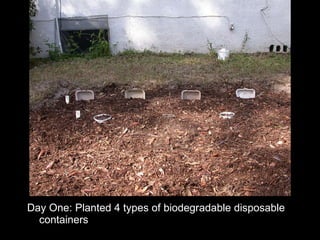
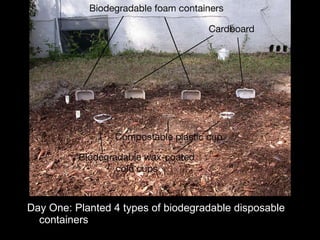
Day One: Planted 4 types of biodegradable disposable containers
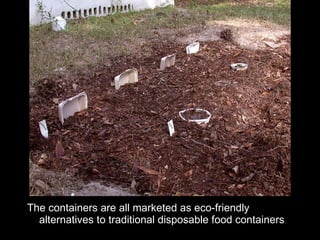
The containers are all marketed as eco-friendly alternatives to traditional disposable food containers
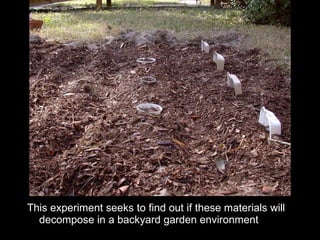
This experiment seeks to find out if these materials will decompose in a backyard garden environment
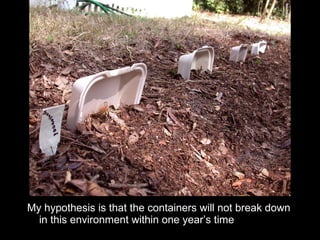
My hypothesis is that the containers will not break down in this environment within one year’s time
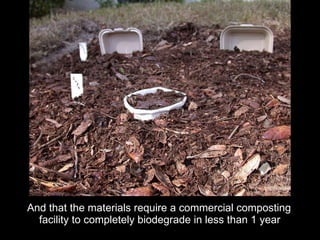
And that the materials require a commercial composting facility to completely biodegrade in less than 1 year
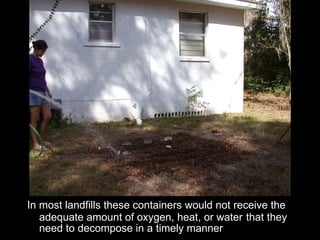
In most landfills these containers would not receive the adequate amount of oxygen, heat, or water   that they need to decompose in a timely manner
Will the containers fare better in the garden conditions? Will they decompose before my lease is up? Lacking a commercial composting facility, what is the ideal way to dispose of these materials? Should one consider refusing disposable containers rather than pondering these questions?
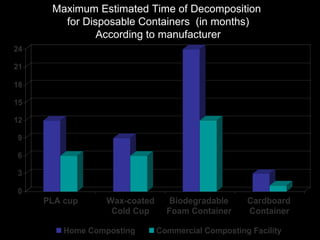
Maximum Estimated Time of Decomposition  for Disposable Containers  (in months) According to manufacturer
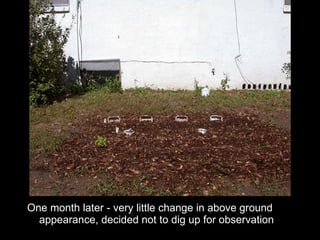
One month later - very little change in above ground appearance, decided not to dig up for observation
Five months after planting
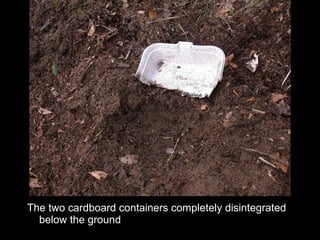
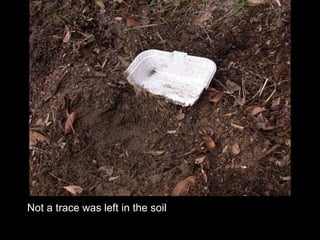
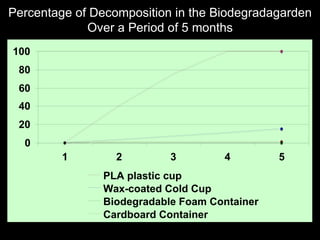
The two cardboard containers completely disintegrated below the ground
Not a trace was left in the soil
 
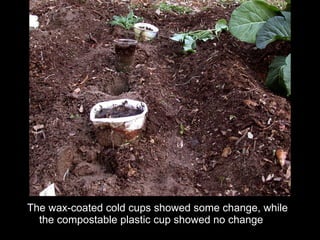
The wax-coated cold cups showed some change, while the compostable plastic cup showed no change
 
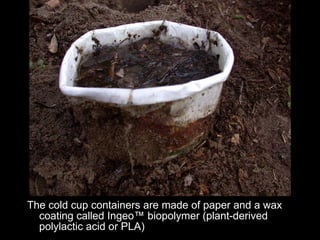
The cold cup containers are made of paper and a wax coating called Ingeo™ biopolymer (plant-derived polylactic acid or PLA)
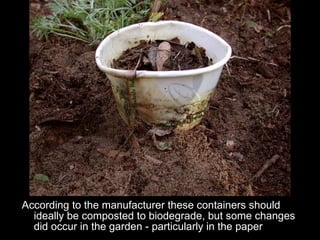
According to the manufacturer these containers should ideally be composted to biodegrade, but some changes did occur in the garden - particularly in the paper
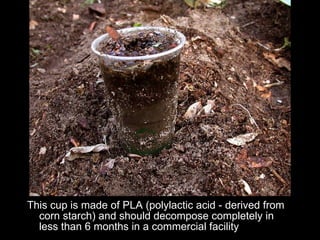
This cup is made of PLA (polylactic acid - derived from corn starch) and should decompose completely in less than 6 months in a commercial facility
In a home composting environment, biodegradation could take up to a year or more In these garden conditions, no discernible change has occurred in 5 months and it is reasonable to assume that it may take years to decompose In a landfill it would take decades 1   1.Worldcentric.org (the manufacturer)
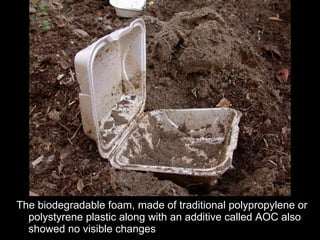
The biodegradable foam, made of traditional polypropylene or polystyrene plastic along with an additive called AOC also showed no visible changes
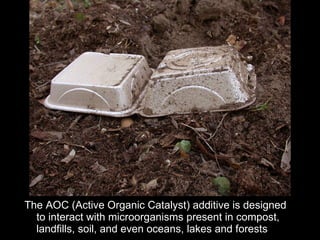
The AOC (Active Organic Catalyst) additive is designed to interact with microorganisms present in compost, landfills, soil, and even oceans, lakes and forests
The additive acts as a catalyst to encourage microorganisms to break the material down into soil The company does not specify how long the biodegradation process should take for this product, but estimates assume up to 2 years in home compost and 1 year in a commercial facility
Percentage of Decomposition in the Biodegradagarden Over a Period of 5 months
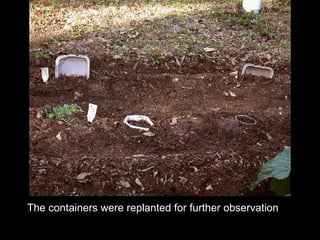
The containers were replanted for further observation
A few weeks later…..
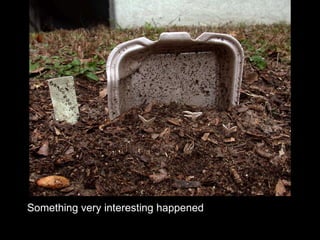
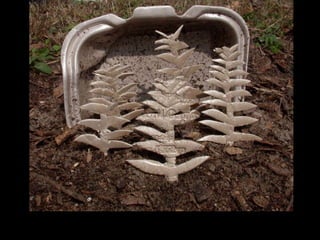
Something very interesting happened


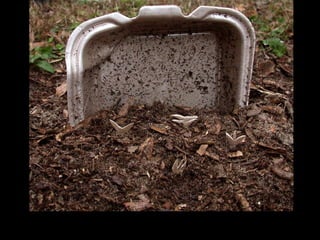
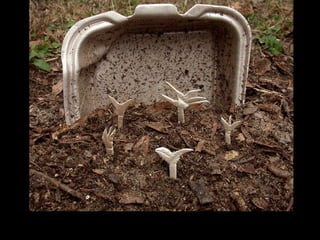
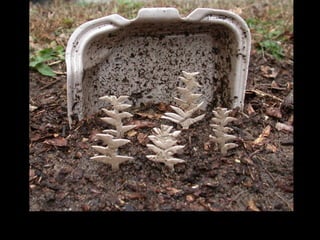
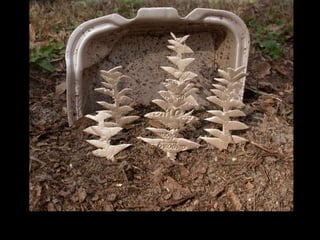
The chemical AOC additive had mutated the plastic and grown into an edible herb Enviroware, the manufacturer of these foam containers, has named the product of this new phenomenon Enviroherb™  Recent studies have shown the herb to reduce cholesterol levels, boost immunity and help protect against memory loss, while providing a good source of antioxidants and magnesium
Try Enviroherb™ in soups, on  salads, or use it in a marinade - you can even make Enviroherb™ tea
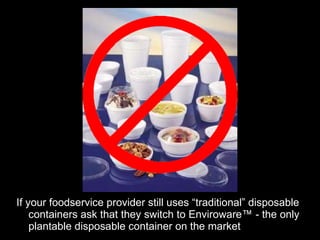
If your foodservice provider still uses “traditional” disposable containers ask that they switch to Enviroware™ - the only plantable disposable container on the market
In conclusion This experiment has proven that this time the “lesser of two evils” in disposable container products has literally risen from the ground to become, in fact, a good - and a delicious one at that!
Thank You

The Biodegradagarden

  • 1.
    The Biodegradagarden: Anexperiment in disposable container technology
  • 2.
    Day One: Planted4 types of biodegradable disposable containers
  • 3.
    Day One: Planted4 types of biodegradable disposable containers
  • 4.
    The containers areall marketed as eco-friendly alternatives to traditional disposable food containers
  • 5.
    This experiment seeksto find out if these materials will decompose in a backyard garden environment
  • 6.
    My hypothesis isthat the containers will not break down in this environment within one year’s time
  • 7.
    And that thematerials require a commercial composting facility to completely biodegrade in less than 1 year
  • 8.
    In most landfillsthese containers would not receive the adequate amount of oxygen, heat, or water that they need to decompose in a timely manner
  • 9.
    Will the containersfare better in the garden conditions? Will they decompose before my lease is up? Lacking a commercial composting facility, what is the ideal way to dispose of these materials? Should one consider refusing disposable containers rather than pondering these questions?
  • 10.
    Maximum Estimated Timeof Decomposition for Disposable Containers (in months) According to manufacturer
  • 11.
    One month later- very little change in above ground appearance, decided not to dig up for observation
  • 12.
  • 13.
    The two cardboardcontainers completely disintegrated below the ground
  • 14.
    Not a tracewas left in the soil
  • 15.
  • 16.
    The wax-coated coldcups showed some change, while the compostable plastic cup showed no change
  • 17.
  • 18.
    The cold cupcontainers are made of paper and a wax coating called Ingeo™ biopolymer (plant-derived polylactic acid or PLA)
  • 19.
    According to themanufacturer these containers should ideally be composted to biodegrade, but some changes did occur in the garden - particularly in the paper
  • 20.
    This cup ismade of PLA (polylactic acid - derived from corn starch) and should decompose completely in less than 6 months in a commercial facility
  • 21.
    In a homecomposting environment, biodegradation could take up to a year or more In these garden conditions, no discernible change has occurred in 5 months and it is reasonable to assume that it may take years to decompose In a landfill it would take decades 1 1.Worldcentric.org (the manufacturer)
  • 22.
    The biodegradable foam,made of traditional polypropylene or polystyrene plastic along with an additive called AOC also showed no visible changes
  • 23.
    The AOC (ActiveOrganic Catalyst) additive is designed to interact with microorganisms present in compost, landfills, soil, and even oceans, lakes and forests
  • 24.
    The additive actsas a catalyst to encourage microorganisms to break the material down into soil The company does not specify how long the biodegradation process should take for this product, but estimates assume up to 2 years in home compost and 1 year in a commercial facility
  • 25.
    Percentage of Decompositionin the Biodegradagarden Over a Period of 5 months
  • 26.
    The containers werereplanted for further observation
  • 27.
    A few weekslater…..
  • 28.
  • 29.
  • 30.
  • 31.
  • 32.
  • 33.
  • 34.
    The chemical AOCadditive had mutated the plastic and grown into an edible herb Enviroware, the manufacturer of these foam containers, has named the product of this new phenomenon Enviroherb™ Recent studies have shown the herb to reduce cholesterol levels, boost immunity and help protect against memory loss, while providing a good source of antioxidants and magnesium
  • 35.
    Try Enviroherb™ insoups, on salads, or use it in a marinade - you can even make Enviroherb™ tea
  • 36.
    If your foodserviceprovider still uses “traditional” disposable containers ask that they switch to Enviroware™ - the only plantable disposable container on the market
  • 37.
    In conclusion Thisexperiment has proven that this time the “lesser of two evils” in disposable container products has literally risen from the ground to become, in fact, a good - and a delicious one at that!
  • 38.