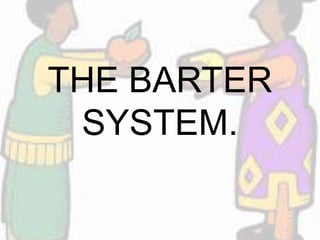
THE BARTER 
SYSTEM.
What does barter 
mean? 
• It is one of the earliest form of exchanges 
• Barter system refers to the system of exchange 
where goods and services are exchanged 
directly for other goods and services. 
• Dates back to as old as 6000 B.C 
• Believed to have been first found and 
implemented in the Mesopotamian 
civilization.
ORIGIN. 
• During the initial phases of civilization, man’s wants 
were basic and few. 
• With time these wants and desires increased 
• He found it advantageous to adopt the division of 
labour and specialize in the production of one/few 
goods. 
• This led to the act of exchange whereby people 
exchanged the surplus goods they have for the things 
that they require. 
• Food, cloth, salt, weapons etc were among the few 
commodities that were exchanged during the initial 
stages.
ADVANTAGES. 
• Simplicity 
• Flexibility.
DISADVANTAGES. 
• Lack of double-coincidence of wants 
• No common measure of value. 
• Large number of intermediate transactions. 
• Indivisibility of commodities. 
• Difficulty as store of value. 
• Problem of future payments.
CREDIT CARDS. 
• A credit card is a payment card issued to users 
as a system of payment. 
• The use of credit cards originated in the 
United States during the 1920s. 
• The general-purpose credit card was born in 
1966. 
• The inventor of the first bank issued credit 
card was John Biggins.
TYPES OF CREDIT CARDS. 
• Standard credit cards 
• Credit cards with rewards programs. 
• Airline mile / frequent flier credit cards. 
• Specialty credit cards.

The barter system

  • 1.
  • 2.
    What does barter mean? • It is one of the earliest form of exchanges • Barter system refers to the system of exchange where goods and services are exchanged directly for other goods and services. • Dates back to as old as 6000 B.C • Believed to have been first found and implemented in the Mesopotamian civilization.
  • 3.
    ORIGIN. • Duringthe initial phases of civilization, man’s wants were basic and few. • With time these wants and desires increased • He found it advantageous to adopt the division of labour and specialize in the production of one/few goods. • This led to the act of exchange whereby people exchanged the surplus goods they have for the things that they require. • Food, cloth, salt, weapons etc were among the few commodities that were exchanged during the initial stages.
  • 4.
    ADVANTAGES. • Simplicity • Flexibility.
  • 5.
    DISADVANTAGES. • Lackof double-coincidence of wants • No common measure of value. • Large number of intermediate transactions. • Indivisibility of commodities. • Difficulty as store of value. • Problem of future payments.
  • 6.
    CREDIT CARDS. •A credit card is a payment card issued to users as a system of payment. • The use of credit cards originated in the United States during the 1920s. • The general-purpose credit card was born in 1966. • The inventor of the first bank issued credit card was John Biggins.
  • 7.
    TYPES OF CREDITCARDS. • Standard credit cards • Credit cards with rewards programs. • Airline mile / frequent flier credit cards. • Specialty credit cards.