THE ATMOSPHERE


The atmosphere is a layer of gases surrounding the planet Earth. The atmosphere
protects life on Earth by absorbing ultraviolet solar radiation, warming the
surface through heat retention (greenhouse effect), and reducing temperature
extremes between day and night.


Atmosphere is a mixture of gases, nitrogen (78%), oxygen (21%) and other gases
in smaller quantities (1%): argon, ozone, carbon dioxide, water vapor.


                         STRUCTURE OF ATMOSPHERE

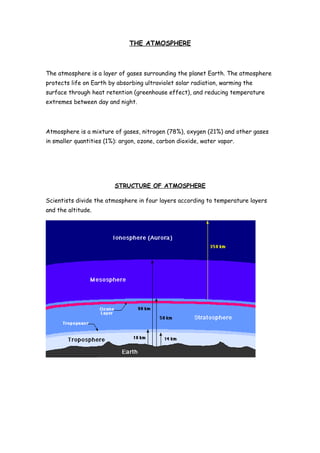
Scientists divide the atmosphere in four layers according to temperature layers
and the altitude.
TROPOSPHERE


This is the closest layer of the atmosphere to the Earth's surface, extending up
to about 10-15 kms above the Earth's surface. It contains 75% of the gases and
its temperature varies from 15ºC to -50ºC.

The tropopause is the area between troposphere and stratosphere and because of
it, the water vapor cannot go higher because it becomes ice and is trapped. The
tropopause acts like an invisible barrier and is the reason why most clouds form
and the weather phenomena occur in the troposphere.


STRATOSPHERE


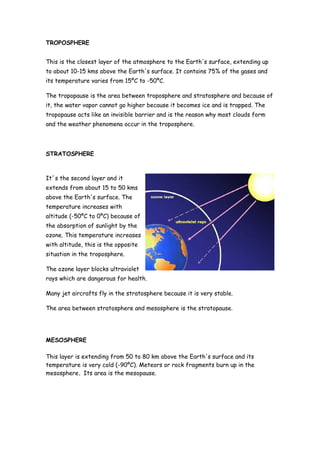
It´s the second layer and it
extends from about 15 to 50 kms
above the Earth's surface. The
temperature increases with
altitude (-50ºC to 0ºC) because of
the absorption of sunlight by the
ozone. This temperature increases
with altitude, this is the opposite
situation in the troposphere.

The ozone layer blocks ultraviolet
rays which are dangerous for health.

Many jet aircrafts fly in the stratosphere because it is very stable.

The area between stratosphere and mesosphere is the stratopause.


MESOSPHERE

This layer is extending from 50 to 80 km above the Earth's surface and its
temperature is very cold (-90ºC). Meteors or rock fragments burn up in the
mesosphere. Its area is the mesopause.
IONOSPHERE

  •   This layer contains the thermosphere and exosphere and it extends from
      80 km above the Earth's surface to outer space. The temperature is hot
      because molecules receive a lot of energy from the sun. Those molecules
      are ionized by solar radiation and it´s important because it influences, for
      example, on radio propagation on the Earth. It is responsible for the
      auroras borealis

  © by Alan & Hui Meng

  © The Regents of the University of Michigan


                                       ACTIVITIES

  1- In pairs interpret this graphic:


  a) What happens to the temperature and pressure as you rise through the
     Troposphere?
  b) What layer includes the ozone layer?
  c) In which layer does weather occur? Why?
d) Where is the highest temperature? How many degrees is it?

2- Look for information on the internet about the ozone holes.

   a) What is it?
   b) Where are the holes on Earth?
   c) How are these holes made?
   d) Write three things that make the ozone holes bigger.


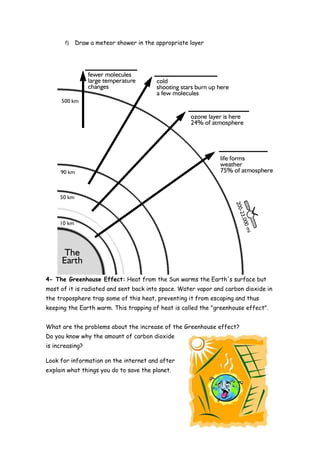
3- Label the following things on the drawing
   a) Identify layers of the atmosphere and write on the blank lines
   b) Color layers of the atmosphere
   c) Draw a line that identifies the ozone layer
   d) Draw clouds in the layer of the atmosphere in which weather occurs
   e) Draw an airplane in the layer in which the most commercial air travel
      occurs
f)   Draw a meteor shower in the appropriate layer


4- The Greenhouse Effect: Heat from the Sun warms the Earth's surface but
most of it is radiated and sent back into space. Water vapor and carbon dioxide in
the troposphere trap some of this heat, preventing it from escaping and thus
keeping the Earth warm. This trapping of heat is called the "greenhouse effect".


What are the problems about the increase of the Greenhouse effect?
Do you know why the amount of carbon dioxide
is increasing?

Look for information on the internet and after
explain what things you do to save the planet.
How is the Earth's atmosphere similar to a greenhouse?

What factors influence on the function of a greenhouse?

 What is albedo and how is it related to understanding global climate change?

More information and games:

   •   http://www.windows.ucar.edu
   •   http://epa.gov/climatechange/kids/games
   •   http://www.oar.noaa.gov/k12/pdfs/gresall.pdf
   •   http://en.wikipedia.org
   •   http://www.kidsgeo.com/geography-for-kids/


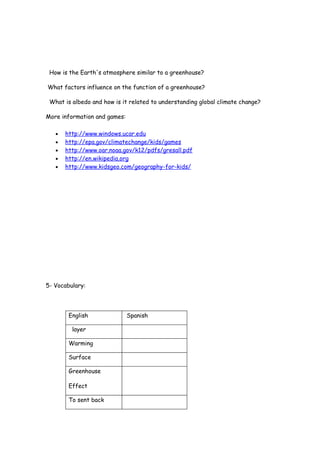
5- Vocabulary:


        English               Spanish

         layer

        Warming

        Surface

        Greenhouse

        Effect

        To sent back
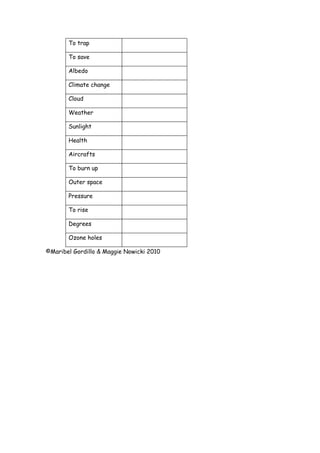
To trap

       To save

       Albedo

       Climate change

       Cloud

       Weather

       Sunlight

       Health

       Aircrafts

       To burn up

       Outer space

       Pressure

       To rise

       Degrees

       Ozone holes

©Maribel Gordillo & Maggie Nowicki 2010

The Atmosphere

  • 1.
    THE ATMOSPHERE The atmosphereis a layer of gases surrounding the planet Earth. The atmosphere protects life on Earth by absorbing ultraviolet solar radiation, warming the surface through heat retention (greenhouse effect), and reducing temperature extremes between day and night. Atmosphere is a mixture of gases, nitrogen (78%), oxygen (21%) and other gases in smaller quantities (1%): argon, ozone, carbon dioxide, water vapor. STRUCTURE OF ATMOSPHERE Scientists divide the atmosphere in four layers according to temperature layers and the altitude.
  • 2.
    TROPOSPHERE This is theclosest layer of the atmosphere to the Earth's surface, extending up to about 10-15 kms above the Earth's surface. It contains 75% of the gases and its temperature varies from 15ºC to -50ºC. The tropopause is the area between troposphere and stratosphere and because of it, the water vapor cannot go higher because it becomes ice and is trapped. The tropopause acts like an invisible barrier and is the reason why most clouds form and the weather phenomena occur in the troposphere. STRATOSPHERE It´s the second layer and it extends from about 15 to 50 kms above the Earth's surface. The temperature increases with altitude (-50ºC to 0ºC) because of the absorption of sunlight by the ozone. This temperature increases with altitude, this is the opposite situation in the troposphere. The ozone layer blocks ultraviolet rays which are dangerous for health. Many jet aircrafts fly in the stratosphere because it is very stable. The area between stratosphere and mesosphere is the stratopause. MESOSPHERE This layer is extending from 50 to 80 km above the Earth's surface and its temperature is very cold (-90ºC). Meteors or rock fragments burn up in the mesosphere. Its area is the mesopause.
  • 3.
    IONOSPHERE • This layer contains the thermosphere and exosphere and it extends from 80 km above the Earth's surface to outer space. The temperature is hot because molecules receive a lot of energy from the sun. Those molecules are ionized by solar radiation and it´s important because it influences, for example, on radio propagation on the Earth. It is responsible for the auroras borealis © by Alan & Hui Meng © The Regents of the University of Michigan ACTIVITIES 1- In pairs interpret this graphic: a) What happens to the temperature and pressure as you rise through the Troposphere? b) What layer includes the ozone layer? c) In which layer does weather occur? Why?
  • 4.
    d) Where isthe highest temperature? How many degrees is it? 2- Look for information on the internet about the ozone holes. a) What is it? b) Where are the holes on Earth? c) How are these holes made? d) Write three things that make the ozone holes bigger. 3- Label the following things on the drawing a) Identify layers of the atmosphere and write on the blank lines b) Color layers of the atmosphere c) Draw a line that identifies the ozone layer d) Draw clouds in the layer of the atmosphere in which weather occurs e) Draw an airplane in the layer in which the most commercial air travel occurs
  • 5.
    f) Draw a meteor shower in the appropriate layer 4- The Greenhouse Effect: Heat from the Sun warms the Earth's surface but most of it is radiated and sent back into space. Water vapor and carbon dioxide in the troposphere trap some of this heat, preventing it from escaping and thus keeping the Earth warm. This trapping of heat is called the "greenhouse effect". What are the problems about the increase of the Greenhouse effect? Do you know why the amount of carbon dioxide is increasing? Look for information on the internet and after explain what things you do to save the planet.
  • 6.
    How is theEarth's atmosphere similar to a greenhouse? What factors influence on the function of a greenhouse? What is albedo and how is it related to understanding global climate change? More information and games: • http://www.windows.ucar.edu • http://epa.gov/climatechange/kids/games • http://www.oar.noaa.gov/k12/pdfs/gresall.pdf • http://en.wikipedia.org • http://www.kidsgeo.com/geography-for-kids/ 5- Vocabulary: English Spanish layer Warming Surface Greenhouse Effect To sent back
  • 7.
    To trap To save Albedo Climate change Cloud Weather Sunlight Health Aircrafts To burn up Outer space Pressure To rise Degrees Ozone holes ©Maribel Gordillo & Maggie Nowicki 2010