THE ARTS WORKSHOPS
A short summary of what we learned!
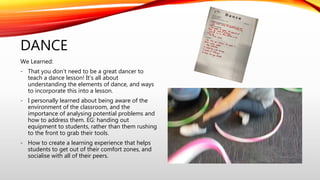
DANCE
We Learned:
- That you don’t need to be a great dancer to
teach a dance lesson! It’s all about
understanding the elements of dance, and ways
to incorporate this into a lesson.
- I personally learned about being aware of the
environment of the classroom, and the
importance of analysing potential problems and
how to address them. EG: handing out
equipment to students, rather than them rushing
to the front to grab their tools.
- How to create a learning experience that helps
students to get out of their comfort zones, and
socialise with all of their peers.
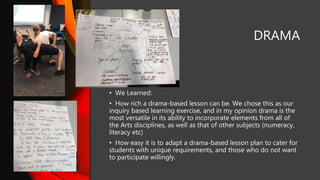
DRAMA
• We Learned:
• How rich a drama-based lesson can be. We chose this as our
inquiry based learning exercise, and in my opinion drama is the
most versatile in its ability to incorporate elements from all of
the Arts disciplines, as well as that of other subjects (numeracy,
literacy etc)
• How easy it is to adapt a drama-based lesson plan to cater for
students with unique requirements, and those who do not want
to participate willingly.
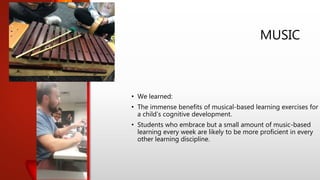
MUSIC
• We learned:
• The immense benefits of musical-based learning exercises for
a child’s cognitive development.
• Students who embrace but a small amount of music-based
learning every week are likely to be more proficient in every
other learning discipline.
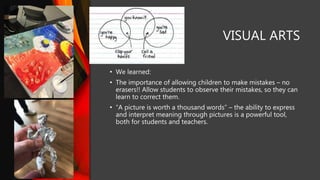
VISUAL ARTS
• We learned:
• The importance of allowing children to make mistakes – no
erasers!! Allow students to observe their mistakes, so they can
learn to correct them.
• “A picture is worth a thousand words” – the ability to express
and interpret meaning through pictures is a powerful tool,
both for students and teachers.
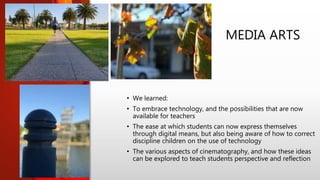
MEDIA ARTS
• We learned:
• To embrace technology, and the possibilities that are now
available for teachers
• The ease at which students can now express themselves
through digital means, but also being aware of how to correct
discipline children on the use of technology
• The various aspects of cinematography, and how these ideas
can be explored to teach students perspective and reflection

The Arts Workshops

  • 1.
    THE ARTS WORKSHOPS Ashort summary of what we learned!
  • 2.
    DANCE We Learned: - Thatyou don’t need to be a great dancer to teach a dance lesson! It’s all about understanding the elements of dance, and ways to incorporate this into a lesson. - I personally learned about being aware of the environment of the classroom, and the importance of analysing potential problems and how to address them. EG: handing out equipment to students, rather than them rushing to the front to grab their tools. - How to create a learning experience that helps students to get out of their comfort zones, and socialise with all of their peers.
  • 3.
    DRAMA • We Learned: •How rich a drama-based lesson can be. We chose this as our inquiry based learning exercise, and in my opinion drama is the most versatile in its ability to incorporate elements from all of the Arts disciplines, as well as that of other subjects (numeracy, literacy etc) • How easy it is to adapt a drama-based lesson plan to cater for students with unique requirements, and those who do not want to participate willingly.
  • 4.
    MUSIC • We learned: •The immense benefits of musical-based learning exercises for a child’s cognitive development. • Students who embrace but a small amount of music-based learning every week are likely to be more proficient in every other learning discipline.
  • 5.
    VISUAL ARTS • Welearned: • The importance of allowing children to make mistakes – no erasers!! Allow students to observe their mistakes, so they can learn to correct them. • “A picture is worth a thousand words” – the ability to express and interpret meaning through pictures is a powerful tool, both for students and teachers.
  • 6.
    MEDIA ARTS • Welearned: • To embrace technology, and the possibilities that are now available for teachers • The ease at which students can now express themselves through digital means, but also being aware of how to correct discipline children on the use of technology • The various aspects of cinematography, and how these ideas can be explored to teach students perspective and reflection