CREATIVITY AND THE ARTS IN EDUCATIONAlexandra Cochran: 41806531EDUC1704- slidecast
MY MAMA TOLD ME WHEN I WAS YOUNGWE'RE ALL BORN SUPERSTARS
Creativity is something you are born with
Creativity is....
STIMULUS TO ENRICH CREATIVITY IS FOUND IN...
THE ARTS
BREAKING NEWS
It has been found that a society that regards paid work as the 'real thing' and creative life (the arts) as a 'frill‘ is a society that is incomplete and unhealthy.(Boyd, 2000)
Over the past decade there has been an increasing amount of research and studies undertaken on creativity.(Runco, 2004)
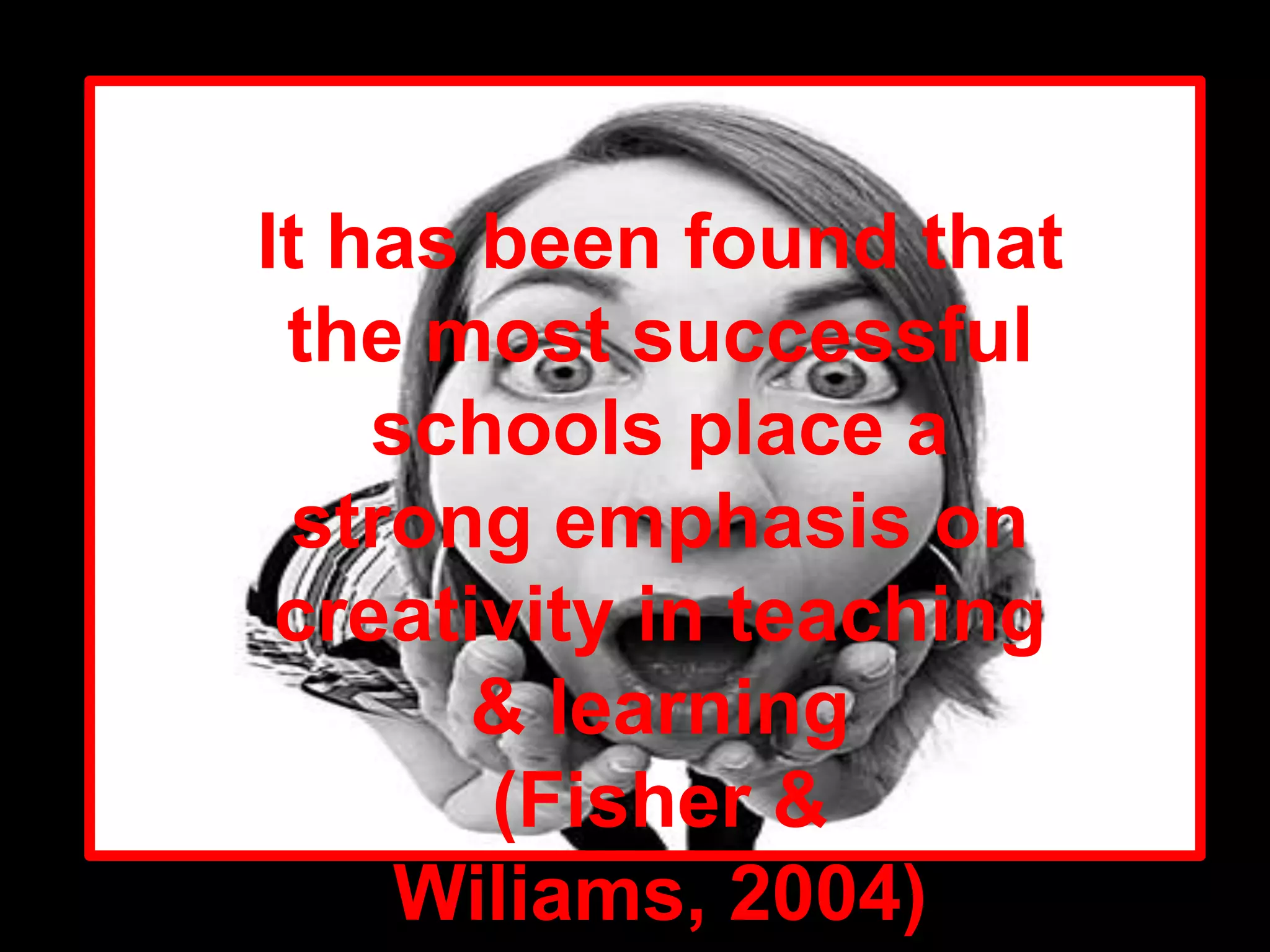
It has been found that the most successful schools place a strong emphasis on creativity in teaching & learning(Fisher & Wiliams, 2004)
A curriculum rich in ARTS can enhance 	 LITERACY by at least 24% and MATHAMATICAL CAPABILITY by at least 6%(O’Brien, 2011)
Engagement in the arts is more than "hands on minds off" and the community and schools must see that it actually requires:
 Distinguishing between fact and fiction
Defining terms
Enquiring and reasoning
Striving to be consistent and avoid contradictions
becoming aware of complexity: seeing the 'grey' areas between black and white
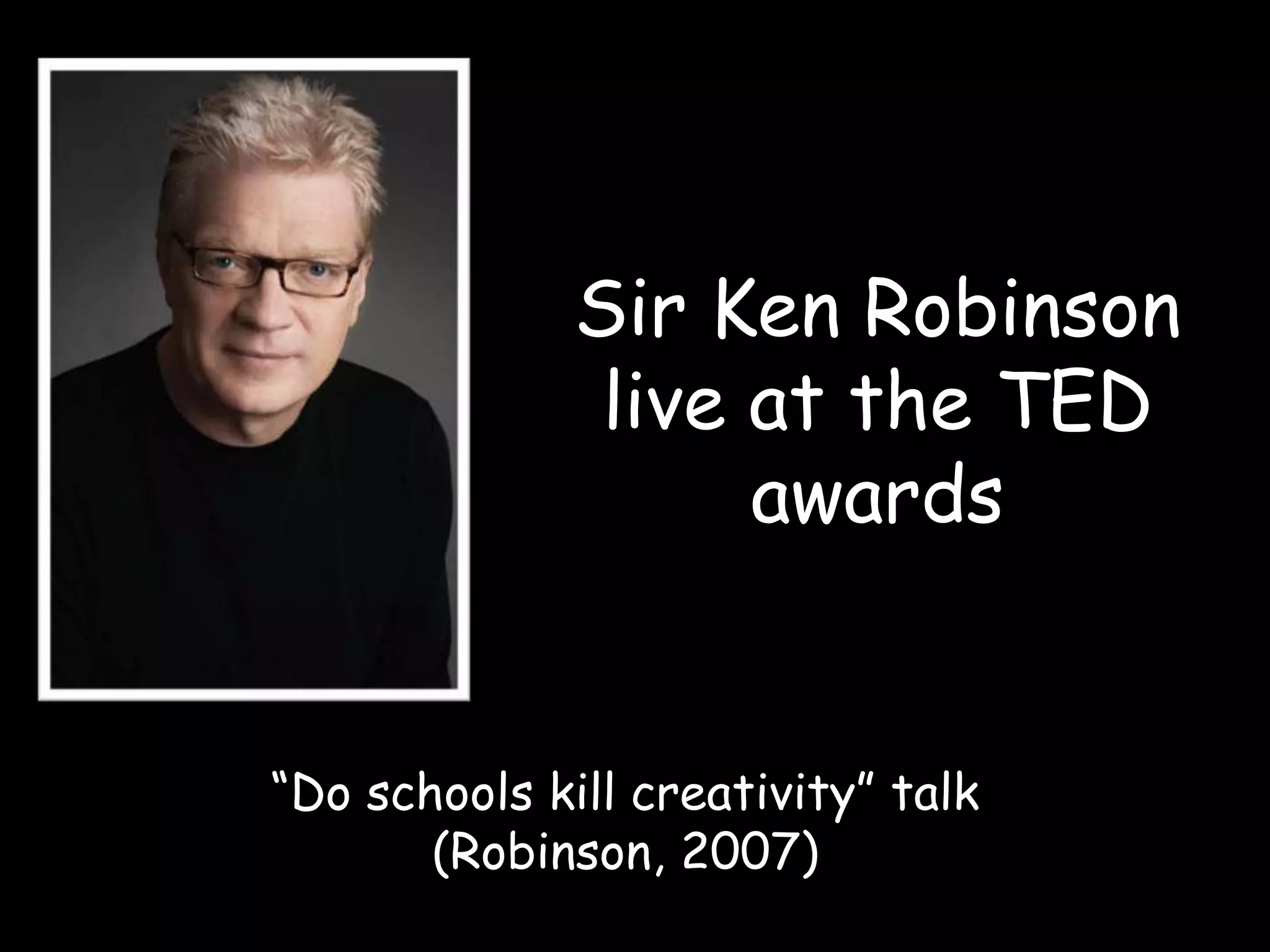
Sir Ken Robinson live at the TED awards“Do schools kill creativity” talk(Robinson, 2007)
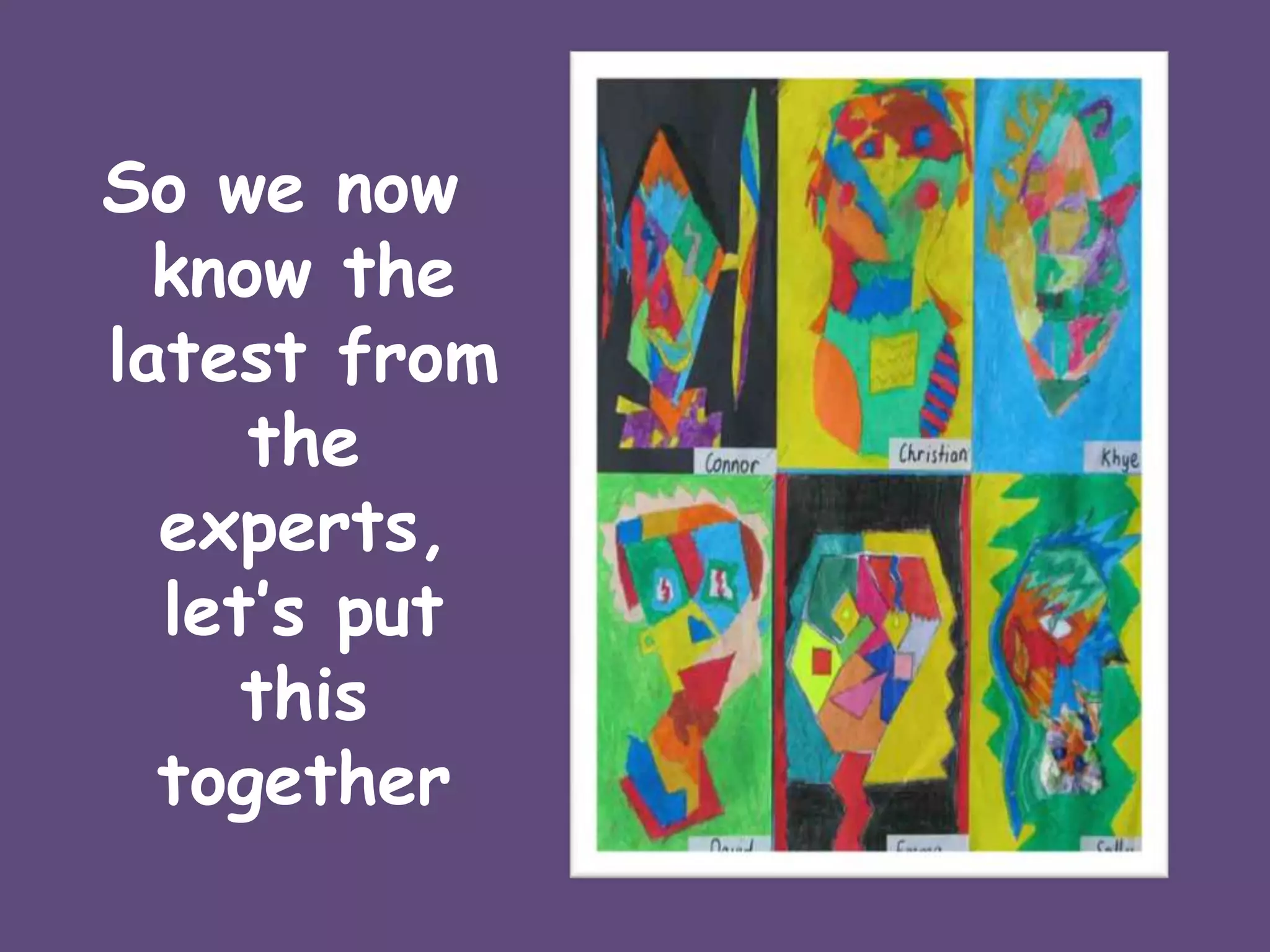
So we now know the latest from the experts, let’s put this together
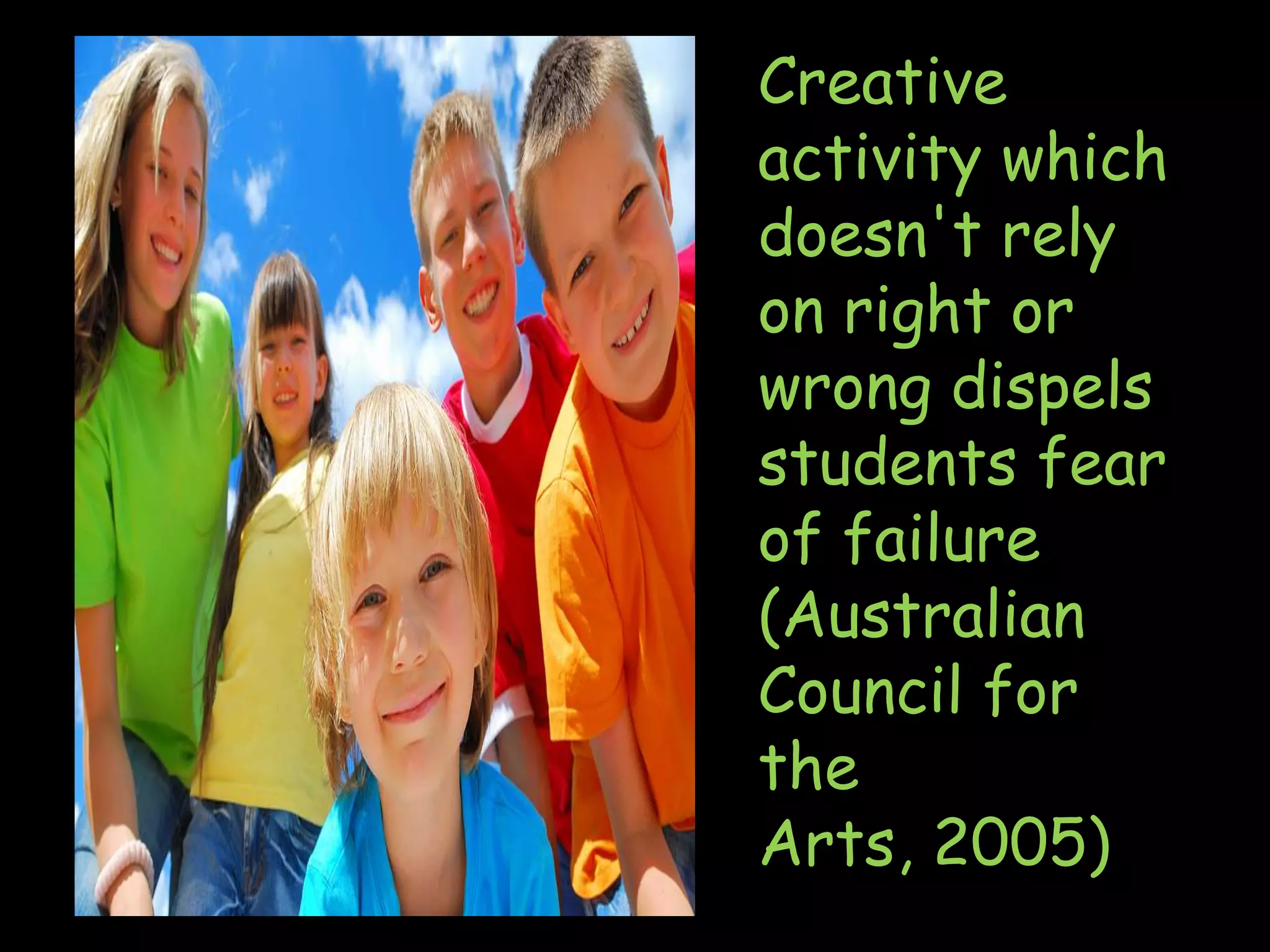
Creative activity which doesn't rely on right or wrong dispels students fear of failure (Australian Council for the Arts, 2005)
NOT WANTED
UNIQUE SELFrather than"MORE LIKE EVERYONE ELSE" CHARACTERS(Shipley, 2002)
FUN FACT: Music increases brain growth (Pasek & Golinkoff, 2003)
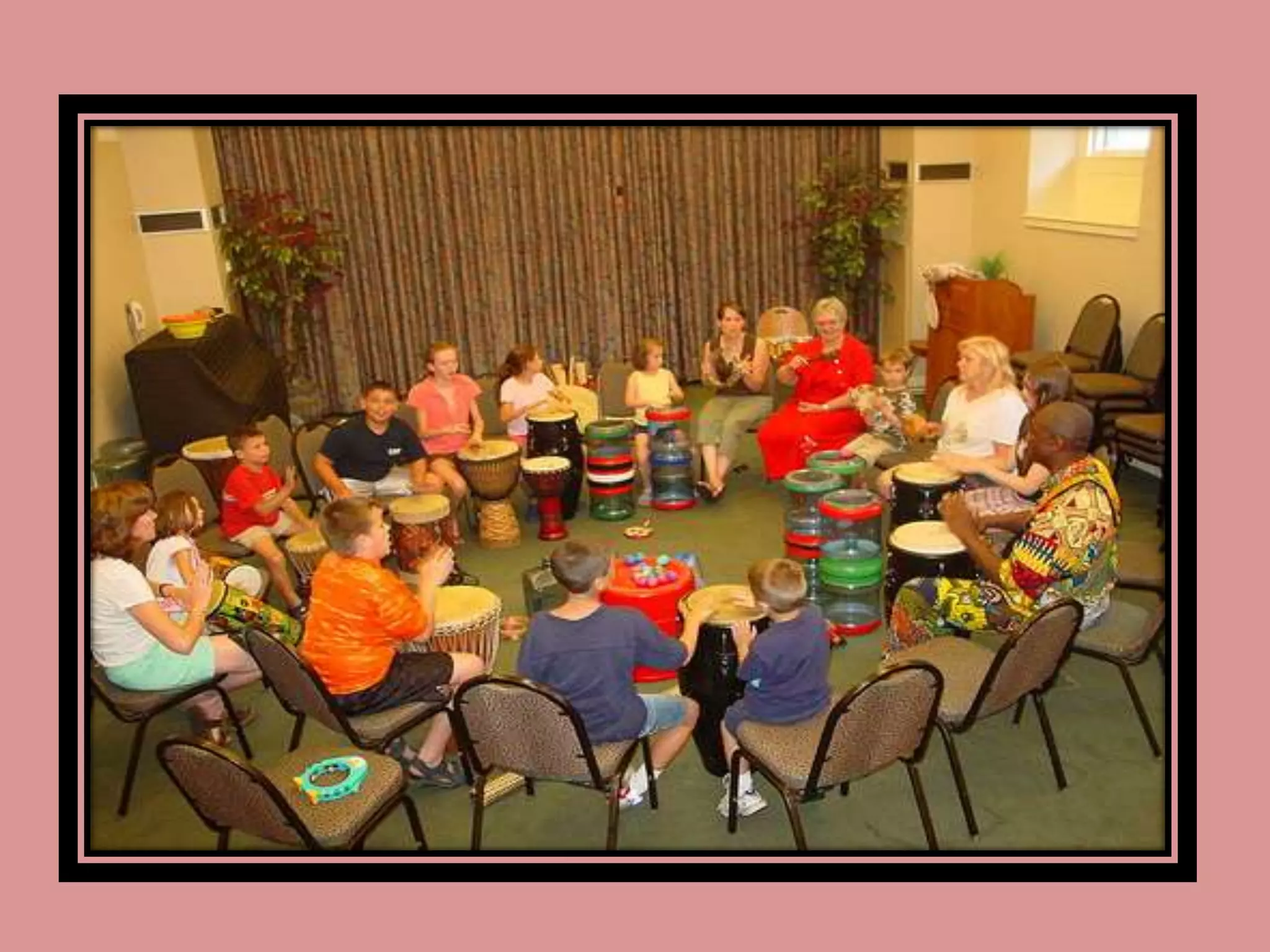
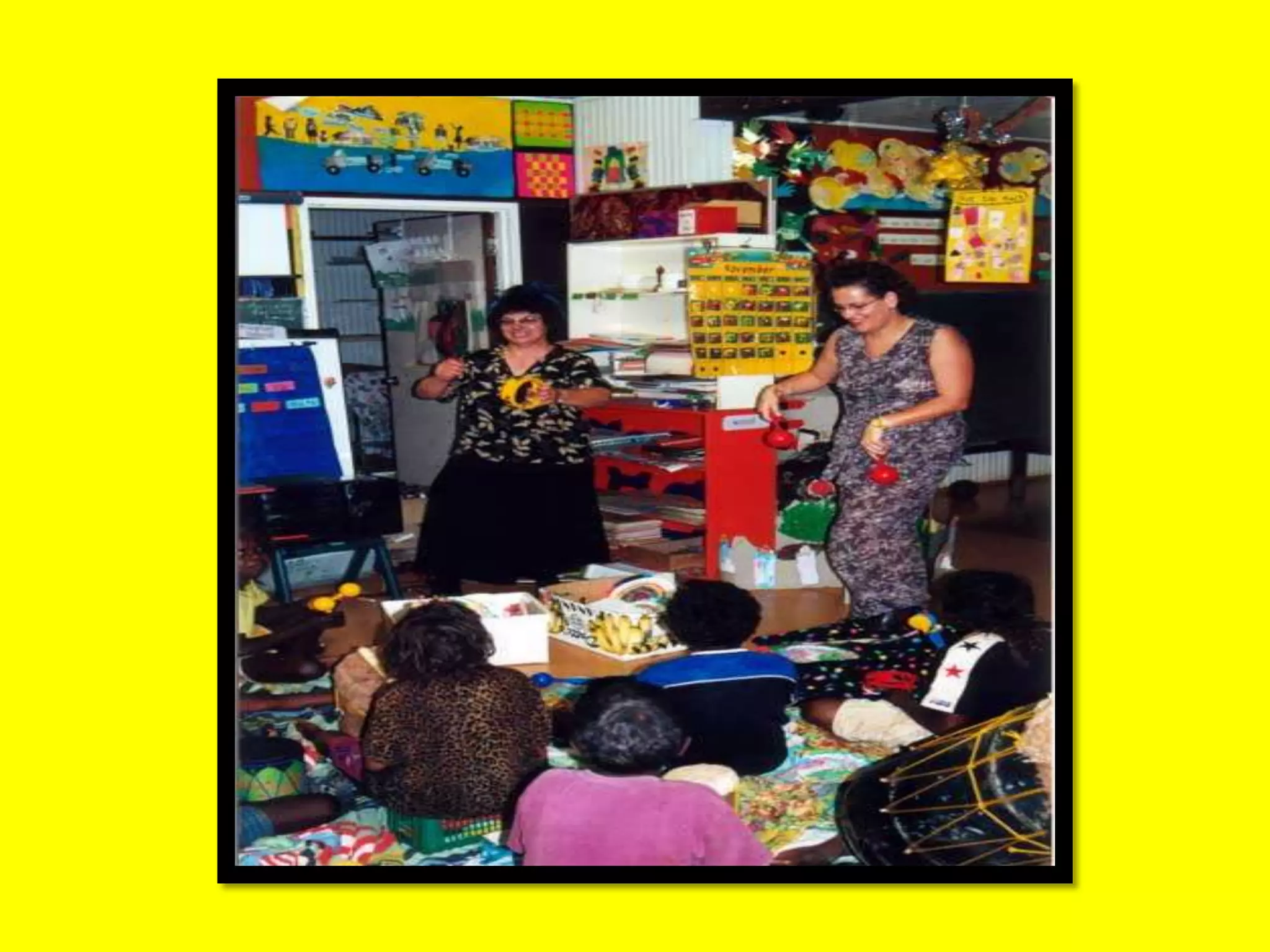
Through a vartiety of music, drama, dance and visual arts students are encouraged to think outside the box and are able to engage in imaginative play.  This increases the child's ability to think for themselves, without being told what they have to do.
It is vitally important that our future adults are equipped with creative strategies which are born from effective problem solving skills.  The adults of the future will be our young children of today.
It has been found that children develop problem solving skills from exposure to a wide variety of materials and creative contexts (Curtis and Carter, 2003).
As has been reiterated above this then encourages a variety of approaches to construction, invention and problem solving.
Teachers Development Curriculum...  and the arts
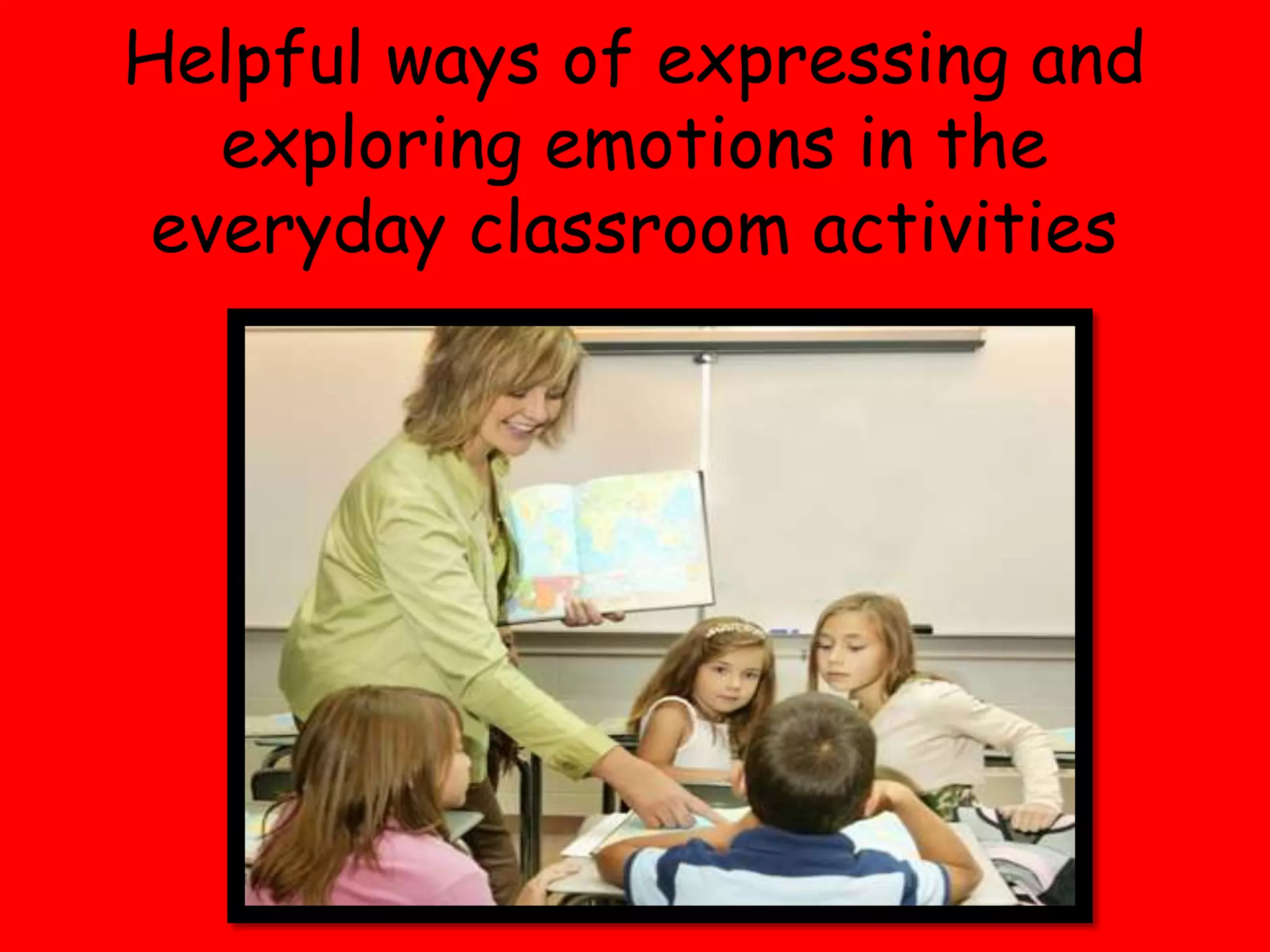
Helpful ways of expressing and exploring emotions in the everyday classroom activities
different styles of teaching intertwined with different sections of the curriculum
The Kodaly approach focuses on the voice as the main instrument (O'Brien, 2011)
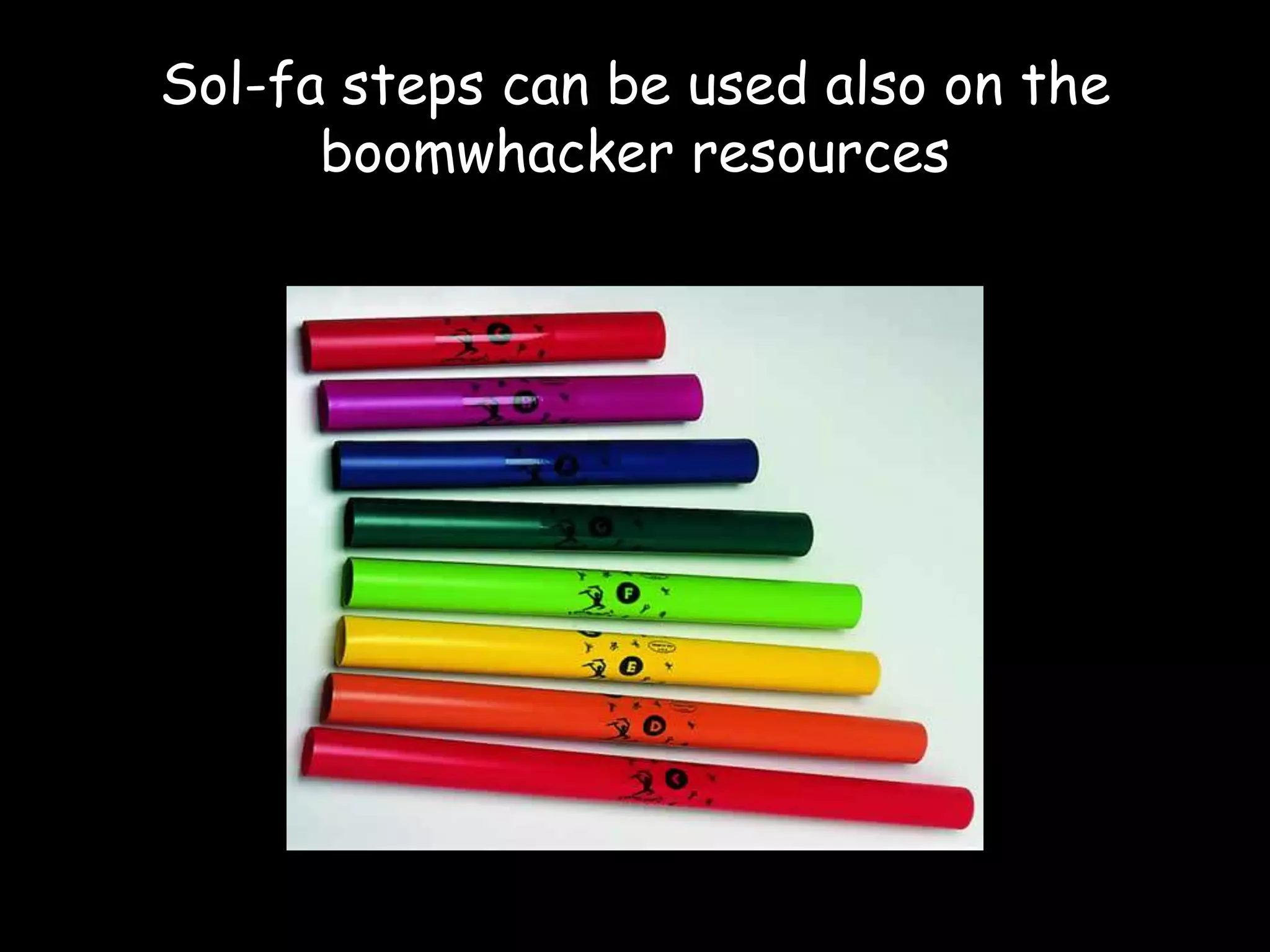
Sol-fa steps can be used also on the boomwhacker resources
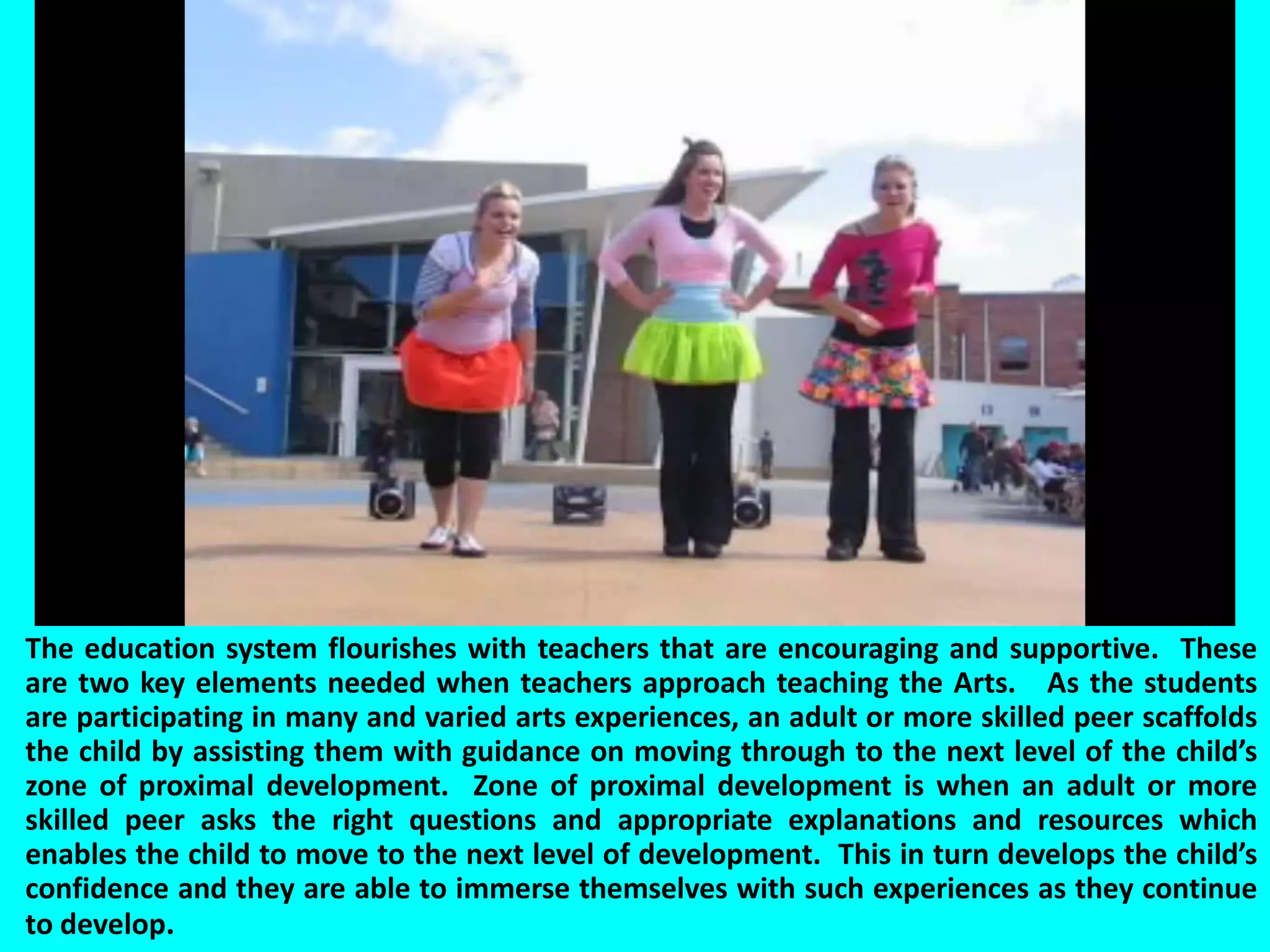
	The education system flourishes with teachers that are encouraging and supportive.  These are two key elements needed when teachers approach teaching the Arts.   As the students are participating in many and varied arts experiences, an adult or more skilled peer scaffolds the child by assisting them with guidance on moving through to the next level of the child’s zone of proximal development.  Zone of proximal development is when an adult or more skilled peer asks the right questions and appropriate explanations and resources which enables the child to move to the next level of development.  This in turn develops the child’s confidence and they are able to immerse themselves with such experiences as they continue to develop.
A positive proactive approach to early childhood arts education is imperative as this means the child can develop specific skills and enhance all they have to be (Wright 2003)
Parents must be encouraging and supportive by attending the school musicals and performances displaying the child's achievements.
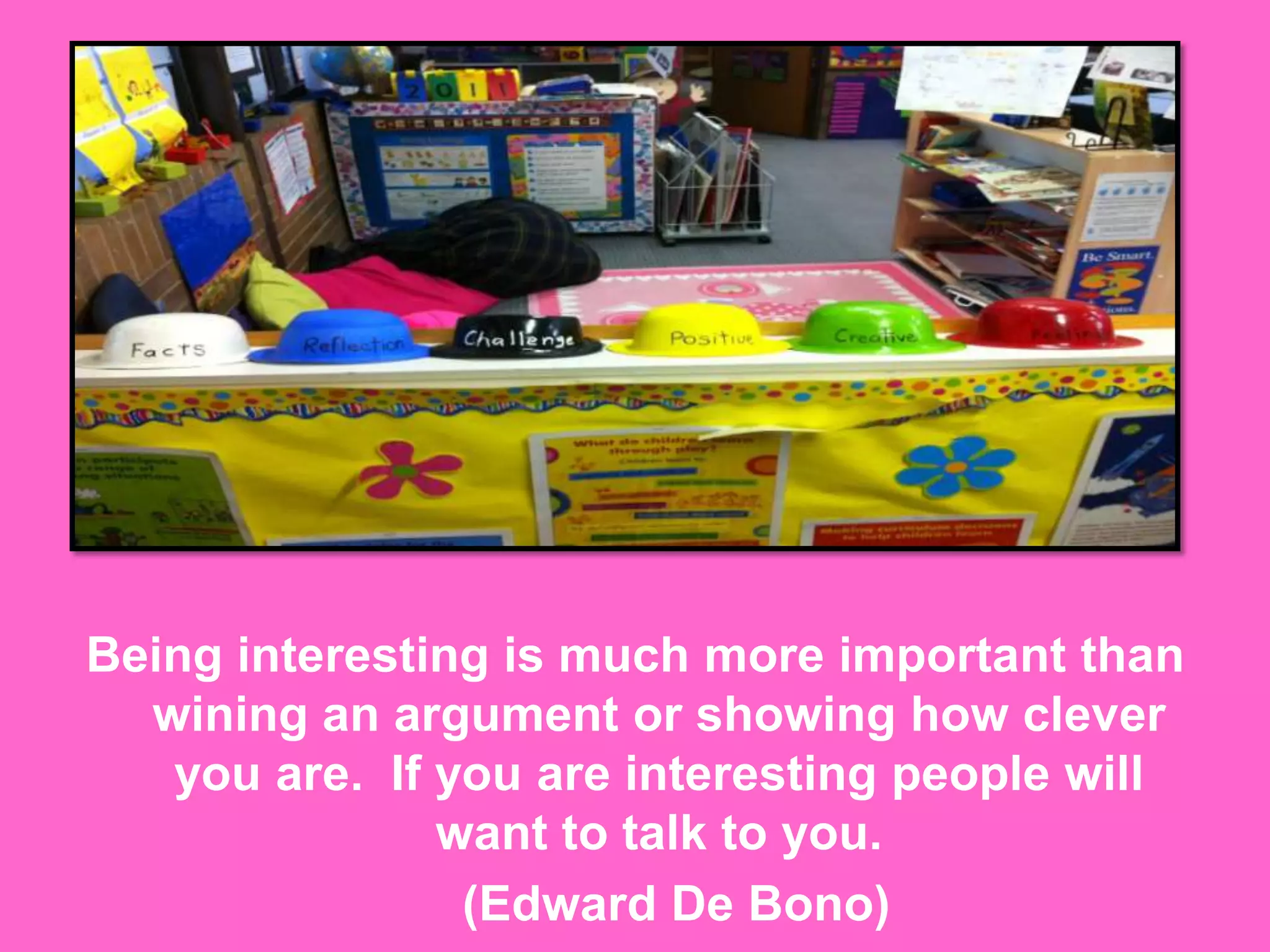
Being interesting is much more important than wining an argument or showing how clever you are.  If you are interesting people will want to talk to you.      (Edward De Bono)
THE END

Educ1704 powerpoint slidecast

  • 1.
    CREATIVITY AND THEARTS IN EDUCATIONAlexandra Cochran: 41806531EDUC1704- slidecast
  • 6.
    MY MAMA TOLDME WHEN I WAS YOUNGWE'RE ALL BORN SUPERSTARS
  • 7.
    Creativity is somethingyou are born with
  • 9.
  • 10.
    STIMULUS TO ENRICHCREATIVITY IS FOUND IN...
  • 11.
  • 24.
  • 25.
    It has beenfound that a society that regards paid work as the 'real thing' and creative life (the arts) as a 'frill‘ is a society that is incomplete and unhealthy.(Boyd, 2000)
  • 27.
    Over the pastdecade there has been an increasing amount of research and studies undertaken on creativity.(Runco, 2004)
  • 28.
    It has beenfound that the most successful schools place a strong emphasis on creativity in teaching & learning(Fisher & Wiliams, 2004)
  • 29.
    A curriculum richin ARTS can enhance LITERACY by at least 24% and MATHAMATICAL CAPABILITY by at least 6%(O’Brien, 2011)
  • 30.
    Engagement in thearts is more than "hands on minds off" and the community and schools must see that it actually requires:
  • 31.
    Distinguishing betweenfact and fiction
  • 32.
  • 33.
  • 35.
    Striving to beconsistent and avoid contradictions
  • 36.
    becoming aware ofcomplexity: seeing the 'grey' areas between black and white
  • 37.
    Sir Ken Robinsonlive at the TED awards“Do schools kill creativity” talk(Robinson, 2007)
  • 38.
    So we nowknow the latest from the experts, let’s put this together
  • 40.
    Creative activity whichdoesn't rely on right or wrong dispels students fear of failure (Australian Council for the Arts, 2005)
  • 41.
  • 46.
    UNIQUE SELFrather than"MORELIKE EVERYONE ELSE" CHARACTERS(Shipley, 2002)
  • 47.
    FUN FACT: Musicincreases brain growth (Pasek & Golinkoff, 2003)
  • 48.
    Through a vartietyof music, drama, dance and visual arts students are encouraged to think outside the box and are able to engage in imaginative play. This increases the child's ability to think for themselves, without being told what they have to do.
  • 49.
    It is vitallyimportant that our future adults are equipped with creative strategies which are born from effective problem solving skills. The adults of the future will be our young children of today.
  • 50.
    It has beenfound that children develop problem solving skills from exposure to a wide variety of materials and creative contexts (Curtis and Carter, 2003).
  • 51.
    As has beenreiterated above this then encourages a variety of approaches to construction, invention and problem solving.
  • 52.
  • 54.
    Helpful ways ofexpressing and exploring emotions in the everyday classroom activities
  • 55.
    different styles ofteaching intertwined with different sections of the curriculum
  • 56.
    The Kodaly approachfocuses on the voice as the main instrument (O'Brien, 2011)
  • 57.
    Sol-fa steps canbe used also on the boomwhacker resources
  • 61.
    The education systemflourishes with teachers that are encouraging and supportive. These are two key elements needed when teachers approach teaching the Arts. As the students are participating in many and varied arts experiences, an adult or more skilled peer scaffolds the child by assisting them with guidance on moving through to the next level of the child’s zone of proximal development. Zone of proximal development is when an adult or more skilled peer asks the right questions and appropriate explanations and resources which enables the child to move to the next level of development. This in turn develops the child’s confidence and they are able to immerse themselves with such experiences as they continue to develop.
  • 62.
    A positive proactiveapproach to early childhood arts education is imperative as this means the child can develop specific skills and enhance all they have to be (Wright 2003)
  • 63.
    Parents must beencouraging and supportive by attending the school musicals and performances displaying the child's achievements.
  • 68.
    Being interesting ismuch more important than wining an argument or showing how clever you are. If you are interesting people will want to talk to you. (Edward De Bono)
  • 71.